









Top 10 AI Startups to Watch in Ukraine in 2026
By Irene Holden
Last Updated: April 26th 2026
Too Long; Didn't Read
Buntar Aerospace tops the list, having raised $10.4 million to develop AI drone guidance that functions under electronic warfare, proven on Ukraine's front lines. Respeecher follows with its Hollywood-quality voice cloning in a Disney partnership, showing Ukrainian AI can compete globally. Both exemplify an ecosystem that builds for resilience first - a distinction that makes them startups to watch in 2026.
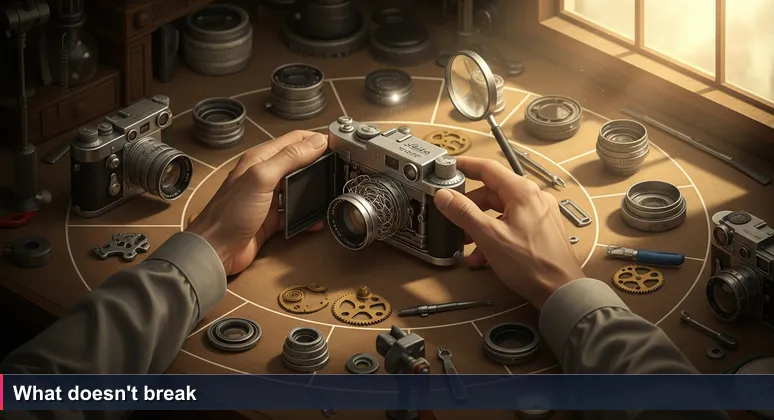
That moment in a used camera shop when the technician turns your find over, taps the lens housing with his fingernail, and says nothing - you’ve brought a Leica, but he’s looking for warpage. Lists like this one flatten complexity. “Top 10” implies clean comparison, but Ukraine’s AI startups aren’t competing on the same terrain. Buntar’s $10.4 million round means something different when your product is tested under electronic warfare. Respeecher’s Disney contract lives in a different world than Ovul.AI’s clinical validation. Ranking them feels like comparing a drone stabilizer to a fertility tracker - unless you ask the right question.
The question isn’t “which is best?” It’s “which is built to survive what’s coming?” Ukrainian startups don’t optimize for pitch decks. They optimize for edge cases. Buntar Aerospace’s AI models run without connectivity. Deus Robotics partnered with Nova Poshta because sorting centers don’t stop for air raids. As Tech.eu’s Cate Lawrence observed, the ecosystem is “not paused by war. It is evolving - faster, harder, and with a clarity of purpose that much of Europe would do well to study.”
“Not paused by war. It is evolving - faster, harder, and with a clarity of purpose that much of Europe would do well to study.” - Cate Lawrence, Tech.eu
The ranking that matters isn’t about valuation - it’s about what breaks and what doesn’t. These ten companies earned their place not because they raised the most, but because their founders learned what Kyiv already knows: the smartest system is the one that still functions when the grid goes down.
Table of Contents
- Introduction
- HEFT
- MindyGem
- Thefourthlaw
- Ovul.AI
- ThreatBreaker
- Dynamiq
- Zibra AI
- Deus Robotics
- Respeecher
- Buntar Aerospace
- Conclusion: The Real Metric
- Frequently Asked Questions
- If you want to launch an AI career in Ukraine's tech hubs, this complete guide is essential reading.
HEFT
In a field outside Kharkiv, a dairy farmer opens an app that tells him which of his cows is about to ovulate and which one is showing early signs of illness. That app is powered by HEFT, a vertical AI platform that combines IoT sensors with machine learning to monitor cattle fertility and health in real time. The company, with roots in Kharkiv and current headquarters in Lviv, was founded by graduates of V.N. Karazin Kharkiv National University and Lviv Polytechnic who understood that Ukraine's agricultural sector would need precision tools for its post-war recovery.
HEFT's system deploys solar-powered ear tags and collars that stream biometric data to a cloud-based model trained on thousands of Ukrainian herd records. The AI predicts fertility windows with higher accuracy than traditional observation and flags early signs of mastitis or lameness before a farmer would notice them. For small-to-medium enterprises (SMEs) that lack budgets for full veterinary staff, this is a game-changer. The company is backed by the Ukrainian Startup Fund and the European Innovation Council's "Seeds of Bravery" initiative, which specifically supports deep-tech ventures critical to Ukraine's reconstruction.
Ukraine's agricultural sector employs millions and accounts for a significant share of GDP. HEFT's focus on SME-friendly AI tools positions it as a crucial player in rebuilding the rural economy. The company's dual-use hardware-software stack also makes it a candidate for expansion into EU agricultural markets, where similar precision livestock management tools remain scarce and expensive. For investors watching the post-war recovery playbook, HEFT is a bet on the land itself.
MindyGem
Every developer in Kyiv has lived this: a designer hands off a beautiful Figma mockup, and three weeks later, the engineering team delivers something nobody asked for. The gap between visual intent and technical reality wastes thousands of hours annually across Ukraine's outsourcing ecosystem. MindyGem, founded in 2023 by Odesa-based software architects, eliminates that friction by using computer vision and natural language processing to translate UI/UX designs directly into structured developer documentation.
Instead of generic project management tools that organize tasks, MindyGem generates the actual technical requirements that define what needs to be built - complete with edge cases, validation rules, and API specifications. Early pilot customers include mid-size product development agencies in Odesa that previously lost up to 30% of project time to design-to-engineering handoff errors. The company is currently bootstrapped with recent angel investment and is scouting for its 2026 Seed round, targeting integration partnerships with major IT service firms like EPAM Systems and SoftServe.
The product's key differentiator is its zero-configuration approach: upload a Figma file, receive a complete product requirements document (PRD). No manual tagging, no training data. For an outsourcing sector that employs over 200,000 engineers in Kyiv, Lviv, and Kharkiv alone, MindyGem could become as essential as the version control system. If the company closes its Seed round, watch for rapid enterprise adoption through Ukraine's large engineering centers, where the handoff problem is multiplied across hundreds of concurrent client projects.
Thefourthlaw
The most dangerous moment for a drone is when it loses its link to the operator. Thefourthlaw, founded in 2023 by defense-tech engineers from the Brave1 ecosystem, builds guidance systems that solve for exactly that loss. Based in Kyiv, the company develops high-autonomy AI stacks for UAVs that maintain navigation and target tracking under heavy electronic warfare conditions - jamming, spoofing, total signal loss. Their core insight is that drone guidance can't depend on external communication links that enemies can sever.
Thefourthlaw secured a Seed round in July 2025 backed by specialized defense-tech investors who recognized the dual-use potential. The same autonomy stack that tracks targets through electronic attack can be adapted for civilian search-and-rescue in debris fields or collapsed structures. This matters because Ukraine's defense market doubled to $6.8 billion in 2025, and investors are actively seeking companies that serve both military and civilian markets.
- Core differentiator: Onboard AI operates entirely without external connectivity, processing visual and sensor data for autonomous decisions.
- Dual-use roadmap: Military targeting systems are being adapted for disaster-response scenarios where communications infrastructure is destroyed.
- Market position: Positioned for NATO contracts and partnerships with international drone manufacturers seeking electronic-warfare-resistant systems.
Thefourthlaw's guidance stack has been tested in the hardest possible environment - Ukraine's eastern front lines - where electronic warfare is a constant, not a contingency. For defense-tech investors watching the intersection of AI and autonomy, this is a startup built for the war that exists, not the one engineers imagined in a lab.
Ovul.AI
A smartphone camera, a saliva sample, and an algorithm - that's all Ovul.AI needs to track hormonal health with precision that previously required a clinic visit and a blood draw. The Odesa-based startup uses AI-powered digital microscopy to analyze crystallized saliva patterns and predict ovulation windows, detect cycle irregularities, and flag potential hormonal imbalances. No expensive lab equipment, no invasive procedures - just computer vision applied to biology.
Founded by researchers from Odesa I.I. Mechnikov National University, Ovul.AI received a $100,000 grant from Google's Ukraine Support Fund and represented Ukraine at CES 2026, where the product moved from prototype into clinical validation stages with European health partners. The company is part of a cohort of Ukrainian startups that each received $100K from Google's initiative to support deep-tech ventures continuing operations during the war.
- No laboratory required: At-home saliva analysis replaces clinic-based hormonal testing with comparable accuracy during initial trials.
- Computer vision breakthrough: The AI detects microscopic changes in saliva crystallization patterns that correlate with estrogen and progesterone levels.
- Clinical validation phase: Currently partnering with European health institutions to validate accuracy against standard blood-based testing.
Hormonal health tracking has been dominated by expensive clinic-based diagnostics or low-accuracy consumer wearables. Ovul.AI's approach represents a genuinely new category - at-home diagnostics through computer vision. If clinical validation confirms accuracy comparable to lab testing, the company becomes a prime acquisition target for European healthtech firms or international diagnostics companies expanding their direct-to-consumer portfolios. Ovul.AI's CES showcase proved the technology works; now it must prove it works at scale.
ThreatBreaker
Ukraine's cybersecurity sector has grown in parallel with its IT outsourcing industry, and ThreatBreaker represents the next evolutionary step: AI agents that don't just detect threats but respond to them autonomously. Based in Lviv and founded in 2025 by cybersecurity experts from Lviv Polytechnic National University, the startup targets managed security service providers (MSSPs) serving mid-market clients who lack dedicated in-house security operations centers.
The system's core innovation is "zero-touch" deployment - it learns normal network behavior patterns within hours, then automatically isolates compromised devices or blocks suspicious traffic without human intervention. This is a fundamentally different approach from signature-based detection tools that require constant rule updates. The founding team cut their teeth at major Lviv-based IT firms before branching out, bringing deep understanding of the mid-market pain point: sophisticated threats without sophisticated budgets. The Lviv IT Cluster network provided the initial angel round, continuing its track record of supporting deep-tech spinouts from the region's universities.
- Autonomous response: AI agents isolate compromised endpoints and block malicious traffic without waiting for a human analyst
- Self-learning: Models adapt to each organization's unique network behavior patterns within hours of deployment
- MSSP-ready: Designed for managed service providers who need multi-tenant deployment with unified dashboards
ThreatBreaker is positioned for the growing European mid-market cybersecurity segment, where small and medium businesses increasingly face sophisticated ransomware and supply-chain attacks but lack the budget for full security operations teams. A partnership with one of Ukraine's larger IT service firms - EPAM, SoftServe, or GlobalLogic - could accelerate customer acquisition across their existing enterprise client bases. For investors tracking the Ukrainian AI development landscape, ThreatBreaker represents the next logical bet in a sector where the country has quietly built deep expertise.
Dynamiq
Every enterprise wants to deploy generative AI agents, but most discover a painful truth: building a single chatbot is easy, managing dozens of agents across different departments with consistent monitoring, testing, and security is a nightmare. Dynamiq, headquartered in Kyiv, solves that orchestration problem with a platform purpose-built for the lifecycle management of enterprise-scale GenAI agents. Founded by seasoned engineers from the Kyiv tech scene - including alumni of Grammarly and other Ukrainian-born success stories - the company understands the specific compliance and data governance pressures that enterprises face.
The platform provides built-in monitoring, automated testing frameworks, and granular security controls designed for sensitive corporate data. Unlike general-purpose AI platforms that treat enterprise deployment as an afterthought, Dynamiq is architected from the ground up for the requirements of regulated industries: audit trails, role-based access, and the ability to roll back agent behaviors that drift off course. The company secured a pre-seed round led by TA Ventures in April 2025, alongside u.ventures and Geek Ventures - four funds that recognized the gap in enterprise GenAI infrastructure. According to the TA Ventures announcement, Dynamiq was identified as one of the most promising Ukrainian AI infrastructure plays.
Dynamiq competes in a space that includes well-funded international players, but its deep integration with Ukraine's enterprise and outsourcing ecosystem gives it home-field advantage. The same IT service firms that employ tens of thousands of engineers - EPAM, SoftServe, GlobalLogic - are natural distribution partners for an agent orchestration platform. If Dynamiq can embed its technology into their client delivery frameworks, it could bypass the slow enterprise sales cycle entirely. TheRecursive's analysis of Ukraine's H1 2025 funding rounds highlighted Dynamiq as a standout in the MLOps category, noting that enterprise AI infrastructure remains one of the most underfunded segments in the region.
Zibra AI
Zibra AI sits at the intersection of two Ukrainian strengths: gaming and artificial intelligence. The company's technology generates physics-based visual effects and 3D assets automatically, using AI to simulate realistic fluid, smoke, and destruction without manual animation. Founded as part of the Roosh ecosystem, with ties to Taras Shevchenko National University of Kyiv's AI programs, the company delivers what game developers have long needed: procedural generation that looks intentional, not randomly generated.
The company was ranked as a top winner in the Google for Startups Startup Pitching Session, validating its approach against a global field of competitors. Backing from Roosh Ventures and the Google for Startups Ukraine Support Fund provided the capital to build deep integration with both Unreal Engine and Unity - the two dominant game development platforms. Today, hundreds of game studios use Zibra AI's technology to automate visual effects that previously required days of manual tuning per scene.
Zibra AI is a prime acquisition target for a major game engine company or a larger tech firm looking to strengthen its 3D content generation capabilities. The company's tight integration with existing developer tools creates a defensible position: once a studio builds its pipeline around Zibra's asset generation, switching costs are high. For investors watching the capital-efficient growth trends in the AI era, Zibra AI represents a bet on infrastructure, not hype - the kind of company that becomes invisible because it just works.
Deus Robotics
Warehouses don't stop for air raids. That reality shaped every design decision at Deus Robotics, the Kyiv-based company building the operating system for autonomous sorting centers. Founded by veteran entrepreneur Pavlo Pikulin, the company deploys fleets of robots that navigate using computer vision rather than floor markers or GPS, coordinating with each other to sort packages without human intervention. But what makes them exceptional is what happens when the grid goes down.
Their partnership with Nova Poshta, Ukraine's largest private postal operator, means their robots sort packages in facilities that operate 24/7 through power outages and connectivity drops. Each robot carries enough onboard intelligence to continue operating autonomously when cloud connectivity is lost, then synchronizes with the fleet when networks restore. The company raised over $5 million in late-stage seed funding from SMRK VC and ICLUB VC - capital that went into hardening the system for exactly these conditions. According to Vestbee's analysis of Ukrainian startups, Deus Robotics exemplifies capital-efficient growth in the AI era, building defensible technology with focused spending.
The Nova Poshta deployment serves as a reference case that carries weight far beyond Ukraine. Any logistics operator with backup power concerns - from Polish warehouses near the Ukrainian border to German distribution centers facing energy price volatility - suddenly finds Deus Robotics' resilience-first approach compelling. The company is positioned to become a leading player in Eastern European logistics automation, with potential for partnerships with major European carriers seeking automation that doesn't fail when conditions degrade.
Respeecher
Most voice cloning sounds impressive in a demo but falls apart in production. Respeecher, headquartered in Kyiv, achieved what few AI startups can claim: it passed the scrutiny of professional sound engineers at Disney for Star Wars content. Founded by Volodymyr Kyryliv and Alex Serdiuk, who brought together expertise in computer science and linguistics from major Kyiv institutions, the company understood that production-grade voice synthesis required not just better algorithms but a deeper grasp of human phonetics and speech production.The company's Seed round in March 2025 brought total funding to approximately $4.5 million from Techstars and ff Venture Capital. Rather than burning cash on customer acquisition, Respeecher let the work speak for itself: the Disney partnership came from technical excellence, not competitive pricing. The Digital State UA report on Ukraine's $25 billion tech growth highlighted the deal as a landmark moment for Ukrainian AI on the global stage, proving the country could produce world-class intellectual property, not just outsourced engineering hours.
Respeecher's path forward involves expanding from entertainment into broader media production, voice preservation for medical applications, and accessibility tools for individuals who have lost their ability to speak. For investors, the company represents a rare combination: Hollywood-grade quality with a cost structure that makes sense for volume media production. The same technology that de-aged a Star Wars character could eventually preserve a grandparent's voice for future generations - a market that extends far beyond the movie studio. Respeecher didn't win Disney's business because it was the cheapest option; it won because its AI passed a test most startups never face: the ear of a professional sound engineer looking for artifacts.
Buntar Aerospace
Most drone AI is tested in a lab. Buntar Aerospace's AI is tested under electronic warfare that would blind most systems, on the front lines of Ukraine's war with Russia. The Kyiv-based startup builds an AI "Copilot" for UAVs that automates intelligence, surveillance, and reconnaissance in contested environments where cloud connectivity, satellite links, and even GPS don't exist. Founded by specialized engineers with ties to Igor Sikorsky Kyiv Polytechnic Institute, the team didn't build their models in a clean room - they built them from field experience, iterating based on what actually works when the enemy is actively jamming every frequency.
Buntar raised $10.4 million in March 2026 from Flyer One Ventures and Roosh Ventures, one of the largest AI startup funding rounds in Ukraine's history. The capital is being deployed to scale proprietary edge AI models that can detect camouflaged targets in near real-time and continue operating through total signal loss. The system is already deployed by Armed Forces of Ukraine units and integrated with Axon technologies for secure data transmission. As TheRecursive noted in its H1 2025 funding analysis, defense-tech AI commanded premium valuations because of its proven real-world performance, and Buntar is the category leader.
Buntar earns the top position because their product is tested in the hardest possible environment. The same technology that finds targets through electronic jamming can find disaster victims through debris. The same edge-AI stack that operates without connectivity can serve remote communities, disaster zones, and any setting where the grid goes down. With Ukraine's defense market doubling to $6.8 billion in 2025, Buntar is on a trajectory toward a major Series A and potentially Ukraine's first defense-tech IPO. The ranking that matters isn't about valuation - it's about what breaks and what doesn't. Buntar has been tested in ways most Silicon Valley companies will never understand, and it keeps working.
Conclusion: The Real Metric
Next time you read a list like this, ask what's missing. These ten companies aren't the best because they raised the most money - they're here because their founders learned something Kyiv already knows: the smartest system is the one that still functions when the grid goes down. The ranking that matters isn't about valuation, funding rounds, or press mentions. It's about what breaks and what doesn't under conditions no pitch deck can simulate.
As Cate Lawrence of Tech.eu observed, Ukraine's ecosystem is "not paused by war. It is evolving - faster, harder, and with a clarity of purpose that much of Europe would do well to study." That clarity comes from being tested in ways most startups will never face. Joram Brouwer of Oxford Insights calls the war a "grim catalyst for innovation," pushing Ukrainian founders to build for resilience first and growth second - the opposite of the Silicon Valley playbook.
The watchmaker doesn't read the brand name. He taps the lens housing with his fingernail, listens, and already knows more than any spec sheet could tell him. Buntar, Respeecher, Deus Robotics, and the others on this list have passed that test - not in a demo room, but under conditions that reveal truth. The next unicorn to come out of Ukraine won't be the one with the best slide deck. It will be the one that still works when everything else fails. And that's a bet worth paying attention to.
Frequently Asked Questions
How were these AI startups ranked?
The list is ranked by each startup’s ability to function under duress - a metric that matters in Ukraine’s wartime environment. Factors included real-world deployment under pressure (e.g., Buntar’s drones operating through electronic jamming), funding traction like Buntar’s $10.4 million round, and resilience in product design, such as Deus Robotics’ warehouse robots running during power outages.
Which startup raised the most funding?
Buntar Aerospace leads with a $10.4 million Seed round in March 2026 from Flyer One Ventures and Roosh Ventures, one of the largest AI startup rounds in Ukraine’s history. Deus Robotics follows with over $5 million from SMRK VC and ICLUB VC.
Are any of these startups already working with major global brands?
Yes. Respeecher has a direct partnership with Disney for Star Wars voice cloning, a landmark deal for Ukrainian AI. Deus Robotics deployed its autonomous warehouse system with Nova Poshta, Ukraine’s largest postal operator.
How is the war affecting the development of these startups?
The war acts as a ‘grim catalyst,’ forcing startups to build for extreme resilience. For example, Buntar’s AI runs on edge devices under electronic warfare, while Thefourthlaw’s drone guidance works without connectivity. Deus Robotics designed its fleet coordination to operate during power outages and network drops.
What makes Ukrainian AI startups different from those in Silicon Valley?
Ukrainian startups prioritize edge cases over pitch decks. They are tested in real-world contested environments - like Buntar’s defense drones or Deus Robotics’ Nova Poshta deployment - building for reliability when everything else fails. This resilience gives them a unique advantage in global markets, especially for dual-use technologies.
Discover where to work as an AI engineer in Ukraine with this career fit analysis.
If you're looking for the best non-degree tech jobs in Ukraine right now, this article covers everything from junior web development to cybersecurity.
Best entry-level tech jobs in Ukraine's growing startup ecosystem.
Learn about the top-paying tech employers in Ukraine and how to evaluate hidden value like equity and taxes.
If you're wondering how to become an AI engineer in Ukraine in 2026, this guide goes beyond typical roadmaps.

Irene Holden
Operations Manager
Former Microsoft Education and Learning Futures Group team member, Irene now oversees instructors at Nucamp while writing about everything tech - from careers to coding bootcamps.