









Top 10 Industries Hiring AI Talent in the Netherlands Beyond Big Tech in 2026
By Irene Holden
Last Updated: April 20th 2026
Too Long; Didn't Read
In 2026, Healthcare & Biotech and Fintech & Banking lead the charge in hiring AI talent in the Netherlands beyond big tech, fueled by EU regulations and societal needs. Healthcare stands out with mission-driven roles in Utrecht offering senior salaries over €150,000, while Fintech in Amsterdam boasts top compensation up to €318,000 at firms like Adyen due to intense demand for compliance expertise.
You might be aiming for the glossy tech giants, only to find fierce competition for a narrowing set of roles. The market has shifted silently, creating a "diamond hierarchy" of demand where entry-level coding tasks automate away, while urgent, complex problems in core Dutch sectors lack the hybrid AI talent to solve them.
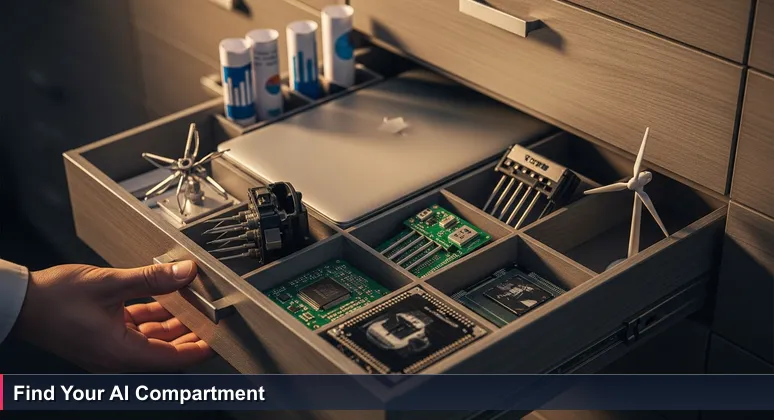
Your career path transforms from chasing a single employer to navigating a rich landscape. The Netherlands, with the highest relative density of AI specialists in Europe, is deploying this talent as essential infrastructure - from the greenhouses of Wageningen to the smart grids of Arnhem. This isn't about hype; it's about orchestration, integrating AI into the very compartments of society that face our most pressing challenges.
The ranking that follows is a map of these pressure points. It reveals where your skills are not just wanted but needed to build compliant, explainable, and trusted systems. With specialist roles in major hubs commanding total packages from €121,000 to over €318,000, the opportunity is vast yet specialized. The question is no longer if you can build a career in AI, but which fundamental Dutch challenge you want to help solve.
Table of Contents
- Introduction
- Healthcare & Biotech
- Fintech & Banking
- Agriculture & Food Tech
- Logistics & Maritime Supply Chain
- Energy & Utilities
- Aerospace & Defense
- Retail & E-commerce
- Manufacturing & High-Tech Systems
- Public Services & Government
- Gaming & Entertainment
- Conclusion
- Frequently Asked Questions
Navigate the Dutch AI job market in 2026 with this complete guide.
Healthcare & Biotech
The full enforcement of the EU AI Act has propelled healthcare and biotech to the forefront, shifting focus from experimentation to the orchestration of compliant, explainable systems into clinical workflows. According to experts at Panda International, the most valuable hires are now those who can ensure AI is trusted within regulated clinical settings, accelerating drug discovery and alleviating workforce shortages.
This creates demand for hybrid roles like Computational Biologist and Radiology AI Specialist, where deep technical prowess must be paired with an understanding of medical regulations and multi-disciplinary collaboration. The mission is compelling, but product cycles are measured and governed by strict frameworks like the EU's Medical Device Regulation.
Salary bands are highly competitive, with senior specialists often commanding total packages exceeding €150,000, reflecting the high-stakes nature of the work. For professionals in life sciences, transitioning into an AI role is a powerful accelerator, as domain expertise in pharmacology or medical imaging is invaluable. Key hubs are Utrecht and Rotterdam, home to leading institutions like Erasmus MC and UMC Utrecht, where hiring intensely focuses on senior talent who can manage risk.
Fintech & Banking
Dutch banks and fintechs have moved beyond pilots to building full-scale internal AI production teams, driven by the dual needs of competitive efficiency and navigating the complex EU AI Act regulations. This quiet transformation is creating a surge in niche roles like AI Compliance Specialist and Model Risk Manager, where regulatory expertise is as critical as building robust financial data pipelines.
Compared to big tech, the environment is more regulated and risk-averse, but the impact - securing transactions and enabling fair credit - operates on a massive scale. As noted in analysis of the fintech talent race, firms are in a quiet competition for professionals who can innovate securely within these strict bounds.
Salaries in Amsterdam, the dominant hub, are among the highest in the Dutch AI landscape. According to Selby Jennings, specialist and lead roles at major banks and firms like Adyen can reach total compensation packages between €121,000 and €318,000. For professionals with backgrounds in finance or compliance, adding AI skills is a direct path to these high-value, future-proof positions.
Agriculture & Food Tech
As a global leader in precision farming, the Netherlands leverages AI to tackle food security and sustainability head-on. In the Food Valley region centered on Wageningen University & Research, AI enables hyper-localized crop optimization, computer vision for plant health monitoring, and the management of robotic systems in vertical farms.
This creates demand for roles like Precision Agriculture Engineer, requiring a rare hybrid skillset: expertise in plant or animal science combined with computer vision and edge AI for field robotics. According to analysis of the Dutch AI in agriculture market, the hiring outlook is exceptionally strong for researchers and system orchestrators who can translate AI from the lab to the greenhouse.
This sector offers a profoundly mission-driven career, directly contributing to global challenges, though the pace can be seasonal and tied to biological cycles. Salaries are strong, especially for research-oriented roles, with senior positions offering competitive packages that align with the broader Dutch tech hiring trends. For agronomists or food scientists, upskilling into AI is a natural evolution, turning deep domain knowledge into scalable, data-driven solutions for the world's food systems.
Logistics & Maritime Supply Chain
As Europe's main maritime gateway, the Netherlands uses AI to build resilience and autonomy into its physical supply chains. The Port of Rotterdam operates as a living lab for predictive AI, tackling complex problems like autonomous shipping coordination, predictive maintenance for cranes, and dynamic logistics optimization to counteract global delays.
This field demands professionals who can bridge digital and physical worlds. Roles such as Maritime Autonomous Systems Lead require knowledge of operational technology (OT) networks, industrial communication protocols, and the integration of sensor data from massive infrastructure. The work is project-based and often integrated with legacy systems, leading to development cycles longer than in cloud-native companies.
Working here means your AI decisions have immediate, tangible economic and physical consequences. Salaries in the Rotterdam region are robust, reflecting this technical and logistical complexity. As part of broader Dutch tech hiring trends, professionals from maritime engineering or supply chain management possess crucial domain context that, when combined with AI skills, makes them indispensable for the country's steady investment in smart port initiatives.
Energy & Utilities
The energy transition is fundamentally impossible without AI. Dutch grid operators and energy firms deploy intelligent systems to balance increasingly decentralized, renewable-powered grids, forecast wind and solar output with precision, and optimize the maintenance of sustainable infrastructure.
This creates critical roles like Grid Optimization Specialist and Renewable Energy Forecaster, demanding skills in time-series forecasting, cybersecurity for critical infrastructure, and hardware-software integration. Careers here are at the heart of the fight against climate change, offering a powerful sense of purpose, though the highly regulated, safety-critical environment prioritizes reliability over breakneck innovation.
Salary prospects in strategic hubs like Arnhem and The Hague are rising with the demand for "green AI" talent. According to the broader Dutch tech hiring outlook, professionals can expect competitive packages, with senior roles often commanding base salaries of €85,000-€120,000+, plus the standard 8% holiday allowance. For engineers, physicists, or energy sector veterans, upskilling into AI places you at the center of managing the transition to a smart, decentralized energy market.
Aerospace & Defense
Driven by imperatives of national digital sovereignty and security, the aerospace and defense sector is a high-stakes frontier for AI talent. Work focuses on AI Security & Red Teaming, developing autonomous systems for surveillance and drones, and architecting robust, ethical defense systems that can withstand sophisticated threats.
These roles demand not only deep technical skills in areas like embedded AI and computer vision but also eligibility for security clearance and a rigorous understanding of ethical governance and vulnerability testing. As noted by the AI Coalition 4 NL, this sector represents a key area for intensification, prioritizing technologies that ensure national security resilience.
This is arguably the most regulated and secure AI field, characterized by long product lifecycles and an uncompromising focus on robustness. While less public about specific compensation, salaries are highly competitive, reflecting the specialization and clearance requirements. For professionals with backgrounds in cybersecurity, embedded systems, or physics, this sector offers a unique chance to work on frontier technologies with profound national importance from hubs like The Hague's security cluster and Enschede.
Retail & E-commerce
Major Dutch retailers and platforms are using AI to move from insight to real-time execution, tackling core problems like dynamic pricing, hyper-personalized marketing, and supply chain optimization to prevent costly stockouts. Firms like Bol.com and Ahold Delhaize are at the forefront, creating demand for AI Product Engineers and Recommendation Engine Specialists skilled in real-time data streaming and scalable production systems.
The pace in e-commerce can rival big tech, with a relentless focus on A/B testing and direct business impact measured in conversion rates and reduced waste. As detailed in analysis of global AI retail trends, success hinges on adapting entire operations to work with intelligent systems, not just deploying the technology in isolation.
Salaries in hubs like Utrecht and Amsterdam are attractive, though may not always reach the absolute peaks of finance or big tech, often aligning with the broader bands for senior AI roles. For professionals already in marketing, supply chain, or product management within retail, mastering AI is the key to driving the next wave of efficiency and customer experience, a transformation reflected in broader 2026 hiring trends.
Manufacturing & High-Tech Systems
In the Brainport Eindhoven region and beyond, Dutch manufacturing is focused on the practical, industrial deployment of AI, primarily for predictive maintenance. This involves using sensor data to foresee failures in complex machinery, from ASML's lithography systems to automated factory robots, turning data into uptime and efficiency.
Despite high adoption rates - 73% of Dutch manufacturers report being at or ahead of their peers - a "lack of the right talent" remains the top barrier. Working in manufacturing AI means dealing with heterogeneous, real-world sensor data and integrating solutions into decades-old industrial processes and operational technology (OT) networks.
The cycle from proof-of-concept to factory-floor deployment is long but immensely impactful on productivity. Salaries in the high-tech cluster are strong, with senior roles often reaching the €85,000-€120,000+ base range. For mechanical, electrical, or industrial engineers, adding AI/ML skills is a direct path to high-value roles that bridge the critical gap between IT and the physical factory floor.
Public Services & Government
With over €1.1 billion invested in AI research and adoption, the Dutch public sector is actively seeking talent to translate this ambition into tangible public benefit. AI is being applied to complex implementation issues in urban planning, social service allocation, traffic management, and administrative automation, aiming to enhance efficiency and evidence-based decision-making.
This creates unique roles like Public Policy Data Scientist, which require a hybrid skillset: proficiency in NLP and predictive analytics must be paired with a deep understanding of public ethics, transparency, and explainable AI. The sector offers unparalleled stability and the chance to work on solutions that benefit society as a whole, though the pace is often dictated by policy cycles and public accountability.
Salaries are generally good and aligned with senior civil service scales, offering competitive packages though typically below the top private-sector bands. As part of the broader Dutch tech hiring outlook, this sector represents a growing niche. For policy experts, social scientists, or public administrators, developing AI competency allows them to directly shape how technology is harnessed responsibly for the public good.
Gaming & Entertainment
The Netherlands' creative hubs in Amsterdam and Eindhoven are home to world-leading studios like Guerrilla Games, where AI is deployed not for business analytics but for creativity and immersion. Here, the technology powers procedural content generation, creates believable non-player character (NPC) behavior, and optimizes demanding real-time rendering pipelines.
This industry uniquely blends cutting-edge AI research with scalable performance engineering in a fast-paced, collaborative environment. It demands roles like Game AI Engineer, which require specialized expertise in C++, real-time systems, and a creative, problem-solving approach to simulating intelligence and building virtual worlds.
As highlighted in broader analyses of 2026 hiring trends, there is high demand for this hybrid research-engineering talent. While compensation at top studios is excellent, it can be more variable and project-based compared to other sectors. For software engineers with a passion for interactive media or digital artists who learn to code, moving into game AI represents a dream career that marries profound technical challenge with artistic expression.
Conclusion
The landscape for AI talent in the Netherlands is rich, diversified, and deeply integrated into the nation's economic and social fabric. Your career is no longer a binary choice between a handful of tech giants; it is an opportunity to become a hybrid artisan, applying the versatile tool of AI within the unique compartment of society where you can have the deepest impact, whether in a Utrecht hospital, a Wageningen greenhouse, or the Port of Rotterdam.
This shift, as detailed in analyses like the Dutch tech hiring outlook, means evaluating new trade-offs. You may work within more deliberate, regulated product cycles in healthcare or energy, balancing potentially different salary bands with the chance to build essential, trusted infrastructure for a smarter and more resilient Netherlands.
The demand is unequivocal, from the €1.1 billion public investment to the urgent need for talent in high-tech manufacturing. The question has decisively evolved from if you can build a career in AI to which fundamental Dutch challenge - be it health, climate, security, or sustenance - you want to help orchestrate with your skills.
Frequently Asked Questions
What industries beyond big tech are hiring the most AI talent in the Netherlands for 2026?
Healthcare, fintech, and agriculture are leading the charge, driven by regulations like the EU AI Act and sustainability goals. For instance, healthcare roles in Utrecht offer salaries over €150,000, while Wageningen's AgTech sector focuses on AI for precision farming.
How do AI salaries in these industries compare to traditional tech jobs in the Netherlands?
Salaries can be competitive, with fintech in Amsterdam reaching up to €318,000, similar to big tech, while public sector roles might be lower but offer stability. Sectors like manufacturing in Eindhoven also provide strong packages, reflecting high demand for specialized skills.
What skills are most in demand for AI roles in the Dutch job market?
Hybrid skills combining AI expertise with domain knowledge are key, such as understanding medical regulations for healthcare or operational technology for logistics in Rotterdam. Roles like AI Compliance Specialist in fintech require both technical prowess and regulatory awareness.
Besides Amsterdam, where in the Netherlands can I find AI job opportunities?
Key hubs include Eindhoven for manufacturing AI, Wageningen for agriculture, and Utrecht and Rotterdam for healthcare and logistics respectively. These regions offer specialized roles, with the Port of Rotterdam being a hotspot for predictive AI in maritime supply chains.
Can I transition into an AI career if my background isn't in tech?
Yes, industries like agriculture and finance value domain expertise, so professionals from fields like agronomy or compliance can upskill into AI roles. For example, precision agriculture engineers often start with plant science knowledge, making the switch to AI a natural career move.
Get insights into 2026 financial planning for AI engineers moving to the Netherlands from our blog.
This guide offers a comprehensive list of top employers for AI engineers in the Netherlands, including project details.
Looking for junior developer roles in Netherlands tech startups? Check this ranked list.
This article details the best tech careers for non-degree holders in the Netherlands in 2026.
Explore entry-level tech jobs in Amsterdam and Eindhoven for 2026 opportunities.

Irene Holden
Operations Manager
Former Microsoft Education and Learning Futures Group team member, Irene now oversees instructors at Nucamp while writing about everything tech - from careers to coding bootcamps.