









Top 10 Free Tech Training at Libraries and Community Centers in the Netherlands in 2026
By Irene Holden
Last Updated: April 20th 2026
Too Long; Didn't Read
The top free tech training resources in Dutch libraries for 2026 include Maakplaats 021 for hands-on maker workshops and LinkedIn Learning for professional courses, offering accessible and practical skill-building. With 94% of library patrons valuing digital services, these options provide a cost-effective launchpad, often requiring only a library card priced around €35 annually. They are key for starting a tech career, leveraging the Netherlands' strong ecosystem in hubs like Amsterdam and Eindhoven.
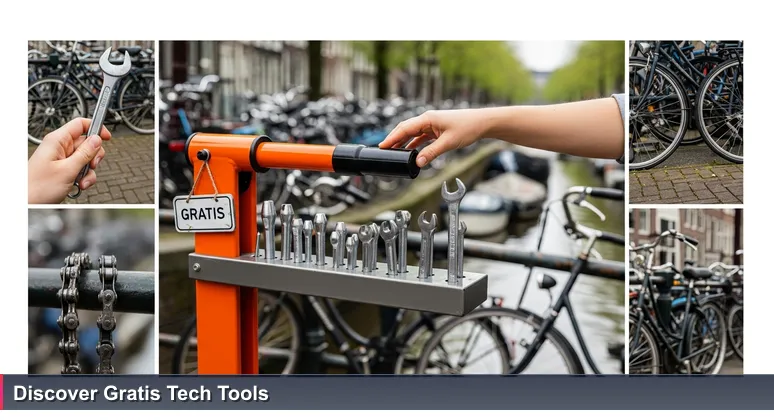
You’ve walked past it a hundred times: the bright orange public bike repair stand on the corner, its tools silently waiting. In the Netherlands, our public infrastructure empowers movement in the most practical ways. What if your next career move into tech is just as visible, just as free, and you’ve been walking past it too?
The landscape of free tech training in Dutch bibliotheken and buurthuizen is more robust than ever. These are not just quiet reading rooms but dynamic digital hubs, offering everything from basic digital literacy to introductions to AI, coding, and 3D printing. With 94% of Dutch library patrons valuing the digital services and computer access provided, these spaces are a critical first gear for anyone curious about tech.
This guide walks you through the top resources and how to combine them into a powerful, no-cost launchpad. From the robotics workshops of the Maakplaats 021 initiative to professional LinkedIn Learning courses accessed with your library card, the path forward is built on a uniquely Dutch commitment to accessible learning and digital inclusion.
Your journey doesn't have to start with a daunting financial investment. Just like that ubiquitous repair stand, the tools for your future are woven into the fabric of your city, ready and, most importantly, gratis.
Table of Contents
- Introduction
- Maakplaats 021 Maker Workshops
- Library LinkedIn Learning
- CoderDojo Netherlands
- University Library Walk-In Hours
- Digital Literacy at Wijkcentra
- FabLabs and Repair Cafés
- Rotterdam Central Library Tech
- University MOOCs
- KB's IDO Points
- Open Universiteit Modules
- Your 30-Day Free Learning Plan
- Conclusion
- Frequently Asked Questions
Navigate the Dutch AI job market in 2026 with this complete guide.
Maakplaats 021 Maker Workshops
Topping our list is the network of Maakplaats 021 (Makerplace 021) labs inside Amsterdam's public libraries. As Waag Futurelab describes, this initiative transforms libraries into vibrant makerspaces, offering the closest you can get to a university fab lab for free.
"[We are] transforming libraries into vibrant makerspaces… the closest you can get to a university fab lab for free." - Waag Futurelab on the Maakplaats 021 project
Weekly workshops cover robotics with tools like Micro:bit, introductory coding, 3D printing, and laser cutting. Unique sessions on "Digital Independence" teach open-source alternatives to Big Tech software, focusing on collaborative, hands-on learning. These skills are directly applicable in Amsterdam’s creative tech agencies and startups.
Perfect for absolute beginners to intermediate learners, access is straightforward. The central OBA Oosterdok location is open daily, and many workshops are walk-in or require simple online sign-up. While a library card (€35.20/year for adults) is needed for borrowing, using the digital facilities for workshops is typically free.
This is your essential on-ramp to the city’s tech scene. Building a tangible portfolio project here can be the perfect conversation starter for tech meetups or interviews, demonstrating the practical, community-led learning that research links to positive life outcomes like new job opportunities.
Library LinkedIn Learning
Perhaps the most powerful hidden resource in the Dutch system is the free, full access to LinkedIn Learning provided by most public libraries through the Koninklijke Bibliotheek (KB) national digital infrastructure. This turns a basic library card into a portal to thousands of professional-grade video courses.
The platform offers structured learning paths in Python, data analysis, web development, UX design, and foundational AI concepts. These are not amateur tutorials but professionally produced curricula that mirror the training used within tech companies, providing a credible and structured foundation for self-learners.
Access is remarkably straightforward: with a local library membership (often free for youth), you can log in from home or use library computers. As detailed in the LinkedIn Learning for Library patrons FAQ, there’s no complex application - it's an instant benefit. Courses range from beginner to advanced, allowing you to progress systematically.
This resource provides a critical advantage for the Dutch job market. Completing courses and adding certifications to your LinkedIn profile demonstrates proactive, continuous skill development to employers like ING or Adyen, who highly value this mindset. It's the perfect way to build a formal knowledge base to complement hands-on workshop experience.
CoderDojo Netherlands
For a mentor-driven, peer-learning introduction to code, CoderDojo Netherlands stands as an exceptional, nationwide community resource. This volunteer-led movement creates a collaborative, project-based atmosphere that demystifies programming for all ages.
Volunteer mentors guide participants - primarily aged 7-17, though adults are often welcome - through coding basics, website building, and app development using accessible tools like Scratch, HTML, and Python. The focus is on fun, computational thinking rather than pressure, making it an ideal first touchpoint.
Access is designed to be effortless. "Dojos" are held periodically in libraries and community centers across the country. They are completely free, typically requiring only a simple online ticket reservation to manage capacity. This model fosters a grassroots tech community, often with direct links to local IT professionals and companies.
The local advantage is multifaceted. For parents or career-changers, it's a way to explore tech alongside a child or to volunteer as a mentor - an experience that itself accelerates learning. Engaging here plugs you into the informal networks that are the lifeblood of the Netherlands' thriving tech community ecosystem, building social capital as you build skills.
University Library Walk-In Hours
Dutch university libraries extend their resources beyond the campus, offering the public a direct line to expert guidance through free walk-in hours. This transforms these institutions into hubs of accessible, high-level tech consulting without the price tag of formal education.
A prime example is the weekly Digital Humanities Walk-In Hour hosted by Utrecht University’s Centre for Digital Humanities, running every Thursday from 14:00-15:00. Here, experts help with research software, programming questions, data management, and digital tools. Similar programming cafés and open lectures are common at institutions like the University of Amsterdam.
This service is ideal for beginners tackling a first project or intermediate learners stuck on a specific problem. The barrier to entry is remarkably low: no appointment or student ID is needed. You can simply walk in with your question, leveraging the same academic-grade knowledge that feeds into the nation’s top research.
The local advantage is significant. Getting help here can elevate a personal project or help you understand the rigorous methodologies used at TU Delft or Eindhoven University of Technology. This knowledge makes you a more informed candidate for R&D-focused roles at companies like ASML or Philips, where such academic precision is highly valued. It’s a unique opportunity to benchmark your self-directed learning against world-class standards.
Digital Literacy at Wijkcentra
At the most local level, the humble neighborhood wijkcentrum or buurthuis (community center) remains one of the most accessible points of entry for building digital confidence. These centers are the frontline of practical digital inclusion, especially for those less comfortable with technology.
"Community-led digital literacy training [leads] to positive life outcomes, such as applying new skills to jobs or education." - Research from Wiley's Journal of the Association for Information Science and Technology
Sessions focus on Digitaal Meedoen (Digital Participation), covering essential skills like navigating online government services (DigiD), online banking, and using smartphones and tablets. Many centers utilize nationally recognized programs like Klik & Tik and host informal "Coffee and Laptop" mornings for peer support, as seen in initiatives like the community-based free classes in Den Haag.
Designed for absolute beginners, access couldn't be simpler. Sessions are typically 100% walk-in, held weekly, and completely free. Schedules are often posted on local municipality notice boards or community social media groups, requiring no prior registration or technical knowledge.
Mastering these essentials is the non-negotiable first step in the Dutch tech learning journey. It builds the foundational confidence and competence required to live and work effectively in the Netherlands, creating a solid platform from which to explore the more advanced, specialized training offered in libraries and makerspaces.
FabLabs and Repair Cafés
To grasp the tangible, physical side of technology - essential for fields like IoT or hardware engineering - the Netherlands' extensive network of FabLabs and volunteer-run Repair Cafés is an invaluable public resource. These spaces embody the hands-on maakcultuur (maker culture) that complements digital learning.
Here, you gain practical experience with hardware repair, basic electronics like soldering and circuits, and digital fabrication tools including 3D printers, laser cutters, and CNC machines. The pedagogy is learning by doing: fixing broken household items or creating projects from scratch, fostering a deep understanding of how things work.
All skill levels are welcome. Most FabLabs host weekly or monthly open days where anyone can use the tools for free, often only paying for consumed materials like 3D printer filament. Repair Cafés are purely volunteer-run and free, operating on principles of sustainability and knowledge-sharing. This model lowers the barrier to experimenting with hardware dramatically.
This practical skill set is highly prized within Dutch tech ecosystems, particularly in the Brainport Eindhoven region, home to ASML and Philips. Demonstrating hands-on maker competencies can be a powerful differentiator when applying for technical support, prototyping, or engineering trainee roles, showing you can bridge digital concepts with physical reality.
Rotterdam Central Library Tech
Rotterdam Central Library (Bibliotheek Rotterdam) distinguishes itself as a forward-looking digital hub within the Randstad, actively bridging the gap between foundational skills and emerging technologies. With a 4.3-star public rating as a key community resource, it goes beyond traditional library services to foster digital inclusion and future-ready skills.
The library is a proactive supporter of cutting-edge events like Immersive Tech Week, introducing the public to Extended Reality (XR) - Virtual and Augmented Reality. Alongside these specialized events, it runs consistent "Digitaal Meedoen" sessions for foundational digital literacy and provides general access to powerful computers and software, as outlined in their corporate presentation on digital inclusion.
Access is designed for all levels. Their digital inclusion points offer walk-in help for beginners, requiring no membership for on-site support. For larger immersive tech events, free registration is typically required, but the barrier remains low, emphasizing exploration over expertise.
This early, supportive exposure to technologies like XR is a significant local advantage. It positions learners for the growing number of applications in healthcare simulation, port logistics, and urban design within the Rotterdam and Hague metropolitan regions, where tech is deeply integrated into key economic sectors.
University MOOCs
For learners who thrive with structured academic coursework, world-class Dutch universities provide a powerful, cost-free solution through the audit tracks of their Massive Open Online Courses (MOOCs). This allows anyone to access the same foundational material taught to on-campus students.
Institutions like TU Delft, TU Eindhoven, and the University of Amsterdam offer courses on platforms like edX and Coursera covering AI, data science, computer science, and software engineering. By selecting the "Audit" option instead of the paid certificate track, you gain free access to all video lectures, readings, and discussion forums.
This pathway is ideal for intermediate to advanced learners seeking depth. There is no application process or need for prior qualifications - just sign up on the platform and begin learning. It’s a commitment-free way to gauge your interest and aptitude for high-level tech subjects.
The local advantage is profound. Learning from the professors who directly feed talent into the Dutch tech ecosystem provides a shared knowledge base with graduates now at companies like Booking.com, Google, or Microsoft in the Zuidas. Completing a MOOC from a university like TU Delft signals serious initiative and self-discipline to prospective employers.
KB's IDO Points
Acting as the national backbone for digital inclusion, the IDO (Informatiepunt Digitale Overheid / Digital Government Information Point) network is a cornerstone resource located in nearly every public library branch. This initiative, powered by the Koninklijke Bibliotheek's (KB) national infrastructure, ensures a consistent, nationwide standard for accessing essential digital services and foundational skills training.
"[Our mission is to ensure] all Dutch citizens can explore its sources and make up their own minds and support their personal development." - KB, National Library of the Netherlands
While a primary focus is guiding residents through secure use of government services (DigiD, tax portals), IDO points also actively signpost and offer free courses for core digital competencies. This includes the essential Klik & Tik program for absolute beginners, creating a clear, guided pathway toward more advanced training.
Built explicitly for beginners and those needing patient, in-person support, it is a completely free, walk-in service staffed by trained volunteers and library personnel. This removes the intimidation factor and the "where do I begin?" barrier that many face when starting their tech journey.
The local advantage is fundamental: starting here ensures you master the digital citizenship skills mandatory for participating in Dutch society and the modern workplace. It represents the most structured and widely available entry point in the country, embodying the public infrastructure that makes the Netherlands' tech learning landscape uniquely accessible.
Open Universiteit Modules
For complete autonomy and flexibility, the Open Universiteit (OU) provides free "Open Modules" that serve as a low-stakes, high-quality introduction to university-level tech subjects. These self-paced, online resources allow you to test your affinity and aptitude on your own schedule.
These modules offer introductory university-level content in subjects like computer science, data science, and information sciences. They provide a solid theoretical foundation and a genuine taste of formal academic study, using the same rigorous approach as their for-credit courses but without the pressure of exams or deadlines.
This format is excellent for motivated beginners who prefer text-based, self-directed learning. The modules are entirely free and open, with no registration hurdles or prerequisites. You can start and stop as needed, making it a zero-commitment way to explore whether a deeper dive into tech is right for you.
Succeeding in an OU module delivers a tangible confidence boost. It provides concrete proof to yourself - and to institutions or employers - that you can handle academic rigor. This experience can be the deciding factor to apply for a part-time HBO (University of Applied Sciences) ICT programme or to pursue an employer-sponsored traineeship at a company like ING, as noted in resources like guides on Dutch tech education pathways. It turns curiosity into qualified ambition.
Your 30-Day Free Learning Plan
These resources become most powerful when strategically combined. Here’s a practical, zero-euro plan to build unstoppable momentum in your first month, leveraging the public infrastructure at your fingertips.
Days 1-7: Build Foundation & Access. Visit your local library for a membership card - your only potential investment, often free for youth. Immediately activate your LinkedIn Learning access. Locate your nearest IDO point or wijkcentrum and attend one walk-in digital help session. This establishes your base in a system where 94% of patrons already value these library digital services.
Days 8-21: Start Structured Learning & Peer Support. Dedicate 30-60 minutes daily to a beginner LinkedIn Learning course like "Python Essential Training." In week two, attend a hands-on CoderDojo session or a Maakplaats 021 workshop. In week three, bring a question to a University Library Walk-In Hour for expert guidance, applying the collaborative learning shown to drive positive life outcomes.
Days 22-30: Explore Specialization & Plan Next Steps. Deepen knowledge by starting a specialized LinkedIn Learning path or auditing a TU Delft MOOC. Integrate into the maker community by visiting a FabLab open day or Repair Café. Use the clarity gained to inform your next move: applying for a focused bootcamp, a part-time HBO ICT degree, or targeting tech apprenticeships at Dutch leaders like ASML or ING that value demonstrated, proactive learning.
Conclusion
Just like that ubiquitous orange bike repair stand, a powerful infrastructure for your career mobility is woven into the urban fabric, waiting to be used. The Dutch commitment to accessible learning means your journey into tech doesn't require a daunting upfront investment. Your local bibliotheek or buurthuis is your public workshop - a place to get your hands dirty with code, ask foundational questions, and build the confidence that makes a career pivot achievable.
This ecosystem, where 94% of library patrons value the digital access provided, is a testament to a system designed for empowerment. It’s the practical manifestation of the national library's mission to support personal development and informed citizenship. From the maker labs of Amsterdam to the IDO points in every neighborhood, the tools are maintained, communal, and, most importantly, gratis.
Your path forward in 2026 isn't hidden behind paywalls or exclusive networks. It’s often just inside your local library, where the resources for your future are ready. As highlighted in social insights, your library offers far more than books - it’s access, learning, and support. By starting here, you’re not just learning a skill; you’re engaging with a unique, democratic layer of the Dutch tech ecosystem that empowers you to build, repair, and propel your own career forward.
Frequently Asked Questions
Are all these tech training options truly free, or do I need a library membership?
Most training is free, but some resources like LinkedIn Learning access through libraries require a basic membership, costing about €35.20 annually for adults. However, many workshops at community centers or FabLabs are completely gratis and walk-in.
Which free resource is best for someone with no prior tech experience?
Begin with IDO points or wijkcentra sessions offering Klik & Tik programs, designed for absolute beginners to build digital confidence. These provide a supportive entry point before exploring more advanced options like CoderDojo or Maakplaats 021 workshops.
How can I find and access these training sessions near me in the Netherlands?
Check your local library's website or visit in person for schedules; many, like Maakplaats 021 in Amsterdam, use Eventbrite for sign-ups. Community centers often post updates on municipal boards or Facebook groups, and university library walk-in hours are openly accessible.
What kind of advanced skills, like AI or coding, can I learn for free from these resources?
You can access structured courses on AI and coding via LinkedIn Learning with a library card, or audit MOOCs from institutions like TU Delft. Hands-on workshops at Maakplaats 021 cover robotics and 3D printing, providing practical exposure to emerging tech.
Can these free trainings help me prepare for a career in the Dutch tech industry?
Yes, by building skills and adding certifications to your LinkedIn profile, you can showcase initiative to employers like Adyen or ASML. Gaining hands-on experience in makerspaces or through university guidance can align with roles in tech hubs like Eindhoven or Amsterdam.
Find key AI networking events in the Netherlands for 2026 to advance your career.
This article highlights top incubators like YES!Delft and HighTechXL in the Netherlands for 2026.
Looking for junior developer roles in Netherlands tech startups? Check this ranked list.
Discover leading female tech networks and support systems in the Netherlands.
For those interested in top 10 companies hiring AI engineers in the Netherlands in 2026, this list provides detailed insights.

Irene Holden
Operations Manager
Former Microsoft Education and Learning Futures Group team member, Irene now oversees instructors at Nucamp while writing about everything tech - from careers to coding bootcamps.