









Top 10 Industries Hiring AI Talent in Tanzania Beyond Big Tech in 2026
By Irene Holden
Last Updated: April 25th 2026
Too Long; Didn't Read
The top industries hiring AI talent in Tanzania beyond big tech are fintech and banking, where senior ML engineers earn up to TSh 6 million monthly, and agriculture, which employs 65% of Tanzanians and urgently needs AI for smallholder farming solutions. Other strong sectors include manufacturing with a 56% wage premium, logistics at the Port of Dar es Salaam, and healthcare, all offering mission-driven work and career change opportunities.
html
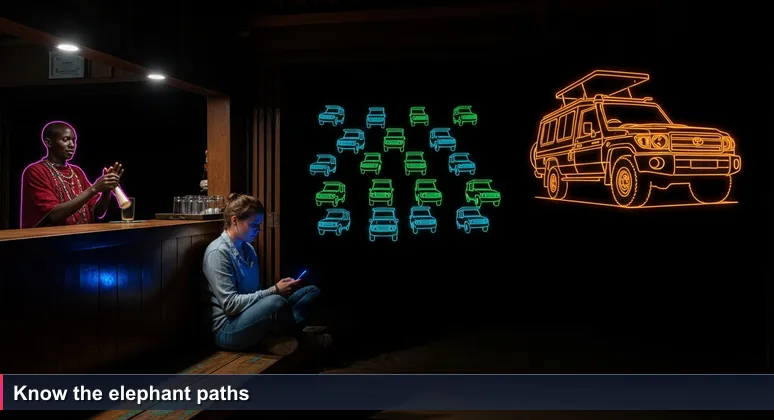
You're scrolling a list of "Top 10 Safari Guides" on your phone in an Arusha lodge, comparing reviews and star ratings. Behind the counter, a Maasai staff member polishes a glass and smiles. He knows the real top guide drives a battered Land Cruiser, carries a spare water filter, and can predict where the elephants will drink at dusk - but that man has never been on any list.
The same gap exists in Tanzania's AI job market. Everyone talks about "Big Tech" - Vodacom, Airtel, cloud providers - yet the industries quietly hiring the most AI talent in 2026 are the ones that feed, power, and move the country: agriculture, logistics, healthcare, and public-sector e-governance. They don't make headlines; they make impact. According to TICGL's analysis of AI's effect on Tanzanian employment, foundational sectors are absorbing more machine-learning specialists than any single telecom operator, with demand concentrated in organizations that own massive real-world data - think NMB's transaction logs, TANESCO's grid sensors, and TPA's port throughput records.
These "unlisted" industries offer something big tech rarely does: end-to-end ownership of models that solve concrete, high-stakes problems. At NMB Bank, an ML engineer's fraud-detection model directly protects millions of M-Pesa users. At TANESCO, a grid-prediction algorithm keeps lights on across Dar es Salaam. The Digital Regenesys Tanzania AI strategy report notes that local employers increasingly value "integrators" - professionals who blend domain expertise (banking, farming, power distribution) with machine-learning skills - over pure algorithm specialists imported from Nairobi or Johannesburg.
Stop looking for a map of big tech. Start becoming the local guide who knows the elephant paths. Tanzania's AI career goldmine isn't in a startup accelerator - it's in the logistics yard at the Port of Dar, the hospital ward at Muhimbili, and the maize fields of Iringa where satellite imagery predicts next season's yield. The industries hiring most aggressively are the ones no glossy listicle talks about.
``
Table of Contents
- Why Look Beyond Big Tech
- Tourism & Hospitality
- Education & Edtech
- Government & Public Sector
- Retail & E-commerce
- Energy & Utilities
- Manufacturing & FMCG
- Logistics & Ports
- Healthcare & Biotech
- Agriculture & Agritech
- Fintech & Banking
- Frequently Asked Questions
Tourism & Hospitality
``html
That guide behind the Arusha lodge counter knows the real expertise isn't on a tourist listicle. Tanzania's tourism sector is now applying the same principle to AI: the most valuable models don't sit in flashy tech offices - they're embedded in multilingual chatbot deployments at Serena Hotels, dynamic pricing algorithms for Zanzibar beach packages, and seasonal demand forecasts that predict exactly when Serengeti bookings will spike. The core AI problems here are practical: handling code-switching between Swahili and English in real-time customer interactions, and building forecasting models from messy, informal booking data that lacks the clean structure of e-commerce logs.
What makes this sector unique is the data itself. You'll work with sparse historical records, seasonal spikes tied to wildebeest migrations, and informal booking channels that require creative feature engineering. According to TANAPA's recent job postings, the national parks authority is actively recruiting digital and data-literate candidates to build revenue management systems and visitor-experience tools - a clear signal that government tourism bodies are moving beyond Excel spreadsheets.
Key employers include Serena Hotels, Coastal Aviation, TANAPA, and the Zanzibar Tourism Commission. Salaries for mid-level roles range from TSh 1.0M to 2.5M monthly - lower than fintech but with less cutthroat competition. The tradeoff? You'll own your models end-to-end, from data collection at Ngorongoro gate entries to deployment on lodge booking platforms, rather than being a small cog in a massive ML pipeline. For career changers from hospitality or tour operations, your domain knowledge of seasonality and guest behavior is more valuable than a pure machine-learning background.
``
Education & Edtech
``html
Walk into a classroom in Mtwara and you'll find forty students sharing four textbooks, a teacher juggling three subjects, and a smartphone that barely holds a charge by noon. This is the reality that Tanzania's edtech AI is built for. The sector tackles three core problems: adaptive learning platforms that personalize content for students at wildly different levels, administrative automation using localized NLP for grading and reporting, and AI training specialists who help educators integrate these tools into national curricula. The constraint that defines every project? Offline-first design - models must function on low-end smartphones with intermittent internet, because cloud connectivity is a luxury in rural districts.
Localization is non-negotiable. Your NLP models must handle Swahili fluently and extend to regional languages like Kisukuma and Kichagga. The University of Dar es Salaam and the Nelson Mandela African Institution of Science and Technology serve as research hubs, while startups like Shule Direct and Ubongo Learning build production tools that reach millions of students through mobile-first platforms. A 2026 industry analysis by Research.com confirms "high demand for educators proficient in AI applications" as schools scramble to implement new digital curricula.
Salaries are modest - expect TSh 800,000 to 1.8 million monthly for entry roles - but the mission is direct: your model could help a rural student in Mtwara master algebra on a smartphone that doesn't even have WhatsApp. Career changers from teaching find this sector particularly welcoming. Your classroom experience with student learning patterns is worth more than a Kaggle badge, and schools value pedagogical understanding over pure ML theory. The work feels less like engineering and more like nation-building.
Government & Public Sector
`html
Picture a civil servant in Magogoni shuffling through five years of procurement files, trying to spot a single fraudulent tender. That's the problem AI is solving in Tanzania's public sector - not by replacing the civil servant, but by giving them a human-in-the-loop system that flags anomalies in minutes. The core applications are starkly practical: data entry automation across ministries, AI-assisted procurement to reduce corruption, and analytics for tax collection at TRA and census processing at NBS. According to the Tanzania Investment and Consultant Group's analysis of AI's impact on local employment, 2026's focus is squarely on reducing administrative bloat rather than replacing civil servants entirely - a distinction that shapes every model built here.
What makes government AI distinct from private sector work is the explainability requirement. When your model flags a tax audit or denies a social benefit application, that decision must be auditable in court. You'll navigate data sovereignty laws, complex procurement regulations, and ethical constraints that would make a fintech engineer wince. The e-Government Authority (e-GA) is the central coordinator, but each ministry runs its own projects - meaning you might build a crop subsidy model for TAMISEMI one quarter and a vehicle registration classifier for TRA the next. The Digital Regenesys Tanzania AI strategy report notes that public sector roles increasingly demand "integrators" who understand both machine learning and government operations.
Salaries range from TSh 1.0 million to 2.2 million monthly for mid-level roles - lower than private sector but with ironclad job security and genuine national impact. The bureaucracy can be frustrating, but you'll have resources to deploy at scale: a model accepted by TRA reaches millions of taxpayers. Compared to Nairobi's aggressive startup scene, Dar's public sector AI offers stability, policy influence, and the chance to build systems that serve every Tanzanian. Career changers from public administration or law will find their domain knowledge prized more than pure algorithmic skills.
Retail & E-commerce
``html
A duka owner in Mwanza pulls out her smartphone, snaps a photo of her shelf, and the app instantly counts every soda bottle and soap bar. That's the reality of AI in Tanzania's retail sector today. The core problems are deceptively complex: recommendation engines for platforms like Jumia and Kikuu that must handle sparse browsing histories, computer vision for real-time inventory management in informal shops that have never seen a POS system, and customer sentiment analysis pulling insights from Swahili social media chatter. The defining challenge is the informal-to-formal data transition - a duka's "database" is a notebook and the owner's memory, making every model a creative exercise in feature engineering from sparse signals.
Companies like Ramani AI have introduced mobile computer vision tools that let duka owners count stock with a simple photo. According to The Citizen's analysis of small business turning points in 2026, this kind of AI adoption is transforming retail at the grassroots level, with reported inventory shrinkage reductions of 34% for distributors using the tool. Your models must work on basic Android phones with intermittent connectivity - the cloud is not an option when the duka is in a village outside Mbeya.
Major employers include Jumia Tanzania, Kikuu, GSM Group, and Azam Group, the latter creating unique cross-sector AI opportunities spanning food, manufacturing, and retail. Salaries range from TSh 1.5 million to 3.5 million monthly for mid-level roles - competitive but not top-tier. The pace is fast, and you'll ship products quickly rather than spending months perfecting a single model. The main frustration? This Week in Tanzania Tech recently highlighted that data quality remains the bottleneck: cleaning duka inventory photos is far less glamorous than building fraud models, but the impact on small businesses is tangible and immediate. For career changers from retail or supply chain, your understanding of how a duka actually operates is worth more than a pure ML degree.
Energy & Utilities
`html
A transformer station outside Dar es Salaam hums with heat, its aging windings one surge away from failure. That hum is data - temperature, vibration, load - that an AI model now reads in real time, predicting the exact week maintenance is needed before the lights go out. Tanzania's energy sector is deploying machine learning for three critical tasks: predictive maintenance on aging infrastructure across TANESCO's grid, IoT sensor integration for smart metering that detects power theft, and geospatial analysis for rural grid expansion planning. Each model must run at the edge - on embedded devices at substations - because cloud connectivity is unreliable where the grid is weakest.
The data comes from messy, low-quality sources: manual meter readings scribbled in notebooks, satellite imagery with cloud cover, and IoT sensors that drop packets in the heat. According to PwC's AI Jobs Barometer, energy-sector AI roles are growing faster than the overall job market, with predictive maintenance and smart grid applications driving demand. The regulatory environment - overseen by EWURA - means every model decision must be explainable because audits are routine. You're not just optimizing; you're building systems that regulators trust.
Key employers include TANESCO, TPDC, Engie Mobisol, and PanAfrican Energy. Salaries range from TSh 1.8 million to 4.0 million monthly for senior roles, competitive with telecom. The work is mission-critical: a grid stability model you build keeps lights on across Dar es Salaam's industrial zones. The downside? Deployment environments are harsh - remote substations with unreliable power and long project timelines due to regulatory approvals. But as Digital Regenesys' Tanzania AI strategy notes, the sector offers closer collaboration with field teams and faster prototyping than South African energy AI counterparts. For career changers from TANESCO or TPDC who know transformer internals, adding time-series forecasting skills makes you uniquely valuable.
Manufacturing & FMCG
`html
A bottle of Safari Lager moves down the conveyor at Tanzania Breweries Limited's Dar es Salaam plant, and a computer vision model tracks every label angle, every fill level, every speck of dust on the glass. If a bottle deviates by 0.3 millimeters, the system flags it before a human inspector could blink. This is the reality of AI in Tanzania's manufacturing sector: real-time quality control on production lines, consumer insight mining from social media and sales data to inform new product flavors, and supply chain resilience models that re-route shipments instantly when port congestion or fuel spikes hit.
The wage premium here is staggering. According to PwC's AI Jobs Barometer, manufacturing staff with AI skills earn up to 56% more than their non-AI peers - the highest premium across every industry surveyed. This is because manufacturers are desperate for people who understand both shop-floor operations and machine learning. When your model reduces waste on a bottling line by 12% in the first month, the financial impact is immediate and measurable. The Coca-Cola Kwanza LinkedIn announcement specifically highlights that they value employees who bridge operational expertise and technology - exactly the integrator profile this sector rewards.
Key employers are Tanzania's industrial giants: TBL, SBC Tanzania (Pepsi), Coca-Cola Kwanza, and METL Group. These companies have deep pockets and rich data - TBL alone generates massive consumer transaction data across every region. Salaries range from TSh 2.0 million to 5.0 million monthly for senior AI roles, plus that 56% premium. The work is tangible and satisfying: your model might reduce water waste at a brewing line or predict soda demand for Arusha's next festival season. The downside? Factory environments can be harsh, and you'll wrestle with legacy IT systems that predate the smartphone era. But for career changers from manufacturing backgrounds, this is the single best sector to pivot into AI - your shop-floor knowledge makes you irreplaceable, and the pay rise is life-changing.
Logistics & Ports
html
A container ship idles off the coast of Dar es Salaam, its cargo of Rwandan electronics and Congolese copper waiting for a berth. Every hour of delay costs thousands of dollars in demurrage fees, and the port's aging terminal operators rely on clipboards and intuition to decide which ship unloads first. This is where AI is cutting through the chaos. The core problems are high-stakes: berth and cargo optimization models that predict ship arrival times and container dwell, route optimization for inland trucking fleets heading to Kigali and Lubumbashi, and congestion modeling that fuses real-time traffic data with weather patterns and customs processing times.
The data is as messy as the port itself - GPS trackers on trucks, port scanner logs, customs declaration systems - all in different formats, all with gaps. Your models must handle this chaos and deliver decisions that save real money. According to Research.com's analysis of AI in logistics, demand for automation experts in the sector is projected to rise 40% through 2028, with port optimization leading the charge. The Tanzania Ports Authority (TPA) is investing heavily in digital transformation, recognizing that every efficiency gain at the Port of Dar reduces costs for every Tanzanian consumer - from the electronics in Kariakoo Market to the grain shipped to Zambia.
Key employers include TPA, Bolloré Logistics Tanzania, Silent Ocean, and Tanzania Railways Corporation (TRC). Salaries range from TSh 2.0 million to 4.5 million monthly for senior roles - competitive with manufacturing. The work is high-pressure: a port delay costs millions daily, and your models directly affect East African trade flows. The downside is bureaucracy: you'll navigate government agencies (TRA customs, port authority, immigration) with separate agendas and legacy systems. But compared to Nairobi's logistics AI scene, Dar offers more direct impact on actual port operations and closer collaboration with the dockworkers who know the real constraints. For career changers from freight forwarding or supply chain, your knowledge of transit patterns across the Central Corridor is invaluable - you know the elephant paths that no algorithm textbook teaches.
Healthcare & Biotech
html
A mother carries her feverish child into a rural clinic in Mbeya. The nurse has no X-ray machine, no lab, just a stethoscope and a smartphone. She opens AfyaBot, types the symptoms in Swahili, and the AI triage tool assigns a risk score, recommends immediate referral, and logs the case for the district health officer to follow up. This is healthcare AI in Tanzania - not in a sterile hospital data center, but on a battered Android phone with intermittent internet, saving lives where the doctor-to-patient ratio is 1:25,000 outside major cities. The core applications are diagnostic imaging for TB and diabetic retinopathy, NLP for extracting meaning from handwritten patient records, and epidemic prediction models that fuse mobile money transaction data with clinic visit logs.
According to the AI4A Tanzania landscape report, local conversational AI tools like AfyaBot now process over 50,000 Swahili health inquiries monthly, reducing clinic congestion by 40% in pilot districts. The constraint that defines every project: models must function completely offline at rural clinics, medical terminology must be accurately translated into Swahili, and patient data must comply with Tanzania's Data Protection Act under strict ethical scrutiny. A misdiagnosis carries a weight no AUC curve can quantify.
Key employers include Muhimbili National Hospital, Aga Khan Hospital Dar es Salaam, PATH, and the Ifakara Health Institute. Salaries range from TSh 1.5 million to 3.5 million monthly - lower than fintech but higher than education. As a 2026 biotech hiring analysis by Panda International notes, new AI roles in healthcare are emerging faster than hiring strategies can adapt, creating opportunities for professionals who can bridge clinical domain knowledge with machine learning. The work is deeply mission-driven, and you'll collaborate with doctors who are eager for tools but skeptical of black-box decisions. For career changers: harder without a biomedical background, but hospital administrators, lab technicians, and public health professionals with ML training are increasingly sought after. This is AI that matters at 3 AM in a rural clinic.
Agriculture & Agritech
html
A farmer in Iringa pulls out his smartphone, snaps a photo of a maize leaf with suspicious yellow streaks, and a computer vision model diagnoses the disease in seconds. The phone buzzes back: "Pest ya kutu - paka dawa hii" (Rust pest - apply this treatment). This is agriculture AI in Tanzania, where the models must work on basic smartphones with intermittent connectivity, using sparse, low-quality data from farm records that often exist only in a farmer's memory. The core problems are foundational: crop yield prediction from satellite imagery and weather data, pest and disease detection via mobile photos, soil analysis for precision fertilizer recommendations, and supply chain optimization for getting perishable goods to market before they rot.
Agriculture employs over 65% of all Tanzanians, making it the single largest sector for potential AI impact. But it's the "small data" frontier - your models must function offline at the edge, speaking Swahili to farmers who may have never used a computer. The Agriculture Recruiter's 2026 hiring analysis confirms that "integrators" - professionals who combine deep agricultural domain knowledge with machine learning skills - are the most sought-after profiles in the sector. These are the people who understand that a cassava disease model must work on a $40 phone with no data plan, not on a GPU cluster in Dar.
Key employers include Bakhresa Group, Olam International (Tanzania), Kilimo Trust, and the Tanzania Agricultural Research Institute (TARI). Salaries range from TSh 1.2 million to 3.0 million monthly for mid-level roles - modest by fintech standards, but the impact is unmatched: your yield prediction model could help a smallholder farmer in Iringa decide exactly when to plant, doubling their harvest. The work involves field visits, rural travel, and patience with unreliable infrastructure. But as one analysis of Tanzania's AI revolution on LinkedIn notes, the sector is less funded than Kenyan agritech but more grounded in actual smallholder needs. For career changers from agricultural backgrounds - extension officers, farm managers, TARI researchers - this is your best pathway into AI, where your knowledge of farming cycles and crop diseases becomes your superpower.
```Fintech & Banking
`html
A farmer in Mbeya taps "M-Pesa" on his phone, needing a 50,000 TSh loan for seeds. He has no bank account, no payslip, no collateral. But the app approves him in 17 seconds because an AI model has analyzed three years of his mobile money transactions - his airtime top-ups, his school fee payments, his grocery remittances to his mother. This is Tanzania's fintech AI engine at work, where alternative credit scoring models are bringing millions of unbanked Tanzanians into the financial system. The core AI problems are high-stakes: real-time fraud detection across payment networks, personalized micro-loan offers, and regulatory compliance automation for AML and KYC checks.
The data is abundant - Vodacom Tanzania alone processes millions of daily M-Pesa transactions - but the regulatory scrutiny is intense. According to HRFinEase's fintech hiring trends for 2026, the sector's most sought-after profiles are "integrators" who understand both machine learning engineering and financial regulation. A credit decision denial must be auditable and explainable to the Bank of Tanzania, not just accurate on a test set.
Employer
Key AI Focus
Senior Salary Range (TSh/month)
NMB Bank
Alternative credit scoring, fraud detection
2.5M - 5.5M
CRDB Bank
Personalized loans, AML/KYC automation
2.5M - 5.0M
Vodacom (M-Pesa)
Real-time fraud, customer churn prediction
3.0M - 6.0M+
NALA & Selcom
Remittance routing, payment optimization
2.0M - 4.5M
These are the highest salaries outside multinational tech - TSh 2.5 million to 6.0 million+ monthly for senior ML engineers. But competition is fierce. You'll interview against candidates from Nairobi and Johannesburg. The pressure is relentless: a fraud model failure means millions lost. As Harrington Starr's 2026 fintech hiring analysis confirms, mid-career hires with banking or risk management backgrounds are valued for their "integrator" status, bringing domain expertise that pure tech hires lack. For career changers, the learning curve is steep but the payoff is life-changing. This is the sector where Tanzania's AI talent makes the most money - and the most impact on financial inclusion.
Frequently Asked Questions
Which industry outside of telecom and global tech companies hires the most AI talent in Tanzania?
Fintech and banking lead the pack, with NMB, CRDB, Vodacom M-Pesa, and NALA aggressively hiring. Senior ML engineers can earn TSh 2.5M to 6M+ monthly, and the sector offers the most abundant, high-quality data from mobile money transactions.
Can someone without a computer science degree transition into an AI role in Tanzania?
Absolutely. Industries like agriculture, tourism, and manufacturing actively seek career changers with domain expertise. For example, a former teacher can move into edtech AI, or a logistics professional into port optimization roles. Adding Python and basic ML skills to existing industry knowledge often puts you ahead of pure tech hires.
What specific AI skills are most in demand for Tanzania's non-tech industries?
Localized NLP for Swahili and regional languages, computer vision for retail inventory and crop disease detection, time-series forecasting for energy and tourism demand, and model explainability for regulated sectors like banking and government. Edge computing and offline-first design are also critical for agriculture and healthcare.
How does Tanzania's AI job market compare to Kenya's for mid-career professionals?
While Nairobi has a more aggressive startup scene, Dar es Salaam offers greater stability in public sector and manufacturing AI roles, with closer collaboration to real-world deployment. Salaries in Tanzanian fintech and energy are competitive with Nairobi, and the cost of living is lower, making take-home pay stretch further.
Which industry offers the most impactful AI work for someone who wants to make a difference in Tanzania?
Agriculture and healthcare have the deepest social impact. In agriculture, your model could help a smallholder farmer in Iringa predict yields, while in healthcare, diagnostic tools at Muhimbili National Hospital can screen for TB. Salaries are modest (TSh 1.2M-3.5M monthly), but the mission-driven work and ownership of entire projects are unmatched.
Discover hidden expenses and budgeting tips in this comprehensive overview of living costs for tech workers in Tanzania.
Find out how to combine multiple funding sources for tech bootcamps in Tanzania with our detailed article.
Explore the top 10 women in tech communities in Tanzania 2026 and discover hidden gems.
Discover AI salary expectations in Tanzania by role and experience in this comprehensive guide.
This AI bootcamp ranking Tanzania 2026 includes financing options like Income Share Agreements.

Irene Holden
Operations Manager
Former Microsoft Education and Learning Futures Group team member, Irene now oversees instructors at Nucamp while writing about everything tech - from careers to coding bootcamps.