









Top 10 AI Startups to Watch in Tanzania in 2026
By Irene Holden
Last Updated: April 25th 2026
Too Long; Didn't Read
Ramani AI leads the pack with a $12M Series B and over 8,000 merchants using its real-time shelf-scanning API to slash stock shrinkage by 34%. While Tanzania's AI ecosystem raised roughly $5M in 2025 - far behind Kenya and Uganda - these startups are winning by solving deeply local problems for the duka economy, smallholder farmers, and Swahili-speaking patients.
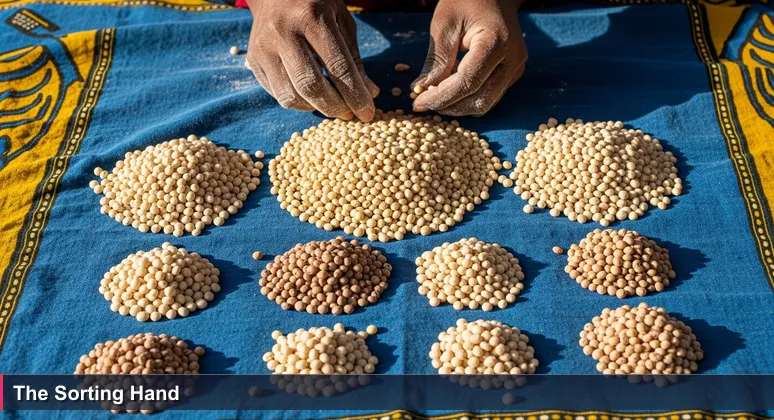
She runs her two fingers through the pile of mbaazi on the market mat, gently pushing aside the cracked ones. Sorting is an act of care - but also an act of forgetting. It declares some beans worthy and others waste, even though each grew under its own sun, in its own soil, waiting for its own season.
This list is like that hand. It ranks ten Tanzanian AI startups by traction, funding, and relevance - but the real story is how each one has rooted itself in a specific patch of Tanzanian soil. While Nairobi remains East Africa's AI nerve centre, and Kampala and Kigali race ahead on policy and funding, Tanzania is quietly doing something different: growing sideways into the informal economy with deeply local solutions.
The numbers tell part of the story. Tanzania's AI ecosystem raised roughly $5M in 2025 compared to Uganda's $30M and Kenya's dominance. But that gap is not a weakness - it reflects a deliberate focus on Vertical AI over horizontal platforms. With 65% of Tanzanians engaged in agriculture and mobile money penetration exceeding 80%, startups here solve problems that general models ignore - a Swahili-speaking health assistant, a credit score built from M-Pesa transactions, a shelf-scanning API for a duka owner in Kariakoo.
Read this not as a competition, but as a field guide. Each startup solves a different problem for a different community, and together they reveal something remarkable about where Tanzanian AI is heading.
Table of Contents
- Introduction: A Field Guide to Tanzanian AI
- AfyaTest
- AgriNEXA
- EL-REKINA Co. Ltd
- MsomiApp
- Medikea
- Kilimo Fresh
- Mazao Hub
- Black Swan
- TanzMED
- Ramani AI
- Conclusion: The Field Guide, Not the Ranking
- Frequently Asked Questions
AfyaTest
In a small private clinic along Dar es Salaam's Ali Hassan Mwinyi Road, a patient presses a fingertip to a sensor no larger than a coin. Within seconds, blood glucose and blood pressure readings appear on a connected phone - no needle, no lab, no drawn blood. This is AfyaTest, the vision of founder Golden Kamage, now in clinical trials across the city. The company's early seed backing from local angels signals growing confidence in a technology that could transform chronic care for millions of Tanzanians managing diabetes and hypertension.
The science is elegant. AfyaTest employs PhotoPlethysmoGraphy (PPG) - the same optical method powering smartwatch heart-rate sensors - combined with proprietary AI signal processing to extract precise biomarker data from light reflected through skin tissue. Where imported glucometers cost thousands of shillings per test strip and require painful pricks, this approach promises a low-cost, needle-free alternative. The team is already in discussions about a potential partnership with Vodacom Tanzania's M-Pesa for pay-per-test billing, which would make the service accessible to informal economy workers who cannot afford upfront device costs.
The market need is stark: non-communicable diseases already account for nearly a third of deaths in Tanzania, and awareness is rising while access to monitoring remains scarce. If clinical validation benchmarks hold over the coming months, AfyaTest could become a critical tool for chronic disease management in resource-limited settings across East Africa. The company's ability to scale will depend on securing regulatory approval and expanding clinic partnerships - but the direction is clear. In a country where the nearest lab can be hours away, a fingertip sensor that works through AI might be the closest thing to a cure for neglect.
AgriNEXA
The calloused thumb scrolls a smartphone screen, pausing at a notification in Swahili: "Panda wiki hii - mvua inatarajiwa" (Plant this week - rain expected). For a woman farmer managing a small plot in Morogoro's foothills, this message from AgriNEXA replaces a trip to an extension officer who may never come. Founded by Enna, Saraphina, and Regina, the Dar es Salaam-based startup integrates weather insights and climate risk early warnings with AI-driven planting recommendations delivered through a mobile interface designed for low-literacy users.
The team's deliberate focus on gender-inclusive tech is not merely ethical - it is strategic. Women make up the majority of smallholder farmers in Tanzania, yet they are consistently underserved by agricultural extension services that assume a male farmer with formal education. AgriNEXA's platform speaks directly to this gap, offering simple visual cues and voice guidance alongside text. Early pilots with female-led cooperatives show improved crop survival rates during erratic rainy seasons, a lifeline when weather patterns become unpredictable. The company is currently supported by pre-seed grants from local innovation hubs.
What makes AgriNEXA particularly interesting is its potential integration with CRDB Bank's agricultural loan products. By bundling planting advice with credit access, the platform could offer a woman farmer both a recommendation and the financial means to act on it. This kind of embedded service - advice delivered alongside capital - is how Tanzania's AI ecosystem grows sideways, rooting in the real economy rather than abstract algorithms. The platform does not try to do everything. It does one thing well: tell a farmer when to plant, and when to wait. In an era of climate uncertainty, that single piece of knowledge can be the difference between a harvest and empty hands.
EL-REKINA Co. Ltd
In the central highlands of Morogoro, a pastoralist snaps a photo of a limping cow with his basic smartphone. The image buffers briefly, then the screen lights up with a diagnosis in Swahili: "Ugomvi wa mguu na mdomo" - Foot and Mouth Disease. Treatable, if caught within two days. This is EL-REKINA Co. Ltd, led by Adolf Kiiza, a startup that uses computer vision to detect diseases in cattle, goats, and poultry by scanning photographs and analysing symptom behaviour patterns. With ~$1M in early-stage capital, the company has built a strong presence in Morogoro and Dodoma, where veterinary clinics are hours away and extension officers are stretched thin.
The tech is deliberately built for rural realities. The app works offline, stores images for later upload, and delivers diagnoses in Swahili - no internet dependency, no English-language barrier. Livestock is both wealth and livelihood for millions of Tanzanian families; a missed case of East Coast Fever or Newcastle disease can wipe out a family's assets in days. EL-REKINA's offline-first approach, trained on local animal breeds and regional disease patterns, reduces the window of inaction from weeks to minutes. Tanzania's tech ecosystem increasingly supports such hyper-local solutions, recognising that generalised models fail where context matters most.
What to watch next: a potential integration with Airtel Tanzania's rural network for SMS-based alerting, which would extend reach to feature-phone users who cannot run the full app. There is also speculation that a larger agri-input company could acquire EL-REKINA for its specialised dataset. Either way, in a country where cattle outnumber bank accounts, a veterinary AI that speaks Swahili and works in the bush is not a convenience - it is a critical piece of Tanzania's digital infrastructure.
MsomiApp
In a secondary school classroom in Mwanza, a student taps through a quiz that asks not for the date of a historical event, but for three different ways to solve a problem without instructions. There are no right answers, only patterns of thinking. This is MsomiApp, founded by Arnold Joseph, an education platform that evaluates students on creativity, logic, and problem-solving through interactive quizzes rather than rote memorisation. The platform is still pre-seed, seeking a Series A in 2026, but its user base is growing rapidly in Mwanza's secondary schools.
In Tanzania's education system, where national exam results determine nearly every life outcome, MsomiApp offers a complementary lens: what is this child actually good at? The platform measures three core cognitive dimensions:
- Creative thinking - generating original solutions to open-ended prompts
- Logical reasoning - identifying patterns and drawing conclusions from incomplete data
- Problem-solving - applying multiple strategies to reach a goal without predefined steps
Parents in Mwanza have embraced the tool as an alternative to the exam-pressure culture, using reports to guide career conversations with teenagers. Beyond individual benefit, the platform generates anonymised data that could help policymakers identify where the national curriculum is failing to develop critical thinking. This aligns with the government's push for more AI and data science expertise in the education pipeline. As MsomiApp targets a Series A, the key test will be whether they can secure government pilot partnerships for the new Digital Economy curriculum rollout. In a system that sorts students by examination scores, MsomiApp asks a different question: what talents are the exams missing?
Medikea
The queue snakes past the reception desk and out into the Dar es Salaam heat. Patients with chronic conditions wait hours for a consultation that could take ten minutes. Medikea, founded by Dr. Elvis Silayo, is changing this equation through AI-driven patient triage tailored for urban clinics. A patient describes symptoms via a Swahili-language chatbot; the AI assigns a triage priority and slots them for the appropriate consultation time. This reduces congestion and ensures that urgent cases are not lost in the queue.
The platform integrates ML-driven diagnostics with a booking system specialised in non-communicable diseases, a growing burden in Tanzanian cities. Early data from partner hospitals shows a measurable drop in no-show rates - patients who receive a clear appointment and a sense of urgency are far more likely to attend. Medikea's $200K Seed from Madica and develoPPP Ventures has enabled pilots in several major urban hospitals, building digital infrastructure where paper records still dominate.
What makes Medikea strategically compelling is its potential expansion into NMB Bank's health financing ecosystem. By offering AI-driven insurance premium estimates alongside triage, Medikea could embed itself in the financial loop of healthcare delivery - a model that aligns with Tanzania's growing fintech-health convergence. For a patient in Manzese or Kariakoo, the difference between skipping medication and buying it may come down to a chatbot that understands both their Swahili and their budget.
Kilimo Fresh
A farmer in Morogoro watches his tomato harvest ripen faster than the middleman's truck can arrive. The alternative is a direct line to a hotel kitchen in Dar es Salaam, coordinated by an algorithm that knows exactly how many kilograms of tomatoes will be pureed into sauce at that hotel next Tuesday. This is Kilimo Fresh, founded by Baraka Silaejit, a startup that uses MLOps for demand forecasting to connect farmers directly with hotels, restaurants, and catering companies. Instead of relying on middlemen who buy low and let surplus rot, the AI predicts precisely what the hospitality sector needs on any given day - and tells farmers what to plant, when to harvest, and where to deliver.The results are tangible. Revenue growth in Dar es Salaam's hospitality sector has been significant, and the reduction in post-harvest loss is measured in tonnes per quarter. For perishables like tomatoes, leafy greens, and avocados - crops that spoil within days of picking - this forecasting is the difference between profit and waste. The $200K Seed from Madica secured in April 2026 has enabled expansion beyond initial pilot routes into a wider network of suppliers and buyers.
The next frontier is reaching institutional kitchens beyond hotels. Tanzania's tech ecosystem is maturing toward deeper integration with everyday commerce, and Kilimo Fresh is well-positioned to expand into Selcom's merchant network for school feeding programmes and hospital kitchens. A child in a public school deserves the same fresh produce as a hotel guest in Kariakoo - and an AI that understands demand could help make that possible. In a country where post-harvest losses can exceed 30% for some crops, Kilimo Fresh is not just reducing waste. It is rewriting the logic of how food moves from field to table in Tanzania's fast-growing startup ecosystem.
Mazao Hub
A maize farmer in Iringa kneels beside a stalk whose leaves are curling in a pattern he has seen before but cannot name. He takes a photo, uploads it, and within moments the Farm Manager platform tells him it is fall armyworm — not drought stress — and recommends an organic treatment available at the nearest agro-dealer. This is Mazao Hub, founded by innovation veteran Adolf Kiiza, whose $2M Seed round from Catalyst Fund in September 2025 validated a simple insight: pest and disease management for Tanzanian farmers requires models trained on Tanzanian crops, not imported algorithms that fail when confronted with local soil and climate conditions.
The platform uses predictive analytics to analyse crop symptoms and behaviour patterns, generating precise diagnoses and treatment plans. Active across Tanzania’s major agricultural corridors from Arusha to Morogoro, Mazao Hub has built a reputation for deep localisation that international AI competitors struggle to replicate. For a coffee grower in the northern highlands, a correct early diagnosis of leaf rust can save an entire season’s harvest. The platform’s training data comes from years of field observations in Tanzanian conditions — not from Brazilian or Indian crop libraries.
What to watch next: the natural synergies between Mazao Hub and EL-REKINA, Kiiza’s livestock-focused venture born from the same innovation ecosystem. Both platforms share a common algorithmic backbone and could eventually merge into a comprehensive farm management suite covering crops and animals. Beyond that, integration with government subsidy programmes for agrochemicals would make pest management affordable for the smallholder farmers who need it most. Mazao Hub’s bet on Africa-first AI models trained on local data is proving that the continent’s agricultural technology will not be imported — it will be grown from native seed.
Black Swan
The vegetable seller at Kariakoo market has never filled out a loan application. She has no bank account, no payslip, no utility bill in her name. But every day, she sends money through M-Pesa, buys airtime for her phone, and pays suppliers through mobile transfers - data traces that tell a story of reliability no formal credit bureau has ever captured. Black Swan, founded by Derick Kazimoto and formerly known as Tausi Africa, uses AI to analyse precisely this kind of alternative data from the informal economy - mobile money transactions, airtime top-up patterns, M-Pesa merchant payments - to generate credit risk scores for people who are invisible to traditional banking.
Selected for develoPPP Ventures with approximately $100K in non-dilutive funding, Black Swan is scaling through partnerships with local microfinance institutions like ASA Microfinance. Early results show significantly lower default rates than traditional credit-scoring methods, because the AI reads real economic behaviour rather than arbitrary paperwork. In a country where mobile money penetration exceeds 80% but formal bank lending covers less than 20% of adults, this approach is not just clever - it is necessary for financial inclusion to mean anything at all.
The company was part of the eighth cohort of develoPPP Ventures, a programme that backs startups solving real market gaps in frontier economies. The next strategic move would be a partnership with NALA or Selcom for embedded lending within their payment flows. For the duka owner in Manzese or the boda boda rider in Kigamboni, Black Swan’s AI could transform a phone full of receipts into the first loan they have ever qualified for. That is the promise of Tanzania’s growing fintech ecosystem: not just moving money, but unlocking the economic potential of people the formal system has always ignored.
TanzMED
A feverish patient in a rural dispensary describes her symptoms to a phone screen: "Nina homa sana na mwili wote unauma" (I have a high fever and my whole body aches). An AI processes the words, cross-references them with regional disease patterns, and provides a preliminary assessment in clear Swahili. This is TanzMED, founded by Mussa Said, a digital health platform that solves the one barrier most global AI health tools ignore: language. While chatbots trained on English medical data fail the moment a patient says “kichwa kinaniuma,” TanzMED’s NLP models were built on Swahili medical conversations from scratch – not translated from another tongue.
The platform is an end-to-end health system: AI-powered diagnostics for initial assessment, a Swahili-speaking medical assistant for follow-up questions, and referral recommendations when needed. Already serving thousands of monthly active users across East Africa, TanzMED has gained traction precisely where larger competitors cannot follow. The team’s seed backing from Open Startup International and the Funguo Programme has enabled refinement of the diagnostic engine for local conditions rather than generic tropical disease libraries.
The potential impact is profound. For rural communities where the nearest doctor is a half-day walk away, TanzMED is not a convenience – it is triage. The company’s next horizon targets integration with Vodacom’s health insurance products and a potential Series A aimed at embedding the assistant into the public health system through Tanzania’s Digital Economy initiative. A patient in Tabora who says “nina homa na kichwa kinaniumu” should not have to wait for a translator to access care. TanzMED ensures the AI hears them clearly.
Ramani AI
In a crowded duka along Mchikichini Market in Dar es Salaam, the shopkeeper sweeps his smartphone camera over a shelf of cooking oil, soap, and maize flour. In milliseconds, Ramani AI identifies every product, cross-references it with historical sales data, and flags which items need reordering. The founders - Iain Usiri, Calvin Usiri, and Martin Kibeti - have built a mobile platform that requires no barcode scanners or expensive hardware, just the smartphone every duka owner already carries.
The company's $12M Series B closed in early 2026 is the largest AI-specific round in Tanzania's history, signaling that international investors see the duka economy as a billion-dollar opportunity. Here is how the core metrics stack up:
| Metric | Data Point | Impact |
|---|---|---|
| Active Merchants | 8,000+ across Dar, Mwanza, Arusha | Dominant POS intelligence layer in the informal economy |
| Stock Shrinkage Reduction | 34% for distributors | Direct capital preservation for supply chain partners |
| Funding Round | $12M Series B (Flexcap & Raba Partnership) | Largest AI-specific round in Tanzanian startup history |
| Core Product | Real-time shelf-scanning API | Live inventory intelligence without hardware investment |
For a job-seeking AI engineer in Dar es Salaam, Ramani represents the pinnacle of what is possible: a hyper-local solution to an informal economy problem that has scaled to attract major international capital. The API integration with distributor systems creates a live view of stock across thousands of shops, transforming a blind supply chain into a real-time intelligence network. This is the backbone of Tanzania's informal retail segment, and Ramani is not just watching this space - it is owning it.
Conclusion: The Field Guide, Not the Ranking
The hand resting on the mound of mbaazi at the market has not moved. The sorting is done - the cracked beans set aside, the whole ones gathered in a twist of newspaper. But the sorting itself was never the point. The point was recognizing that each bean came from its own vine, its own rain, its own particular season of sun. This list of ten Tanzanian startups is no different from that pile. $5M in overall funding in 2025 against Uganda's $30M sounds like a story of scarcity, but only if you measure by the size of the cheque rather than the depth of the root.
The real picture is more interesting. Tanzania's AI ecosystem grows sideways rather than up, burrowing into the informal economy that sustains most Tanzanians. The duka owner in Kariakoo, the farmer in Morogoro, the pastoralist in the central highlands, the patient in a rural clinic who speaks only Swahili - these are the users for whom models are trained from scratch, not translated from English datasets. The Vertical AI approach means every startup on this list solves a problem that a global platform would ignore. That is not a weakness. That is a moat.
Not every startup here will become a unicorn. Some will be acquired by the Vodacoms and Airtels that need deeply local AI models to serve their millions of subscribers. Some will fold when the seed runs out. A few will grow into regional champions. But every single one is rooted in real Tanzanian soil, solving a problem that matters here - and that is worth watching far more than the size of a cheque. The hand on the mbaazi knows the difference between a bean that will feed a family and one that will poison the meal. Tanzania's AI startups are asking the same question: what will actually feed this country?
Frequently Asked Questions
How did you rank these Tanzanian AI startups?
We ranked them by traction (active users, partnerships), total funding raised, and relevance to Tanzania's market. The list isn't a competition - it's a field guide to startups solving deeply local problems, from duka inventory to Swahili-language healthcare.
Which AI startup in Tanzania has the most funding?
Ramani AI leads with a $12M Series B in early 2026, one of the largest AI-specific rounds in Tanzania. They power supply chain intelligence for informal retail, serving over 8,000 merchants across Dar es Salaam, Mwanza, and Arusha.
Are any of these startups focused on healthcare?
Yes, three healthcare-focused startups made the list: AfyaTest uses AI and smartphone sensors to monitor chronic diseases without needles; TanzMED offers a Swahili-speaking AI assistant for symptom triage; and Medikea uses ML to reduce clinic congestion in urban hospitals.
What makes these Tanzanian AI startups unique compared to other African AI startups?
Unlike Nairobi's fintech-heavy scene, Tanzania's startups grow sideways into the informal economy - solving problems for duka owners, smallholder farmers, and Swahili-speaking patients. They're deeply local, with models trained on Tanzanian crops and languages, not imported from other markets.
How can I get involved or invest in Tanzanian AI startups?
Many startups at seed stage seek local angels - check hubs like Buni, Sahara, and KINU. For later-stage opportunities, watch for Series A rounds from firms like Madica and Flexcap. Direct partnerships with telecoms like Vodacom or banks like NMB are also common entry points.
Check out this comprehensive guide to cost of living vs tech salaries in Tanzania 2026.
Looking for free tech training at libraries and community centres in Tanzania? This guide lists the top 10 options for 2026.
See the top 10 highest paying tech companies in Tanzania in 2026 ranked by total compensation.
This AI engineering roadmap for Tanzania in 2026 is perfect for career changers.
For those seeking junior developer jobs in Tanzania, this article ranks the best startups.

Irene Holden
Operations Manager
Former Microsoft Education and Learning Futures Group team member, Irene now oversees instructors at Nucamp while writing about everything tech - from careers to coding bootcamps.