









Top 10 Industries Hiring AI Talent in Palau Beyond Big Tech in 2026
By Irene Holden
Last Updated: April 22nd 2026
Too Long; Didn't Read
Tourism and fisheries are Palau's top AI hiring industries in 2026, with tourism offering remote specialist roles exceeding $120,000 and fisheries providing $50,000 to $85,000 for computer vision and drone work. The most impactful careers, however, blend expertise across sectors, like using marine data science to personalize eco-tourism experiences.
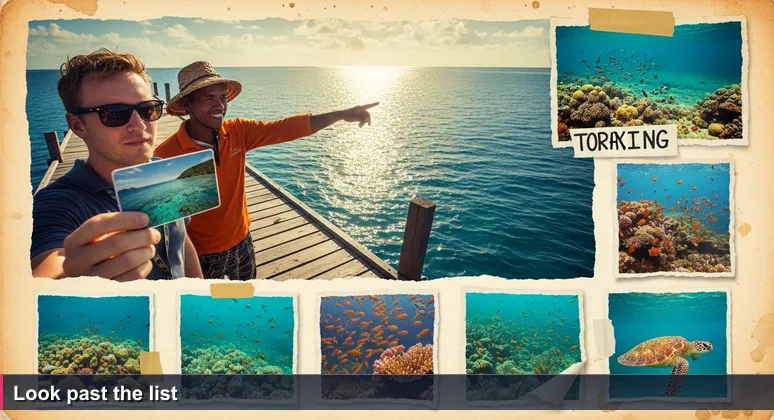
The laminated card promised ten perfect spots. The guide’s hand pointed to a break in the reef where the water turned a shade no map could print. That’s the feeling of trusting any ranked list when the real opportunities live in the white space between entries.
We’ve all been there. A ranking promises clarity, but Palau’s AI job market doesn’t respect neat categories. A computer vision specialist might work for a fisheries NGO, funded by a tourism grant, sitting in a government building. The ten industries below suggest separation; the reality is woven. As LinkedIn’s Economic Graph notes, by 2026 over 70% of global AI job postings are now outside the traditional tech sector, demanding skills that bridge multiple domains.
The most exciting roles in Palau aren’t in any single slot - they’re at the edges: where tourism analytics meet marine conservation, where banking compliance models serve government data, where an edtech specialist trains the next generation while building a chatbot for Belau National Hospital. According to the World Economic Forum, leading firms succeed by “pointing AI at growth, not just cost reduction,” making it scalable and reliable across interconnected systems.
Read this list. Use it. Then forget it. The guide’s gesture points to something deeper: your best career move isn’t in a ranked slot - it’s in the overlap between two industries you haven’t connected yet.
Table of Contents
- Beyond the List
- Retail & E-Commerce
- Education & Research
- Logistics & Shipping
- Healthcare & Public Health
- Renewable Energy & Utilities
- Government & Public Sector
- Conservation & NGOs
- Banking & Financial Services
- Fisheries & Marine Science
- Tourism & Hospitality
- Your Career in the Overlap
- Frequently Asked Questions
Check out this complete guide to starting an AI career in Palau in 2026.
Retail & E-Commerce
When a supply ship arrives in Koror once a week, every shelf tells a story. Overstock tinned fish means wasted capital; empty shelves during tourist season means lost revenue. AI inventory planners now use predictive models to solve this concrete problem, forecasting demand based on seasonal visitor data, historical sales, and even weather patterns. Roles pay $40,000 to $60,000 annually, with employers like WCTC Shopping Center and local boutique retailers leading adoption as digital payments expand across the islands.
What makes Palau’s retail AI work unique is the data itself. Global models train on millions of transactions; here, a good dataset might hold a few thousand rows, heavily skewed by tourist seasons. That scarcity forces creativity. A career changer from retail management can bring deep domain knowledge and apply off-the-shelf tools like Google’s Retail AI without needing a PhD. The LinkedIn Economic Graph confirms that AI job postings outside tech now dominate, and retail is a key growth vertical for applied AI talent.
Tradeoffs are clear: salaries sit below remote big tech roles, but the work is mission-driven - keeping local businesses alive and reducing waste on an island where every import costs time and fuel. Upskilling pathways include Palau Community College’s digital literacy courses and programs like Cognizant’s SkillSpring, which offers AI-native reskilling for retail analytics. The growth trajectory is rapid from a small base, making early movers in this space invaluable.
Education & Research
Every other sector on this list depends on this one first. Without AI-literate graduates, Palau cannot staff tourism, fisheries, or government AI roles. The concrete problem here is scalable personalized learning: building adaptive tutors for remote islands where internet connectivity is patchy and class sizes are small. AI literacy instructors at Palau Community College (PCC) now design curricula that teach prompt engineering and Python alongside traditional subjects, while edtech developers create offline-capable learning tools tailored to Palauan students. Salaries range from $30,000 to $55,000, reflecting grant funding and the essential nature of this foundational work.
What makes this sector unique is its accessibility. PCC has begun integrating AI modules into existing programs - no separate computer science degree required. A teacher with a decade of classroom experience can pivot by taking PCC’s “AI for Educators” workshop, then redesign their entire curriculum. Affordable online options like Nucamp’s AI Essentials for Work bootcamp (15 weeks, $3,582) offer structured upskilling with monthly payment plans, making AI education feasible for working professionals across the islands. Nucamp reports a 78% employment rate and a Trustpilot rating of 4.5 out of 5 stars from nearly 400 reviews.
Stanford University’s field projects in Palau also hire local research assistants to train models on island-specific data - a rare opportunity to contribute to global research while living in Koror. The tradeoff is clear: salaries sit at the bottom of this list, but the impact is unmatched. Every AI literacy instructor creates dozens of future AI workers. According to the LinkedIn Economic Graph, demand for AI talent outside tech has surged, making education the pipeline that feeds every other industry’s growth.
Logistics & Shipping
Palau imports nearly everything that fills its shelves, fuels its cars, and builds its homes. When a cargo vessel runs a day late, the ripple effect touches every business on the island. That’s the concrete problem AI solves here: supply chain optimization analysts use historical shipping data and weather models to predict arrival times, reduce demurrage fees, and optimize warehouse space. AI fleet managers at employers like CTSI Logistics and Palau Shipping Company now reroute vessels before delays compound, turning a reactive scramble into a predictable process. Salaries range from $45,000 to $75,000, competitive with local tourism roles but well below remote big tech logistics positions that can exceed $120,000.
What makes Palau’s logistics AI work distinctive is the scale. Unlike Manila’s sprawling container terminals that deploy autonomous cranes documented in recent AI applications in maritime logistics research, Palau needs lightweight edge-computing sensors on a single dock. That constraint makes the work hands-on and highly visible - a career changer from logistics management can learn predictive modeling through Palau Community College’s data analytics track and immediately see their impact on the next shipment.
The tradeoff is influence versus pay. You’re building a system from scratch rather than tweaking a mature one. For professionals seeking remote flexibility, platforms like Himalayas list remote AI logistics roles that Palau-based talent can access with the right skillset. Upskilling pathways include online supply chain AI certifications through Coursera and direct project work with Palau Shipping Company, where every optimization directly lowers the cost of living for the entire island.
Healthcare & Public Health
Our healthcare system serves a population scattered across hundreds of islands, and distance is the diagnosis. A patient in Kayangel cannot easily see a specialist in Koror. That’s where AI-powered telemedicine platforms come in, using symptom checkers and image analysis to triage who needs evacuation. Diagnostic support models help radiologists at Belau National Hospital flag abnormalities in X-rays trained on local data. Roles for AI health informatics specialists and telemedicine support technicians pay between $60,000 and $95,000, among the highest locally, reflecting the specialized clinical validation these systems require.
What makes this work uniquely Palauan is the data itself. Global AI models trained on US or European populations often miss patterns prevalent here, like diabetes complications and leptospirosis. That creates a niche for local specialists who understand both the algorithms and the community. A career changer from nursing or public health can bridge into AI through upskilling programs, bringing deep domain knowledge that no off-the-shelf model can replicate. As pharmaceutical leaders invest heavily in dedicated AI centres, the demand for professionals who can validate clinical models on underrepresented populations is growing globally.
The tradeoffs are real: deployment is slow because clinical validation requires rigorous testing, and the work is tied to grant cycles. But the autonomy is unmatched. Unlike in larger health systems where you’re one cog in a machine, in Palau you can build a telemedicine triage system from scratch and see its impact on real patients within weeks. Upskilling pathways include Palau Community College’s digital health certificate and the NOAA deployable AI expeditions that occasionally partner with local health centers on remote diagnostics projects.
Renewable Energy & Utilities
Palau has committed to 100% renewable energy, but solar power is intermittent. When clouds cover the panels on Koror, the grid must instantly switch to battery or diesel backup. Smart grid analysts build forecasting models that predict cloud cover and energy demand 24 hours ahead, ensuring the lights stay on. Predictive maintenance engineers use IoT sensors on solar inverters to detect failures before they happen, reducing downtime. These roles pay $50,000 to $80,000 annually, with employers like Palau Public Utilities Corporation (PPUC) and Equator Energy leading the transition.
What makes this work unique is the grid itself. Palau’s system serves only a few thousand customers, making it small enough for a single analyst to model end-to-end - a stark contrast to the sprawling grids of Manila or Singapore. As global energy infrastructure spending hits trillions, Research.com notes that AI-driven predictive maintenance is becoming essential for remote and island energy systems where technician travel time is costly. Career changers from PPUC’s maintenance teams can upskill through IoT sensor management training and immediately apply it to the island’s solar array.
The tradeoff is that salaries are often tied to grant cycles from international donors like the World Bank. But the mission-driven appeal is powerful - you are literally powering Palau’s future. Johnson Controls, a global leader in smart building energy systems, has highlighted how small-scale renewable grids like Palau’s are ideal testing grounds for new AI optimization models. Upskilling pathways include regional energy AI workshops at the University of Guam and online specializations through Coursera’s renewable energy track.
Government & Public Sector
Palau’s government is digitizing at an unprecedented pace, leapfrogging legacy systems that bog down larger nations. The concrete AI problem is efficiency: automating permit processing, visa applications, and tax filings so civil servants can focus on policy instead of paperwork. The Palau Digital Residency Program already uses AI to verify identities and process applications in minutes instead of days. AI policy advisors and data governance managers earning $35,000 to $65,000 aren't just implementing technology - they're shaping the legal frameworks that will govern Palau's data for decades.
What makes this sector extraordinary is the blank slate. Unlike Singapore, which spent decades modernizing, Palau can adopt Estonia’s digital model from scratch. That means a career changer from the civil service can pivot by taking the World Economic Forum’s government AI readiness insights and apply them directly to their current department. The work is highly visible - you might help design the AI rules that govern Palau for generations, from data privacy laws to ethical AI deployment in public services.
The tradeoffs are clear: salaries are lower than private sector, but job security and mission are strong. As MetaComp launches the world’s first AI agent governance framework, Palau is positioned to become a regional testbed for small-nation digital sovereignty. Upskilling pathways include Palau Community College’s public administration AI track and online World Bank e-governance modules, giving civil servants the tools to lead this transformation from within.
Conservation & NGOs
Palau’s National Marine Sanctuary spans 500,000 square kilometers - one of the largest fully protected areas on Earth. The concrete AI problem is stark: how do you monitor an area the size of Spain with a handful of rangers? Computer vision models on satellite imagery now detect illegal fishing vessels in near real-time, while bioacoustic sensors on reefs identify the acoustic signature of poaching. Environmental data scientists and remote sensing technicians earning $40,000 to $70,000 (often grant-funded) build these systems for employers like The Nature Conservancy Palau, Palau Conservation Society, and OneReef.
What makes this work extraordinary is the leverage. Unlike conservation in larger countries, Palau’s small footprint means a single data scientist can build a detection system that protects the entire sanctuary. The Global Fishing Watch research roadmap highlights how Palau’s scale makes it ideal for piloting new AI detection methods that can then scale to the Pacific. A career changer from marine biology can upskill through Palau Community College’s GIS certificate and immediately contribute to real conservation outcomes.
The tradeoff is real: salaries depend on grant cycles, so job stability can be uncertain. But the mission is unmatched - your code helps save sharks, tuna, and coral for future generations. As research in deep learning and computer vision for environmental monitoring accelerates globally, Palau’s pristine datasets are becoming some of the most valuable in the world for training reef and biodiversity models. Upskilling pathways include NOAA’s deployable AI expeditions and direct project partnerships with the Palau Conservation Society, where every model deployment has immediate, visible impact on the reef you can see from shore.
Banking & Financial Services
Palau’s financial sector is small but heavily regulated, creating a perfect pressure cooker for AI innovation. The concrete problem is compliance: with international anti-money laundering standards tightening, banks need automated systems to flag suspicious transactions without drowning in false positives. Agentic AI - autonomous agents that monitor transactions in real time - is being deployed by Bank of Guam’s Palau branch to speed up investigations. Roles for AI compliance officers, fraud detection specialists, and RegTech integrators pay $55,000 to $90,000, competitive with regional centers like Guam but far below Singapore’s benchmarks.
What makes this work unique is Palau’s position as a Pacific hub for offshore finance. AI compliance roles here have global implications, but unlike Singapore where large teams build proprietary models, Palau’s banks adopt and customize solutions from vendors like Finastra. That means talent focuses on integration and tuning rather than research - a career changer from banking compliance can transition through online AI governance certifications and immediately apply their domain knowledge to reduce false positives by significant margins.
The tradeoff is clear: salaries sit below Singapore’s $120,000-$180,000 for similar roles, but the work is stable and well-regulated. As Oliver Wyman notes, AI agents in banking are reshaping roles, skills, and leadership - and Palau’s small market means early adopters of agentic AI gain outsized influence. Upskilling pathways include internal training programs at Bank of Hawaii’s Palau branch and specialized RegTech certifications, giving local professionals the tools to lead digital transformation in one of the Pacific’s most regulated sectors.
Fisheries & Marine Science
Counting fish by sending divers into the water is slow, expensive, and limited. That’s the concrete problem computer vision solves: models trained on underwater video footage now estimate fish populations and species diversity across Palau’s reefs in hours instead of weeks. AI drone operators fly missions over the Rock Islands to map coral bleaching, while maritime data analysts process satellite imagery to detect illegal fishing vessels. These roles pay $50,000 to $85,000 annually, with employers like the Palau International Coral Reef Center (PICRC), Global Fishing Watch, and the Bureau of Fisheries leading the charge.
What makes this work globally significant is the data itself. Palau’s marine ecosystems are some of the most pristine on Earth, making PICRC’s datasets invaluable for training reef monitoring models used worldwide. In 2026, NOAA and Fish and Wildlife awarded $3.4 million for fisheries technology, much of it directed toward Pacific island nations piloting new AI detection methods. A computer vision specialist in Palau isn’t just doing local work - they’re contributing to a global research network that protects marine biodiversity across the Pacific.
The tradeoff is that salaries are often grant-funded with fixed terms, creating some instability. But the mission is unmatched: your code helps protect Palau’s heritage for future generations. As fastest-growing job lists for 2026 highlight, AI roles in environmental science are surging globally. Career changers from marine biology can upskill through Palau Community College’s marine science data analytics track and immediately apply their domain knowledge to real conservation outcomes visible from the shore.
Tourism & Hospitality
Tourism is Palau’s largest private sector employer, and it’s undergoing an AI-driven transformation. The concrete problem is personalization at scale: a resort in Koror might host guests from Japan, the US, and Australia in the same week, each with different expectations. AI personalization specialists build models that recommend activities, dining, and excursions based on past behavior, weather forecasts, and crowd levels. Revenue management analysts use predictive AI to adjust pricing dynamically, maximizing occupancy while protecting sensitive sites. These roles pay $45,000 to $75,000 locally, with remote specialist positions at global hospitality tech companies exceeding $120,000.
What makes this sector unique is Palau’s pioneering approach to “smart tourism” that balances revenue with conservation. The Palau Visitors Authority has adopted AI-powered booking systems that cap visitor numbers at sensitive sites like Jellyfish Lake, enforcing sustainability rather than just maximizing profit. As Research.com notes, by 2026 an estimated 90% of initial visitor interactions globally will be managed by agentic AI, providing multilingual support and personalized itineraries around the clock. Palau’s small scale means a single AI specialist can design a system that touches every tourist who visits the Rock Islands.
The tradeoffs are clear: local salaries cap around $75,000, but the work is highly collaborative - you’ll partner with guides, hotel managers, and government officials. For those seeking higher pay, remote roles with global hospitality tech firms are accessible. Career changers from hospitality can upskill through courses highlighted by Onward Search’s top AI jobs guide and Palau Community College’s tourism tech certificate, turning front-desk experience into a data-driven career that shapes how the world experiences Palau.
Your Career in the Overlap
The guide's hand points past the reef toward water no map shows. That gesture is the real lesson of this list. The best opportunities in Palau's AI job market aren't in any single ranked slot - they live in the white space between industries. A computer vision specialist trained in fisheries who works for a tourism board. A policy advisor who learned AI governance from a banking compliance project. An edtech instructor who builds chatbots for Belau National Hospital on weekends.
These crossover roles don't appear on any ranking, but they're where Palau's most impactful AI work happens. The advantage of our small island is that boundaries between sectors are porous. You can build a career that touches three industries before lunch. The key is recognizing that your domain expertise - whether in marine biology, hospitality, or civil service - is your strongest asset. 78% of bootcamp graduates find employment within six months, according to Course Report, and the most successful ones combine technical skills with deep industry knowledge.
Affordable upskilling pathways exist to bridge those gaps. Programs like Nucamp's Solo AI Tech Entrepreneur bootcamp (25 weeks, $3,980 with monthly payments) are designed for Palauans who want to build AI products for local markets - tourism tech, conservation tools, government automation. With a Trustpilot rating of 4.5 out of 5 stars and a graduation rate of 75%, these programs offer structured paths without requiring a computer science degree.
The list is a snapshot. Your career is the current. The guide's hand points to something deeper: the real opportunity isn't in choosing one industry over another. It's in connecting them in ways no ranked list can capture. That's where Palau's AI future lives - in the overlap.
Frequently Asked Questions
Which industry in Palau pays the highest AI salaries in 2026?
Healthcare leads with $60,000 to $95,000 for specialized clinical AI roles at Belau National Hospital, followed closely by Banking & Financial Services at $55,000 to $90,000. However, remote AI specialist roles in Tourism can exceed $120,000.
How can someone with a background in fishing or marine biology break into AI?
Palau's Fisheries & Marine Science sector is the fastest-growing AI field. Career changers can upskill through Palau Community College's marine science data analytics track or NOAA's fisheries tech grants, then apply computer vision to reef monitoring or drone operations.
What makes Palau's AI job market different from bigger markets like Singapore?
Palau offers a mission-driven environment where AI directly impacts conservation and community. Salaries are lower (e.g., $50k-$85k in Fisheries vs. $120k+ in Singapore), but you get autonomy to build systems from scratch and see immediate results in protecting Palau's heritage.
Which industry has the most stable AI job growth in Palau?
Government & Public Sector offers strong job security with a massive push for e-government. While salaries are lower ($35k-$65k), the work is highly visible and you'll shape data governance frameworks. Banking also provides steady growth with global compliance demands.
Do I need a computer science degree for AI jobs in Palau, or can I learn on the job?
Many roles value domain expertise over pure coding skills. For example, tourism AI roles leverage hospitality experience, and conservation roles welcome marine biologists. Palau Community College offers certificates, and online courses like Coursera's AI specializations are accessible. Hands-on projects matter more than degrees.
Get insights into Palau's AI job market and salary expectations for 2026.
Discover how to use Australia Awards and Taiwan scholarships for tech studies from this guide.
Learn about Palau's AI networking opportunities in this complete guide.
If you're a beginner, explore the top 10 tech apprenticeships in Palau for 2026.
Read our comprehensive list of the best tech incubators and coworking spots in Palau.

Irene Holden
Operations Manager
Former Microsoft Education and Learning Futures Group team member, Irene now oversees instructors at Nucamp while writing about everything tech - from careers to coding bootcamps.