









Top 10 AI Startups to Watch in Bellevue, WA in 2026
By Irene Holden
Last Updated: January 23rd 2026
Too Long; Didn't Read
Statsig and Summation are the top Bellevue AI startups to watch in 2026 - Statsig because its experimentation infrastructure led to a $1.1 billion acquisition by OpenAI, and Summation because a $21 million raise and its “decision-grade” finance AI give it real enterprise traction. They illustrate the Eastside’s enterprise-first AI shift: Washington is the fifth most active AI startup ecosystem, and Bellevue’s no-income-tax advantage plus close ties to Microsoft and Amazon help startups scale from pilot to production quickly.
Seeing the List Like a Chalkboard, Not a Scoreboard
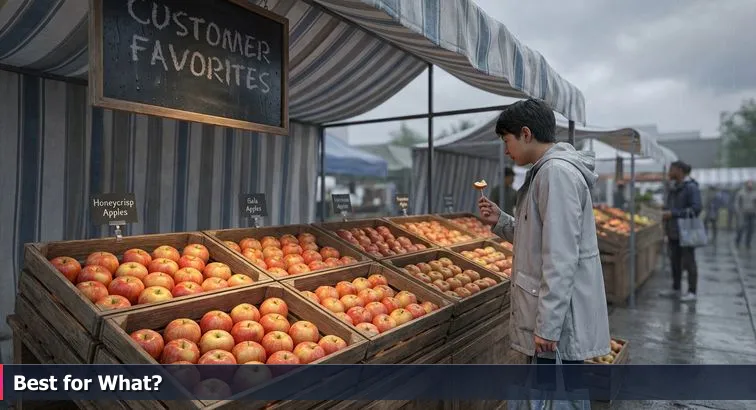
You can almost feel the damp sleeve of your jacket as you stand under a dripping awning at the Bellevue Farmers Market, eyeing a chalkboard of “Top 10 Customer Favorites.” You know the list is shorthand: it collapses an entire orchard of varieties into a neat stack of names. Grabbing whatever’s at #1 might get you a great apple, but not necessarily the right one for a crumble, a tart, or a straight-from-the-fridge snack. That’s exactly how most “Top 10 AI startups in Bellevue” lists work: they’re helpful, but only if you treat them as a chalkboard overview, not a final verdict on what’s “best.”
Why the Eastside Orchard Is So Dense Right Now
Step back from that chalkboard and you see why it’s so full. The Bellevue-Redmond-Kirkland corridor pulls in AI talent the way a good tree pulls light: Microsoft in Redmond and Amazon in nearby Seattle create a constant flow of engineers, researchers, and PMs who eventually spin out into startups. On top of that, Washington now ranks as the 5th most active AI startup ecosystem in the U.S., according to the Washington Technology Industry Association’s statewide AI landscape work, and the lack of a state income tax makes equity in those startups meaningfully more valuable than in many competing hubs. Local programs like the Founder Institute’s “Bellevue, Washington: The Startup City Defining Its Shadow” point out that founders here are increasingly building with global ambition while staying rooted on the Eastside.
"AI dreams, brutal realities, and Seattle tech at a turning point."
What Rankings Capture - and What They Miss
Lists like the GeekWire 200, Built In’s Bellevue AI rankings, or the F6S startup directories are basically different chalkboards on different stalls: they surface signal from noise, but they’re all making choices about what to highlight. For this particular Top 10, the filter is simple and a little opinionated: companies with a clearly AI-heavy product (not just “AI-enabled” services), visible funding or traction, a real footprint in the Eastside ecosystem, and a tangible 2026 inflection point like IPO potential, acquisition odds, or major market expansion. That means plenty of worthy players - bootstrapped shops, quieter B2B tools, and early researchy bets - stay out of frame, even though they still shape the canopy of the local scene and show up at meetups and showcases like the Seattle AI Startup Showcase in Bellevue.
How to Use This Chalkboard If You’re Aiming for an AI Career
If you’re an aspiring ML engineer or applied scientist, the real move is to treat this list like a tasting flight. Each company here represents a different “apple variety” of AI work - finance, HR, real estate, infrastructure, mental health, robotics - and the value is in matching those flavors to the career recipe you’re trying to cook up. Use internships, side projects, hackathons, and low-stakes coffee chats as your samples: quick ways to test whether a given startup’s problems, tech stack, and culture actually fit you. In a region where the default is to turn big ideas into “brutal realities” fast, the advantage goes to people who don’t just read the chalkboard but walk the rows of the orchard, choosing deliberately where they want to grow.
Table of Contents
- From Farmers Market Chalkboards to AI League Tables
- Statsig
- Summation
- Auger
- SeekOut
- CityBldr
- TerraClear
- Centific
- Sportsbox AI
- Aiberry
- MangoBoost
- Reading the Chalkboard - and the Orchard
- Frequently Asked Questions
This guide: starting an AI career in Bellevue WA in 2026 lays out education choices from bootcamps to UW certificates.
Statsig
The Experimentation Engine That Put Bellevue on the Map
Statsig is the rare Bellevue startup that went from “quiet infra tool” to global signal overnight when OpenAI acquired it for $1.1 billion in late 2025. That exit shows up in almost every regional ranking now; for example, Seedtable’s 2026 Bellevue startup list calls out the deal as a watershed moment for the Eastside. The company’s core bet was simple but brutal: as products get more AI-heavy, guessing with your roadmap becomes untenable. Teams need to know, with data, whether a new recommendation model, pricing algorithm, or LLM-powered feature actually moves the needle on engagement, revenue, and safety.
The Problem and Product: Moving Beyond Gut-Driven Shipping
Most product orgs still rely on basic A/B tests duct-taped to legacy analytics, which buckle when you’re running dozens of experiments across millions of users. Statsig attacked that by offering a full-stack experimentation and product analytics platform: feature flags and staged rollouts, automated A/B and multivariate testing at massive scale, and real-time metrics pipelines tuned for event-driven apps. Crucially for AI teams, it closes the loop between model changes and business outcomes: you can ship a new ranking model to 5% of users, watch churn, revenue, latency, and custom safety metrics in near real time, and let pre-set guardrails decide whether to ramp up or roll back. That “faster validation and learning” loop mirrors what Ash Maurya describes in his talk on how the best startups use AI for rapid experimentation in 2026, and it’s become table stakes for serious AI product teams.
Why Statsig Stood Out in a Crowded Tools Market
What made Statsig different wasn’t a pretty dashboard; it was infrastructure depth. This is hard-core experimentation plumbing that has to be correct under heavy load, which is why it resonated with customers like Microsoft and OpenAI long before the acquisition. In a region that leans enterprise-first, that fit matters: the platform lines up perfectly with the Eastside’s bias toward measurable impact over hype. Compared to generic analytics tools, Statsig baked in fine-grained cohorting, complex experiment designs, and tight controls around rollouts, which are exactly the knobs AI teams need when shipping features that can both delight users and accidentally tank key metrics if you’re not careful.
What to Watch Next If You’re Betting Your Career on AI Infra
Post-acquisition, the open question is how deeply Statsig’s ideas get woven into the way developers ship on OpenAI’s platform. If experimentation primitives become a default part of that stack, it effectively exports a Bellevue-born way of working to thousands of teams worldwide. Locally, the other thing to watch is how much of the product and engineering footprint stays - and grows - on the Eastside. When a tools company proves it can reach a billion-dollar outcome without decamping to the Bay, it raises the ceiling for every infra-heavy AI startup in Bellevue and Redmond that’s trying to do something similar, and it gives ML engineers here a clear signal that specializing in experimentation and metrics can be just as career-defining as working directly on models.
Summation
The CFO’s New Favorite Kind of AI
Walk into pretty much any mid-market or enterprise finance team on the Eastside and you’ll see the same thing: people buried in CSV exports from three different ERPs, stale dashboards, and a forest of spreadsheet models that only one analyst truly understands. Summation is going after that mess directly with a “decision-grade” AI platform that plugs into ERPs, CRMs, billing systems, and more to answer the questions executives actually ask in real time.
- “What’s our true gross margin by product line, right now?”
- “How did last month’s pricing change play out by region?”
- “Where are we most at risk of missing the quarter?”
Instead of waiting days or weeks for a special report, finance and ops leaders can ask those questions in natural language and get back answers that come with lineage, versioning, and explanations they can audit.
From Fragmented Systems to a Unified Semantic Layer
Under the hood, Summation builds a unified semantic layer across all those scattered systems so the AI isn’t guessing what “revenue” or “churn” mean for your business. Its agents sit on top of that layer to deliver trusted, real-time business answers, a pattern that’s helped land the company on Built In’s list of Bellevue AI startups to watch. For CFOs, the big unlock is that they don’t have to trade speed for control: they still see where numbers come from and can drill down when something looks off.
| Aspect | Traditional BI dashboards | Summation |
|---|---|---|
| Data freshness | Batch-loaded, often days out of date | Connected to live systems for near real-time views |
| Question format | Pre-built charts and canned reports | Natural-language questions answered by AI agents |
| Trust & explainability | Opaque SQL and spreadsheet logic | Data lineage, versioning, and audit trails |
| Workflow fit | Static views, hard to adapt to new scenarios | Interactive, scenario-friendly workspace for finance/ops |
Why VCs See This as “Core Infrastructure,” Not a Feature
Investors have started to treat this category as plumbing, not a nice-to-have. Summation’s $21 million funding round led by Kleiner Perkins signals that this isn’t just another analytics layer; it’s a potential system-of-record for how CFOs and COOs make calls. Greater Seattle Partners, in its overview of AI startup funding across the region, points out that capital is concentrating around vertical AI plays that sit close to revenue and cost decisions - exactly where Summation lives. In practice, that deep systems integration and governance focus make it a natural fit for Bellevue’s enterprise-heavy mix of SaaS, cloud, and B2B companies.
What to Watch in 2026 If You’re Finance- or Infra-Curious
This is a company in that “baking apple” phase of the orchard: not the flashiest fruit at the stall, but central to the recipe. Three arcs are worth tracking from the Eastside: whether Summation jumps from finance into adjacent functions like supply chain or revenue operations; how tightly it partners with cloud mainstays like Microsoft Dynamics or SAP; and whether it can turn that Series A into a repeatable go-to-market motion instead of a handful of lighthouse wins. If you’re an ML engineer who likes structured data, complex schemas, and very measurable impact, this is the kind of AI work - right at the finance and ops nerve center - that tends to compound into serious career capital in Bellevue.
Auger
Automation for the Boring, Regulated, and Very Expensive Stuff
While a lot of generative AI startups on the Eastside chase chatbots and copilots, Auger is pointed squarely at the unglamorous core of big enterprises: insurance workflows, healthcare claims, underwriting, compliance-heavy back offices. Its pitch is that off-the-shelf LLMs can draft a nice email, but they can’t reliably orchestrate a multi-step claims process across legacy systems, stay inside domain-specific regulations, and leave behind an audit trail that keeps regulators calm. Emerging in the 2025-2026 window with a massive $100 million funding round led by fintech and healthcare specialist Oak HC/FT, Auger is deliberately starting where the constraints are toughest and the budgets are largest.
From Chatbots to Orchestrated Workflows
The gap Auger is attacking shows up every time a bank or health system tries to “AI-ify” an existing process and hits a wall. They’re stuck with long-lived line-of-business systems, strict audit requirements, and fragmented processes that blend documents, calls, and manual approvals. A generic LLM endpoint can’t see all of that, let alone coordinate it. Auger’s platform layers domain-tuned LLMs on top of workflow orchestration, connectors into core systems, and built-in guardrails like robust logging and human-in-the-loop review so you can automate work without losing control.
| Capability | Generic LLM chatbot | Auger-style enterprise automation |
|---|---|---|
| Typical use case | Answering FAQs, drafting emails | End-to-end workflows in claims, underwriting, approvals |
| System integration | Limited APIs, often manual copy/paste | Connectors to CRMs, ERPs, legacy line-of-business systems |
| Compliance & auditability | Best-effort logging | Regulation-aware guardrails and detailed audit logs |
| Target buyer | Individual teams, innovation labs | CIO, COO, or line-of-business owners in regulated industries |
Why a $100M Bet Makes Sense from Bellevue
On paper, a nine-figure round for a still-young company looks aggressive. In context, it lines up with broader trends: investment across Washington’s AI scene is concentrating in life sciences and enterprise SaaS, with the Washington Technology Industry Association noting in its AI landscape report that regulated and data-heavy sectors are drawing outsized attention. Auger sits right at that intersection. Being anchored near Azure and AWS teams on the Eastside also helps; the company can hire people who understand both hyperscale infrastructure and the security models big banks and payers expect. For Oak HC/FT, which has a long track record in healthcare and fintech, this looks less like a moonshot and more like building the next layer of core enterprise plumbing.
Signals to Watch If You Want to Work on “Serious” AI
For engineers and data folks in Bellevue wondering whether this is a good tree to climb, a few signals matter. First, flagship customers: if Auger starts closing visible deals with banks, insurers, or healthcare payers, that’s proof its compliance story holds up. Second, hyperscaler relationships: showing up in reference architectures or partner programs from cloud providers that already dominate the corridor would validate its platform approach. Finally, exit trajectory: with this level of capitalization, Auger is either on a path to IPO or to becoming a strategic acquisition for a global systems integrator or cloud provider, a pattern you can see across other large AI rounds tracked in recent AI startup funding reports. If you care more about hard enterprise problems than shiny demos, this is the kind of “orchard-scale” bet that can define a whole chapter of your career.
SeekOut
The Talent Intelligence Layer Under Bellevue’s AI Boom
When people talk about AI in Bellevue, they usually start with models and infrastructure, but the real bottleneck most companies feel first is talent. That’s the gap SeekOut stepped into early: giving employers a 360-degree view of both the external market and their own workforce so they can actually see who has which skills, who could be reskilled, and where the real gaps are. Founded by former Microsoft leaders, SeekOut has grown into a unicorn serving numerous Fortune 500s, and it’s become a kind of talent-intelligence grid under the Eastside’s AI scene, quietly influencing who ends up where at companies from downtown Bellevue to Redmond.
From Sourcing Tool to Workforce Operating System
SeekOut started out best known as a power tool for external recruiting, surfacing candidates from public data sources that traditional ATS or LinkedIn-only workflows would miss. By 2025-2026, it had expanded into internal talent mobility, helping companies benchmark internal skills against the market and find employees who can move into AI and ML roles with targeted upskilling instead of expensive external hires. That evolution - from point solution to what feels more like an “operating system” for workforce planning - is why it shows up so consistently in regional lists of top AI startups and in overviews like the AI-powered reboot of the GeekWire 200 ranking of Seattle-area startups.
| Aspect | Traditional ATS / recruiting stack | SeekOut talent intelligence |
|---|---|---|
| Data coverage | Internal applicants + limited job boards | External profiles + internal HR data in one view |
| Use case focus | Filling open reqs | Hiring, internal mobility, reskilling, workforce planning |
| AI depth | Keyword search and basic filters | Predictions, recommendations, and non-obvious skill matches |
| Strategic value | Operational recruiting tool | Exec-level visibility into current and future skill gaps |
How Rankings and IPO Talk Translate into Career Bets
Because it’s already at unicorn scale with backing from Seattle stalwarts like Madrona, SeekOut shows up a lot in IPO speculation and ecosystem write-ups. For you, as someone aiming at an AI or ML career, the more practical angle is how central this kind of platform is becoming: as AI rewrites job families and salary bands across the Seattle-Bellevue corridor, the companies that control the visibility into skills and potential control a surprising amount of downstream opportunity. In a no-state-income-tax environment where senior AI and cloud engineers already see very strong total comp, a place like SeekOut can be a high-leverage “tasting sample” in your own orchard tour - a way to work on applied ML that directly shapes who gets hired, promoted, or retrained into the next wave of AI roles on the Eastside.
CityBldr
In a place like Bellevue, where cranes keep edging closer to light rail stops and surface parking lots mysteriously sprout high-rises, the real question isn’t just “what’s getting built?” but “why here, and not across the street?” CityBldr is the AI layer trying to answer that, parcel by parcel, by treating land like a data problem instead of a slow back-of-the-envelope exercise.
Turning Parcels into Data, Not Just Addresses
At its core, CityBldr ingests zoning codes, parcel maps, transaction histories, and a mess of local regulations, then uses machine learning to spot underutilized sites and model what could be built there. It’s often described as a kind of “Bloomberg for real estate” because it gives developers, cities, and investors a single interface to test scenarios: add density near a new transit station, convert an aging office into mixed-use, or prioritize affordable units over luxury inventory. The platform is already live in over 155 cities across the U.S. and Canada, which means a downtown Bellevue parcel is being evaluated with the same rigor as one in other fast-growing metros listed in tools like the F6S index of AI companies in Bellevue.
| Step | Traditional redevelopment scouting | With CityBldr’s AI platform |
|---|---|---|
| Finding sites | Manual drives, broker tips, ad hoc spreadsheets | Algorithmic identification of underutilized parcels |
| Zoning analysis | Hand-reading zoning codes for each parcel | Automated parsing of zoning and overlay rules |
| Financial modeling | Custom pro formas built from scratch | Scenario models based on comps and local constraints |
| ESG / affordability | Checked late, if at all | Dedicated workflows for affordable and ESG-weighted projects |
Why This Matters in a Transit-Shifted, High-Cost Market
Bellevue is feeling simultaneous pressure for more housing near jobs, office-to-residential debates, and the long shadow of regional affordability gaps. CityBldr’s ESG-focused division leans into that by flagging sites with strong affordable-housing potential and aligning them with capital that cares about environmental and social outcomes. That’s not just nice branding; it syncs with how regional groups like Greater Seattle Partners describe investors increasingly looking for tech that can bridge growth and livability in their surveys of AI-backed startups and funding flows.
Career-Wise, This Is AI That Literally Redraws the Map
For someone aiming at an AI or ML role, CityBldr is a different flavor of work than a SaaS dashboard: models have to encode messy zoning rules, infer redevelopment potential, and reflect community priorities, not just click-through rates. If you care about the physical city as much as the digital one, this is a way to have your code show up as new buildings along the East Link line or more mixed-income housing within walking distance of Bellevue’s offices. In the orchard of local AI companies, CityBldr is one of the clearest examples of algorithms shaping not just balance sheets, but the literal skyline you bike past on your commute.
TerraClear
Robots in the Fields, Ten Miles from the Towers
Drive ten miles out from Bellevue’s glass and steel and you hit a different kind of infrastructure problem: rocks. Not metaphorical ones, literal ones - dense, equipment-killing stones scattered across fields that farmers have to clear before they can even think about planting. TerraClear, led by Brent Frei (co-founder of Smartsheet and Onyx Software), is building AI-powered robotics to take that work off human backs and put it onto machines that can see, map, and remove rocks at scale.
The Backbreaking, Low-Margin Problem
Farmers face a nasty combination of labor shortages, rising equipment costs, and pressure to increase yields without trashing their soil. Rock picking sits right at that intersection: it’s tedious, seasonal, and expensive, but skipping it risks catastrophic damage to tractors and implements. For the mid-size operations that don’t have endless capital, every broken tine or bent axle eats straight into thin margins. That’s the wedge TerraClear picked - an unsexy job that happens on almost every farm, every year.
Computer Vision + Robotics Instead of Bent Axles
TerraClear’s system combines aerial sensing (often via drones), computer vision models that detect and classify rocks in those images, high-accuracy GPS, and custom hardware that can autonomously or semi-autonomously remove them. Madrona Venture Group backed the company early, a detail called out in regional investment overviews like the Seattle-area startups to watch in 2026, because this is real edge AI: models running in harsh outdoor conditions, tied directly to heavy machinery and measurable ROI.
| Aspect | Traditional rock picking | With TerraClear |
|---|---|---|
| How rocks are found | Walking or driving fields, visually scanning | Aerial imagery processed by vision models |
| Labor required | Multiple workers, long days in the field | One operator supervising robotic or assisted equipment |
| Equipment risk | High - missed rocks damage expensive gear | Mapped and cleared rocks before sensitive passes |
| Scalability | Limited by available labor each season | Scales with machines, not additional people |
Why This Edge AI Matters for the Eastside - and for Your Career
On paper, this looks nothing like a Bellevue enterprise SaaS play, but that’s the point: TerraClear is proof that the region’s AI talent isn’t confined to dashboards and copilots. It’s part of a broader wave of robotics and applied ML that shows up alongside more traditional software in lists of top AI companies in Washington. If you’re an ML engineer who likes dirty data, hard latency constraints, and problems where success is measured in fewer broken parts and higher yields, this is a very different “variety” in the local AI orchard. You’re not just optimizing clicks; you’re helping decide whether the cost of food production inches up or down over the next decade - and doing it from a base on the Eastside that still lets you bike to a downtown Bellevue office when you’re not out in the fields.
Centific
From AI Pilots to Something That Actually Ships
Across traditional enterprises on the Eastside, there’s a familiar pattern: a team spins up a promising ML proof-of-concept in a notebook, gets a small win, and then… nothing. The model never quite makes it into production, data pipelines stay brittle, and every new use case feels like starting from scratch. Centific, based in Redmond, is trying to break that cycle with an end-to-end platform that wraps data engineering, MLOps, and domain-specific accelerators into something large organizations can actually deploy at scale.
What Centific Puts on the Table
Instead of selling just tooling or just consulting, Centific positions itself as an enterprise-grade AI and data platform for sectors like retail and complex information systems. Its offering spans data and database management, model training and deployment workflows, and pre-built analytics components for common industry problems. That “ready-to-deploy” posture is why it shows up in statewide roundups of leading AI providers, including Clutch’s rankings of top artificial intelligence firms in the Bellevue area, even though its headquarters sit next door in Redmond.
| Aspect | Typical enterprise AI pilot | With Centific’s platform |
|---|---|---|
| Data foundation | Ad hoc extracts, one-off pipelines | Managed data and database layer |
| Model lifecycle | Notebook experiments, manual handoffs | Structured training, deployment, and monitoring workflows |
| Domain fit | Generic models, heavy customization per use case | Retail and industry accelerators to speed first wins |
| Scalability | Stalls after POC, hard to replicate | Designed to roll out across multiple teams and regions |
Why a $60M Round Changes the Conversation
In late 2025, Centific secured a $60 million funding round, giving it the runway to invest simultaneously in platform depth and go-to-market rather than choosing between them. That places it in the same capital tier as other serious AI infrastructure bets highlighted in recent AI startup funding trackers, and it matters because enterprise buyers increasingly want partners that will still be around in five years. For Eastside companies wrestling with how to standardize data and ML deployment across dozens of teams, a well-capitalized platform provider with local talent access starts to look less like a vendor and more like a core part of their stack.
Product vs. Services - and What It Means for Your Career
The big strategic question for Centific in 2026 is how far it can lean into product without becoming “just another” services integrator. If it can codify repeatable blueprints - retail AI-in-a-box, predictive maintenance stacks, cross-channel personalization - it has a shot at being the default way traditional enterprises in Washington operationalize ML. For you as an engineer or data scientist, that translates into a different flavor of work than joining a single-brand retailer or a pure consultancy: you’re building reusable infrastructure that will be deployed across many customers, but doing it from inside a company that still speaks fluently with CxOs and line-of-business owners. In a region where there’s no state income tax and a dense network of cloud-native enterprises to sell into, that’s a compelling niche to specialize in if you like turning “we have a POC” into “this runs everywhere, all the time.”
Sportsbox AI
On the surface, Sportsbox AI looks like a golf app, but under the hood it’s one of the more interesting computer vision labs on the Eastside. The company turns a standard smartphone video into a full 3D model of your swing, then uses biomechanics and AI to give feedback that would normally require a high-end motion-capture studio and an elite coach standing next to you. For a region full of weekend golfers and serious athletes, it’s a very Bellevue way to apply AI: take a pro-only tool, compress it into your phone, and make it usable between meetings.
The Coaching Bottleneck Sportsbox Is Attacking
High-quality coaching doesn’t scale well. Good instructors are expensive, booked solid, and limited to whoever can physically get to their range, court, or studio. Video tools help, but most either drown you in complex overlays or reduce everything to simple before/after clips. Sportsbox AI targets that gap by using 3D motion capture derived from 2D video to extract joint angles, velocities, sequencing, and other biomechanical metrics, then pairing that with correction cues informed by world-class instructors. The result is feedback that feels like a coach freezing your motion, drawing lines, and explaining what to change - but delivered on demand, wherever you train.
How It Compares to Traditional Coaching and Old-School Video Tools
| Aspect | In-person coaching | Basic video analysis apps | Sportsbox AI |
|---|---|---|---|
| Hardware required | None, but you must be onsite with the coach | Smartphone or camera | Just a smartphone - 3D generated from 2D video |
| Motion detail | Coach’s eye + occasional slow motion | 2D overlays and side-by-side comparisons | Full 3D model with biomechanical metrics |
| Scalability | Limited by coach’s calendar | User does their own interpretation | AI scales feedback to many users; coaches can review asynchronously |
| Domains | Golf, tennis, fitness, etc., but location-bound | Any sport, but shallow insights | Golf today, expanding into tennis, baseball, and broader fitness |
Why This Belongs in the Bellevue AI Orchard
Sportsbox AI sits at a useful intersection for the local ecosystem: serious computer vision and model optimization work, but applied to something very human and very visual. It has gained traction by combining its AI with the expertise of world-leading instructors, making sure the feedback is coach-approved rather than purely algorithmic. That’s a pattern you see across the region in overviews of the top AI development companies in Washington: the most durable plays pair deep ML with domain experts who know what “good” actually looks like. For an ML engineer or data scientist, this means working on pose estimation, multi-view geometry, and real-time inference on mobile - not just web dashboards - while still being able to commute from a Bellevue apartment instead of a remote field site.
What to Watch in 2026 If You Care About Applied Vision
The roadmap to pay attention to is less about pure user counts and more about where the motion stack shows up next. Expect pushes beyond golf into sports like tennis and baseball, where swing and serve mechanics are equally measurable, as well as into general fitness and potentially physical therapy and workplace ergonomics. On the business side, B2B deals with gyms, training academies, and wellness platforms could turn the tech into a recurring SaaS layer rather than just a consumer subscription. And down the line, deeper integrations with wearables or AR glasses would make the feedback loop even tighter. If you want to work on computer vision that doesn’t live in a lab but in someone’s backswing on a rainy Bellevue driving range, this is one of the more interesting trees to climb.
Aiberry
In the middle of Bellevue’s productivity-obsessed AI scene, Aiberry is pointed at something much less quant-y and much harder to scale: mental health screening. Health systems are short on clinicians, primary-care visits are rushed, and traditional tools lean heavily on self-report questionnaires that miss nuance and can reinforce existing biases. Aiberry’s bet is that a carefully designed, clinician-in-the-loop AI can triage and surface risk signals faster and more consistently, without trying to replace the humans who ultimately make the call.
What Multimodal Screening Actually Means
Instead of just analyzing text or survey answers, Aiberry’s platform looks at multiple channels at once: voice, facial expressions, and speech content. The system processes how someone talks (prosody, pauses, tone), what they say (language patterns), and how their face moves (micro-expressions and affect) to flag indicators that may warrant closer attention from a clinician. In regional AI company roundups like Built In’s profile of Bellevue AI startups, Aiberry is highlighted for using this kind of multimodal pipeline to improve screening efficiency while deliberately working to reduce diagnostic bias across demographic groups.
How It Compares to Traditional and “Pure Chatbot” Approaches
| Aspect | Traditional screening | Generic mental health chatbot | Aiberry’s approach |
|---|---|---|---|
| Primary input | Paper or digital questionnaires | Text or simple conversation | Audio, video, and language analyzed together |
| Role of clinicians | Administer and interpret manually | Often minimal or absent | AI flags risk; clinicians review and decide |
| Bias handling | Depends on tool and training | Rarely audited systematically | Models and pipelines tuned to reduce diagnostic bias |
| Deployment setting | Clinic visits, limited touchpoints | Direct-to-consumer apps | Integrated into health systems’ existing workflows |
Why Health Systems - and the Ecosystem - Care
For hospitals, universities, and clinics, the appeal is straightforward: an AI assistant that can run in the background and flag at-risk patients means scarce therapist and psychiatrist time is focused where it’s most needed. That fits the broader pattern called out in statewide AI surveys, where healthcare is one of the top verticals drawing AI investment and experimentation, but only when tools are framed as decision support rather than standalone diagnostics. Aiberry’s emphasis on explainable signals and a clear audit trail gives it a better shot at fitting into real-world care pathways and payer expectations than consumer-first wellness bots.
What This Looks Like as an AI/ML Career Path
Working on Aiberry-style problems is a different texture than building recommender systems or growth analytics. You’re dealing with noisy, sensitive multimodal data, complex evaluation metrics, and a regulatory environment that demands robustness over raw speed. For ML engineers and data scientists in Bellevue who want their work to touch something more human than click-through rates, this is a compelling branch of the local AI orchard: you still get to collaborate with cloud and infrastructure experts, but your models end up in clinics and counseling centers instead of just dashboards, and the success criteria are closer to “early intervention and reduced disparities” than “more ad impressions.”
MangoBoost
Under all the friendly chatbots and sleek dashboards in Bellevue’s AI scene, there’s a much more physical problem: data centers running hot, network links saturated, and power bills that make CFOs squint. MangoBoost lives down at that layer, building specialized data processing units (DPUs) and AI-focused chips to offload the unglamorous work of shuttling data, encrypting traffic, and juggling storage so GPUs and CPUs can focus on the actual models.
Why the Data Center Is the Real Bottleneck
As companies on the Eastside move from AI pilots to production workloads, they run into constraints that no amount of prompt engineering can fix: GPU clusters pinned at 100%, network and storage systems that weren’t designed for today’s volume of embeddings and vector searches, and tight power and cooling envelopes. General-purpose CPUs and even GPUs are not optimized for all of that “glue” work. That’s the gap MangoBoost is targeting with DPUs that handle networking, security, and data movement more efficiently, echoing the broader trend described by CTech that “everyone is obsessed with the AI brain, but there’s a whole body that needs to be built around it.”
| Aspect | CPU/GPU only | With DPU acceleration | Impact on AI workloads |
|---|---|---|---|
| Who handles data movement | CPUs and GPUs manage I/O + compute | DPUs offload networking and storage tasks | More headroom for model training and inference |
| Network efficiency | General-purpose stacks, higher overhead | Specialized packet processing on-chip | Lower latency, better cluster utilization |
| Security and isolation | Software-defined, CPU-heavy | Hardware-enforced isolation on DPU | Stronger multi-tenant guarantees |
| Power and cooling | More watts spent on non-model work | Dedicated silicon for repetitive tasks | Improved performance per watt at scale |
MangoBoost’s Place in the Eastside Stack
MangoBoost has raised significant capital from backers including Premier Partners to push this hardware-first approach, which is unusual in an ecosystem better known for SaaS and cloud services. In the Washington Technology Industry Association’s statewide AI landscape, infrastructure and tooling companies are highlighted as critical leverage points, and MangoBoost sits right in that category: if it succeeds, every hyperscaler, enterprise, and AI startup running serious workloads in the region can get more out of each rack. The fact that cloud giants like Microsoft and Amazon are just down the road gives MangoBoost direct access to the customers with the gnarliest scaling problems and the budgets to match.
“Everyone is obsessed with the AI brain, but there’s a whole body that needs to be built around it.” - CTech analysis, Calcalist’s technology desk
Career-Wise, This Is AI Work Below the Model Line
For ML and systems engineers in Bellevue, MangoBoost represents a different kind of bet than joining an LLM app or an applied-ML startup. You’re working on PCIe lanes, NICs, and firmware as much as on Python, and your success is measured in microseconds and watts instead of engagement curves. But the leverage is huge: a well-designed DPU shows up as faster training times and cheaper inference for every model that touches the accelerated cluster. As investors and accelerator programs increasingly fund infra-heavy plays in the Seattle area - something you can see in the mix of companies on Y Combinator’s list of Seattle-region startups - roles like this become a way to sit under the entire AI orchard rather than on a single branch. If you like thinking about how everything fits together in the rack, not just in the notebook, this is one of the most interesting places on the Eastside to do it.
Reading the Chalkboard - and the Orchard
By the time you’ve made a second lap past the stalls at the Bellevue Farmers Market, that “Top 10 Apples” chalkboard looks different. You’ve tasted a few samples, talked to the growers, and realized the list is more like a navigation aid than a scoreboard. That’s the right way to treat any “Top 10 AI Startups in Bellevue” list too: as a compressed view of a very full orchard, not a decree about who’s objectively best.
The Chalkboard vs. the Orchard
This particular chalkboard leans toward companies with clearly AI-heavy products, visible funding or traction, deep roots in the Eastside ecosystem, and something big looming in 2026 - IPO potential, acquisition pressure, or serious market expansion. That leaves out plenty of worthy players: bootstrapped teams, niche vertical tools, and very early experiments that don’t show up in databases like F6S’s broader list of Bellevue startups. They’re still part of the orchard; they just don’t fit on this particular chalkboard. The real question, whether you’re job hunting or angel investing, isn’t “who’s #1?” but “who’s best for the kind of problem I care about solving?”
What This Snapshot Says About the Eastside
Even with that subjectivity, the pattern across these ten companies is hard to miss. The Bellevue-Redmond-Kirkland corridor is skewed toward AI that touches real revenue, infrastructure, and human outcomes: experimentation and finance (Statsig, Summation), enterprise automation (Auger, Centific, SeekOut), the built and physical world (CityBldr, TerraClear, MangoBoost), and performance and wellbeing (Sportsbox AI, Aiberry). That mix reflects the local gravity of Microsoft and Amazon, the venture and industry focus documented in the WTIA’s AI startup and investment landscape, and a tax structure that makes equity meaningfully more attractive than in many rival hubs. It’s an ecosystem wired less for hype cycles and more for long, sometimes brutal product journeys.
"Bellevue is the startup city defining its shadow, growing a distinct ecosystem in the orbit of bigger neighbors." - Founder Institute, Seattle Chapter
Turning Lists into Career and Startup Leverage
If you’re aiming for an AI or ML role, the move isn’t to memorize who’s ranked where; it’s to treat each company here as a different “apple variety” and use low-risk samples - internships, side projects, hackathon teams, open-source contributions, and coffee chats - to see which flavors fit your skills and values. The same goes if you’re a founder: use leaderboards like GeekWire 200 or Seedtable as starting points, then walk the rows yourself, talking to alumni, investors, and customers. In an ecosystem where exits like Statsig’s are just one harvest in a longer season, the real advantage goes to people who can read both the chalkboard and the orchard: understanding not just which names are hot this year, but how the whole Eastside canopy is shifting and where you want to plant yourself for the next cycle.
Frequently Asked Questions
Which Bellevue AI startup from this list should I watch first and why?
Statsig is the clearest signal - its $1.1 billion acquisition by OpenAI in late 2025 proved that Eastside infra plays can scale globally. Also keep an eye on Auger (raised $100M) for regulated-enterprise automation and MangoBoost for data-center silicon, both of which have clear 2026 inflection paths.
Which startups are best if I want to work on hardware, robotics, or silicon in the Bellevue area?
TerraClear is the go-to for robotics and field-AI (rock-clearing systems led by Brent Frei), while MangoBoost targets data-center DPUs and AI silicon - both leverage Bellevue/Redmond systems talent and proximity to hyperscalers like Microsoft and AWS. These roles tend to be more hardware-focused and often require systems, embedded, or firmware experience.
Which companies are best for careers in enterprise AI, MLOps, or AI product at scale?
Centific and Summation stand out - Centific secured $60M to move models from prototype to production, and Summation raised $21M to deliver decision-grade finance AI for enterprises. In the Seattle-Bellevue market AI roles commonly command six-figure base salaries and meaningful equity upside, helped by Washington’s no state income tax.
Which startups should I follow if I care about healthcare or social impact?
Aiberry is the primary healthcare pick with multimodal mental-health screening designed for clinician review and ongoing clinical pilots, while CityBldr focuses on affordable-housing and redevelopment intelligence and already operates in about 155 cities. Both prioritize validation, equity, and real-world outcomes over flashy demos.
How were these Bellevue startups ranked - what selection criteria did you use?
Rankings prioritized four things: a clearly AI-native product (not just ‘AI-enabled’), meaningful funding or customer traction, strategic fit in the Eastside ecosystem, and a tangible 2026 inflection point (IPO, acquisition, or major expansion). That approach reflects the region’s strength - Washington is the 5th most active AI startup ecosystem nationally - so the list is a curated tasting flight, not a definitive podium.
For a Bellevue-focused guide, see our best no-degree tech jobs in Bellevue (2026) that map certifications to local employers.
See the best Eastside tech coworking and incubator rankings - Bellevue 2026 for options near Microsoft and Amazon.
For a Bellevue-specific job strategy, consult the best AI companies to work for in Bellevue, WA (2026).
Compare tuition and outcomes in our Top 10 AI Tech Bootcamps in Bellevue, WA in 2026 guide.
Bookmark our Bellevue AI meetups 2026: learn the networking stalls and where to go for newcomers and busy Eastside professionals.

Irene Holden
Operations Manager
Former Microsoft Education and Learning Futures Group team member, Irene now oversees instructors at Nucamp while writing about everything tech - from careers to coding bootcamps.