









This Month's Latest Tech News in San Francisco, CA - January 31st 2026 Edition
By Irene Holden
Last Updated: February 2nd 2026
Key Takeaways
- Amazon announced 16,000 job cuts, the largest single January layoff to hit Bay Area tech.
- Ricursive raised $300 million in a Series A, marking one of the Bay Area's largest AI A-rounds.
- SB 53 requires frontier AI labs exceeding 10^26 FLOPs to publish safety risk frameworks.
- Citywide office vacancy improved roughly 370 basis points year-over-year in San Francisco.
- Nucamp offers a Full Stack bootcamp for $2,604 as an affordable reskilling path for laid-off Bay Area workers.
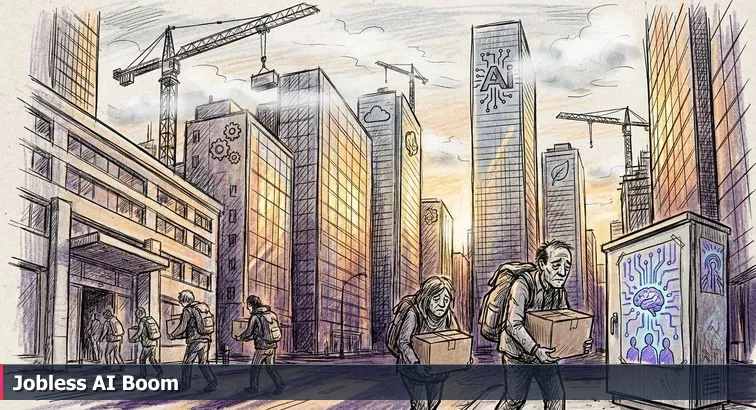
San Francisco ended January 2026 with a stark split-screen: AI firms signed some of the largest funding and office deals since before the pandemic, even as thousands of local tech workers were laid off and overall headcount barely moved. Local coverage captured the mood, with the San Francisco Examiner reporting that the city was experiencing a “jobless AI boom,” as capital poured into a handful of high-profile players while traditional tech hiring plateaued.
“San Francisco is seeing a ‘jobless AI boom.’” - San Francisco Examiner, technology desk
On the capital side, January headlines reinforced the Bay Area’s status as the command center for frontier AI. Waymo prepared a $16 billion raise at a roughly $110 billion valuation, Anthropic locked in a full-building downtown lease, and multiple AI startups closed fresh nine-figure rounds. Office demand from tech had already risen 165% in 2025, according to one leasing index cited by local business press, and AI searches now accounted for a significant share of active space requirements.
The labor picture looked very different. Big Tech incumbents including Amazon, Google, Pinterest and Autodesk announced new cuts or WARN notices that hit Bay Area offices, while Meta trimmed more than 1,000 roles at Reality Labs. LinkedIn data showed “Founder” and “Business Development” titles growing faster than classic mid-level engineering roles, suggesting that San Francisco was tilting toward a founder-and-VC town rather than a broad-based tech employment engine.
Layered on top of this economic decoupling, a new wave of California rules on AI transparency, training data and liability took effect on January 1, alongside higher salary thresholds and tighter limits on employer restraints. Whether those measures ultimately protect consumers or nudge the next generation of AI builders to friendlier jurisdictions may determine if San Francisco’s AI surge becomes a durable ecosystem or a short-lived, capital-heavy spike.
In This Update
- San Francisco’s January Tech Crossroads
- Amazon, Google, Meta Layoffs Reshape Bay Area Jobs
- OpenAI IPO Signal and Anthropic’s Full-Building Lease
- Waymo’s $16B Fundraise and Tesla’s Fremont Expansion
- Ricursive, Cellares, ClickHouse: January AI Megadeals
- Anthropic, Decagon, Intercom: Downtown Office Comeback
- California Laws SB 53, AB 2013, AB 316 Reshape AI & Labor
- The Jobless AI Boom: Founders and BD Roles Surge
- Nucamp: Affordable Upskilling for Laid-Off Tech Workers
- What to Watch Before Spring: IPOs, Tax, Offices, Talent
Find the breaking tech news update summarizing AI spending, Coinbase's insider breach, and what it means for tech workers.
Amazon, Google, Meta Layoffs Reshape Bay Area Jobs
Big Tech’s January cuts hit local hubs
Across the Bay Area, January’s most visible tech story was the return of large-scale layoffs. On January 29, Amazon announced 16,000 job cuts, roughly 9% of its corporate workforce, a move that rippled through its local offices from downtown San Francisco to the Peninsula. CNN described the restructuring as “staggering,” noting that “we’ve seen this before” in prior tech downturns, underscoring how deep this latest round ran across teams and geographies, according to CNN’s coverage of Amazon’s January 2026 layoffs.
“Amazon’s layoffs are staggering. We’ve seen this before.” - CNN Business analysis of Amazon’s January 2026 restructuring
They were not alone. New WARN notices filed by Google and Pinterest pointed to additional cuts affecting Bay Area campuses, while Autodesk confirmed 1,000 global layoffs in January on top of 1,350 roles eliminated in 2025. Executives framed the reductions as a way to “reinvest in AI and cloud priorities,” echoing a broader pattern: trimming traditional software, marketing and operations headcount to free budget for data infrastructure, machine learning platforms and automation.
From safety net to selective employer
For local workers, the symbolism mattered as much as the numbers. Through the 2010s, FAANG and adjacent giants functioned as a de facto employment safety net; talented engineers, PMs and designers could usually land somewhere along the 101 corridor. January’s cuts signaled a shift: Big Tech was still hiring, but selectively and often for highly specialized AI roles, while mid-career generalists saw fewer obvious landing spots.
Yahoo Finance noted that firms like Google, Amazon and Pinterest were “planning new cuts” even as they increased AI investment, a pattern that left many Bay Area teams shrinking in headcount while expanding in scope, according to Yahoo’s report on the latest tech layoffs. Meta, meanwhile, reduced staff in its Reality Labs unit, reinforcing the message that even deep-pocketed incumbents were no longer guaranteed havens for displaced talent.
OpenAI IPO Signal and Anthropic’s Full-Building Lease
IPO signals and new wealth
OpenAI’s move to quietly prepare for a potential Q4 2026 IPO was one of January’s clearest signals that San Francisco remained the command center for AI capital. The San Francisco Business Times reported that the company had begun laying groundwork for a listing that could mint hundreds of new local millionaires and inject fresh liquidity into the city’s startup ecosystem, according to its daily digest on OpenAI’s IPO plans.
For founders and investors clustered around SoMa and Mission Bay, an OpenAI offering would likely trigger a familiar pattern: early employees turning into angel investors, new funds targeting AI spinouts, and more pre-seed rounds for specialized infrastructure and vertical applications. But unlike the broad hiring waves of the mobile and cloud eras, much of the upside this time appeared concentrated in a smaller pool of highly specialized researchers and infra engineers.
Anthropic’s bet on downtown
If OpenAI’s IPO prep highlighted capital markets, Anthropic underscored real estate. The AI safety-focused firm agreed in late January to take over an entire downtown tower, in what local media called one of San Francisco’s largest post-pandemic office leases, as detailed by the San Francisco Chronicle’s report on Anthropic’s expansion.
“Emerging tech titan Anthropic [is set] to take over an entire office building in downtown S.F.” - San Francisco Chronicle, real estate desk
The deal signaled confidence in central San Francisco as the physical hub for AI labs and executive teams, even as many support and implementation roles increasingly gravitated to lower-cost regions. Together, OpenAI’s prospective IPO and Anthropic’s full-building lease suggested a future in which the Bay Area serves as the boardroom and brain trust of the AI industry - while the heavier hiring, and some tax base, may land elsewhere if California’s regulatory and cost pressures continue to climb.
Waymo’s $16B Fundraise and Tesla’s Fremont Expansion
Waymo’s mega-round and the AV capital stack
Two hardware-heavy bets stood out in January’s AI frenzy: autonomous driving and electric vehicles. Alphabet’s self-driving unit Waymo moved to raise about $16 billion at a roughly $110 billion valuation, underscoring how much capital was chasing full-stack autonomy. The prospective round, detailed in a report from Fortune on Waymo’s funding push, would rank among the largest private financings for a Bay Area tech company since the pre-IPO days of Uber.
For San Francisco, the implications went beyond another eye-popping headline. Waymo’s robo-taxi operations, mapping teams and simulation work are deeply tied to local talent and streets, meaning fresh capital is likely to flow into specialized roles in robotics, sensor fusion, and safety engineering rather than broad software hiring. It also reinforced a broader pattern in January: the biggest checks were going to capital-intensive, defensible platforms that could afford rising compliance and infrastructure costs.
Tesla doubles down on Fremont
On the manufacturing side, Tesla announced new expansion plans for its Fremont factory late in the month, adding capacity for robotics-heavy production just as many software employers were cutting staff. While the company has shifted some corporate functions to Texas, the Fremont facility remained a major Bay Area industrial anchor, supporting thousands of direct jobs and a regional supply chain in advanced manufacturing, automation and EV components.
Those moves landed as property data showed AI and automation-focused firms driving much of San Francisco’s commercial search activity. A recent office-leasing index found that AI companies accounted for a substantial share of the roughly 8 million square feet of space firms were actively seeking in the city, according to new figures cited by VTS’s January 2026 leasing report. Taken together, Waymo’s capital stack and Tesla’s factory build-out highlighted a key shift: Bay Area growth was tilting toward high-investment, high-skill segments, even as mid-level tech roles remained under pressure.
Ricursive, Cellares, ClickHouse: January AI Megadeals
AI megadeals define January’s capital flows
Beneath the layoff headlines, investors kept writing very large checks to Bay Area-anchored AI startups. Palo Alto-based Ricursive Intelligence closed a massive $300 million Series A at a $4 billion valuation on January 30, one of the largest A-rounds ever for an AI company. South San Francisco’s Cellares raised $257 million in a Series D to automate cell therapy manufacturing, while San Francisco’s Upwind Security secured a $250 million Series B, earning unicorn status and reinforcing the city’s role in cloud security.
Data infrastructure also drew heavyweight backing. ClickHouse, a high-performance analytics platform with deep Bay Area roots, landed a $400 million Series D to push further into AI-powered cloud services. In the broader stack, voice-AI firm Deepgram raised $130 million in Series C funding, specialized chip startup Etched pulled in $500 million, and customer-service AI company Decagon closed a $250 million Series D at a $4.5 billion valuation, more than tripling its value in six months.
“AI-related companies once again dominated our ranking of the biggest funding rounds this week.” - Crunchbase News, venture funding roundup
These financings fit a wider pattern. Venture analysts noted that 2025 was the third-strongest year on record for startup funding, with AI and profitable companies leading the list of likely IPO candidates in 2026, according to Crunchbase’s 2026 tech and startup trends report. Capital was clustering around capital-intensive infrastructure, chips and tooling - segments best able to absorb regulatory and compute costs - rather than broad-based software plays.
| Company | Round | Amount | Primary Focus |
|---|---|---|---|
| Ricursive Intelligence | Series A | $300M | AI infrastructure |
| Cellares | Series D | $257M | AI-enabled cell therapy manufacturing |
| Upwind Security | Series B | $250M | Cloud and security |
| ClickHouse | Series D | $400M | Data platform & AI analytics |
Anthropic, Decagon, Intercom: Downtown Office Comeback
Flight to quality in the core
Downtown San Francisco’s skyline looked a little less empty in January as AI and high-growth tech firms continued to consolidate into the best buildings. New data showed citywide office vacancy improving by roughly 370 basis points year over year, with “trophy” and Class-A properties posting more than 433,000 square feet of positive net absorption, according to an office market report from CommercialSearch.
Anthropic’s decision to take over an entire downtown tower was the clearest AI-era symbol of that “flight to quality.” But it was part of a broader pattern. Customer-service AI unicorn Decagon finalized plans for roughly 70,000 square feet in a modern South of Market building, while Intercom signed a new 45,000-square-foot lease just off Market Street, maintaining its presence close to key transit hubs.
“Office Report: As vacancy eases, coworking bridges the gaps.” - CommercialSearch, national office market analysis
Coworking and hybrid patterns
Even as large tenants inked long-term deals, coworking and flexible space quietly filled in the gaps between traditional leases. Analysts noted that flexible operators were absorbing space in central business districts, allowing smaller AI teams and remote-first startups to maintain a San Francisco address without committing to full floors. That model fit a January reality in which many companies asked employees to be downtown one or two days per week, while keeping broader teams distributed across the Bay Area and beyond.
The Real Deal reported that both Decagon’s Financial District expansion and Intercom’s move near Market Street reflected a bet on transit-accessible locations with modern amenities, a trend mirrored by professional-services firms planning relocations into newer stock, as covered in its rundown of recent San Francisco office leases. For downtown, the message was clear: AI may not refill every tower, but it was beginning to redraw the map of which blocks felt alive.
| Tenant | Approx. Space | Submarket | Lease Type |
|---|---|---|---|
| Anthropic | Full building | Downtown core | Headquarters-style expansion |
| Decagon | ~70,000 sq. ft. | Financial District / SoMa edge | Growth-stage AI hub |
| Intercom | 45,000 sq. ft. | Market Street corridor | Consolidated downtown office |
| Coworking operators | Various | CBD and SoMa | Flexible hybrid footprint |
California Laws SB 53, AB 2013, AB 316 Reshape AI & Labor
January 1 marked a regulatory pivot for Bay Area tech. On the same day investors doubled down on frontier AI, California activated a slate of new laws aimed at governing how powerful models are built, what data they use, and who pays when things go wrong - while also raising wage floors and tightening the rules of the employment relationship.
SB 53 and AB 2013: Regulating the AI pipeline
SB 53, the Transparency in Frontier AI Act, now applies to developers whose training runs exceed 10²⁶ FLOPs, effectively capturing only the largest labs. It requires publication of safety and risk frameworks and mandates that “critical safety incidents” be reported within 15 days. King & Spalding called out that “new state AI laws are effective on January 1, 2026, but a new executive order signals disruption,” highlighting the uncertainty for companies planning their next training run, in a client alert on California’s AI regime.
“New state AI laws are effective on January 1, 2026, but a new executive order signals disruption.” - King & Spalding, client alert on California AI regulation
AB 2013, meanwhile, requires developers releasing generative models in California to disclose the datasets used for training - an attempt to address copyright and bias that also increases IP risk for commercial vendors, as summarized in JD Supra’s overview of new California AI laws.
AB 316 and new labor rules: Liability and cost
AB 316 closes the door on the “autonomous-harm defense” by keeping humans and corporate entities liable for damages caused by AI-driven decisions. For Bay Area firms deploying AI in lending, hiring, healthcare, or autonomous systems, that raises the stakes on monitoring, documentation and insurance.
On the labor side, California increased the “computer professional” overtime exemption to $122,573.13 annually (or $58.85/hour) and, through AB 692, largely banned “stay-or-pay” training repayment agreements. Those changes strengthen worker mobility and earning power - but also push employers, especially startups, to reserve in-state roles for the most senior and expensive talent while offshoring or relocating more junior positions.
| Law | Primary Focus | Key Requirement | Who’s Most Affected |
|---|---|---|---|
| SB 53 | Frontier AI training | Report safety frameworks & incidents over 10²⁶ FLOPs within 15 days | OpenAI, Anthropic, Big Tech labs |
| AB 2013 | Training data transparency | Disclose datasets used for generative models | Commercial model providers |
| AB 316 | AI liability | Bars “autonomous-harm” defense | Deployers in finance, health, AV, HR |
| AB 692 | Employment restraints | Bans most “stay-or-pay” training agreements | Tech employers and startup founders |
The Jobless AI Boom: Founders and BD Roles Surge
Plateaued headcount, shifting roles
Behind January’s megadeals, San Francisco’s tech employment remained stubbornly flat. Local reporting described a city where AI companies were driving growth without a commensurate rise in overall tech headcount, as large incumbents quietly pared back teams while retooling for automation. Nationwide, roughly 55,000 layoffs in 2025 explicitly cited AI as a contributing factor, underscoring how automation pressure was feeding into restructuring rather than broad new hiring.
Within that churn, the mix of roles started to change. LinkedIn data showed titles like “Founder” and “Business Development” among the fastest-growing job categories in San Francisco, signaling that growth was skewing toward small founding teams and dealmakers who could commercialize AI products, rather than traditional “software engineer II” or generalist PM positions. Experts interviewed by Inc. on AI and the future of work predicted more of this polarization as companies sought fewer but more leveraged hires.
“8 experts’ work and technology predictions for AI in 2026.” - Inc., on how AI is reshaping roles and careers
Founders, closers and AI translators
In practice, the hottest local demand clustered around three profiles: founders spinning out of Big Tech, business-development leads who could open doors in legacy industries, and “AI translators” such as solutions engineers and technical account managers who could bridge complex models and real-world workflows. Lists of the “best startups to work for” in San Francisco increasingly featured AI-native companies that prized these hybrid roles, according to rankings compiled by Built In San Francisco’s 2026 startup awards.
For mid-career engineers and operators, that shift meant fewer obvious corporate landing spots and more pressure to either skill up into infrastructure, security and data-heavy roles - or step into higher-risk, higher-upside founder and go-to-market paths that matched where the city’s AI capital was actually flowing.
| Role Type | Trend in SF | Typical Employer | Risk Profile |
|---|---|---|---|
| Founder | Rising | Early-stage AI startups | High risk / high upside |
| Business Development | Rising | Growth-stage AI & SaaS | Variable, tied to sales |
| AI Infra / Security Engineer | Growing | Funded AI platforms, cloud | Medium, skills-intensive |
| Mid-level Generalist Engineer | Flat to declining | Big Tech incumbents | Increasingly uncertain |
Nucamp: Affordable Upskilling for Laid-Off Tech Workers
Part-time reskilling for a volatile market
As January’s layoffs hit Big Tech and mid-sized startups across the Bay Area, many displaced workers were suddenly weighing whether to leave the region or invest in new skills. Traditional in-person coding bootcamps in San Francisco often charged $15,000-$20,000 and assumed students could forgo income for months - a tough proposition in a high-cost city.
Nucamp’s pricing and schedule advantage
Against that backdrop, Nucamp’s online, part-time model offered a different calculus. Its Full Stack Web and Mobile Development program ran 22 weeks at $2,604, while Back End, SQL and DevOps with Python lasted 16 weeks at $2,124. A Cybersecurity Fundamentals track spanned 15 weeks for $2,124, and a Solo AI Tech Entrepreneur Bootcamp ran 25 weeks at $3,980. All were designed around roughly 10-20 hours per week, with small live classes and built-in career services, allowing students to interview, consult or work part time while reskilling through Nucamp’s coding bootcamps.
Concrete paths for Bay Area workers
For a laid-off PM or operations lead in SoMa, the back-end and DevOps program offered a path into technical product or solutions engineering roles at AI startups. A former fintech operations specialist in the Financial District could use the full-stack track to move into internal tools or implementation engineering. Security-minded developers in Oakland had a way to pivot into SOC or DevSecOps roles through the cybersecurity course, while domain experts in health or logistics could use the AI entrepreneur bootcamp to prototype niche products and tap the region’s seed-investor network.
| Program | Duration | Tuition | Best Fit |
|---|---|---|---|
| Full Stack Web & Mobile | 22 weeks | $2,604 | Non-technical or front-end workers moving into engineering |
| Back End, SQL & DevOps | 16 weeks | $2,124 | PMs, IT staff targeting platform/data roles |
| Cybersecurity Fundamentals | 15 weeks | $2,124 | Engineers and analysts pivoting into security |
| Solo AI Tech Entrepreneur | 25 weeks | $3,980 | Domain experts launching lean AI startups |
What to Watch Before Spring: IPOs, Tax, Offices, Talent
As January closed, San Francisco’s AI boom had set up three tests for the rest of 2026: whether the IPO window reopened for flagship AI companies, how far Sacramento pushed on new taxes and regulation, and if downtown’s fragile office recovery could survive another year of hybrid work and cost pressures.
IPO window and AI liquidity
Venture analysts pointed to AI and profitable late-stage startups as leading IPO candidates this year, with names like OpenAI and Databricks frequently mentioned. A successful offering or two would inject fresh liquidity into the Bay Area, turning early employees into angels and seeding the next generation of spinouts. The tone heading into spring’s conference season, including events like TechCrunch Disrupt 2026, would be an early signal of how public-market investors were feeling about AI valuations.
Billionaire tax, relocations and office bets
At the same time, a proposed California “billionaire tax” and fresh AI rules raised the risk that founders and VCs might scale their companies elsewhere even if they still started them in San Francisco. The month ended with a warning shot: quantum computing firm D-Wave announced it would move its headquarters from Palo Alto to Florida, a shift its CEO tied to the Sunshine State’s tech ecosystem in comments reported by the Los Angeles Times.
“The state offers a rich scientific and educational environment, a growing pool of highly skilled tech talent, and a vibrant spirit of innovation that made it attractive to D-Wave.” - Alan Baratz, CEO, D-Wave
Locally, the key questions heading into spring were whether more high-profile firms followed D-Wave’s lead, whether AI tenants kept absorbing prime downtown space, and how many laid-off workers chose to leave versus retrain into AI-adjacent roles via bootcamps and employer-sponsored upskilling. Those choices, made one lease and one career at a time, would determine if San Francisco remained the AI era’s command center - or became just one stop on a more distributed innovation map.
| Signal to Watch | Upside Scenario | Downside Scenario | Impact on SF |
|---|---|---|---|
| AI IPOs | Successful listings, strong debuts | Delayed or weak offerings | More local angels vs. tighter capital |
| Billionaire tax & AI rules | Moderated proposals, clear guidance | Higher rates, heavier compliance | HQ growth vs. more relocations |
| Downtown leasing | Continued AI-led absorption | Stall in trophy-building demand | Stabilized core vs. lingering vacancies |
| Talent choices | Retooling into AI/security roles | Outmigration of mid-career workers | Deeper talent bench vs. shrinking base |
Explore the latest New York AI policy announcement and what it means for startups and engineers.
Breaking Detroit tech update: Oracle/OpenAI $7B data center and auto AI moves
Analysis: This Month's Chicago tech update on fintech, quantum, and office rebounds
Read the latest Miami tech news announcement summarizing D-Wave’s relocation and SB 1038 developments.
Atlanta tech announcement - fintech, AI funding, and the future of data center incentives

Irene Holden
Operations Manager
Former Microsoft Education and Learning Futures Group team member, Irene now oversees instructors at Nucamp while writing about everything tech - from careers to coding bootcamps.