









This Month's Latest Tech News in Miami, FL - January 31st 2026 Edition
By Irene Holden
Last Updated: February 2nd 2026
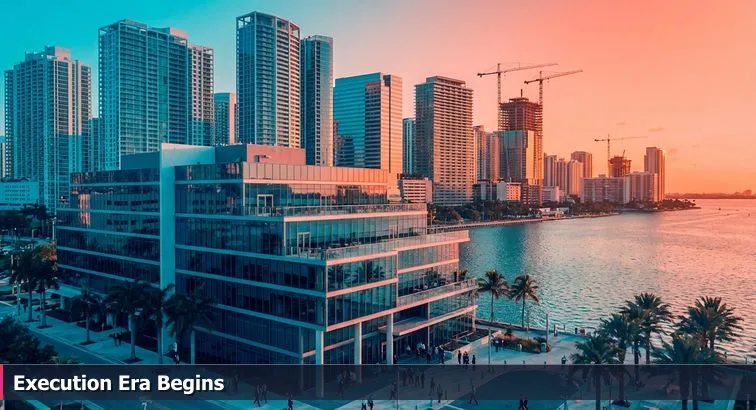
Key Takeaways
- D-Wave relocated its global HQ to Boca Raton with a $20 million FAU quantum-computer purchase to anchor local R&D.
- Florida advanced SB 1038 to let the CFO invest up to 10% of certain public funds in Bitcoin plus other digital assets.
- MSC Group opened a $100 million North American headquarters in downtown Miami to anchor trade-focused tech hiring.
- OpenEvidence raised $250 million to scale AI-driven medical tools, reinforcing Miami's applied-AI momentum.
- DevOps listings rose about 20% month-over-month, creating urgent demand for cloud-focused SRE skills in Miami.
- Nucamp's Full Stack program costs $2,604, offering part-time training for Miami workers targeting DevOps or product roles.
Quantum HQs and hard capital
South Florida’s tech economy shifted into a higher gear in January 2026. Quantum computing pioneer D-Wave Quantum confirmed it was moving its global headquarters and R&D center from Silicon Valley to the Boca Raton Innovation Campus, anchored by a $20 million deal for Florida Atlantic University to purchase a D-Wave quantum computer for joint research in optimization and AI, according to the D-Wave Boca Raton Innovation Campus announcement.
At the same time, Switzerland-based MSC Group cut the ribbon on a $100 million North American Cruise Division headquarters in downtown Miami, relocating more than 400 employees immediately and projecting roughly 1,900 jobs and about $300 million in recurring annual economic impact for Miami-Dade as the campus fills out over the next three years.
Policy as a competitive weapon
On the policy front, lawmakers advanced SB 1038 and companion HB 183, which would create a Florida Strategic Cryptocurrency Reserve. As outlined in the official bill text for SB 1038, the state’s Chief Financial Officer could allocate up to 10% of specified public funds, including General Revenue and Budget Stabilization funds, into Bitcoin and other digital assets under diversification and risk guidelines.
Supporters framed the move as both a hedge against inflation and a branding strategy to position Florida as the most crypto-friendly large state, while critics warned of volatility and taxpayer exposure. Coverage in outlets like Bitcoin Magazine and Yahoo Finance noted that few, if any, other states were exploring a comparable statewide crypto reserve in early 2026.
From buzz to execution
These institutional bets landed alongside a wave of funding in AI, climate tech, and cybersecurity and an estimated $3.5-$4 billion in venture capital that flowed into the Miami metro in 2025, according to an overview of the ecosystem published by Weidemann Tech. Local investors argued that the region was moving beyond branding exercises.
"There is now more focus on execution over storytelling as South Florida matures into a stable tech hub." - IDC Ventures, cited by Refresh Miami
For engineers, founders, and investors, the message was clear by January 31: Miami and the broader Florida corridor were no longer just hosting conferences and courting remote workers. With HQ relocations, a potential state Bitcoin reserve, and strong demand for AI, DevOps, and cybersecurity talent, the region was making a high-conviction bet that low taxes and light-touch regulation could sustain a self-reinforcing tech economy.
In This Update
- January snapshot: South Florida enters its execution era
- D-Wave moves global headquarters to Boca Raton
- MSC Group opens $100M North American headquarters in Miami
- SB 1038 and the Florida Bitcoin reserve
- Propy and MoonPay accelerate Miami’s crypto-fintech ecosystem
- Funding surge: OpenEvidence, Exowatt, CyberFOX and AI unicorns
- Jobs and training: DevOps, cloud, cybersecurity and Nucamp
- Neighborhood playbook: Brickell, Wynwood, Boca Raton and Coral Gables
- Florida Tech Corridor: Orlando, Tampa and Jacksonville link up
- Community pulse and civic tech opportunities
- What this means for you: concrete action steps
Find the breaking tech news update summarizing AI spending, Coinbase's insider breach, and what it means for tech workers.
D-Wave moves global headquarters to Boca Raton
From Palo Alto R&D to Boca Raton campus
In one of January’s most consequential relocations, D-Wave Quantum said it would shift its global headquarters and core R&D operations from Palo Alto to the Boca Raton Innovation Campus (BRiC), the former IBM complex where the original PC was developed. As first detailed by the South Florida Business Journal, the move included plans to bring senior executives and key technical teams to Boca Raton, positioning South Florida as a base for commercial quantum computing research and product development rather than just a satellite office.
Anchoring the relocation, Florida Atlantic University agreed to purchase a D-Wave system for $20 million, creating a joint research platform focused on optimization problems and AI-adjacent workloads. The system is expected to serve both FAU researchers and industry partners across logistics, finance, and healthcare.
Why Boca, and why now
BRiC’s legacy as an R&D campus, combined with Florida’s lack of a state income tax and comparatively light-touch regulatory environment, helped tip the scales. Local coverage in Refresh Miami’s report on the D-Wave relocation highlighted how the deal aligned with state and regional efforts to attract deep-tech tenants, not just software sales offices.
"D-Wave’s HQ move to Boca Raton puts South Florida firmly on the quantum map." - Refresh Miami
What it means for local talent
For engineers and researchers from Miami up through Palm Beach County, D-Wave’s arrival opened a new tier of roles in quantum software, physics and algorithms, cloud infrastructure, and applied AI. The FAU partnership also created a clear academic-to-industry pathway, with students able to work on production-grade quantum systems without leaving the region.
If hiring scales as expected through 2026, Boca Raton is poised to function as a deep-tech counterweight to Brickell’s fintech-heavy scene, giving South Florida a more diversified - and more resilient - tech base than it had during the early, conference-driven “Miami Tech” years.
MSC Group opens $100M North American headquarters in Miami
A cruise giant makes a long-term Miami bet
Cruise and shipping giant MSC Group quietly turned downtown Miami into its North American nerve center in January, opening a new headquarters for its Cruise Division that represented a $100 million capital commitment. The glass-and-steel office anchors a broader strategy to consolidate executive, operations, and technology teams in South Florida, reinforcing Miami’s role as a global trade and travel hub rather than a seasonal cruise port.
According to coverage of the ribbon-cutting by Travel Agent Central’s report on MSC’s Miami headquarters, the company planned to bring more than 400 employees into the building in the near term, with another 1,500 additional jobs expected over the next three years as teams across operations, customer experience, and corporate functions migrated to the city.
Scale, space, and economic signal
The headquarters spans roughly 130,000 square feet across multiple floors, giving MSC room to add engineering, data, and digital-product staff as it modernized fleet management, pricing systems, and guest services. The size of the buildout placed the project among the more significant private-sector office bets downtown Miami had seen since the pandemic, further tightening an office market already reshaped by finance and tech relocations.
New demand for travel-tech and enterprise talent
Behind the cruise branding, the move created demand for roles that looked more like a SaaS or logistics company than a hospitality brand. MSC’s Miami buildout was expected to need data engineers to unify booking and loyalty platforms, customer-experience technologists to personalize offers across channels, and cybersecurity and AI specialists to harden and optimize a global fleet.
Fox Business, in its coverage of MSC’s “strategic bet” on Florida, framed the headquarters as part of an industry-wide shift toward more technologically sophisticated, analytics-driven cruise operations - exactly the kind of embedded, long-horizon investment Miami boosters argued would differentiate this cycle from earlier, more speculative waves of corporate interest.
SB 1038 and the Florida Bitcoin reserve
A bold experiment in state-level crypto policy
While corporate relocations grabbed headlines, Florida lawmakers spent January testing how far the state was willing to go to differentiate its tech and financial climate. SB 1038 and companion HB 183 advanced through committee, proposing a Florida Strategic Cryptocurrency Reserve that would let the Chief Financial Officer invest up to 10% of specified public funds, including General Revenue and Budget Stabilization funds, in Bitcoin and other digital assets.
The bills outlined diversification and risk-management rules mirroring traditional investments, but the core idea was disruptive: put a portion of taxpayer-backed capital directly into volatile, non-sovereign assets. Coverage in outlets such as Bitcoin Magazine’s report on Florida reviving its Bitcoin reserve push stressed that no other large state had moved this far toward holding Bitcoin on its balance sheet in early 2026.
Branding, hedge, or unnecessary gamble?
Supporters framed the proposal as both macro hedge and marketing tool. By allocating a defined slice of reserves into Bitcoin and select digital assets, they argued, Florida could diversify away from exclusive dependence on U.S. Treasuries while signaling to crypto founders and funds that the state was “all in” on digital finance.
Critics in hearings and op-eds countered that Bitcoin’s drawdowns - historically exceeding 70% in past cycles - made it an inappropriate vehicle for public money. They warned that a sharp crypto market reversal could trigger political backlash and pressure future legislatures to unwind the strategy, muddying Florida’s fiscal reputation.
Implications for Miami’s fintech scene
For Miami’s crypto and fintech ecosystem, the signal mattered almost as much as the balance sheet impact. A state-sanctioned Bitcoin reserve would reinforce the city’s positioning as a crypto-friendly jurisdiction at a time when regulators in other coastal hubs were tightening the screws. Whether the bill ultimately passes or is watered down, January’s legislative momentum showed Florida was willing to use policy, not just tax arbitrage, to compete for the next wave of financial innovation.
Propy and MoonPay accelerate Miami’s crypto-fintech ecosystem
Propy turns blockchain into real estate plumbing
Miami-based proptech and Web3 startup Propy closed a $100 million private credit facility on January 29 to modernize title and escrow and fund acquisitions of traditional title companies in California and Texas. The deal positioned Propy not as a speculative token play but as back-office infrastructure for a real-estate market that still runs heavily on paper and fax.
By the end of January, Propy had processed more than $5 billion in real estate transactions, using blockchain to create tamper-evident audit trails and secure settlements. That combination of scale and compliance-minded tooling underscored why Miami’s real-estate-heavy economy has treated tokenization and smart contracts as workflow technology rather than a sideshow.
MoonPay pushes Web3 into mainstream sports
On the consumer side, crypto payments company MoonPay, headquartered in Miami, announced a multi-year title partnership with X Games that rebranded the competition as the MoonPay X Games League. The agreement, described by law firm Cooley as a “landmark title partnership” in its coverage of the deal, signaled a bid to put Web3 wallets and loyalty mechanics in front of a mass audience of action-sports fans via the MoonPay-X Games partnership announcement.
For Miami, that meant more than branding: MoonPay’s push into live events created local demand for engineers building wallet infrastructure, NFT-style collectibles, and data systems that can handle millions of casual users who have never touched a crypto app before.
Why it matters for Miami builders
Taken together, Propy’s debt facility and MoonPay’s sports partnership showed Miami’s crypto sector maturing into payments and property infrastructure with clear revenue models. They also landed in the same month lawmakers advanced a state-level crypto reserve strategy, covered by outlets like Yahoo Finance’s report on Florida’s crypto push, reinforcing the message that Florida was betting on digital assets as a core part of its financial identity.
For local engineers and founders, January’s deals pointed toward practical Web3 work - title automation, compliant payments, and large-scale consumer experiences - rather than speculative token launches, with Miami emerging as a preferred testbed.
Funding surge: OpenEvidence, Exowatt, CyberFOX and AI unicorns
Big checks for applied AI and infrastructure
January brought a funding spike that pushed South Florida further into serious deep-tech territory. Healthcare AI company OpenEvidence raised $250 million for decision-support tools, renewable-energy startup Exowatt closed a $120 million Series A for next-gen power infrastructure, and Tampa-based CyberFOX secured a nine-figure growth investment (more than $100 million) from Level Equity to scale its MSP-focused cybersecurity platform. A separate Miami AI startup crossed the $1 billion valuation mark after a $100 million round, underscoring how quickly the region’s AI profile has grown, as noted in an ecosystem overview by Weidemann Tech’s survey of the Miami startup scene.
Key January rounds at a glance
| Company | Sector | Amount | Primary Focus |
|---|---|---|---|
| OpenEvidence | AI in healthcare | $250M | Clinical decision support |
| Exowatt | Climate / energy | $120M Series A | Renewable power infrastructure |
| CyberFOX | Cybersecurity | 9-figure growth round | MSP-focused security tools |
Security and corridor effects
CyberFOX’s investment, reported out of Tampa Bay, highlighted how the statewide corridor is knitting together: Miami’s MSPs and SaaS companies now have a homegrown security vendor scaling up just a few hours away. Combined with Miami fintech and healthtech raises, the pattern pointed toward capital concentrating in applied AI, resilience, and security rather than speculative consumer apps.
Why this wave was different for workers
Local workforce groups argued that this funding cycle would be judged less on headlines and more on productivity. In a LinkedIn analysis of 2026 trends, Miami Tech Works wrote that employers would shift from experimentation to measurement around AI tools.
"Employers are going to start talking about measuring the impact of AI in the workplace, not just playing with tools." - Miami Tech Works, LinkedIn post
For engineers and data professionals from Miami to Tampa, January’s deals translated into concrete demand for roles in AI infrastructure, MLOps, and cybersecurity - signals that the funding wave was tied to long-term operational change, not just paper valuations.
Jobs and training: DevOps, cloud, cybersecurity and Nucamp
Demand spikes in DevOps, cloud and security
Hiring data in January underscored how South Florida’s tech market has shifted from experimentation to execution. A national Tech Career Monthly analysis from Zero To Mastery found listings for DevOps roles jumped by about 20% month over month, with software engineering and cybersecurity close behind, reflecting companies’ struggle to manage growing cloud complexity and attack surfaces. Miami employers mirrored that pattern as local firms continued cloud migrations and modernization projects, especially in finance, logistics, and healthcare, according to the January 2026 job market trends report.
The local “talent pipeline paradox”
Regional workforce events in January highlighted a structural mismatch: employers insisted on multi-year experience with Kubernetes, CI/CD, and security frameworks but were hesitant to fund reskilling for junior or mid-career talent. At the “2026 Shift” gathering, hosted with input from Miami Tech Works, speakers argued that traditional degree-driven hiring was too slow for current demand and that alternative credentialing would have to carry more weight.
"Industry leaders described a 'talent pipeline paradox,' where demand for experienced talent far outpaces employers' willingness to invest in training." - Panelists at “The 2026 Shift” event, via Miami Tech Works
Nucamp as a practical on-ramp
Against that backdrop, part-time bootcamps emerged as a market-driven fix. Nucamp, an international online provider, offered Miami residents several targeted tracks in January, all structured at 10-20 hours per week with live instruction, small cohorts, and included career services. The promise was simple: acquire employer-relevant skills without pausing full-time work or taking on six-figure debt.
| Program | Duration | Tuition | Role Target |
|---|---|---|---|
| Full Stack Web and Mobile Development | 22 weeks | $2,604 | Front-end / full-stack engineer |
| Back End, SQL and DevOps with Python | 16 weeks | $2,124 | DevOps / cloud / platform roles |
| Cybersecurity Fundamentals | 15 weeks | $2,124 | Security analyst / SOC junior |
| Solo AI Tech Entrepreneur Bootcamp | 25 weeks | $3,980 | AI-focused founder |
For a support rep in Doral eyeing an SRE track or a mid-career finance professional in Brickell looking to pivot into cybersecurity, these options provided a relatively low-cost, market-led bridge into the roles Miami companies were actually posting. Details on schedules and curricula were available directly through Nucamp’s coding bootcamp programs, giving locals a way to bet on their own skills rather than waiting for subsidized training to arrive.
Neighborhood playbook: Brickell, Wynwood, Boca Raton and Coral Gables
Across South Florida, January’s corporate moves clarified a neighborhood playbook: Brickell as “Wall Street South,” Wynwood as creative-tech lab, and Boca Raton and Coral Gables as engineering and infrastructure anchors. At a recent Miami “Table of Experts” roundtable, business leaders argued that the region’s evolution from a gateway to Latin America into a gateway to the world would hinge on how these districts balance tech growth with housing and transport capacity.
Brickell: finance, data and risk jobs cluster
Brickell’s office towers continued to densify white-collar tech roles. A Bisnow analysis reported CI Financial expanding from 19,000 to 34,000 square feet at 830 Brickell, while Black & Veatch committed to grow its local workforce after signing new space in nearby Coral Gables, underscoring confidence in the market’s long-term prospects, according to Bisnow’s report on post-pandemic tenant expansion. Allianz Commercial’s new Latin America hub in Brickell added another layer of insurance, risk-modeling, and fintech-adjacent jobs.
Wynwood: proptech and creative-tech experimentation
To the north, Wynwood solidified its role as the experimental edge of Miami tech. Retail-focused firm Ripco Real Estate grew its Miami team by about 30% after moving into The Gateway at Wynwood, using the neighborhood’s arts-and-startups mix to attract both tenants and talent. For early-stage founders, this submarket offered comparatively lower office costs than Brickell and a dense calendar of meetups and pop-ups.
Boca Raton and Coral Gables: engineering and R&D spine
Farther up the corridor, Boca Raton’s innovation campus became a magnet for deep-tech R&D, while Coral Gables pulled in infrastructure-heavy tenants like Black & Veatch and regional insurance operations. Allianz’s Brickell-based Latin America hub, profiled by Financial IT’s coverage of the opening, highlighted how global firms were pairing customer-facing teams with data and analytics roles in these quieter but highly connected districts.
As one participant in the “Miami’s future course” roundtable put it, “Growth is real, but it only becomes sustainable if we solve for housing affordability and infrastructure in parallel.” - a reminder that, for workers and founders choosing neighborhoods, commute times, rents, and insurance costs now matter as much as office views.
Florida Tech Corridor: Orlando, Tampa and Jacksonville link up
A statewide corridor takes shape
Florida’s tech story in January was bigger than Miami. While South Florida locked in new headquarters and crypto policy, Orlando, Tampa, and Jacksonville each logged milestones that quietly stitched together a statewide innovation corridor, giving Miami founders and workers more options without crossing state lines.
Orlando: simulation, travel and 30 years of the Corridor
Central Florida marked the 30th anniversary of the Florida High Tech Corridor, a long-running partnership connecting universities and industry around space, simulation, and defense. As the Orlando Economic Partnership noted in its regional perspective, January also saw billing platform Biller Genie open a new 14,000-square-foot headquarters and Travel + Leisure Co. cut the ribbon on a global HQ in downtown Orlando, reinforcing the city’s pull for travel-tech and SaaS firms, according to the Orlando Economic Partnership’s January 23 update.
Tampa: vertical software and industrial tech scale
On the Gulf Coast, Tampa Bay’s tech economy leaned on vertical software and industrial tools. Lakewood Ranch-based Roper Technologies approached roughly $8 billion in annual revenue, driven by a strategy of acquiring niche software firms and keeping them relatively autonomous. The company’s growth underlined how Florida now hosts not only startups but also publicly traded software consolidators, as covered by Business Observer’s profile of Roper’s revenue climb.
Jacksonville: a fintech bridge to the UK
Further north, Jacksonville’s Jax Hub initiative focused on building a fintech corridor linking Florida and the United Kingdom, giving startups a way to pilot products with partners like Paysafe and access European markets without relocating. For Miami founders in payments or compliance, that meant a plausible expansion path up the state: launch in South Florida, test cross-border offerings via Jacksonville, and plug into UK and EU ecosystems through that bridge.
| Region | Core Strength | January Highlight | Opportunity for Miami |
|---|---|---|---|
| Orlando | Space, simulation, tourism tech | 30 years of Florida High Tech Corridor | Partner on travel-tech, AI simulation |
| Tampa Bay | Vertical and industrial software | Roper nearing $8B revenue | Enterprise sales, B2B integrations |
| Jacksonville | Fintech and payments | Jax Hub UK corridor pilots | LatAm-US-Europe fintech expansion |
Community pulse and civic tech opportunities
Founders, resilience and real-world problems
Beneath January’s headlines, Miami’s tech scene continued to attract founders looking for more than term sheets. One profile of the local ecosystem described how WeChangedIt founder Randy Garrett used the city as a reset point to build a mental health platform aimed at providing a “safe space to find real support” away from doomscrolling, reflecting a broader shift toward products that solve visible, human problems rather than chasing speculative trends.
Civic workshops as product discovery labs
City Hall also leaned into tech-enabled civic engagement. Commissioner Sabina Covo Pardo’s “Partnering for Progress” civic workshop series, which held its second session in late January, invited residents to learn how to navigate zoning, budgeting, and public meetings using digital tools and structured exercises. The program, outlined in a City of Miami notice on the workshop, effectively turned community complaints into a backlog of potential civic-tech features: better 311 reporting, neighborhood data dashboards, and streamlined permit workflows.
Where builders can plug into civic tech
| Channel | What happens there | Civic-tech opportunity |
|---|---|---|
| Civic workshops | Residents surface infrastructure and safety issues | Build reporting apps, feedback tools, open-data interfaces |
| Neighborhood groups | Organize around housing, parking, transit | Create lightweight coordination and mapping platforms |
| Online forums | Debate Miami’s tech identity and growth | Prototype discovery engines for local resources and services |
A hub in progress, not yet a finished product
Online, locals and newcomers kept expectations in check. In a widely shared thread, one user argued that while the city’s momentum was undeniable, Miami “still has a ways to go” before matching the depth of Silicon Valley’s ecosystem, a discussion captured on Threads’ debate over Miami as a tech hub.
"Miami has definitely grown as a tech hub, but it still has a ways to go compared to the Bay Area." - @notioncoach, creator coach, Threads
For builders, that gap is less a warning sign than an arbitrage opportunity: a fast-growing market where community workshops, neighborhood meetings, and online debates double as user research for the next generation of civic and social infrastructure startups.
What this means for you: concrete action steps
For people living and building in South Florida, January’s news translated into immediate to-do lists. Headquarters relocations, a proposed state Bitcoin reserve, and a run of AI and cybersecurity funding signaled that the region’s tech story was shifting from lifestyle branding to performance expectations.
For tech workers: specialize and be location-aware
Engineers, analysts, and product managers saw demand concentrate around cloud operations, security, and applied AI. Local workforce group Miami Tech Works emphasized in January that employers were beginning to evaluate AI and automation by measurable impact, not experimentation, and urged workers to align upskilling with those metrics, as outlined in its overview of local tech opportunities. Practically, that meant pairing a core specialty - such as DevOps, data, or cybersecurity - with basic literacy in AI tooling and model integration.
For founders: build where Florida has a structural edge
For founders, the playbook that emerged in January was to lean into sectors where Florida’s business climate and industry base provided leverage: proptech around real estate, fintech and payments, healthcare AI, climate resilience, and travel-tech tied to cruise and tourism. With a statewide set of hubs in Miami, Orlando, Tampa, and Jacksonville, the path looked more like stitching together customers across the corridor than chasing subsidies. Early-stage teams also gained another on-ramp via the Florida chapter of Founder Institute, which continued to recruit for its accelerator cohorts, as highlighted in its guidance for building Florida startups.
For investors and executives: treat Miami as a long-term node
Executives weighing site-selection decisions were encouraged to treat Miami and South Florida as a durable node in a larger Florida tech network, not a satellite for back-office work. The mix of headquarters, R&D, and fintech activity suggested that capital and talent were responding to a predictable combination of taxes, regulation, and connectivity. For investors, the practical takeaway was to back teams that could execute within that framework - moving fast under light-touch rules while self-imposing discipline on risk, security, and compliance.
| Who you are | Main focus | Geography to target | First move |
|---|---|---|---|
| Tech worker | Cloud, security, applied AI skills | Brickell, Wynwood, Boca, Coral Gables | Pick one specialty and enroll in a focused upskilling track |
| Founder | Regulated, infrastructure-heavy niches | Miami plus Orlando/Tampa/Jacksonville customers | Validate demand with corridor partners before raising big rounds |
| Investor/executive | Long-horizon, execution-driven bets | Statewide Florida tech corridor | Treat Florida as a multi-city platform, not a one-city experiment |
Industry readers should review the DMV tech announcement (Jan 2026) about defense robotics and AeroVironment's expansion.
January 2026 Atlanta tech roundup: Silicon Peach fintech expansion and policy moves
Boston tech announcement: $14.5B Boston Scientific deal - read the full January 2026 roundup
Bookmark our latest Austin tech news and policy update for hiring and career implications.
Breaking: Columbus tech ecosystem growth and policy update (Jan 2026)

Irene Holden
Operations Manager
Former Microsoft Education and Learning Futures Group team member, Irene now oversees instructors at Nucamp while writing about everything tech - from careers to coding bootcamps.