









How to Become an AI Engineer in Yuma, AZ in 2026
By Irene Holden
Last Updated: April 2nd 2026
Quick Summary
To become an AI engineer in Yuma, AZ by 2026, follow a structured 12-month learning roadmap that blends foundational skills with specialization in local industries like defense and agriculture. Commit about 15 to 20 hours weekly to master Python, machine learning, and MLOps, leveraging local programs such as Nucamp's bootcamps to build a portfolio that appeals to employers like Yuma Proving Ground. With Yuma's lower cost of living and sunny climate, you'll be ready for tech-adjacent roles in a growing ecosystem by next year.
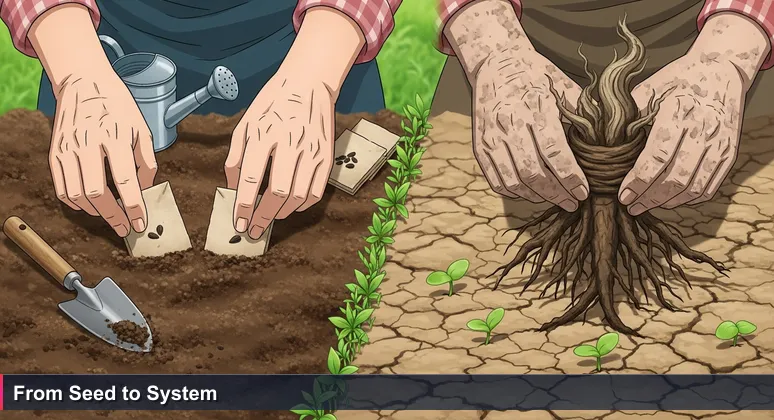
Every farmer in Yuma knows the gap between the perfect seed packet and the first harvest. Your journey to becoming an AI engineer here follows the same law: success depends on starting with the right, hardy tools adapted to our environment. This isn't about having a four-year degree, but cultivating a builder's mindset - a willingness to learn continuously through solving practical problems, a skill valued from the proving grounds to the packing sheds.
Your Foundational Setup
Beyond mindset, you need concrete tools. A reliable computer is non-negotiable - aim for at least 8GB of RAM, though 16GB is recommended for training more complex models. While a top-tier GPU isn't essential day one, planning for it will pay dividends. This upfront investment is more manageable here, where a lower cost of living compared to coastal tech hubs preserves your capital for learning.
The Essential Software Stack
Your primary tool will be Python 3.8+, the universal language of AI. You'll also need to install Git for version control and create a GitHub account to host your growing portfolio. For writing code, the free and powerful VS Code is the editor of choice for many professionals. Finally, secure accounts with cloud platforms like AWS, Google Cloud, or Azure; most offer generous free tiers for new users, which you'll use to deploy projects beyond your local machine.
Plan for a consistent 15-20 hours per week of dedicated learning and building. This commitment is your irrigation schedule - without it, even the best seeds won't sprout. With mid-level AI engineer salaries in the region growing by 9.2% in early 2026, significantly outpacing general IT, the investment in time and tools is one that the local market is ready to reward.
Steps Overview
- Gear Up for Success: Prerequisites and Tools
- Phase 1: Build Your Core with Python and Math
- Phase 2: Dive into Machine and Deep Learning
- Phase 3: Specialize and Deploy AI Models
- Verify Your AI Engineering Progress
- Common Questions
Get the latest on AI job markets and salaries in Yuma, Arizona in 2026 from this comprehensive resource.
Phase 1: Build Your Core with Python and Math
This initial phase is about establishing your bedrock - the equivalent of preparing the desert soil for irrigation. Rushing to "get to the AI" without this foundation is the most common mistake, guaranteeing your progress will wither later. You'll spend months 1-4 mastering the tools that manipulate data, which is the lifeblood of Yuma's industries, from sensor logs at Yuma Proving Ground to crop yield datasets.
Cultivate Python and Data Wrangling
Your first task is achieving fluency in Python, focusing on data structures, functions, and object-oriented principles. Immediately apply this by mastering NumPy for numerical operations and Pandas for data manipulation. These libraries are your plow and harrow for preparing real-world data.
- Complete a structured beginner Python course.
- Build a project using Pandas to clean and analyze a local dataset, like Arizona agricultural exports or public weather station data.
Pro tip: Practice daily. Consistency is more valuable than marathon sessions. A structured local starting point is the AI and Machine Learning Level-2 Certificate at Arizona Western College, which covers these practical foundations.
Irrigate with Mathematical Intuition
Concurrently, you must understand the soil itself: the mathematics that make AI algorithms work. Focus on core concepts - vectors and matrices (linear algebra), gradients (calculus), and statistical distributions. This isn't about becoming a theorist, but gaining the intuition to trust your models.
Warning: Don't learn all the math upfront before coding. This leads to burnout. Learn it in parallel, using visual resources like 3Blue1Brown's "Essence of Linear Algebra" series. When you use a matrix operation in NumPy, dive into the theory behind it. This hybrid approach ensures the knowledge takes root.
Phase 2: Dive into Machine and Deep Learning
Now you'll plant the seeds of intelligent systems and watch the first green shoots emerge. In months 5-8, you transition from foundational programming to the core algorithms that power prediction and automation, directly applicable to Yuma’s logistics and agricultural cycles.
Plant the Seeds of Classical Machine Learning
Before deep learning, master the robust, interpretable models that solve many real-world problems. Using Scikit-learn, learn algorithms like linear regression, decision trees, and ensemble methods. Crucially, master model evaluation - cross-validation, precision, recall - to trust your results.
- Learn the theory and application of key algorithms.
- Build a time-series forecasting model, predicting water usage for irrigation or equipment failure rates, a stated need at Yuma Proving Ground.
This is where structured guidance accelerates growth. Programs like the University of Arizona's Online Machine Learning Engineering & AI Bootcamp focus on turning these fundamentals into deployable projects, which is exactly what local employers want to see.
Nurture Deep Learning Shoots
Deep learning, particularly computer vision, drives innovation here - from autonomous systems testing to crop disease detection. Choose one core framework: TensorFlow/Keras (industrial standard) or PyTorch (highly flexible). Understand neural network fundamentals, then build your first Convolutional Neural Network (CNN).
Your project should mirror local needs: build a computer vision model to classify healthy and diseased crops from leaf imagery. Warning: It's easy to build a model that fails in the real world (overfitting). Regularization and validation techniques are your essential tools to prevent this.
“This field rewards builders over studiers.” - Industry practitioners emphasize that real-world projects teach nuances that reading never will.
Phase 3: Specialize and Deploy AI Models
Your plants are growing; now you must tend them toward a fruitful harvest. Months 9-12 are about specializing in Yuma-relevant domains and proving you can move a model from a notebook experiment to a living, breathing tool. This phase differentiates a hobbyist from a job-ready engineer who understands that by 2026, AI engineers are responsible for the infrastructure, APIs, and monitoring that make models usable.
Hybridize for Local Domains
To stand out, you must speak the language of local industries. Deepen computer vision for defense applications or advance time-series forecasting for agriculture and logistics. Simultaneously, learn the modern Large Language Model (LLM) stack, including Retrieval-Augmented Generation (RAG), crucial for building tools that can query complex manuals at Yuma Regional Medical Center or summarize technical reports.
Your portfolio centerpiece should be an end-to-end, deployable application. Examples include a RAG-powered Q&A system for military equipment manuals or a web application that analyzes drone imagery to highlight potential pest infestation in fields.
Engineer for the Real World (MLOps)
An AI model in a Jupyter notebook is a science experiment. One integrated into a reliable system is a product. You must learn to containerize applications with Docker, deploy models as APIs using FastAPI or Flask, and implement basic cloud deployment on AWS, Google Cloud, or Azure.
Pro tip: "Perfect is the enemy of good." Your first deployment needs to work, not be elegant. Iterate from there. Take your best project, containerize it, deploy it, and document the process. This skillset is a major differentiator, with local salaries for these production-ready roles reaching $160,757 to $175,262. Network with industry leaders applying these skills at events like Yuma Tech Week 2026 to connect your cultivation to the market.
Verify Your AI Engineering Progress
You haven't succeeded when you finish a course, but when you can prove you can build what Yuma needs. This is your harvest - the tangible proof that you've cultivated general knowledge into something that thrives in our specific soil. As industry experts note, the field has shifted toward engineers who can deliver production-ready ecosystems, not just trained models.
Your verification is a practical checklist. Use this to gauge your readiness for Yuma's job market, where demonstrated ability often outweighs credentials alone.
- A Robust GitHub Portfolio: Showcase three to four polished projects. Include one classical ML project (e.g., a time-series forecast for irrigation), one deep learning project (e.g., computer vision for crop analysis), and one end-to-end deployed application. Your code must be clean, documented, and reproducible.
- Domain-Specific Knowledge: You should confidently discuss how AI applies to at least one of Yuma's major sectors - defense, agriculture, healthcare, or logistics - with portfolio work that reflects this understanding.
- Mastery of the Full Lifecycle: For your best project, be prepared to walk through every stage: data collection and cleaning, model training and evaluation, to deployment and basic monitoring.
- Community Engagement: Demonstrate proactive learning and networking by attending local events like Yuma Tech Week 2026 or participating in relevant online forums.
Meeting these benchmarks means you are ready to contribute to Yuma's economic ecosystem. With AI engineer salaries in the region reaching up to $175,262, your cultivated skill set is positioned for a harvest that rewards both your effort and our community's unique needs.
Common Questions
How long will it take me to become an AI engineer in Yuma, AZ?
With a focused 12-month roadmap, you can build the necessary skills for entry-level roles. Local programs like Nucamp's 25-week bootcamp offer structured paths to accelerate your journey into Yuma's tech ecosystem.
What kind of AI jobs can I find in Yuma, and are they growing?
Yuma's key industries, such as defense at Yuma Proving Ground and agriculture with large producers, increasingly need AI for tasks like data analysis and automation. The area's tech-adjacent roles are expanding, supported by events like Yuma Tech Week 2026.
Do I need a computer science degree to start learning AI in Yuma?
No, but a strong problem-solving mindset is essential. Options like Arizona Western College's Associate in Computer Science or affordable bootcamps like Nucamp, starting at $2,124, provide practical training without a traditional degree.
How does Yuma's lower cost of living help someone pursuing an AI career?
With living costs significantly below major West Coast metros, Yuma allows you to invest more in education or savings. This, combined with year-round sunny weather, creates an affordable environment to focus on skill development.
Are there local resources or communities for AI learners in Yuma?
Yes, Yuma has resources like Nucamp bootcamps and online programs from the University of Arizona, plus networking events such as Yuma Tech Week 2026. These help connect you with local employers and peers in the growing tech scene.
This article highlights Yuma's emerging AI startup ecosystem and its key players.
Get advice on how to land AI jobs in Yuma's key sectors from this analysis.
This article ranks the best tech companies for salary in Yuma, Arizona based on 2026 data.
This resource provides a detailed overview of Yuma's cybersecurity job market for 2026, covering key sectors.
Learn about leading startups recruiting new developers in Yuma, AZ for the upcoming year.

Irene Holden
Operations Manager
Former Microsoft Education and Learning Futures Group team member, Irene now oversees instructors at Nucamp while writing about everything tech - from careers to coding bootcamps.