









Is Yuma, AZ a Good City for a Tech Career in 2026?
By Irene Holden
Last Updated: April 2nd 2026
Quick Explanation
Yes, Yuma is a great city for a tech career in 2026, particularly if you specialize in fields like defense testing, AgTech, or renewable energy where roles can pay over $140,000. With a cost of living so low that an $85,000 salary delivers a lifestyle akin to $130,000 in bigger cities, it's ideal for mid-career professionals seeking stability and impact in a sunny, tight-knit community.
Forget the sprawling tech metropolis. Yuma’s economy is anchored by a powerful, stable foundation local developers call the "triple threat": defense testing, advanced agriculture (AgTech), and utility-scale renewable energy. Unlike Phoenix's software and semiconductor focus, Yuma's tech scene is defined by hardware, systems integration, and field operations - deploying technology with immediate, tangible impact.
This specialized focus is gaining statewide recognition. Yuma is participating in the inaugural Arizona Tech Week, with events showcasing local AgTech innovation and signaling growing momentum. A recent target industry analysis identified semiconductor device manufacturing and technical consulting as high-potential sectors, indicating a broadening of Yuma’s tech base beyond its core strengths.
Each of the "triple threat" industries is undergoing a profound tech-driven transformation. The Greater Yuma Economic Development Corporation highlights how these sectors create a niche but potent demand for skilled professionals who can work on next-generation Army equipment in the desert, AI-driven agricultural robots, and massive solar arrays engineered to power tens of thousands of homes.
What We Cover
- Yuma's Tech Market Uniqueness: The Triple Threat
- Defense & Aerospace: Bedrock of Stability
- AgTech: AI Meets Desert Farming
- Renewable Energy: The Green Tech Boom
- Salary vs Cost of Living in Yuma
- Education and Upskilling Pathways
- Community, Lifestyle, and Bigger Picture
- Who Yuma is Best For in Tech
- Commute and Remote Work Strategies
- The 2026 Verdict on Yuma Tech Careers
- Common Questions
Get the latest on AI job markets and salaries in Yuma, Arizona in 2026 from this comprehensive resource.
Defense & Aerospace: Bedrock of Stability
The Yuma Proving Ground (YPG) and Marine Corps Air Station (MCAS) Yuma are premier outdoor laboratories, creating constant demand for high-stakes tech roles, often requiring security clearances. These facilities are not just military bases but critical hubs for testing everything from autonomous vehicles to advanced aviation systems, offering long-term stability tied to federal contracts.
Consistent demand exists for hands-on engineering roles, such as the Engineering Technician positions at MCAS Yuma listed on Indeed, which focus on maintaining complex radar and telemetry systems. Major contractors like TRAX International and Astrion frequently post for Test Analysts and Engineers to conduct end-to-end validation of emerging Army technology, with listings available on platforms like TRAX International's career site.
Professionals in this sector describe a work environment that is "tight-knit, team-oriented," where individuals own their lane and see the direct impact of their work. This mission-driven focus, combined with the sector's insulation from broader market volatility, makes defense and aerospace the bedrock of Yuma's specialized tech economy.
AgTech: AI Meets Desert Farming
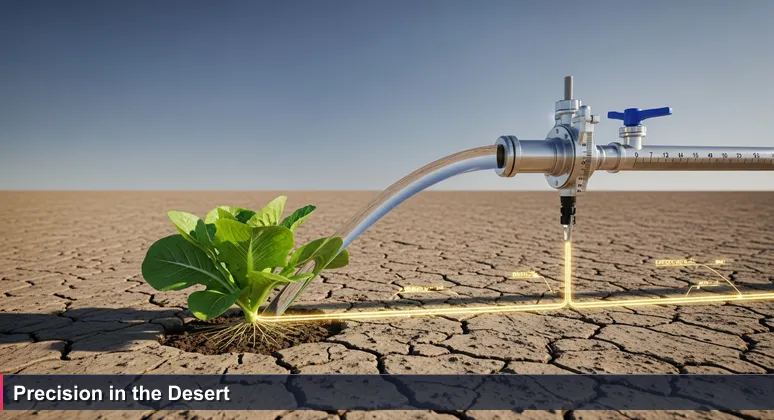
As the producer of over 90% of North America's winter leafy greens, Yuma is a global living laboratory for agricultural technology. The transformation is led by institutions like the Yuma Center of Excellence for Desert Agriculture (YCEDA), which is establishing a "Smart Farm" Innovation Hub complete with a private 10G wireless network to test AI, computer vision, and robotics for specialty crops.
The practical applications are groundbreaking. Research initiatives focus on deploying networks of IoT soil moisture sensors, drone-based imaging, and automated harvesters. As detailed in the YCEDA 2024 Annual Report, these technologies aim to optimize every drop of water and minimize pesticide use in the desert environment. This creates direct demand for Data Scientists, Robotics Engineers, and IoT Sensor Technicians who can bridge the gap between data analysis and field operations.
This innovation is showcased at events like the Desert Difference: Ag Tech Conference, a key networking hub for the sector. The work here epitomizes Yuma's tech model: leveraging cutting-edge AI-driven robots and computer vision not for abstract applications, but to solve the immediate, critical challenge of feeding the nation with sustainable precision.
Renewable Energy: The Green Tech Boom
Yuma's abundant sunshine - over 300 days per year - is fueling a construction boom that translates directly into long-term tech careers. Multiple utility-scale solar-plus-storage projects are creating hundreds of technical roles focused on monitoring, maintaining, and optimizing green energy infrastructure.
A prime example is the Pioneer Clean Energy Center, a 366 MWdc solar array developed by BrightNight. Once operational, it will require a full-time team of Grid Operations Engineers, Performance Analysts, and Maintenance Technicians to manage its integration into the power grid and ensure peak efficiency. Similar projects, like the Elizabeth Solar Project, promise sustained demand for these specialized skills.
The economic and employment impact of this sector is significant. An analysis by ARISEIA details how such projects contribute to local tax bases and create durable technical career pathways. For tech professionals, this represents a chance to work on frontier energy solutions while enjoying the stability of essential infrastructure roles rooted in Yuma's natural assets.
Salary vs Cost of Living in Yuma
This is where Yuma’s value proposition shines: the real wage - what your paycheck actually buys - is often superior to larger tech hubs. While base salaries may appear lower, drastically reduced living costs, especially for housing, create a higher quality of life and greater disposable income.
Salary data reflects a bifurcated market. Entry-level IT and tech support roles typically range from $17 to $27 per hour. However, for specialized, in-demand positions, the numbers climb significantly. According to Glassdoor's 2026 data, information technology salaries in Yuma have a wide range, with experienced professionals in sectors like defense and energy commanding salaries from $70,000 to over $140,000.
The cost of living advantage is stark. A salary of $85,000 in Yuma can afford a standard of living - including home ownership and minimal commute - that might require $130,000 or more in Phoenix or San Diego. This affordability is a cornerstone of local economic strategy, explicitly promoted by the City of Yuma as a key workforce advantage for attracting and retaining talent.
This financial calculus makes Yuma particularly attractive for mid-career professionals and remote workers. Professionals on review platforms note the "very cheap lifestyle" where engineering salaries provide substantial purchasing power, contributing to a positive 61% business outlook rating for tech roles in the region.
Education and Upskilling Pathways
Building the precise skills for Yuma's specialized tech market doesn't require leaving the region. The local educational ecosystem is robust and directly aligned with industry needs, offering multiple pathways from certificates to advanced degrees.
Arizona Western College (AWC) serves as the cornerstone, providing associate degrees and certificates in Cybersecurity, Computer Information Systems, and Industrial Technology that create direct pipelines to technician and IT support roles at major local employers. For those seeking bachelor's or advanced degrees, AWC maintains strong transfer pathways to engineering and computer science programs at Arizona's major universities.
For career changers or professionals seeking faster, targeted upskilling, coding bootcamps present a powerful alternative. Nucamp Coding Bootcamp, which serves students in over 200 US cities including Yuma, offers affordable, live-online programs in foundational skills like Back End, SQL, and DevOps with Python. With tuition starting at $2,124 and flexible schedules, these bootcamps provide an accessible on-ramp to the data analysis and automation roles thriving in AgTech, energy, and defense IT.
Nucamp's specialized AI Essentials for Work and Solo AI Tech Entrepreneur bootcamps also directly address the growing need for AI integration skills across Yuma's core industries. With a reported 78% employment rate and a community-based learning model, such programs exemplify the practical, career-focused education that supports Yuma's unique tech landscape.
Community, Lifestyle, and Bigger Picture
Yuma’s tech community operates differently than the startup-saturated scenes of larger metros. Networking is institutional and mission-driven, centered around conferences like the Desert Difference: Ag Tech Conference and within the large employer organizations that form the region's economic backbone. This creates an environment where, as professionals note, you work in a "tight-knit, team-oriented group where everyone owns their lane" - ideal for those who crave direct impact and visibility over anonymity in a corporate machine.
Lifestyle is a formidable advantage in the career equation. With over 300 days of sunshine annually, immediate access to the Colorado River for boating and fishing, and proximity to the dunes and Mexican border town of Los Algodones, Yuma supports an outdoor-centric life. The practical benefit of a minimal commute - often under 15 minutes - frees up hours each week, contributing significantly to work-life balance and reducing daily stress compared to Phoenix or San Diego traffic.
Yuma’s role within Arizona's broader tech landscape is gaining recognition, a sign of its maturing ecosystem. The city's participation in the inaugural Arizona Tech Week showcased its AgTech innovations to a statewide audience, signaling built momentum. Further community-building initiatives, like the Yuma Hackathon organized by local cybersecurity leaders, actively work to connect emerging talent with established local industries, strengthening the calibrated channel between skill and opportunity.
Who Yuma is Best For in Tech
Yuma represents a strategic alternative, not a universal solution. Its specialized market offers exceptional advantages for specific professional profiles while presenting clear limitations for others.
An Excellent Fit For
- Mid-Career Engineers & Technicians seeking stability, lower stress, and a high standard of living. Specialized experience in systems testing, field operations, or industrial IT is highly valued and rewarded.
- Career Changers with adjacent experience (e.g., mechanics, agriculture, military veterans) looking to upskill into tech roles within familiar industries. Accessible pathways through institutions like Arizona Western College and coding bootcamps are crucial here.
- Remote-First Tech Workers who can work for any company but want to maximize disposable income through "geoarbitrage," enjoying an outdoor lifestyle on a coastal salary with Yuma's low costs.
- Defense/Aerospace Professionals looking for long-term, stable careers with major government contractors, often requiring security clearances that command premium salaries.
Might Not Be Ideal For
- Early-Career Software Developers seeking their first job at a trendy SaaS startup or hoping to job-hop frequently to rapidly increase salary. The ladder here is shorter and more specialized.
- Tech Managers & Executives aiming for C-suite roles in major tech corporations, as the upper-management ecosystem is more limited.
- Those who thrive on a dense, urban tech scene with nightly meetups and a vast array of employers. As noted in community reviews, Yuma's scene is smaller, more focused, and built on institutional networks rather than a startup "meetup" culture.
Commute and Remote Work Strategies
An increasingly powerful strategy is to live in Yuma and work remotely for a company based in Phoenix, San Diego, or beyond. This "geoarbitrage" approach allows professionals to capture the higher salaries of larger markets while benefiting from Yuma's significantly lower cost of living. With reliable high-speed internet available, this is a growing segment of the local workforce, exemplified by remote opportunities like a Technical Lead role at Outlier AI listed for Yuma residents.
Conversely, relocating to Yuma for a local, in-person role typically represents a deliberate career pivot into one of its core field tech or federal service sectors. These careers are built on deep specialization and institutional knowledge, often tied to long-term defense contracts or major utility infrastructure projects, rather than the volatile startup scene of larger metros.
This dual dynamic defines Yuma's modern tech landscape. One path offers the freedom of remote work paired with exceptional affordability, while the other offers rooted stability and mission-critical work within the community. Both strategies leverage Yuma’s fundamental advantage: enabling a focused, high-quality life where your career, whether remote or local, gains substantial breathing room.
The 2026 Verdict on Yuma Tech Careers
The verdict for 2026 is a confident, nuanced yes. Yuma is not a substitute for Phoenix's dynamic software scene but represents a compelling alternative model for a tech career. It is defined by deep specialization in critical fields, remarkable stability from federal and infrastructure spending, and an unparalleled balance between meaningful work and personal life.
This is the career for the engineer who wants to see their autonomous systems tested under the desert sun, the data scientist whose algorithms optimize every drop of irrigation water, and the professional who values a 10-minute commute and home ownership over fighting freeway traffic. The pathways are clear, from targeted education at local colleges to career-pivoting through accessible bootcamps that report a 78% employment rate for graduates.
Success here is measured by precision, not proliferation. It’s about becoming the essential, calibrated channel of expertise in a high-stakes field like defense testing, AgTech, or green energy. In return, professionals gain a deeply rooted life where a salary between $70,000 and $140,000 delivers a quality of life that would be unattainable in coastal hubs, all under the vast, sunny Arizona sky.
Common Questions
Is Yuma, AZ actually a good place for tech careers in 2026, or is it overhyped?
Yes, it's a strong option, particularly for tech professionals in specialized niches like defense testing, AgTech, and renewable energy. With mid-to-senior engineering salaries ranging from $70,000 to over $140,000 and a cost of living much lower than in Phoenix or San Diego, Yuma offers a unique blend of meaningful work and affordable lifestyle that many find rewarding.
What kind of tech jobs can I realistically find in Yuma?
Yuma's tech job market focuses on hardware, systems integration, and field operations, with high demand in defense roles like test engineers at Yuma Proving Ground, AgTech positions such as data scientists for the winter lettuce industry, and renewable energy jobs like grid operations engineers for solar projects. These roles often require specialized skills but offer stability and direct real-world impact.
How do tech salaries in Yuma stack up against the cost of living?
Tech salaries in Yuma are competitive when adjusted for cost of living; for instance, a salary of $85,000 here can afford a quality of life similar to earning $130,000 or more in larger metros like Phoenix. With entry-level roles around $35,000-$56,000 and senior positions exceeding $140,000, your paycheck goes further due to affordable housing and minimal commute times.
Are there local training programs to help me transition into a tech career in Yuma?
Yes, Arizona Western College offers associate degrees in cybersecurity and computer information systems, while bootcamps like Nucamp provide accessible online training in back-end development and AI skills tailored to Yuma's industries. These programs, with Nucamp starting at $2,124, are designed to equip you with the precise skills needed for local AgTech, defense, and energy sectors.
Can I live in Yuma and work remotely for a tech company in a bigger city?
Absolutely, remote work is a growing and viable strategy in Yuma, allowing you to earn salaries from markets like Phoenix or San Diego while enjoying the area's lower cost of living, sunny climate, and outdoor lifestyle. With reliable high-speed internet, many tech professionals choose Yuma as a home base for geoarbitrage, maximizing their income and work-life balance.
For information on AI networking events in Yuma, refer to this comprehensive resource.
For a detailed look at the top 10 tech startups hiring junior developers in Yuma, AZ in 2026, check out this resource.
Find out where to find AI roles beyond big tech in Yuma with this resource.
Read about the most valuable tech opportunities in Yuma for building a career in 2026 through this listicle.
For insights into AI career opportunities in Yuma's top companies for 2026, check this guide.

Irene Holden
Operations Manager
Former Microsoft Education and Learning Futures Group team member, Irene now oversees instructors at Nucamp while writing about everything tech - from careers to coding bootcamps.