









Top 10 Industries Hiring AI Talent in Yuma Beyond Big Tech in 2026
By Irene Holden
Last Updated: April 2nd 2026
Too Long; Didn't Read
In 2026, Yuma's top industries for AI talent are government and aerospace, with government roles at Yuma Proving Ground leading the way due to national security needs and salaries reaching over $170,000. Healthcare and logistics also offer strong demand, leveraging AI for local challenges like medical diagnostics and agricultural supply chains. With Yuma's lower cost of living compared to West Coast metros and over 4,000 new tech-adjacent jobs projected in Arizona, it's a prime location for meaningful AI careers beyond big tech.
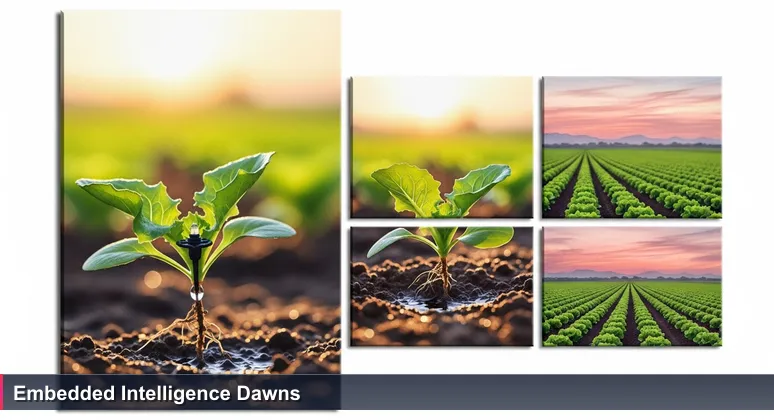
The most advanced piece of technology in a Yuma lettuce field isn't the drone flying overhead. It's the unassuming drip emitter at your feet, delivering precise intelligence directly to the roots. This principle of embedded, mission-critical efficiency is redefining where to build an AI career, far from the crowded campuses of Silicon Valley.
Here, your work ensures national security at Yuma Proving Ground, conserves every drop of water in the desert sun, and optimizes the journey of food from field to table. With Arizona projected to add over 4,000 new tech-adjacent jobs this year, AI skills have become a baseline expectation across the foundational industries that power our community.
The shift favors practical problem-solvers. As a 2026 LinkedIn AI hiring report notes, "portfolios, demos and real world projects will carry more weight than degrees or certifications alone." This creates a unique opportunity for career-changers in Yuma to leverage their deep domain knowledge in agriculture, logistics, or healthcare, and amplify it with applied AI skills.
For the aspiring AI professional, Yuma presents a compelling trade-off: competitive salaries amplified by a significantly lower cost of living than West Coast tech hubs, year-round sunshine, and the chance to see your contributions directly impact the community. Your career becomes the new emitter, delivering transformative intelligence exactly where it's needed most.
Table of Contents
- Yuma's AI Revolution
- Real Estate and Proptech
- Retail and E-commerce
- Energy and Utilities
- Gaming and Simulation
- Education Technology
- Fintech and Banking
- Healthcare and Biotech
- Logistics and Supply Chain
- Aerospace and Defense
- Government and Public Sector
- Building a Career in Embedded Intelligence
- Frequently Asked Questions
Get the latest on AI job markets and salaries in Yuma, Arizona in 2026 from this comprehensive resource.
Real Estate and Proptech
In a market dynamically shaped by military rotations at MCAS Yuma, agricultural seasons, and an influx of remote workers, static valuation models fail. AI tackles this by powering hyper-local Automated Valuation Models (AVMs) that analyze datasets national platforms miss, such as the impact of new base infrastructure on neighborhood demand.
The work involves integrating AI agents into sales workflows and specialized platforms. As the broader Arizona tech workforce expands, Yuma's proptech roles often include a performance-based component, with total compensation for specialists ranging from $86,000 to over $186,000.
This sector is excellent for career changers. Real estate agents or property managers with invaluable local knowledge can pivot to become Proptech CRM Integrators or AVM Analysts. They learn to implement the AI tools - like the "Ninja Selling" platforms gaining traction - that automate transactions and deepen client relationships, blending domain expertise with new technical fluency.
Retail and E-commerce
The challenge for Yuma's major distribution centers and border-adjacent retailers isn't just moving goods - it's predicting precisely what will be needed and when. AI solves this through sophisticated demand-planning models and by automating complex customer service interactions in a logistics-heavy environment.
What's unique here is the focus on Agentic Workflow Automation. This involves connecting large language models directly to operational platforms like Zendesk or Shopify to handle intricate inquiries, and building systems that account for unique variables like cross-border trade flows and the seasonal surge from agricultural shipping. Specialists in this area, such as AI Support Automation Specialists, can earn between $75,000 and $120,000.
The fit for career changers is strong. Professionals from warehouse management, logistics coordination, or customer service intuitively understand the operational pain points. This domain knowledge is invaluable when learning to implement and manage the AI tools that are becoming a baseline job requirement, allowing them to move into roles that require both technical and operational fluency.
Energy and Utilities
Managing Yuma's abundant solar energy output and its critically scarce water resources requires more than generic algorithms. AI here is deployed for smart grid optimization, predictive maintenance of infrastructure, and precise load forecasting to ensure resilience in a sun-drenched region.
The unique challenge demands a deep understanding of industrial systems, not just cloud platforms. Professionals need expertise in Supervisory Control and Data Acquisition (SCADA) systems and analyzing time-series data from sensors spread across the desert. Roles like Smart Grid Analysts at employers such as Arizona Public Service (APS) command salaries from $95,000 to $140,000, with their work directly supporting regional sustainability.
This creates a moderate-to-high fit for career changers already in the sector. Technicians, field engineers, or utility analysts possess the essential domain knowledge of the physical infrastructure. Upskilling with AI allows them to advance into optimization and predictive analytics roles, making their hands-on experience with the equipment being monitored incredibly valuable for training accurate models.
Gaming and Simulation
This is serious gaming, where the stakes are national security, not high scores. The Department of Defense requires hyper-realistic, AI-driven simulators for pilot training and tactical planning, with systems needed to run complex scenarios, as noted by Apex Defense, "10,000x faster than real-time."
In Yuma, Simulation Engineers and AI Behavior Scripters use tools like Unity and Unreal Engine to create synthetic environments for testing and mission rehearsal at places like Yuma Proving Ground, not for consumer entertainment. This fusion of creative technical skill and high-stakes defense needs fuels a unique niche within Arizona's emerging industries.
The fit for career changers is good for those with adjacent skills. Game developers from the entertainment industry can pivot into this sector, but they must master the rigorous requirements and protocols of military simulation standards. Salaries reflect this specialized, defense-focused work, ranging from $44,000 for internships to over $140,000 for senior engineering roles with major contractors.
Education Technology
In Yuma, education isn't just about teaching - it's about building local capacity. Colleges like Arizona Western College (AWC) are developing "full capacity-building" AI programs that require adaptive learning systems to serve a diverse student body of veterans, agricultural workers, and career-changers.
The work is inherently community-focused. AI Curriculum Developers and Instructional Tech Specialists, earning $65,000 to $105,000, must integrate AI ethically within Learning Management Systems (LMS) to directly support local workforce development goals. This mirrors broader trends where AI skills are becoming requirements in non-technical roles, including education.
This represents an exceptional fit for career changers. Educators, instructional designers, and academic advisors already possess deep pedagogical knowledge and understand student needs. By adding AI skills, they can directly shape the tools and curricula that train Yuma's next-generation tech workforce, ensuring the community's educational infrastructure keeps pace with its economic evolution, much like AWC's work to integrate AI into local agriculture.
Fintech and Banking
For Yuma's regional banks and credit unions, the AI imperative is less about flashy consumer apps and more about robust, reliable systems for core operations. The challenge involves combating sophisticated fraud, automating stringent FinCEN and Anti-Money Laundering (AML) compliance, and accurately assessing credit for the unique profiles of local small businesses and agricultural operations.
The work requires a specific skill set focused on integration and regulation. Professionals must navigate the complexity of implementing AI within often-outdated legacy banking systems while adhering to unyielding financial regulations. AI Compliance Officers and RPA Developers at institutions like AEA Federal Credit Union address these critical needs, with salaries reflecting their specialized hybrid expertise, ranging from $80,000 to $135,000.
This sector offers a very strong path for career changers. Bankers, loan officers, and compliance specialists already possess deep fluency in the language of finance and regulation. Learning AI allows them to become the crucial bridge that modernizes trusted local institutions, offering a stable, purpose-driven career path that leverages their existing domain knowledge to safeguard the community's financial health.
Healthcare and Biotech
Facing workforce shortages and rising costs, Yuma's healthcare systems are turning to AI not as a replacement, but as a critical support system. The priority is on practical applications: improving clinical documentation to reduce burnout, aiding diagnostics, and optimizing patient flow at centers like Onvida Health (formerly Yuma Regional Medical Center).
The work is deeply human-centered and governed by strict compliance. Clinical Data Analysts and Health Informatics Engineers must master HIPAA regulations and seamless Electronic Health Record (EHR) integration, ensuring AI tools augment - not disrupt - clinical workflows. This aligns with a national trend where 76% of healthcare leaders are prioritizing AI for workforce retention. Salaries in Yuma for these specialized roles range from $74,000 to $125,000.
The fit for career changers is exceptional. Nurses, medical technicians, and healthcare administrators possess irreplaceable domain knowledge of patient care and system operations. Transitioning into AI-driven health informatics allows them to amplify their impact, improving care quality and operational efficiency from within the system they know intimately, much like other local sectors integrating AI for precision.
Logistics and Supply Chain
Getting the nation's winter lettuce from Yuma's fields to grocery stores nationwide is a monumental exercise in efficiency and timing. AI optimizes this critical supply chain through computer vision for automated sorting, dynamic route planning for perishable goods, and managing autonomous fleets within sprawling distribution centers.
The desert environment demands a specific approach: Edge AI. Models must run directly on harvesting equipment or warehouse robots with low connectivity, processing data locally rather than relying solely on the cloud. Computer Vision Engineers and Supply Chain Optimization Analysts at major employers like GXO Logistics or Dole work at this intersection of AI and industrial IoT. Salaries for these specialized roles reflect the technical demand, ranging from $85,000 to $130,000.
This sector is perfect for career changers rooted in Yuma's core industry. Those with experience in farming operations, commercial trucking, or warehouse logistics intimately understand the physical supply chain's constraints and costs. Their practical insight is invaluable for training and deploying the AI systems that automate and optimize these very processes, creating a seamless transition from operator to optimizer. As Arizona farmers increasingly experiment with AI, the need for this hybrid expertise grows.
Aerospace and Defense
The AI challenge in Yuma's aerospace and defense sector is performance-critical: developing next-generation autonomous systems, advanced electronic warfare capabilities, and real-time signal processing for platforms tested in the desert environment of Yuma Proving Ground.
This is high-stakes engineering where reliability is paramount. ML Ops Engineers and Signal Processing Specialists working for contractors like The Aerospace Corporation need expertise in low-latency programming (C++/Python) and real-time processing for hardware-in-the-loop testing, not just batch data analysis. Salaries reflect this intense specialization, ranging from $110,000 to over $170,000.
The fit for career changers is possible but demanding. Engineers from other hardware or software fields can transition, but they must be prepared to master stringent military specifications (MIL-SPEC) and often obtain security clearances. The reward is working on cutting-edge national defense technology with substantial resources, contributing directly to missions that leverage Yuma's unique testing grounds.
Government and Public Sector
At the epicenter of applied AI for national defense in Yuma is the public sector, where the work is fundamentally mission-driven. The U.S. Army's Yuma Proving Ground (YPG) is actively standardizing AI for analyzing massive datasets from weapon system tests, evaluating autonomous vehicles, and enabling data-centric warfare.
This environment creates unique, high-stakes roles like AI Test & Evaluation Engineers, which require active security clearances and expertise in military specification (MIL-SPEC) data standards rather than commercial software frameworks. The career path is formalizing, with the Army establishing dedicated AI/ML career tracks. Salaries are competitive with the private sector, ranging from $90,000 to $145,000+ at GS-13/14 levels or equivalent specialized pay scales.
This sector is highly viable for career changers, particularly veterans, federal employees, or those with defense contractor experience. These professionals already understand the critical mission, protocols, and security landscape. Adding applied AI skills through targeted education allows them to become the in-house experts driving technological modernization within the very institutions dedicated to national security.
Building a Career in Embedded Intelligence
The future of AI work in Yuma is not about displacing its core industries but about becoming the embedded intelligence that allows them to thrive under pressure. This transformed map of opportunity values tangible impact on community-scale systems - predicting a lettuce harvest, maintaining critical defense infrastructure, or streamlining patient care - above abstract innovation.
Building this career hinges on demonstrating applied skill. As hiring shifts toward practical problem-solvers, the most effective path is through education that prioritizes portfolio-ready projects. For Yuma's career-changers - the veteran, the nurse, the logistics manager - this means finding programs that are affordable, flexible, and grounded in real-world application, allowing them to layer technical AI skills onto deep domain expertise.
This is where affordable, community-focused bootcamps become strategic tools. Programs like a 25-week Solo AI Tech Entrepreneur Bootcamp ($3,980) or a 15-week AI Essentials for Work course ($3,582) are designed for professionals who need to build and prove their skills without relocating or sacrificing their current roles. With a ~78% employment rate and flexible payment plans, such pathways make the transition viable, turning Yuma's unique challenges into a competitive career advantage built on meaningful, visible impact.
Frequently Asked Questions
What industries in Yuma are hiring AI talent beyond big tech in 2026?
In 2026, Yuma's top AI-hiring industries include government and defense at Yuma Proving Ground, aerospace contractors like The Aerospace Corporation, agriculture-focused logistics with employers like GXO Logistics, and healthcare at Yuma Regional Medical Center. Salaries vary, from $74,000 in healthcare to over $170,000 in aerospace, reflecting the diverse, mission-driven opportunities.
How do AI salaries in Yuma compare to Silicon Valley?
While top AI salaries in Yuma, such as $90,000 to $145,000+ in government roles, may not match Silicon Valley peaks, they are competitive given Yuma's significantly lower cost of living. With over 4,000 new tech-adjacent jobs projected for Arizona, your earnings stretch further for housing and lifestyle in this sunny region.
Can I switch to an AI career in Yuma without a tech background?
Yes, many industries in Yuma offer excellent fit for career changers. For example, healthcare professionals can transition into health informatics roles earning $74,000 to $125,000 by leveraging domain knowledge, while logistics workers can move into AI-driven supply chain optimization with salaries from $85,000 to $130,000.
What AI roles are available in Yuma's defense and aerospace sector?
Yuma Proving Ground and private contractors hire roles like AI Test & Evaluation Engineers and Signal Processing Specialists, often requiring security clearances. Salaries range from $110,000 to $170,000+, focusing on autonomous systems and real-time data analysis for national defense projects.
What are the benefits of working in AI in Yuma versus big tech hubs?
AI work in Yuma is community-focused and mission-driven, impacting areas like water conservation or military testing, with a lower cost of living and year-round sunshine. Proximity to California and Mexico adds to the appeal, offering a balanced lifestyle where your contributions directly support local industries and national security.
Explore the top 10 free tech training programs available in Yuma, AZ.
In 2026, Yuma's women in tech groups offer valuable opportunities for advancement.
Discover the high-demand tech jobs in Yuma's defense and aerospace sectors for 2026 and how to access them.
This article highlights hiring tech startups for junior devs in Yuma with key insights.
Read about Nucamp and other AI bootcamps in Yuma for 2026 in this article.

Irene Holden
Operations Manager
Former Microsoft Education and Learning Futures Group team member, Irene now oversees instructors at Nucamp while writing about everything tech - from careers to coding bootcamps.