









Top 10 AI Startups to Watch in Uganda in 2026
By Irene Holden
Last Updated: April 26th 2026
Too Long; Didn't Read
Uganda's top AI startups in 2026 are those solving deeply local problems, like Sunbird AI's Sunflower LLM covering 31 languages for farmers and Numida's mobile-money microloans reaching 150,000 SMEs. These companies prioritize real impact over hype, with Sunbird's FarmPredict helping 2 million farmers and Numida raising over 10.5 billion UGX from investors like Serena Ventures. The real opportunity lies in building number 11 by understanding Uganda's unique challenges.
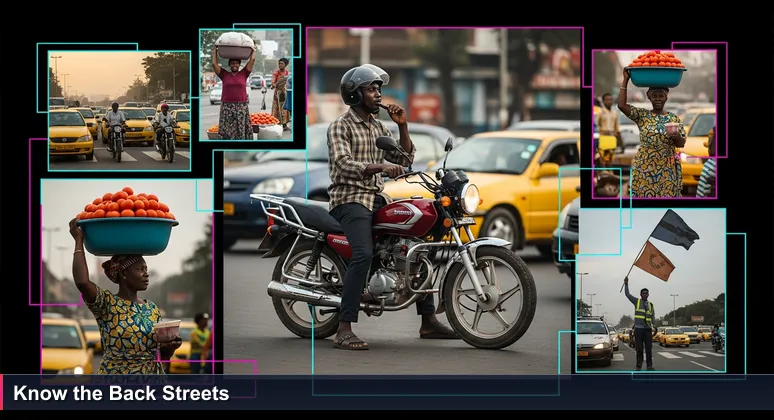
Wandegeya junction, 6:15 PM. A boda boda rider idles at the intersection, foot down, scanning the chaos. He has three possible routes home, but no app can rank them. Because the best route depends on rain, police, fuel, and a street he learned at twelve years old. Every Ugandan has been this rider or this passenger - choosing between speed and safety, knowing the map is a lie. A "Top 10" list flattens this complexity. The most important Ugandan AI startups aren't always the best-funded or most visible; some solve problems so local that global rankings miss them entirely.
The boda rider's route selection - fluid, contextual, knowledge-rich - is a better model for understanding this ecosystem than any fixed ranking. The startups that last are embedded in local realities: translating 31 languages, helping farmers predict seasons, lending through mobile money patterns from MTN Mobile Money and Airtel Money. These are not abstract innovators building for Silicon Valley. They are operating from Hive Colab and The Innovation Village, drawing talent from Makerere University's strong pipeline, and solving problems that affect millions of Ugandans directly.
Look past the ranking into the ground it grows from. The list that follows highlights 10 startups that understand those back streets - each has secured funding, hit measurable milestones, or solved a problem that directly affects Ugandans. But the real opportunity isn't joining a "Top 10" startup. It's understanding Uganda's problems deeply enough to build number 11. The government's NITA-U sandboxes for AI testing and the Makerere AI Lab's national research cloud, launched in 2026 to reduce reliance on foreign infrastructure, signal that the foundation is being laid for the next wave of builders.
Table of Contents
- Introduction
- Unjovu AI Solutions
- Aquawood Group Uganda
- Feyti Medical Group
- MyMedikoz
- Impala Healthtech Research
- Kiira AI Motors
- AgroAnalytix
- Innova AI Health
- Numida AI Solutions
- Sunbird AI
- Beyond the List
- Frequently Asked Questions
Access a comprehensive resource for AI careers in Uganda covering education, jobs, and tips.
Unjovu AI Solutions
Generic chatbots fail when a Kampala insurance firm asks about Uganda Revenue Authority tax codes or a real estate agency needs to process Luganda-language property listings. Most enterprise AI tools are trained on US or European data, leaving local businesses with automation that misunderstands their own regulations. Unjovu AI Solutions, operating from Kampala Central Division, builds customized machine learning models trained specifically on industry-vernacular and sector-specific regulatory frameworks - from Ugandan tax law to local real estate vocabulary.
The company moves beyond one-size-fits-all chatbots to create models that understand the language of Ugandan business. Their approach is deeply bespoke: each model is trained on the actual documents, compliance requirements, and communication patterns of the client's sector. For a logistics firm, that might mean processing waybills in English and Luganda simultaneously; for a microfinance institution, it could mean interpreting mobile money transaction histories within the context of Bank of Uganda lending guidelines.
The risk is whether they can scale beyond custom projects into productized solutions, a challenge that has tripped up many vertical AI startups globally. But their advantage is structural - no Silicon Valley competitor can replicate the deep local knowledge of Kampala's regulatory and linguistic landscape. According to iCreativez's 2026 ranking of AI development companies in Uganda, Unjovu is one of the few firms targeting local enterprises that need to automate complex backend processes without losing context. Watch for partnerships with NITA-U to certify their models for government use, or acquisition by a larger East African tech firm seeking localized AI capabilities that generic platforms cannot provide.
Aquawood Group Uganda
Uganda loses 2% of its forest cover annually, and water pollution in Lake Victoria threatens the livelihoods of 4 million people who depend on it for fish, transport, and drinking water. Environmental monitoring has traditionally relied on slow, expensive ground surveys that leave regulatory bodies understaffed and blind to damage until it's irreversible. Founder Mesarch Senjiyunva identified this gap and launched Aquawood Group Uganda to bring computer vision and satellite imagery into real-time environmental surveillance, as listed among top AI companies operating from Kampala Central.
Their AI analyzes multispectral satellite data to detect illegal logging, wetland encroachment, and agricultural runoff before the damage accumulates. Instead of waiting for a government inspector to visit a remote wetland two months later, Aquawood's models flag suspicious activity within days. The system provides actionable data to environmental NGOs and local government stakeholders who previously relied on tip-offs and occasional patrols. The technology fills a gap that regulatory bodies, constrained by staffing and budgets at the National Environment Management Authority (NEMA), cannot cover on their own.
The primary risk is dependency on government funding cycles and foreign satellite data sources, which can shift unpredictably with political priorities. Yet Aquawood's strength is structural: they are solving a monitoring problem that Uganda cannot staff its way out of. What to watch for includes integration with NEMA's official monitoring systems, which would embed their AI into national enforcement operations, or expansion into carbon credit verification for Uganda's growing carbon markets - a sector that could unlock international revenue streams independent of domestic budgets.
Feyti Medical Group
Registering a pharmaceutical product across multiple African markets takes 18-24 months in Uganda alone, with each country demanding different regulatory requirements, language translations, and document formats. Small pharma companies simply cannot afford the compliance costs spread across fragmented health authorities. Led by Kansiime and Mark, Feyti Medical Group developed Aicyclinder, an AI system that automates Common Technical Document (CTD) preparation and provides multilingual translation for health authorities across Africa.
Their NLP models understand pharmaceutical terminology in English, French, Portuguese, and multiple local languages - a critical capability when submitting to regulators from Kampala to Dakar. Instead of hiring separate compliance teams for each country, a manufacturer can use Aicyclinder to generate standardized submissions while automatically adapting language and format requirements per market. The system directly addresses the high barrier to entry for pharmaceutical registration that keeps many African-developed drugs off shelves for years.
The primary risk is regulatory: health authorities may be slow to accept AI-automated submissions, especially for products that affect patient safety. But the potential payoff is continent-wide standardization. Watch for partnerships with the National Drug Authority or the African Medicines Agency to standardize AI-assisted registration across the continent - a move that would transform pharmaceutical access in Uganda and beyond. As regional startup collaboration accelerates, Feyti's regulatory AI could become the backbone of cross-border drug approval in East Africa.
MyMedikoz
Most Ugandans keep medical records in folders - if they keep them at all. A mother in Mukono cannot easily share her child's vaccination history with a new clinic. Blood test results get lost, medication histories are forgotten, and the burden falls disproportionately on women, who act as primary caregivers in Ugandan households. The paper-heavy healthcare system creates gaps in care continuity that cost lives and money, especially for families managing multiple members' health across different clinics.
Founded by Geraldine, MyMedikoz uses computer vision to process physical medical documents and blood test results into a unified AI-powered portal. Their image recognition models can read handwritten clinic notes, lab printouts, and prescription labels - converting the chaotic paper trail from Kampala's public health centers into structured, searchable digital records. As one of the eight AI companies operating out of Kampala, MyMedikoz designed its platform with a distinctly local feature: family sub-accounts tailored for women who manage healthcare for children, elderly parents, and spouses. A single login gives a mother in Wakiso access to every family member's vaccination timeline, lab history, and upcoming appointments.
The startup's primary risk is data privacy and building trust with users who may be wary of digital health records after years of informal paper-based care. Many Ugandans have seen personal data misused by mobile money agents or unregulated lenders. Overcoming that skepticism is as important as the technology itself. Watch for partnerships with the Ministry of Health for rural health center digitization, or integration with MTN Mobile Money for health savings accounts - a move that would embed MyMedikoz into the financial flows of everyday healthcare spending.
Impala Healthtech Research
Antimicrobial resistance is a silent crisis in Uganda. Rural clinics prescribe antibiotics without testing because microbiology labs are hours away. A patient in Gulu may receive the wrong antibiotic for a urinary tract infection, accelerating resistance that kills 1.27 million people globally each year. Impala Healthtech Research developed DIGAMS, a digital diagnostics marketplace that connects rural clinics to AI-supported microbiology testing. Samples are collected locally, sent to centralized labs, and analyzed by AI models trained specifically on Ugandan pathogen data from Makerere University's AI Health Lab.
The system collapses a two-week turnaround to 48 hours - fast enough to inform treatment decisions before the infection progresses. Their computer vision models identify bacterial strains and resistance patterns from culture plates, flagging which antibiotics will actually work. For a rural clinic in Mbale, that means a mother with a stubborn UTI gets amoxicillin only if the AI confirms susceptibility, not because it's the only drug on the shelf.
Impala raised approximately 185 million UGX ($41,000 USD) in early rounds from the Makerere Innovation & Incubation Center, a seed amount that reflects Uganda's early-stage funding reality. Their operational risk is not technical but logistical: transporting biological samples across Uganda's road network, where a broken-down taxi or washed-out bridge can delay a specimen past viability. According to F6S's directory of AI companies in Uganda, Impala is one of the few healthtech startups tackling antimicrobial resistance at the diagnostic level. Watch for partnerships with the African CDC's antimicrobial resistance surveillance network, or expansion into veterinary diagnostics for Uganda's livestock sector - where misuse of antibiotics in poultry and cattle accelerates the same crisis.
Kiira AI Motors
Autonomous vehicle systems trained on German highways fail spectacularly on Ugandan roads. Potholes, wandering livestock, boda bodas weaving through informal traffic, and pedestrians stepping off matatus without warning are edge cases that most self-driving companies never train for. Kiira AI Motors, a spin-off from state-owned Kiira Motors, is building Advanced Driver Assistance Systems (ADAS) trained specifically on these African road conditions. Their computer vision models recognize hazards that Silicon Valley datasets ignore: cattle crossings, makeshift speed bumps, and the distinctive weaving pattern of a boda boda preparing to cut across traffic. The startup unveiled a self-driving shuttle for campus transit in early 2026, with engineering hubs in Jinja drawing from the manufacturing lineage of Kiira Motors' original electric vehicle projects. Unlike generic autonomous systems that require pristine lane markings and predictable traffic behavior, Kiira's models are trained on Kampala's actual driving patterns. Their value proposition is simple: global companies will never prioritize African road conditions because the market is too small for them, making local solutions the only viable path. This aligns with Seedtable's 2026 assessment of Uganda's most promising startups, which highlights spin-offs from established industrial players as a growing trend in the ecosystem. The critical risk is regulatory: Uganda currently has no legal framework for autonomous vehicles, meaning every test drive exists in a policy vacuum. Their advantage is solving a problem that global companies will not touch. Watch for pilot programs with Kampala Capital City Authority for campus or industrial park transit - controlled environments where regulation can be tested alongside technology. Logistics partnerships with companies like SafeBoda for last-mile delivery automation could provide the revenue runway needed while autonomous passenger regulations catch up.AgroAnalytix
Uganda's coffee and maize farmers lose export revenue because buyers cannot verify quality at scale. A cooperative in Mbale may produce premium Arabica, but without consistent grading, international buyers offer commodity prices instead of specialty premiums. The Uganda Coffee Development Authority estimates quality inconsistency costs the sector billions of UGX annually. AgroAnalytix uses computer vision to grade coffee and maize quality, integrated with blockchain for traceability from farm to export. Their AI models analyze bean size, color, and defect rates faster than human graders - with provable consistency that international buyers trust. The system operates from a headquarters in Kampala and a northern hub in Gulu, positioning the startup to serve both central commercial farmers and the smaller cooperatives of the north. According to their own data, export revenues for partner cooperatives increased by 30%, as consistent grading unlocked premium pricing from European and Middle Eastern buyers who previously paid flat rates due to quality uncertainty. The blockchain component provides an immutable record of origin, which is increasingly demanded by fair-trade and specialty markets. This aligns with Uganda's broader push into AI-powered smart agriculture initiatives that aim to bridge the technology gap for smallholder farmers. The biggest risk is adoption: smallholder farmers may resist technology that feels alien, especially when their traditional grading knowledge is a source of pride and income. AgroAnalytix must demonstrate that its models enhance, not replace, human expertise. Watch for integration with the Uganda National Coffee Platform's traceability initiatives, which would embed their grading system into the country's official export infrastructure. Expansion into cocoa and vanilla grading for West African markets could also unlock a much larger addressable market beyond Uganda's borders.Innova AI Health
Maternal mortality in Uganda stands at 336 deaths per 100,000 live births, a rate that remains stubbornly high despite decades of public health interventions. Many deaths are preventable with early detection of complications like fetal anomalies, placental problems, and gestational hypertension. But ultrasound machines are concentrated in Kampala's referral hospitals - too far for rural mothers who deliver in health centers with minimal diagnostic equipment. Innova AI Health developed a portable ultrasound analyzer that uses AI to detect fetal anomalies in remote health centers, bringing specialist-grade diagnostics to places that have never had them. Their computer vision models identify 15 common pregnancy complications with accuracy comparable to specialist radiologists. The device is designed for low-resource settings: no internet connection is required for initial analysis, meaning a midwife in Kotido can get results without waiting for a network signal. The AI runs inference on-device, flagging abnormalities in real-time. The device was developed at their R&D center in Entebbe in collaboration with local midwifery schools, ensuring the training data reflects Ugandan physiology rather than European populations. This builds on the foundation of Makerere University's AI Health Lab, which has been central to validating clinical AI tools for local conditions. According to their partnership with the Uganda Ministry of Health, pilot districts recorded a 22% reduction in maternal mortality attributable to earlier detection of complications. The device allows health center staff to identify high-risk pregnancies and refer mothers to hospitals before emergencies arise. Their primary risk is device durability: rural health centers have unreliable power, dust, and humidity that can degrade electronics faster than in controlled lab environments. Watch for expansion into 10 more districts through Uganda's national health strategy, or partnerships with the African CDC for continent-wide deployment across similar low-resource settings in East and West Africa.Numida AI Solutions
An estimated 90% of Ugandan SMEs cannot access formal credit. Banks demand collateral that small business owners do not have - a woman selling produce in Owino market may have a decade of proven repayment history on mobile money but zero bank statements. Numida AI Solutions uses machine learning to analyze MTN Mobile Money and Airtel Money transaction patterns, bypassing traditional collateral requirements entirely. Their models assess creditworthiness based on actual financial behavior rather than assets, unlocking loans for businesses that formal banking ignores.
By 2026, Numida had served over 150,000 borrowers and raised approximately $10.5 billion UGX ($2.3 million USD) from investors including Serena Ventures. The startup deployed a generative AI assistant for loan officers that reduced approval times from days to minutes, enabling rapid scaling without proportionally expanding human underwriting teams. Operating from Kampala and Jinja, Numida is one of the most visible fintech startups on Seedtable's 2026 list of top Ugandan startups, and its Y Combinator pedigree gives it access to global best practices in lending ML.
The critical risk is over-indebtedness. Mobile money lending can create debt traps without proper consumer protection, and Uganda has seen borrowers cycle through multiple digital lenders to pay off previous loans. Numida must balance growth with responsible lending algorithms that detect distress signals before defaults accumulate. Watch for expansion into Kenya and Nigeria for regional B2B lending, which would diversify its revenue base beyond Uganda's market, or acquisition by a major bank like Stanbic Uganda seeking to digitize SME lending without building the ML infrastructure from scratch.
Sunbird AI
Uganda has 43 living languages, yet virtually every digital tool, government service, and healthcare system operates in English or Luganda. A Karamojong farmer cannot ask a smartphone for planting advice in Nga´karimojong. A Lugbara speaker in Arua cannot access agricultural extension services in their mother tongue. This language barrier locks millions out of the digital economy and reinforces inequality between urban English speakers and rural communities. Sunbird AI, a non-profit research lab led by Dr. Ernest Mwebaze, a pioneer in Makerere University's AI lab, exists to close this gap.
In 2026, they launched Sunflower, Uganda's first multilingual large language model covering 31 local languages. Sunflower can translate, transcribe, and generate text in languages that global AI companies ignore entirely - from Runyankore to Ateso to Lugbara. Their FarmPredict tool reaches 2 million farmers with planting advice delivered via SMS in local languages. The system analyzes weather data, soil conditions, and pest patterns to recommend optimal planting dates, then sends the advice in the farmer's mother tongue. This is not abstract research; it is deployed technology that changes agricultural outcomes for households across the country.
Sunbird is primarily grant-funded by the IDRC and UK's FCDO, transitioning to "unfunded" sustainable research models by 2026. The lab has deep roots in the Makerere AI Lab and collaborates with the Ministry of Health and global responsible AI networks. Their critical risk is sustainability: non-profit models struggle to retain talent when for-profit competitors like Numida can offer salaries that research labs cannot match. Makerere's AI Health Lab has been a talent pipeline, but retaining senior engineers requires competitive compensation that grants may not cover. Watch for Sunflower becoming the default language model for Uganda's e-government services under NITA-U, or spin-off commercial applications for call center automation in local languages across East Africa - a move that could generate revenue to fund continued research.
Beyond the List
A ranking tells you what is visible. The boda rider knows what is not - the street that floods in heavy rain, the corner where police set up checkpoints, the shortcut that saves fifteen minutes at 6 PM. Uganda's AI ecosystem has the same hidden infrastructure. In 2026, the Makerere AI Lab launched Uganda's first national AI research cloud, reducing reliance on AWS and Google Cloud for local startups and researchers. Hive Colab and The Innovation Village continue to produce founders who understand local problems deeply - founders who know that a Karamojong farmer cannot use an English-only chatbot, that a boda rider needs a route that avoids police checkpoints, not just traffic. The National Information Technology Authority (NITA-U) has opened sandboxes for AI testing in government services, allowing startups to pilot their models with real public-sector data before scaling. This infrastructure is invisible in any "Top 10" list but determines whether the next Numida or Sunbird AI can actually survive and grow. The startups that will last are not those with the best pitch decks or the highest valuations in UGX. They are the ones that learn the back streets - that solve problems so close to the ground that global rankings cannot see them. For a developer or career-switcher in Kampala, the real opportunity is not joining a "Top 10" startup. It is understanding Uganda's problems deeply enough to build number 11. The Makerere AI Lab's national research cloud gives you the infrastructure. The mobile money rails give you the data. The 43 living languages give you the problem. What remains is the willingness to sit at the junction, foot on the ground, and learn the streets that the map does not show.Frequently Asked Questions
What criteria did you use to rank Uganda's top AI startups for 2026?
The ranking prioritizes startups that solve distinctly local problems, have secured verifiable funding or measurable traction, and are deeply embedded in Uganda's realities - like mobile money patterns or local language needs - over those with just high valuations or glossy pitch decks.
Which startup on the list has the most real-world impact so far?
Sunbird AI, ranked #1, reaches 2 million farmers with its FarmPredict tool and launched Sunflower, a multilingual LLM covering 31 local languages. Their work in public-interest AI and language access makes them a standout for concrete impact on Ugandan communities.
Are there AI startups in Uganda working on healthcare outside of Kampala?
Yes - Innova AI Health (ranked #3) uses a portable AI-powered ultrasound analyzer for remote maternal health, reducing maternal mortality by 22% in pilot districts. Also, Impala Healthtech's DIGAMS connects rural clinics to AI diagnostics for antimicrobial resistance.
How can a tech professional in Kampala join or collaborate with these startups?
Start by engaging with innovation hubs like Hive Colab and The Innovation Village, or applying directly. Many startups, such as Numida and Sunbird AI, actively hire for ML engineering and product roles. Career-switchers can also join the Makerere AI Lab's training programs.
Do any of these startups specifically focus on Uganda's agriculture sector?
Yes - AgroAnalytix (ranked #4) uses computer vision to grade coffee and maize quality, boosting export revenues for cooperatives by 30%. Sunbird AI's FarmPredict also serves 2 million farmers with localized advice via SMS in their languages.
Here are the top employers for AI talent in Uganda based on work quality and team culture.
For African tech professionals, this AI engineer career path in Uganda is invaluable.
This 2026 guide to tech careers in Uganda outlines practical steps to start, from skills to hub memberships to bootcamps.
- comprehensive resource on Kampala housing, transport, and food costs for techies
For a comprehensive guide on Uganda's best coworking spaces for every stage, read this 2026 ranking.

Irene Holden
Operations Manager
Former Microsoft Education and Learning Futures Group team member, Irene now oversees instructors at Nucamp while writing about everything tech - from careers to coding bootcamps.