









How to Become an AI Engineer in Suffolk, VA in 2026
By Irene Holden
Last Updated: March 27th 2026
Quick Summary
Become an AI engineer in Suffolk, VA within six months by following a focused roadmap that aligns with the Hampton Roads job market's demand in defense, healthcare, and logistics. Master Python and machine learning fundamentals, then specialize in skills like computer vision for shipbuilding or NLP for healthcare, building a portfolio with projects relevant to local employers such as Sentara or the Port of Virginia.
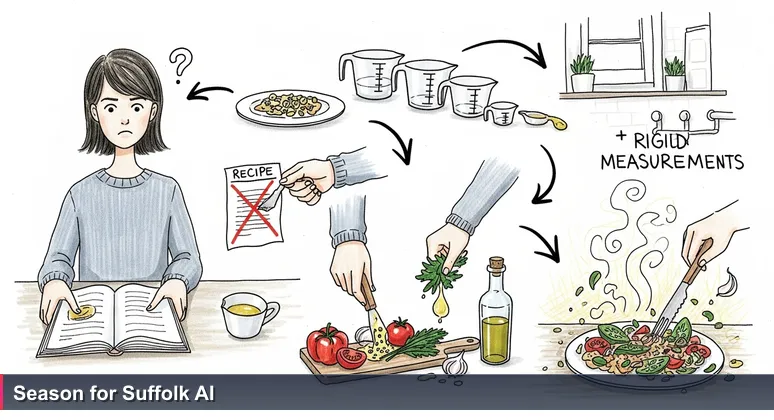
You can follow a recipe to the letter and still end up with a meal no one wants to eat. The same is true for becoming an AI engineer in Suffolk. The foundational ingredients - like Python and a logical mindset - are universal, but your success depends on seasoning those skills for the Hampton Roads market in defense, healthcare, and logistics.
Begin by assessing your kitchen. You need a modern computer, comfort with the command line, and a foundational technical mindset. Many successful local engineers transition from adjacent roles in IT, defense systems, or data analysis.
Your Core Toolbox
Your primary tool is Python. Master its syntax and learn to write standalone .py scripts, not just Jupyter notebooks. Use pip or conda to install core libraries like NumPy for numerical operations and Pandas for data manipulation.
- Python Proficiency: Write clean, modular code focusing on functions, classes, and error handling.
- Data Skills: Learn SQL to query databases, as regional employers from Sentara to the Port of Virginia run on vast datasets.
- Local Learning: Access structured programs like the Artificial Intelligence (Undergraduate) Certificate at ODUGlobal or affordable, non-credit courses such as the Artificial Intelligence and Machine Learning Suite through TCC.
With 1.5 million Virginia jobs exposed to AI transformation, starting with the right tools prepares you to build solutions that resonate. As Donna Wertalik and Jenn Tortora from Virginia Tech note, "The winning formula in workplaces today isn't AI or human - it's both." Your journey begins by gearing up to solve local problems, not just follow a generic tutorial.
Steps Overview
- Gear Up with Essential Tools and Skills
- Build a Solid Foundation in Your First Two Months
- Master Machine Learning and Specialize for Local Demand
- Create and Deploy Real-World AI Projects
- Know When You've Succeeded as an AI Engineer
- Common Questions
For a step-by-step approach to starting an AI career in Suffolk, VA, refer to this resource.
Build a Solid Foundation in Your First Two Months
Your first two months are about mastering fundamental skills - the knife work of an AI chef. This universal foundation becomes powerful when you practice with local ingredients, preparing you to handle Hampton Roads data from day one.
Achieve Python Proficiency
Move beyond basic syntax to writing clean, production-ready code. Focus on functions, classes, and error handling. A critical mistake is staying only in experimental Jupyter notebooks; employers need engineers who can build robust applications.
Pro tip: Practice by writing standalone Python scripts (.py files) that automate tasks, like organizing files or fetching local weather data from an API.
Master Data Manipulation with Local Context
Dive into Pandas for analysis and NumPy for numerical operations, paired with SQL for querying databases. Data is the fuel for AI, and our region's sectors - from ship sensor logs at Huntington Ingalls Industries to patient records at Sentara - run on vast datasets.
Practical project: Use Pandas to analyze a public dataset like Port of Virginia cargo statistics. Clean the data, calculate trends, and visualize your findings to build relevant experience.
Build Mathematical Intuition
You don't need to derive every formula, but you must grasp the concepts that underpin machine learning: Linear Algebra for data structure, Calculus for model optimization, and Statistics & Probability for evaluating performance.
By the end of this phase, you should be able to confidently ingest a CSV file from a local source, clean it using Pandas, perform meaningful analysis, and present results programmatically. For guided learning, explore affordable options like the Data Science & Artificial Intelligence Course at TCC to structure this foundational work.
Master Machine Learning and Specialize for Local Demand
Now you begin cooking with the core recipes of machine learning. This is where you start to specialize, tailoring your skills to the specific palate of Hampton Roads employers in defense, healthcare, and logistics.
Learn Machine Learning Fundamentals
Understand supervised vs. unsupervised learning, training/testing splits, and key algorithms like linear regression and decision trees. Build a predictive model, such as forecasting house prices in the Suffolk/Chesapeake area using historical data. This skill in predictive analytics is crucial for our logistics sector, where companies like those supporting the Port of Virginia need to optimize supply chains.
Choose Your First Deep Learning Framework
Gain proficiency in either TensorFlow or PyTorch to start building neural networks. Focus on one framework deeply to understand how to construct, train, and evaluate models, which are the advanced engines powering modern AI applications.
Align with Local Employer Demand
This is the critical tasting phase. Based on the market, choose your initial specialization:
- Defense & Naval (HII, Northrop Grumman): Focus on Computer Vision and Convolutional Neural Networks (CNNs) for automated inspections in shipbuilding or satellite imagery analysis.
- Healthcare (Sentara, Riverside): Focus on Natural Language Processing (NLP) to unlock insights from medical records and clinical notes.
- Logistics & Manufacturing: Focus on Predictive Analytics and Time-Series Forecasting for supply chain optimization at organizations like Smithfield Foods.
By this stage, you should have built and evaluated at least two different ML models and can articulate which local industry sector you're targeting. A structured bootcamp like the one from Virginia Tech can accelerate this hands-on learning. As a 2026 Virginia Chamber Foundation report found, Virginia's workforce is "especially exposed" to AI impacts, making these specialized, applicable skills your key to becoming a solution, not a disruption.
Create and Deploy Real-World AI Projects
This is where you graduate from following recipes to opening your pop-up restaurant. The final phase is about proving you can deliver a complete, deployable solution that solves real problems for Hampton Roads industries.
Execute an End-to-End Portfolio Project
Build a complete application showcasing the full pipeline: data collection, cleaning, model training, evaluation, and deployment. For the defense sector, this could be a web app using computer vision to classify images of ship components and flag anomalies. For maritime logistics, build a tool that ingests Port of Virginia data to predict shipment delays. Learn essential tools like Docker for containerization, GitHub for version control, and cloud platforms for MLOps practices.
Master the Modern AI Engineer's Toolkit
The field is evolving toward expertly applying existing models. Companies now prioritize engineers who can build the "car" using powerful pre-built "engines."
- Learn prompt engineering and frameworks like LangChain to build applications with large language models.
- Understand Retrieval-Augmented Generation (RAG) and vector databases to create AI systems that leverage proprietary data - a critical need in defense and healthcare.
Engage with the Local Ecosystem
Transition from solo learning to community engagement. Attend local tech meetups and participate in AI-focused events at ODU. Apply for internships; as one AI professional's story highlights, proving your value through an internship can lead directly to a full-time offer. Follow the complete career roadmap for tech graduates to stay aligned with industry expectations.
Your verification for success is a public GitHub portfolio with 2-3 polished projects, including one sophisticated end-to-end application that demonstrates skills directly relevant to a Suffolk employer.
Know When You've Succeeded as an AI Engineer
Your technical journey culminates when you shift from being a student of AI to a problem-solver for Hampton Roads industries. You'll know you've succeeded not just by what you've built, but by how it resonates within our local ecosystem.
First, your portfolio must "Speak Suffolk." It should move beyond generic datasets to solve problems analogous to those faced by Sentara, HII, or the Port of Virginia. This demonstrates you understand the regional ingredients. Second, you must think in systems, not just models. You'll consider deployment, scalability, and security - key concerns for defense and healthcare employers. As highlighted in a guide on future-proofing an AI career, longevity comes from building robust applications, not just training algorithms.
Finally, you can tell your story. With 1.5 million Virginia jobs affected by AI, your role is to be a solution. As Kate Melton, Senior Associate Director at the UVA Career Center, advises, "human skills are actually some of your best assets." You can articulate not just what you built, but why it matters to the regional economy outlined in reports on Virginia's AI-exposed workforce.
You transform from following a generic recipe into a chef who creates the precise solutions our local employers are hungry to hire. The path is demanding, but the destination is clear: becoming an indispensable architect of AI-driven progress in Hampton Roads.
Common Questions
How can I start becoming an AI engineer in Suffolk, VA by 2026?
Begin with a structured 6-month learning roadmap focusing on Python proficiency and data manipulation, then specialize in high-demand areas like computer vision for defense or NLP for healthcare. Local resources such as Tidewater Community College's AI programs can guide your journey to align with Suffolk's growing tech ecosystem by 2026.
Do I need a computer science degree to break into AI engineering in Suffolk?
No, a four-year degree isn't mandatory. Many AI engineers in Hampton Roads transition from roles in IT or defense, and employers value practical skills. Focus on mastering Python and building a portfolio with projects relevant to local sectors, like shipbuilding or healthcare, to demonstrate your capabilities.
What AI specializations are most in demand for jobs in the Hampton Roads area?
Computer vision for defense contractors like Huntington Ingalls Industries, natural language processing for healthcare systems such as Sentara, and predictive analytics for logistics at the Port of Virginia are highly sought after. Specializing in these areas can make you competitive in Suffolk's defense, healthcare, and maritime job markets.
How long will it take to get hired as an AI engineer in Suffolk?
With dedicated effort, you can aim for job readiness in 6 to 12 months by following a focused learning plan and building a portfolio with local-relevant projects. For example, creating a computer vision app for shipbuilding or a predictive model for port logistics can help you land roles in the Hampton Roads area more quickly.
Where can I find affordable local courses or support for learning AI in Suffolk?
Affordable options include the Artificial Intelligence programs at Tidewater Community College and online courses through ed2go partnerships. Additionally, Old Dominion University offers graduate programs in data science and AI, providing accessible pathways for learners in the Hampton Roads region.
Read about the AI innovators in Suffolk, Virginia that are tackling maritime, construction, and healthcare problems.
For a detailed look at how to pay for tech training in Suffolk, VA in 2026, check out this comprehensive guide.
Find out how companies like Lockheed Martin and Sentara Health stack up in the Suffolk tech salary rankings for 2026.
Check out the top free tech resources in Suffolk for 2026 to advance in AI and cyber careers.
Get details on the best tech jobs in Suffolk that don't require a degree, including pathways and certifications.

Irene Holden
Operations Manager
Former Microsoft Education and Learning Futures Group team member, Irene now oversees instructors at Nucamp while writing about everything tech - from careers to coding bootcamps.