









Is Slovenia a Good Country for a Tech Career in 2026?
By Irene Holden
Last Updated: April 24th 2026
Quick Explanation
Yes, Slovenia is an excellent choice for tech careers in 2026 if you prioritize quality of life, autonomy, and meaningful work over the highest headline salary. With average engineer comp around €44,000 but remote contractors often netting over €60,000 after lower taxes, and a cost of living significantly below Munich or Vienna, the country offers a compelling package - especially for AI/ML specialists leveraging the Jožef Stefan Institute and a tight-knit, high-trust ecosystem.
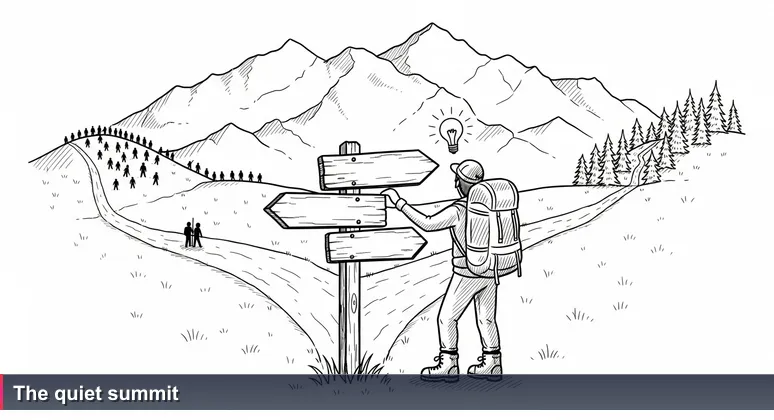
At the trailhead of the Vršič Pass, two signs point in different directions. One leads to a famous peak where you’ll queue for the summit photo, the kind of crowded path that feels safe and predictable. The other disappears into silence, promising a harder but clearer route through pine scent and gravel. You know which one you’d take - that quiet pull toward something deeper that most hikers overlook.
The same fork exists in tech careers. The obvious choices - Munich, Vienna, Berlin - dangle bigger salaries and massive job boards. They are the bald summits everyone photographs. Then there’s Slovenia: a country of just two million people, yet quietly climbing the rankings. According to the CNN feature on Smart Slovenia, the country ranks fifth globally for smart products delivered by its digital and robot-intensive economy. It doesn’t shout about it. It just builds.
This isn’t a consolation prize for those who couldn’t land a Munich offer. It’s a deliberate choice - optimising for autonomy, air quality, and meaningful work over headline salary numbers. The threshold question isn’t “Can Slovenia compete with the big hubs?” It’s “What are you actually optimising for?” The quiet summit asks for a different kind of ambition: one where you wake up excited, build things that matter, and still have energy for an evening hike. That trail is real, and it starts here.
What We Cover
- The Fork in the Tech Career Trail
- What Slovenia Actually Offers in 2026
- The Salary Reality Check
- Hidden Compensations: Quality of Life
- Who Should Take This Trail
- How to Make the Move
- The Quiet Summit Awaits
- Common Questions
Learn about AI career paths in Slovenia including salaries and skills in this detailed overview.
What Slovenia Actually Offers in 2026
Slovenia’s ICT sector operates as a boutique innovation hub rather than a volume play. The EU Digital Decade country report describes the economy as redefining itself around science, high-value skills, and strategic digital partnerships. That translates to roughly 13,000 ICT vacancies nationwide in 2024, with 9,100 concentrated in Ljubljana alone - an enormous talent deficit for a country of just two million people. Yet roughly 40-45% of Slovenia’s top-ranked STEM graduates emigrate within two years, lured by higher salaries abroad. Those who stay gain significant leverage.
- Global scaleups: Outfit7 (Talking Tom), Celtra (creative automation), Comtrade (system integration), and XLAB (cybersecurity) all base their core engineering teams here. CargoX, a blockchain logistics firm, hit €81.7 million in revenue with just 63 employees.
- Deep tech champions: Elaphe leads in-wheel motor technology for EVs; Dewesoft dominates global measurement tech. Pharmaceutical giants Lek (Sandoz) and Krka are major employers for automation and data roles.
- International presence: Endava, Infinum, and Siemens maintain significant offices, while companies like NLB Group (Slovenia’s largest bank) invest heavily in AI and ICT teams.
At the ecosystem’s heart sits the Jožef Stefan Institute, Slovenia’s premier AI research centre with direct access to the Vega supercomputer - one of Europe’s fastest - supporting the SMASH project for global AI researchers. During the 2026 Slovenian Space Days, a University of Ljubljana representative noted, “The space sector is looking for people like you,” capturing how aggressively Slovenia recruits talent for cutting-edge fields.
The startup support infrastructure is equally robust. The Start:up Slovenija programme recently allocated €10 million through the P2 initiative, while the ABC Accelerator and Ljubljana University Incubator connect founders to EU resources. With Technology Park Ljubljana as the largest hub and the Podim conference drawing CEE’s top investors, the pieces exist for serious career building - just on a more human scale.
The Salary Reality Check
The headline numbers tell a nuanced story. According to Levels.fyi's software engineer salary data, the average total compensation in Slovenia sits at €44,342, with a range from €32,822 to €60,819. For data scientists, boljsaplaca.si reports salaries between €35k and €75k, with senior roles climbing higher. Top-tier software engineers at the 75th percentile can reach €96k+ within Ljubljana itself. These figures trail Munich (€70k-€90k for mid-level) and Vienna (€60k-€80k) - but the comparison is incomplete.
The real leverage comes from the remote-first gap. Many Slovenian engineers work as sole proprietors (SPs) for US or UK firms, with discussions on Reddit’s r/Slovenia confirming net annual incomes exceeding €60k. Slovenia’s flat 20% corporate income tax and lower social security contributions for SPs create an effective tax rate far below most Western European countries. A €60k net income in Slovenia can feel equivalent to roughly €90k gross in Germany when accounting for take-home pay differences.
The cost of living completes the picture. Ljubljana’s one-bedroom apartments run €400-€650 in the city centre, while Maribor or Celje cut that in half. Internal data from KiTalent’s analysis of Ljubljana ICT hiring notes the average commute is just 22 minutes compared to 3.8 hours daily in Munich. That time savings buys energy, health, and space to think - real currency that doesn't appear on any payslip. As one anonymous engineer on Relocate.me put it, the work culture offers a “great work-life balance” that higher gross salaries often fail to deliver.
Hidden Compensations: Quality of Life
Who Should Take This Trail
The quiet summit demands the right gear and the right mindset. As the Global Observer Slovenia 2026 tech report notes, the country is a "resilient destination for expansion with steady metrics and policy support" - but resilience suits specific profiles better than others. Slovenia in 2026 works best for:
- Early- to mid-career engineers (2-5 years) who want cutting-edge work in AI, blockchain, or green tech with high autonomy and low bureaucracy.
- Senior engineers commanding remote-first contracts who maximise take-home pay through Slovenia's sole proprietorship structure, where a €60k net income can feel like €90k gross in Munich.
- AI/ML specialists who value direct access to the Jožef Stefan Institute and the Vega supercomputer - world-class research infrastructure without the overhead of a large German lab.
- Founders who want a low-cost, high-talent base; the ABC Accelerator and Ljubljana University Incubator provide EU-linked resources for scaling globally.
- Those prioritising work-life balance as non-negotiable, where leaving the office at 4 PM for a trail run isn't a luxury but a rhythm.
This trail frustrates others. Risk-takers chasing massive equity upside will find fewer Series A+ rounds than Berlin or London. Engineers valuing base salary alone will always see Munich or Zurich winning on paper. The Trade.gov business travel guide notes English is widely spoken in business, but daily integration beyond Ljubljana demands Slovene - a barrier for non-EU nationals unwilling to learn. And those wanting an anonymous job market will find Slovenia's small community makes every move visible. Reputation travels fast here. Choose the trail that fits your boots.
How to Make the Move
For non-EU nationals, Slovenia offers two clear pathways. The digital nomad visa requires a minimum income of roughly €3,500/month net, along with proof of freelance income or a remote-work contract. The standard work permit follows a more traditional employer-sponsored route. Both processes are straightforward, and the Relocate.me guide to moving to Slovenia for a tech job outlines each step in practical detail, including documentation requirements. EU citizens face no visa hurdle - simply register for residence and access the high-quality public healthcare system through social security contributions.
Networking in a market of just two million people rewards genuine effort over volume. The Podim conference in Maribor functions as the annual gathering point for CEE's investors and founders, where a single conversation can open doors that would take months elsewhere. Throughout the year, the Ljubljana University Incubator and ABC Accelerator host regular events, while the "Startup Slovenia" and "Slovene Developers" Slack communities provide day-to-day connection points. Because the ecosystem is compact, showing up consistently matters more than broadcasting credentials.
For those targeting remote-first arrangements with foreign firms, Playroll's employer-of-record guide for Slovenia confirms that EOR services are well-established, making compliant international employment simple. Many engineers combine a Slovenian cost base with a US or UK salary through the sole proprietorship structure, maximising take-home pay while enjoying the 22-minute commute and alpine afternoons. The practical infrastructure is already in place - the only missing piece is your decision to take the fork less travelled.
The Quiet Summit Awaits
Return to the trail fork at Vršič Pass. The air is still, the pine scent sharp, and the choice remains yours. The popular peak will always be there, crowded with hikers ticking boxes. But the hidden summit calls to something quieter in you - the conviction that a career should measure more than gross annual pay. Slovenia in 2026 is that hidden summit, offering not a shortcut but a deeper climb.
The numbers only tell part of the story. The real trade-off isn't between €44k in Ljubljana and €70k in Munich - it's between spending three hours daily in traffic versus thirty minutes on a trail. It's between maintaining legacy CRUD apps for a massive corporation versus working on AI research at the Jožef Stefan Institute with direct access to the Vega supercomputer. The Global Observer Slovenia 2026 report describes the country as a resilient destination for expansion - but resilience here means building a career that sustains you, not just pays you.
As LinkedIn CEO Ryan Roslansky noted in his 2026 career outlook, the most resilient careers belong to those who combine technical fluency with human judgment and visible proof of work rather than just academic credentials. Slovenia's compact ecosystem demands exactly that: you can't hide in anonymity. Your work speaks. Your reputation travels. And the country's emergence as Europe's innovation incubator means that meaningful problems await those who show up ready to solve them.
The big hubs will always have more job ads and higher headline salaries. But they also have longer commutes, higher rents, and a noise that drowns out your own thinking. At the trail fork, you chose the quiet path. The air is clearer, the pace is human, and the summit is yours alone. Take the trail less travelled - and build a career that leaves you energy for the things that matter most.
Common Questions
How do tech salaries in Slovenia compare to places like Munich or Vienna?
Average total compensation for software engineers in Slovenia is around €44k, with top seniors reaching €96k. While that's lower than Munich's €70k-€90k for mid-level, the cost of living in Ljubljana is significantly cheaper - a one-bedroom apartment costs €400-€650 - and many engineers earn more by working remotely for US or UK firms as sole proprietors, keeping more after taxes.
Is the Slovenian tech job market too small to find good opportunities?
It's small but concentrated: in 2024 there were 13,000 ICT vacancies nationwide, 9,100 in Ljubljana alone, with a talent deficit. Major employers like Outfit7, Celtra, Comtrade, and Endava are actively hiring, and the presence of the Jožef Stefan Institute and Vega supercomputer means cutting-edge AI roles exist. You just need to network effectively in this tight-knit community.
Can non-EU tech workers easily move to Slovenia?
Yes, Slovenia offers both a digital nomad visa (requires ~€3,500/month net income) and a standard work permit for skilled professionals. For EU citizens, no visa is needed - just register residence. While English is common in tech teams, learning some Slovene helps with daily life and integration outside the office.
What is the work-life balance like in Slovenia's tech sector?
It's a major draw. The average commute in Ljubljana is just 22 minutes, and many companies offer remote or hybrid arrangements. Multiple Glassdoor reviews highlight low stress and a 'can-do' attitude, and you can be hiking in the Julian Alps 30 minutes after leaving the office. Annual leave is generous, typically 20-30 days.
What are the best tech companies to work for in Slovenia?
Top employers include global scaleups like Outfit7 (Talking Tom), Celtra (creative automation), CargoX (blockchain logistics with $81.7M revenue on 63 employees), and Endava (one of the largest tech employers). For research roles, the Jožef Stefan Institute is a premier choice, especially for AI/ML. International offices like Siemens and Infinum also have strong local teams.
If you're wondering about top paying tech companies in Slovenia, this list reveals total compensation breakdowns.
Want to learn to become an AI engineer in Slovenia? This article covers the 70/30 engineering mindset.
Our complete resource on cybersecurity careers in Slovenia includes salary benchmarks and certification advice.
Discover how to attend AI meetups and conferences in Slovenia in 2026.

Irene Holden
Operations Manager
Former Microsoft Education and Learning Futures Group team member, Irene now oversees instructors at Nucamp while writing about everything tech - from careers to coding bootcamps.