









Top 10 Free Tech Training at Libraries and Community Centres in Slovenia in 2026
By Irene Holden
Last Updated: April 24th 2026
Too Long; Didn't Read
Slovenia offers at least 10 places for free tech training in 2026, led by the CTK Creative Workshop at the University of Ljubljana and the Ljubljana City Library network. CTK’s structured workshops save hundreds of euros compared to paid makerspace memberships, while the city library’s 37 branches make learning accessible across the metro area. From mobile classrooms like Simbioza to adult education centres in every region, these programmes cover everything from Arduino to digital literacy for beginners.
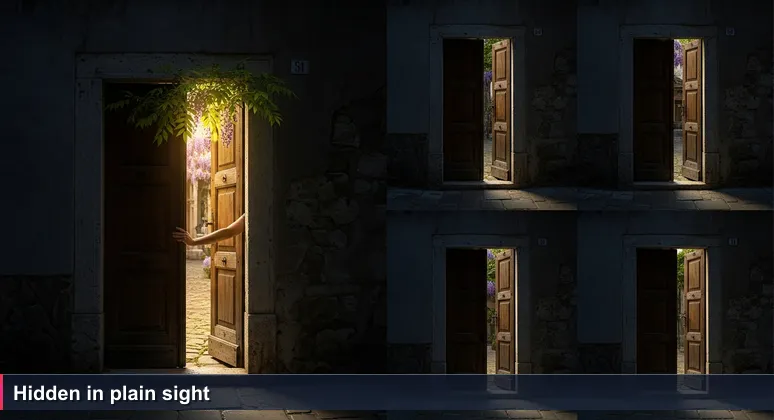
The door is unmarked but you’ll find it inside the Central Technical Library at the University of Ljubljana. Walk past the reading room on the ground floor, take the stairs, and you’re standing in Slovenia’s best-kept makerspace secret - a free, structured workshop where hardware skills go from intimidating to doable.
- 3D printing & scanning - Prusa printers and handheld scanners ready for your first project
- Arduino for beginners - no soldering iron experience assumed, none required
- Zbrush 3D sculpting - digital modelling without the software subscription anxiety
Sessions run Mondays, Wednesdays, and Fridays, 10:00-13:00. Registration via email or phone is required, but membership - and every workshop - is completely free. Just sign up at the library desk. All equipment is provided: Prusa printers, soldering stations, computers with design software. Bring nothing but curiosity. Workshops are held in Slovenian and English; international UL students regularly attend.
This is the only free, recurring, structured technical workshop in Slovenia covering hardware and production skills. Compare it to paid makerspace memberships in Ljubljana (€50-80/month), and you’re saving hundreds. Last year a participant built a working weather station from scratch - proof that the threshold between “never touched an Arduino” and “I built something” is just one free Wednesday morning.
Table of Contents
- CTK Creative Workshop
- Ljubljana City Library
- Maribor Public Library
- Ljudske univerze (Adult Education Centres)
- Simbioza Mobiln@ and Reverse Mentoring
- University of Ljubljana Open Lectures
- National and University Library - Open Science Workshops
- Computer History Museum Slovenia
- Mreža občanske znanosti Citizen Science Network
- Institute for Information Science IZUM Short Courses
- Your First 30 Days: A Free Learning Plan
- Frequently Asked Questions
Learn about AI career paths in Slovenia including salaries and skills in this detailed overview.
Ljubljana City Library
You've passed the main branch on Cankarjeva cesta a hundred times. The door is always open, and the tech training calendar at Ljubljana City Library is richer than most people realise. With 37 branches across the metro area, this network offers computer basics, smartphone and tablet use, e-government services like eUprava and eDavki, social media safety, and occasional "Mind Labs" exploring AI and digital creativity.
The library explicitly targets adults who feel left behind by technology. Sessions are free and require no library membership - though joining is free for unemployed, disabled, or minor residents with proof of status, as confirmed by the library's price list. PCs and tablets are provided on-site; you can book public terminals for practice afterwards. Language is primarily Slovenian, though some English-led conversation hours and international events are listed. According to the educational events page, workshops run on an ongoing schedule - check the calendar for dates near your branch.
Google Maps rates the main branch 4.7 stars, with users noting "friendly staff who explain slowly." For anyone starting from zero, this is likely your closest, most welcoming entry point to digital skills in the Ljubljana metro area - a door you already walk past, now worth pushing open.
Maribor Public Library
Head east to Slovenia's second city, and you'll find a library network that matches Ljubljana's commitment to free tech training. The Maribor Public Library offers one-on-one digital advice sessions and group presentations covering information literacy, Internet basics, and electronic database navigation. Its "Internet Café" drop-in sessions let you bring any tech question to a librarian who will guide you step by step.
- Skill level: Beginner - the focus is building confidence with search tools and online resources
- Schedule: Ongoing individual advice; group presentations listed regularly on the library calendar
- Equipment: Public-access computers, tablets, and free Wi-Fi throughout all branches
- Language: Slovenian
According to the Statistical Information portal of Slovenian libraries, Mariborska knjižnica recorded over 12,000 visits to its public computer terminals in 2025 alone. The one-on-one digital advice sessions are particularly valued by job seekers who need help building an online CV or applying for work via eSrce. The central branch on Rotovški trg is open six days a week, and no membership is required for basic computer use or drop-in advice sessions - making this the most accessible free tech training option in the Štajerska region.
Ljudske univerze (Adult Education Centres)
These centres are scattered across every region of Slovenia - Kranj, Celje, Murska Sobota, Novo Mesto - and they run free digital skills workshops funded by national and EU projects. If you live outside Ljubljana or Maribor, this is likely your closest door to structured tech training: smartphone use, mobile apps, online shopping safety, basic computer science concepts, and e-government portals like eUprava.
Sessions target absolute beginners, often tailored for adults aged 60+ through the "Center for Intergenerational Learning" programme. At Ljudska univerza Kranj, a rotating calendar of tech workshops is posted at the start of each month - most project-based activities are walk-in, no prior registration required. Computer labs with modern PCs are provided for all participants. Google Maps rates the Kranj centre 4.9 stars, with users saying "the staff are incredibly patient with beginners." The Celje centre offers parallel programming, and the network stretches nationwide.
This is the most geographically distributed free tech training option in Slovenia. Equipment, workshops, and materials are completely free - a door within reach whether you live in Prekmurje, the Gorenjska region, or the Dolenjska valleys.
Simbioza Mobiln@ and Reverse Mentoring
Not a building, but a mobile classroom - and arguably the most innovative tech training project in Slovenia. Simbioza Mobiln@ travels to rural areas with a simple premise: university students, the "kid-experts," teach older adults basic computer skills, smartphone use, internet navigation, and social media. No intimidating classrooms, no expensive fees - just intergenerational mentoring that scales on student volunteers.
Katja Sobocan, the project's coordinator, describes the approach as "a unique opportunity" that keeps participants returning year after year. Forbes profiled the model in 2018, highlighting how it bridges the digital divide with minimal resources. By 2026, Simbioza reaches over 5,000 participants annually - older adults who learn from someone who speaks their language generationally, not just linguistically. Reverse mentoring sessions also run at libraries and community centres in Ljubljana, where students from FRI UL provide individualised advice.
All devices - laptops and tablets - are brought by the mobile unit. You bring nothing but willingness. Sessions are in Slovenian, and the schedule is posted on Simbioza's Facebook page. For anyone intimidated by traditional classes, learning from a university student who treats you with patience and respect can be the breakthrough moment that transforms digital fear into digital curiosity.
University of Ljubljana Open Lectures
The University of Ljubljana opens its doors several times a month for free public lectures on emerging tech - no student ID required. Topics range from AI in scientific research to open science practices, digital ethics, and new programming paradigms. These sessions are designed for a general audience, though some technical jargon may appear; complete beginners will still walk away with clearer mental maps of where technology is heading.
Lectures are advertised roughly two weeks ahead on the University's events portal. Speakers typically include researchers from the Jožef Stefan Institute and other top Slovenian research bodies. Language alternates between Slovenian and English - international speakers often present in English, making this accessible to Ljubljana's growing expat tech community. Bring your own device for note-taking; these are lectures, not workshops.
A 2025 IATED paper on digital literacy in Slovenia noted that such public outreach is critical for "closing the gap between academia and the general public." For anyone pursuing a career in AI or machine learning, these lectures offer a direct line to the research shaping the field - at zero cost, with no administrative barriers. The topics are current: AI literacy, digital trust, data sovereignty. It's your cheapest and most direct entry point into Slovenia's research ecosystem.
National and University Library - Open Science Workshops
NUK's grand reading room is one of Ljubljana's most iconic spaces - but its training programme is the real hidden treasure. The National and University Library runs occasional workshops on using digital repositories, advanced search techniques, and open science practices. If you're planning further tech study, these sessions build research literacy that most bootcamps skip entirely.
The key resource is dLib.si, Slovenia's Digital Library - a gateway to scientific publications, historical documents, and datasets. According to a ResearchGate study comparing Slovenia and the UK on digital librarian training, NUK's continuing professional development courses cover "conceptual and syntactic" digital library knowledge. This is the foundational skill of knowing how to find, evaluate, and cite technical information - indispensable when learning machine learning or AI on your own.
Workshops are at an intermediate skill level; some familiarity with academic research helps, but a willingness to dive deep is enough. Check the Indico platform for upcoming Open Science sessions. Language is Slovenian and English. Dedicated research terminals are available on-site, or bring your own laptop. It's not coding, but it's the metadata literacy that separates confident self-learners from those who get lost in search results.
Computer History Museum Slovenia
This museum in Ljubljana is more than a static collection of beige boxes and dusty monitors - it offers interactive learning experiences that make computing history tactile. Walk in and you can try ASCII photography, type code on a Commodore 64, or press keys on a ZX Spectrum. No programming experience needed; the staff assumes you've never touched a vintage terminal.
"A must-see for every technology enthusiast" - Tripadvisor reviewers
By 2026, the museum has expanded its workshops to include physical computing sessions that bridge historical technology with modern IoT concepts. You might start the afternoon learning how a 1980s dot-matrix printer worked, then spend the second half connecting a modern sensor to a microcontroller. All vintage hardware is provided - you just show up. The museum is open regularly, and hands-on sessions are included with entry. Language is Slovenian and English.
This is the most playful entry on the list. It won't replace structured training, but it can spark the curiosity that sustains a career change - especially if you're young or early in your shift toward tech. Sometimes the best way to understand where AI and machine learning are going is to stand where computing began.
Mreža občanske znanosti Citizen Science Network
Mreža občanske znanosti isn't a household name in Slovenia, yet its free training sessions offer a hidden doorway into practical data science for career changers. The network runs workshops at libraries and museums across the country, teaching data collection methods, digital tools for citizen science, and basic Python for data analysis - skills directly transferable to AI and machine learning roles.
- Skill level: Beginner to intermediate. No prior coding experience required
- Schedule: Varies by location - check the network's training calendar for upcoming dates
- Equipment: All laptops provided during sessions; bring nothing but curiosity
- Language: Slovenian
Because the network is connected to the Jožef Stefan Institute and other top research bodies, you're learning research-grade methods, not watered-down theory. One participant who attended a "Data in the Field" workshop in Maribor shared what came next: "I learned to use basic Python to clean environmental data. Now I volunteer with a local nature monitoring group." That's a portfolio project, a contribution to real science, and proof of competence - all starting from a free workshop offered at a library near you.
Institute for Information Science IZUM Short Courses
Based in Maribor, the Institute for Information Science (IZUM) offers short, intensive courses that pack surprising power into 1-2 days. These free sessions focus specifically on electronic information sources, database querying, and information retrieval - the research literacy skills that become critical when learning AI or machine learning on your own.
- Schedule: 1-2 day courses, often held quarterly. Registration is free but required
- Skill level: Beginner to intermediate - structures search techniques from basics to advanced operators
- Equipment: All computers provided in lab sessions; hands-on practice throughout
- Language: Slovenian
What makes IZUM's approach distinctive is its focus on practical navigation of technical documentation. When you're self-studying machine learning, the ability to quickly find and evaluate technical sources directly impacts how fast you progress. The training is part of Slovenia's national digital-literacy push, which The Slovenia Times reported in 2025 when the government adopted a systemic bill for this purpose. For students and professionals in Ljubljana or Maribor, these concentrated courses offer a time-efficient way to build a skill most bootcamps ignore - and it costs nothing.
Your First 30 Days: A Free Learning Plan
The best door to push open this week is your nearest library branch. Walk in, ask a librarian about the next "Digital Basics" workshop, and book a session at a public PC. That single act starts a 30-day arc from complete beginner to someone with a clear next step in AI or machine learning.
- Week 1 - Orientation: Attend a CTK Arduino workshop. Learn to blink an LED and read sensor data. Visit the Safer Internet Centre Slovenia site for online safety basics. Measurable goal: explain FDM printing and send email with attachment.
- Week 2 - First skills: Complete a Ljudska univerza smartphone safety workshop. Register for the next Python data-analysis session through the AmCham Slovenia digital literacy initiatives. Measurable goal: working Arduino sketch, mastered online banking safety.
- Week 3 - Explore pathways: Attend a University of Ljubljana public lecture. Spend an afternoon at the Computer History Museum. Write down ten tech terms to research. Measurable goal: two structured sessions and one informal session completed.
- Week 4 - Consolidation: Book a practice session at CTK makerspace. Design a simple 3D object in Tinkercad. Visit NUK's dLib.si and create a reading list on AI basics. Measurable goal: navigate digital archive, clear next skill identified (Python, data analysis, hardware prototyping).
After 30 days, you'll have foundational confidence - and a clear investment path. Buy an Arduino kit (€25 at Salecom) for CTK open sessions. Enrol in Ljudska univerza's free Python course. When you're ready for accredited training, Nucamp's bootcamps build on exactly these foundations. The free programmes are the threshold; pushing through is your choice.
Frequently Asked Questions
Which free tech training option is best for complete beginners?
Ljubljana City Library's tech workshops are the most beginner-friendly. They explicitly target adults who feel left behind by technology, offer one-on-one support, and require no library membership for unemployed or disabled individuals. For a more structured start, the CTK Creative Workshop's Arduino for beginners session is also excellent and entirely free.
Do I need to be a library member to attend the free workshops?
No, most workshops are open to everyone. For example, at Ljubljana City Library, many workshops are free without membership, though using public computers afterwards may require a free membership for certain groups. CTK Creative Workshop requires a free library membership, which you can sign up for at the desk.
Are the workshops available in English?
Yes, several venues offer English-language sessions. The CTK Creative Workshop runs in Slovenian and English, and University of Ljubljana open lectures often feature international speakers presenting in English. The Computer History Museum also offers bilingual hands-on sessions.
I live outside Ljubljana - which free tech training options are available near me?
Ljudske univerze (adult education centres) are the most widespread, with locations in Kranj, Celje, Murska Sobota, Novo Mesto, and more. The Maribor Public Library also offers extensive digital skills training. For rural areas, look out for Simbioza's mobile classroom or check the Citizen Science Network for regional events.
How quickly can I learn something useful from these free workshops?
Within two weeks, you can go from complete novice to building a simple Arduino circuit that blinks an LED at CTK's workshop. The article's 30-day plan shows you can learn to navigate digital archives, design 3D objects, and confidently pursue next steps like a Python course or bootcamp.
Discover Slovenia's best coworking spaces and incubators for 2026 in our comprehensive guide.
Learn about Slovenia's best non-degree tech careers in our latest listicle.
Explore our complete guide to AI compensation in Slovenia for role-specific salary bands and negotiation tactics.
Find out why Slovenia's top tech apprenticeship programs are ranked by more than just salary.
Check out this in-depth guide to living costs and compensation for Slovenian tech workers.

Irene Holden
Operations Manager
Former Microsoft Education and Learning Futures Group team member, Irene now oversees instructors at Nucamp while writing about everything tech - from careers to coding bootcamps.