









AI Meetups, Communities, and Networking Events in San Francisco, CA in 2026
By Irene Holden
Last Updated: March 24th 2026
Key Takeaways
In 2026, San Francisco offers a dynamic range of AI meetups and networking events that are crucial for professionals to close the industry's readiness gap, driven by the city's proximity to giants like Google and OpenAI. Key gatherings include The AI Conference and AI Engineer World's Fair, where you can tap into over 50% of U.S. AI venture capital and median AI engineer salaries surpassing $220,000. Engaging here isn't just socializing - it's strategic calibration in a live ecosystem that transforms AI from hype to high-stakes deployment.
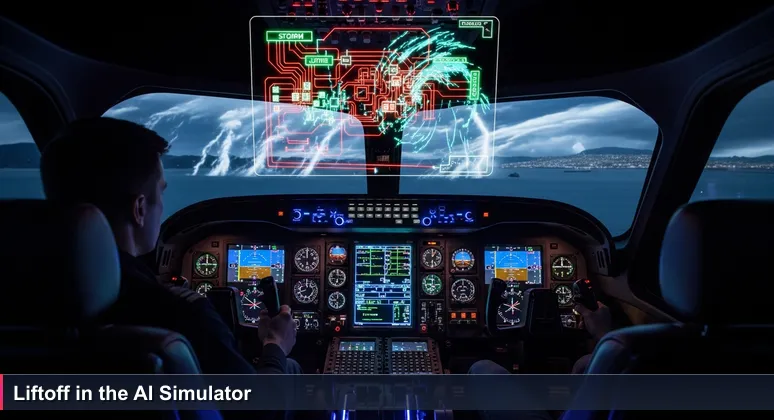
Mastery in AI, like aviation, is decided not in the lecture hall but in the high-fidelity simulator where theory meets the turbulence of real-world deployment. The central challenge of 2026 is the "readiness gap" - the paralyzing divide between experimental pilots and full-scale, production-grade AI implementation. San Francisco's dense ecosystem functions as the world's premier collective simulator, providing the live environment where this gap is closed through intense, social calibration.
The city's position is built on unparalleled foundations. Groundbreaking research from control towers like Stanford HAI and UC Berkeley's College of CDSS sets the global agenda for policy and innovation. The world's dominant AI companies - Google, Meta, Apple, and OpenAI - are literal neighbors, creating a constant cross-pollination of talent and ideas. This concentration is fueled by capital, with over 50% of all U.S. AI-focused venture funding flowing into the Bay Area, specifically targeting San Francisco startups.
For the machine learning professional, engagement here is a career accelerator. The median salary for an AI Engineer in the city has surpassed $220,000, but the real wealth creation lies in equity and startup formation. The constant hum of events provides a live instrument panel showing the industry's next move, from the rise of Agentic AI to new infrastructure paradigms. As a VP of Research at Intel noted after a niche event, the conversations found there "directly mirrored real-world work" in generative AI, offering a clarity impossible to find in isolation.
This isn't just networking; it's continuous, immersive training. Every meetup in SoMa, every university symposium in Berkeley, and every startup showdown downtown is a controlled yet urgent environment where you stop reading about multi-agent systems and start stress-testing them alongside the engineers building the future.
In This Guide
- Why San Francisco is the AI Simulator in 2026
- Navigating AI Community Types in San Francisco
- Weekly Meetup Groups: Your Consistent Training Flights
- Major Conferences: The Annual Fleet Exercises
- University Events: Control Tower Briefings
- Niche Communities and Hackathons: Specialist Workshops
- Advanced Networking Strategies for All Levels
- Career Leverage and Salary Insights in San Francisco
- Your First Mission: Commit to an Event
- Frequently Asked Questions
Explore how to become an AI builder in San Francisco with this guide.
Navigating AI Community Types in San Francisco
To navigate San Francisco's AI scene effectively, you must understand the distinct types of "airspace." Each event format serves a specific purpose in your career flight plan, from weekly tactical training to annual strategic horizon-scanning.
Regular Meetup Groups: The Weekly Training Flights
These consistent, low-friction gatherings are the backbone of hands-on learning. Events like the monthly AICamp SF meetup attract hundreds of developers for deep dives into GenAI and LLM infrastructure, hosted in tech hubs across SOMA and Mission Bay.
Major Conferences: The Annual Fleet Exercises
Large-scale events define the industry's annual agenda. In 2026, the focus is decisively on Agentic AI at scale. Conferences like The AI Conference and the AI Engineer World's Fair draw global builders for high-stakes pitching and deep technical substance, setting the operational tempo for the year ahead.
University & Research Hub Events: Control Tower Briefings
Institutions like Stanford and UC Berkeley act as intellectual engines, hosting summits that shape global AI policy and research direction months before ideas hit mainstream discourse. These are where ethical frameworks and governance debates are crystallized.
Niche Communities & Hackathons: Specialist Workshops
Beyond public forums, focused company tech talks, online-offline hybrid communities on Discord, and hands-on hackathons provide the ultimate simulator for collaborative building and debugging real agentic systems with peers.
Weekly Meetup Groups: Your Consistent Training Flights
These consistent gatherings are the operational backbone of skill development, offering low-friction opportunities to translate theory into practice. Held weekly or monthly in tech company venues and collaborative spaces across SOMA and Mission Bay, they range from intimate circles to major assemblies.
| Group Name | Focus & Scale | How to Engage |
|---|---|---|
| AICamp SF | Ruthlessly practical talks on GenAI, LLM infrastructure & enterprise architecture. Attracts 200-500+ developers monthly. | Join their platform or Discord for RSVPs and ongoing technical conversation. |
| SF Bay Area AI User Group | Cross-disciplinary focus on "AI in Production" for 20-100+ developers, designers, and marketers. | Find their weekly or monthly sessions through Meetup.com to bridge building and deployment. |
| Claude Code Meetups | Hands-on sessions for developers working with Anthropic's API and the Model Context Protocol (MCP). | Apply via Anthropic Events or monitor the r/ClaudeAI subreddit for coveted tickets. |
| AI & Tech Networking Mixers | Deal-flow environments like monthly events at Thriller Social Club where founders pitch and teams form. | Use these bar-setting events, listed on Eventbrite, to test your startup's narrative. |
The actionable takeaway for newcomers is to commit to one technical meetup and one networking mixer per quarter. Use Q&A sessions to ask specific deployment questions - this often yields more valuable insights than post-talk conversations.
Major Conferences: The Annual Fleet Exercises
These large-scale gatherings are where the industry's annual agenda is set and the most significant connections are forged. Drawing global audiences to San Francisco and Silicon Valley, they function as live testing grounds for the year's most critical themes, particularly the shift to production-scale Agentic AI.
- The AI Conference (Sept 29 - Oct 1): A cornerstone event for over 5,500 builders. Its unique structure includes "Day ZERØ," an intimate pre-conference for senior engineers, and a live "Startup Showdown" pitching arena. It operates on the belief that "the best way to predict the future is to build it," making it essential for practitioners. Learn more and register on their official site.
- AI Engineer World's Fair (June 29 - July 2): This practitioner-led conference has earned a reputation for "high-signal" technical depth on autonomous AI and reinforcement learning. Industry reviewers note it has "surpassed larger generic tech shows" in relevance for engineers seeking substance over hype.
- HumanX (April 6-9): Dubbed the "Davos of AI," this summit focuses on strategic, ethical, and regulatory frameworks. Professionals describe it as a "definitional event," and companies like Aomni have reported seeing a "positive ROI in less than a month" from the organic, high-level networking it facilitates.
- PyTorch Conference & Open Source AI Week (October): Part of a larger open-source ecosystem event in San Jose, this is ground zero for framework innovations and the open-source agent stack, critical for anyone building on PyTorch. The Linux Foundation hosts details on Open Source AI Week.
"Great conferences balance sprawl and personalization," notes Kyle Daigle, GitHub COO, on modern conference design. The trend is to "trim the typical keynote marathon and add extended workshop blocks" to prioritize depth over breadth.
To maximize ROI, budget for one major conference annually and consider volunteering or speaking to gain backstage access and force meaningful dialogue with other builders.
University Events: Control Tower Briefings
Stanford, UC Berkeley, and UCSF are far more than academic institutions; they are intellectual control towers that host public-facing events where global AI policy, ethics, and foundational research direction are shaped months before these conversations reach mainstream discourse.
These seminars and summits provide critical briefings on the frameworks governing innovation. Stanford HAI hosts high-level gatherings like the Joint California Summit on Generative AI, featuring state leadership and industry CEOs. Meanwhile, UC Berkeley's College of CDSS and CLTC center run essential discussions like the AI Policy Research Symposium, focusing on the governance and societal impact of emerging technologies.
For those in applied fields, these events offer masterclasses in overcoming real-world hurdles. The UCSF AI Seminar Series, for instance, delves into the brutal realities of implementing and evaluating AI in live clinical settings - a niche but invaluable track for health tech professionals.
The actionable takeaway is that these events are often free or low-cost but require proactive registration. They are ideal for introverts, as the formal lecture and Q&A format provides structure. To engage meaningfully, prepare a thoughtful question about the practical application of the presented research; this is far more effective than a generic introduction for starting substantive connections.
Niche Communities and Hackathons: Specialist Workshops
Beyond the public meetup circuit, the most potent technical growth and strongest professional bonds are often forged in focused, specialist forums. These niche environments function as high-intensity workshops where theoretical knowledge is pressure-tested through collaboration.
Company-Sponsored Tech Talks & Closed Circles
While giants like OpenAI and Salesforce host many invite-only events, they frequently sponsor technical deep-dives at neutral hubs like the AWS Loft SF. These sessions offer rare glimpses into proprietary tools and production challenges, serving as a backchannel to typically guarded insights.
Online-Offline Hybrid Communities
Digital platforms are where local plans crystallize into real-world collaboration. The AICamp Discord and subreddits like r/ClaudeAI are not just for global chat; a conversation troubleshooting a multi-agent script can easily lead to an impromptu coffee meetup in SoMa to debug code in person.
Hackathons & Buildathons: The Ultimate Simulator
Events like the Open Safeguard Hackathon (focused on AI safety) or buildathons during Open Source AI Week represent the purest form of practical learning. As noted in conference design trends, the focus is on adding "extended workshop blocks" for depth. Participating on a hackathon team, even in a supporting role, demonstrates skill in a way a resume cannot and creates stronger collaborative bonds than a hundred exchanged business cards.
The actionable strategy is clear: don't just attend - participate. Whether contributing to a Discord community, joining a buildathon, or organizing a micro-workshop, active contribution transforms you from a spectator into a recognized builder within these specialist circles.
Advanced Networking Strategies for All Levels
In 2026, effective networking in San Francisco's AI scene is defined by demonstrated competence and shared context, not passive attendance. Transitioning from observer to participant requires tailored strategies that leverage the simulator's unique dynamics.
For Introverts & Newcomers: The Digital-First Approach
Begin by engaging for weeks in communities like the AICamp Discord before an event, arriving with familiar online handles to seek out. Volunteering to check badges or help with logistics provides a purposeful role and conversation starter. Most importantly, set a "one connection" goal per event - aiming for a single substantive conversation that leads to a follow-up coffee is far more valuable than collecting dozens of business cards.
For Seasoned Professionals: Establish Credibility
Move from listening to leading by submitting talks to meetups on specific production challenges you've solved. Consider hosting a curated dinner or roundtable on a niche topic like "LLM Evals in Production." Prioritize access to exclusive, high-trust forums like the "Day ZERØ" pre-conference workshops at major events, where unfiltered strategic conversations occur.
This active engagement is the instrument panel for career navigation. The median salary for an AI Engineer in San Francisco exceeds $220,000, with senior roles at major firms reaching $350,000+. True wealth creation, however, lies in equity and startup formation. The city's network, where over 50% of U.S. AI venture funding concentrates, actively scouts these events. Your path to a funded startup or a pivotal career move is more likely to be forged in a post-hackathon conversation than through any cold application.
Career Leverage and Salary Insights in San Francisco
The financial rewards in San Francisco's AI sector are significant, but they represent only the baseline incentive. The true career leverage comes from the ecosystem's unique capacity to transform technical skill into ownership and accelerated trajectory through its dense network of capital and collaboration.
The median salary for an AI Engineer in the city has surpassed $220,000, with senior roles at major firms like Google, Meta, and Apple commanding $350,000+ in total compensation. However, these figures merely reflect the price of talent in a hyper-competitive market. The generational wealth creation occurs through equity - either in fast-growing startups or via your own venture.
This is where San Francisco's simulator proves invaluable. The region attracts over 50% of all U.S. AI-focused venture capital, with investors actively scouting the very meetups, hackathons, and conference "Day ZERØ" events detailed in this guide. Success stories abound, like Aomni reporting a "positive ROI in less than a month" from connections made at the HumanX summit. Your introduction to a founding team or a pivotal investor is far more likely to happen during a post-event conversation at Blue Bottle Coffee than via any online application.
Therefore, career strategy here must be twofold: excel in your technical craft to command top-tier salaries, while simultaneously using the community's events as a live platform to demonstrate thought leadership and build the relationships that lead to equity-based opportunities. This dual-track approach is the definitive advantage of calibrating your career within the Bay Area's high-fidelity AI simulator.
Your First Mission: Commit to an Event
The instrument panel is illuminated, and the controls are within reach. Closing the industry's readiness gap between theoretical knowledge and production-scale deployment begins not with another research paper, but with a single, decisive action within the live simulator of San Francisco's AI community.
Your first mission is straightforward: commit to one event in the next 30 days. This is the equivalent of gripping the controls for the first time. Register for the next SF AI/LLMs Meetup, apply for a hackathon spot, or secure a ticket to a university seminar at Stanford or UC Berkeley. The specific event matters less than the commitment to enter the environment.
Walk in with a concrete objective: to understand one new deployment tool like the Model Context Protocol, to share one technical hurdle you're facing with agentic workflows, or to meet one person building in your specific domain. In an ecosystem where median engineer salaries exceed $220,000 and over 50% of U.S. AI venture capital is deployed, these focused interactions are the genesis of career-defining opportunities.
This action transforms you from an observer of the industry's future to an active participant in its stress-testing. Liftoff follows.
Frequently Asked Questions
Why is San Francisco the best place for AI networking in 2026?
San Francisco is unmatched due to its proximity to major AI employers like Google and Meta, top research from Stanford and UC Berkeley, and over 50% of U.S. AI venture capital flowing into the Bay Area. This dense ecosystem acts as a live simulator for tackling real-world AI deployment challenges.
What are the must-attend AI conferences in San Francisco for 2026?
Key conferences include the AI Engineer World's Fair in June for deep technical insights on autonomous AI, and The AI Conference in September with its Startup Showdown for practical building. HumanX in April offers strategic discussions on AI ethics and governance, drawing industry leaders.
How can beginners network effectively at AI events without feeling overwhelmed?
Start by engaging in online communities like the AICamp Discord before events to build familiarity. Set a simple goal, such as having one substantive conversation, and consider volunteering to gain structure and free access while making connections naturally.
Are there affordable AI community events in San Francisco for those on a budget?
Yes, many university events at Stanford and UC Berkeley are free or low-cost, focusing on research and policy seminars. Recurring meetups like the SF Bay Area AI User Group also offer accessible opportunities for learning and networking without high fees.
How can attending these events boost my AI career in San Francisco?
Networking here can lead to roles with median salaries over $220,000 for AI engineers, and the strong venture capital presence means connections often result in startup equity or funding deals. It's a direct way to demonstrate skills and access high-growth opportunities.
Read about AI startups in SF that are solving niche problems and gaining traction.
The top-rated AI bootcamps in SF are evaluated here for their fit and pipeline to tech employers.
Discover the Top 10 Companies Hiring AI Engineers in San Francisco, CA in 2026 in this detailed guide.
For a detailed overview of women in tech community resources in San Francisco, check this out.
Navigate San Francisco's cybersecurity job market in 2026 with this resource.

Irene Holden
Operations Manager
Former Microsoft Education and Learning Futures Group team member, Irene now oversees instructors at Nucamp while writing about everything tech - from careers to coding bootcamps.