









Top 10 AI Startups to Watch in San Francisco, CA in 2026
By Irene Holden
Last Updated: March 24th 2026
Too Long; Didn't Read
Ambience Healthcare and LangChain lead as the top AI startups to watch in San Francisco in 2026, with Ambience securing a $243M Series C to automate healthcare workflows and LangChain raising $135M as the essential infrastructure for AI applications. Their dominance reflects the Bay Area's edge in solving high-value problems through vertical AI and deep tech, backed by San Francisco's vibrant venture capital and talent pool.
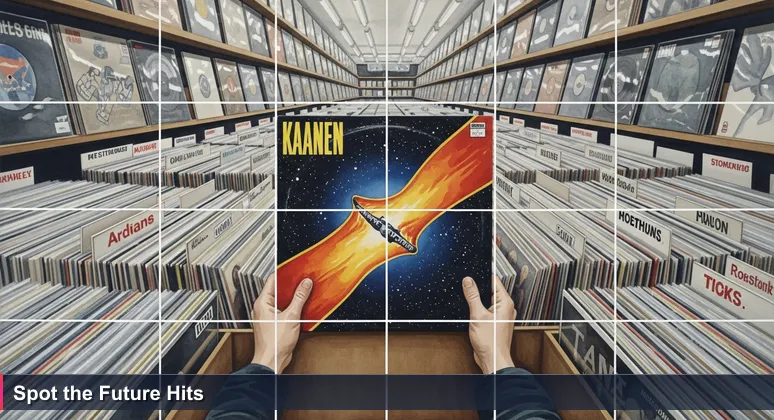
There’s a specific, familiar overwhelm in the aisles of Amoeba Music on Haight Street - the feeling of standing before a universe of potential hits, knowing most will fade, but one could define everything that comes next. The San Francisco AI scene in 2026 feels remarkably similar. As the market matures, capital is concentrating in high-traction startups with proven revenue, moving beyond broad experimentation. According to industry analysis, the "next OpenAI" likely won't be another massive model builder, but a company solving niche, high-value problems with precision.
This shift is visible on the ground. From SoMa to Mission Bay, the city's ecosystem is dense with emerging AI companies moving past hype. They are increasingly taking over San Francisco's Production, Distribution, and Repair (PDR) spaces in neighborhoods like Mission Bay and Dogpatch, blending software innovation with tangible industrial impact. This physical evolution mirrors the strategic pivot toward applications that deliver immediate, critical value.
The challenge, much like flipping through endless vinyl, is spotting genius in the cacophony. For founders, investors, and tech professionals pursuing careers here, the skill is identifying the pattern: companies that solve silent, expensive inefficiencies for entire industries. This list of startups to watch is curated for that specific insight - their unique approach, funding traction, and potential to define the next era of intelligent software from the Bay Area outward.
Table of Contents
- The San Francisco AI Scene in 2026
- Ambience Healthcare
- LangChain
- Harmonic
- Paraform
- Rad AI
- Braintrust Data
- AiStrike
- Streamline AI
- Overview AI
- Listen Labs
- Frequently Asked Questions
Explore how to become an AI builder in San Francisco with this guide.
Ambience Healthcare
In a city synonymous with technological moonshots, Ambience Healthcare's genius is its focus on healthcare's silent, trillion-dollar inefficiencies. The company develops an AI operating system that automates the unglamorous but critical back-office workflows of clinical documentation, medical coding, and compliance, deeply integrating with Electronic Health Records (EHRs).
This vertical, high-impact focus has attracted immense capital, including a recent $243 million Series C round from investors like Atomic VC, as noted by Blumberg Capital's 2026 startup watchlist. Its traction stems from solving a non-discretionary problem for major healthcare systems, directly lifting administrative burdens from clinicians to improve patient care.
Ambience is now a prime IPO candidate. As it scales, the key evolution to watch is its expansion from automating clinical notes to orchestrating entire clinical and revenue cycle workflows. This path could see it become the indispensable AI layer for modern healthcare delivery, a foundational shift born from San Francisco's unique blend of venture capital and vertical software ambition.
LangChain
While powerful, large language models (LLMs) often function as isolated engines. Building complex, reliable applications that connect these models to data, tools, and workflows has been a fragmented developer nightmare. LangChain became the de facto standard by thinking like essential infrastructure, providing the open-source framework that orchestrates chains of LLM reasoning, memory, and tool use.
Co-founded by Harrison Chase and Ankush Gola, its $135 million in funding fuels the evolution from a popular library to an enterprise-grade platform, a trajectory noted by Seedtable's 2026 analysis. Its San Francisco headquarters provides unmatched access to the developers and scaling startups in SoMa and beyond who are its core users and evangelists, turning the city's dense ecosystem into a built-in accelerator.
The critical transition to watch is from beloved open-source project to dominant commercial platform. Its success hinges on monetizing enterprise features without alienating its foundational community, aiming to become as fundamental to building AI applications as AWS is to cloud computing. This balance makes it one of the most strategically watched infrastructure plays in the Valley.
Harmonic
While general-purpose LLMs often stumble on complex mathematical reasoning, limiting their utility in engineering and hard sciences, Harmonic is betting big on "mathematical superintelligence." Headquartered in the Bay Area, the company moves beyond standard natural language processing to build AI capable of deep technical reasoning, targeting a market underserved by general chatbots.
This research-heavy, frontier-AI spirit is still thriving in the region, drawing top talent from Stanford and UC Berkeley. Backed by a $100 million Series B in 2025 led by Sequoia Capital and Kleiner Perkins, the startup represents a significant conviction in specialized intelligence, as highlighted in The Silicon Review's 2026 analysis of the hottest Silicon Valley ventures.
What to watch for are breakthroughs in benchmark performance for math and logic. Harmonic is a likely acquisition target for a major cloud provider like Google or Microsoft seeking to bolster its AI suite's technical capabilities. Alternatively, it could emerge as a standalone leader in the scientific AI tools space, proving that deep specialization is a viable and powerful path in San Francisco's evolving AI landscape.
Paraform
Tech hiring remains notoriously broken - slow, expensive, and reliant on scattergun outreach from recruiters. In San Francisco's AI talent war, where the average candidate commands ~$260,000, efficiency is paramount. Paraform tackles this head-on as an AI-powered recruiting marketplace built in the heart of the crunch.
Founded by Forbes 30 Under 30 alumni John Kim and Jeffrey Li, it uses AI to match companies with expert recruiters and vet candidates. Companies using Paraform typically meet their hire in ~12 days, a fraction of the traditional timeline. Its recent $40 million Series B in March 2026, led by ScaleVP with participation from Felicis and A* Capital, will scale this model, as detailed in the funding announcement. Being in San Francisco gives it a front-row seat to the hiring needs of every scaling AI startup in SoMa and South Beach.
Watch its ability to "eat" the traditional recruiting agency model. As it scales recruiter supply - who have already generated over $50 million on the platform - and refines its AI matching, it could become the primary conduit for high-stakes tech hiring, with a clear path to an IPO as a modern, tech-enabled staffing leader.
Rad AI
Radiologists face crippling workloads, spending hours dictating and editing structured reports for each scan - a bottleneck that delays diagnoses and contributes to professional burnout. Rad AI exemplifies the powerful trend of "vertical AI", applying deep specialization to a high-value, critical niche within the massive healthcare sector.
Based in San Francisco, the company builds generative AI tools that automate radiology report generation, directly targeting this operational choke point. Its $68 million Series C funding demonstrates strong investor confidence in this focused approach, as tracked by analyses of California's Series C landscape. Proximity to top medical centers like UCSF and a dense pool of machine learning talent in the city accelerates its ongoing research, development, and crucial clinical validation.
What to watch are regulatory milestones and expansion into new imaging modalities. Rad AI is a classic acquisition target for large medical imaging conglomerates, such as GE HealthCare or Siemens, or healthcare IT giants looking to deeply and reliably embed AI into clinical workflows. Its success underscores a key lesson from the SF scene: solving one expensive, unglamorous problem exceptionally well can be a billion-dollar strategy.
Braintrust Data
Enterprises deploying large language models face a critical "evaluation gap" - the challenge of rigorously measuring, monitoring, and improving model performance in production, not just in a controlled lab environment. Braintrust Data provides the comprehensive evaluation and data management platform that acts as the essential control tower for this process.
Focused squarely on MLOps and AI infrastructure, the company tackles the complex but fundamental problem of model reliability and governance. Its $41.1 million Series A funding is dedicated to scaling these critical tools for enterprises, as identified in analyses of San Francisco's AI startup landscape. Its location in the city places it at the epicenter where companies are urgently moving AI applications from pilot to production.
Watch for Braintrust's role in enabling regulated industries like finance and healthcare to adopt LLMs safely and at scale. By providing the necessary framework for audit trails, performance benchmarking, and data management, it could become a foundational, non-negotiable component of the enterprise AI stack, essential for any company serious about deploying reliable, governed intelligent systems.
AiStrike
Traditional cybersecurity operates on a reactive model, relying on Security Operations Centers to respond to alerts - a system increasingly overwhelmed by the scale and sophistication of modern attacks. AiStrike represents the next wave, building an AI-native, agentic security operations platform that moves beyond this paradigm to proactive threat hunting.
The company uses autonomous AI agents that continuously learn and adapt, offering what it terms "Agentic Cyber Defense as a Service." This model allows security teams to focus on strategic outcomes rather than manual alert tuning. San Francisco's dense venture capital presence and deep pool of security and AI talent fuel this ambitious mission, with the startup having raised a $7 million seed round to scale its preemptive platform, as reported by Pulse 2.0.
The key metric to watch is the adoption of its agentic model by Fortune 500 security teams. AiStrike is a prime candidate for acquisition by a legacy security giant like Palo Alto Networks or CrowdStrike seeking to leapfrog into the AI-native future, a trend noted by investors tracking the space. Its progress is a bellwether for how fully autonomous AI will reshape enterprise defense.
Streamline AI
In-house legal teams are inundated with high-volume, repetitive intake requests and matter management tasks, leading to slow turnaround times and costly reliance on outside counsel. Streamline AI addresses this by automating the intake, triage, and management of legal work through an AI-powered workflow platform, targeting the essential but often overlooked processes that define corporate efficiency.
Backed by enterprise-focused venture capital firms like Blumberg Capital, which highlights it as a key startup automating "unglamorous but essential" business functions, the company is headquartered in San Francisco. This location is its ideal launchpad, given the city's concentration of tech companies facing complex, scaling legal and compliance needs daily.
The evolution to watch is Streamline AI's potential expansion from core workflow automation into predictive legal analytics and more strategic advisory functions. By becoming the central operating system for corporate legal departments, it could evolve into a highly attractive asset for legal tech consolidators or major enterprise software platforms seeking to embed deeper intelligence into business operations.
Overview AI
Manufacturing quality control has long relied on manual inspection - a process that's slow, inconsistent, and prone to human error, leading to product defects, waste, and significant recall risks. Overview AI applies San Francisco's software ingenuity to this physical-world problem, using deep learning-powered computer vision to automate inspection and modernize quality control directly on the factory floor.
The company's approach represents a fascinating geographical trend within the city's tech expansion. As detailed in analyses of San Francisco's AI boom, Overview AI is part of a wave of companies taking over the city's "Production, Distribution, and Repair" (PDR) spaces near Mission Bay and Dogpatch. This physical presence in the city's evolving industrial core is a key differentiator, blending software innovation with tangible, real-world impact.
Watch for strategic partnerships with major manufacturers and industrial automation firms like Rockwell Automation or Siemens. Overview AI could become the crucial bridge that brings the Bay Area's cutting-edge AI software prowess directly onto the global factory floor, a move highlighted by investors tracking industrial AI applications. Its success signals that the next frontier for San Francisco startups isn't just in the cloud, but in the gritty, essential work of making physical things better.
Listen Labs
Traditional market research - relying on static surveys and focus groups - often fails to capture the nuanced, evolving "why" behind customer behavior at scale. Listen Labs acts as an autonomous market researcher, fundamentally reimagining this process by using advanced natural language processing to conduct deep, interactive customer conversations, replacing outdated methods with high-fidelity, AI-led interviews.
This approach has attracted significant backing, including a $27 million Series A in 2025 led by Sequoia Capital, underscoring the belief in this new paradigm for gathering insights, as noted in coverage of the hottest Silicon Valley startups. The Bay Area's deeply ingrained culture of obsessed customer-centricity and rapid product iteration provides the perfect real-world testing ground for refining its technology.
The key disruption to watch is within the traditional market research industry itself. If Listen Labs can reliably deliver richer, more dynamic insights faster and more cost-effectively, it could reshape how every product team from SoMa to Cupertino understands its audience. This potential makes it a compelling standalone business or an attractive acquisition for a major data and insights platform seeking AI-native capabilities.
Frequently Asked Questions
How did you choose which AI startups made the list for 2026?
We selected them based on unique approaches to solving niche, high-value problems, strong funding traction, and potential to define the next era of AI. For instance, Ambience Healthcare's focus on healthcare inefficiencies helped secure a $243M Series C, highlighting its impact.
Are these startups well-funded, and what does that mean for their growth?
Yes, many have raised substantial rounds, such as LangChain with $135M and Harmonic with a $100M Series B from top VCs like Sequoia Capital. This funding, driven by San Francisco's deep venture capital presence, fuels scaling and innovation in areas like AI infrastructure and mathematical superintelligence.
Can I find good AI job opportunities at these startups in San Francisco?
Absolutely, with AI talent commanding ~$260,000 on average in San Francisco, startups like Paraform - which speeds up hiring to ~12 days - are creating roles in tech and recruiting. The ecosystem offers diverse positions, from MLOps at Braintrust Data to AI development across verticals.
Why is San Francisco such a hotspot for AI startups compared to other cities?
San Francisco's proximity to tech giants like Google and Meta, top universities such as Stanford and UC Berkeley, and a dense venture capital network accelerates innovation. Startups like Rad AI leverage this for R&D and clinical validation, making the Bay Area ideal for high-growth AI ventures.
What key AI trends are these startups capitalizing on for the future?
They're focusing on emerging trends like vertical AI in healthcare with Ambience Healthcare, agentic cybersecurity at AiStrike, and autonomous market research via Listen Labs. These moves target specific, high-value problems beyond general AI, reflecting the shift towards practical, revenue-generating applications.
Get a breakdown of San Francisco's cost of living vs tech salaries in 2026 in our expert review.
This analysis covers the highest compensation packages in SF tech for the year 2026.
For those looking for high-demand tech roles accessible without a college education in the Bay Area in 2026, this article is essential.
Explore the top 10 tech startups hiring junior developers in San Francisco, CA in 2026 for valuable insights.
Find the AI capital's best coworking spaces in 2026 with our detailed list.

Irene Holden
Operations Manager
Former Microsoft Education and Learning Futures Group team member, Irene now oversees instructors at Nucamp while writing about everything tech - from careers to coding bootcamps.