









Top 10 AI Startups to Watch in the Netherlands in 2026
By Irene Holden
Last Updated: April 20th 2026
Too Long; Didn't Read
The top AI startups to watch in the Netherlands in 2026 are Weaviate and Cradle, leading a thriving ecosystem where AI now drives 25% of new tech ventures. Weaviate stands out with €128 million funding as a foundational AI infrastructure player, while Cradle's €73 million investment fuels its breakthrough generative AI for protein design, both capitalizing on the Dutch strengths in research and deep-tech innovation.
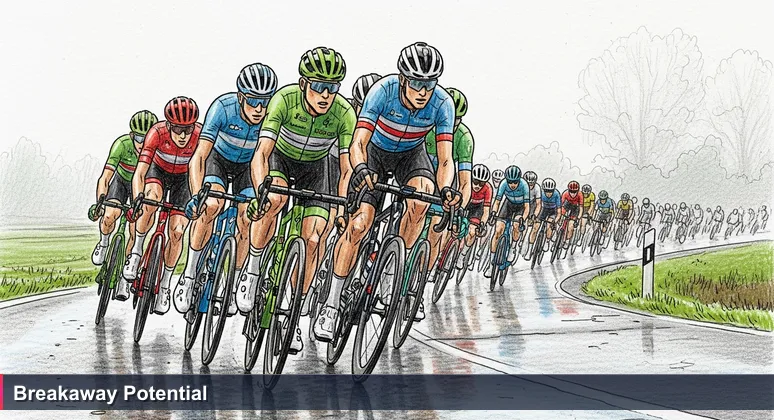
To understand which Dutch AI startup will break away next, don't just watch the leaders. Watch the peloton. The nation’s ecosystem moves with a powerful, collective draft of world-class research, strategic funding, and a unique culture of vertical specialization, creating conditions where breakthroughs are not isolated but systemic.
This momentum is quantified by the "Silicon Canal" effect, where the Netherlands' status as an EU gateway with regulatory clarity attracts global founders. As a result, AI now drives 25% of all new Dutch tech ventures, a transformation detailed in analyses of the shifting startup landscape. This listicle maps the momentum within that peloton, highlighting companies whose trajectory is shaped by - and is shaping - this unique Dutch terrain.
The question for 2026 isn't just who is leading, but who is perfectly positioned in the draft. The most successful Dutch startups are increasingly avoiding costly foundational models to instead build "killer applications" for niche problems in agritech, climate, and life sciences. This strategic focus is fueled by an investment climate where nearly 62% of total European venture deal value is being funneled into AI, making integrated strategies mandatory for founders aiming to scale.
From foundational infrastructure like Weaviate's vector database to Cradle's protein-designing generative AI, the following companies represent the dynamic front of this pack, perfectly harnessed to the Netherlands' research institutions, tech hubs, and global market ambitions.
Table of Contents
- Introduction
- Weaviate
- Cradle
- CuspAI
- Source.ag
- Fourthline
- Overstory
- Dexter Energy
- Neople
- Orq.ai
- Carv
- Frequently Asked Questions
Navigate the Dutch AI job market in 2026 with this complete guide.
Weaviate
Amsterdam-based Weaviate has become a foundational layer in the global generative AI stack, providing the essential infrastructure that allows other applications to sprint ahead. Its open-source, cloud-native vector database enables developers to build sophisticated semantic search and retrieval-augmented generation (RAG) applications, moving far beyond simple keyword matching.
Founded by Bob van Luijt and Etienne Dilocker, the company's success is a direct product of the Netherlands' strong open-source culture and its appeal to top-tier European tech talent. By early 2026, this position had attracted massive investor confidence, with total funding reaching approximately €128 million. Industry analysts at Seedtable argue it is arguably the "best Dutch startup to watch in 2026" precisely because of this enabling, infrastructure role.
Weaviate’s strategic importance means its growth is inextricably linked to the expansion of the entire AI ecosystem. As enterprises across Europe and beyond rush to deploy generative AI, the demand for robust vector search engines only intensifies. Watch for Weaviate as a potential IPO candidate or a strategic acquisition target by a major cloud provider, as its technology becomes indispensable for the next wave of industrial AI deployment.
Cradle
Operating at the thrilling intersection of biology and machine learning, Amsterdam’s Cradle uses generative AI to dramatically accelerate the design of proteins for sustainable materials and novel therapeutics. Founded by ex-Google engineer Stef van Grieken, the startup helps biologists program and optimize proteins, potentially reducing experimental R&D cycles from months to days by using large language models trained on protein sequences.
This deep-tech approach perfectly embodies the Dutch ethos of translating fundamental academic research into high-impact commercial applications. That vision attracted a significant €73 million funding round in late 2024 from top-tier investors like Index Ventures. As noted by Sifted in its list of generative AI startups to watch, Cradle represents the high-stakes, high-reward frontier of applied AI, where the Netherlands' strong life sciences and computational research clusters provide a critical advantage.
For 2026, the key indicators will be Cradle's partnerships with major pharma and biomanufacturing companies. Its success will serve as a benchmark for the Dutch ecosystem's ability to commercialize world-class research, turning cutting-edge AI into tangible solutions for global health and sustainability challenges.
CuspAI
Co-founded by renowned AI professor Max Welling of the University of Amsterdam, CuspAI is a quintessential Dutch moonshot venture tackling climate change with generative AI and molecular simulation. Its mission is to discover and design new materials optimized for carbon capture and storage, operating at the bleeding edge of deep learning and computational chemistry.
The startup, which emerged directly from Welling's academic work, secured an impressive €28.3 million Seed round in 2024. As highlighted by industry observers at ioplus.nl, this substantial early investment signals strong belief in its deep-tech approach to a critical global problem. The funding positions CuspAI at the forefront of climate-focused AI, aiming to create materials that can efficiently pull CO₂ from the air or industrial emissions.
In 2026, the key metric will be CuspAI's progress from advanced simulation to lab-scale validation. Its work aligns perfectly with both the Dutch national AI strategy and overarching EU Green Deal goals, making it a prime candidate for further public-private grants. The company stands as a beacon for climate-tech talent in the Randstad, demonstrating how Dutch academic excellence can be channeled into solving planetary-scale challenges.
Source.ag
Amsterdam’s Source.ag exemplifies the Dutch genius for applying cutting-edge AI to world-leading industries - in this case, revolutionizing greenhouse farming. The startup uses AI to create "digital twins" of plants, modeling their physiology to provide real-time recommendations that optimize climate, lighting, and irrigation for maximum yield and resource efficiency.
This deep vertical application leverages the Netherlands' global leadership in agritech, deeply embedded in the Brainport Eindhoven and Westland Greenport clusters. Founded by Ernst van Bruggen and Rien Kamman, the company has raised over €60 million by 2026. A recent €15.2 million Series B extension aims specifically to scale its technology globally, capitalizing on a growing Netherlands AI in agriculture market.
For 2026, watch Source.ag’s international expansion as it exports Dutch horticultural expertise via its SaaS platform. Its trajectory tests the scalability of deep vertical AI solutions from a small, advanced market to the global stage, turning localized knowledge into a worldwide competitive advantage in sustainable food production.
Fourthline
In the heavily regulated world of finance, Amsterdam’s Fourthline has built a formidable AI-driven "Know Your Customer" (KYC) and compliance platform. It automates identity verification, fraud detection, and anti-money laundering (AML) checks using advanced computer vision and natural language processing, helping financial institutions onboard customers quickly and securely.
Founded by Krik Gunning and Chris van Straeten, Fourthline has turned regulatory complexity into a competitive moat. Its high precision in a compliance-critical domain has attracted €69 million in cumulative funding. As noted in a Seedtable analysis of top Amsterdam AI startups, it has secured strong traction with major banks and neobanks, a testament to the robustness required in this sector.
In 2026, as EU financial regulations like MiCA (for crypto-assets) fully come into force, Fourthline’s AI platform is perfectly positioned to help institutions navigate this increasing complexity. Watch for its potential expansion into adjacent regulated verticals like legaltech or proptech, leveraging its trusted regulatory expertise to capture new markets beyond traditional finance.
Overstory
applies powerful geospatial AI to solve critical environmental and infrastructure challenges. Using satellite imagery and computer vision, its platform monitors vegetation - specifically where trees intersect with power lines - to help utility companies prevent devastating wildfires, reduce outages, and improve overall grid resilience.
Founded in Amsterdam by Indra den Bakker, Roelof Pieters, and Anniek Schouten, the startup has raised €57 million to refine its models and expand its global reach. A significant €14 million funding round underscored investor confidence in its mission to turn vast satellite data into actionable, preventative intelligence for utilities worldwide.
Overstory represents the scalable, global SaaS potential of Dutch environmental technology. As climate change increases the frequency and intensity of extreme weather, its solution has become increasingly vital. The year 2026 is poised to be pivotal for Overstory's expansion beyond Europe, particularly into North American markets where wildfire risk is a paramount concern for utilities, governments, and insurers, showcasing how Dutch innovation can address global safety challenges.
Dexter Energy
Based in Amsterdam, Dexter Energy tackles the critical challenge of managing the inherent volatility of wind and solar power in the renewable energy transition. Its AI-powered forecasting and trade optimization software analyzes weather data, grid conditions, and market signals to help energy suppliers, traders, and grid operators balance their portfolios in real-time, reducing costs and improving grid stability.
Founded by Luuk Veeken, the company has secured around €38 million in funding to refine its specialized algorithms. Its deep focus on the energy sector's unique data landscape makes it an indispensable tool, a point underscored by industry analyses that label it as vital for the 2026 energy market.
Watch for Dexter Energy’s role in enabling more local, community-based energy markets - like those pioneered in the Netherlands - and its potential expansion into adjacent grid-serving AI applications like demand response optimization. Its trajectory is a clear indicator of how Dutch technical specialization is building the essential intelligence layer for a sustainable and resilient energy grid.
Neople
Based in 's-Hertogenbosch, Neople is pioneering the next wave of workplace automation by creating sophisticated "digital coworkers." These are not simple chatbots but AI agents designed with specific personalities and roles that integrate seamlessly into human teams via tools like Slack and Microsoft Teams to handle repetitive support, scheduling, and administrative tasks.
Founded in 2023 by Hans de Penning, the startup raised a €6 million Seed round from prominent Dutch investors Newion and Peak. As highlighted in an analysis of early-stage Dutch AI innovation by Zefyron, Neople's focused strategy on the Dutch and European SME market is its key differentiator, targeting businesses eager to adopt practical automation. This aligns with broader trends showing Dutch SMEs leading in Europe regarding AI adoption.
In 2026, watch for Neople’s adoption metrics within the domestic business landscape and its expansion into vertical-specific agents for sectors like legal, healthcare, or logistics. Its success will serve as a critical real-world test of the productivity impact of AI agents in everyday business operations, demonstrating how focused solutions can win in the peloton of broader AI innovation.
Orq.ai
As enterprises rush to deploy Large Language Model applications, they hit the critical "last mile" problem: how to manage, test, and govern these models safely in production. Amsterdam’s Orq.ai provides the essential enterprise-grade platform to solve this, bridging the gap between software engineers, data scientists, and product managers to industrialize generative AI workflows.
Founded by Sohrab Hosseini and Anthony Diaz, the startup secured €7 million in seed funding to build its collaborative orchestration layer. This focus on the enterprise deployment bottleneck addresses a glaring need in the generative AI stack, as highlighted in broader analyses of Amsterdam's AI ecosystem. The funding, detailed in coverage from outlets like Golden Egg Check, enables the team to refine its platform for complex organizational needs.
For 2026, watch for Orq.ai’s partnerships with major consulting firms and system integrators across the Benelux region. Its growth trajectory will demonstrate how Dutch startups can capitalize on the region's dense concentration of multinational headquarters and tech-forward enterprises, positioning themselves as the go-to solution for turning experimental AI pilots into reliable, scaled operations.
Carv
Amidst a persistently tight Dutch and European labor market, Amsterdam's Carv uses deep natural language processing to revolutionize recruitment. The platform moves beyond simple keyword matching to automate interview assistance, capture and summarize unstructured conversation data, and engage candidates, all while focusing on reducing unconscious bias and improving hiring quality.
Founded by serial entrepreneur Barend Raaff, who previously founded the HR tech company Harver, Carv combines proven scaling experience with cutting-edge AI expertise. The startup has raised €14 million to refine its sophisticated technology, securing its place among the innovative companies highlighted in analyses of Amsterdam's top AI startups to watch. This capital injection fuels its mission to solve a critical pain point for businesses competing for talent.
In 2026, watch for Carv’s expansion beyond the Netherlands into other European markets where complex, multi-lingual recruitment presents a significant challenge. Its growth will serve as a key indicator for the adoption of deep, specialized AI in transforming traditional yet vital enterprise functions like talent acquisition, proving that even in a crowded field, focused solutions can lead the breakaway.
Frequently Asked Questions
What makes the Netherlands a key place to watch AI startups in 2026?
The Netherlands leverages the 'Silicon Canal' effect, where AI now drives 25% of new tech ventures, thanks to its EU gateway status and strong research hubs like TU Delft. With proximity to major employers such as ASML and Philips, it's a fertile ground for startups in sectors from biotech to climate tech.
How were these top AI startups selected and ranked?
Startups are ranked based on factors like funding, innovation, and alignment with Dutch strengths such as vertical specialization. For example, Weaviate's €128M funding and role in AI infrastructure highlight its impact, while Cradle's €73M round showcases deep-tech potential in biotech.
Which startup is best for someone interested in climate-focused AI careers?
CuspAI and Overstory are top picks, with CuspAI raising €28.3M for carbon capture materials and Overstory securing €57M for geospatial AI to prevent wildfires. They reflect the Netherlands' focus on sustainability and the EU Green Deal, offering roles in research and data science.
What kind of job opportunities do these startups offer in the Dutch market?
They create high-demand roles in AI engineering, research, and vertical applications, with competitive salaries in hubs like Amsterdam and Eindhoven. For instance, positions at Source.ag in agritech or Fourthline in RegTech often rival those at tech giants like Google or Adyen.
How do funding levels indicate the stability of these AI startups?
Funding ranges from early-stage rounds like Neople's €6M to substantial amounts like Weaviate's €128M, showing varied growth stages. High investment, such as Dexter Energy's €38M, signals strong confidence in their potential, making them resilient players in the Dutch AI ecosystem.
For role-specific AI salary data in the Netherlands for 2026, this article provides detailed benchmarks.
This article explains why the Netherlands is a top destination for tech careers in 2026, with data on AI and cloud roles.
Learn about subsidies and grants for tech training in the Netherlands in our detailed article.
A 2026 guide to the best Dutch startups for new developers is available.
This article covers the best Dutch tech graduate programs with high conversion rates.

Irene Holden
Operations Manager
Former Microsoft Education and Learning Futures Group team member, Irene now oversees instructors at Nucamp while writing about everything tech - from careers to coding bootcamps.