









Who's Hiring Cybersecurity Professionals in Lincoln, NE in 2026?
By Irene Holden
Last Updated: March 12th 2026
Key Takeaways
In 2026, Lincoln's cybersecurity hiring is dominated by sectors like local tech with companies such as Nelnet and Hudl, defense contractors near Offutt Air Force Base, and critical infrastructure employers including Bryan Health and Lincoln Electric System. Salaries can reach up to $155,000 at Hudl and over $150,000 in defense roles, with over 77 active jobs in the metro area, offering competitive pay in a city with a lower cost of living than coastal hubs. This makes Lincoln an ideal spot for professionals seeking impactful work in national security and community-focused tech without the high expenses.
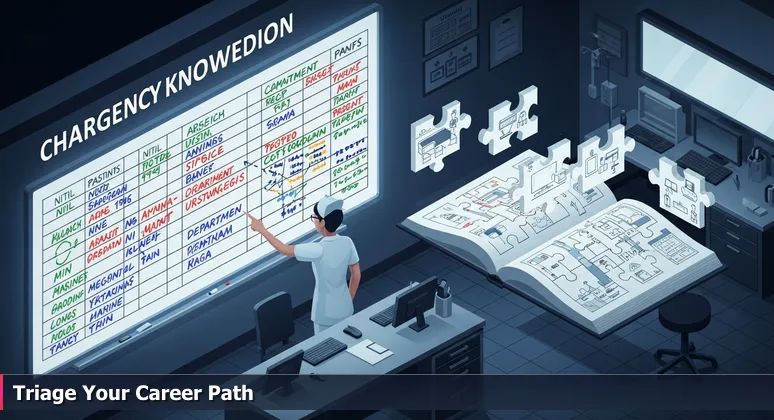
Picture the high-stakes environment of a hospital emergency room at Bryan Health. The charge nurse’s whiteboard is a mosaic of colored codes directing each patient to a specific specialist - "GSW→OR3," "MI→CATH." The most critical skill isn't medical knowledge; it's the decisive ability to triage a crisis to the exact department that can save it.
In 2026, navigating Lincoln’s booming cybersecurity job market requires the same precision. The frustration isn't a lack of opportunity - with over 77 cybersecurity jobs currently active in the metro area - but the chaos of not knowing which "department" your skills belong to. Are you meant to protect nuclear command systems, secure student loan data, or defend life-saving medical devices? This guide is your triage board.
"By 2026, we'll likely see around 4.5 million open cybersecurity jobs worldwide... these are complex jobs where human reasoning and adaptability still matter beyond what AI can automate." - Industry Analyst, YouTube
The national landscape is growing at a projected rate of 32%, but Lincoln's demand is supercharged by local factors. The bar for entry has evolved, with automation handling basic tasks and pushing demand toward specialists who understand the unique regulatory and business "vital signs" of their sector. Your path becomes clear when you stop looking for a generic job and start diagnosing which critical heartbeat of Lincoln's economy you are built to protect.
In This Guide
- Your Cybersecurity Triage: Start Here
- Understanding Lincoln's 2026 Cybersecurity Boom
- Local Tech Anchors: Nelnet, Hudl, and UNL
- Defense and National Security Careers
- Non-Tech Critical Infrastructure: Healthcare, Utilities, Finance
- Your 2026 Career Pathways into Lincoln
- The Lincoln Advantage: Why Build Your Career Here
- Frequently Asked Questions
This article provides a roadmap for AI careers in Lincoln's ecosystem for aspiring professionals.
Understanding Lincoln's 2026 Cybersecurity Boom
Lincoln's cybersecurity landscape isn't a generic tech hub; it's a resilient mosaic of high-stakes, compliance-driven industries. The demand is fueled by the imperative to protect everything from student loan data at Nelnet and nuclear command systems near Offutt Air Force Base to life-saving medical devices at Bryan Health and the city's power grid. This diversity creates a robust job market less susceptible to sector-specific downturns.
Local Advantages Supercharging Growth
While national growth is strong, local factors provide a unique accelerant. Lincoln’s central U.S. location and significantly lower cost of living compared to coastal metros make it attractive for both companies and professionals. Furthermore, a deep talent pipeline flows from institutions like the University of Nebraska-Lincoln and the 55th Wing at Offutt Air Force Base, producing graduates and cleared personnel with mission-critical experience.
The Evolution of Required Skills
The "barrier to entry" has fundamentally shifted. Basic Security Operations Center (SOC) analyst roles are increasingly automated, pushing demand toward specialized, higher-value skills. Employers now prioritize professionals with expertise in cloud security, identity management, and AI-augmented defense who also understand the specific business and regulatory heartbeat of their sector. This evolution is evident in local job postings, from Peraton's contracts supporting USSTRATCOM requiring TS/SCI clearance to specialized IAM managers in healthcare commanding salaries up to $156,000. Success in this market means solving sector-specific problems, not just understanding security generically.
Local Tech Anchors: Nelnet, Hudl, and UNL
This sector is home to Lincoln's most visible technology anchors, where cybersecurity isn't just a support function but a core product feature and competitive advantage. Each company presents a distinct security challenge rooted in its business model, requiring professionals who can specialize in protecting financial data, global cloud platforms, or academic research.
| Employer | Cybersecurity Focus | 2026 Salary Range | Key Certs & Skills |
|---|---|---|---|
| Nelnet | Securing billions in student loan transactions and sensitive PII under heavy federal regulation. | $92,000 - $139,000 | CISSP, CompTIA Security+; securing diverse payment systems & cloud environments. |
| Hudl | Protecting a massive, globally accessed sports video database in the cloud, requiring 24/7 incident response. | $93,000 - $155,000 | AWS security tools, ISO 27001; managing vulnerability remediation in DevOps. |
| UNL | Balancing open academic collaboration with locking down federally funded research and student data (FERPA). | $94,000 - $117,000 | CompTIA Security+, CEH; implementing security without hindering academic freedom. |
The Lincoln advantage across these anchors is profound. At Nelnet, you tackle large-scale fintech problems with Lincoln's affordability. Hudl offers Silicon Valley-scale cloud challenges within a collaborative Midwestern community. UNL provides unmatched benefits and the chance to directly impact Nebraska's future innovators. Each offers a pathway to specialization on problems of national relevance.
Defense and National Security Careers
Propelled by the presence of U.S. Strategic Command (USSTRATCOM) at nearby Offutt Air Force Base, this sector represents the high-stakes, high-reward pinnacle of Lincoln's cybersecurity spectrum. Here, the mission extends beyond corporate data protection to national security at the highest level, including the defense of nuclear command and control (NC3) systems.
Roles, Clearances, and Core Challenges
Major defense contractors like Peraton and Applied Research Solutions hold substantial contracts supporting USSTRATCOM. They hire for senior-level roles such as System Cybersecurity Engineers, Information Systems Security Officers (ISSO), and DevSecOps Engineers, with salaries ranging from $126,000 to $150,000+ for cleared personnel. The non-negotiable gateway is a Top Secret/SCI (TS/SCI) security clearance, supported by certifications like CISSP and CompTIA Security+. The core technical challenge is maintaining the Authority to Operate (ATO) for critical systems under the stringent Department of Defense Risk Management Framework (RMF), a rigorous process detailed in active contracts for cybersecurity support at Offutt AFB.
The Lincoln Military Talent Pipeline
This sector benefits immensely from a unique local pipeline. The 55th Wing at Offutt and Nebraska National Guard cyber units continuously produce a steady stream of personnel who already possess high-level clearances and practical, mission-critical experience. Upon separation from service, these individuals become prime candidates for contractor roles, creating a resilient talent ecosystem that few other metros can match and ensuring a deep bench of professionals who understand the grave stakes of the mission.
Non-Tech Critical Infrastructure: Healthcare, Utilities, Finance
Beyond the flashy tech firms, Lincoln's cybersecurity story is uniquely compelling in its essential services - healthcare, utilities, and finance. These sectors are in a hiring race to fortify their digital foundations against threats that carry immediate, real-world consequences, often offering excellent work-life balance and stable, purpose-driven careers.
Healthcare: Protecting Life-Critical Systems
Providers like Bryan Health and CHI Health St. Elizabeth are prime ransomware targets. A breach here directly impacts patient care, making roles like Identity & Access Management (IAM) Cybersecurity Managers, with salaries from $105,000 to $156,000, critical. The daily challenge is a delicate surgery: enforcing strict HIPAA compliance and securing IoT medical devices while ensuring doctors have fast, reliable access to records.
Utilities: Defending the Physical Grid
As a publicly owned utility, Lincoln Electric System (LES) defends critical infrastructure from sophisticated, potentially state-level threats. Roles like Generation Operations Security Specialists ($107,000 - $134,000) require knowledge of Industrial Control Systems (ICS) and SCADA networks, which operate fundamentally differently from corporate IT. The advantage is profound purpose: keeping the lights and heat on for your community.
Finance: Securing Trust and Capital
Local institutions like Union Bank & Trust and Assurity Life Insurance manage immense trust and financial data, attracting fraud and data theft. They hire Information Security Analysts and Systems Engineers for cloud security operations and vulnerability management. Compared to frenetic national banks, these regional players often offer less competitive hiring processes and a strong focus on developing local talent, providing a stable entry point into financial sector security.
Your 2026 Career Pathways into Lincoln
Knowing Lincoln's key sectors is the diagnosis; successfully navigating into them requires a deliberate treatment plan. Your strategy must be tailored to your career stage, shifting from building foundational credibility to solving sector-specific problems.
For Career Changers & Entry-Level Seekers
The path begins with establishing core competency. In Lincoln, entry-level cybersecurity roles, such as help desk analysts with a security focus, typically start in the $50,000 - $63,000 range. Accelerated pathways exist through focused training; for example, local bootcamps like Nucamp offer 15-week programs designed to build the practical skills employers need. This investment bridges the gap into the industry, a critical step as new state compliance directives force local entities to build their security teams, creating more on-ramps for new talent.
For Mid-Career Professionals & Specialists
Your approach must evolve from "applying for jobs" to "demonstrating sector-specific solutions." Follow these tactical steps:
- Get Certified for Your Target Sector: Pursue CISSP for management in healthcare or finance; deep-dive into AWS/Azure certs for cloud roles at Hudl or Nelnet; follow the Security+/CASP path for defense contracting.
- Build a Lincoln-Relevant Portfolio: Move beyond generic labs. Document projects that simulate local challenges, like securing a simulated student database (for UNL/Nelnet) or designing IAM policies for a healthcare scenario.
- Leverage the Local Network: Engage with local chapters of (ISC)² or ISACA. Connect with organizations like the State of Nebraska’s IT division, where CISO Patrick Wright is actively working on statewide resilience and AI integration, showcasing where local impact is being made.
The Lincoln Advantage: Why Build Your Career Here
While competitive salaries are a draw - with senior-level positions consistently reaching $130,000 to $150,000+ - the true advantage of a Lincoln cybersecurity career is the holistic equation. You can earn a coastal-tier income while enjoying a cost of living significantly lower than tech hubs on the coasts. This financial efficiency translates into tangible quality of life, from housing to community engagement, all within a manageable, connected metro.
More than affordability, Lincoln offers profound purpose. You're not securing abstract data; you're defending systems with immediate, real-world impact. You could safeguard the nuclear command infrastructure at USSTRATCOM, ensure the integrity of patient care at Bryan Health, or protect the financial futures of students at Nelnet. As one industry expert notes about the future of such roles, "these are complex jobs where human reasoning and adaptability still matter beyond what AI can automate."
Finally, the scale of the Lincoln market is uniquely empowering. It's broad enough across defense, tech, healthcare, and infrastructure to allow for deep specialization, yet small enough that your expertise and reputation can make a visible impact. You aren't just a cog in a machine; you become a recognized specialist safeguarding the key systems that make your own community run. With over 77 active openings, the demand is clear, offering a career built on stability, meaning, and direct community contribution.
Frequently Asked Questions
Which companies and organizations in Lincoln, NE are actively hiring for cybersecurity roles in 2026?
In 2026, key hiring sectors in Lincoln include local tech anchors like Nelnet and Hudl, defense contractors such as Peraton supporting USSTRATCOM, and critical infrastructure players like Bryan Health and Lincoln Electric System. With over 77 active cybersecurity jobs in the metro area, opportunities span high-stakes industries from healthcare to national security.
What kind of salaries can I expect for cybersecurity jobs in Lincoln, NE in 2026?
Salary ranges vary by role and experience; for example, senior defense positions can reach $150,000+, while entry-level roles start around $50,000-$63,000. At tech firms like Hudl, specialized cloud security roles offer $93,000-$155,000, making Lincoln competitive with its lower cost of living compared to coastal cities.
What skills or certifications are most in demand for cybersecurity roles in Lincoln?
Employers in Lincoln prioritize certifications like CISSP and CompTIA Security+ for roles in finance or healthcare, while defense contractors require Top Secret clearances. For cloud-focused jobs at Hudl or Nelnet, hands-on AWS security tools and frameworks like SOC 2 are crucial to handle global-scale challenges.
Are there pathways for entry-level candidates to break into cybersecurity in Lincoln?
Yes, entry-level pathways exist, often starting with help desk roles in the $50,000-$63,000 range. Local bootcamps like Nucamp offer accelerated training, and state initiatives are expanding security teams in compliance-driven sectors, providing more on-ramps for new talent in Lincoln's growing market.
Why should I choose Lincoln, NE over other cities for a cybersecurity career?
Lincoln combines competitive salaries, with senior roles reaching $130,000-$150,000+, with a lower cost of living and a central U.S. location. You'll work on critical problems in defense, healthcare, and infrastructure within a tight-knit community, offering stability and a tangible impact on local systems like power grids and universities.
Check out the AI startups to watch in 2026 from Lincoln for key insights.
For opportunities in Lincoln, NE tech startups with roles for junior developers, check this out.
For a detailed roadmap, see how to become an AI engineer in Lincoln, NE in 2026 from Nucamp Bootcamps.
In 2026, Lincoln's AI hiring trends beyond tech are highlighted.
This guide provides a detailed evaluation of tech job offers in Lincoln, NE based on local affordability.

Irene Holden
Operations Manager
Former Microsoft Education and Learning Futures Group team member, Irene now oversees instructors at Nucamp while writing about everything tech - from careers to coding bootcamps.