









How to Become an AI Engineer in Lincoln, NE in 2026
By Irene Holden
Last Updated: March 12th 2026
Quick Summary
To become an AI engineer in Lincoln, NE by 2026, follow a year-long phased plan starting with Python and math fundamentals, then specialize in areas like computer vision or NLP to align with local employers such as Hudl and Nelnet. With average salaries around $123,000 and senior roles reaching $177,000, Lincoln's lower cost of living and growing tech scene, supported by the University of Nebraska-Lincoln, offer a rewarding career path. By completing end-to-end projects and engaging with local resources like the PRAIRIE AI initiative, you'll be well-positioned to thrive in this heartland hub by 2026.
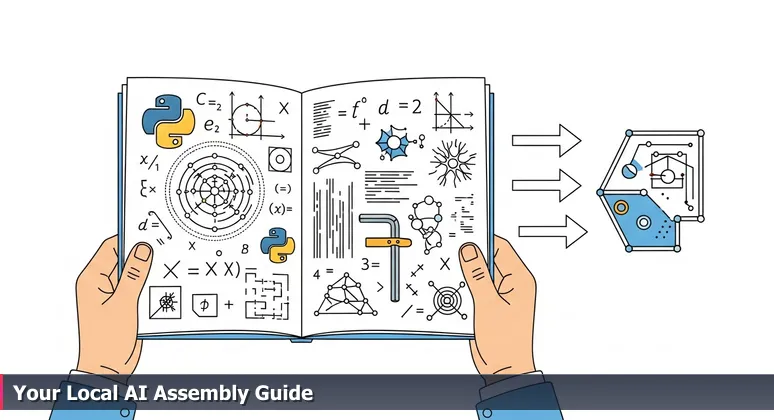
Staring at the sprawling, multi-page roadmap to become an AI engineer can feel like holding a complex assembly manual with no clear starting point. The task feels monumental, defined by abstract skills and generic advice. Yet, here in Lincoln, you have a critical advantage: a local blueprint that turns overwhelming instructions into a tangible career structure.
Your foundational toolkit - reliable computer, internet, discipline - remains essential. But the true differentiator is leveraging Lincoln’s unique ecosystem. According to industry analysis, the AI engineer role is the #1 emerging job in the area's "2026 Jobs on the Rise" report, proving demand is not a future concept but a present reality. This local demand provides immediate context for every skill you learn.
This practical foundation is bolstered by institutional support, like the University of Nebraska's system-wide AI Institute launched to position the state as a leader in human-centered AI. This initiative, alongside the ethical PRAIRIE initiative, creates a scaffold for your learning, connecting theory to real-world applications in agriculture, healthcare, and tech.
Your toolbox extends beyond software. It includes Lincoln’s lower cost of living, which allows for deeper investment in education, and a growing tech scene anchored by companies like Hudl and Nelnet. This environment transforms the daunting journey into a structured assembly, where each new skill - Python, Git, cloud platforms - interlocks with local opportunities, building something stable and rewarding right here.
Steps Overview
- Your AI Engineer Toolkit in Lincoln
- Master Python for AI Success
- The Math Behind Machine Intelligence
- Build Your First Machine Learning Model
- Dive Into Deep Learning Frameworks
- Specialize in Lincoln's AI Job Market
- Integrate Generative AI and LLMs
- Execute a Capstone End-to-End Project
- Engage with Lincoln's AI Community
- Validate Your AI Engineer Readiness
- Common Questions
This article provides a roadmap for AI careers in Lincoln's ecosystem for aspiring professionals.
Master Python for AI Success
Consider Python the universal Allen wrench in your AI toolkit - the single, indispensable tool that makes assembling everything else possible. It’s the lingua franca of AI, and every employer from Hudl to Bryan Health expects proficiency not just in running libraries, but in writing clean, effective code for data manipulation, model training, and system integration.
Investing your first month deeply in fundamentals pays direct dividends in Lincoln’s market. An AI/ML Engineer in Nebraska commands an average salary of approximately $123,362, a figure that starts with mastering this single, critical skill. This local earning potential underscores why a robust Python foundation is your first non-negotiable step.
The common trap is rushing through syntax to reach the "exciting" AI libraries. As emphasized by the University of Nebraska-Lincoln School of Computing, strong mathematical and programming foundations are what separate technicians from engineers who can innovate. Weak Python skills will cause every complex model you build later to be unstable and difficult to debug.
Your verification step is practical: can you write a script that reads a local dataset (like Lincoln housing or public health stats), cleans it with Pandas, and calculates meaningful statistics? This isn’t a theoretical exercise; it’s the daily work of an AI professional. Mastering loops, functions, and data structures isn’t a formality - it’s how you ensure the career you’re building has a stable, level foundation.
The Math Behind Machine Intelligence
If Python is your universal tool, then mathematics is the blueprint’s hidden diagram - the underlying logic that ensures your structure won’t collapse. You don't need to derive proofs, but you must speak the language. Linear algebra forms the skeleton of neural networks, calculus enables learning via optimization, and statistics validates whether your model is finding signal or just echoing noise.
The University of Nebraska-Lincoln's School of Computing explicitly emphasizes this strong mathematical foundation, knowing it's what enables engineers to innovate rather than just operate tools. This academic expectation mirrors what local employers value: the ability to understand why a model works, not just how to call the function.
Your action is to build intuition, not memorize theorems. Resources like the "3Blue1Brown" YouTube series visually explain how vectors and matrices transform data, making abstract concepts tangible. This practical focus is crucial; getting bogged down in rigor can stall your progress. Instead, ask: how does a gradient direct a model toward the right answer? How do probability distributions help us quantify uncertainty?
You apply this math immediately through libraries like NumPy for numerical operations and Pandas for data manipulation. This is where theory meets practice, checking your work for "plumb and level." Mastering this foundational layer is what allows you to later debug a failing model at Hudl or explain a prediction's confidence interval at Bryan Health - it’s the mark of a true engineer.
Build Your First Machine Learning Model
This is where abstract concepts snap into place. Using the classic Scikit-learn library, you move from theory to tangible execution, learning the universal workflow of an AI project. Scikit-learn provides the essential components for supervised and unsupervised learning, letting you focus on the process itself. Your goal isn't perfection but understanding the pipeline.
Follow this core workflow in your first guided project, like classifying species on the classic Iris dataset:
- Load and clean your data with Pandas.
- Explore and visualize it to understand patterns.
- Split it into separate training and testing sets.
- Train a model (like a Random Forest) using Scikit-learn.
- Evaluate its performance with appropriate metrics.
Apply this directly to a Lincoln context. Imagine building a model to predict software subscription churn for Nelnet or patient readmission trends for Bryan Health. The workflow is identical: data in, features engineered, model trained, results validated. This practical framing, supported by resources like the computational clusters at UNL, grounds your learning in real-world utility.
Warning: Your first model will perform poorly. That’s not a failure; it’s the essential point. You're learning to diagnose issues like overfitting or poor feature selection. This hands-on struggle is what transforms theoretical knowledge into the problem-solving muscle that Lincoln employers value in a complete engineer.
Dive Into Deep Learning Frameworks
With your machine learning foundation set, you now integrate the specialized components that power modern AI: deep learning frameworks. This step moves beyond traditional algorithms to the neural networks behind advancements in image recognition, language understanding, and more. Your choice here is between two industry standards, each with its own philosophy.
You should select either PyTorch, often preferred for research and its intuitive, Pythonic design, or TensorFlow/Keras, renowned for its robust production deployment tools. As noted in guides on becoming an AI engineer, hands-on proficiency with one of these frameworks is non-negotiable for contemporary roles.
The local application is immediate. Hudl's transformative work in automated sports video analysis relies heavily on deep learning for computer vision tasks. Your project work - like building a basic neural network to classify handwritten digits from the MNIST dataset - directly parallels the type of problems solved by Lincoln's leading tech employers. You learn by doing: defining layers, activation functions, and loss to see how raw data transforms into prediction.
This specialization is your gateway to higher-value roles. While an entry-level AI/ML Engineer in Nebraska averages ~$123,362, advancing to a Senior Machine Learning Engineer with deep learning expertise commands salaries approaching $176,800 in the local market. Dedicating time to a framework like PyTorch or TensorFlow isn't just adding a tool; it's assembling a critical subsystem for your career.
Specialize in Lincoln's AI Job Market
A generalist learns everything shallowly; an engineer with a specialty becomes indispensable. Lincoln's market offers clear, high-demand paths where your deep learning skills can intersect with specific industry needs. Choosing one to master in months 5-7 transforms you from a learner into a targeted candidate.
Your specialization options align directly with major local employers:
- Computer Vision (CV): Ideal for targeting Hudl. This path involves mastering Convolutional Neural Networks (CNNs), object detection models like YOLO, and video processing. Practical training for this is available through providers like the American Graphics Institute offering AI classes in Lincoln.
- Natural Language Processing (NLP): Perfect for Nelnet (document processing) or Bryan Health (clinical notes analysis). This requires studying transformers, models like BERT, and text embeddings.
- AI Systems & MLOps: The backbone for all companies, focusing on model deployment, APIs, containerization with Docker, and cloud platforms. Foundational engineering skills are emphasized in programs like the AI Machine Learning Boot Camp from PACE.
The directive is to build a substantial portfolio piece in your chosen specialty. For CV, that could be a model identifying plays in a football clip. For NLP, build a sentiment analyzer or document classifier. This focused project demonstrates to employers that you can translate framework knowledge into a solution for their domain.
This strategic specialization is your leverage. It directly supports the progression to advanced roles, such as a Senior Machine Learning Engineer, where local salaries near $176,800. By aligning your depth with Lincoln's economic blueprint, you ensure the specialized component you're building fits perfectly into the larger career structure you're assembling.
Integrate Generative AI and LLMs
By 2026, skills in Generative AI and Large Language Models (LLMs) are considered "table stakes" according to job recruiters. This isn't futuristic speculation; it's a current expectation from Lincoln's growing startups and established firms. Integrating these modern techniques means moving from models that predict or classify to systems that understand, generate, and reason.
The local proof point is powerful. Lincoln's own CompanyCam reached a landmark $2 billion valuation by leveraging AI to automate administrative "busywork" for contractors - a prime example of applied, practical AI integration. This success story, detailed by Startland News, demonstrates how generative capabilities solve real business problems and create immense value right here in the Nebraska ecosystem.
Your action is to move beyond theory. In months 8-9, learn prompt engineering, utilize LLM APIs (like OpenAI or Anthropic), and understand the architecture of Retrieval-Augmented Generation (RAG) systems. RAG is crucial because it grounds an LLM's vast knowledge in specific, proprietary data - exactly what a company like Nelnet or Bryan Health would require.
Build a project that showcases this integration. Create a RAG-based chatbot that answers questions about a specific domain, such as "Ask me about Nebraska's PRAIRIE AI initiative," by pulling accurate information from provided documents. This demonstrates you can build the intelligent, context-aware tools that are now the baseline for innovation in Lincoln's tech landscape.
Execute a Capstone End-to-End Project
This phase is where your collection of parts becomes a polished, functional product. Employers in Lincoln need "The Complete Engineer" - someone who can deliver reliable software, not just a model trapped in a Jupyter notebook. Your capstone project, spanning months 10-12, is your masterwork, demonstrating you can own a problem from conception to deployment.
According to a definitive industry discussion on must-have AI engineer skills, your project must embody five key elements:
- Product Ownership: Solve a real, tangible problem (e.g., a tool for local farmers to classify crop disease from phone pictures).
- Full-Stack Fundamentals: Integrate a simple web frontend or mobile app for user interaction.
- AI System Integration: Design the complete data flow, where your model is just one component in a larger pipeline.
- Software Discipline: Use Git rigorously, write tests, and document your code professionally.
- Requirement Translation: Articulate the business problem and your solution's value in a clear README.
Build an end-to-end system with local relevance. For example, create a system that ingests Nebraska public health data, forecasts local trends, and serves predictions via a secure API. This demonstrates the exact blend of AI, software engineering, and domain awareness that commands senior-level salaries, such as the ~$176,800 for a Senior Machine Learning Engineer in the area.
This capstone is your final quality check. It proves you can translate Lincoln's blueprint into a working structure, ready for the showroom floor of the local job market.
Engage with Lincoln's AI Community
Your education doesn't happen in a vacuum. Lincoln's AI ecosystem acts as your scaffold, providing structure, resources, and ethical grounding as you assemble your career. While building your capstone, actively connect with the formal and informal networks that make the local tech scene unique.
Formal education pathways abound. The University of Nebraska-Lincoln offers a dedicated Graduate Certificate in AI and a full MS in Artificial Intelligence, providing deep theoretical rigor. For faster, practical upskilling, explore intensive options like the AI Machine Learning Boot Camp from PACE or Metropolitan Community College's 30-day AI Agility program, designed to make foundational AI accessible. These varied options, combined with Lincoln's lower cost of living, make advanced training more attainable.
Beyond the classroom, engage with initiatives shaping the field's future. Follow the work of the University of Nebraska's system-wide AI Institute and contribute to conversations around the ethical PRAIRIE Initiative. As highlighted in discussions on leading AI education, this focus on responsible, human-centered application is what Nebraska employers increasingly value.
This engagement transforms you from a solitary learner into a community-connected professional. You gain context for your capstone project, find mentors, and demonstrate to employers that you think beyond code to the broader impact of your work - proving you're building a career with both stability and purpose.
Validate Your AI Engineer Readiness
How do you know the assembly is complete and ready for the Lincoln market? Your readiness is validated by concrete outputs and a shifted mindset. Your portfolio must speak for you: 3-4 public GitHub repositories, anchored by a sophisticated capstone you can walk through from business problem to deployed solution. This demonstrates the end-to-end ownership that local firms demand.
Your skills must be precisely aligned. You need deep proficiency in one Lincoln-relevant specialty - Computer Vision for Hudl, NLP for Nelnet, or MLOps for scalable systems - combined with confident use of modern GenAI tools. This specialization is what supports the salary progression from an average ~$123,362 for an AI/ML Engineer to the ~$176,800 commanded by Senior Machine Learning Engineers, as noted in analyses of Lincoln's 2026 job market.
Critically, you must understand the local blueprint. Can you articulate how your skills apply to specific problems at Hudl, Nelnet, or Bryan Health? This practical translation of ability to context is what the University of Nebraska-Lincoln defines as the mark of a complete engineer. Finally, your thinking must evolve: you prioritize model reliability, scalability, and ethical implications as much as raw accuracy.
When these elements lock into place, you’ve done more than follow a manual. You’ve used Lincoln’s unique ecosystem - its employers, academic institutions, and pragmatic midwestern ethos - as your primary guide, transforming abstract, daunting steps into a stable and rewarding career structure ready to meet the city's growing demand.
Common Questions
Is it realistic to become an AI engineer in Lincoln, NE without prior experience?
Yes, it's achievable with a structured learning path and commitment. Start by mastering Python and foundational math through online resources or local programs like UNL's AI courses. Lincoln's lower cost of living and growing tech scene make it a supportive environment for career changers.
How much can I earn as an AI engineer in Lincoln, NE?
In Lincoln, entry-level AI/ML engineers average around $123,362, with senior roles reaching near $176,800. These salaries are competitive when combined with the area's affordable living costs, making it a great place to build a career.
What companies in Lincoln hire AI engineers, and what do they work on?
Key employers include Hudl for computer vision in sports analytics, Nelnet for NLP in finance, and Bryan Health for healthcare AI applications. Startups like CompanyCam, which achieved a $2 billion valuation, also drive demand in areas like automation and data processing.
How long does it take to get job-ready for AI roles in Lincoln?
A typical timeline is about 12 months, divided into foundation building, specialization, and capstone projects. Local bootcamps and university programs, such as those at UNL, can help accelerate this process by providing structured learning and networking opportunities.
Why should I consider Lincoln, NE over other cities for starting an AI career?
Lincoln offers unique advantages like a lower cost of living, a central U.S. location, and strong employers such as Hudl and Nelnet. With UNL's AI initiatives and a growing tech ecosystem, it's an affordable and dynamic place to enter the field.
Check the ranking of Lincoln's tech firms by total pay in 2026 to maximize your earnings.
Explore the Top 10 AI Startups to Watch in Lincoln, NE in 2026 for a detailed analysis.
Check out the ranked list of degree-free tech jobs in Lincoln for 2026, based on demand and salary.
Nucamp Bootcamps highlights top free tech training in Lincoln for 2026.

Irene Holden
Operations Manager
Former Microsoft Education and Learning Futures Group team member, Irene now oversees instructors at Nucamp while writing about everything tech - from careers to coding bootcamps.