









Is Iceland a Good Country for a Tech Career in 2026?
By Irene Holden
Last Updated: April 16th 2026
Quick Explanation
Yes, Iceland is a strong tech career choice in 2026, particularly for senior engineers and AI specialists who can leverage its booming data center industry, projected to hit $812 million by 2030 with 100% renewable energy. With net salaries around 700k ISK monthly for software engineers, the high cost of living in Reykjavík is balanced by a tight-knit community and thriving startups like CCP Games and Verne Global.
Iceland’s tech career potential is not about being the biggest market, but about achieving an outsized impact from a unique position. The core thesis is one of leverage, where specialized resources create a force multiplier for talent and innovation. This is evident across three key dimensions: foundational infrastructure, startup density, and job market specialization.
This specialized environment creates a "high-leverage" career proposition. As noted in a Reddit discussion on Iceland's tech job market, the demand is deepest for senior engineers and specialists who can take ownership in fintech, health-tech, or data infrastructure. Your work in Reykjavík can power a global biotech firm, a leading-edge video game, or a carbon-negative data center.
"Iceland's tech ecosystem punches well above its weight due to a highly educated workforce and resilient, 100% renewable energy infrastructure." - Tech.eu analysis
The island’s constrained size forces focus and efficiency. You are not a small cog in a giant machine, but a vital component in a precision-engineered system where your contribution is both visible and impactful.
What We Cover
- Iceland's Tech Market: Leverage Over Scale
- Data Center Boom Powered by Renewable Energy
- Startup Scene: Global Focus in a Small Country
- Job Market Realities: Senior Roles vs. Junior Entry
- Salary and Cost of Living in Reykjavík 2026
- Community and Work-Life Balance in Iceland
- Education Paths: Universities and Bootcamps
- Nucamp Bootcamps: Local Upskilling for Reykjavík
- Who Should Move to Iceland for Tech in 2026
- The Bottom Line: Relocating to Iceland's Tech Hub
- Common Questions
This comprehensive guide covers everything about AI careers in Iceland.
Data Center Boom Powered by Renewable Energy
This leveraged environment is powered by a foundational resource: 100% renewable energy from geothermal and hydroelectric sources. This unique advantage is fueling a data center industry set for explosive growth, transforming Iceland into a premier hub for energy-intensive computing.
The Iceland data center market was valued at $425M in 2024 and is projected to nearly double to $812M by 2030. The drivers are clear: abundant, affordable green power and free-air cooling create an ideal environment for High-Performance Computing (HPC) and AI model training, which demand immense energy.
Major expansions are underway. The massive Verne Global campus on the Reykjanes peninsula is a flagship, while operators like atNorth and Borealis Data Center are scaling rapidly to meet global demand. As noted in a market landscape report, Iceland has become "a major destination for HPC and AI users."
This boom creates direct career pathways. The infrastructure supporting companies like Verne Global requires talent in data pipeline engineering, cloud architecture, and AI ops, making it a cornerstone of Iceland's tech leverage.
Startup Scene: Global Focus in a Small Country
The data center infrastructure supports a surprisingly dense and ambitious startup ecosystem. Despite its small population, Iceland leverages its constraints into global ambition, ranking 5th globally in startups per capita. The ecosystem comprises approximately 8,347 startups, including 598 that are funded, as tracked by Tracxn's Iceland startup data.
Companies here are often globally minded from day one, built to solve specific, high-value problems where Iceland has a competitive edge. This includes gaming giants like CCP Games (now over 400 employees), biotech innovators like Kerecis, and fintech leaders such as Meniga and Lucinity.
"Iceland's startup scene is all about making the most of the country's resources." - TechCrunch analysis
This global focus means tech professionals in Reykjavík are rarely building for just a local market. They are developing prosthetics used worldwide, anti-money laundering AI for international banks, or video game economies sustaining millions of players. The small, connected market is ideal for prototyping and rapid iteration before scaling globally.
The success of these companies creates a self-reinforcing cycle, attracting more talent and investment into a specialized, high-impact environment far removed from the sprawling startup scenes of larger nations.
Job Market Realities: Senior Roles vs. Junior Entry
The job market in Iceland’s tech sector is a direct reflection of its leveraged ecosystem: deep in specialized areas but narrow in breadth. This creates a distinct landscape where experienced professionals are in high demand, while those just starting face a more competitive path.
As highlighted in discussions within Iceland’s tech community, there is consistent, strong demand for senior engineers and technical specialists. Companies seek professionals who can take immediate ownership in critical domains. High-impact opportunities are concentrated in several key sectors:
- Fintech & IT Services: Companies like Lucinity, Meniga, and Advania need experts in scalable systems and AI-driven finance.
- HealthTech & DeepTech: Global players like Össur, Marel, and Kerecis require engineers for complex biotech and hardware-software integration.
- Gaming & Entertainment: Flagship employer CCP Games and others drive demand for advanced graphics and backend engineers.
- Data Infrastructure: The booming data center landscape, powered by projected market growth, creates roles in HPC, cloud, and AI ops.
Conversely, the market for junior developers is notably more competitive. The ecosystem’s small size and focus on immediate impact mean entry-level roles are fewer. Breaking in often requires exceptional initiative, local networking through hubs like Gróska, or very specialized skills from the outset.
This dynamic underscores the high-leverage nature of an Icelandic tech career: for the right experienced professional, it offers unparalleled ownership and impact, while newcomers must be strategic and persistent to secure their foothold.
Salary and Cost of Living in Reykjavík 2026
Evaluating a tech career in Iceland requires a clear-eyed view of competitive salaries against one of the world's highest costs of living. The following table outlines key benchmarks for Reykjavík in 2026, illustrating the balance between earning potential and essential expenses.
| Category | Estimated Annual Gross (ISK) | Estimated Monthly Net (After Tax) |
|---|---|---|
| Software Engineer | 11.6M - 15.6M | ~600k - 800k ISK |
| Senior SE / Lead | 17.8M+ | ~900k+ ISK |
| Data Analyst | 10.1M - 14.3M | ~550k - 750k ISK |
| Cost of Living (Monthly, excluding rent) | ||
| Single Person | ~190k ISK | |
| Family of Four | ~719k ISK | |
| Rent (1-BR, City Center) | 255k - 275k ISK | |
As residents note on forums like Reddit discussions on programmer salaries, compensation is competitive within Iceland but must be contextualized against high costs for housing, groceries, and imported goods. The math reveals that a comfortable life, particularly for a family, often necessitates a dual-income household or a senior-level salary.
Practical budgeting tools, such as those on Numbeo's Iceland page, are essential for planning. The high cost is the trade-off for Iceland's safety, stability, and unparalleled access to nature, making financial planning a critical first step for any tech professional considering the move.
Community and Work-Life Balance in Iceland
Beyond the numbers, Iceland's greatest asset for tech professionals is its tightly knit community and exceptional work-life balance. The tech scene is highly accessible and networked, running on a foundation of personal connections and mutual support rather than corporate hierarchy.
The physical heart of this community is the Gróska innovation hub in Reykjavík, serving as the central meeting point. Organizations like KLAK (Icelandic Startups) run pivotal programs such as Startup SuperNova, creating vital pathways for collaboration. As noted by professionals, success here depends on active engagement - attending tech talks at Reykjavík University or research showcases at the University of Iceland, and participating in local events to build the network that is essential for opportunity.
The work culture is often described as efficient and "no-nonsense," with a direct approach that values getting the job done well and then going home to enjoy life. This ethos supports an unparalleled work-life balance, underscored by some of the world's most generous parental leave policies - up to 12 months shared between parents.
This combination of a supportive, integrated community and a culture that prioritizes personal time creates a sustainable environment for a tech career. It’s a key reason why, despite the high cost of living, many professionals find the Icelandic model offers a richer, more balanced definition of success. Resources like Expat Focus analyses often highlight these qualitative benefits that define the daily experience of working in Iceland's tech sector.
Education Paths: Universities and Bootcamps
For those building a tech career in Iceland, education paths blend traditional academic strength with modern, practical training. The foundational route flows through computer science programs at the University of Iceland (Háskóli Íslands) and the industry-focused engineering departments of Reykjavík University. These institutions provide deep theoretical knowledge and strong research ties, particularly in fields aligned with Iceland's renewable energy and data infrastructure.
For career changers or professionals seeking targeted, debt-conscious upskilling, coding bootcamps have emerged as a vital and respected alternative. Providers like Nucamp offer affordable, flexible programs priced directly in ISK, such as their 25-week Solo AI Tech Entrepreneur Bootcamp (ISK 517,000) and 16-week Back End, SQL and DevOps with Python Bootcamp (ISK 276,000). These curricula build the high-demand skills in AI, data engineering, and cloud deployment directly relevant to Iceland's specialized market.
Crucially, these programs often complement online learning with local career services and in-person community meetups in Reykjavík, helping students build the essential local network. With a reported employment rate of approximately 78%, this model provides a practical on-ramp into fields like AI engineering, which is central to the country's tech strategy. Government initiatives like Rannís (The Icelandic Centre for Research) further support skill-building through R&D grants, creating a supportive ecosystem for continuous learning.
Whether through a university degree or a focused bootcamp, the goal is the same: to gain the specialized, high-leverage skills that allow you to contribute meaningfully to Iceland's globally competitive tech projects from day one.
Nucamp Bootcamps: Local Upskilling for Reykjavík
Nucamp’s bootcamp model is uniquely tailored to address the specific dynamics of entering Iceland's high-leverage tech market. By offering programs like the Solo AI Tech Entrepreneur Bootcamp (25 weeks, ISK 517,000) and the Back End, SQL and DevOps with Python Bootcamp (16 weeks, ISK 276,000), they provide affordable, practical upskilling in the exact disciplines - AI product development, data engineering, cloud deployment - that power local giants like CCP Games, Össur, and the expanding data center sector.
What makes Nucamp particularly effective for the Reykjavík context is its integration of online flexibility with essential local grounding. The curriculum is complemented by local career services and periodic in-person community meetups in the capital region, actively helping students build the professional network that is critical for success in Iceland's connected ecosystem. This focus on community directly tackles the challenge of breaking into a market where personal connections and demonstrated initiative are key.
Outcomes speak to the model's efficacy, with a reported ~78% employment rate and strong student feedback highlighting the structured learning and support. For a career changer in Reykjavík looking to transition into a specialized field like AI engineering, this represents a strategic, low-debt pathway to gaining the high-impact skills that allow for immediate contribution, whether at a global biotech firm, a fintech startup, or within Iceland's green data infrastructure. Analyses of Iceland's tech hub consistently emphasize the value of such practical, networked upskilling routes.
Who Should Move to Iceland for Tech in 2026
Iceland’s tech scene is a niche, high-performance environment that rewards specific profiles while presenting clear challenges for others. Understanding where you fit is key to determining if a move here makes strategic sense.
Iceland is a compelling choice for senior engineers & technical leads (5+ years experience) seeking high-impact roles, ownership, and a better balance between a demanding career and a rich personal life. Companies like CCP Games, Össur, and Advania need experienced talent to lead complex, globally-facing projects. It's equally ideal for data scientists & AI/ML engineers drawn to working with massive datasets powered by 100% renewable energy, leveraging infrastructure from firms like Verne Global.
The ecosystem also strongly suits tech founders in niche deep-tech sectors like green energy, biotech, or fintech, where the small, connected market is perfect for prototyping with robust support from networks like KLAK. Additionally, remote workers for international firms can leverage Iceland's stability and natural beauty while working for companies based in the EU, UK, or North America.
Experts suggest Iceland's tech ecosystem "punches well above its weight" due to a highly educated workforce and resilient, 100% renewable energy infrastructure. - Tech.eu analysis
Conversely, Iceland is less ideal for junior developers & career starters, as the entry-level market is the most competitive segment. It's also challenging for those prioritizing maximum salary growth, as the high cost of living and tax structure limit disposable income, and for professionals who thrive on constant job mobility, given the market's small size and limited number of major employers in each specialization.
The Bottom Line: Relocating to Iceland's Tech Hub
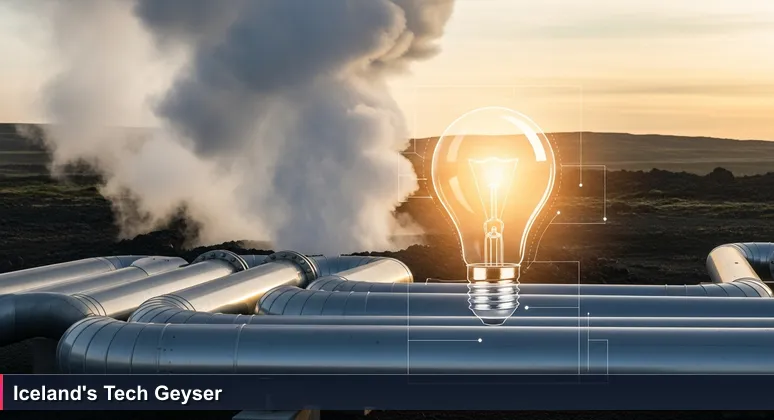
Iceland’s tech scene is a focused geyser of potential, not a sprawling ocean of opportunity. For the right person, it offers a career with outsized leverage, set within a society that values well-being, sustainability, and directness. The final decision hinges on aligning your career stage and personal priorities with this unique environment.
For those considering a move from another Nordic capital like Stockholm or Helsinki, the choice centers on trading a larger, more varied job market for Iceland's unparalleled energy infrastructure, tight-knit community, and distinct work-life balance. This trade-off is most compelling for mid-to-senior level professionals who can immediately contribute to high-impact projects.
For professionals relocating from further afield, practical logistics are paramount. For non-EU/EEA citizens, securing a job offer is the critical first step for a work permit. The process is straightforward for skilled professionals with a contract, but the initial job hunt requires a clear strategy. Success involves targeting major employers and proactively engaging with the local community through events and networks, perhaps beginning with programs designed for international talent integration.
In essence, Iceland remains a niche, high-performance environment in 2026. It rewards specialization, operationalizes sustainability, and offers a quality of life deeply integrated with the natural world. Your career here is about being a vital component in a precision-engineered system, powered by some of the cleanest energy on Earth. The first step is to honestly assess which component you are - and then find your fit. Resources like guides to Nordic career paths can provide further context for this significant decision.
Common Questions
What are the key advantages of pursuing a tech career in Iceland in 2026?
Iceland leverages 100% renewable energy to power a booming data center industry, projected to grow from $425M in 2024 to $812M by 2030, supporting AI and HPC roles. It has a dense startup ecosystem, ranking 5th globally in startups per capita, with companies like Verne Global and a focus on high-impact tech in gaming, fintech, and health-tech.
How do tech salaries in Iceland compare to the high cost of living?
Salaries are competitive, with senior software engineers earning up to 17.8M ISK annually for a monthly net of around 900k ISK. However, Reykjavík's cost is steep, with essentials excluding rent at about 190k ISK for a single person and central apartment rent at 255k-275k ISK, meaning disposable income can be tight.
Is Iceland's tech job market better for senior engineers or junior developers?
It strongly favors senior engineers, with consistent demand for specialists in areas like fintech and gaming, offering high-leverage roles. Junior developers face a more competitive entry-level market, often requiring local networking or specialized skills from bootcamps like Nucamp to break in.
What are some major tech companies in Iceland that hire professionals?
Key employers include CCP Games in gaming, Marel in food tech, Össur and Kerecis in health-tech, and fintech firms like Meniga. Data center operators such as Verne Global on the Reykjanes peninsula also drive demand for AI and infrastructure roles.
How can someone without a traditional degree enter Iceland's tech industry?
Bootcamps like Nucamp offer affordable, ISK-priced programs in AI and coding, with local career services and meetups in Reykjavík to build networks. Government initiatives like Digital Iceland and university research at Reykjavík University also provide pathways for skill development and integration.
This article details the best technology positions in Iceland that skip the degree requirement and offer competitive pay.
Find out how AI salaries in Iceland compare to other Nordic countries in 2026.
Find information on Iceland's top tech bootcamps for 2026 in this comprehensive list.
Discover the 12-month roadmap to AI engineering in Iceland for 2026 in this comprehensive blog post.
Gain salary insights for AI engineers in Iceland, with average earnings over ISK 14 million.

Irene Holden
Operations Manager
Former Microsoft Education and Learning Futures Group team member, Irene now oversees instructors at Nucamp while writing about everything tech - from careers to coding bootcamps.