









Top 10 AI Startups to Watch in Greenland in 2026
By Irene Holden
Last Updated: April 15th 2026
Too Long; Didn't Read
Greenland's top AI startups in 2026, like the Greenland Data Center Project using abundant hydropower for sustainable AI infrastructure and Arctic Lingua AI enabling digital services in Kalaallisut, stand out for addressing local Arctic challenges. With around 72 startups in the ecosystem, these ventures are pivotal in areas from maritime safety to telemedicine, backed by entities like Nalik Ventures and multi-billion DKK investments, showcasing Greenland's role as an innovative hub for practical AI solutions.
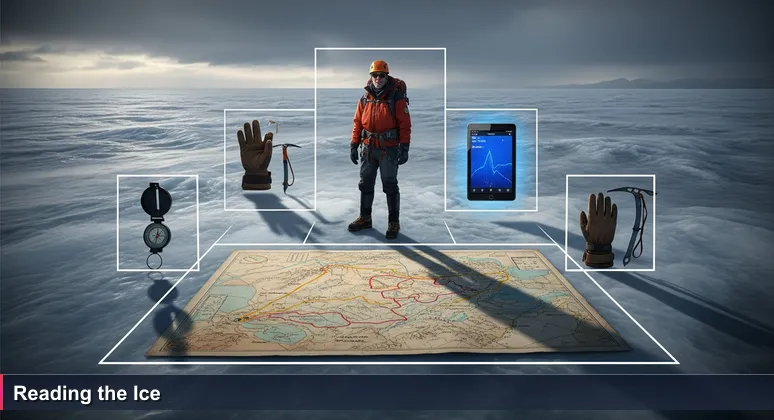
Every great polar expedition begins with two maps: the one showing where you dream of going, and the one showing where the ice will actually let you travel. As 2026 unfolds, Greenland's emerging AI startup ecosystem is being charted in this same tense space. Global capital is drawing a multi-billion DKK blueprint for an "AI powerhouse", attracted by cheap hydropower and Arctic cooling.
Yet the true pioneers are those successfully navigating the local "ice conditions" - the unique challenges of language, logistics, community health, and sustainable industry. Out of Greenland's current landscape of approximately 72 startups, the most promising ventures stand out not merely for their ambition, but for their skill in translating world-class AI into tangible Arctic utility.
This is the new frontier for tech careers in Greenland, where practical AI skills become essential for navigating our digital future. For those looking to chart their own course, programs like Nucamp's AI bootcamps, with tuition starting around DKK 14,443, provide the foundational skills to engage with this unique, adaptation-driven tech landscape.
Table of Contents
- Introduction
- Greenland Data Center Project
- Arctic Lingua AI
- Kepler.gl
- Sikumiut Intelligence
- Nalik AI Solutions
- Arctic Ice AI
- Greenlandic Rare Earth AI
- Sisimiut Agri-Tech
- Nanoq Tele-Health
- Arctic Sky Logistics
- Conclusion
- Frequently Asked Questions
For a thorough guide on artificial intelligence careers in Greenland in 2026, this resource is invaluable.
Greenland Data Center Project
The most audacious undertaking is not a traditional software startup but a foundational infrastructure play poised to redefine Greenland’s position in the global digital economy. The Greenland Data Center Project (GreenMet) aims to build the world's largest sustainable AI data center in Kangerlussuaq, leveraging between 300MW to a planned 1.5GW of the island’s abundant hydroelectric power.
"Greenland is literally the best place in the world for data centers." - Drew Horn, CEO of GreenMet, in Arctic Today
Its technical differentiation is the natural Arctic ambient cooling, which drastically reduces the energy required for thermal management. Co-founded by Svend Hardenberg, former head of Greenland's Prime Minister's Department, and US-based CEO Drew Horn, the venture combines deep political understanding with international financing and has binding commitments for 50% of its initial and final phases.
This multi-billion DKK project is what analysts at CSIS suggest could spur a broader digital awakening. Its success will create a new strata of local tech careers, from data center operations to AI infrastructure management, aligning with the high-demand skills taught in specialized bootcamps.
Arctic Lingua AI
In a nation where the digital economy must function in both Kalaallisut and Danish, language is a critical barrier to innovation and access. Arctic Lingua AI is solving this essential "Greenlandic context" problem by developing AI-driven translation and digital preservation tools specifically for the Greenlandic language and its dialects.
Founded by Maria Lyberth Jensen, an alumna of local business programs, the startup's approach is unique because it builds an irreplaceable data moat. Training effective models requires vast, curated corpora of Greenlandic text and speech, which the team is diligently assembling from the ground up. The startup gained early, practical traction as a participant in the Narsaq business development pilot project.
Its tools are vital for enabling self-employment, digital public services, and education, directly impacting Greenland’s digital sovereignty. Key partnerships to watch involve the Government of Greenland (Naalakkersuisut) for administrative tools and Tusass for integrating language services into national platforms. For professionals in Greenland's growing tech landscape, expertise in Natural Language Processing (NLP) is becoming increasingly valuable, a core skill taught in modern AI bootcamps.
Kepler.gl
Based in Nuuk, Kepler.gl (Geospatial Greenland) tackles one of the Arctic's most data-rich challenges: understanding a rapidly changing environment. This startup provides open-source-powered geospatial analysis AI, optimized for the massive datasets generated by satellite monitoring of ice sheets, sea ice, and maritime traffic.
Its technical differentiation lies in high-performance visualization and analysis models specifically calibrated for Arctic coordinates and phenomena, a niche often overlooked by global GIS platforms. Operating as an unfunded, bootstrapped venture with a high ecosystem visibility score (40/100 on Tracxn), its path to success hinges on strategic, local partnerships.
Collaborations with the University of Greenland’s climate research departments and entities like the Danish Meteorological Institute for data validation are crucial. As analyzed by CSIS, Greenland's position makes it central to climate and maritime data. Kepler.gl aims to become the essential dashboard for companies like Royal Greenland and Air Greenland, transforming raw spatial data into navigational and operational intelligence. This demand makes skills in data analysis and visualization, core components of tech education, highly relevant for Greenland's future workforce.
Sikumiut Intelligence
Operating in the critical Nuuk-Sisimiut corridor, Sikumiut Intelligence addresses a life-and-death economic problem: safe navigation for the fishing fleet that accounts for over 90% of Greenland's exports. The startup provides real-time AI analysis of sea ice conditions, iceberg trajectories, and water density using computer vision models fed by satellite, drone, and onboard sensor data.
Its uniqueness comes from a hyper-local focus. While global weather models exist, Sikumiut’s AI is trained specifically on the nuanced conditions of Disko Bay and the Davis Strait, offering far greater predictive accuracy for local captains. This practical application of AI to "read the ice" is a prime example of Arctic adaptation.
The startup is actively running pilots with community fishing quotas and cargo operators. Its processing capability is enhanced by integration with the new AI computing infrastructure launched in Nuuk in late 2025. Positioned within Greenland's startup ecosystem, Sikumiut is a prime candidate for acquisition by larger maritime insurance or logistics companies seeking indispensable Arctic domain expertise.
Nalik AI Solutions
Backed by Nalik Ventures, Greenland’s national venture arm, Nalik AI Solutions is building the decision-making engine for the country’s economic future. It focuses on AI-driven risk assessment, financial modeling, and impact analysis for large-scale local infrastructure projects and mining investments.
Its distinct advantage is unparalleled access and trust within Greenland’s investment and policy framework. This allows it to train its models on non-public data related to feasibility studies, environmental impact assessments, and sovereign wealth considerations. As explored in WIRED's analysis of Greenland's subterranean resources, the sustainable management of minerals and ice is fraught with complexity.
Nalik AI’s tools are designed to navigate this, making it an indispensable partner for the Government of Greenland (Naalakkersuisut) and major developers. Its models are positioned to become the de facto standard for evaluating projects funded by the Bank of Greenland or the Vestnorden Fund. This venture exemplifies how AI expertise, particularly in data analysis and strategic modeling, is critical for roles within Greenland's public and private sectors, aligning with skills developed in focused tech education programs.
Arctic Ice AI
This innovative venture turns a climate challenge into a commercial and ethical opportunity. Arctic Ice AI uses machine learning to optimize the entire supply chain for harvesting and transporting pure glacial ice and meltwater to the global premium beverage market, aiming for carbon-neutral pathways.
The startup’s technical core is a sophisticated MLOps platform that models everything from ice field integrity and harvest timing to shipping logistics and market demand. This creates a new, sustainable revenue stream from a changing environment, differentiating it from purely extractive industries. Its competitive edge is a proprietary dataset linking hydrological models with real-time maritime logistics data from ports in Nuuk and Ilulissat.
Partnerships with environmental scientists at Ilisimatusarfik and export specialists at Royal Greenland are key to its operational success. As part of a broader wave of pragmatic, Arctic-specific tech innovation noted by observers like Sophie Rogers on LinkedIn, the company demonstrates how AI can build economic resilience. As consumer demand for sustainable luxury goods grows, Arctic Ice AI has significant potential to scale a unique "Greenland brand" globally.
Greenlandic Rare Earth AI
Greenland sits atop some of the world's largest untapped deposits of critical minerals essential for the global AI and green tech race. Greenlandic Rare Earth AI (GRE-AI) is at the forefront of this sector, deploying AI-powered predictive drilling, geological analysis, and site optimization to make exploration faster, cheaper, and less invasive.
Heavily backed by international tech billionaires and working alongside local geological experts, this startup is part of a multi-billion DKK investment surge into Arctic resources. As CNBC reported, tech investors are intensely probing the viability of Greenland's mineral wealth, with professional opinions noting that while deposits are vast, "the economic viability of shipping minerals remains a concern."
GRE-AI’s competitive edge is its collaboration with companies like Amaroq Minerals, feeding its algorithms with exclusive, high-value subsurface data. The startup’s success is directly tied to global geopolitics and commodity prices, but its technology is what could make Greenlandic mining projects economically feasible. It positions GRE-AI as a vital enabler for a major national industry, creating demand for tech professionals skilled in data science and vertical AI applications.
Sisimiut Agri-Tech
Based in Sisimiut, Greenland’s emerging hub for AI conferences and research, this startup addresses food security and economic diversification. Sisimiut Agri-Tech leverages computer vision and sensor AI to automate and optimize scalable seaweed farming in Arctic fjords.
The company’s AI monitors growth rates, biomass density, and seawater purity, ensuring a consistent, high-quality yield for both health supplements and local food products. Its location is strategic, placing its R&D operations near clean, cold waters ideal for cultivation and within a community supportive of tech innovation, as highlighted in analyses of Arctic blue economy ventures.
Partnerships with the local fishing industry for shared maritime space and with the University of Greenland for marine biology research are foundational. As the EU and Nordic markets seek sustainable protein and nutrient sources, this startup is poised to become a leader in the "blue economy," transforming Greenland's maritime expertise from harvest to controlled cultivation. This practical application of AI creates new, tech-integrated career paths in Greenland's primary industries.
Nanoq Tele-Health
For a population dispersed across isolated settlements, access to specialist healthcare is a persistent challenge. Nanoq Tele-Health, founded with partners from Nordic research institutions, is deploying AI-driven remote diagnostic tools to bridge this critical gap.
Its AI models are trained on anonymized data from Queen Ingrid’s Hospital in Nuuk and can assist in preliminary screenings for dermatological conditions, analyzing X-rays, or monitoring chronic diseases via patient-submitted data. Funded by grants from the Vestnorden Fund and the Bank of Greenland, its mission is explicitly social. The startup is actively expanding its capabilities, as noted by Innovation South Greenland, to service towns like Ilulissat and Qaqortoq.
Key partnerships with Tusass for reliable broadband connectivity and with the Government of Greenland’s health service are critical for nationwide deployment. As a participant in Greenland's pragmatic tech ecosystem, Nanoq Tele-Health is a powerful example of AI serving urgent community needs, with a business model likely based on essential public health contracts. It directly demonstrates how technology can strengthen community resilience in the Arctic.
Arctic Sky Logistics
In a land where transport between communities is expensive, weather-dependent, and sometimes impossible, Arctic Sky Logistics is pioneering an aerial solution. The startup develops AI-powered autonomous drones capable of delivering critical medical supplies, postal items, and lightweight cargo in extreme Arctic conditions.
Its core innovation is in "cold-start" AI models - algorithms engineered to maintain reliability and navigation accuracy in high winds, sub-zero temperatures, and poor visibility. This directly addresses the fundamental challenges of Greenland's harsh environment and sparse infrastructure, turning a persistent logistical weakness into a domain for technological leadership.
Backed by Nalik Ventures and Nordic angel investors, the company is solving a critical infrastructure gap. Successful pilots with the medical supply chain and potentially with Tusass for last-mile delivery would prove its model. As noted in discussions on Greenland's tech potential, the startup’s technology also has dual-use potential for search-and-rescue operations and infrastructure inspection, making it a strategic asset for national safety.
Conclusion
This exploration reveals a pattern far more compelling than the birth of a "next Silicon Valley." Greenland is solidifying its role as an Arctic Adaptation Engine. The most promising ventures use AI not for abstract global challenges, but as a precise tool for practical navigation - reading the local ice of language, safety, health, and resources.
Their success, backed by entities from Nalik Ventures to Ilisimatusarfik, won't be measured solely in Danish kroner of venture capital, but in strengthened communities, sustainable industries, and a model of technological development forged in, and for, the Arctic. As analyzed by CSIS, this pragmatic approach positions Greenland uniquely in the global tech landscape.
This is the new map for Greenland's digital future: a frontier where technology earns its keep by solving problems born of ice, distance, and cold. For professionals, this creates demand for adaptable, practical tech skills - precisely the kind fostered through accessible, community-oriented education pathways that prepare learners to contribute to this distinct and growing ecosystem.
Frequently Asked Questions
Why are AI startups in Greenland worth watching in 2026?
Greenland's AI startups are gaining attention for leveraging unique Arctic advantages like sustainable hydropower and natural cooling, which can drastically reduce energy costs for data centers. With around 72 startups emerging, they focus on critical local challenges such as language preservation and maritime safety, making them key players in Greenland's growing digital economy.
What makes Greenland's AI ecosystem different from global tech hubs?
These startups specialize in hyper-local applications, such as AI for Greenlandic language translation or ice condition prediction, which are vital for industries like fishing that account for over 90% of exports. They are supported by entities like Nalik Ventures and the University of Greenland, blending international tech with Arctic-specific insights to address unique regional needs.
Are there good AI career opportunities in Greenland, and what can I expect to earn?
Yes, AI roles are expanding in population centers like Nuuk, with startups such as Sikumiut Intelligence offering positions in computer vision for maritime safety. Salaries in Danish krone (DKK) are competitive with European markets, supported by local employers like the Government of Greenland and Tusass, which are investing in digital services.
How do Greenland's AI startups secure funding and support?
They attract investment from sources like Nalik Ventures and international backers, with projects such as the Greenland Data Center Project involving multi-billion DKK commitments. Additional support comes from grants like the Vestnorden Fund and partnerships with local universities, ensuring a robust ecosystem for growth.
Which AI startup in Greenland is best for someone focused on environmental sustainability?
Kepler.gl is a top choice for its geospatial AI used in climate and maritime analysis, collaborating with the University of Greenland. Another is Arctic Ice AI, which employs MLOps to optimize carbon-neutral ice harvesting, showcasing Greenland's potential in sustainable tech solutions.
This comprehensive analysis covers Greenland's cost of living for tech professionals in 2026, including budget examples.
Find out which Greenland-based startups are best for junior developers in the current year.
For Greenlandic professionals, this article covers Greenlandic women in tech groups for 2026 and beyond.
Get detailed information on salary expectations for data scientists in Greenland in 2026 from this report.
Learn how to adapt AI engineering for Arctic conditions in Greenland through this detailed resource.

Irene Holden
Operations Manager
Former Microsoft Education and Learning Futures Group team member, Irene now oversees instructors at Nucamp while writing about everything tech - from careers to coding bootcamps.