









AI Salaries in Greenland in 2026: What to Expect by Role and Experience
By Irene Holden
Last Updated: April 15th 2026
Key Takeaways
In 2026, AI salaries in Greenland are competitive with an Arctic Premium, where specialized roles like Applied Scientists and MLOps Engineers can earn from around 500,000 DKK for juniors to over 900,000 DKK for principals, reflecting high demand in local industries. The average AI Engineer in Nuuk is projected to make about 638,000 DKK, with salaries expected to grow by 9% over the next five years, driven by Arctic research and digital services sectors.
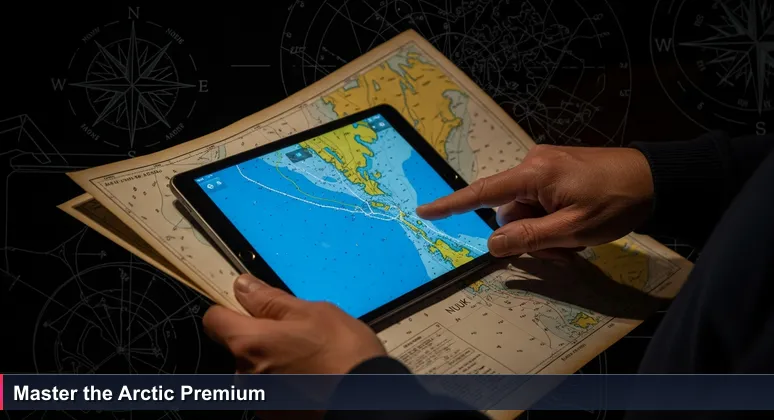
The weathered hands of an Arctic captain know that a GPS signal fades where local knowledge endures. The real route - safe, swift, and valuable - is charted in unmarked channels and an understanding of shifting ice. So it is with an AI career in Greenland. Global salary averages are a weak signal here; true navigation requires reading the unique local conditions where specialized skill meets Arctic demand.
In 2026, this confluence creates a significant "Arctic Premium" - often adding 10-15% to mainland Danish salary benchmarks - designed to attract and retain the talent needed to solve High North challenges. This isn't a generic tech market; it's an ecosystem where compensation is directly shaped by role, experience, and a practitioner's ability to create value from ice-core data, satellite telemetry, or remote logistics.
The average gross salary for an AI Engineer in Nuuk is projected at 637,699 DKK, with total compensation expected to grow by approximately 9% over the next five years. This guide provides the localized chart you need to move beyond generic data. We'll decode exact salary bands, illuminate the compensation structures of major employers from Naalakkersuisut to research consortia, and offer tactics for negotiation, all framed within Greenland's distinct tech and research frontier.
In This Guide
- Introduction to Greenland's AI Compensation Landscape
- Decoding 2026 AI Salary Bands in Greenland
- AI Careers in Greenland's Public Sector
- AI Opportunities with Major Greenlandic Employers
- High-Reward AI in Mining and Resource Exploration
- Collaborating with Arctic Multinationals on AI Innovation
- Benchmarking Nuuk Against Other Nordic Tech Hubs
- Effective Negotiation Strategies for Greenland's AI Jobs
- Use Our Checklist to Evaluate AI Job Offers in Greenland
- Navigating Your Future in Greenland's AI Ecosystem
- Frequently Asked Questions
For a thorough guide on artificial intelligence careers in Greenland in 2026, this resource is invaluable.
Decoding 2026 AI Salary Bands in Greenland
To navigate Greenland's AI compensation landscape, you need precise local soundings, not global averages. The following table provides those exact benchmarks: projected annual gross base salaries in Danish Kroner (DKK) for key roles concentrated in Nuuk and other population centres, reflecting the "Arctic Premium" and the value placed on applied specialization.
| Role | Junior / Associate (1-3 yrs) | Mid-Level (4-7 yrs) | Senior / Lead (8+ yrs) | Principal / Head of (10+ yrs) |
|---|---|---|---|---|
| Machine Learning Engineer | 496,500 - 550,000 DKK | 550,000 - 700,000 DKK | 700,000 - 804,000 DKK | 840,000+ DKK |
| AI Engineer | 446,600 - 520,000 DKK | 520,000 - 630,000 DKK | 630,000 - 720,400 DKK | 770,000+ DKK |
| Data Scientist | 283,700 - 450,000 DKK | 450,000 - 650,000 DKK | 650,000 - 721,500+ DKK | 780,000+ DKK |
| MLOps Engineer | 480,000 - 540,000 DKK | 540,000 - 680,000 DKK | 680,000 - 810,000 DKK | 900,000+ DKK |
| AI Researcher | 400,000 - 500,000 DKK | 500,000 - 650,000 DKK | 650,000 - 850,000+ DKK | 950,000+ DKK |
| Applied Scientist | 513,500 - 600,000 DKK | 600,000 - 730,000 DKK | 730,000 - 831,700 DKK | 900,000+ DKK |
Several key currents define this chart. First, Applied Scientist roles command some of the highest starting salaries, reflecting the immediate value of translating research into solutions for local logistics or geology. Second, specialization is lucrative; engineers in high-demand niches like MLOps - critical for maintaining models in remote environments - can command a 20% to 40% premium over generalist roles, according to experts from firms like KORE1. Finally, Principal or Head roles typically add a 15-20% premium over Senior bands, pushing top earners well past 900,000 DKK.
Globally, the "AI Premium" is stark, with a significant salary gap between AI and traditional software roles. In Greenland, this is amplified by the Arctic adjustment, ensuring that specialized talent is compensated for mastering this distinctive ecosystem where technical skill must meet environmental rigor.
AI Careers in Greenland's Public Sector
For AI professionals drawn to foundational research and long-term societal impact, Greenland's public sector offers a distinct and stable channel. Careers with Naalakkersuisut (the Government of Greenland) and Ilisimatusarfik (the University of Greenland) follow transparent, standardized compensation structures anchored in collective agreements (AK/AC).
Base pay is predictable, with average academic salaries around 500,000 DKK and senior research scientists or project leads reaching 650,000-750,000 DKK. The cornerstone benefit is exceptional job security paired with strong pension contributions, typically 12-15%. A uniquely valuable component is the significant remote or field allowance for research conducted outside Nuuk, essential for Arctic data collection.
The AI focus here is predominantly pure research and data science. Roles involve climate modeling, environmental monitoring via satellite data analysis, and social sciences research. Success is measured in publications, grant acquisition, and policy impact rather than commercial KPIs. This aligns with global initiatives where EU-funded projects like Climate AI Nordics create positions at this intersection of global science and local application.
These roles often serve as a pipeline for local talent, with graduates from Ilisimatusarfik and participants in specialized programs like the DTU Arctic Semester feeding into the sector. For those whose compass points toward discovery and public service over corporate bonus structures, Greenland's public sector provides a respected and secure career fjord to navigate.
AI Opportunities with Major Greenlandic Employers
Steering toward Greenland's corporate giants means applying AI where it meets ice, wind, and supply chain reality. At companies like Royal Greenland, Air Greenland, Tusass, and KNI, artificial intelligence is not an abstract concept but a critical tool for operational survival and efficiency in the Arctic environment.
The compensation structure mirrors this applied focus: a competitive base salary augmented by a target annual performance bonus, typically ranging from 5% to 8% of base pay. This variable component differentiates these roles from the fixed scales of the public sector, directly linking compensation to tangible outcomes.
The AI work itself is intensely practical. At Royal Greenland, machine learning models optimize fishing yields and manage complex, temperature-sensitive logistics across global markets. At Air Greenland and Tusass, predictive maintenance algorithms are crucial for aircraft and telecommunications infrastructure enduring harsh climates. KNI employs AI to model retail demand in isolated communities, ensuring supply resilience. These are roles for Applied Scientists and MLOps Engineers who build systems that must work reliably far from tech hubs.
This sector values professionals who can articulate their impact in the language of business and environment. As noted in global trends, the "value metric has shifted from pure coding to system orchestration and business impact." In Greenland, that impact is measured in reduced spoilage, fewer flight delays, and sustained connectivity - outcomes that are vital to the territory's infrastructure and economy.
High-Reward AI in Mining and Resource Exploration
For AI professionals willing to venture beyond Nuuk's city limits, the mining, energy, and resource exploration sector represents the frontier of both work and compensation. Companies like Bluejay Mining and Greenland Minerals operate where infrastructure is sparse and challenges are magnified, requiring robust technological solutions and compensating talent accordingly.
This sector offers the highest potential total cash compensation in Greenland, built on a foundation of high base pay topped with substantial "hardship" or field allowances. These allowances, for time spent at remote exploration or operational sites, can add 15-25% to the base salary. Bonuses are frequently structured around project-completion milestones rather than annual performance, aligning rewards with tangible progress in high-stakes environments.
The AI application is intensely physical and environmental. Machine Learning Engineers and Applied Scientists here build geological modeling software to pinpoint resources, develop autonomous machinery systems for unmanned remote operations, and create models to predict environmental impacts. This is industrial machine learning where models must function in extreme conditions, aligning with a global shift toward practical applications over theoretical hype.
The value proposition is clear: unparalleled compensation in exchange for less predictable work-life balance and demanding remote deployments. For those drawn to adventure and the direct application of AI to some of the planet's most challenging operational puzzles, this sector offers a uniquely rewarding - and lucrative - channel to navigate.
Collaborating with Arctic Multinationals on AI Innovation
The most forward-looking AI careers in Greenland often operate at the intersection of local challenges and global innovation networks. Collaborating with Arctic multinationals and research consortia - such as those involving the Technical University of Denmark (DTU), UiT The Arctic University of Norway, or EU-funded projects - places you at the cutting edge of applied research with a direct path to real-world impact.
Compensation in this tier is competitive with the upper end of Greenland's private sector, but with a critical differentiator: Equity or RSUs (Restricted Stock Units). Particularly in Nordic startups or spinoffs focused on Arctic tech, these packages can be worth 15-25% of base pay over a standard 4-year vesting period, a rarity in purely local firms.
The work is pioneering. Roles here are often a blend of AI Research and rapid prototyping, tackling problems from climate modeling to sustainable energy. Initiatives like Climate AI Nordics actively create such positions, seeking talent that can translate fundamental research into scalable solutions. These collaborations, including graduate programs like the DTU Arctic Semester, form a vital pipeline for high-level expertise.
For the AI professional, this sector offers a unique blend: the intellectual challenge of frontier research, the potential financial upside of equity in a growing venture, and the profound satisfaction of addressing Arctic-specific issues with global significance. It is the channel for those looking to pioneer, not just participate.
Benchmarking Nuuk Against Other Nordic Tech Hubs
Understanding your position on a chart requires knowing not just your own coordinates, but those of the surrounding harbors. When benchmarking Nuuk against other Nordic tech hubs, a clear picture emerges: Greenland offers competitive compensation adjusted for its unique market, with the "Arctic Premium" ensuring salaries stand strong against larger regional players.
For a Senior Machine Learning Engineer, the comparative annual gross salaries (converted to DKK for parity) illustrate this positioning:
- Nuuk: ~804,000 DKK
- Copenhagen: ~866,000 DKK
- Oslo: ~880,000 - 950,000 DKK
- Reykjavik: ~820,000 - 900,000 DKK
While Nuuk's figures sit slightly below the highest-paying private sectors in Oslo or Reykjavik, they are highly competitive with Copenhagen. This reflects a deliberate balance between market size, cost-of-living differences, and the strategic premium paid to attract specialized talent to Greenland. The average AI Engineer salary in Nuuk of 637,699 DKK is projected to grow 9% in the coming years, signaling rising value and demand.
Crucially, this compensation buys a significantly different lifestyle and impact potential. Compared to the dense urban centers of Copenhagen or Oslo, Nuuk offers lower living costs in many sectors and direct access to high-impact, Arctic-specific projects. You are not a small cog in a global machine but a key navigator for local industry and research. This trade-off - slightly lower absolute salary for greater influence, unique challenge, and a distinct living environment - defines the true value proposition of Greenland's tech hub.
Effective Negotiation Strategies for Greenland's AI Jobs
Negotiating an AI role in Greenland demands a specific mindset. This is not about leveraging competing offers from distant tech hubs, but about articulating your value within a small, interconnected, and application-driven ecosystem. Your leverage comes from understanding local needs and demonstrating how you can navigate them.
First, explicitly negotiate for field or remote allowances if the role involves work outside Nuuk. Your willingness to deploy is a valuable, billable skill. Second, distinguish between research and applied work from the outset. As global experts note, "the 'value metric' has shifted from pure coding to system orchestration and business impact." Negotiate your goals and bonus structure accordingly - whether tied to publications or to quantifiable savings in logistics costs.
Third, if relocating, ensure a comprehensive package covering flights, shipping, and temporary housing is formalized. Fourth, understand the equity trade-off: in local subsidiaries, equity is rare; prioritize base and bonus. In Arctic-focused startups, assess the company's valuation and scaling potential. Finally, specialists command premiums; engineers in niches like MLOps or Generative AI can often negotiate higher salaries by proving their skill directly addresses a critical, local bottleneck.
Ultimately, success hinges on quantifying your impact with Greenlandic examples. Translate your expertise into the language of local challenges, showing you can read the unique currents of this market and chart a course to tangible results.
Use Our Checklist to Evaluate AI Job Offers in Greenland
Core Compensation & Benefits
Systematically assess the financial and structural foundation of any offer. First, verify the Base Salary aligns with or exceeds the Nuuk band for your role and level. Confirm any Variable Pay; a target bonus of 5-8% is common, with clear performance criteria. If offered, evaluate Equity/RSUs on their vesting schedule and the company's realistic growth potential. For benefits, a strong employer pension contribution is 12% or higher. Crucially, if the role involves work outside Nuuk, a clear and generous Field/Remote Allowance is non-negotiable.
Role Context & Professional Growth
Determine if the role's environment and trajectory match your compass. Clarify the Work Location - is it based in Nuuk, hybrid, or requiring remote site rotation? Understand the core focus: is success measured by Research vs. Product metrics (publications vs. revenue KPIs)? Seek a defined Professional Development budget for courses or conferences to ensure continuous growth. As opportunities with initiatives like Climate AI Nordics show, roles at the intersection of research and application are highly valued.
Local Impact & Personal Alignment
The final and most Greenland-specific set of criteria gauges deeper fit. Can you see how your work directly addresses a Local Arctic Challenge, creating tangible impact? Does the company's mission and the team's culture resonate with your professional values and lifestyle needs? Use resources like local salary projections to ground your evaluation in the market reality. A strong offer will allow you to confidently check most of these boxes, ensuring your career is both rewarding and resilient in the Arctic ecosystem.
Navigating Your Future in Greenland's AI Ecosystem
Navigating a career in Artificial Intelligence in Greenland concludes not with reaching a single destination, but with mastering the art of sailing its unique waters. The highest rewards and deepest professional satisfaction accrue to those who embrace specificity - who understand that their technical expertise gains its true value when applied to the distinct challenges between the ice cap and the sea.
This guide has provided the local chart: the 10-15% Arctic Premium, the lucrative bands for specialized roles like MLOps, and the varied compensation structures from the security of Naalakkersuisut to the high-stakes projects of remote mining. With compensation for AI roles projected to grow 9% in the coming years, the current is favorable for those who know how to harness it.
Your career here is defined by impact. Whether optimizing Royal Greenland's supply chain, modeling climate data at Ilisimatusarfik, or pioneering new tech in an Arctic consortium, you are applying global innovation to local imperative. This is the world's newest tech frontier, not defined by silicon density but by environmental rigor and strategic need.
By moving beyond global averages to understand the detailed compensation charts and hidden channels of negotiation, you are equipped to steer toward work that is both profoundly impactful and personally rewarding. Set your course with the confidence of a local captain, for the most promising passages are often those only visible to those who know how to look.
Frequently Asked Questions
What can I expect to earn in an AI role in Greenland in 2026?
In 2026, AI salaries in Greenland come with an 'Arctic Premium,' typically 10-15% higher than in mainland Denmark, making them competitive locally. For example, the average AI Engineer in Nuuk is projected to earn around 637,699 DKK annually, with roles like Machine Learning Engineers starting at 496,500 to 550,000 DKK for juniors.
Which AI roles pay the most in Greenland, especially in Nuuk?
Specialized roles such as MLOps Engineers and Applied Scientists command top salaries, with MLOps principals earning over 900,000 DKK in 2026. Applied Scientist roles, critical for industries like logistics and mining, start at 513,500 DKK for juniors, reflecting their direct impact on Greenland's economy.
How does my experience level affect AI salaries in Greenland?
Experience significantly boosts earnings; for instance, a Senior AI Engineer with 8+ years can make 630,000 to 720,400 DKK, compared to 446,600 to 520,000 DKK for juniors. Principal roles add a 15-20% premium, pushing salaries above 900,000 DKK for those with over a decade of experience.
Are AI salaries in Greenland competitive with other Nordic countries?
While Greenland offers an 'Arctic Premium,' salaries in Nuuk are slightly below major Nordic capitals; a Senior ML Engineer earns about 804,000 DKK, compared to 866,000 DKK in Copenhagen. However, benefits like field allowances and lower cost-of-living in Greenland can make total compensation attractive.
What unique benefits should I negotiate for in a Greenland AI job?
Key benefits include field allowances for remote work, adding 15-25% to base pay, and annual bonuses of 5-8% from employers like Royal Greenland. Also, prioritize pension contributions up to 15% and relocation packages if moving to Greenland, as these are common in this market.
Discover Greenland's top tech roles where experience trumps degrees in this comprehensive list.
Learn about Greenland's tech apprenticeships and internships to kickstart your career in the Arctic.
If you're pursuing a career in AI, discover the best bootcamps for AI in Greenlandic context with job market advice.
Explore leading AI startups in Greenland that are making waves in the tech industry.
For aspiring tech professionals in Greenland, explore the list of startups actively recruiting junior developers for 2026.

Irene Holden
Operations Manager
Former Microsoft Education and Learning Futures Group team member, Irene now oversees instructors at Nucamp while writing about everything tech - from careers to coding bootcamps.