









Cost of Living vs Tech Salaries in Greenland in 2026: Can You Actually Afford It?
By Irene Holden
Last Updated: April 15th 2026
Key Takeaways
Yes, you can afford living in Greenland as a tech professional in 2026, but it largely depends on securing employer-provided housing from organizations like the Government of Greenland or Tusass to mitigate high costs. With mid-level salaries around 850,000 DKK annually, after taxes, you can manage essentials like groceries that cost double compared to Denmark, while enjoying unique opportunities in Arctic research and digital services.
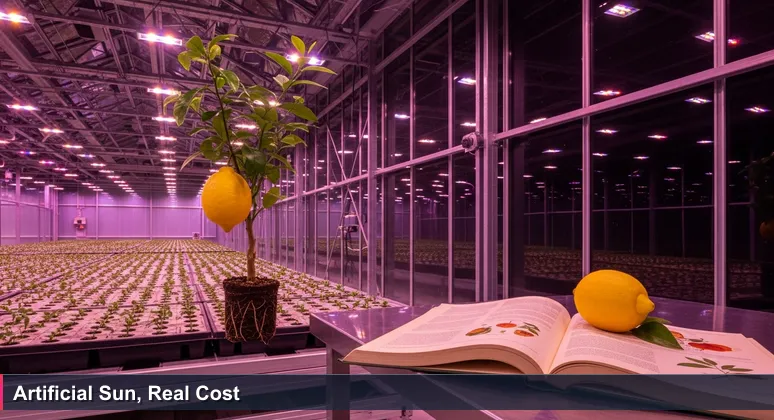
There is a lemon growing in Nuuk. Not in a supermarket, flown in at a carbon premium, but here, in a climate-controlled pod under the glow of LEDs - a small, yellow monument to the fact that in Greenland, everything is possible, if you can pay for the ecosystem to make it so.
This is the fundamental equation for any tech professional considering a move. Your impressive salary offer is the artificial sun. The question is whether it generates enough energy to sustain the entire, costly system required for a comfortable life in the Arctic. Moving beyond the gross salary number to dissect the real economics provides the data to answer definitively: can you actually afford it?
Life here operates on an extreme "import premium". With few exceptions, every consumer good must be shipped or flown in, creating a cost structure unlike Europe. A single lemon can cost over $1.20, and a weekly grocery basket for one person typically runs DKK 500-700, roughly double prices in Denmark or the continental US. This is the most visceral reminder of the import economy, where even basic items reflect the immense logistical costs detailed in cost-of-living analyses for Nuuk.
This reality frames the central tension: the friction between an impressive gross salary and the startling reality of your first grocery bill. In Greenland's unique economic climate, your salary isn't just income; it's your personal infrastructure fund. True viability is found not in the salary alone, but in how deeply you are plugged into local support structures - employer housing, the Nordic social contract, and a willingness to engage with Greenland’s specific model of life at the edge of the possible.
In This Guide
- The Economics of an Arctic Lemon
- The Greenland Premium: Understanding the Cost Base
- The Housing Equation: Your Biggest Variable
- Tech Salaries in 2026: The Raw Numbers
- The Real Budget: From Gross Salary to Monthly Reality
- Lifestyle & Strategic Trade-Offs
- The Greenland Advantage: More Than a Paycheck
- Conclusion: Can You Actually Afford It?
- Frequently Asked Questions
For a thorough guide on artificial intelligence careers in Greenland in 2026, this resource is invaluable.
The Greenland Premium: Understanding the Cost Base
The Import Economy in Action
Life in Greenland operates on a foundational "import premium." With the exception of locally sourced fish and game, nearly every consumer good - from building materials to groceries - must be shipped or flown in. This creates a cost structure fundamentally different from continental Europe or North America. A standard weekly grocery shop for one person typically runs DKK 500-700, with fresh produce and specialty items carrying the highest markups, as detailed in expat cost-of-living comparisons. This is the most constant financial reminder of the Arctic's logistical reality.
Taxes: Your Subscription to Society
Greenland’s income tax is high, with an effective rate of 42-44% for tech-level salaries. This is not merely a cost but a critical investment. It funds the robust public infrastructure, including the largely free-at-point-of-service healthcare system, which eliminates a major budgetary worry common elsewhere. As analysts from Danmarks Nationalbank note, this social contract and the management of labour shortages are central to Greenland's economic policy.
Connectivity: The Digital Lifeline
For tech professionals, reliable internet is non-negotiable. In major hubs like Nuuk, high-speed fibre-optic internet via undersea cable is standard, with plans from the national provider Tusass starting around DKK 499-714 per month. In more remote settlements, satellite internet is available but slower and more expensive - a crucial consideration for remote work, as upgrades continue to improve services in Eastern Greenland.
The Housing Equation: Your Biggest Variable
Nuuk Neighborhoods by Budget
Housing is the single largest expense and the most critical factor in determining affordability. A unique market quirk defines it: private land ownership is not permitted; all land is state-owned. This creates a market heavily influenced by government and employer involvement, as outlined in the Nordic Council's guide to housing in Greenland. In Nuuk, your budget dictates your district:
- Downtown (Central Nuuk): The most expensive and convenient. A furnished 85m² apartment here can command market rents of DKK 12,215 or more.
- Qinngorput: A newer, planned residential area growing in popularity, especially with families. It offers modern amenities but requires a bus commute.
- Nuussuaq: An established residential district with a mix of housing. Rents for a similar 85m² apartment are more manageable, typically ranging from DKK 7,275 to 8,000.
Beyond Nuuk and the Employer Advantage
In other tech-relevant towns like Sisimiut (a growing hub) and Ilulissat (tourism and research), the private rental market is extremely limited. Short-term accommodation, as seen on platforms like Booking.com, can run DKK 1,200-2,000 per night, highlighting the long-term cost challenge. Critically, there is a severe housing shortage. For tech professionals, the most common and financially viable path is employer-provided or -subsidized housing. Major employers like the Government of Greenland, Royal Greenland, and Air Greenland often include housing guarantees as part of relocation packages - a standard feature that fundamentally changes your affordability calculus, as community discussions on the housing shortage underscore.
Tech Salaries in 2026: The Raw Numbers
Greenland's tech salaries are competitive within the Nordic region, driven by high demand and significant labour shortages, as noted in economic analyses. The following table outlines the expected salary ranges for 2026, based on local industry data and global trend reports.
| Role | Annual Gross Salary (DKK) | Monthly Gross (DKK) |
|---|---|---|
| Entry-Level (Junior Dev, IT Support) | 476,000 - 612,000 | 39,667 - 51,000 |
| Mid-Level (Software Engineer, Sys Admin) | 656,000 - 850,000 | 54,667 - 70,833 |
| Senior/Expert (Lead Engineer, AI/ML Specialist, Cybersecurity) | 850,000 - 1,200,000+ | 70,833 - 100,000+ |
Specialists in high-demand fields like AI/ML and cybersecurity are seeing salary growth above 4%, helping to offset local living costs. As the Robert Half 2026 Technology Salary Trends report indicates, these niche skills command premium rates globally, and Greenland is no exception. This data is further supported by local salary aggregators like SalaryExpert, which tracks compensation for roles such as software engineers in Nuuk.
The Real Budget: From Gross Salary to Monthly Reality
Translating gross salaries into real, after-tax living requires a clear-eyed budget. The scenarios below assume a single professional without employer-provided housing - the most financially challenging situation. If housing is included, the entire "Housing" cost effectively becomes surplus. These budgets incorporate savings for essential seasonal travel, a non-negotiable line item for most residents.
| Expense Category | Entry-Level (DKK 550k) | Mid-Level (DKK 850k) | Senior (DKK 1.2M+) |
|---|---|---|---|
| Gross Monthly | DKK 45,833 | DKK 70,833 | DKK 100,000 |
| Tax & Deductions (~43%) | DKK 19,708 | DKK 30,458 | DKK 43,000 |
| Take-Home Pay | DKK 26,125 | DKK 40,375 | DKK 57,000 |
| Housing (Market Rate) | DKK 8,000 | DKK 12,000 | DKK 15,000 |
| Groceries & Food | DKK 3,500 | DKK 5,000 | DKK 7,000 |
| Utilities & Heating | DKK 1,100 | DKK 1,500 | DKK 2,000 |
| Transport | DKK 605 (Bus) | DKK 1,000 (Car) | DKK 2,000 (Car+Flights) |
| Internet & Mobile | DKK 800 | DKK 1,000 | DKK 1,200 |
| Savings for Travel | DKK 4,000 | DKK 8,000 | DKK 12,000 |
| Discretionary Spending | DKK 4,000 | DKK 7,000 | DKK 10,000 |
| Monthly Surplus/Savings | ~DKK 4,120 | ~DKK 4,875 | ~DKK 7,800 |
For the entry-level budget, life is viable but tight, requiring careful management. Employer-provided housing would be transformative, potentially doubling the surplus. The mid-level budget allows for comfort - a car, a better apartment, more travel, and meaningful savings, aligning with what some describe as a "decent" standard that avoids merely scraping by. The senior/expert budget affords an affluent lifestyle by Greenlandic standards, enabling significant investment and property ownership within the leasehold system. These budgets reflect the hard realities of the Arctic import economy, where, as noted in analyses on competence mobility, strategic financial planning is as crucial as professional skill. Planning for travel is essential, with costs for flights to Copenhagen requiring advance booking, as shown on Air Greenland's flight portal.
Lifestyle & Strategic Trade-Offs
The Commute Versus Cost Calculus
Affording Greenland requires strategic lifestyle choices beyond simple budgeting. One key trade-off is location versus commute. Living in the newer Qinngorput district versus downtown Nuuk can save DKK 4,000-5,000 monthly on rent - enough to fund a car. Conversely, the local bus service, Nuup Bussii, offers a comprehensive network with a monthly pass for just DKK 605, making a car-free life in the capital entirely feasible.
The Inter-Town Equation and Local Harvest
For roles in Sisimiut or Ilulissat, the financial equation flips. Your salary may be slightly lower, but employer-provided housing is almost standard, allowing your savings rate to skyrocket while avoiding Nuuk's high market rents. The trade-off is greater remoteness. Another universal strategy is embracing the local harvest. Learning to love local lamb, seal, fish, and muskox is both a cultural integration and a practical way to mitigate staggering grocery costs, a common topic in community discussions about expenses.
Planning for the Essential Escape
Seasonal budgeting is non-negotiable. The high cost of leaving Greenland - with flights to Copenhagen being a necessity for most - must be planned for meticulously. Successful residents treat travel as a mandatory savings line item, booking flights well in advance through Air Greenland's portal to manage costs. This strategic foresight turns a potential budget-buster into a planned part of your Arctic life.
The Greenland Advantage: More Than a Paycheck
Frontier Tech in a Living Lab
While the costs are high, Greenland offers unique professional value that transcends the paycheck. The nation is a living lab for Arctic technology and frontier research. Extraordinary opportunities exist in climate tech, sustainable resource exploration, and telecommunications, where analysts note Greenland's growing geopolitical importance for subsea cables and digital infrastructure. The burgeoning data center sector leverages the natural cooling of the Arctic climate, attracting significant investment and positioning Greenland as what some call a "techno-utopian" site for future AI infrastructure.
A Connected and Impactful Ecosystem
The professional ecosystem is small, tightly knit, and deeply impactful. Working for the Government of Greenland on national digitalisation, for Royal Greenland on AI-driven supply-chain optimization, or for Tusass on next-generation connectivity means your work is visible and vital to the nation's function. This creates a rare sense of tangible contribution. As highlighted by industry observers, Greenland's future is increasingly important to global tech, offering professionals a chance to work at this unique intersection of technology, geopolitics, and sustainability.
Pathways from Academia to Industry
Clear pathways exist for cultivating local talent. The University of Greenland (Ilisimatusarfik) and its collaborations with the University of Copenhagen are key feeders. Junior roles often emerge from targeted internships or graduate programs within the government and major parastatals, ensuring a pipeline of professionals who understand both the technical challenges and the cultural context of building a tech sector in the Arctic.
Conclusion: Can You Actually Afford It?
The answer to whether you can afford life in Greenland on a tech salary is a qualified yes, defined by a fundamental Greenlandic caveat. If you are moving with a job at a major employer that includes a housing solution, you can live very comfortably, even on an entry-level salary. Your high taxes buy peace of mind through healthcare and stability, and your disposable income supports a unique Arctic lifestyle.
If you are entering the private rental market in Nuuk without housing support, the path is narrower. It demands meticulous budgeting, strategic lifestyle choices, and a salary solidly in the mid-level range to achieve both comfort and savings. This aligns with experiences shared in community discussions about making ends meet in the import economy.
Ultimately, the "artificial sun" of a tech wage can indeed power a thriving life here, but only if you consciously build your ecosystem around it. This means prioritizing employer benefits, embracing local rhythms, and valuing the profound community and frontier opportunity that define this extraordinary place. As underscored in the Nordic guide to working in Greenland, success hinges on understanding this integrated social contract. Greenland doesn't just offer a job; it offers a distinct, impactful, and rewarding way of life for those who approach it with clear eyes and a strategic plan.
Frequently Asked Questions
Is it actually affordable to live in Greenland on a tech salary in 2026?
Yes, but it depends heavily on housing support. With employer-provided housing, even an entry-level salary of around DKK 550,000 gross can be viable, while without it, you'll need a mid-level salary of DKK 850,000+ for comfort and savings.
How much does housing cost in Nuuk for tech professionals?
Housing is the biggest expense, with rents varying by neighborhood. In downtown Nuuk, a furnished 85m² apartment can cost over DKK 12,215 monthly, but in areas like Nuussuaq, it's more like DKK 7,275 to 8,000. Employer subsidies are common and can drastically reduce this cost.
What are typical tech salaries in Greenland for roles like software engineers?
Salaries are competitive within the Nordic region. In 2026, expect entry-level roles to earn DKK 476,000 to 612,000 annually, mid-level around DKK 656,000 to 850,000, and senior experts can make over DKK 1.2 million, with AI/ML specialists seeing growth above 4%.
Do tech employers in Greenland help with housing for new hires?
Yes, major employers like the Government of Greenland, Royal Greenland, and Tusass often include housing guarantees or significant subsidies in relocation packages. This is key due to Greenland's housing shortage and can make moving here much more affordable.
Are there tips to manage the high cost of living in Greenland?
Yes, strategic choices help. Embrace local foods like fish and muskox to cut grocery costs, consider commuting from areas like Qinngorput to save on rent, and budget for seasonal travel, with flights to Copenhagen costing around DKK 3,500-4,500 one-way.
This analysis covers Arctic tech roles in Greenland and their future in 2026, including climate data and AI infrastructure.
If you're interested in advancing your career, explore the top AI tech bootcamps in Greenland for 2026.
Find out where AI talent is hired in Greenland for key sectors like mining and fisheries.
This guide highlights the best tech groups for women in Greenland in 2026 with Arctic focus.
For a detailed guide, read about the companies hiring AI talent in Greenland for 2026 with applied ingenuity.

Irene Holden
Operations Manager
Former Microsoft Education and Learning Futures Group team member, Irene now oversees instructors at Nucamp while writing about everything tech - from careers to coding bootcamps.