









How to Pay for Tech Training in Egypt in 2026: Scholarships, Grants & Government Programs
By Irene Holden
Last Updated: April 13th 2026
Key Takeaways
You can pay for tech training in Egypt in 2026 through fully funded government scholarships like the Digital Egypt Builders Initiative and ITI's 9-month program, which has a 95% employment rate, supported by the government's over EGP 4 billion annual investment in digital skills. Additionally, corporate programs such as SAP Young Professionals and flexible online options like Egypt FWD provide accessible paths, with key deadlines in June for DEBI and August for ITI to help you launch a career in Cairo's tech hubs.
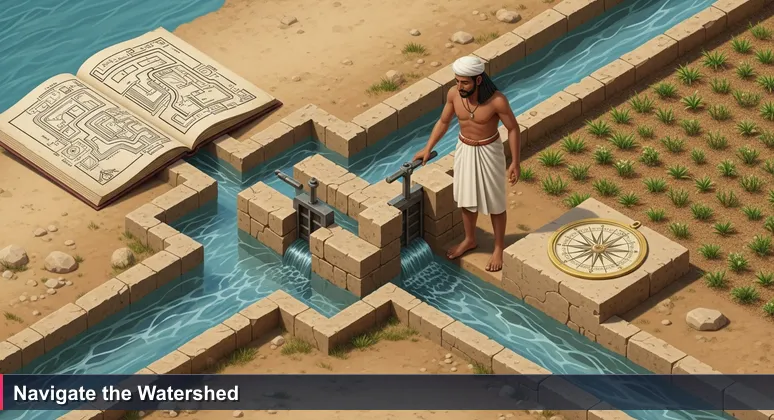
For millennia, the farmer’s most critical decision wasn't whether the Nile would flow, but knowing which canal gate to lift. In 2026, your tech career in Egypt faces the same precise calculus. The government, pursuing a “human development first” strategy as noted by the Central Bank Governor, has committed over EGP 4 billion annually to youth digital skills training according to Egypt Today. The abundance is there, but watching it flow past while you lack the local map is the modern frustration.
This guide is your watershed map. Your opportunity lies not in a single source, but in a complex, engineered ecosystem - a "Digital Nile" of overlapping channels from government master’s degrees to corporate academies. Success means moving from hoping for rain to becoming a savvy irrigator, strategically targeting the right channel for your specific career plot.
Egypt’s proactive AI adoption and readiness has created fertile ground. This landscape is amplified by Cairo’s unique advantages: a lower cost of living compared to Western hubs, proximity to multinational and local tech employers clustered around Smart Village and New Cairo, and a growing AI community supported by ITIDA, Flat6Labs, and RiseUp. Your path to a thriving AI or machine learning career begins with understanding this mapped territory.
In This Guide
- Navigating Egypt's 2026 Tech Funding Landscape
- Government-Funded Tech Training Programs
- Corporate Scholarships and Academy Programs
- Flexible Financing with Payment Plans and Loans
- How to Choose Your Funding Path
- Key Application Deadlines for 2026
- Essential Documentation for Egyptian Applicants
- Combining Multiple Funding Sources
- Becoming the Architect of Your Career Flow
- Frequently Asked Questions
For a thorough understanding, check out the guide to AI career development in Egypt for 2026, including local salary data.
Government-Funded Tech Training Programs
These are the perennial, high-volume channels of the funding Nile, offering the most substantial support for building elite, specialized talent. Managed by the Ministry of Communications and Information Technology (MCIT) and its executive arm, ITIDA, they represent the state's direct investment in your future.
The Premier Channel: Digital Egypt Builders Initiative (DEBI)
Think of DEBI as the grand canal for advanced specialization. Egypt’s flagship scholarship offers full professional master’s degrees and intensive training in frontier fields like AI, Data Science, and Cloud Computing. It covers 100% of tuition, a monthly stipend, and often living expenses. Eligibility targets Egyptian nationals who graduated within the last five years with a minimum GPA of 3.0 or "Very Good." The primary annual deadline is typically around June, with applications managed through the official Digital Egypt Builders Initiative (DEBI) portal.
The Industry Standard: ITI 9-Month Program
If DEBI is the grand canal, the Information Technology Institute (ITI) is the highly engineered irrigation network trusted across the land. Its rigorous, fully funded 9-month professional program boasts a 95% employment rate for graduates, making its credential a golden stamp in the local market. Admission is fiercely competitive, with an acceptance rate as low as 10%. The annual cycle usually begins in August or September, and the program's value is cemented by direct recruitment access through trusted industry job fairs. More details on tracks and structure can be found in the official ITI Professional Training Program outline.
For flexible or rapid upskilling, the distributed network of Egypt Future Work is Digital (FWD) offers fully funded, self-paced nano-degrees, while the National Telecommunication Institute (NTI) provides targeted "Train to Hire" tracks. As experts note, Egypt's 2026 landscape marks a pivotal shift toward this competency-based education, moving beyond theoretical knowledge to job-ready skills.
Corporate Scholarships and Academy Programs
These channels are funded by private entities and multinationals, creating direct tributaries from corporate academies to employment pipelines in Egypt's tech hubs. They represent powerful public-private partnerships (PPPs) where training is often designed with immediate hiring in mind.
Corporate Academy Programs
Global tech giants are building direct talent pipelines through dedicated academies. A prime example is the SAP Young Professionals Program Egypt 2026, a fully funded, intensive initiative targeting recent graduates in IT, Engineering, or Business. It provides virtual, instructor-led training in SAP's cloud and AI platforms, culminating in certification and job placement support. As detailed in the program overview, it requires a bachelor's degree and full-time availability, with rolling admissions. Similarly, the Cisco Networking Academy, often administered through local partners, offers online scholarship tracks in cybersecurity and AI basics.
The "Train-to-Hire" Model
This is one of the most direct pathways to a job. ITIDA’s Train to Hire Program partners with companies like IBM Egypt, Vodafone Egypt, and Raya to subsidize training for talent that the company commits to hiring afterward. You typically apply through the participating company's career page for these specialized tracks, which are tailored to their immediate technical needs. This model effectively de-risks your career shift, aligning your training cost with a guaranteed employment outcome.
For entrepreneurs, targeted grant programs like the Aswan Bootcamp Series - supported by ITIDA - demonstrate the corporate-style support available beyond Cairo. This program has helped 61 startups in Upper Egypt secure a combined $3.7 million in funding by providing intensive training, mentorship, and investor access, signaling a strategic expansion of Egypt's tech ecosystem.
Flexible Financing with Payment Plans and Loans
When the main government and corporate channels aren't accessible, modern financial tools allow you to draw water directly, repaying the investment from your future career harvest. These options put control back in your hands, especially if you're employed or have a co-signer.
Income Share Agreements (ISAs)
An ISA is an agreement where you pay nothing upfront. Instead, you commit to paying a fixed percentage of your salary for a set period after you land a tech job meeting a minimum income threshold (e.g., EGP 8,000/month). This aligns the bootcamp's success with your own. In Egypt, the legal framework for ISAs is still evolving, so scrutinize the contract terms - payment percentage, salary threshold, and duration - carefully.
Education Loans & Buy-Now-Pay-Later (BNPL)
Traditional and fintech solutions offer structured repayment. Major Egyptian banks like CIB and QNB Alahli provide specialized education loans with repayment terms up to 7 years, though they often require a co-signer. More accessible are fintech BNPL services like valU, which partners with educational institutions to break costs into manageable monthly installments, frequently with low or zero-interest promotional periods.
Employer Sponsorship
Don't overlook pitching your current employer. Frame upskilling as an investment in their team. You can strengthen your proposal by noting programs like the ITIDA Electronics Design & Development Investment Support, which subsidizes up to 50% of a company's HR development costs in the electronics sector. Propose a shared-cost model or a commitment to stay with the company post-training.
How to Choose Your Funding Path
With multiple channels available, selecting the right one requires a strategic self-assessment. Your graduation status, current employment, and career focus determine which gate you should lift first. Use this practical decision tree to navigate your primary options.
Start by asking: Are you a recent graduate (within 5 years) with a GPA above 3.0 or "Very Good"? If yes, your prime targets are the flagship government scholarships: DEBI for an advanced master’s and the ITI 9-month program for a professional diploma. These offer full funding and the highest local market recognition.
If not, proceed to: Are you currently employed, even in a non-tech role? Employed individuals should explore employer sponsorship by making a business case, or utilize BNPL plans and bank loans. The rolling admissions of Egypt FWD also provide flexible, free upskilling alongside your job.
- Aspiring Entrepreneurs: Target grant-based programs like the Aswan Bootcamp Series or accelerator competitions from Flat6Labs.
- Specialized Tech Seekers: Aim for corporate academy programs like SAP Young Professionals or Cisco NetAcad, which train for specific, in-demand platforms.
- Career Shifters: Your best entry points are Egypt FWD (free), NTI short tracks, or a bootcamp with an ISA/installment plan that mitigates upfront cost risk.
Your chosen path must align with your timeline, financial flexibility, and ultimate goal - whether it's a prestigious credential, a specific job, or launching a venture. This initial diagnosis is the most critical step in effectively channeling Egypt's funding abundance toward your field.
Key Application Deadlines for 2026
Navigating Egypt's funding watershed requires perfect timing. The flow of opportunity follows a strict seasonal calendar. Missing a key deadline means waiting a full year for the channel to open again. Synchronize your efforts with this schedule to ensure you’re ready when the gates lift.
| Program | Type | Best For | Typical Deadline/Cycle |
|---|---|---|---|
| DEBI | Govt. Scholarship | Advanced Specialization | June 2026 (Annual) |
| ITI 9-Month | Govt. Scholarship | Career Shifters | Aug-Sep 2026 (Annual) |
| RESPECT Grant (Cycle 3) | Research Grant | Young Researchers | March 31, 2026 (as per the Ministry of Higher Education) |
| SAP Young Professionals | Corporate Academy | Recent Grads | Rolling (Apply Early 2026) |
| Egypt FWD | Govt. Online Scholarship | Remote, Self-Paced | Rolling Admission |
| University Scholarships | Academic Scholarship | Undergraduate/Master's | July 31, 2026 (e.g., via Study in Egypt portal) |
This calendar underscores a critical strategy: if you qualify, your year should be planned around the DEBI (June) and ITI (Aug/Sep) deadlines. For all other programs, especially rolling admissions like MCIT online scholarships or corporate tracks, the rule is to apply as early as possible. Procrastination is the greatest barrier to accessing the flow.
Essential Documentation for Egyptian Applicants
Before you approach any application gate, ensure your documentation dossier is complete. A missing paper can dam the entire flow. Prepare a dedicated digital folder with scanned copies of these essential documents, as they are required across nearly all major programs, from DEBI to corporate academies.
Mandatory Foundation Documents: Every application starts with your National ID (بطاقة الرقم القومي) or passport. For male applicants, proof of military status (إثبات حالة التجنيد) - whether temporary or final - is non-negotiable for government and most corporate programs.
- Academic Credentials: Your official graduation certificate (شهادة التخرج) and university transcript (كشف الدرجات) from institutions like Cairo University, Ain Shams, or AUC are proof of your eligibility.
- Career Documents: An updated CV (السي في) tailored for tech roles and any prior technical certificates demonstrate your trajectory.
- For Employed Applicants: A recent payslip and a formal letter from your employer may be needed for sponsorship negotiations or need-based assessments.
- For Specific Grants: Programs like the Future Scientists Initiative may require proof of family income or tax returns to demonstrate financial need.
As noted in official handbooks, having these documents prepped and translated if necessary can be the difference between a seamless application and a last-minute scramble. Start this administrative process early; it is the unglamorous but critical work of a savvy irrigator preparing their field.
Combining Multiple Funding Sources
Smart irrigators know that a single canal may not water the entire field. Strategic stacking - combining multiple, smaller funding sources - is not only possible but often the wisest way to fully cover your training investment. This approach maximizes resources and mitigates risk.
Example Stack 1: The Student
A university student might secure a partial scholarship from their faculty, win a corporate micro-scholarship (e.g., from Google Developer Groups Cairo), and cover the remaining balance with a valU installment plan. For instance, if targeting a practical bootcamp like Nucamp's Back End, SQL and DevOps with Python (priced at approximately EGP 63,720), a EGP 20,000 scholarship and a EGP 10,000 grant would leave a manageable remainder to finance.
Example Stack 2: The Employed Professional
An employed individual could negotiate 50% employer sponsorship by highlighting how the training fills a critical skill gap. They could then cover the other 50% using a bank education loan with a favorable rate from a local bank. This model shares the cost and commitment, making it an attractive proposal for both employee and employer.
The principle is to view the total cost as a puzzle to be solved with multiple pieces. Always check the terms of each funding source for stacking restrictions, but in Egypt’s evolving ecosystem, creatively channeling multiple streams is a mark of financial savvy and determination.
Becoming the Architect of Your Career Flow
The journey ends where it began: at the water's edge. But you are no longer the farmer hesitating before an unmarked gate. You now hold the map to Egypt's entire digital watershed. The state's partnership with over 30 global technology firms, as confirmed by Ministry official Raafat Hindy, represents a sustained, billion-pound investment in this very system according to The North Africa Post. Your task is not to wait for rain, but to become the architect of your own flow.
This means moving from theory to action. Map your position using the decision tree, synchronize your efforts with the application calendar, and prepare your documentation dossier. Start by opening the most accessible gate - perhaps the rolling Egypt FWD application or a free introductory course from a corporate academy. Build momentum with a small success, then channel that confidence toward the larger opportunities like DEBI or a competitive corporate "Train-to-Hire" program.
"Egypt partners with 30 technology firms to train youth in digital skills" - Raafat Hindy, Ministry Official
With this map in hand, you are equipped to cultivate a thriving career in AI, cloud, or software engineering at the heart of the region's most dynamic tech landscape. The water is flowing. Lift your gate.
Frequently Asked Questions
What are the best ways to pay for tech training in Egypt in 2026?
Egypt offers multiple channels, including fully funded government scholarships like DEBI and ITI, corporate programs from companies like SAP, and flexible payment options such as Income Share Agreements or installment plans. With the government investing over EGP 4 billion annually in digital skills, there are abundant opportunities for those who know where to look.
Are there any fully funded scholarships I can apply for in 2026?
Yes, programs like the Digital Egypt Builders Initiative (DEBI) offer full professional master’s degrees with stipends, and the ITI 9-month program has a 95% employment rate for graduates. Egypt FWD also provides fully funded nano-degrees with rolling admissions, making it accessible for remote learning.
What if I'm not a recent graduate or don't have high grades? Are there other options?
Absolutely, you can explore corporate scholarships like SAP Young Professionals, which have rolling applications, or flexible online options like Egypt FWD. Additionally, payment plans through services like valU or education loans from banks like CIB can make training affordable without upfront costs.
How do I apply for these programs, and what are the key deadlines for 2026?
Key deadlines include DEBI in June, ITI in August or September, and grants like RESPECT by March 31. For corporate programs, monitor employer career pages in Smart Village, as many have rolling admissions. Always prepare documents like your national ID and academic transcripts early.
Can I combine different funding sources to cover my tech training costs?
Yes, strategic stacking is possible; for example, you might use a partial university scholarship along with a corporate micro-scholarship and a valU installment plan. This approach maximizes resources, especially if you're balancing costs or targeting specific programs.
This article covers the best AI engineering employers in Cairo for 2026 and their hiring criteria.
This piece explains is Egypt ideal for a tech career in 2026 with real-world data and examples.
Find the top coworking spaces in Egypt for 2026, tailored for the MENA region's tech scene.
Build a career in tech with portfolio-driven jobs in Egypt.
This article details Egypt's top women in tech organizations for 2026, including accelerators and summits.

Irene Holden
Operations Manager
Former Microsoft Education and Learning Futures Group team member, Irene now oversees instructors at Nucamp while writing about everything tech - from careers to coding bootcamps.