









Is Egypt a Good Country for a Tech Career in 2026?
By Irene Holden
Last Updated: April 13th 2026
Quick Explanation
Yes, Egypt is a promising tech career destination in 2026, particularly for early to mid-career professionals seeking growth in a dynamic ecosystem. Backed by initiatives like the $1 Billion Startup Charter and a lower cost of living compared to Western hubs, senior roles can offer salaries over EGP 120,000 monthly in thriving clusters like Cairo's Smart Village and New Cairo.
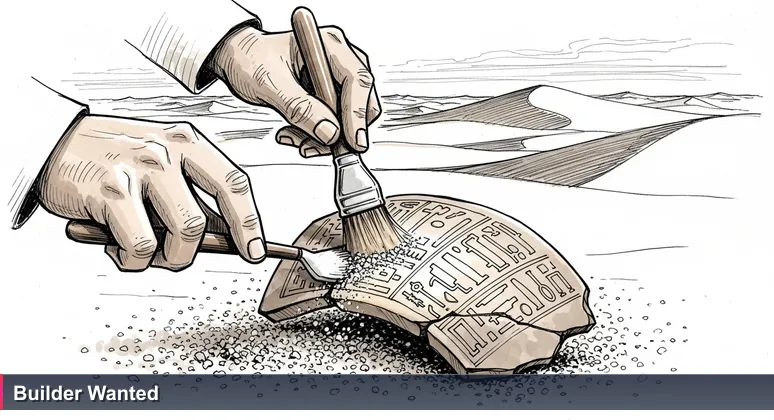
Standing in the desert at dawn, a single pottery shard promises an entire civilization waiting to be uncovered. For tech professionals in Cairo, Alexandria, or beyond, the career landscape offers a similar sensation. The fragments are everywhere: a LinkedIn alert for an AI role, news from the RiseUp Summit, or a friend's startup closing a funding round. These aren't random finds; they are surface clues to a major, transformative opportunity being systematically unearthed beneath your feet.
By 2026, the question isn't whether Egypt has tech potential, but what kind of builder you want to be. Unlike polished, established hubs, Egypt's tech scene is an active, noisy, and strategically funded excavation site. Its ICT market is projected to hit $45.18 billion by 2029, a testament to rapid, foundational growth.
The most compelling evidence lies in the strata of investment and confidence. The landmark $1 Billion Startup Charter launched in early 2026 signals a pivotal shift from high-potential to structured, scaled execution for tech brands. This isn't a scattered opportunity - it's the blueprint for a cohesive tech civilization, and it's seeking the architects, engineers, and entrepreneurs bold enough to start building.
What We Cover
- Unearthing Egypt's Tech Career Opportunities
- The Bedrock: Egypt's Massive Talent Pipeline
- Fueling Growth: Investments and Government Initiatives
- Navigating Egypt's Tech Hubs: Clusters and Connectivity
- High-Growth Sectors: Fintech, AI, and Cloud
- Realistic Insights: Salaries and Cost of Living in 2026
- Choosing Your Path: Multinational, Startup, or Remote
- Is Egypt Your Ideal Tech Destination?
- Common Questions
For a thorough understanding, check out the guide to AI career development in Egypt for 2026, including local salary data.
The Bedrock: Egypt's Massive Talent Pipeline
The civilization of Egypt's tech future is being built on an unparalleled foundation of human capital. Each year, the country graduates approximately 50,000 engineers and computer science students, creating one of the largest and most dynamic technical talent pools in the entire EMEA region. This isn't just a number - it's the raw material that global industry leaders recognize as a strategic asset.
As highlighted in the official ITIDA Industry Outlook, this massive pipeline is the bedrock of the sector's growth. Universities like Cairo University, AUC, and Nile University continuously feed this stream, ensuring a fresh influx of problem-solvers and innovators ready to tackle the market's demands.
This scale transforms Egypt into what experts call a "global cost-effective talent hub." For you, as an aspiring AI engineer or developer, this means your career is launching within a deep, competitive, and collaborative talent ecosystem. The density of skilled peers accelerates learning, fosters innovation, and makes Egypt an irresistible destination for multinational companies seeking to build and scale their teams.
Fueling Growth: Investments and Government Initiatives
Sitting atop the bedrock of talent is a thick, active layer of strategic capital and policy designed to fuel the ecosystem. The government, through the Information Technology Industry Development Agency (ITIDA), acts as the primary engine, deploying programs that directly lower the barriers for startups and innovators.
Key initiatives like the Start IT program offer qualifying startups up to EGP 480,000 in support and $10K in AWS credits, providing essential runway for early-stage ventures. This confidence is amplified on a global scale by the landmark $1 Billion Startup Charter, a decisive signal that Egypt is shifting from a market of potential to one of structured, high-growth execution.
"September-In-Review | AI, Talent, and Startups Power Egypt’s Global Business Services Growth" - ITIDA, LinkedIn
This public investment attracts matching private confidence. Global firms like Luxoft, Capgemini, and Vehiclevo have inaugurated new offices, underscoring international faith in Egypt's digital skills and market trajectory. For your career, this layered investment means more employers, more funded projects, and a stronger safety net for entrepreneurial ambition.
Navigating Egypt's Tech Hubs: Clusters and Connectivity
In Egypt, your daily experience and career trajectory are deeply shaped by your chosen dig site - the specific tech cluster where you work. The infrastructure isn't abstract; it's a tangible grid of innovation zones, each with its own culture, commute, and community.
The long-established heart remains Smart Village & Sheikh Zayed, home to multinational anchors like IBM Egypt and Vodafone, and supported by incubators like the Technology Innovation & Entrepreneurship Center (TIEC). Meanwhile, New Cairo and the New Administrative Capital (NAC) represent the burgeoning frontier, designed for digital governance and attracting new headquarters with modern living spaces. For specialized roles in outsourcing, Maadi Technology Park serves as a focused hub for the booming BPO industry.
Crucially, innovation is decentralizing. Through initiatives like the ITIDA & Plug and Play bootcamp in Aswan, support is expanding beyond Cairo to Upper Egypt and Alexandria. Your most critical career-life decision may be choosing where to live relative to these clusters to master the ancient Cairo challenge of traffic, turning proximity into productivity.
High-Growth Sectors: Fintech, AI, and Cloud
The most visible "potshards" in Egypt's tech excavation are the high-growth sectors generating intense demand for specialized skills. Leading the charge is Fintech, where the ecosystem has grown fivefold to over 177 startups by 2026, attracting nearly half of all venture capital in the country, as detailed in The Fintech Times. Giants like Fawry and a wave of innovators are reshaping finance, creating roles from payment systems engineering to blockchain development.
Simultaneously, AI & Machine Learning has moved to center stage. Cairo's hosting of AI Everything MEA 2026 underscores its rising profile, with demand for AI/ML Engineers and Data Scientists surging across banking, telecoms (Orange, Etisalat Misr), and e-commerce (Jumia Egypt).
Supporting this digital boom is the critical Cloud & Data Infrastructure sector. With the data center market expanding rapidly, roles for Cloud Architects, DevOps Engineers, and Data Engineers at firms like Raya Data Center and Telecom Egypt are becoming foundational to the entire ecosystem's growth.
Realistic Insights: Salaries and Cost of Living in 2026
Evaluating Egypt's tech career means looking honestly at compensation against real-world expenses. Salary ranges vary dramatically based on employer type and currency. According to industry analysis like the Sprints 2025 salary report, junior developers in Cairo might earn EGP 10,000 - 18,000 monthly, while senior AI Engineers or Tech Leads at major firms can command EGP 60,000 to 120,000+. The top tier remains remote roles with global companies, where Egyptians can earn $2,000 - $5,000+ USD per month.
The compelling advantage emerges in the cost-of-living comparison. While a living wage for a family is estimated above EGP 14,624/month, tech salaries comfortably surpass this. When measured against regional hubs like Dubai or Riyadh, Egypt offers a significantly lower financial threshold for a comfortable, middle-class lifestyle in areas like New Cairo or Sheikh Zayed, including dining, travel, and proximity to tech clusters.
However, budgeting must account for local inflation, which remains an economic factor. The real cost for many professionals is time - hours lost in Greater Cairo's traffic. Choosing where to live relative to your workplace (Smart Village vs. NAC) becomes a critical quality-of-life and productivity decision, a practical trade-off in an otherwise high-value career landscape.
Choosing Your Path: Multinational, Startup, or Remote
Your experience in Egypt's tech excavation depends entirely on which part of the site you choose to work. The Multinational Track, with established players like Microsoft Egypt and Vodafone Egypt, offers structured progression, renowned training, and relative stability - perfect for building a solid foundation. As seen on platforms like Glassdoor reviews, employees often praise the supportive environments and exposure to modern technologies, though the pace can be slower than in startups.
For those seeking rapid growth and direct impact, the Startup & Scale-up Track with companies like Fawry or Flat6Labs alumni presents a dynamic alternative. Here, you trade some stability for broad responsibility, equity potential, and a fast-paced learning curve where you can shape products from the ground up.
The Remote/Global Track represents a third path, allowing you to earn foreign currency while living in Egypt, maximizing purchasing power. This requires high self-discipline and can be isolating, but it offers access to cutting-edge global projects. Success in any track hinges on acquiring the right, in-demand skills efficiently - a need that makes focused, affordable upskilling pathways a strategic tool for career navigation in this competitive landscape.
Is Egypt Your Ideal Tech Destination?
Egypt is not a universal tech destination, but a highly specific opportunity that excels for particular career archetypes. It is best for early to mid-career builders (0-8 years experience) who seek rapid skill development, hands-on responsibility, and a chance to rise quickly in a market where demand for seasoned talent outpaces supply. It equally suits cost-conscious innovators and entrepreneurs who can build and iterate with a lower burn rate than in Dubai or Europe, making funding stretch further.
The ecosystem rewards local networkers who engage with communities at the RiseUp Summit or TIEC demo days. For career-changers or new graduates, as noted in discussions on platforms like Reddit, Egypt's growth creates valuable entry points that might be harder to find in saturated markets. Its strength as a startup hub is validated by ranking as the 14th most popular country globally to start a company and 2nd in the Middle East.
"Egypt's $1 Billion Charter Makes It A MENA Hub For Scaling Tech and Brands" - Forbes
Conversely, Egypt may be less ideal for late-career executives seeking maximum global compensation and stability, or those deeply averse to the bureaucracy and energetic density of a megacity like Cairo. The final verdict reframes the question: Egypt in 2026 doesn't need residents of a finished tech metropolis; it needs the archaeologists, engineers, and entrepreneurs ready to decode the blueprint and build the temples of tomorrow.
Common Questions
Is Egypt actually a good place to start or grow a tech career in 2026?
Yes, Egypt presents a strong opportunity with a large talent pool of 50,000 engineering graduates annually and significant investments like the $1 Billion Startup Charter. High-growth sectors like fintech and AI are driving demand, making it an exciting time for tech professionals in Cairo and beyond.
What tech jobs are most in demand in Egypt right now?
Roles in AI & Machine Learning, fintech, and cloud infrastructure are highly sought after. For example, AI/ML Engineers are needed at companies like Orange and Jumia, while fintech has expanded to over 177 startups by 2026, creating numerous opportunities.
How do tech salaries in Egypt compare to the cost of living?
Tech salaries in Egypt are quite competitive relative to living costs. A mid-level professional can earn EGP 25,000 to 45,000 per month, which is well above the living wage of around EGP 14,624, allowing for a comfortable lifestyle in areas like New Cairo with lower expenses than many Western cities.
What types of companies can I work for in Egypt's tech scene?
You have options ranging from multinationals like Microsoft Egypt and Vodafone Egypt in Smart Village to fast-growing startups like Fawry supported by Flat6Labs. Remote roles with global firms are also popular, offering foreign currency earnings while living in Egypt.
Is Egypt better suited for beginners or experienced tech professionals?
Egypt is ideal for early to mid-career builders, offering rapid skill development and hands-on roles in a growing market. However, late-career executives might prefer more stable, higher-paying opportunities in places like Dubai, as Egypt's ecosystem is still evolving.
Stay updated with 2026 AI hiring trends in Egyptian companies through this blog post.
Opportunities in Smart Village and New Cairo for tech professionals without degrees.
Read about the definitive ranking of women in tech resources in Egypt to navigate the ecosystem effectively.
Understand the total compensation packages at leading tech companies in Egypt with this guide.
This article provides a list of tech startups recruiting junior developers in Egypt for aspiring coders.

Irene Holden
Operations Manager
Former Microsoft Education and Learning Futures Group team member, Irene now oversees instructors at Nucamp while writing about everything tech - from careers to coding bootcamps.