









Is Chicago, IL a Good City for a Tech Career in 2026?
By Irene Holden
Last Updated: February 25th 2026
Quick Explanation
Chicago is an excellent city for a tech career in 2026, thanks to its diversified tech economy and strong AI ecosystem anchored by research from universities like UChicago and Northwestern. The tech sector grew 18% in the last decade, employing over 106,000 people, with mid-level developers earning competitive salaries around $120,000 that offer great value given Chicago's lower cost of living compared to coastal hubs.
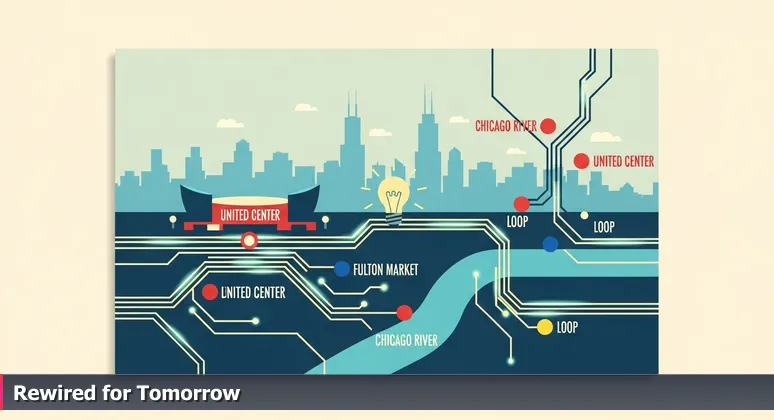
The iconic Chicago River bends through the city, framed by architectural marvels that speak to a century of industrial might. But today, that same waterway serves as a perfect metaphor for a different kind of power: the glowing lines of data and innovation that now trace its path. This isn't just history; it's a living, breathing circuit board, and the current flowing through it is powering one of America's most compelling tech career destinations.
In 2026, Chicago has climbed to become the fourth-hottest tech hub in the nation, a recognition of sustainable momentum over fleeting hype. This rise is detailed in reports like the one from the Chicagoland Chamber of Commerce's Tech Effect initiative, which chronicles the region's unique "diversified tech" advantage. The transformation is profound: while the overall metro economy grew by a modest 1% over the last decade, its tech sector expanded by a robust 18%.
This growth represents more than just numbers; it's a fundamental rewiring. The city's historic strengths in transportation, finance, and logistics are no longer separate from its tech scene - they are its foundation. The river, once a conduit for goods, now maps the flow of ideas from the research labs in Hyde Park to the corporate towers of the Loop and the logistics hubs near O'Hare, creating a dynamic ecosystem where technology builds upon the bedrock of the real economy.
What We Cover
- Chicago's Tech Circuit: Rewiring the Future
- The Power of Diversified Tech in Chicago
- AI Innovation Fueled by Chicago's Research
- Living Well: Tech Salaries vs. Cost in Chicago
- Chicago's 2026 Tech Job Market Outlook
- Life in Chicago: Community, Commute, and Culture
- Is Chicago Right for Your Tech Career?
- Final Verdict: Building a Substantial Tech Career in Chicago
- Common Questions
This article provides a comprehensive overview of AI salaries and roles in Chicago.
The Power of Diversified Tech in Chicago
Chicago's tech strength lies not in a single, dominant industry but in a powerful integration model. Here, technology acts as the new operating system for the massive, foundational sectors that have long defined the city's economy - finance, healthcare, logistics, and manufacturing. This approach, often called diversified tech, creates remarkable resilience by tethering innovation to industries society cannot simply stop using.
Instead of building apps in a vacuum, you're creating AI to optimize global flight paths for United Airlines or developing machine learning models to manage trillion-dollar portfolios at JPMorgan Chase. You're writing the software that powers McDonald's supply chain or Walgreens Boots Alliance's digital pharmacy platform. This is technology with immediate, tangible impact on the real world, a concept championed by the Chicagoland Chamber of Commerce.
The data confirms this strategy's success. The digital tech sector now employs over 106,000 people directly in the Chicago metro area, representing roughly 8% of the local workforce according to an analysis from World Business Chicago. This growth is insulated from the boom-and-bust cycles of pure-play consumer tech, offering a more stable career path rooted in substantive, real-world problems.
This model ensures that tech talent in Chicago is never siloed. A software engineer can pivot into finance, a data scientist can dive deep into healthcare, and an AI researcher can tackle global supply chains - all without leaving the city's vibrant ecosystem. It's a career built on a diversified portfolio of impact.
AI Innovation Fueled by Chicago's Research
If diversified tech is Chicago's economic body, artificial intelligence is its nervous system in 2026. The energy is palpable, with over 65% of annual venture capital deals in the city now flowing into AI-related companies. This isn't theoretical research confined to academia; it's commercial reality accelerated by a world-class innovation ecosystem.
The city is anchored by powerhouse institutions that turn discovery into application. The University of Chicago's Polsky Center and Northwestern University are not just elite schools but innovation engines, hosting key events like the Venture Capital Investment Competition (VCIC) to funnel talent into the market. Then there are the national labs: Argonne National Laboratory and Fermilab. Their pioneering work on exascale computing and quantum information science spins out startups, attracts R&D dollars, and creates a deep talent pipeline.
This research backbone produces standout companies like Tempus AI, which is revolutionizing precision medicine, and Prenosis, which raised $40 million for AI diagnostic tools. Even Big Tech's major Chicago offices, from Google to Microsoft, are geared toward this applied AI future. As Yahoo Finance reports, massive infrastructure investments are planned for 2026 to support cloud and AI services, with Chicago's central geography and energy infrastructure making it a key node in this $650 billion spend.
Living Well: Tech Salaries vs. Cost in Chicago
A tech career isn't just about the work - it's about the life you can build. This is where Chicago delivers a decisive advantage over coastal hubs, offering strong compensation amplified by a significantly lower cost of living. The numbers reveal a compelling value proposition for professionals.
According to the comprehensive 2026 Chicago Tech Salary Guide from Motion Recruitment, compensation here is highly competitive. More importantly, a stark analysis shows that to match the standard of living of a software engineer in Chicago, you would need to earn roughly $171,535 in New York City. This multiplier effect transforms a tech salary from covering rent to enabling genuine comfort, homeownership, and full enjoyment of the city's world-class amenities.
| Role | Salary Range (2026) |
|---|---|
| Mid-level Software Developer | $100,841 - $135,127 |
| Senior Software Developer | $116,638 - $139,173 |
| Senior Platform/Data Engineer | $138,000 - $181,000+ |
The median tech wage in the region is about $102,800 annually, which is 1.5 times the median for the overall local economy. This substantial purchasing power allows professionals to enjoy spacious housing, the lakefront, renowned restaurants, and vibrant neighborhoods without the financial anxiety endemic to other major tech cities, fundamentally redefining what success in tech looks like.
Chicago's 2026 Tech Job Market Outlook
The 2026 job market in Chicago is dynamic and leans decisively into modernization and intelligence. Data analyzed by The Business Journals identifies the hottest opportunities as AI Engineers, AI Consultants/Strategists, and AI/ML Researchers. This aligns perfectly with the city's research strengths and its focus on industrial application, creating high demand for talent that can bridge cutting-edge innovation and real-world business problems.
Your potential employer list reflects the diversified tech model, blending legacy titans with scaling disruptors. Major anchors include JPMorgan Chase and CME Group in finance; United Airlines and Boeing in aviation; Walgreens Boots Alliance and Tempus in healthcare; and McDonald's in retail. Big Tech maintains a significant presence with offices for Google, Microsoft, and Salesforce, which recently launched a major platform expansion. The startup scene remains vibrant, with companies like ShipBob in logistics and ActiveCampaign in SaaS leading the charge, many featured on lists of the largest and most influential tech companies in the city.
Geographically, the epicenter of tech activity has solidified. The Fulton Market district, with its converted lofts and modern offices, now boasts an 89% activity level compared to pre-pandemic times, acting as the primary live-work-play magnet for innovation. This significantly outpaces the Central Loop, as detailed in market reports from Avison Young. This shift underscores a preference for energetic, integrated neighborhoods that define the modern tech workplace in Chicago.
Life in Chicago: Community, Commute, and Culture
Beyond the spreadsheet metrics, building a tech career in Chicago is defined by a collaborative community and a high quality of life. The ecosystem is active and connected, celebrated through major events like TechChicago Week, and characterized by a Midwestern pragmatism that favors building substantial solutions. This atmosphere is often reflected in employee sentiment; reviews on platforms like Glassdoor for Chicago tech firms frequently cite a "friendly, collaborative atmosphere" and strong work-life balance as key positives, a contrast to more cutthroat coastal environments.
The city is proactively enhancing urban livability. Commuting is a focus, with the Chicago Transit Authority (CTA) implementing a 'security surge' as a new safety plan for 2026, increasing police and K-9 patrols to improve the rider experience. This, combined with O'Hare's status as a global hub, makes navigation efficient. The shift toward vibrant, walkable districts like Fulton Market reinforces a desirable live-work-play dynamic.
It's a balanced picture, however. Some professionals note on forums like Reddit that the market can feel "tough" for a city of its size, with many of the best opportunities tied to established corporations rather than a vast sea of seed-stage startups. Yet, for those seeking impact within a supportive community, access to lakefront parks, diverse neighborhoods, and cultural institutions without crippling costs, Chicago offers a compelling and sustainable tech life.
Is Chicago Right for Your Tech Career?
Choosing where to build your tech career is deeply personal, and Chicago's unique proposition makes it an ideal fit for specific professional profiles while being a less obvious choice for others. A clear-eyed assessment helps determine if you should make the move.
Chicago is BEST for professionals who value applied impact and sustainable growth:
- Career Changers & Industry-Shifters: The diversified tech model lets you pivot into finance, healthcare, or logistics without leaving the tech field.
- Mid-Career Professionals Seeking Stability & Lifestyle: If you're done with the coastal grind, Chicago offers high-impact roles paired with affordability and space.
- AI/ML & Quantum Talent: With its research labs and industrial problems, Chicago is a premier destination for cutting-edge talent, reflected in its ranking as a top-tier emerging tech hub.
- New Grads from Midwest Schools: For graduates from UIUC, Northwestern, or Purdue, Chicago is the natural, vibrant metropolis to launch an affordable career.
Conversely, Chicago might NOT be ideal for those with very specific ambitions. If your heart is set on joining a five-person pre-seed startup, the density of that environment remains greater in San Francisco or Austin. While VC exists, the early-stage scene is active but not overwhelming, as seen when funding dipped to $458M in Q4 2025. Those seeking the absolute peak FAANG salary may also find higher ceilings on the coasts, a trade-off for Chicago's dramatically higher quality of life.
Final Verdict: Building a Substantial Tech Career in Chicago
The fundamental question for tech professionals has evolved. It's no longer just "Which coast?" but "Which industry do I want to transform, and what kind of life do I want to build?" Chicago answers with a powerful, substantive proposition. It offers a career built on the bedrock of the real economy - finance, medicine, logistics - where technology creates immediate, tangible impact.
This is supported by sustainable momentum, not just hype. The region has solidified its status as the fourth-hottest tech hub in the nation, with its tech sector growing 18% in a decade. It provides a standard of living where a tech salary translates into genuine comfort, backed by a cost-of-living advantage that requires a New Yorker to earn over $170,000 to match a Chicagoan's lifestyle.
Choosing Chicago is a vote for a balanced, resilient career path. You gain the complexity of working on global-scale problems within industry leaders, the support of a world-class research and AI ecosystem, and the space to build a full life beyond your desk. It’s recognizing that the most powerful innovations aren't always the flashiest - they're the ones reliably powering everything else, mapped onto the city's historic infrastructure and waiting for your next line of code.
Common Questions
Is Chicago really a good city for a tech career in 2026?
Yes, Chicago is an excellent choice, with its tech sector growing by 18% over the last decade to employ over 106,000 people. The city's diversified model integrates tech into finance, healthcare, and logistics, supported by a strong AI ecosystem from institutions like the University of Chicago and Argonne Lab, offering sustainable career paths.
How affordable is Chicago for tech professionals compared to places like New York?
Chicago provides great value, with mid-level software developers earning $100,841 to $135,127. According to Purpose Jobs, you'd need about $171,535 in New York City to match Chicago's standard of living, making it much more affordable for tech salaries here.
What kinds of tech jobs are available in Chicago, especially in AI?
Chicago offers diverse roles in AI and tech, with over 65% of venture capital deals in 2025 focused on AI. You can find positions at major employers like JPMorgan Chase in finance, United Airlines in logistics, and startups like Tempus AI in healthcare, leveraging the city's research backbone.
What are the fastest-growing tech roles in Chicago for someone starting out?
The fastest-growing jobs are AI Engineers, AI Consultants, and AI/ML Researchers, as per LinkedIn data. This demand stems from Chicago's applied AI focus, supported by universities and national labs, creating ample opportunities for entry-level and experienced professionals.
Is Chicago's tech community supportive for newcomers or career changers?
Absolutely, Chicago's tech scene is known for its collaborative and friendly atmosphere, with events like TechChicago Week fostering connections. Glassdoor reviews often highlight a strong work-life balance, making it welcoming for those pivoting into tech from other industries.
This guide offers a curated list of women's tech support networks in Chicago for professional growth.
Learn about Chicago's free tech training resources in 2026 to gain skills without cost.
Read about the highest-rated tech coworking spaces in Chicago for entrepreneurs and innovators.
Learn about the top 10 industries hiring AI talent in Chicago beyond big tech in 2026.
Learn how to connect with AI communities in Chicago through this resource.

Irene Holden
Operations Manager
Former Microsoft Education and Learning Futures Group team member, Irene now oversees instructors at Nucamp while writing about everything tech - from careers to coding bootcamps.