









The Complete Guide to Using AI as a HR Professional in Belgium in 2025
Last Updated: September 4th 2025
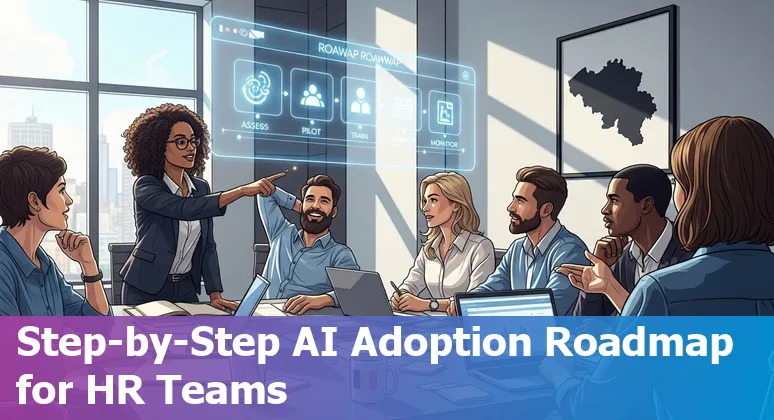
Too Long; Didn't Read:
In 2025 Belgian HR must pair governance and training with targeted AI pilots: 76% of firms pilot AI but only 21% scale. Prioritise recruitment/HR‑ops (≈70%/60% uptake), run DPIAs, consult works councils, and aim for 10–20 hours weekly savings per manager.
AI matters for HR professionals in Belgium in 2025 because the opportunity and the gap are both huge: PwC Belgium's “Bridging the AI Gap” survey found 40% of Belgian workers still don't interact with AI while only 34% use it regularly, and Hudson's Hudson HR Barometer 2025 report on AI implementation in HR flags lack of expertise, time and budget as the main stumbling blocks even though improving the employee experience is the primary driver; that creates a clear playbook for HR teams to build skills, set governance and pilot high-impact use cases, and practical training like Nucamp AI Essentials for Work bootcamp can help turn experimentation into measurable value.
| Bootcamp | Length | Early bird cost |
|---|---|---|
| AI Essentials for Work | 15 weeks | $3,582 |
“Although AI is becoming more prevalent in workplaces, a significant portion of our workforce has yet to embrace these technologies.” - Xavier Verhaeghe
Table of Contents
- What is the AI strategy in Belgium? National & organisational directions
- What is the AI regulation in Belgium? GDPR, AI Act and collective agreements
- How can HR professionals use AI in Belgium? Key use cases
- Which AI tool is best for HR in Belgium? Types, examples and selection criteria
- Data, privacy and governance: Preparing HR data in Belgium for AI
- Ethics, bias and employee rights in Belgium
- Implementation roadmap for Belgian HR teams: pilots to scale
- Training and education options in Belgium for HR upskilling in AI
- Conclusion: Next steps for HR professionals in Belgium in 2025
- Frequently Asked Questions
Join the next generation of AI-powered professionals in Nucamp's Belgium bootcamp.
What is the AI strategy in Belgium? National & organisational directions
(Up)Belgium's national and organisational AI direction in 2025 is both ambitious and pragmatic: the government's 2025–2029 coalition sets a “cloud‑first” public administration, stronger data governance through FOD BOSA and MyGov, and plans for living labs and administrative simplification to make AI work for citizens and civil servants (Belgium Federal Government Agreement 2025–2029 AI and Cloud Policy); at the same time EU rules are landing fast, so Belgian employers must align pilots and procurement with the AI Act's staged obligations and early deadlines while watching GPAI model rules coming into force (Trustworthy AI in Europe - Belgium Legal Guidance and Action Plan).
On the organisational front the playbook is clear: most firms are in experimentation mode but only a minority have scaled - PwC finds 76% piloting and just 21% fully integrated - so HR leaders should prioritise targeted use cases, build governance and close skills and cybersecurity gaps before scaling (PwC Belgium Report on Navigating AI Adoption for Organisations).
The result for HR: align learning and governance with national initiatives (AI4Belgium, regional plans and the national convergence plan), treat regulatory sandboxes and living labs as safe testing grounds, and remember a single, well‑governed pilot that saves 10–20 hours a week for hiring managers can be the tipping point from experiment to routine.
| Metric | Value | Source |
|---|---|---|
| Company AI adoption (Belgium) | 13.81% (2023) → 24.71% (2024) | ActLegal |
| Organisations experimenting with AI | 76% | PwC Belgium |
| Organisations with AI scaled into operations | 21% | PwC Belgium |
What is the AI regulation in Belgium? GDPR, AI Act and collective agreements
(Up)Belgian HR teams must navigate a tight web of data‑protection and AI rules: the Belgian Data Protection Authority's brochure lays out familiar GDPR basics - lawful basis, transparency, DPIAs, data minimisation and strong human oversight for automated decisions - alongside practical steps for AI deployment (Belgian Data Protection Authority brochure on AI and the GDPR), while employer‑facing guidance stresses works‑council consultation under Collective Bargaining Agreements No.
9 and No. 39 before rolling out tools that change working conditions (Osborne Clarke guidance on using AI in the workplace in Belgium).
Layered on top is the EU AI Act's risk‑based regime: recruitment, promotion, monitoring and performance systems are classed as high‑risk and must meet strict data‑quality, documentation and human‑oversight rules, some prohibitions (for example emotion‑recognition in the workplace) are absolute, and non‑compliance can trigger very large fines - up to €35 million or 7% of global turnover for the most serious breaches - so treat pilots as governed experiments, log decisions, run bias tests and keep workers informed (ActLegal guidance on Trustworthy AI in Belgium).
The practical takeaway: combine GDPR workflows (DPIAs, legal bases, subject‑rights processes) with early social‑partner consultation and a staged compliance checklist so a single well‑documented pilot unlocks scale instead of a regulatory headache.
| Focus | Short note (source) |
|---|---|
| GDPR guidance | DPIAs, legal basis, transparency; BDPA brochure (Sept 2024) |
| Collective consultation | Inform/consult works council per CBA No.9 & No.39 (Osborne Clarke) |
| AI Act risk & penalties | High‑risk rules, some prohibitions (emotion recognition); fines up to €35M / 7% turnover (ActLegal) |
How can HR professionals use AI in Belgium? Key use cases
(Up)Belgian HR teams can turn talk into tangible wins by focusing on high‑impact use cases: recruitment and resume shortlisting (already used by roughly 70% of organisations for selection), automated HR operations like payroll and PTO processing (about 60% uptake), personalised onboarding and learning recommendation engines, and agentic AI that schedules interviews, answers benefits questions and even runs scenario‑based workforce planning - all designed to free time for coaching and strategic work rather than replace it.
Real‑world pilots show big returns (Convin reports hiring time reductions of up to 60% with real‑time hiring assistants, while Zalaris cites 20–40% cost reductions where AI is applied to HRM), yet uptake remains uneven - PwC finds 40% of Belgian workers don't interact with AI and two‑thirds haven't even heard of AI agents, so change needs to pair tools with training and clear governance.
Prioritise use cases that solve a measurable pain (faster time‑to‑hire, reliable screening, smoother onboarding, predictive attrition alerts), pick multilingual platforms for Belgium's bilingual workforce, and start with a tightly governed pilot that demonstrably saves managers hours each week - that single success is often the catalyst to scale across the business.
For practical framing and local stats see PwC's Bridging the AI Gap and the Vlerick‑Hudson HR Barometer, and explore how agentic AI is being applied at scale in Workday's HR agent examples.
| Use case | Quick stat | Source |
|---|---|---|
| Recruitment & screening | ~70% report AI use in recruitment | Vlerick-Hudson HR Barometer AI in HR (AE) |
| HR operations & admin | ~60% use AI for HR ops | Vlerick-Hudson HR Barometer AI in HR (AE) |
| Agentic AI / assistants | Can save an entire recruiter workday weekly | Workday AI agents for HR examples |
| Adoption gap | 40% of workers don't interact with AI | PwC Bridging the AI Gap Belgium 2025 |
| Cost & efficiency gains | 20–40% HR cost reduction reported | Zalaris AI in HR management 2025 |
“Although AI is becoming more prevalent in workplaces, a significant portion of our workforce has yet to embrace these technologies. Implementing AI tools and fostering an AI-driven culture are essential steps to harness the full potential of AI. Meanwhile, as the technology evolves rapidly, the disparity between proficient AI users and non-users continues to widen.” - Xavier Verhaeghe
Which AI tool is best for HR in Belgium? Types, examples and selection criteria
(Up)Choosing the “best” AI tool for HR in Belgium starts with one simple question: what problem is being solved? For candidate sourcing and ATS needs, Belgium-friendly options like iSmartRecruit, Workable, Softgarden, Comeet and Personio surface repeatedly for their AI-driven screening, multilingual support (Dutch/French/English) and recruitment workflows - see a handy roundup of local recruitment platforms at iSmartRecruit; for broader HRIS and people‑management, enterprise players such as Workday, Dayforce, ADP and HiBob offer scale, payroll and analytics that matter when Belgian payroll rules and 13th‑month conventions come into play (OutSail's 2025 HRIS comparison is a useful frame).
Selection criteria should be practical: GDPR and AI‑Act compliance, Dutch/French UX, integrations with your HRMS/ATS/EOR stack, scalability and vendor support in Belgium.
If rapid Belgian hiring or contractor compliance is the goal, pair your stack with an EOR (Rippling, Remote, Deel, Papaya) rather than spinning up a local entity.
Prioritise demos and reference checks, insist on explicit GDPR features and local language contracts, and score vendors on use‑case fit, integration ease and total cost of ownership; for feature checklists and what to prioritise, Qandle's guide to AI HR tools highlights the must‑have capabilities to compare during trials.
A tightly scoped pilot that proves time‑saved for hiring managers and clear compliance controls usually decides which tool moves from shortlist to rollout.
| Tool type | Examples (from research) | Best for |
|---|---|---|
| Recruitment / ATS | iSmartRecruit, Workable, Softgarden, Comeet, Jobsoid, Personio | CV parsing, multilingual job ads, candidate matching |
| HRIS / HCM | Workday, Dayforce, ADP Workforce Now, HiBob, Paycom | Payroll, workforce planning, enterprise analytics |
| EOR / Global hiring | Rippling, Remote, Deel, Papaya Global, Multiplier | Rapid Belgium hiring, compliance, payroll outsourcing |
“Although AI is becoming more prevalent in workplaces, a significant portion of our workforce has yet to embrace these technologies.” - Xavier Verhaeghe
Data, privacy and governance: Preparing HR data in Belgium for AI
(Up)Data, privacy and governance are the make‑or‑break steps for Belgian HR teams that want AI to deliver real value: start by tackling the most common blocker Vlerick flags - fragmented, incomplete or biased HR data - so models aren't trained on partial views that reproduce unfair outcomes, and pair that work with a clear DPIA, documented data maps, retention/versioning rules and role‑based access to meet GDPR expectations; legally, recruitment, promotion and performance systems sit in the AI Act's high‑risk bucket and therefore need transparency, human oversight and ongoing monitoring, so follow practical checklists like ActLegal's Trustworthy AI guidance and Hunton's HR‑specific AI Act preparedness notes for DPIAs, staff AI literacy and worker‑representative consultation; operational governance also means logging model decisions, publishing explainability notes for candidates and keeping vendors' documentation on training data ready should regulators ask - because in Belgium a single well‑governed pilot with clean data and a solid DPIA often convinces works councils and executives more than a dozen uncontrolled experiments.
For local context and stats see the Vlerick–Hudson HR Barometer and the EU compliance roadmaps linked below.
| Date | Key AI compliance milestone |
|---|---|
| 2 Feb 2025 | Prohibitions on unacceptable AI practices and AI‑literacy obligations become applicable |
| 2 Aug 2025 | Obligations for general‑purpose AI (GPAI) models take effect |
| 2 Aug 2026 | Most high‑risk AI system obligations (recruitment, evaluation) apply |
“Although AI in HR is currently a low priority and CHROs indicate that their mastery is relatively low at present, there is still plenty of experimentation with AI applications in HRM. In addition, we are seeing a strong belief that AI can help free up time for strategic priorities such as strategic workforce management and competency management. There is also a growing conviction that it can greatly increase the quality of a number of HR processes and decisions, which further emphasises the role of HR as a strategic business partner.” - Dirk Buyens
Ethics, bias and employee rights in Belgium
(Up)Ethics, bias and employee rights are front‑and‑centre for Belgian HR teams rolling out AI in 2025: the EU AI Act already classifies recruitment and people‑management systems as high‑risk, so fairness, transparency and human oversight aren't optional - they are legal prerequisites (see the Belgian DPA's guidance on aligning GDPR with the AI Act and practical employer rules in Osborne Clarke's workplace briefing).
Practically that means documented DPIAs, bias audits, diverse training data and clear candidate notices, plus consultation with works councils under Belgium's collective‑bargaining framework before tools that change working conditions are used.
Beware real‑world failure modes: testers found video‑interview platforms downgrading candidates for hairstyle, lighting or bookshelf clutter - a vivid reminder that opaque models can punish innocent differences unless audited and tuned (Europe HR Solutions' examples).
Employees feel the pressure too: most Belgian workers worry about job losses and report gaps in AI training, so pair safeguards with upskilling and explainability so decisions can be challenged and human reviewers can step in.
In short, treat ethical controls, employee rights and governance as the backbone of any Belgian HR AI pilot - a single well‑documented, bias‑tested project that protects rights and saves time is the most persuasive case for broader rollout.
| Metric | Value | Source |
|---|---|---|
| Belief fewer employees needed as AI grows | 74% | EY Belgium AI report on employee attitudes and AI adoption |
| Employees saying company provides insufficient AI training | ~80% | EY Belgium AI report on employee training gaps |
| Belgian AI users (have used AI tools) | 70.9% | EY Belgium survey of AI tool usage among employees |
Implementation roadmap for Belgian HR teams: pilots to scale
(Up)Turn ambition into repeatable wins with a clear, Belgium‑centred roadmap: pick one or two measurable pilots (recruitment and HR operations are natural starters given 70% and 60% uptake respectively), design a DPIA and governance checklist up front, and lock in multilingual UX so Dutch‑ and French‑speaking teams aren't left behind; this focused approach echoes PwC's “start small, scale fast” playbook and helps avoid the familiar trap of isolated experiments that never reach production (PwC Belgium: Navigating AI Adoption 2025 - practical guidance for organisations adopting AI).
Address the top barriers - expertise, time and budget - by pairing pilots with short, targeted training and by using living labs or public sandboxes encouraged in the federal coalition's cloud‑first plans to safely test integrations (Belgium Federal Government Agreement 2025–2029 - AI and digital policy provisions, and see Hudson's HR Barometer on resourcing hurdles).
Measure ROI from day one (Vlerick notes only 18% currently measure outcomes), involve works councils early, log decisions for AI Act compliance, and treat each successful pilot as the persuasive, visible win that moves a project from ‘experiment' to business‑as‑usual - because proving one repeatable time‑saving use case is often the clearest route to scale in Belgian organisations (Vlerick & Hudson HR Barometer: AI in HR - measurement and resourcing insights).
| Roadmap step | What to do | Source |
|---|---|---|
| Pilot selection | Choose recruitment or HR ops for quick wins (70% / 60% uptake) | Vlerick‑Hudson |
| Governance & compliance | DPIA, works‑council consultation, log decisions for AI Act | B‑WAW / Belgian federal plan |
| Skills & ROI | Short upskilling sprints; set ROI metrics (only 18% currently measure) | Hudson; Vlerick‑Hudson; PwC |
“The future of AI is not about technology - it's about people.” - Frederik Anseel
Training and education options in Belgium for HR upskilling in AI
(Up)Belgian HR teams have a clear ladder for AI upskilling in 2025: academic depth for strategy and technical rigor, compact professional certificates for business application, and short bootcamps or executive modules for rapid, role‑specific skills.
For example, KU Leuven's one‑year, English‑taught Master of Artificial Intelligence compresses research‑grade topics (from machine learning to privacy and NLP) into a focused programme ideal for HR leaders who need a strong technical foundation (KU Leuven Master of Artificial Intelligence program); for practicing HR professionals a postgraduate certificate such as KU Leuven's “Artificial Intelligence in Business and Industry” offers a year‑long applied route (€4,300 listed registration fee) that balances theory and immediate workplace use.
Fast routes include bootcamps - Le Wagon's data‑science tracks or BeCode's free 7‑month AI programme (which includes a two‑month internship) for practical, hands‑on conversion - and short executive courses from providers like ICHEC or Technofutur for strategic adoption and vendor evaluation.
Mix an academic anchor with a bite‑sized bootcamp or executive module to create a memorable win: a single HR pilot paired with targeted training can turn months of uncertainty into a repeatable, auditable process that saves hiring managers hours each week (Best AI training courses in Belgium - Lecercle.ai roundup).
| Programme | Type | Duration | Typical price (EUR) | Source |
|---|---|---|---|---|
| Master of Artificial Intelligence (KU Leuven) | Academic MSc | 1 year | ~7,771 / year | KU Leuven Master of Artificial Intelligence program |
| Postgraduate Certificate – AI in Business & Industry (PUC KU Leuven) | Professional certificate | 1 year (part‑time options) | 4,300 (registration fee) | PUC KU Leuven AI in Business and Industry postgraduate certificate |
| Bootcamps (BeCode, Le Wagon) | Intensive practical | 9 weeks → 7 months (BeCode incl. internship) | Free (BeCode) → €6,000–8,000 (Le Wagon) | Lecercle.ai AI training courses in Belgium roundup |
| Executive & short courses (ICHEC, Technofutur, AI Academy) | Executive / short | 5 days → 3 months | €500 → €4,500 | Lecercle.ai AI training courses in Belgium roundup |
Conclusion: Next steps for HR professionals in Belgium in 2025
(Up)Next steps for HR professionals in Belgium in 2025 are practical and urgent: start by running a tool inventory and targeted risk audit (DPIA) for any recruitment, promotion or performance systems classed as high‑risk under the AI Act, then lock in a single measurable pilot - recruitment or HR ops are sensible first bets - designed for Dutch/French/English users, with works‑council consultation and clear logging for explainability and compliance; remember that regulatory milestones matter (the AI Act's early employer obligations were flagged ahead of 2 Feb 2025 and GPAI rules take effect from August 2025), so align procurement and vendor contracts to those timelines and use living labs or external counsel to de‑risk rollouts (see a practical employer checklist on AI Act readiness).
Pair pilots with short, targeted training to close the “expertise, time and budget” gap Vlerick highlights and measure ROI from day one - PwC's data shows many workers haven't yet adopted AI, so one well‑governed pilot that demonstrably saves managers hours can change minds fast.
For hands‑on skills and prompts geared to workplace roles, consider a role‑focused course such as Nucamp's Nucamp AI Essentials for Work bootcamp, read the employer briefing on AI Act steps (AI Act: what Belgian employers need to know) and keep PwC's “Bridging the AI Gap” findings close when planning change management (PwC Belgium: Bridging the AI Gap).
| Bootcamp | Length | Early bird cost | Register |
|---|---|---|---|
| AI Essentials for Work | 15 weeks | $3,582 | Register for the AI Essentials for Work bootcamp |
“Although AI is becoming more prevalent in workplaces, a significant portion of our workforce has yet to embrace these technologies.” - Xavier Verhaeghe
Frequently Asked Questions
(Up)Why does AI matter for HR professionals in Belgium in 2025?
AI matters because adoption gaps and clear operational benefits create a strong opportunity for HR teams: surveys show many Belgian workers still don't interact with AI (about 40%) while organisations are rapidly piloting solutions (76% experimenting, only 21% scaled). Targeted pilots can save hiring managers 10–20 hours a week, reduce time‑to‑hire by up to 60% in real cases, and generate 20–40% HR cost reductions when applied to HRM - so HR should prioritise skills, governance and measurable pilots to turn experimentation into value.
What regulatory requirements must Belgian HR teams follow when deploying AI?
Belgian HR teams must comply with GDPR (lawful basis, transparency, DPIAs, data minimisation, subject rights) and the EU AI Act. Recruitment, promotion, monitoring and performance systems are high‑risk under the AI Act and require data quality, documentation, human oversight and bias testing; some practices (e.g., workplace emotion‑recognition) are prohibited. Works‑council consultation under collective bargaining (CBA No.9 & No.39) is typically required before changing working conditions. Non‑compliance can trigger large fines (up to €35M or 7% of global turnover). Use DPIAs, log model decisions, publish explainability notes and involve social partners early.
What practical AI use cases should HR teams in Belgium prioritise first?
Prioritise high‑impact, measurable use cases such as recruitment and CV shortlisting (~70% current uptake), HR operations automation (payroll, PTO processing ~60% uptake), personalised onboarding and learning recommendations, and HR agent assistants that schedule interviews and answer benefits queries. Choose multilingual platforms (Dutch/French/English), design pilots to save measurable manager hours, pair each pilot with governance and training, and measure ROI from day one to justify scaling.
How should HR teams choose AI tools and vendors for the Belgian market?
Select tools based on the problem you need to solve, not hype. For recruitment/ATS consider Belgium‑friendly vendors (iSmartRecruit, Workable, Softgarden, Comeet, Personio); for HRIS/HCM look at Workday, Dayforce, ADP, HiBob. Key selection criteria: GDPR & AI Act readiness, multilingual UX (Dutch/French/English), integrations with HRMS/ATS/EOR stacks, vendor support in Belgium, and total cost of ownership. Run demos, reference checks, insist on documented training data and contract clauses for compliance, and validate via a tightly scoped pilot that proves time saved and compliance controls.
What roadmap and training steps should Belgian HR teams follow to move from pilots to scale?
Follow a staged roadmap: 1) inventory current tools and perform targeted DPIAs for high‑risk systems; 2) pick one or two measurable pilots (recruitment or HR ops are best for quick wins); 3) set governance (data maps, retention, logging, works‑council consultation) and multilingual UX requirements; 4) run short upskilling sprints or bootcamps for HR staff and managers; 5) measure outcomes (only ~18% measure today) and document bias audits and explainability; 6) use living labs or sandboxes to de‑risk procurement. Combine an academic anchor or certificate with a short bootcamp (or a 15‑week role‑focused course) to close the expertise gap and accelerate adoption.
Ready to act? Discover the next steps for HR beginners in Belgium to stay relevant in 2025.
Increase response rates using a personalized recruitment outreach that stays within GDPR consent boundaries.
Start with small pilot projects and governance roadmap to safely scale AI across your HR processes in Belgium.

Ludo Fourrage
Founder and CEO
Ludovic (Ludo) Fourrage is an education industry veteran, named in 2017 as a Learning Technology Leader by Training Magazine. Before founding Nucamp, Ludo spent 18 years at Microsoft where he led innovation in the learning space. As the Senior Director of Digital Learning at this same company, Ludo led the development of the first of its kind 'YouTube for the Enterprise'. More recently, he delivered one of the most successful Corporate MOOC programs in partnership with top business schools and consulting organizations, i.e. INSEAD, Wharton, London Business School, and Accenture, to name a few. With the belief that the right education for everyone is an achievable goal, Ludo leads the nucamp team in the quest to make quality education accessible