









Top 10 Universities and Colleges for AI/ML Near Bellevue, WA in 2026
By Irene Holden
Last Updated: January 23rd 2026
Too Long; Didn't Read
University of Washington Seattle and UW Bothell are the top picks for AI/ML near Bellevue in 2026 - UW Seattle for unmatched research depth and direct Big Tech pipelines, and UW Bothell for strong applied training with better admission odds. Keep in mind UW Seattle’s CS direct-admit rate is roughly five percent, Bellevue College offers an ultra-high-value alternative with reported entry-level pay around $101,661, and all options benefit from Bellevue/Seattle’s no-state-income-tax and proximity to Amazon, Microsoft, and a growing Eastside AI startup scene.
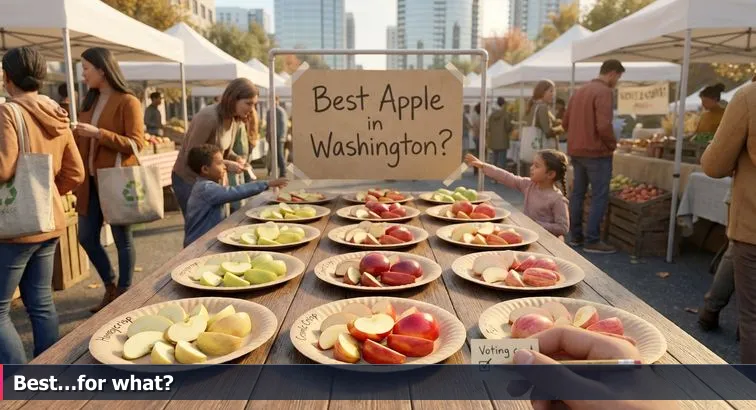
You’re at the Bellevue Saturday farmers market, a tiny voting card in one hand and a slice of something crisp and sweet in the other. Ten apple varieties line the table; the sign demands a single verdict: “Best Apple in Washington?” Suddenly that golf pencil feels heavy, because each bite is good in a different way - one is ultra-crisp, another is perfect for pie, a third has that tart kick you didn’t know you wanted.
From apples to AI/ML degrees
Picking an AI or machine learning program near Bellevue works the same way. Rankings try to compress an entire feature space - tuition, research intensity, admissions odds, internship pipelines to Amazon and Microsoft, and even your long-term take-home pay in a no-state-income-tax state like Washington - into one number. As Hakia’s Best AI Programs in Washington 2026 analysis puts it, the region is crowded with options that “leverage their proximity to major tech hubs” to offer industry-integrated AI training, but no ranking can tell you which flavor will actually fit your life.
“In 2026, the academic landscape near Bellevue, WA, is dominated by institutions leveraging their proximity to major tech hubs like Microsoft and Amazon to offer industry-integrated AI and Machine Learning programs.” - Hakia, Best AI Programs in Washington 2026
Why “Best…for what?” matters
If you’re already thinking in terms of models and loss functions, you know the problem isn’t that rankings are evil - they just bake in someone else’s objective function. One list might overweight research prestige, another might quietly assume you’re fine paying private-school tuition, and almost none will factor in what it means to study within bus range of downtown Bellevue while interviewing across the lake at Microsoft or walking to an AI startup in the Spring District. The real question isn’t “What’s #1?” so much as “Best…for what goal, under what constraints?”
How to use this Top 10 from Bellevue
This guide treats the schools around Bellevue like that tasting table: ten good “apples” laid out in a row, each with different flavor notes - some extra-crisp on research, some sweeter on cost and ROI, some grown for industry co-ops instead of academic pie contests. We’ll call out AI/ML depth, pricing, admission realities, and how tightly each option is wired into the Eastside ecosystem of Amazon, Microsoft, and the growing AI startup scene in Bellevue, Redmond, and Kirkland. Your job is to assign your own weights to those features, based on whether you’re optimizing for a PhD path, a fast, affordable jump into ML engineering, or a working-professional upgrade that doesn’t blow up your Bellevue rent.
Table of Contents
- Introduction
- University of Washington Seattle Campus
- University of Washington Bothell Campus
- Bellevue College
- Seattle University
- Washington State University
- University of British Columbia
- Simon Fraser University
- Western Washington University
- Portland State University
- Eastern Washington University
- How to Choose Your Best AI/ML Path from Bellevue
- Frequently Asked Questions
This guide: starting an AI career in Bellevue WA in 2026 lays out education choices from bootcamps to UW certificates.
University of Washington Seattle Campus
From downtown Bellevue, a 20-30 minute bus ride drops you into the heart of the Paul G. Allen School, which functions as the R&D engine behind the Eastside skyline. If Bellevue’s towers are filled with applied AI roles at Amazon, Microsoft, and a growing crop of startups, UW Seattle is where a lot of that talent and research pipeline is trained.
AI/ML ecosystem and degree options
UW Seattle’s strength is depth: you’re not just “doing CS,” you’re stepping into a dense AI/ML ecosystem. The Allen School’s BS in Computer Science lets you stack electives in machine learning, NLP, computer vision, and robotics, while traditional MS in Computer Science tracks and PhD programs in Computer Science & Engineering push into advanced ML theory, systems for ML, and human-centered AI. Beyond CS, the Statistics Department runs a dedicated Machine Learning & Big Data PhD track, and cross-campus efforts like the AI Institute in Dynamic Systems and the Computational Neuroscience Center pull in applied math, engineering, and neuroscience.
Professional learners get a parallel lane: the College of Engineering’s stackable MS in AI and Machine Learning is built so a working engineer at an Eastside employer can pick up modern AI methods without pausing their career. According to the UW College of Engineering’s description of its MS in AI and Machine Learning program, the curriculum is organized around “modern artificial intelligence methods” that can be applied across industries, from software to healthcare.
| Program | Level | AI/ML Focus | Typical Candidate Goal |
|---|---|---|---|
| BS in Computer Science | Undergraduate | AI/ML electives (ML, NLP, vision, robotics) | Entry into software/ML roles or direct-to-industry pipeline |
| MS in AI & Machine Learning | Professional Master’s | Applied AI/ML methods for working engineers | Upskill while employed at Amazon, Microsoft, or local startups |
| MS in Computer Science | Academic Master’s | ML, systems for ML, AI theory | Bridge to advanced ML engineering or PhD preparation |
| PhD in CSE (AI areas) | Doctoral | Robotics, vision, NLP, human-centered AI | Research career in academia or industrial labs |
| PhD in ML & Big Data (Statistics) | Doctoral | Statistical ML, large-scale inference | Theoretical ML, data-intensive research across domains |
Cost, selectivity, and admissions reality
On paper, UW Seattle looks like the obvious “best” choice. The 2026 Hakia guide tags UW Seattle as “#1 overall quality in Washington” with about $57,782 average early-career earnings for CS-related grads. The catch is access: the university’s overall admit rate hovers around 48%, but direct admission into the CS major is closer to 5%, with many students starting as “pre-sciences” and later competing for limited CS spots. Graduate programs typically require a minimum 3.0 GPA, but successful MS/PhD applicants in AI/ML tend to present significantly stronger records in calculus, linear algebra, probability, and programming, plus research or substantial projects.
“48% get into UW, but only 5% get direct admission to CS. Most students enter as ‘pre-sciences’ and compete for limited CS spots… Admission Strategy: If you're an in-state Washington student, UW is a no-brainer.” - Top 10 Universities for AI & Machine Learning in 2026, RightWay Admission
For undergraduates, tuition follows Washington’s public-school structure with a clear in-state versus out-of-state split. Professional programs like the MS in AI and Machine Learning use per-credit pricing, so the full degree typically lands in the high five-figure range. Application timelines are front-loaded: many AI-focused MS and PhD programs set December-January deadlines for a fall start, so you’re planning 9-12 months ahead if you want to sync graduation, internships, and Eastside job offers.
Industry pipelines and the Eastside advantage
For a Bellevue-based student, one of UW Seattle’s biggest differentiators is how tightly it’s wired into local employers. The Allen School’s artificial intelligence research overview highlights collaborations that include the Amazon + UW Science Hub and an Amazon AI PhD Fellowship program launched with UW, underscoring how research projects often line up directly with problems being tackled at Amazon’s nearby offices. Microsoft Research, Google, Meta, Apple, and an entire layer of Eastside AI startups recruit heavily out of UW, with many students doing multiple internships before sliding into full-time roles.
If you land there, you’re effectively studying in the middle of the Bellevue-Seattle AI corridor: busing across the lake for class, interviewing at Amazon in South Lake Union one quarter, then riding a Microsoft Connector back to Redmond the next. Combine that with Washington’s lack of state income tax, and the long-term take-home pay from those early-career salaries becomes a nontrivial part of your objective function.
Best for (with a practical example)
UW Seattle is the “maximize research + Big Tech options” apple, best suited to students who are willing to aim high and tolerate real admissions risk. Picture a Bellevue College transfer with a 3.9+ GPA, calculus and linear algebra completed, and a Kaggle competition or small research project under their belt. If they clear the admissions bar into CS or a related AI-heavy pathway, they can push toward one of two trajectories: a PhD track oriented toward foundational ML and eventual roles at places like Microsoft Research AI, or an industry-focused route via the Allen School’s MS programs or the professional MSAIM, setting up for applied ML engineering roles across the Eastside without ever leaving the region.
University of Washington Bothell Campus
Head a short hop up I-405 from Bellevue and UW Bothell feels like the quieter stand at the end of the farmers market row: fewer crowds than UW Seattle, but some surprisingly strong “flavor notes” if you’re weighing AI/ML depth against cost, commute, and admissions odds. A lot of Eastside students treat it as the realistic way to plug into the UW system without betting everything on one ultra-competitive application.
Programs and AI/ML exposure
The core of Bothell’s offering is the BS in Computer Science & Software Engineering (CSSE), housed in the Division of Engineering & Mathematics. Upper-division CSSE students can choose electives in areas like machine learning, computer vision, and data-intensive systems, giving you enough AI exposure to be useful in industry without requiring you to live in research labs. At the graduate level, the MS in Computer Science & Software Engineering (MSCSSE) adds more advanced ML, vision, and data systems topics, with a curriculum designed to be rigorous but approachable for working professionals and career switchers, as outlined in UW Bothell’s own MSCSSE curriculum overview.
| Program | Level | AI/ML Components | Typical Student Profile |
|---|---|---|---|
| BS in CS & Software Engineering (CSSE) | Undergraduate | Electives in ML, computer vision, data-intensive systems | First CS degree, often commuting from Bellevue/Redmond |
| MS in CS & Software Engineering (MSCSSE) | Graduate | Advanced ML topics, vision, scalable software systems | Working engineers and CS grads seeking AI/ML upskilling |
“UW Bothell was designated a ‘Research College and University’ by the Carnegie Foundation, acknowledging growing research output and graduate programs.” - UW Bothell at a Glance 2025-26, University of Washington Bothell
Cost, outcomes, and admissions odds
Hakia’s Washington analysis flags UW Bothell as a rising AI/ML hub, citing roughly a 69% graduation rate in AI-related tracks and alumni reporting some of the highest wages among Washington public four-years, with many breaking into six-figure roles at regional employers. As a public campus, it uses standard in-state tuition rates that come in well below private options in Seattle, and the ability to live in Bellevue or Kirkland and commute keeps overall cost-of-attendance down. For the MSCSSE, UW Bothell’s graduate program pages note a minimum 3.0 GPA plus prerequisites in data structures, algorithms, and discrete math, but the admissions environment is notably less cutthroat than direct-to-major CS in Seattle.
Best for (with a practical example)
Think of a Bellevue resident working helpdesk or QA at a Redmond company with community college credits and a 3.4 GPA. They finish a CSSE bachelor’s at Bothell, taking ML and vision electives through the Engineering & Mathematics division, then slide into the MSCSSE part-time while keeping their Eastside job. By graduation, they’ve built an applied ML portfolio, tapped into internships or capstones with nearby employers, and are positioned for ML engineer or MLOps roles - while still benefiting from Washington’s no state income tax on that first six-figure tech salary. UW Bothell ends up as the “balanced, high-ROI apple”: solid AI/ML exposure, strong local pipelines, and a far more forgiving admissions curve than its Seattle sibling.
Bellevue College
Stand anywhere near downtown Bellevue and you can literally see Bellevue College tucked just beyond the glass towers, closer to real AI jobs than many brand-name universities. For a lot of future ML engineers, it’s not the fanciest orchard on the map, but it’s the smartest first move: start cheap, build a strong technical core, then decide whether to transfer to a research powerhouse or cash in on local demand for software and data talent.
An ultra high-value on-ramp into AI/ML
Bellevue College is a four-year public institution that punches way above its weight in CS-adjacent outcomes. It offers bachelor’s degrees in computing-related fields plus a solid spread of computer science, math, and data coursework that lines up cleanly with upper-division requirements at places like UW Seattle and UW Bothell. In the 2026 Hakia and related analysis summarized in the 2026 AI-College-Jobs dataset, Bellevue College is singled out as a top-value choice for tech-bound students who want to stay on the Eastside.
“Bellevue College: Noted as a top-value choice, offering affordable bachelor's degrees ($4,074/year) with a high 96% graduation rate.” - Best Computer Science Programs in Washington 2026, Hakia
Cost, ROI, and why the numbers look almost unreal
Hakia’s numbers put hard edges on the value story: tuition of about $4,074 per year for a bachelor’s, a striking 96% graduation rate, reported entry-level salaries around $101,661, and an approximate 0.2-year payback period on the four-year degree investment. That combination is rare anywhere, but it’s especially powerful in a region where even junior AI/ML-adjacent roles benefit from Washington’s lack of state income tax. For Bellevue students who can live at home or share housing nearby, commute by bus, and work part-time in tech support or QA, the total cost of launching into the local AI/ML ecosystem can be dramatically lower than starting at a flagship university.
| Bellevue College Metric | Value | Implication for AI/ML Path |
|---|---|---|
| Annual tuition (bachelor’s) | $4,074 | Community-college-level pricing in a major tech market |
| Graduation rate | 96% | High probability of actually finishing the degree |
| Entry-level salary | $101,661 | Starts you near six figures in the Seattle-Bellevue metro |
| Payback period | 0.2 years | Tuition recouped in roughly 2-3 months of full-time work |
Admissions, transfer pathways, and a practical Bellevue scenario
Unlike UW Seattle’s 5% direct-to-CS bottleneck, Bellevue College is built around access. Admissions are far more flexible, with multiple start terms and a focus on getting students into college-level math and CS rather than filtering them out. From there, you can either complete a Bellevue College bachelor’s and step directly into Eastside software or data roles, or follow a well-trodden transfer pipeline into places like UW Seattle, UW Bothell, or Seattle University once you’ve proved yourself with calculus, discrete math, and CS I/II. Picture a 24-year-old living in Bellevue, working retail, who discovers they love training models in Python: they enroll at Bellevue College, pull a 3.7 GPA across two years of CS and math, then choose between transferring to a higher-profile AI/ML program or finishing their bachelor’s and targeting that ~$100K local starting salary - keeping their debt low and their options wide open.
Seattle University
Walk a few blocks up the hill from downtown Seattle and Seattle University feels very different from the giant lecture halls across the lake. For a Bellevue-based student or working professional, it’s the smaller, human-scale orchard in this lineup: still close enough to commute from the Eastside, but with quieter paths, fewer students, and professors who actually know your name.
AI programs with an ethical edge
Seattle U’s Department of Computer Science offers both traditional and AI-focused degrees: a BS in Computer Science (BA and BS options), an online MSAI (Master of Science in Artificial Intelligence), and an MS in Data Science. The computer science programs cover the usual foundations - algorithms, data structures, software engineering - while the MSAI is explicitly framed around applying AI “responsibly and effectively in diverse industries,” according to the university’s online MSAI program overview. With a student-to-faculty ratio around 11:1, you’re trading stadium seating for close mentorship and more room to explore questions at the intersection of technology, policy, and ethics.
“Seattle University has not approved any AI detection software for professional uses. Thus, faculty are advised to rely on their pedagogical expertise rather than AI detection software to assess academic integrity.” - Guidelines for AI Use in Teaching and Research, Seattle University
Rankings, outcomes, and the private-school tradeoff
On national rankings, Seattle U sits mid-pack but solid: Futurense’s summary of U.S. News & World Report places it around #152 among National Universities, competitive but not in the same research tier as UW. Where it stands out is in outcomes and support. University reporting highlighted in Seattle U’s newsroom notes about a 96% success rate, with most graduates employed or in graduate school within six months, and the College of Science and Engineering has recently launched new STEM graduate programs to meet regional demand for AI and data talent. The tradeoff is cost: as a private Jesuit institution, tuition is higher than Washington’s public options, but you’re paying for smaller classes, integrated ethics, and a tight-knit community in the middle of the city.
| Program | Format / Level | AI/ML Emphasis | Ideal Candidate |
|---|---|---|---|
| BS in Computer Science | On-campus / Undergraduate | CS core with some AI/ML and data electives | Students wanting small classes and a CS foundation |
| MS in Artificial Intelligence (MSAI) | Online / Graduate | Applied AI with focus on ethical AI in industry | Working professionals upskilling into AI roles |
| MS in Data Science | On-campus / Graduate | Statistics, ML, and analytics for decision-making | Candidates leaning toward analytics and data-heavy roles |
Admissions and a realistic Bellevue-to-Capitol Hill path
Seattle U’s MSAI is designed with career changers and working engineers in mind. Admission requirements include prior coursework in probability or statistics, Python programming, and integral calculus, plus a résumé showing relevant academic or professional experience, as detailed on the MSAI admission requirements page. Application timelines typically run 6-9 months before your intended start term, giving you time to finish prerequisite courses at a place like Bellevue College if needed. For someone living in Bellevue and working at T-Mobile in Factoria or at a mid-size SaaS company downtown, the online MSAI means you can keep your Eastside salary (and the benefit of no Washington state income tax) while steadily repositioning yourself as “the AI person” on your team.
In practice, that might look like a Bellevue-based information systems grad who’s been automating reports in Python for a few years. They enroll part-time in the online MSAI, frame their capstone around an internal recommendation system or customer-churn model for their employer, and graduate in two years with both an advanced degree and a portfolio of applied AI projects. Seattle University ends up being the small-batch apple in our lineup: not the biggest name, but rich in ethical nuance and mentorship for Eastside professionals who want to move deliberately into AI without leaving the region - or their current paycheck - behind.
Washington State University
On a map, Washington State University looks far from Bellevue - Pullman over the mountains, Vancouver down by the Oregon border - but in the feature space of AI/ML education, it’s a serious “research plus practicality” option. For Eastside students who want in-state tuition, real lab work, and a bit of distance from the Seattle pressure cooker, WSU can be a very rational pick.
AI/ML degrees and research focus
WSU’s core pipeline runs from a BS in Computer Science (offered at both Pullman and Vancouver) through MS and PhD programs in Computer Science, plus a dedicated MS in Data Science & AI. The School of Electrical Engineering and Computer Science highlights research in intelligent systems, computer vision, and data-driven modeling, with AI/ML woven into domains like smart homes, precision agriculture, and energy systems. According to its AI and machine learning research overview, WSU’s labs focus on “artificial intelligence and machine learning applications that address challenges in areas such as smart environments, power systems, and bioinformatics.”
“Research advances made by WSU scientists raise quality of life worldwide.” - Washington State University, Research Overview
Pullman vs. Vancouver: two routes to similar goals
While Pullman is the flagship R1 campus, WSU Vancouver has become an attractive alternative for West-side students who still want access to multiyear research assistantships and smaller cohorts. The Vancouver campus’s graduate pages note state-of-the-art laboratories and funded research roles that can significantly offset tuition for MS and PhD students, especially in AI-adjacent areas like data-intensive computing and applied ML.
| Campus | Key CS/AI Degrees | Research Flavor | Who It Fits Best |
|---|---|---|---|
| Pullman | BS CS, MS CS, PhD CS, MS Data Science & AI | R1-scale projects in health, clean energy, smart agriculture | Students seeking a classic college town and large research ecosystem |
| Vancouver | BS CS, MS CS (Vancouver), Data/AI-related graduate study | Applied AI/ML with multiyear research assistantships | Those wanting smaller cohorts and West-side living costs |
Cost, admissions, and outcomes for Bellevue students
As a Washington public university, WSU offers significantly lower in-state tuition than private options, which matters if you’re coming from Bellevue and trying to minimize debt before jumping into ML roles. The Vancouver MS in CS lists a minimum 3.0 GPA for admission, and PrepScholar pegs the overall average undergrad admit GPA around 3.4, making it selective but not brutal. Internationally, TopUniversities’ profile of Washington State University describes Pullman as a “top public research university” with a strong STEM footprint, which translates into graduates landing in software, data, and AI-adjacent roles across sectors like energy, healthcare, and ag-tech.
For a Bellevue College transfer who wants a research-oriented MS but doesn’t need the absolute top-tier ranking, a practical path looks like this: transfer to Pullman for the BS in CS, join an AI-related lab working on smart grid optimization or intelligent environments, then roll into the WSU MS in CS and graduate with publications or a strong thesis. From there, you can either leverage that experience into applied ML roles back in the Seattle-Bellevue market or aim up again and apply to more elite PhD programs. WSU becomes the “bigger-orchard, research-forward apple” in your lineup - less glamorous than some, but dense with real projects and reasonably priced for Washington residents willing to trade a quick I-405 commute for a few years in Cougar country.
University of British Columbia
Look north from Bellevue, past Everett and Bellingham, and the map eventually lands you in Vancouver, BC. In AI/ML terms, the University of British Columbia is a world-class orchard just across the border: not as close as a bus ride to UW, but close enough for a long weekend drive and significant enough to change the trajectory of your career if you’re open to an international chapter.
Research-heavy AI/ML ecosystem
UBC’s Department of Computer Science runs the full stack of AI/ML degrees: a BS in Computer Science with machine learning, NLP, vision, and data mining courses; MS and PhD programs with research concentrations in AI and data science; and specialized labs like the Laboratory for Computational Intelligence, known for work in reinforcement learning and deep learning. In the comparative overview of AI programs, UBC is described as home to “world-renowned researchers and state-of-the-art AI labs,” with a particular strength in modern machine learning themes like deep RL and probabilistic models. That makes it one of the relatively few options within driving distance of Bellevue where you can do truly cutting-edge ML research without heading to the Bay Area or Europe.
“UBC is consistently ranked as one of the top universities globally, and one of Canada’s strongest CS schools, highly regarded for CS research.” - University of British Columbia summary, Google AI Mode Research
Domestic vs. international tuition and admissions
The catch with UBC isn’t quality, it’s fit. As a Canadian public university, it has a sharp tuition split: Canadian citizens and permanent residents pay domestic rates, while most U.S. students are billed as international, often still cheaper than a top U.S. private but higher than Washington in-state. Admission is correspondingly competitive. The AI/ML-focused summary notes that successful graduate applicants typically present very strong GPAs (think the equivalent of 3.7+), substantial math and programming preparation, and ideally some research experience. If you’re coming from Bellevue College or a U.S. four-year, expect UBC to evaluate you alongside top Canadian applicants and global candidates who are also targeting elite AI programs cataloged in rankings like the Best Online AI Degrees and Program Directory.
| UBC Pathway | Level | AI/ML Emphasis | Best Fit Applicant |
|---|---|---|---|
| BS in Computer Science | Undergraduate | ML, NLP, vision, data mining electives | Students with strong math/CS prep seeking a global CS brand |
| MS in Computer Science | Graduate | Research in AI, ML, data science | Candidates with projects or publications in applied/theoretical ML |
| PhD in Computer Science | Doctoral | Deep RL, probabilistic ML, domain-specific AI | Future researchers targeting academia or advanced industrial labs |
Two job markets, one degree
Where UBC gets especially interesting for someone staring up at the Bellevue skyline is its industry geography. Vancouver’s tech hub has grown into a serious AI node, with companies working on ML-driven gaming, computer vision, and enterprise AI. The UBC overview emphasizes “strong collaboration with the Vancouver tech hub and major global tech companies,” which translates into co-ops and internships that look good in both Canadian and U.S. job pipelines. A Bellevue-area student with dual U.S.-Canadian citizenship might pay domestic Canadian tuition, spend their undergrad or MS working in a UBC reinforcement learning lab, then graduate with options in two ecosystems: stay in Vancouver’s AI scene, or return to the Seattle-Bellevue corridor as an ML engineer with an international research pedigree.
Immigration and visas become part of your objective function here - work permits in Canada, then later H-1B or TN status if you come back to the U.S. - but for the right profile, UBC is the “international, research-elite apple” on the table. It’s not the simplest choice logistically, yet if your goal is to maximize AI research exposure while keeping one foot in the Pacific Northwest, it’s one of the most powerful levers within a day’s drive of Bellevue.
Simon Fraser University
From Bellevue, Simon Fraser University sits just past the border and up the hill in Burnaby and downtown Vancouver, close enough that you can imagine weekend trips home but far enough to feel like you’ve stepped into a different system. If UBC is Vancouver’s heavyweight research brand, SFU is the more agile, career-focused counterpart: computing science degrees threaded through with co-op terms that drop you into real AI and software teams long before graduation.
Computing science pathways with AI/ML depth
SFU’s School of Computing Science offers a full academic ladder: a BS in Computing Science where you can concentrate electives in AI, machine learning, computer vision, and big data; followed by MS and PhD programs that let you double down on research in areas like data mining and AI for games. The Google AI Mode overview of SFU notes that it is “widely known for its interdisciplinary research and strong co-op programs, providing hands-on experience,” making it one of the few nearby options that bakes extended industry work terms directly into a rigorous CS curriculum.
| SFU Pathway | Level | AI/ML Emphasis | Co-op Potential |
|---|---|---|---|
| BS in Computing Science | Undergraduate | Electives in ML, vision, big data | Multiple 4-8 month co-op terms with Vancouver-area employers |
| MS in Computing Science | Graduate | Research in ML, data mining, AI for interactive systems | Advanced co-op or research assistant roles in applied AI |
| PhD in Computing Science | Doctoral | Deep specialization in AI/ML subfields | Longer-term collaborations with industry labs and startups |
“The university is widely known for its interdisciplinary research and strong co-op programs, providing hands-on experience.” - Simon Fraser University computing science overview, Google AI Mode Research
Career-focused co-op culture
What really differentiates SFU for a Bellevue student isn’t just the course list, it’s the culture of work-integrated learning. Co-op is treated as a core feature, not a side quest: students rotate through paid placements at Vancouver tech companies, AI-heavy gaming studios, and enterprise software firms, graduating with 12-18 months of real-world experience. That emphasis on practice-first training mirrors what bootcamps try to do in shorter bursts; the difference is that SFU’s co-ops are embedded in a full degree. If you’re comparing formal degrees to shorter programs like the AI and ML bootcamps profiled in Nucamp’s Top 10 AI and Machine Learning Bootcamps, SFU sits somewhere in between: slower than a bootcamp, but with a much deeper foundation and more structured employer network.
Who SFU fits for Bellevue-area students
Admissions into computing are competitive, especially for international students, and tuition is split sharply between domestic Canadian and international rates. For a Bellevue high school grad or transfer student with strong math and CS fundamentals, the appeal is clear: complete a BS in Computing Science with two or three AI-related co-op terms - maybe one at a Vancouver gaming studio using ML for NPC behavior, another at a fintech company building fraud detection models - then decide whether to stay in the Lower Mainland tech scene or bring that portfolio back to the Seattle-Bellevue corridor. If you ever decide you’d rather stay fully remote and U.S.-based, online degrees in analytics and data like the programs cataloged by TechGuide’s data science degree directory offer another branch on the tree, but SFU’s combination of structured co-op and solid AI coursework makes it a compelling option if you’re willing to add a border crossing to your commute in exchange for a very experiential education.
Western Washington University
Drive about an hour and a half north from Bellevue and the skyline gives way to water, trees, and the low-rise campus of Western Washington University in Bellingham. If UW Seattle feels like a dense, research-heavy city block, WWU is more like a small neighborhood: teaching-focused, slower-paced, and built around students who learn best in smaller classes with more direct faculty interaction.
Teaching-focused CS with AI/ML options
WWU’s Department of Computer Science offers a straightforward ladder: a BS in Computer Science that covers algorithms, data structures, operating systems, and software engineering, and an MS in Computer Science where you can steer your thesis or project toward AI/ML topics. The research summary describes WWU as “primarily a teaching-focused university with growing research opportunities,” which translates into ample chances to do independent or faculty-guided work in areas like machine learning, data analysis, or simple NLP projects, even if you’re not surrounded by huge grant-funded AI labs.
“Primarily a teaching-focused university with growing research opportunities.” - Western Washington University overview, Google AI Mode Research
| Program | Level | AI/ML Opportunities | Typical Outcome |
|---|---|---|---|
| BS in Computer Science | Undergraduate | Upper-division electives and capstones with ML/data focus | Entry-level software or data-related roles in WA tech markets |
| MS in Computer Science | Graduate | Thesis or project in AI/ML-adjacent topics with close advising | More specialized engineering roles or preparation for further grad study |
Cost, admissions, and where WWU fits in Washington
As a Washington public university, WWU charges standard in-state tuition, which usually undercuts UW Seattle and is far below private options. Admissions are selective but far less cutthroat than direct-to-major CS at the flagship; students with a solid but not perfect GPA (say, 3.2-3.6) and good math/CS preparation are in realistic range. In statewide comparisons like College Factual’s list of focused AI programs in Washington, schools beyond the Seattle metro show up as viable paths, and WWU fits that pattern: less brand prestige than UW, but a strong foundation that still feeds into the broader Pacific Northwest tech ecosystem.
A quieter path back to the Eastside
For a Bellevue student who wants into AI/ML but doesn’t thrive in huge lecture halls, a plausible route looks like this: complete a BS in CS at WWU, using a capstone to build something concrete like a recommendation engine or forecasting model for a local nonprofit or small business. Stay for the MS and turn that work into a thesis on applied ML, meeting weekly with a faculty advisor instead of competing for lab time. Along the way, line up one or two internships - maybe a Bellingham startup first, then a summer in the Seattle area. By the time you move back south, you have a CS master’s, real projects, and Washington residency on your side, ready to interview for Eastside software and ML-adjacent roles while benefiting from the region’s high pay and lack of state income tax.
Portland State University
Head three hours south from Bellevue on I-5 and the Eastside’s glass towers slowly give way to Portland’s denser, quirkier downtown. Tucked into that urban grid, Portland State University is the city campus option in this list: walkable, transit-heavy, and plugged directly into the “Silicon Forest” of Intel, Nike’s tech org, and a long tail of startups where AI and data work shows up in surprisingly practical ways.
AI/ML programs in an urban CS department
PSU’s Department of Computer Science offers a full ladder of degrees: a BS in Computer Science that covers the standard core with electives in AI, machine learning, natural language processing, computer vision, and data mining; an MS in Computer Science with faculty research in those same areas; and a PhD in Computer Science for students who want to go deeper into AI/ML or related systems topics. In the regional overview, PSU is described as part of the Oregon public system and “known for community engagement and research,” with a strong emphasis on applied projects that connect directly to local employers in the Portland-Vancouver tech corridor.
| Program | Level | AI/ML Focus | Typical Outcome |
|---|---|---|---|
| BS in Computer Science | Undergraduate | Electives in AI, ML, NLP, vision, data mining | Entry-level software or data roles in the Silicon Forest |
| MS in Computer Science | Graduate | Research and advanced coursework in AI/ML areas | ML engineer, data scientist, or senior software engineer tracks |
| PhD in Computer Science | Doctoral | Specialized AI/ML research or related systems work | Academic positions or research roles in industry labs |
“Part of the Oregon University System, known for community engagement and research.” - Portland State University summary, Google AI Mode Research
Cost, admissions, and where PSU sits in the region
As a public university, PSU offers lower tuition for in-state Oregon residents and higher - but still generally moderate - rates for non-residents from Washington. Graduate admissions follow familiar patterns: a minimum GPA around 3.0 for many tracks, solid preparation in math and CS, and GRE scores for some programs depending on department policy. Students weighing PSU often compare it to other West Coast STEM options, including cybersecurity and data-focused master’s programs highlighted in resources like the Top 25 Cybersecurity Master’s Degree Programs, but PSU’s differentiator is its tight coupling to Portland’s urban tech scene rather than purely online or suburban models.
Who PSU makes sense for from Bellevue
For a Bellevue student or early-career engineer, PSU is the “regional, applied-research apple” in the crate: not as research-elite as UW Seattle, but strong enough to build real AI/ML depth while you experience a different Pacific Northwest city. A realistic path might be a CS grad from Bellevue College who moves to Portland for an MS in CS at PSU, focuses on NLP and data mining, and lands an internship with a local analytics or fintech company during the program. After graduation, they can either stay in the Silicon Forest or bring that portfolio back up I-5 to interview in the Bellevue/Seattle market, where Washington’s lack of state income tax and a dense cluster of AI employers turn that combination of applied ML skills and regional experience into a compelling package.
Eastern Washington University
On most Bellevue maps, Eastern Washington University barely registers: Cheney and Spokane feel a world away from the Spring District light rail station. But if you’re optimizing for “get a CS degree without blowing up my finances,” EWU is one of the most pragmatic options on the table - especially if your high school or early college record isn’t yet Allen School-ready.
Access-first CS pathways
EWU’s computing offerings are straightforward: a BS in Computer Science that covers core CS fundamentals (programming, data structures, algorithms, systems) and an MS in Computer Science where motivated students can steer projects toward AI/ML-adjacent topics like basic prediction models, classification systems, or simple recommender engines. In the statewide overview, the program is described as smaller and more access-oriented than the research-intensive flagships, built to prioritize teaching and direct student-faculty interaction over massive labs and rankings.
“A regional public university primarily focused on undergraduate education and access.” - Eastern Washington University overview, Google AI Mode Research
Cost, admissions, and realistic odds
As a Washington regional public, EWU’s tuition undercuts UW and Seattle U by a wide margin, and housing in Cheney/Spokane is dramatically cheaper than on the Eastside. Admission requirements are notably more forgiving than the flagship campuses, making EWU a viable landing spot if your GPA is solid but not spectacular, or if you’re rebooting academically after a few false starts. The payoff isn’t glossy AI lab photos; it’s an affordable CS credential that can be stacked with self-directed ML learning and project work while you keep debt low and flexibility high.
| EWU CS Path | Level | AI/ML Potential | Best Use Case |
|---|---|---|---|
| BS in Computer Science | Undergraduate | Foundational CS; AI/ML via electives and side projects | First tech degree with minimal debt and accessible admissions |
| MS in Computer Science | Graduate | Project-based ML (e.g., prediction, basic NLP, recommender systems) | Layering specialization on top of regional industry experience |
From Spokane to Eastside and remote AI roles
Career-wise, EWU leans into regional markets - Spokane-area software shops, IT departments, and smaller tech teams - but that’s increasingly just the starting point. With many Washington AI and software companies open to remote or hybrid work, a strong CS graduate from EWU can build a portfolio and then target roles anywhere in the state, including the Bellevue/Seattle corridor profiled in GoodFirms’ list of top AI companies in Washington. A plausible path from Bellevue might look like this: you head east to EWU after a rocky high school run, earn a BS in CS while working part-time, take on a senior project predicting local energy usage or transit demand, land a junior dev job in Spokane, and spend two years sharpening your ML skills on side projects. With that experience - and Washington’s no state income tax waiting if you move back west - you’re suddenly a competitive candidate for professional AI master’s programs or entry-level ML engineering roles back under the Bellevue skyline.
How to Choose Your Best AI/ML Path from Bellevue
Back at that Bellevue farmers market table, the apples are still lined up in a neat row, voting cards still waiting for a single checkmark. Choosing an AI/ML path from Bellevue works the same way: ten good options on the table, each with different strengths, and a lot of pressure to circle one “best” choice. The trick is to stop asking “Which program is best?” and keep asking “Best…for what?” given your goals, constraints, and where you’re standing right now under the Eastside skyline.
Define your objective function
Start by being explicit about what you’re optimizing. For some people that’s minimizing debt, for others it’s maximizing research depth, or staying employable while you study. Rankings like Hakia’s Best AI Programs in Washington collapse a lot of variables into a single score, but you can mentally re-weight those same features: cost (tuition plus rent), admission odds (your GPA vs. their norms), AI/ML depth (courses, labs, faculty), industry pipelines (Bellevue/Seattle, Vancouver, Portland), and lifestyle (commute, city size, campus vibe). Write those down, then rank them for yourself instead of letting an anonymous methodology decide.
Match goals to program “flavor notes”
Once you know your weights, the different schools around Bellevue look less like a hierarchy and more like distinct varieties of the same fruit. Some are tuned for research, others for co-ops, others for access and quick ROI. This is one way to map goals to the apples on the table:
| Primary Goal | What to Weight Most | Example Fits Near Bellevue | Practical First Move |
|---|---|---|---|
| Big Tech + research prestige | AI/ML depth, research labs, PhD pipelines | UW Seattle, UBC, SFU | Max out math/CS, build projects, apply early to competitive CS/AI tracks |
| High ROI with realistic admissions | Cost, graduation rates, local hiring | Bellevue College, UW Bothell, WWU | Start in-state, keep a strong GPA, layer in internships on the Eastside |
| Working while you upskill | Flexible formats, employer proximity, applied AI | Seattle U (online MSAI), UW professional AI/ML, PSU | Stay employed in Bellevue/Seattle, study part-time, turn work problems into projects |
| Accessible on-ramp after a rocky start | Admissions odds, supportive teaching | EWU, WWU, Bellevue College | Secure a CS seat, rebuild your transcript, then revisit AI-focused master’s later |
“The Allen School's Graduate Certificate in Modern AI Methods is designed with the working professional and recent graduate in mind... [who] acquires critical skills in AI/ML that can help advance their career in any field.” - University of Washington College of Engineering, Modern AI Methods Overview
Plan from Bellevue outward, not from rankings inward
Finally, sketch your path outward from where you actually live and work. If you’re already in a Bellevue support or data role, it might mean keeping that income and using a program like UW’s professional AI/ML offerings from the College of Engineering to pivot internally. If you’re earlier in the journey, it might mean starting at Bellevue College or EWU to stabilize your GPA, then transferring or applying up once you’ve built a portfolio. Either way, the real skill you’re practicing is the same one you’ll use in ML every day: define your objective, understand your constraints, and choose the solution that’s best for the problem you actually have, not the one a generic Top 10 list assumes.
Frequently Asked Questions
Which university near Bellevue is best for AI/ML in 2026?
There’s no single “best” - it depends on your goal. For cutting-edge research and Big Tech pipelines, UW Seattle (Paul G. Allen School) is the strongest - it's a 20-30 minute transit ride from Bellevue and cited with $57,782 average early-career earnings - while UW Bothell, Bellevue College, and Seattle U offer more accessible, high-ROI routes.
Which school offers the best low-cost, high-ROI path into AI/ML?
Bellevue College is the standout for value: Hakia lists tuition around $4,074/year and reports entry-level salaries near $101,661 with an approximate 0.2-year payback period, keeping you local to Bellevue’s job market without heavy debt.
What’s the best option if I need to work full-time while studying AI/ML?
Look at professional and online options like UW’s Professional MS in AI/ML and Seattle University’s online MSAI, both designed for working students; Seattle U advertises a ~11:1 student-faculty ratio and you should plan to apply 6-9 months before your intended start term.
Where should I apply if I want a PhD or a research career in AI?
Prioritize research-heavy programs such as UW Seattle (which hosts NSF AI institutes and partnerships like the 2025 Amazon AI PhD fellowship) and internationally recognized schools like UBC; successful PhD applicants typically show strong math, research experience, and apply in the Dec-Jan cycle for fall admission.
How do I choose among these 10 schools for my specific career goals?
Treat the list like a feature vector: score each school on cost, admission odds, AI/ML depth, industry pipelines (proximity to Amazon/Microsoft and Bellevue’s startup scene), and lifestyle, then weight those factors by what matters to you to pick the option that’s “best…for what you actually want.”}}],
Consult the comprehensive AI salaries in Bellevue, WA in 2026 guide to understand RSUs, bonuses, and tax effects.
Recruiters love our roundup of the top-paying Bellevue tech employers in 2026.
Bookmark the top-ranked women-in-tech programs in Bellevue, WA (2026) for mentorship and promotion outcomes.
Here’s a comprehensive Bellevue 2026 cost of living vs tech salaries analysis with budgets for entry, mid, and senior roles.
Our hiring guide references the Top 10 Remote-Friendly Tech Companies Hiring in Bellevue, WA in 2026 for local remote opportunities.

Irene Holden
Operations Manager
Former Microsoft Education and Learning Futures Group team member, Irene now oversees instructors at Nucamp while writing about everything tech - from careers to coding bootcamps.