









Top 10 Tech Coworking Spaces and Incubators in the Marshall Islands in 2026
By Irene Holden
Last Updated: April 18th 2026
Too Long; Didn't Read
The top tech coworking spaces in the Marshall Islands for 2026 are the USP Innovation Hub in Majuro and the CMI Innovation Academy, which stand out for their strong ties to regional networks and local industries like maritime and ICT. CMI's incubator links to IT support roles with salaries starting at $25,000 to $35,000 USD, while USP offers free or low-cost access to development programs for social entrepreneurs. With Starlink enabling 99.9% uptime across the islands, hubs like the Smart Island Digital Hubs make tech work viable from Majuro to remote atolls, leveraging the close-knit communities and strategic Pacific location.
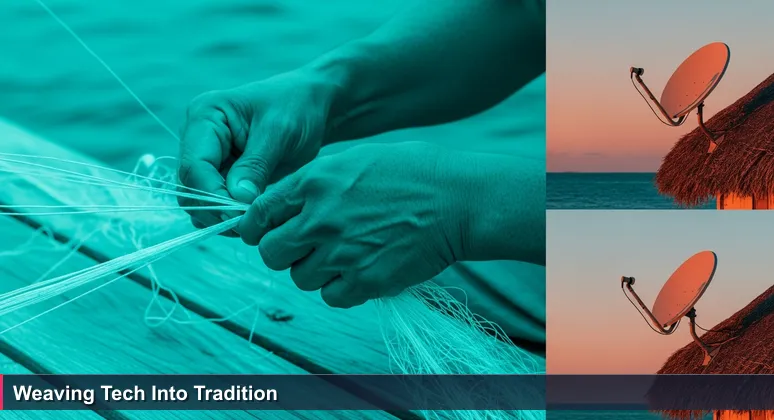
The most important work in Majuro doesn't happen at a standing desk. It happens on a sun-bleached dock, with weathered hands mending fishing nets - a universal act of maintenance, connection, and preparation for the next voyage. This is the rhythm into which our tech ecosystem must be woven.
Standard "Top 10" lists for coworking spaces measure all the wrong things: price per desk, latte quality, and sleek aesthetics. They miss what actually builds a durable tech community in a dispersed, communal Pacific nation. Our metric is different. Here, a hub's value is measured by how well it functions as a modern maneaba - a community meeting house for navigating digital currents.
As of 2026, this navigation is powered by two transformative forces: the landmark IOKWE Cable Project providing redundant, high-speed connectivity, and ubiquitous Starlink integration offering 99.9% uptime to remote atolls. Simultaneously, the U.S. diplomatic focus is shifting, as noted in trends toward "investment over aid" for Pacific infrastructure.
This list, therefore, ranks not commercial chains, but strategic community nodes. It is a map for freelancers in Majuro, climate-tech practitioners on outer atolls, and students building apps for our maritime industry - guiding you to the spaces that best connect opportunity, skill, and community.
Table of Contents
- Navigating Our Nets
- USP Innovation Hub
- CMI Innovation Academy & Business Incubator
- Smart Island Digital Hubs
- OCIT
- RECO
- Hubs of Island Innovation Mobility Program
- The Virtual Hub Network
- The Future Trade
- USP Campus Lodge
- Community Manpower Training Centers
- Is a Coworking Space Worth It
- Looking Beyond Our Shores
- Frequently Asked Questions
This comprehensive guide to AI careers in the Marshall Islands covers everything from skills to salaries.
USP Innovation Hub
Positioned at the University of the South Pacific's Majuro Campus, this hub is the primary node of the Pacific Regional Innovation Network (PRIN), a regional initiative dedicated to building "the Pacific future we want." It serves as a direct conduit to regional funding, expertise, and the Sustainable Development Goals agenda, operating less like a rental office and more like a sponsored mission control for development-tech.
Access is typically free or low-cost for participants in its structured programs, which include flagship Youth Co:Lab workshops and hackathons focused on social entrepreneurship. With secure 24/7 access and enterprise-grade ICT infrastructure, it provides a professional base for developing solutions in climate resilience, digital governance, and health tech. For the AI/ML professional, this is the critical intersection to meet officers from NGOs and government ministries who sponsor data-driven contracts for Pacific challenges.
The hub’s strength is its institutional network. It operates as the USP Innovation Hub in partnership with global organizations, having been launched with UNDP support to turn academic insight into actionable community projects. This makes it the top choice for founders whose business models align with regional grant mechanisms and who need to embed their work within a policy-aware framework.
The vibe is academic and globally connected, a place where a conversation over coffee can link a developer's algorithm to a UNDP-funded project monitoring coastal erosion. It’s the definitive starting point for social entrepreneurs and tech practitioners aiming to scale their impact across the Pacific.
CMI Innovation Academy & Business Incubator
If the USP Hub is the regional gateway, the College of the Marshall Islands' Innovation Academy & Business Incubator is the homegrown talent engine. It symbolizes a strategic shift toward professionalizing the local IT workforce, blending entrepreneurship with Marshallese culture through initiatives like its planned Business Incubator Café.
Its power lies in hyper-local connectivity. The hub is tightly linked to key employers like the Marshall Islands National Telecommunications Authority (MINTA) and the RMI National Government, creating a direct pipeline for internships and contract work. For students and freelancers pursuing the accredited Advanced Certificate in ICS Level 2, this space provides the training and peer network to transition into local IT support roles with salaries starting at $25,000-$35,000 USD.
The environment is energetic and student-driven, focused on turning coursework into tangible solutions for Marshallese challenges. A practical strategy is to use this hub to build a portfolio project that addresses a specific pain point for a local ministry or MINTA - such an project often becomes the most compelling credential during job interviews.
This incubator is ideal for student entrepreneurs and local freelancers seeking to root their tech careers in the Marshall Islands. It represents the crucial, on-ramp where academic theory meets the practical demands of our island's digital infrastructure and public sector.
Smart Island Digital Hubs
For tech professionals on the outer atolls, the Smart Island Digital Hub model, pioneered on Jaluit Atoll, is a community-wide catalyst. As educators note, these hubs are about bringing "modern technology to the island," fundamentally bridging the digital divide and mitigating the professional isolation that once required relocation to Majuro.
Their core utility is providing a reliable, Starlink-powered workspace with 99.9% uptime, transforming a local community center into a portal to the global digital economy. This is revolutionary for freelancers servicing the maritime or fisheries sectors, enabling them to contract for entities like the Marshall Islands Ship Registry or international fishing companies while remaining connected to their home island and culture.
The vibe is communal and resilient, focused on grassroots digital literacy and remote work. It represents a strategic shift from a Majuro-centric tech ecosystem to a distributed network of innovation nodes across the archipelago. For developers or data analysts on remote atolls, this hub is not just a desk; it's an essential piece of infrastructure that turns geographic challenge into sustainable opportunity.
OCIT
Located in the MIDB Building, the Office of Commerce, Investment & Philanthropy (OCIT) is less a daily hot-desking venue and more a professional anchor for high-stakes deal-making and business development. It serves as a critical, formal node for understanding the fiscal landscape and connecting with incoming capital and major project leads.
This space is designed for strategic facilitation. As the broader diplomatic focus in the region shifts, as tracked by analyses of "investment over aid" for Pacific islands, OCIT is where you connect with infrastructure investors, cable network consortia, and newly arriving private capital. It is the venue for formal meetings, structured networking events, and gaining intelligence on the investment climate.
The vibe is distinctly corporate and strategic, catering to established founders seeking seed or growth funding, consultants working on major infrastructure projects, and legal or financial professionals interfacing with the shipping registry and banking sector. It is not where you code all day, but where you secure the partnerships and funding that allow that work to scale.
A practical tip for 2026 is to actively monitor OCIT's event calendar. Attending these functions is the most direct way to engage with the shift from development grants to private investment, positioning your tech venture within the new wave of economic strategy for the Marshall Islands.
RECO
The Research Education Community Organization (RECO) represents where technology directly meets environmental stewardship. This NGO-led space is dedicated to citizen science and technical training, creating a vital lab for developers and data scientists focused on the Marshall Islands' most pressing challenges: climate analytics, ocean health monitoring, and sustainable fisheries management.
Unlike generic incubators, RECO’s vibe is collaborative and mission-driven, attracting professionals who want their code to have tangible ecological impact. It's the intersection where environmental tech and research converge, fostering projects that might involve AI models for predicting coral bleaching or data platforms for tracking fish stocks. Collaborations forged here frequently lead to contracts with regional environmental organizations and grant-funded research projects.
A key strategic advantage is RECO's alignment with major funding opportunities. Projects prototyped in this hands-on environment can become strong entries for competitions like the 2026 Innovation Challenge, which targets digital transformation in health and social care - areas deeply connected to environmental well-being. For data scientists and developers, this hub offers a unique pathway to build a portfolio that is both technically sophisticated and critically relevant to the Pacific's future.
Hubs of Island Innovation Mobility Program
The Hubs of Island Innovation Mobility Program represents a different class of hub altogether: it's an intensive, regionally mobile fellowship rather than a fixed physical desk. This 6-month program combines a 10-week online course with a 2-month in-person placement at a leading Pacific institution, making it arguably the most powerful incubator available for serious practitioners.
The model is designed for depth over daily convenience. The cost is measured in committed time rather than dollars, with the return being unparalleled regional connectivity, specialized mentorship, and immersive skill-building. It directly tackles the archipelagic reality by building a pan-Pacific professional network that extends far beyond any single island's shores.
This program is the top choice for climate-tech entrepreneurs and AI specialists focusing on adaptation and resilience. The vibe is intensive and immersive, suited for those making a mid-career pivot into impact-driven tech. It’s a career-defining asset that positions participants within a vanguard of innovators addressing systemic challenges across the region.
The practical value lies in its function as a direct pipeline. Completion of the fellowship integrates you into the permanent Hubs of Island Innovation network - a community of practice that continues to provide peer mentorship and collaborative opportunities long after the program ends, effectively giving you a professional anchor in multiple Pacific locations.
The Virtual Hub Network
The most profound shift in the Marshall Islands' tech landscape is the emergence of the Virtual Hub Network, powered by the expansive coverage of Starlink. This model liberates talent from the necessity of being in Majuro, effectively allowing your "coworking space" to be any reliable power source on an outer atoll, from Arno to Ebeye. The primary amenity is connectivity, with Starlink now delivering consistent 99.9% internet uptime.
This setup is a game-changer for remote employees of international firms and freelancers with stable overseas clients. The monthly investment for hardware and service (approximately $100-$150 USD) is often offset by eliminating costly and irregular inter-island travel. As highlighted in local reporting on the "technology fix for outer islands," this connectivity allows professionals to maintain careers while staying rooted in their home communities.
The vibe is independent, flexible, and self-directed. Your community becomes the digital network you cultivate through online Pacific tech forums and Slack groups. For a maritime AI developer in Jaluit or a data entry specialist in Kwajalein, this virtual hub is the ultimate tool for professional autonomy, turning geographic isolation into a sustainable, global work-from-home advantage.
The Future Trade
Located on Ajeltake Island within the Trust Company Complex, The Future Trade is a boutique professional suite known for its transparency and discreet, corporate environment. It represents a strategic middle ground for businesses that have outgrown a home office but do not yet require - or cannot justify - the overhead of a large, dedicated staff space.
This hub specifically caters to established consultants, fintech startups, legal tech operations, and maritime services firms. Its value proposition is centered on providing a credible, professional address for entities that frequently interface with the formal sectors of banking, international finance, and the Marshall Islands Ship Registry. The vibe is discreet, professional, and boutique, designed for focused deal-making rather than communal brainstorming.
A key practical advantage is the credibility a physical address here confers. For a local fintech startup negotiating with an overseas partner or a legal consultant processing ship registry documents, operating from The Future Trade lends immediate professional legitimacy. It signals stability and seriousness in industries where trust and formality are paramount, effectively serving as a strategic business asset in its own right.
USP Campus Lodge
Praised for its "breathtaking lagoon views" and reliable Wi-Fi, the USP Campus Lodge in Majuro operates as a unique hybrid - part accommodation, part informal academic crossroads. While not a traditional incubator with dedicated desks, its value lies in being a tranquil, professionally oriented retreat where the lines between lodging, office, and networking venue gracefully blur.
With daily or weekly rates, it serves as an ideal "pop-up" office for visiting tech consultants, academics on research trips, or digital professionals on short-term contracts for government or NGO projects. The environment fosters unexpected collaboration; conversations over breakfast or in common areas overlooking the lagoon can naturally evolve into connections with regional experts, USP faculty involved in ICT research, and project leads visiting from across the Pacific.
The vibe is tranquil, academic, and informally collaborative. It’s best utilized by those who understand that opportunity often emerges outside formal meetings. A strategic approach is to proactively use your stay to schedule casual chats with resident scholars, turning a beautiful view into a conduit for professional relationships that could shape a climate-data project or a new digital governance initiative.
Community Manpower Training Centers
Often overlooked in discussions of tech hubs, the Community Manpower (MOM) Training Centers scattered across the islands are grassroots incubators in the truest sense. These vocational centers are increasingly integrating basic digital literacy and IT support training into their programs, creating a low-barrier entry point for micro-entrepreneurs and community-focused startups.
The value here is hyper-local practicality. These centers offer low-cost access to facilities, local mentors, and most importantly, a direct, visceral understanding of community needs. The vibe is vocational and hands-on, focused on building tech-enabled service businesses that solve immediate, tangible problems - like a digital booking system for inter-atoll transport or a spare parts inventory app for local boat mechanics.
This model is crucial for sustainable outer-island development. Instead of chasing global scalability, ideas born here prioritize local viability and resilience. A simple, well-executed solution addressing a specific atoll's challenge can become a sustainable business, keeping economic benefits within the community. These centers exemplify the principle that in the Marshall Islands, the most impactful tech hubs aren't always the most high-tech, but those most deeply embedded in the social and economic fabric of daily life.
Is a Coworking Space Worth It
For the Early-Stage Founder
The answer is a definitive Yes. The structured support, mentorship, and direct grant-access pathways offered by subsidized hubs like the USP Innovation Hub or the CMI Incubator are invaluable. The potential cost (often minimal) is far outweighed by the network and credibility gained, which are critical for securing initial funding and pilot projects within the close-knit island economy.
For the Freelancer
It depends entirely on your client base. If you seek local contracts and community to combat isolation, a part-time presence at CMI or a Smart Island Hub is wise. If your clientele is entirely overseas, your investment is better placed in a robust Starlink setup and memberships in online communities. Consider upskilling through flexible, affordable programs like an AI bootcamp to remain competitive in the global remote market.
For the Government/NGO Employee
Yes, selectively. Hubs like USP or RECO act as extensions of your professional network, ideal for cross-sector collaboration on digital public-service projects. They are venues to connect with technical talent and innovative approaches that can be integrated into ministry work, especially as projects align with regional development goals and partnerships like those with UNDP-Pacific initiatives.
For the CMI Student
Absolutely. Your campus hub is your greatest unpaid career advisor. It’s the place to transform coursework into portfolio projects, connect with internships at MINTA or the national government, and meet peer co-founders. Engaging here is the most direct route to transitioning into the local tech workforce, where foundational IT roles offer a critical career launchpad.
Looking Beyond Our Shores
While our local ecosystem is rapidly maturing, certain career stages or project types may benefit from engaging with larger regional hubs. The decision hinges on your need for venture capital, a dense talent pool, or specific industry networks not yet fully developed at home.
| Feature | Marshall Islands (Majuro) | Suva, Fiji | Honolulu, Hawai‘i |
|---|---|---|---|
| Ecosystem Maturity | Emerging; NGO/University-led. | Robust; regional center for Pacific innovation. | Mature; venture-backed hubs and corporate labs. |
| Primary Hub Example | USP/CMI Innovation Hubs. | USP Laucala Campus, Greenhouse Co-working. | Hub Coworking, Entrepreneurs Sandbox. |
| Connectivity | Starlink/MINTA Fiber; high reliability. | Regional Hub Fiber; high-speed 4G+/5G. | Tier 1 Global Fiber; 5G standard. |
| Approx. Cost (Dedicated Desk) | Often program-subsidized. | $100-$250 USD/month | $300-$500 USD/month |
Choose Suva, Fiji for a more mature, venture-connected environment at a lower cost while staying within the familiar cultural and professional networks of the Pacific. It's an excellent step for scaling a venture that has outgrown the RMI market.
Choose Honolulu, Hawai‘i for deep venture capital access and a direct bridge to the U.S. and Asian markets, but be prepared for significantly higher living and operational costs.
For most Marshall Islanders in 2026, however, the unique advantage remains here at home. It is the ability to develop, pilot, and refine technology solutions for the singular challenges of the Pacific - from maritime AI to climate resilience - within the very communities that will use them. Our most valuable hubs succeed by acting not just as workspaces, but as modern maneabas for building a digital future grounded in our specific context.
Frequently Asked Questions
What criteria did you use to rank the top tech coworking spaces in the Marshall Islands?
We ranked spaces based on their ability to connect you to opportunities, skills, and community, especially for AI and tech careers in our island context. This includes factors like stability for public-sector links in hubs like USP Innovation Hub, or flexibility for remote workers using Starlink on outer atolls.
Are there any affordable coworking options for freelancers or students in Majuro?
Yes, spaces like the USP Innovation Hub and CMI Innovation Academy often offer free or low-cost access through programs, ideal for those building local projects. For example, CMI links to IT roles with salaries starting at $25,000-$35,000 USD, making it a cost-effective choice for skill development.
Which coworking space is best for someone working on AI or maritime tech projects?
The USP Innovation Hub is top for AI professionals as it connects to regional grants and data-driven solutions for Pacific challenges. For maritime tech, Smart Island Digital Hubs on outer atolls let you work remotely with reliable Starlink, perfect for contracts with the Ship Registry or fisheries.
How reliable is the internet in coworking spaces, especially for remote work from outer islands?
Internet reliability has improved significantly; for instance, Smart Island Hubs offer 99.9% uptime with Starlink, enabling stable work from places like Jaluit. This supports freelancers in tech roles without needing to relocate to Majuro for connectivity.
What are the costs involved in using tech coworking spaces in the Marshall Islands?
Costs vary widely: government-led hubs like USP are often subsidized, while grassroots spaces like the Virtual Hub Network require a Starlink setup at about $100-150 USD monthly. Compared to regional options, local spaces offer unique value for community-focused tech innovation.
For an analysis of the Majuro cybersecurity job market in 2025, refer to this article.
Explore tech training at libraries in the Marshall Islands for community learning.
Navigate your career path with this guide to finding junior developer roles at best Marshall Islands startups for 2026.
Find the best tech opportunities in the Marshall Islands ranked by local access and mentorship in this comprehensive list.
For a detailed guide on how to become an AI engineer in the Marshall Islands in 2026, this article is invaluable.

Irene Holden
Operations Manager
Former Microsoft Education and Learning Futures Group team member, Irene now oversees instructors at Nucamp while writing about everything tech - from careers to coding bootcamps.