









How to Become an AI Engineer in the Marshall Islands in 2026
By Irene Holden
Last Updated: April 18th 2026
Quick Summary
To become an AI engineer in the Marshall Islands by 2026, follow a structured path like the 12-month balanced track, mastering Python and local projects such as a Tide Data Analyzer to solve real-world issues in fisheries and climate. Leverage resources like the College of the Marshall Islands and bootcamps such as Nucamp's Solo AI Tech Entrepreneur program, which costs $3,980, to build a portfolio that appeals to employers in government and maritime sectors. By focusing on practical, low-bandwidth solutions, you'll be ready to contribute to our islands' digital transformation by the target date.
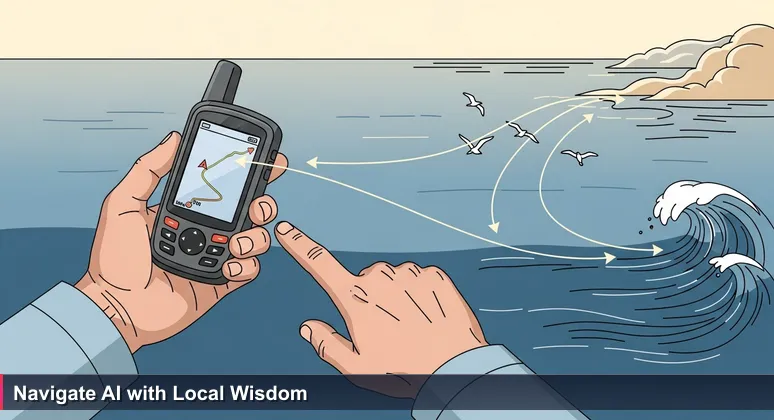
Every Marshallese navigator knows a GPS coordinate is just a suggestion. The real route is written in the currents, the seabirds, the feel of the swell beneath the canoe. Today, the journey to becoming an AI engineer in our islands demands that same dual mastery of global knowledge and local understanding. It's about applying a wave piloting mindset to your education.
The opportunity is not distant but immediate. By 2026, a new divide in tech will form, "not by who adopted AI, but who made it work in practice" as noted in a Databricks industry trend report. This is our strategic edge. With the right skills, AI can help ease long-standing labor challenges and unlock inclusive economic growth across our region.
"Used wisely, AI can ease long-standing labour challenges and unlock inclusive economic growth across the Pacific." - Islands Business Report
For Majuro and the outer atolls, this means building the te etto - people of genuine skill - who can deploy intelligent systems on low-bandwidth connections, analyze satellite data for fisheries, and support our vital maritime industries. Your context, once seen as a constraint, is your greatest source of innovation and purpose in the global AI landscape.
Steps Overview
- The Navigator's Path to AI Excellence
- Prepare Your Tools for the Voyage
- Choose Your Ideal Learning Pace
- Master Data Manipulation Basics
- Learn Core Machine Learning Skills
- Specialize in AI for Atoll Environments
- Build a Compelling AI Portfolio
- Verify Your AI Readiness
- Chart Your Course to AI Impact
- Common Questions
This comprehensive guide to AI careers in the Marshall Islands covers everything from skills to salaries.
Prepare Your Tools for the Voyage
Just as a navigator prepares their canoe and charts, beginning your AI journey requires gathering the right tools and setting up your digital workspace. In Majuro, your laptop and internet connection are your laboratory, making initial setup critical for success.
Start with core hardware: a reliable laptop with at least 8GB of RAM is essential for running data analysis and machine learning code. A stable, though sometimes intermittent, internet connection will be your link to global knowledge and cloud resources.
Your essential software toolkit must include:
- Python: The primary language of AI and data science.
- Git: For version control, allowing you to track changes and collaborate.
- A Code Editor: VS Code is a powerful, free option used by professionals worldwide.
Your most valuable local resource is structured education. Enrolling in a course like ICS 203: Programming with Python at the College of the Marshall Islands (CMI) provides a foundational community and curriculum. For professional certifications, you can explore AI Foundation Training in Majuro to build accredited credentials.
Learning to use these tools professionally from day one - managing Python environments, organizing code with Git - ensures your work is reproducible and ready to share with potential employers like a government ministry or a remote tech team, transforming your laptop into a true engine of innovation.
Choose Your Ideal Learning Pace
Setting a sustainable pace is crucial; a consistent, manageable rhythm leads to deeper mastery than a frantic sprint that burns out. Your ideal track depends on your current responsibilities - whether you're balancing a job at the Ministry, family duties, or other commitments.
The global competitive edge lies in practical implementation, not just theoretical knowledge. As highlighted in a guide on launching an AI career, employers value the ability to make AI work in practice. Choosing a pace that allows for hands-on project work is therefore a strategic investment.
| Track | Timeline | Weekly Commitment | Best For |
|---|---|---|---|
| The Intensive Voyage | 6 Months | 30+ hours | Treating learning as a full-time job; aligns with a structured 25-week bootcamp like the Solo AI Tech Entrepreneur program. |
| The Balanced Passage | 12 Months | 15-20 hours | Most learners balancing work or family; allows for deeper understanding and local project development. |
| The Part-Time Exploration | 24 Months | 10-15 hours | Those with significant commitments; emphasizes gradual, foundational mastery and skill integration into a current role. |
Structured programs can accelerate this journey. For example, a 25-week bootcamp focused on building AI products offers a guided, intensive path for aspiring entrepreneurs. The key is honest self-assessment - starting with a pace you can maintain ensures you build the resilient, practical skills that our local employers and communities need.
Master Data Manipulation Basics
Your first three months are about constructing an unshakable foundation, the strong keel upon which all advanced AI work will be built. This phase focuses on mastering the tools to collect, clean, and understand data - the essential fuel for any intelligent system.
The core milestones are practical: writing Python scripts to automate tasks, manipulating datasets with Pandas, and creating basic visualizations. In our context, this means starting with local data, such as publicly available tidal information for Majuro Lagoon or historical fisheries catch records.
Your most strategic local move is to enroll in ICS 203: Programming with Python at the College of the Marshall Islands (CMI). This structured course provides the guided practice and community support crucial for early success. Complement this with online platforms that offer Python and data science fundamentals.
Pro Tip: Build your first project with immediate local relevance. Create a "Tide Data Analyzer" that loads CSV data, calculates average high and low tides, and identifies days with extreme tidal ranges. This applies your new skills to community planning and coastal management, proving you can handle locally meaningful data from the start.
Warning: A common mistake is trying to jump directly into deep learning or AI chatbots. Without solid data manipulation skills, you cannot build or understand the models that power them. Master the basics of handling our local data first; this practical discipline is what transforms a student into a te etto of the digital age.
Learn Core Machine Learning Skills
With data manipulation skills secured, you now learn the core grammar of machine learning - the algorithms and mathematics that find patterns and make predictions. This phase, spanning months 4-9, transitions you from handling data to teaching computers how to learn from it.
The primary milestone is building and evaluating your first predictive models using the scikit-learn library. Focus on mastering its consistent API for algorithms like Linear Regression and Decision Trees. Crucially, you must learn model evaluation metrics - Mean Squared Error, Accuracy, Precision/Recall - to quantitatively know if your model is reliable.
Pro Tip: Apply these concepts directly to our most vital industry. Build a Catch Prediction Prototype using scikit-learn to forecast approximate tuna catch volumes based on historical seasonal data. This project teaches you the full pipeline: data cleaning, feature selection, training, and evaluation, all within a context that matters locally.
Regional education pathways support this specialization. You can pursue advanced knowledge through a Diploma in Artificial Intelligence offered by the University of the South Pacific, accessible via its Majuro centre. This aligns with the global trend where successful AI engineers often pivot from other fields, emphasizing that a functional, project-based understanding of these algorithms is more critical than a traditional computer science degree alone.
Remember, the goal is a practical, working knowledge. Use libraries like NumPy to apply linear algebra concepts and scikit-learn to implement algorithms. Don't get bogged down in deriving every formula; focus on understanding what each model does, when to use it, and how to interpret its results for a Marshall Islands context.
Specialize in AI for Atoll Environments
This is where you transition from following a global map to true wave piloting. Specialization for months 10-18 means focusing on the skills that matter for our region's infrastructure, deploying AI where the map says it shouldn't work - on low-bandwidth connections and remote atolls.
The core milestone is building and deploying a deep learning model using frameworks like TensorFlow or PyTorch. The critical skill, however, is learning to optimize and containerize these models for edge devices or intermittent connectivity, using tools like Docker. This directly addresses the needs of employers from Kwajalein contractors to the Marshall Islands National Telecommunications Authority (MINT).
Build for Local Impact
Your specialization projects must scream "Marshall Islands." Consider a Coastal Erosion Monitor that uses a pre-trained deep learning model for image segmentation to measure coastline changes from satellite imagery. Or, design a reinforcement learning model to optimize inter-island shipping routes for fuel efficiency. These projects demonstrate you can apply cutting-edge AI to our most pressing climate and logistical challenges.
Ground Your Work in Ethics
Specialization also means understanding the ethical implications of AI systems. Engaging with AI Ethics training available in Majuro ensures your solutions are responsible and trustworthy. As Pacific nations move from talking about potential to building real-world solutions, your ability to navigate both the technical and ethical currents becomes your defining professional edge.
This phase requires moving beyond tutorials to independent problem-solving. It’s about proving you can make AI work in practice within our unique constraints, building the robust, practical expertise that will define the next generation of digital leaders in our islands.
Build a Compelling AI Portfolio
Your portfolio is your seaworthy walap - the vessel that carries your skills to employers at the Marshall Islands Shipping Corporation, a government ministry, or a remote tech firm. It must demonstrate both technical capability and deep contextual understanding of our islands' needs.
Build this portfolio with 3-4 polished projects hosted on GitHub, your professional homepage. Crucially, each project must move beyond generic tutorials. Replace common datasets with local ones: analyze public fisheries data, process satellite imagery for erosion, or simulate logistics for inter-island shipping. Even with messy or limited local data, the effort tells a powerful story about your initiative and problem-solving mindset.
Master the art of storytelling through clear documentation. Every README file should explain not just the "how" of your code, but the "why" for the Marshall Islands. What local challenge does it address? What constraints like bandwidth or data scarcity did you overcome? This narrative turns a technical project into compelling evidence of your value.
Structured learning can accelerate this process. For example, a 25-week bootcamp like the Solo AI Tech Entrepreneur program focuses on building and shipping AI products, providing the curriculum and cohort support to develop portfolio-worthy projects efficiently. Such programs, designed for accessibility with tuition around US$3,980 and flexible payments, offer a direct route to the practical, "make it work" expertise that defines a compelling portfolio for our region's digital transformation.
Verify Your AI Readiness
Success is not marked by a certificate of completion but by tangible evidence that you can navigate real-world challenges. In our islands, where lean teams and unique constraints define the work, verification comes from demonstrating practical, contextual mastery.
Your readiness is confirmed by four key markers. First, you possess a "local-first" portfolio on GitHub with projects addressing fisheries analytics, climate monitoring, or atoll logistics. Second, you can knowledgeably discuss technical trade-offs, explaining why a simpler, efficient model for edge deployment might be better than a complex cloud solution given our connectivity realities.
Third, you have built in public, using platforms like LinkedIn to articulate your journey and insights about AI in the Pacific context. This showcases communication skills and thought leadership. Finally, you are prepared for our specific market, understanding that local employers from the Ship Registry to public-sector ministries need multi-disciplinary problem-solvers who can handle data engineering, basic IT, and ethical considerations.
This comprehensive readiness aligns with the global shift where the industry divide is between those who adopted AI and those who made it work in practice. For the Marshall Islands, making it work means your skills are not just theoretically sound but are honed to create impact within the rhythms and resources of our atoll communities, proving you are a true te etto for the digital age.
Chart Your Course to AI Impact
The journey concludes where it began: with the navigator's wisdom. You are not just following a global map to become an AI engineer; you are mastering the dual arts of trusting external tools while reading the deeper currents of our islands' needs, infrastructure, and opportunities. This is the path of the modern te etto.
Your greatest advantage is your context. As the global industry segments between those who adopted AI and those who "made it work in practice," your focus on deploying models for low-bandwidth atolls, analyzing local fisheries data, and optimizing island logistics becomes your strategic edge. This is the wave-piloting skill for the digital age.
The impact is tangible and close to home. The skills you build can support the data needs of the Marshall Islands Ship Registry, help a ministry monitor coastal erosion, optimize supply chains for local businesses, or enable remote work with global firms. As global experts note, every nation is developing its sovereign AI strategy; your journey contributes directly to ours.
Start by building for the atoll. Let the unique challenges of our seas, our communities, and our future be your source of innovation. The world, in time, will learn to navigate by the stars you chart.
Common Questions
Is it realistic to pursue an AI engineering career in the Marshall Islands by 2026?
Yes, it's very realistic. The Marshall Islands has growing demand in sectors like fisheries and government ICT, with employers seeking practical AI solutions. Bootcamps like Nucamp offer accessible training, such as courses starting at US$2,124, tailored for our Pacific context.
What salary can I expect as an AI engineer in Majuro?
Entry-level AI roles in Majuro might start around US$30,000 to US$40,000 annually, with higher earnings in public-sector or maritime industries like the Ship Registry. As ICT grows, salaries are expected to become more competitive by 2026.
Do I need a university degree to start learning AI here?
No, a formal degree isn't required. You can begin with online resources and local courses like ICS 203 at the College of the Marshall Islands. Focus on building hands-on projects with local data to demonstrate your skills to employers.
How can I gain practical experience with AI projects relevant to our islands?
Work with local datasets, such as fisheries catch or climate data, on projects like a tide analyzer or coastal erosion monitor. This shows you can solve real-world problems, which is key for jobs in sectors like maritime and government here.
Are there any structured programs or bootcamps available in the Marshall Islands for AI learning?
Yes, programs like Nucamp's Solo AI Tech Entrepreneur Bootcamp, costing US$3,980, are designed for Pacific learners and focus on practical skills. They help you build a portfolio with local impact, preparing you for the 2026 job market in Majuro.
Read an expert ranking of tech collaborative spaces in the Marshall Islands, emphasizing local advantages and growth.
The top 10 AI startups to watch in the Marshall Islands in 2026 are highlighted in this article.
Learn about strategic AI education pathways from the Marshall Islands to boost careers in tech and fisheries.
This piece explores whether the Marshall Islands is ideal for tech careers in 2026 with local insights.
This guide covers all funding sources for tech education in the Marshall Islands in 2026, including scholarships and grants.

Irene Holden
Operations Manager
Former Microsoft Education and Learning Futures Group team member, Irene now oversees instructors at Nucamp while writing about everything tech - from careers to coding bootcamps.