









Top 10 Industries Hiring AI Talent in Tonga Beyond Big Tech in 2026
By Irene Holden
Last Updated: April 25th 2026
Too Long; Didn't Read
Healthcare and fintech lead Tonga's AI job market in 2026, with salaries from 25k to 160k TOP, but the real edge comes from domain expertise - doctors, bankers, and farmers who understand local workflows beat pure coders. These industries are hiring because AI directly solves Tonga's unique problems: expanding rural healthcare access, detecting fraud in small financial datasets, and sustaining fisheries and energy grids.
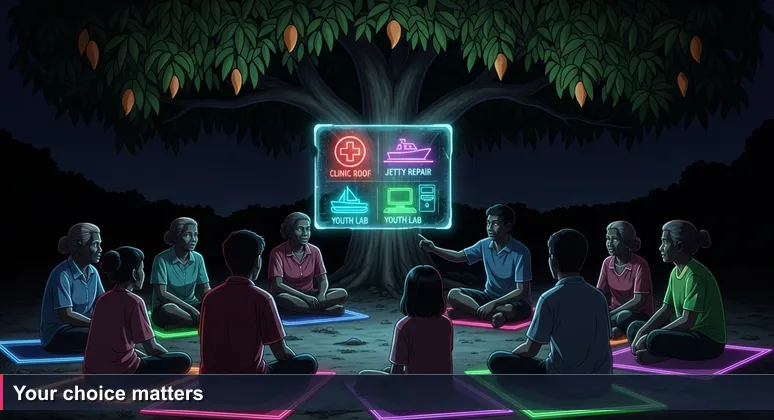
Picture a whiteboard under a large mango tree outside a community hall in Nuku'alofa. A facilitator lists six priorities - clinic roof repairs, a new youth computer lab, drainage for the market, jetty upgrades, solar panels for the primary school, and a village emergency fund. Villagers debate, then vote. Only three projects will receive funding this year. This is how real decisions get made in Tonga: not through outside rankings or global trend reports, but through knowing what matters to your community.
The same principle applies to building an AI career here in 2026. The global narrative says AI jobs belong to big tech companies in San Francisco, Singapore, or Auckland. But for Tongan professionals, the real opportunities sit closer to home - in sectors that power our islands every day. From fisheries monitoring in Neiafu to smart grid management at Tonga Power, from fraud detection at Tonga Development Bank to telemedicine rollouts for outer island clinics. As local conversations on the Tonga AI strategy forum reveal, the urgent question isn't whether AI will arrive - it's who will shape it for Tongan contexts.
This list is not a ranking of "best" industries in some absolute sense. It is a map of where the demand actually lives, organised by relevance, growth trajectory, and real hiring signals from employers including Digicel Tonga, the Ministry of Health, and the Tonga Development Bank. Your choice depends on your background, your curiosity, and where you want your work to land. For those ready to start mapping, the Tonga Public Service Commission vacancy page is one practical place to see which ministries are already building AI-ready teams. The whiteboard is waiting.
Table of Contents
- Foreword: Community-Driven AI Careers in Tonga
- Tourism & Hospitality
- Government & Public Sector
- Logistics, Shipping & Ports
- Education & Research
- Telecommunications & Infrastructure
- Energy & Utilities
- Agriculture & Agri-Tech
- Fisheries & Aquaculture
- Fintech & Banking
- Healthcare & Medical Services
- Beyond the Ranking: Your Map, Not Theirs
- Frequently Asked Questions
Discover how Tonga's digital ID and e-government create demand for AI talent in the complete guide to AI careers in Tonga.
Tourism & Hospitality
Tonga welcomed approximately 94,000 visitors in 2024, but the industry's chronic seasonality creates a distinct AI challenge. The Vava'u whale season runs July to October, Ha'apai ferry schedules are weather-dependent, and most bookings still happen via Facebook Messenger rather than a website. Generic demand-forecasting models fail here because the dataset is small - unlike Fiji's mass tourism - so domain knowledge matters more than pure ML engineering. Understanding that cancellations spike during cyclone months or that overbookings cluster around the Heilala Festival is what separates a useful model from a misleading one.
Tools like ChatGPT's API for reservation chatbots and simple Excel-based forecasting models are already in use at properties such as Tanoa International Dateline Hotel. The technical barrier to entry is intentionally low. Digital Marketing Analysts (Junior: 15k-25k TOP), Revenue Management Specialists (Mid: 30k-50k TOP), and Customer Experience Directors (Senior: 60k-85k TOP) are the typical roles, and none require a data science degree. According to Matangi Tonga's business coverage, hospitality digitisation projects often struggle to find local candidates with even basic AI literacy - meaning the competition is minimal.
If you are already working at the Tonga Visitors Bureau or a boutique resort across Vava'u or Ha'apai, adding AI skills positions you as the go-to person for optimisation projects that would otherwise require hiring from overseas. Salaries sit at the lower end of this list, but the trade-off is clear: you build experience with real, messy, small-island data that no global model understands. As generative AI tools become cheaper and more accessible, the personalisation trends reshaping tourism worldwide will reach Tonga's shores - and those who start now will write the playbook.
Government & Public Sector
Tonga's Public Service Commission processes thousands of applications for permits, passports, and business registrations each year. By 2026, the government is piloting "Agentic AI" - systems that automate routine citizen queries and flag cases requiring human judgment. The Ministry of Finance is simultaneously deploying AI to detect budget anomalies and improve tax compliance. These are not speculative experiments; they are operational pilots driven by the reality that manual processing cannot keep pace with a growing, digitally-connected population.
This sector demands mission-driven professionals who understand data sovereignty and government processes. Tonga's data is small, sensitive, and culturally significant - especially around land records, genealogies, and disaster recovery information. As the OECD's report on building an AI-ready public workforce notes, small island states must prioritise ethical compliance and data governance above raw innovation. You do not need to be a programmer. The real demand is for people who can translate government workflows into AI requirements without breaking privacy laws.
"Small island states need to prioritise data sovereignty and ethical compliance above raw innovation." - OECD, Building an AI-Ready Public Workforce
Typical roles include Data Protection Officers (Junior: 20k-35k TOP), Digital Transformation Leads (Mid: 45k-70k TOP), and Strategy Directors (Senior: 80k-130k TOP). Bureaucracy is real - projects move slowly, budgets depend on international donors, and job security is high but pace is low. However, the ceiling is rising. According to Deloitte's 2026 government trends analysis, significant public-sector AI roles tied to personalised service delivery are projected to expand faster than any other government function. Employers include the Tonga Public Service Commission, Ministry of Finance, Ministry of Internal Affairs, and regional bodies like the Pacific Islands Forum Secretariat.
Logistics, Shipping & Ports
Over 95% of Tonga's goods arrive by sea, making the wharves at Nuku'alofa and Neiafu the kingdom's economic lifelines. Ports Authority Tonga manages a constant flow of containerised cargo, fuel shipments, and food imports - but delays from weather, port congestion, or customs processing ripple through the entire economy. AI route optimisation and real-time inventory tracking are now being tested to reduce demurrage charges and predict supply chain bottlenecks before they cascade into shortages on outer islands.
The Pacific shipping network is fragile. Unlike Auckland's automated terminals, Tonga relies on a mix of large international vessels and small inter-island ferries that must navigate cyclone season, limited cold chain infrastructure, and suppliers who often operate without digital systems. This is not a sector for generic AI solutions; it demands professionals with maritime or logistics experience - port operators, shipping agents, customs brokers - who can train models on the peculiarities of Tonga's trade flows. According to Codewave's analysis of AI adoption across industries, logistics optimisation is one of the fastest-growing application areas precisely because small inefficiencies compound into major costs in fragmented networks like Tonga's.
Typical roles include Logistics Coordinators (Junior: 22k-35k TOP), Supply Chain Analysts (Mid: 40k-65k TOP), and Port Operations Managers (Senior: 70k-100k TOP). Hiring is moderate, but the sector is essential and recession-resistant - ships will always arrive. Salaries align with mid-tier government roles, and opportunities extend to regional shipping lines operating between Tonga, Fiji, and Samoa. Key employers include Ports Authority Tonga, Dateline Transam, and the major shipping agencies serving the Vuna Wharf and Queen Salote Wharf precincts. Global trade volatility is driving a renewed focus on resilient supply chains, and as industry research on AI in supply chains confirms, the firms that invest early in predictive logistics will weather disruptions far better than those that react after delays hit.
Education & Research
Tonga's education system faces a familiar Pacific challenge: too few specialist teachers, especially for STEM subjects, spread across islands where internet access remains uneven. AI-assisted personalised learning tools are being piloted at Tonga High School and the University of the South Pacific's Tonga Campus to provide customised lesson plans and automate grading for large classes. The Ministry of Education is also exploring generative AI to create Tongan-language learning materials - a task that generic global models cannot perform without local curation. This is not about building models from scratch; it is about adapting existing tools for bilingual classrooms where pedagogy comes first, technology second.
The real opportunity lies in "AI Enablement & Literacy" roles being built into teacher training programmes. Curriculum design must account for students who switch between Tongan and English and for outer island schools where connectivity is intermittent. Educational Technology Assistants (Junior: 18k-30k TOP), EdTech Product Managers (Mid: 35k-55k TOP), and AI Research Leads (Senior: 65k-90k TOP) are the typical roles - each focused on application rather than algorithm design. According to the OECD's analysis of emerging trends in AI skill demand, education is among the sectors where domain expertise consistently outranks pure technical ability in hiring decisions.
- Educational Technology Assistants (Junior: 18k-30k TOP) - support classroom tool deployment and teacher training.
- EdTech Product Managers (Mid: 35k-55k TOP) - adapt platforms for Tongan curricula and bilingual users.
- AI Research Leads (Senior: 65k-90k TOP) - oversee pilot programmes and evaluate learning outcomes.
Salaries are modest, and funding depends on government budgets and donor programmes from partners like the Asian Development Bank. However, job satisfaction is high, and these roles often include opportunities for overseas training and conference attendance. Key employers include the University of the South Pacific (USP) - Tonga Campus, the Ministry of Education, the Tonga Institute of Science and Technology, and vocational training centres across the islands. A live example of this demand appeared in a Matangi Tonga listing for a technical assistance project that sought local professionals with both educational background and digital literacy skills - exactly the hybrid profile this sector rewards.
Telecommunications & Infrastructure
Tonga's internet consumption surged after the completion of the Tonga Cable system, linking the islands to Fiji and beyond. Managing this high-speed data flow requires automated network monitoring, predictive maintenance for undersea cable landing points, and AI-driven fault detection to minimise outages. The geography is extreme - cables run across deep ocean trenches, and an anchor drag or seismic event can silence an entire island group. AI models here must also account for limited local repair capacity and the fact that the infrastructure is directly tied to Tonga's e-government ambitions and international connectivity.
Digicel Tonga is leading this push. As of February 2026, the company is actively hiring AI Cloud Infrastructure Engineers per Matangi Tonga's vacancy listings - roles that demand cloud administration skills (AWS, Azure) and the ability to build automated fault-detection systems. Typical roles across the sector include Network Optimization Analysts (Junior: 30k-45k TOP), AI Cloud Infrastructure Engineers (Mid: 55k-85k TOP), and Chief Technology Officers (Senior: 100k-150k TOP). This sector pays among the best on this list, but the technical bar is higher - you need proven cloud and automation skills. The upside is that Digicel Pacific's featured job board shows opportunities across multiple countries, offering mobility to Fiji, Samoa, and Papua New Guinea.
Entry-level network technicians can upskill into AI-focused positions within 12-18 months. Affordable pathways exist locally: programmes like Nucamp's AI Essentials for Work (15 weeks, 8,955 TOP) or Back End, SQL and DevOps with Python (16 weeks, 5,310 TOP) provide the cloud and automation foundations needed to transition into these mid-career roles. Key employers include Digicel Tonga and Tonga Cable Ltd, with the infrastructure sector serving as the backbone for Tonga's digital future.
Energy & Utilities
Tonga has committed to 100% renewable energy by 2035 - an ambitious target that requires an intelligent grid to balance solar, wind, and battery storage across dozens of islands. Tonga Power Ltd is deploying AI for predictive maintenance on transformers and feeders, load forecasting to prevent blackouts, and integration of household solar panels into the national grid. Each island microgrid has different generation profiles and demand patterns, meaning AI engineers must work with small, fragmented datasets and limited sensor coverage. Domain expertise from existing energy professionals who understand both the physics and the software is invaluable here.
The sector rewards hands-on people who grasp hardware constraints. Typical roles include Smart Grid Technicians (Junior: 30k-45k TOP), Renewables Data Engineers (Mid: 50k-75k TOP), and Utility Systems Architects (Senior: 80k-120k TOP). As Codewave's analysis of AI adoption across industries notes, energy utilities are among the fastest adopters of predictive maintenance AI because equipment failure in remote locations carries outsized costs. This is especially true in Tonga, where sending a repair crew to a distant island takes days, not hours.
- Smart Grid Technicians (Junior: 30k-45k TOP) - install and maintain sensor networks for island microgrids.
- Renewables Data Engineers (Mid: 50k-75k TOP) - build pipelines processing limited but high-value generation data.
- Utility Systems Architects (Senior: 80k-120k TOP) - design the overall AI integration strategy across fragmented grids.
The mission is compelling: you directly contribute to Tonga's energy independence and climate resilience. The Tonga Development Bank has been active in financing renewable projects, creating adjacent AI roles in project evaluation and risk assessment. Key employers include Tonga Power Ltd, Tonga Water Board, and renewable energy consultancies supporting the national energy roadmap. For professionals who want tangible impact - keeping the lights on in Ha'apai or stabilising solar output on Niuatoputapu - this sector offers purpose alongside a solid career trajectory.
Agriculture & Agri-Tech
Climate change is directly threatening Tonga's staple crops - kava, taro, cassava, and squash - as unpredictable rainfall and rising temperatures render traditional planting calendars unreliable. The Ministry of Agriculture, Food and Forests is now using AI to analyse satellite imagery and soil sensor data to predict crop yields, detect pest outbreaks early, and optimise irrigation for smallholder farmers. These are not industrial-scale solutions; family farms dominate Tongan agriculture, and employment in the sector still represents a significant share of the national workforce according to Statbase data on Tonga's agricultural employment.
AI solutions here must be cheap, simple, and work on basic smartphones with intermittent internet access. The real innovation lies in building decision-support tools that function offline and deliver advice in the Tongan language. This sector rewards agricultural extension officers, crop scientists, and farmers who want to bring data-driven thinking to their work. The technical requirements are moderate - basic Python, GIS tools, and an understanding of remote sensing are sufficient to start.
- Agri-Data Analysts (Junior: 20k-32k TOP) - process satellite and sensor data into actionable farm reports.
- Precision Farming Specialists (Mid: 35k-55k TOP) - tailor AI recommendations to specific crops and island conditions.
- Agri-Tech Solutions Architects (Senior: 60k-85k TOP) - design systems that work across Tonga's fragmented agricultural landscape.
Funding is grant-dependent and slow - the Ministry works with international partners like the Food and Agriculture Organization and the Asian Development Bank, so projects can be delayed by procurement cycles. However, the work is deeply meaningful with visible impact on food security and rural livelihoods. Key employers include the Ministry of Agriculture, Food and Forests, local farming cooperatives, and climate resilience NGOs working across Tonga's island groups. As global trends in precision agriculture continue to lower the cost of remote sensing, the gap between what's possible and what's deployed in Tonga will shrink - and those who start building now will shape how those tools serve Tongan farmers.
Fisheries & Aquaculture
Tonga's tuna fishery is a key export earner, but accessing premium markets in the European Union and Japan now demands automated catch monitoring and electronic reporting. The Ministry of Fisheries is deploying computer vision systems on fishing vessels to track species and sizes in real time, while machine learning models predict migration patterns based on sea surface temperature and ocean currents. This is not optional compliance; it is the price of admission to international markets that increasingly require traceability from ocean to plate.
The scale is arresting. The South Pacific Tuna Corporation and regional bodies use AI to monitor exclusive economic zones spanning thousands of square kilometres - waters where illegal fishing remains a persistent threat. As SeafoodSource's analysis of 2026 AI trends in seafood makes clear, catch forecasting and supply chain transparency are no longer competitive advantages; they are requirements for retaining market access. This makes fisheries one of the most exciting AI frontiers in the Pacific, where a single well-built model can protect a multi-million-dollar export industry.
Domain knowledge is prioritised over pure coding ability here. You need to understand tuna biology, fishing vessel operations, and the seasonal patterns of Tongan waters. Typical roles include Fisheries Data Technicians (Junior: 20k-35k TOP), Remote Sensing Analysts (Mid: 40k-65k TOP), and Sustainable Resource Strategists (Senior: 70k-95k TOP). Salaries are moderate, but career mobility is strong: skills transfer directly to roles in Fiji's tuna processing sector, New Zealand's Ministry for Primary Industries, and regional bodies like the Secretariat of the Pacific Community. Key employers include the Ministry of Fisheries, South Pacific Tuna Corporation, and the Forum Fisheries Agency - organisations where your work directly shapes the sustainability of the Pacific's most valuable natural resource.
Fintech & Banking
Tonga is rapidly shifting towards digital payments, with mobile money and online banking adoption accelerating through 2026. Bank of Tonga and Tonga Development Bank are deploying AI for fraud detection, anti-money laundering (AML) monitoring, and credit scoring for borrowers who lack formal credit histories. Predictive models analyse transaction patterns to flag suspicious activity in real time - a critical function as digital payment volumes grow faster than compliance teams can manually review. According to Harrington Starr's analysis of the fastest-growing fintech jobs, risk and compliance AI roles are among the most sought-after globally, driven by regulatory pressure and the sheer volume of transaction data that legacy systems cannot process.
The customer base is small and relationship-driven, which makes this sector uniquely suited to Tongan professionals. Unlike global banks that rely on massive behavioural datasets, Tongan banks must build models that work on limited data - often just account balances, transaction frequency, and remittance patterns from diaspora communities. A banker who understands why a village savings group transfers money on certain days is better positioned than a data scientist who arrives without local context. The Storm2 fintech salary guide for 2026 confirms that risk modelling and AML analysis command premium compensation across the Pacific, with senior roles reaching TOP 110k-160k.
Typical roles include AML Technical Analysts (Junior: 35k-50k TOP), Risk Modelers (Mid: 60k-90k TOP), and Chief AI Officers (Senior: 110k-160k TOP). The work carries real pressure: false positives waste investigator time, but missing a genuine fraud case risks regulatory penalties and customer trust. For professionals looking to transition into these roles, affordable training pathways exist - programmes like Nucamp's Solo AI Tech Entrepreneur bootcamp (25 weeks, 9,950 TOP) or Back End, SQL and DevOps with Python (16 weeks, 5,310 TOP) provide the technical foundation needed to build or deploy fraud detection models. Key employers include Tonga Development Bank, Bank South Pacific (BSP) Tonga, Bank of Tonga, and emerging digital wallet providers positioning themselves in the growing Pacific fintech ecosystem.
Healthcare & Medical Services
Specialist doctors are concentrated in Nuku'alofa, leaving outer island clinics reliant on nurses with limited diagnostic tools. In 2026, Tonga's Ministry of Health is deploying AI to assist with triage in remote health centres - analysing symptoms and vital signs to recommend whether patients need evacuation, a specialist video call, or can be treated locally. Predictive models also forecast disease outbreaks (dengue, leptospirosis) based on rainfall and temperature patterns, giving communities precious lead time to prepare. As the healthcare AI trends for 2026 emphasise, successful implementation requires clinicians who can bridge medical knowledge and technology - not just coders building models in isolation.
What makes Tonga unique is its scale: a single AI tool deployed through the Ministry of Health can reach every clinic in the kingdom, something impossible in larger nations. You do not need a PhD in machine learning to contribute here; you need to understand clinical workflows, data governance, and how a nurse on Niuatoputaru makes decisions with limited supplies. Typical roles include AI Healthcare Analysts (Junior: 25k-40k TOP), Medical Data Scientists (Mid: 45k-70k TOP), and Health Informatics Leads (Senior: 75k-100k+ TOP). The Wolters Kluwer analysis of 2026 AI trends confirms that clinicians who add data science skills are among the most sought-after professionals in health systems worldwide.
Salaries are mid-range compared to fintech or telecom, but the work is deeply rewarding. You are building systems that directly expand healthcare access to the most remote communities - a difference measured in lives, not efficiency ratios. The sector is growing fast due to digital patient records and telemedicine initiatives funded by development partners. Key employers include the Ministry of Health, Tonga Health Sector Support Program, Vaiola Hospital, and outer island health centres. With a projected annual growth rate exceeding 6% globally for AI in healthcare, skills here also open doors to roles at the World Health Organization, Pacific regional health programmes, and international NGOs focused on Pacific health systems.
Beyond the Ranking: Your Map, Not Theirs
The whiteboard decision under the mango tree wasn't about which priority was "best" in some absolute sense. It was about what mattered most to that village, at that moment, with the resources available. The same is true for your AI career in Tonga. This list of ten industries gives you a starting point, but your real decision depends on your background, your curiosity, and where you want your work to land. If you are a fisheries scientist passionate about sustainability, the fisheries sector might be your first choice. If you are a banker who wants to build the future of digital finance, fintech is calling.
What these sectors share - from healthcare at the top to tourism at number ten - is that they need people who understand Tonga first, and AI second. The technology is a tool, but the domain knowledge is the engine. As one Nucamp student put it: "I searched and searched for a bootcamp I could afford and Nucamp was the best option for me." This principle applies beyond education: affordable, grounded, local solutions outperform imported ones every time in a small-island context.
So start mapping your context. Check the Tonga Public Service Commission vacancies page for government AI roles. Watch Matangi Tonga's business section for listings from Digicel, Tonga Power, and TDB. For those needing affordable upskilling, programmes like the AI Essentials for Work course (15 weeks, 8,955 TOP) provide practical AI foundations that map directly to the roles described in this article. Talk to professionals in the sectors that interest you. The opportunities are real, they are growing, and they do not require a one-way ticket to Auckland or Suva. They are here, right now, across the islands. The whiteboard is waiting. Your choice matters.
Frequently Asked Questions
Which industry offers the highest salaries for AI jobs in Tonga?
Fintech and banking pay the highest, with senior Chief AI Officers earning 110,000-160,000 TOP. Telecommunications also offers strong salaries - Chieft Technology Officers at Digicel Tonga can earn 100,000-150,000 TOP. Healthcare and government roles are more mid-range but offer stability and mission-driven work.
Do I need a computer science degree to get an AI job in Tonga?
Not necessarily. Most of the top-ranked industries - like fisheries, healthcare, and agriculture - prioritize domain expertise over pure coding. The article highlights that a banker who understands local credit patterns is more valuable than a generic data scientist. Basic skills in Python or data analysis help, but your industry knowledge is the real asset.
Are these AI roles really available in Tonga, or are they mostly remote work for overseas companies?
The roles are genuinely based in Tonga. Employers like Tonga Power, Bank of Tonga, and the Ministry of Health are actively hiring locally. For example, Digicel Tonga advertised an AI Cloud Infrastructure Engineer role in early 2026, and the Public Service Commission lists government AI positions. These are on-the-ground jobs, not remote ones.
How can I find AI job openings in Tonga's public sector?
Check the Tonga Public Service Commission’s vacancy page at psc.gov.to regularly. Also monitor Matangi Tonga’s business section and the Ministry of Finance’s announcements. Roles like Data Protection Officers and Digital Transformation Leads appear frequently, especially as e-government initiatives expand.
Which industry is best for someone with no tech background but deep local knowledge?
Healthcare and agriculture top that list. For example, the Ministry of Health values clinicians who understand clinical workflows more than ML engineers. In agriculture, extension officers who know local farming practices can move into agri-data analysis with basic GIS training. Your local knowledge is your superpower.
For the top AI startups in Tonga in 2026, check out this list.
Discover how much AI professionals earn in Tonga in this detailed guide.
If you're new to AI in Tonga, start with this guide to networking and communities.
This AI engineering tutorial for Tonga in 2026 covers Python, ML, deep learning, and more.
For Tonga-specific AI bootcamp rankings in 2026, this article is a must-read.

Irene Holden
Operations Manager
Former Microsoft Education and Learning Futures Group team member, Irene now oversees instructors at Nucamp while writing about everything tech - from careers to coding bootcamps.