









AI Meetups, Communities, and Networking Events in Tonga in 2026
By Irene Holden
Last Updated: April 25th 2026
Key Takeaways
In Tonga, AI networking in 2026 isn't about big conferences - it's about small, relational circles like TWICT Hub workshops, which draw 20-40 participants but keep them coming back. Success comes from embracing tauhi vā, nurturing connections over time, and joining one event to start building your local network sip by sip.
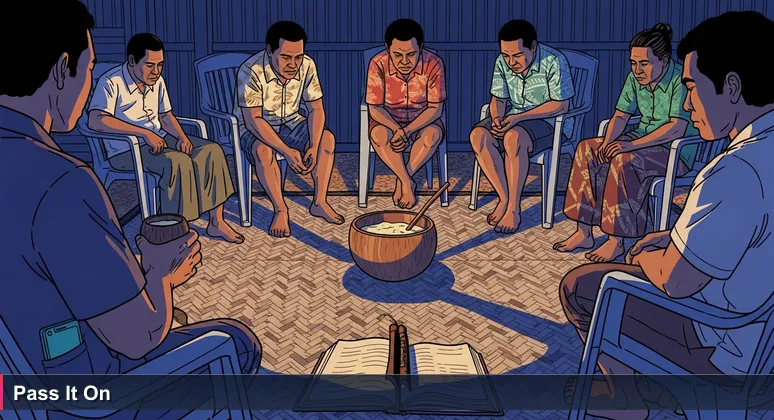
Finding a weekly machine learning meetup in Nukuʻalofa will leave you empty-handed. No startup demo nights, no packed auditoriums with LinkedIn badge hunters. This absence is not a weakness - it is a clue. Global AI networking assumes you already have the infrastructure for broadcast learning. Tonga’s tech community works the way a faikava works: small, intentional, built on trust that deepens over time, not on event frequency.
According to the Lowy Institute’s analysis of Pacific AI leadership, Tonga is in the early stages of formal AI policy development, lacking the venture capital scene of Auckland or the emerging national strategy of Suva. What it possesses is quieter and more durable: a grassroots, community-driven approach to capacity building. The AI Asia Pacific Institute’s report on the state of AI in the Pacific Islands confirms that successful adoption in small island states depends not on technology but on "people-first" innovation.
The critical metric to internalise: TWICT Hub workshops attract only 20 to 40 participants per session - minuscule by international standards. Yet retention is high. People return. They bring colleagues. They ask questions without fear. The strength of your AI network in Tonga will be measured not by how many events you attend, but by how many people you can call at 7 pm on a Sunday to say, "my model is returning nonsense, can we talk?"
The Tongan concept of tauhi vā - nurturing relationships across time and space - is the single most important networking principle you already possess. In a global tech culture obsessed with transactional connections, tauhi vā insists that relationships are maintained, not merely established. When you attend a workshop at Faʻonelua Convention Centre, you are not collecting a contact. You are entering a relational space that requires ongoing care. Follow-up is not optional - a short message the next day, a shared article a week later, an offer to collaborate on a small project. These are the actions that build a real network in Tonga.
In This Guide
- Why the Circle Matters More Than the Stage
- The Core Communities and Meetups in 2026
- Major Calendar Events for 2026
- How to Get Value as a Newcomer or Introvert
- Your 2026 Community Calendar
- From Community to Career: Real Pathways
- Practical Logistics for Attendees
- The Path Forward: Your First Three Steps
- Frequently Asked Questions
Discover how Tonga's digital ID and e-government create demand for AI talent in the complete guide to AI careers in Tonga.
The Core Communities and Meetups in 2026
The engine room of AI literacy in Tonga is the Tonga Women in ICT (TWICT) Hub. Their workshops, held at Faʻonelua Convention Centre or various government venues in Nukuʻalofa, focus on practical AI literacy. Topics range from machine learning basics to addressing AI hallucinations and bias, always grounded in Pacific contexts. Announcements appear primarily on the Live it TONGA Facebook group - a community board, not an event website. Check it weekly to find sessions attracting 20 to 40 participants who return because the learning is safe, specific, and relational.
The University of the South Pacific Tonga Campus provides an academic anchor through its revived annual Learning & Teaching Forum. After a pause of several years, the forum returned in late 2025 with a focus on assessment strategies in the Age of AI. According to USP coverage of the event, Pacific nations were urged to embrace responsible AI development. This forum is the primary venue for connecting with regional academic leaders from across the Pacific, offering rare access to researchers and policymakers you would otherwise only encounter online. Watch for announcements late in the academic year.
The Pacific Islands AI network serves as a regional repository and virtual meeting place through the platform at PacificIslands.AI. While the largest in-person gatherings occur in Suva, drawing 50 to 150 participants, Tongan practitioners participate virtually or by attending regional summits. A proposed Pacific Islands AI Technical Assistance Facility could, if operational in 2026, help Tonga develop its own country-specific AI strategy. Following this initiative through the network positions you for early involvement in national AI projects.
Government-led initiatives through the Ministry of MEIDECC (Ministry of Economy, Environment, Meteorology, and Climate Change) increasingly touch on AI governance during workshops on digital transformation. As highlighted in a Joint SDG Fund report on Pacific connectivity, these sessions connect policy with practice. Attending them gives direct exposure to decision-makers shaping Tonga’s digital future. You learn what problems the government aims to solve - and you can position your skills to address them. The rooms are small, the conversations deep, and the trust built there is career currency.
Major Calendar Events for 2026
Beyond the recurring community circles, 2026 brings several structured events that create rare opportunities for face-to-face learning and connection without leaving the Kingdom. These gatherings range from youth-focused camps to international academic conferences, each offering a different entry point depending on your skill level and career goals. The International AI Conferences in Tonga listing provides regularly updated details for the major Nukuʻalofa events.
| Event | Month | Venue | Focus & Cost |
|---|---|---|---|
| ICSTM Conference | April | Nukuʻalofa | Innovation and management frameworks; fees vary |
| ICPHAMS (AI in Health) | May | Nukuʻalofa | AI in medical sciences; fees vary |
| TechXplore Camp (APTYPS) | Mid-year | Faʻonelua Convention Centre | Entry-level ICT for youth; free or subsidised |
| USP Learning & Teaching Forum | Late year | USP Tonga Campus | AI assessment and pedagogy; free |
| Statistics Conference | TBC | Nukuʻalofa | Data analytics networking; fees vary |
| International Accounting Conference | October | Nukuʻalofa | Digital innovation in finance; fees vary |
The Statistics Conference in Tonga deserves special attention for AI and machine learning practitioners. According to the upcoming conference listings, this event draws professionals from the Tonga Department of Statistics, the Bank of Tonga, and regional development organisations - exactly the people who hold the datasets and the budgets for analytics projects. A single conversation here can open doors that months of online applications cannot.
Practical costs vary significantly. Local workshops and university forums are often free or cost 0-50 TOP. Private regional training provided by groups like Pacific Group AI can cost upwards of 1,800 TOP for intensive group sessions. International conferences held in Nukuʻalofa fall somewhere between these extremes; check individual event websites for registration details. For students at USP Tonga Campus, the TechXplore Camp and academic forums are the most accessible entry points. For working professionals, the Statistics Conference and the accounting conference offer direct relevance to business and government AI applications.
How to Get Value as a Newcomer or Introvert
In Tonga, networking begins before you arrive. You are not just introducing yourself; you are introducing your kainga of interests. Prepare a simple, honest narrative: "I am learning machine learning. I have been working with climate data from the Tonga Meteorological Service, trying to see if we can predict rainfall patterns more accurately." This is specific, grounded in a local problem, and invites collaboration. Avoid jargon. In a room of 25 people, the person who says "I am fine-tuning a transformer model" may impress, but the person who says "I want to help translate Tongan weather warnings into Niuean using AI" will find allies.
The kava circle teaches that the cup comes to you in silence. During the event, listen for who is working on projects that interest you. Listen for who asks the kinds of questions you are afraid to ask. Then, during the talanoa or tea break, approach one of those people. Use the opening line: "I heard your question about bias in training data. I have been thinking about that too." This is not an elevator pitch. It is an invitation to a circle of two. According to the Devpolicy analysis of Pacific agency in AI, the region's success depends on building from existing relational structures - and that is what you are doing.
After the event, follow up with intention within 48 hours. This is where tauhi vā becomes concrete. Send a brief message: remember their work, add value with a link or idea, and leave the door open without asking for anything. That is the foundation. A short message like "I found this paper on predicting crop yields using satellite data that might be relevant" transforms a brief encounter into a lasting connection.
For introverts, start with one connection. Contact the organiser before the event: "I am new to AI and nervous about attending. Could I arrive early and help set up?" Organisers love this. You arrive, you have a task, and by the time others arrive, you already have a relationship with the person running the room. The knowledge will pass to you when you are ready, sip by sip.
Your 2026 Community Calendar
You do not need to attend every event listed in this guide. You need to know the rhythm so you can catch the next wave. Based on observed patterns from 2024-2025 and confirmed events for 2026, here is your annual calendar. Dates shift slightly, but the cycles are reliable. Bookmark the Live it TONGA Facebook group for monthly workshop announcements from TWICT and government partners.
| Frequency | Event | Typical Location | Expected Cost |
|---|---|---|---|
| Monthly | TWICT Hub Workshop | Faʻonelua Convention Centre or government venues | Free or 0-50 TOP |
| Quarterly | Regional Virtual Meetup (PacificIslands.AI) | Online | Free |
| Quarterly | USP Tonga Campus Tech Talk | USP Tonga Campus | Free |
| Mid-year | TechXplore Camp (APTYPS) | Faʻonelua Convention Centre | Free or subsidised for students |
| Late year | USP Learning & Teaching Forum | USP Tonga Campus | Free |
| Varies (annual) | Statistics Conference in Tonga | Nukuʻalofa | Varies (check listings) |
| October | International Accounting Conference | Nukuʻalofa | Varies |
The quarterly virtual meetups hosted by PacificIslands.AI are particularly valuable for practitioners on the outer islands. These online sessions connect Tongan learners with peers in Fiji, Samoa, and beyond without the cost of inter-island travel. The format is informal - a talanoa circle via video call where participants share current projects and challenges. One attendee might be building a weather prediction model for the Meteorological Service while another is exploring NLP for Tongan language preservation.
The USP Tonga Campus Tech Talks occur irregularly but frequently, announced through the campus noticeboard and social media. According to USP's coverage of AI discussions, these sessions are academic-focused but open to the public. For students and early-career professionals, the TechXplore Camp remains the most accessible entry point. The November 2024 camp drew over 50 youth participants to Faʻonelua Convention Centre, and the Asia-Pacific Telecommunity has committed to supporting similar initiatives annually.
Mark your calendar now. The rhythm is predictable: monthly groundwork at TWICT, quarterly connections through virtual hubs, and annual deep dives at the major conferences. Pick one event per quarter as a starting point. Show up, listen, and let the circle form around you.
From Community to Career: Real Pathways
The AI and ML job market in Tonga is emerging. You will not find a "Machine Learning Engineer" posting in the Tonga Chronicle. What you will find are roles at organisations beginning to explore AI applications. Digicel Tonga and Tonga Communications Corporation (TCC) participate in ITU workshops on AI-native networks - a community contact at a TWICT workshop could lead to an internal secondment or pilot project. The Bank of Tonga and Tonga Development Bank are exploring AI for credit scoring, fraud detection, and financial inclusion. The person leading that initiative may be sitting next to you at the upcoming Statistics Conference.
Salary data confirms the value of community involvement. According to local market observations, a junior data analyst at a government ministry earns 25,000-35,000 TOP annually, while a senior developer at Digicel or a commercial bank earns 45,000-70,000 TOP. Consulting for regional organisations such as the Pacific Community (SPC) or the University of the South Pacific can pay significantly higher rates. Community involvement accelerates salary growth by putting you in rooms where you can demonstrate competence before you formally apply. As the Lowy Institute analysis of Pacific AI leadership notes, regional capacity building depends on grassroots networks, not top-down hiring.
The Hunga Digital Hub offers a powerful case study. Part of the ITU Smart Islands initiative, this hub provided connectivity to remote students on Hunga island when sea travel to Vava'u was impossible. According to the Joint SDG Fund report on this project, the infrastructure challenges - intermittent power, limited bandwidth, high latency - are exactly the constraints that force innovative AI solutions. A portfolio project that demonstrates you can make AI work under these conditions is more valuable in Tonga than a perfect model trained on ideal data from California.
Build a portfolio that solves problems that matter in the islands. Consider these starting points:
- Predict crop yields using satellite data and weather records from the Ministry of MEIDECC
- Create a simple NLP tool that translates English public health announcements into Tongan
- Analyse disaster response data from Tonga Geological Services to model optimal aid distribution during cyclone season
- Develop a credit risk model using anonymised data from a microfinance institution
Present these at community events. The feedback you receive will be specific to your context, and the people you meet - from Digicel engineers to ministry directors - will remember your work when opportunities arise.
Practical Logistics for Attendees
Most major AI events in Nukuʻalofa take place at the Faʻonelua Convention Centre, the USP Tonga Campus, or government ministry buildings. Venue announcements are posted in the Live it TONGA Facebook group, so check there the week before any event. For attendees coming from the outer islands, some TWICT and USP events have small travel support budgets - always enquire with the organiser before booking transport.
Getting around Nukuʻalofa is straightforward. Taxis charge between 5 and 15 TOP for short city trips. If you are attending an all-day workshop at Faʻonelua, plan to arrive early; parking is limited, and the best networking happens in the 15 minutes before the session starts. For the USP Tonga Campus on the eastern side of town, consider sharing a taxi with other attendees you meet - this small act of tauhi vā can turn a commute into a relationship.
Costs vary significantly depending on the event type. Local workshops and university forums are often free or cost 0-50 TOP for students. Private regional training, such as the group sessions offered by Pacific Group AI, can run upwards of 1,800 TOP. International conferences held in Nukuʻalofa typically charge registration fees; check the specific event website for details. Always ask about student or early-bird discounts - organisers are often flexible.
What to bring? A notebook and pen are essential - not everyone uses digital notes, and you will want to capture names and contact details from the people you meet. Business cards are less common in Tonga than in Auckland or Suva, but a simple card with your email and phone number is still effective. Most importantly, bring a fully charged phone. You will likely exchange numbers during the talanoa breaks, and a dead battery closes doors. The tools are simple, but they support the relational work that makes Tonga's AI community function.
The Path Forward: Your First Three Steps
You do not need to attend every event in this guide. You need to attend one.
- Find the next TWICT Hub workshop. Check the Live it TONGA Facebook group today. Do not just scroll past the announcement. Comment. Share it. Tag one friend who is also learning. That single action is your first step into the circle.
- Prepare your story. Write one sentence about what you are learning and why it matters for Tonga. "I am trying to use climate data from MEIDECC to predict drought patterns." This is not a pitch for a job; it is an offering. It tells the room what you care about and invites them to help you.
- Commit to the follow-up. Before you walk into Faʻonelua Convention Centre, decide that you will send one message within 48 hours to someone you meet. A short message that adds value. A link to a paper. A question. This is the practice of tauhi vā in a digital age.
As the USP forum on responsible AI makes clear, building Pacific agency in AI depends on relationships, not just technology. The most advanced model in the world is useless if it cannot serve the community that builds it. In Tonga, that community is small, personal, and deeply relational. The cup is passing. When it reaches you, take a drink, and pass it on. The rest will come, sip by sip.
Frequently Asked Questions
Are there regular AI meetups in Nuku'alofa, or is it mostly online?
Yes, there are in-person events, though they're not weekly. The TWICT Hub runs workshops every month or two at Faʻonelua Convention Centre, with 20-40 attendees. Regional virtual meetups via PacificIslands.AI happen quarterly. The key is following the Live it TONGA Facebook group for announcements.
I'm new to AI and shy - how do I start networking without feeling awkward?
Start small: message the event organiser beforehand and offer to arrive early to help set up. At the event, listen more than you speak and approach one person during tea break with a question about their work. Afterward, send a follow-up message referencing something they said - this builds the relationship without pressure.
What's the best way to find out about upcoming AI events in Tonga?
The most reliable source is the Live it TONGA Facebook group, where TWICT posts workshop details. For regional conferences like ICSTM in April 2026, check the International AI Conferences page. University events appear on USP Tonga Campus noticeboards and social media.
How much does it cost to attend these events? Are there free options?
Most local workshops are free or subsidised - TWICT and USP forums often cost 0-50 TOP for students. Private training like Pacific Group AI can run 1,800 TOP, but international conferences held in Nuku'alofa vary. Always check event pages: many offer discounted early-bird rates for Tongan residents.
Can networking at these events actually lead to a job in AI in Tonga?
Absolutely. Employers like Digicel Tonga, Bank of Tonga, and government ministries attend these events to find talent. Showing up consistently and demonstrating competence on local problems - like credit scoring for Tonga Development Bank - puts you ahead of online applicants. Salary for junior analysts starts around 25,000-35,000 TOP, but community connections can fast-track you to senior roles.
Our article on the best coworking spaces in Tonga for 2026 provides actionable insights.
See our ranking of the most accessible tech jobs in Tonga for 2026 that skip the degree requirement.
For a comprehensive overview, check out the top 10 industries hiring AI talent in Tonga beyond big tech in 2026.
From Digicel to UNDP, here are the top organisations for AI engineers in Tonga.
Learn the true affordability of a tech career in Tonga with our 2026 analysis.

Irene Holden
Operations Manager
Former Microsoft Education and Learning Futures Group team member, Irene now oversees instructors at Nucamp while writing about everything tech - from careers to coding bootcamps.