









Top 10 Industries Hiring AI Talent in South Korea Beyond Big Tech in 2026
By Irene Holden
Last Updated: April 17th 2026
Too Long; Didn't Read
Healthcare & Biotech is the top industry hiring AI talent beyond Big Tech in South Korea in 2026, with salaries reaching over ₩140 million for roles that accelerate medical breakthroughs and save lives. Fintech & Banking also stands out, driven by the new 2026 AI Basic Act and offering competitive pay up to ₩120 million, while overall nearly 70% of Korean companies are now recruiting AI professionals, underscoring the widespread demand.
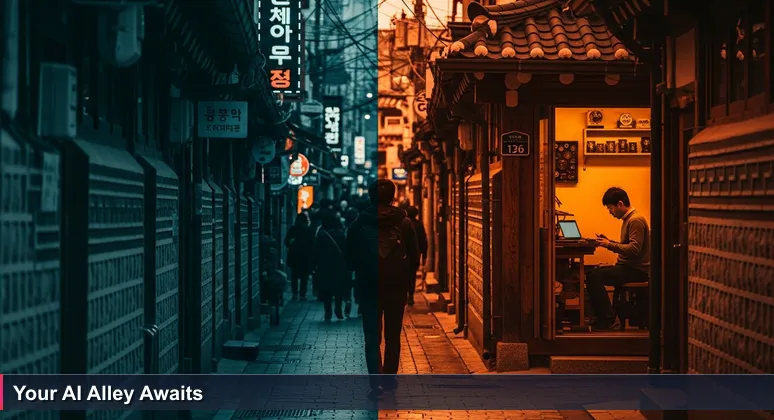
We've all done it: walked straight down Myeongdong's main strip, past the same global brands, while the scent of something unique drifted from a side alley we were too rushed to explore. Your AI career search in 2026 is exactly that moment of hesitation. While countless applicants refresh the career pages of Naver and Kakao, the most dynamic opportunities are quietly thriving in the specialized industrial alleys next door.
The map has been decisively redrawn. According to a major survey highlighted by The Korea Herald, nearly 70% of South Korean companies now plan to recruit AI personnel. This demand surge comes even as overall hiring hits historic lows, with AI-specific job postings having tripled since 2023. As Kim Yo-sep, CTO of Jobkorea, stated, "Jobkorea will lead the industry in transforming the hiring paradigm around AI, including building an integrated AI ecosystem."
This article is your guide to those hidden alleys. We'll move beyond the crowded thoroughfare to explore ten traditional sectors - from healthcare to defense - where AI is no longer an experiment but an embedded, critical capability. The journey begins with recognizing that the most sought-after AI professional is now the hybrid expert who understands medicine, finance, or logistics as deeply as they understand Python.
Table of Contents
- Introduction
- Healthcare & Biotech
- Fintech & Banking
- Aerospace & Defense
- Retail & E-commerce
- Gaming
- Logistics & Supply Chain
- Energy & Utilities
- Real Estate & Proptech
- Education Technology (EdTech)
- Government & Public Sector
- Conclusion
- Frequently Asked Questions
Navigate the 2026 AI employment landscape in Korea with insights from experts.
Healthcare & Biotech
In this sector, AI isn't about scaling social media feeds; it's about saving lives and accelerating cures. Professionals here build systems that automate the analysis of medical images for earlier disease detection and model complex biological interactions to slash drug discovery timelines. The work is unique due to an intense regulatory environment, requiring mastery of Korea’s Pharmaceutical Affairs Act and global standards like HIPAA alongside technical prowess.
This creates a stellar field for career changers with backgrounds in biology or medicine who can bridge clinical practice and data science. The trade-off for this mission-driven work is balanced by the highest salary premiums in the AI landscape, ranging from ₩75 million to over ₩140 million. Key employers include Samsung Biologics and Lunit, whose AI tools are now deployed in over 2,000 hospitals worldwide.
"Growth on ML and AI Engineers Needed in 2026 is particularly acute in sectors like biotech, where clinical validation and regulatory compliance create a high barrier to entry." - Phaidon International, Industry Hiring Analysis
The hybrid expertise demanded here - where a model's accuracy directly impacts patient outcomes - exemplifies the deep industrial integration that defines Korea's 2026 AI advantage, moving far beyond pure software into the fabric of life sciences.
Fintech & Banking
Korean finance is in the midst of a profound AI revolution, moving far beyond simple chatbots. The core mission here is safeguarding assets and personalizing wealth management at scale. Engineers build robust systems for real-time fraud detection that analyze millions of transactions, develop sophisticated algorithms for automated trading, and create intelligent robo-advisors that democratize investment strategies.
This field uniquely operates under the strict new 2026 AI Basic Act, requiring professionals to build compliance and ethical AI governance directly into their models from day one. As noted by legal experts at Littler Mendelson P.C., navigating this regulatory landscape is now a core, non-negotiable skill. This makes the sector an excellent fit for those with finance or economics experience looking to transition into tech.
The work blends high-frequency data handling with stringent regulatory demands. Salaries are highly competitive, typically between ₩70 million and ₩120 million, reflecting the specialized expertise required. Major players aggressively hiring include KB Financial Group, Shinhan Bank, and digital pioneers like Viva Republica (Toss), with AI adoption in Korean finance having reached 75% by early 2024 according to industry analyses.
Aerospace & Defense
Propelled by South Korea's massive expansion as a global defense exporter, this sector applies "Physical AI" to some of the world's most robust and critical systems. Engineers solve high-stakes problems like enabling the autonomous coordination of drone swarms for surveillance, analyzing terabytes of satellite imagery for strategic insights, and creating predictive maintenance models for fighter jets that prevent failures before they happen.
The work is distinct for its critical need for edge AI - deploying optimized models on low-latency, low-power hardware in the field - and often requires handling classified information and security clearances. For professionals with backgrounds in mechanical systems, robotics, or embedded software, this field offers a direct, high-impact path into the heart of national strategic projects.
The trade-off involves longer, meticulous development cycles but comes with significant compensation. Salaries include top-tier premiums for specialized expertise and clearances, ranging from ₩80 million to over ₩150 million. Driven by this strategic mandate, leaders like Hanwha Aerospace, LIG Nex1, and Korea Aerospace Industries (KAI) are on a sustained hiring spree, a trend confirmed in broader analyses of Korea's shifting hiring landscape where AI roles have doubled in five years.
Retail & E-commerce
In Korea’s hyper-competitive, trend-driven retail landscape, AI is the definitive key to personalization and operational efficiency. The industry's focus is solving the complex "discovery" problem for consumers through sophisticated recommendation engines, forecasting volatile consumer demand to optimize inventory across thousands of SKUs, and developing immersive technologies like computer vision for virtual try-ons that bridge online and offline experiences.
A defining aspect is the heavy, practical use of Generative AI for creating marketing assets, automating personalized customer service interactions, and even designing products. This requires a rare blend of technical skill and creative, consumer-centric thinking. As highlighted in industry analyses of in-demand tech fields, retail has become a primary driver for generative AI applications beyond pure content creation.
This vertical is perfect for professionals from marketing, supply chain, or consumer goods who understand the 'why' behind purchasing decisions. The environment is fast-paced and rigorously metrics-driven, with heavy reliance on A/B testing. Salaries reflect this high-stakes environment, ranging from ₩65 million to ₩110 million. Beyond the giant Coupang, vibrant opportunities thrive at Lotte Shopping, Shinsegae (SSG.com), and platforms like Musinsa, which famously drew 2,000 applicants for a single AI-native developer role.
Gaming
Korea's gaming giants are leveraging AI to build richer, more dynamic worlds and more intelligent opponents, moving far beyond just enhancing graphics. The focus here is on creating complex, believable, and adaptive Non-Player Character (NPC) behaviors that react to player choices, using procedural generation to construct vast, unique game environments, and deploying AI to balance intricate multiplayer economies and combat systems in real-time.
The unique twist is the deep, necessary synergy between AI engineers and creative designers, utilizing techniques like Deep Reinforcement Learning (DRL) and LLMs for dynamic storytelling. This field is a dream for those passionate about gaming who possess skills in simulation, creative coding, or narrative design, as it values creative problem-solving as much as algorithmic prowess.
Salaries reflect this specialized niche, ranging from ₩60 million to ₩115 million. With 60% of Korean game studios now using AI for asset generation to control soaring production costs, companies like Krafton and NCSoft are key destinations, actively enhancing their AI capabilities in what industry coverage terms the "K-AI recruitment" drive. Core AI roles in this sector include:
- NPC AI Behavior Designer
- Procedural Content Generation Engineer
- AI Game Balancer & Economist
Logistics & Supply Chain
From the bustling port of Busan to the final porch delivery in a dense Seoul danji, AI is the invisible engine streamlining Korea's world-class logistics networks. The industry tackles massively complex optimization problems in real-time: dynamically routing autonomous delivery fleets through congested urban corridors, managing the symphony of robots in automated warehouses, and perfecting the notoriously difficult "last-mile" in high-rise neighborhoods.
The work is fundamentally characterized by real-time decision-making under uncertainty and requires deep integration with physical robotics systems, often using platforms like the Robot Operating System (ROS). This sector is ideal for systematic thinkers from operations, industrial engineering, or transportation, offering the tangible, visible impact of goods moving faster, cheaper, and more reliably.
Compensation for this critical infrastructure work falls between ₩65 million and ₩105 million. With 30% of Korean logistics centers now fully automated, leaders like CJ Logistics, Hanjin, and Hyundai Glovis are major employers actively seeking AI talent. This automation surge is part of the broader industrial integration highlighted in sector reports on in-demand AI engineers, moving far beyond pure software into the physical movement of the economy.
Energy & Utilities
As Korea accelerates its push toward carbon neutrality, AI has become the indispensable brain for managing a modern, renewable-powered grid. Professionals in this sector build sophisticated models to forecast the volatile output of solar and wind farms, optimize the complex, real-time flow of electricity across smart grids, and monitor safety conditions in sensitive facilities like nuclear power plants with unprecedented precision.
The work demands extreme reliability and deep expertise in time-series forecasting for high-stakes national infrastructure, where predictive accuracy directly impacts grid stability and public safety. For engineers with backgrounds in electrical systems, civil engineering, or environmental science, this field offers stable, long-term projects with profound societal impact, aligning technical work with Korea's green growth strategy.
Salaries are solid and competitive, ranging from ₩70 million to ₩115 million. Key employers at the forefront include KEPCO, SK E&S, and Hanwha Solutions. The tangible impact of this work is already evident; AI-driven energy management systems have reduced building power consumption in Seoul by 15%, demonstrating the rapid industrial integration that defines Korea's AI adoption. This sector's growth is part of the broader surge in demand detailed in analyses showing AI job postings tripling since 2023, even amidst broader economic headwinds.
Real Estate & Proptech
Beyond digital listings and virtual tours, AI is fundamentally reshaping how we value, plan, and interact with physical spaces. This industry applies data science to achieve accurate, real-time property valuations, model the long-term impacts of urban development, and manage the complex energy and security systems of smart, sustainable buildings. The unique skill set here involves integrating GIS (Geographic Information Systems) data with demographic trends and processing continuous streams of IoT sensor data from building management systems.
It’s a compelling field for urban planners, architects, or civil engineers looking to add a powerful data layer to their domain expertise. The work is increasingly focused on sustainability and efficiency, aligning with national green initiatives. Salaries typically range from ₩60 million to ₩100 million, reflecting the growing value of this hybrid knowledge.
Key players driving innovation include proptech platforms like Zigbang and Dabang, as well as construction giants like Samsung C&T, which integrates AI into its premium Raemian Smart Home brand. This shift is part of a broader corporate movement toward AI-driven energy management and smart infrastructure, as noted in analyses of conglomerate hiring plans. The focus has decisively moved toward creating AI-optimized "Green Buildings," a critical component of Korea's sustainable urban future.
Education Technology (EdTech)
Fueled by the government's ambitious national digital textbook initiative, Korea's EdTech sector is using AI to personalize learning at an unprecedented scale. Developers here build adaptive learning platforms that adjust in real-time to each student's pace and comprehension, create responsive AI tutors that provide instant, constructive feedback, and automate the grading of open-ended responses to free up educators for more meaningful interaction.
The unique challenge lies in effectively applying Natural Language Processing (NLP) to educational content and accurately modeling pedagogical best practices within algorithms. This makes it a powerful second act for teachers, curriculum developers, and instructional designers who can apply their crucial domain knowledge to shape effective, ethical AI tools that truly enhance learning outcomes.
While salaries can be slightly lower at ₩55 million to ₩95 million, the mission-driven aspect is profoundly high. With the sector growing at a 15% CAGR, companies like Elice, Woongjin Thinkbig, and Riiid are exciting hubs for innovation. This growth is part of the broader demand for hybrid skills, as seen in salary trends for AI developers in Seoul. Core roles defining this niche include:
- Adaptive Learning Path Engineer
- AI Tutor Developer
- Automated Grading & Assessment Specialist
Government & Public Sector
With the landmark 2026 AI Basic Act now in full effect, the public sector itself has transformed into a major AI employer and practitioner, moving beyond regulation to direct implementation. Roles here involve using data science to inform evidence-based public policy, ensuring all government AI services comply with stringent new ethics and transparency regulations, and building the foundational infrastructure for nationwide smart cities that optimize everything from traffic flow to energy use.
A fascinating and practical trend is the rapid adoption of AI Recruiting Agents within the sector itself, with 65% of large public and private firms now using AI for their own hiring, as reported by the Seoul Economic Daily. This path is ideal for professionals interested in civic tech, law, or public administration who want to ensure AI benefits society broadly, offering significant stability and purpose-driven work.
Salaries for technical roles within government and affiliated research institutes are competitive, ranging from ₩50 million to ₩90 million, with higher bands for specialized research positions. Key employers driving this public-sector AI integration include the National Information Society Agency (NIA), the premier public research institute ETRI, and the Seoul Metropolitan Government. This expansion is a core part of the national strategy, creating a robust ecosystem where government investment and talent development feed directly into Korea's industrial AI competitiveness.
Conclusion
The bustling alleyways of South Korea's AI economy each offer a distinct blend of challenge, impact, and compensation, but they are all connected by a single, powerful throughline: deep industrial integration. While Tokyo focuses on robotics and Singapore on finance, Korea's unique strength in 2026 is how rapidly and thoroughly AI is being woven into the fabric of its traditional powerhouse sectors - from biotech and defense to logistics and energy.
This integration is accelerated by unparalleled chaebol investment, proactive government strategy like the AI Basic Act, and the nation's formidable digital infrastructure. The journey from the crowded main street to a rewarding specialization begins with a fundamental mindset shift. The most sought-after AI professional is no longer just the pure software engineer, but the hybrid expert who understands medicine, finance, or mechanical systems as deeply as they understand TensorFlow.
Your specialized domain knowledge is the critical thread that can integrate AI into these sectors, creating a career that is both uniquely valuable and authentically your own. As the data shows, with nearly 70% of companies recruiting, the opportunity isn't just in building the AI tools, but in being the person who knows exactly where and how to apply them. In Korea's ppalli ppalli innovation landscape, that hybrid expertise is your ultimate competitive advantage.
Frequently Asked Questions
Why should AI professionals look beyond big tech companies like Samsung and Naver in South Korea?
Industries beyond big tech are actively integrating AI, with nearly 70% of South Korean companies planning to recruit AI personnel and job postings tripling since 2023. Sectors like healthcare and finance offer specialized roles with competitive salaries, such as up to ₩140 million in healthcare, and opportunities for impact in areas like logistics and energy.
How did you rank the top 10 industries for AI hiring in South Korea?
The ranking is based on criteria like hiring demand, salary ranges, and unique AI applications, with industries like healthcare and aerospace leading due to high salaries (₩75M-₩150M+) and strategic projects. Factors such as regulatory integration, as seen in fintech with the 2026 AI Basic Act, and growth rates, like EdTech's 15% CAGR, also influenced the selection.
Which industry offers the highest salaries for AI roles in South Korea beyond big tech?
Healthcare & Biotech and Aerospace & Defense provide the top salaries, ranging from ₩75 million to over ₩140 million, driven by specialized expertise and high-stakes projects. In contrast, roles in EdTech or government start around ₩55 million but offer mission-driven work and stability.
Can someone without a tech background transition into AI roles in these industries?
Yes, many industries value domain knowledge; for example, healthcare seeks professionals with biology or medicine backgrounds, while fintech favors those with finance experience. With additional AI skills, career changers can bridge gaps in sectors like retail, where marketing expertise enhances personalization AI, making transitions feasible.
What are some key employers hiring AI talent in these top industries in South Korea?
Key employers include Samsung Biologics and Lunit in healthcare, KB Financial Group and KakaoBank in fintech, and Krafton in gaming. In logistics, CJ Logistics is a major player, while the public sector sees opportunities at the National Information Society Agency, all leveraging South Korea's strong AI ecosystem.
Check out the top 10 tech jobs that don't require a degree in South Korea in 2026 for detailed insights.
This article provides insights into tech career prospects in South Korea for 2026, covering salaries and job markets.
Career changers can discover the top AI bootcamps in South Korea for high-growth roles.
Find out about premier firms recruiting AI talent in Korea from this source.
Find out which AI startups are emerging in South Korea in 2026.

Irene Holden
Operations Manager
Former Microsoft Education and Learning Futures Group team member, Irene now oversees instructors at Nucamp while writing about everything tech - from careers to coding bootcamps.