









Is South Korea a Good Country for a Tech Career in 2026?
By Irene Holden
Last Updated: April 17th 2026
Quick Explanation
Yes, South Korea is a prime destination for tech careers in 2026, particularly for semiconductor and AI specialists driven by booming exports and deep market integration. Tech salaries often start above Seoul's living wage of KRW 29.5 million, with senior roles exceeding KRW 100 million, while 73% of knowledge workers use AI tools daily. Success hinges on adapting to a high-effort culture and navigating hubs like Seoul and Pangyo, but the rewards offer front-row access to cutting-edge tech ecosystems.
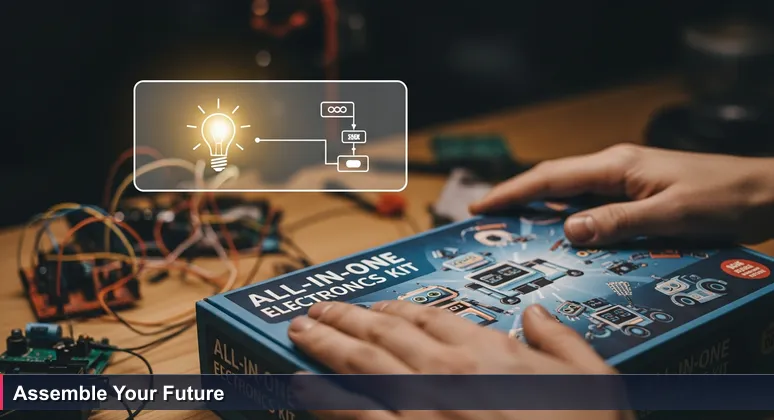
You're holding the box. The graphics promise a world of sleek robots, intelligent circuits, and a seamless digital future. This is the alluring vision of a tech career in South Korea - a premium kit with best-in-class components waiting to be assembled. The excitement is palpable, akin to the moment you receive a complex, high-end electronics set.
However, the real challenge lies not in the quality of the parts but in the gap between that marketed dream and the meticulous work required. Your eye catches the dense, Korean-language manual and the array of unlabeled components within. This represents the core tension: will this kit be your shortcut to mastery, or the ultimate test of your grit and strategic thinking?
South Korea’s tech ecosystem is that premium kit in 2026. The components are indeed world-leading, from a historic semiconductor boom and deeply integrated AI adoption to the Seoul startup ecosystem now ranked 8th globally, surpassing hubs like Singapore and Tokyo. But the "assembly" process involves navigating a unique set of instructions - a high-stakes work culture, competitive talent pool, and financial realities that test your real income.
The value, as with any complex build, isn't in the box's dazzling artwork. It's in the formidable, future-proof skills and career you construct by engaging deeply with one of the globe's most intense and rewarding tech arenas. For those prepared to read the manual and master the tools, it offers a masterclass in next-generation technology.
What We Cover
- The Allure of South Korea's Tech Future
- Core Components of Korea's Tech Powerhouse
- Navigating Salary, Cost, and Workplace Culture
- Who Thrives in South Korea's Tech Scene
- Upskilling with Bootcamps Like Nucamp
- Relocation or Remote Making the Right Move
- Weighing the Rewards Against the Challenges
- Common Questions
Navigate the 2026 AI employment landscape in Korea with insights from experts.
Core Components of Korea's Tech Powerhouse
The raw materials in South Korea's tech kit are genuinely world-class, forming an industrial foundation that few ecosystems can match. This powerhouse is built on three core components, each acting as a critical circuit in the nation's economic engine.
| Component | Role in the Ecosystem | 2025-2026 Data Point |
|---|---|---|
| Semiconductor Sovereignty | The foundational "rice of industry," driving exports and underpinning advanced manufacturing. | AI and chip exports hit record highs, supported by government policies like the "K-Chips Act" providing major tax incentives. |
| Deep AI Integration | The pervasive software layer, with AI tools embedded in daily business and life. | 73% of Korean knowledge workers use AI tools daily, signaling one of the world's deepest levels of practical market adoption. |
| Concentrated Power Hubs | The physical clusters where talent, capital, and innovation are densely packed. | Pangyo Techno Valley's workforce grew 6% to ~83,000; Seoul ranks as a top-10 global startup ecosystem. |
First, semiconductor dominance is not just a sector - it's national strategy. Often called the "rice of industry," chips are the crown jewel, with giants like Samsung Electronics and SK hynix leading a historic upcycle. This strength is supercharged by the global AI boom and deliberate policy, as noted in analyses of South Korea's strategic industrial focus.
Second, the nation's embrace of AI is remarkably deep and practical. The shift is from consumer tech to fundamental AI Transformation (AX) and deep-tech infrastructure. This integration creates immediate applicability for AI/ML specialists, with research from the IMF highlighting Korea's aggressive push into AI as a key economic driver.
Finally, opportunity is hyper-concentrated. The Seoul-Pangyo corridor acts as the nation's primary workbench, centralizing over 80% of tech talent and venture capital. This is supported by unparalleled digital infrastructure - ubiquitous 5G and world-leading broadband - which acts like a high-precision tool, enabling the rapid prototyping and deployment this ecosystem demands.
Navigating Salary, Cost, and Workplace Culture
This is where you must read the fine print. The premium components come with a complex set of instructions involving a precise financial equation and a unique cultural operating system. Understanding this manual is critical to a successful build.
The Financial Reality: Gross vs. Net
The average national wage sits around KRW 50.5 million per year. Tech professionals fare better, with entry-level roles starting significantly higher than Seoul’s 2025 living wage of KRW 29.5 million/year, and senior engineers commanding KRW 100 million+. However, the concept of "real income" is crucial. Reports indicate that take-home pay is under pressure as taxes and essential living costs outpace wage growth, a phenomenon described as thinning 'glass wallets' for workers. A single person in Seoul can expect monthly living costs (excluding rent) around KRW 1.5 million, with significant deductions for National Pension (4.5%), Health Insurance (3.5%), and progressive income tax.
The Cultural Operating System
If the infrastructure is cutting-edge, the workplace culture is often the most challenging part of the manual for newcomers. It's a system built on different code.
- Pressure & Hierarchy: A legacy of "presenteeism" can mean long hours, with 12-14 hour days not uncommon in traditional firms, alongside a formalized, hierarchical communication style.
- Risk-Averse Execution: Compared to Western hubs, the environment can favor meticulous execution and quality over radical, disruptive innovation.
- The Talent War Driving Change: This culture is evolving. As an industry official noted, "As the top experts become increasingly scarce, companies will offer a growing range of incentives... doubling the usual salary" to attract them, gradually modernizing workplace practices.
Who Thrives in South Korea's Tech Scene
South Korea's tech scene isn't a one-size-fits-all destination. Your success depends heavily on your career stage, specialization, and adaptability. Assembling the right profile for this ecosystem is key to a rewarding build.
Best For: Builders in High-Demand Fields
Certain profiles find their skills perfectly matched to the components in the kit.
- Hardware & Semiconductor Engineers: This is ground zero. With the sector in a historic upcycle driven by policies like the K-Chips Act, demand is insatiable. Careers here offer stability at giants like Samsung and SK hynix and exciting paths in related AI chip design, central to the nation's strategic industrial focus.
- AI/ML Specialists & Data Scientists: With 73% daily AI adoption, your skills have immediate, profound applicability. You can work on fundamental research at Naver Labs or apply AI in fields like bio-tech and autonomous vehicles, areas highlighted in analysis of Korea's AI impact.
- Those Seeking Rapid Skill Immersion: For the resilient career-changer, there's no faster environment to learn. The pressure cooker atmosphere, noted in ecosystem reports, accelerates growth exponentially for those who can keep pace with the market's recovery phase and high-tech cleansing.
Not Ideal For: Mismatched Priorities
The assembly process can be a deal-breaker if your core requirements don't align.
- Those Prioritizing Work-Life Balance Above All: While improving, the entrenched culture of long hours and "presenteeism" remains a significant hurdle, often cited as a major con in professional reviews of working in Seoul.
- Professionals Averse to Cultural Adaptation: Success requires a conscious effort to navigate hierarchical customs. Limited Korean language skills will severely restrict options outside multinationals or explicitly global teams.
- Early-Stage Founders Seeking Easy VC Money: While the startup ecosystem is maturing, securing early funding for deep-tech ideas can be more challenging than in more speculative markets, as venture capital remains influenced by large corporate players, a dynamic explored in Korea's startup playbook.
Upskilling with Bootcamps Like Nucamp
Given the premium on high-skilled talent, how do you acquire or upgrade the right components for this kit? Traditional university routes are highly competitive. This is where accessible, targeted upskilling pathways become the essential tools for assembly.
Practical Training for a Practical Market
For those building a career in South Korea's tech scene, bootcamps like Nucamp offer a focused, affordable alternative. With programs starting from approximately ₩2.7 million, they provide a more accessible entry point than many traditional degrees or premium bootcamps, which can exceed ₩13 million. This affordability is critical in a market where real income is squeezed, making career transitions financially feasible. Programs are designed for the local ecosystem, such as the 25-week Solo AI Tech Entrepreneur Bootcamp focusing on AI product building and SaaS monetization - skills directly applicable to the booming AI startup scene around Pangyo.
"It offered affordability, a structured learning path, and a supportive community of fellow learners," notes one Nucamp graduate, highlighting the model's practical appeal.
Building Locally Relevant Skills
The learning model is community-based, with local meetups across major Korean cities and career services tailored for the South Korea job search. This practical training provides the specific skills - like Python, SQL, and DevOps from their 16-week Back End program - that employers at places like Coupang, LG AI Research, and vibrant Pangyo startups actively seek. For professionals aiming to integrate AI into their current roles, shorter courses like the 15-week AI Essentials for Work deliver prompt engineering and AI-assisted productivity skills, aligning with the fact that 73% of Korean knowledge workers use AI tools daily. With a reported employment rate of ~78%, such programs act as a direct pipeline into the high-demand sectors powering Korea's tech transformation.
Relocation or Remote Making the Right Move
The decision to physically relocate to South Korea for a tech career requires careful calibration of your personal parameters. The 2026 verdict differs significantly based on whether you are assessing the move from abroad or from within the country.
For Foreigners: Targeted Pathways
The path is clearest if you aim for specific company types where international talent is actively sought. Securing a position first is paramount, as visa sponsorship (typically the E-7 for Specialty Occupations) is generally tied to a job offer. The most viable targets include:
- Global Tech Giants: Google, Microsoft, Meta, and AWS maintain significant R&D centers in Seoul, often with English as the working language and structured relocation support.
- Korean Conglomerates' Global Teams: Samsung, LG, and Hyundai have expanding divisions focused on international markets, which are more likely to operate in English and seek diverse perspectives.
- Venture-Backed Startups with Global Ambitions: These companies actively seek foreign talent for market expansion and diverse problem-solving approaches. Networking on platforms like LinkedIn and Wanted.co.kr is essential, as many tech listings now include English descriptions to address talent shortages.
For Domestic Candidates: Capital Area vs. Regions
Within Korea, the decision centers on the Seoul-Pangyo corridor versus regional tech centers. The capital area holds an estimated 80% of the opportunity, higher salaries, and dense networking events. However, cities like Daejeon offer a compelling alternative. Home to KAIST and major government research institutes, it provides a strong deep-tech environment with a potentially lower cost of living. Similarly, Gwangju is investing heavily, with over $330 million dedicated to building a dedicated AI scientific technology complex, as part of broader regional development strategies. The choice balances maximum opportunity against cost and specific sector focus.
Weighing the Rewards Against the Challenges
Opening South Korea's premium tech kit is not for the passive builder. The final assembly requires you to weigh substantial challenges against extraordinary rewards, deciding if the finished product justifies the meticulous, often demanding work. The ecosystem rarely forgives slow learning, but for the prepared, it delivers unparalleled acceleration.
The challenges are real and ingrained. You must navigate a workplace culture that expat reviews consistently rate as a major barrier, where long hours and hierarchical structures remain common. Financial pressures persist, with the cost of living in Seoul and significant deductions thinning take-home pay despite competitive gross salaries. As professional analysis notes, while technical skill levels are among the strongest globally, the environment demands significant cultural and professional adaptation.
"The market rarely forgives slow learning but provides strong infrastructure and tech-ready customers," observes a founder in the ecosystem, capturing the intense, high-stakes nature of the arena.
The rewards, however, are transformative for the right builder. You gain a front-row seat in an ecosystem that physically manufactures the digital future, from the AI chips powering global servers to the integrated software defining next-generation mobility. The immersion is total, accelerating skill development exponentially. You're not just taking a job; you're assembling a career with components from the world's most advanced hardware-software integrated market, supported by unparalleled digital infrastructure and public safety.
Ultimately, the value of the kit is determined by the builder. For the semiconductor engineer, the AI researcher, or the tenacious career-changer gaining skills through focused pathways, the finished construct is a future-proof career forged in one of the globe's most intense technological crucibles. The promise on the box is real, but it is only realized through your own grit, strategy, and willingness to master the complex, rewarding assembly process.
Common Questions
Is South Korea a good place for a tech career in 2026?
Yes, South Korea offers a premium tech ecosystem with strengths in semiconductors and AI, where 73% of knowledge workers use AI tools daily. However, it requires resilience to adapt to a high-pressure work culture and manage living costs in Seoul, which average KRW 1.5 million per month excluding rent.
What tech roles are most in demand in South Korea for 2026?
Semiconductor engineers and AI/ML specialists are highly sought after, driven by giants like Samsung and SK hynix, and deep-tech hubs in Pangyo Techno Valley. Data scientists also thrive, with opportunities at Naver Labs and Kakao Brain, supported by South Korea's aggressive AI transformation push.
How do tech salaries in South Korea compare to the cost of living?
Tech salaries are competitive, with entry-level roles often exceeding Seoul's living wage of KRW 29.5 million/year, and senior engineers earning over KRW 100 million. But real income is pressured by taxes (e.g., up to 45% income tax) and high living costs, so careful financial planning is essential.
What cultural challenges should I be prepared for in South Korea's tech industry?
Expect a hierarchical work culture with long hours, often 12-14 hour days in traditional firms, and a formal communication style. While this is evolving due to talent shortages, adapting to these norms is key for success, especially in companies outside global teams.
Do I need to speak Korean to work in tech in South Korea?
Not necessarily, as global tech giants like Google and Samsung's international teams often use English. However, limited Korean can restrict job options, so focusing on multinationals or startups with global ambitions is advisable for non-Korean speakers.
This guide covers South Korea's top tech apprenticeships in 2026, including programs like SSAFY and Naver BoostCamp.
This article reviews leading tech coworking spaces in South Korea for 2026, focusing on proximity to major employers.
This complete guide covers AI compensation trends in South Korea for 2026.
If you're researching best tech bootcamps in Korea, check out this comprehensive ranking.
Understand the national defense strategy behind cybersecurity recruitment in South Korea for 2026.

Irene Holden
Operations Manager
Former Microsoft Education and Learning Futures Group team member, Irene now oversees instructors at Nucamp while writing about everything tech - from careers to coding bootcamps.