









Top 10 Free Tech Training at Libraries and Community Centers in the United Arab Emirates in 2026
By Irene Holden
Last Updated: April 7th 2026
Too Long; Didn't Read
Sharjah Public Libraries’ Smart Knowledge Library and Dubai’s Public Libraries “School of Life” are the top free tech training picks in the UAE for 2026 because Sharjah gives on-demand short courses with instant digital certificates while Dubai delivers hands-on, themed workshops that let you try AI, robotics and creative tech in person. All of these resources cost AED 0 and are widely accessible across Dubai, Abu Dhabi and Sharjah - Dubai ran 34+ free workshops in a single month, MBRL offers access to more than one billion digital resources, and federal initiatives like DGOV Academy and 1 Million Prompters connect your learning to pathways recognised by employers such as G42, e&, Mubadala and Emirates Group.
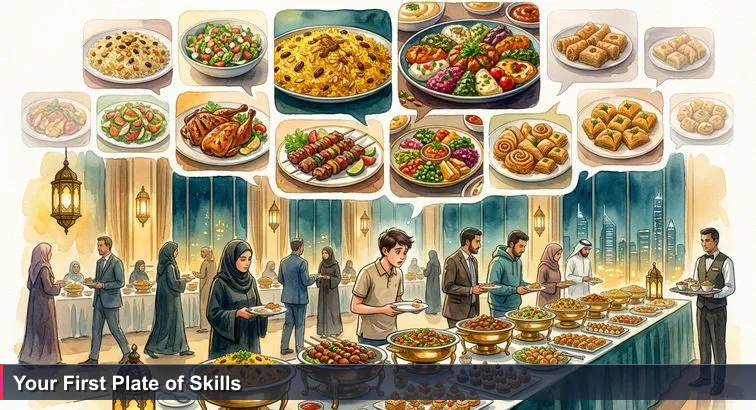
You’re standing at a packed iftar buffet in a Dubai hotel. Steam rises off the machboos, grills hiss, and there’s a whole galaxy of tiny desserts at the far end. Your plate is almost empty, the line is moving, and you’re doing quiet mental maths: if you take this, what will you have to skip?
Free tech learning in the UAE works the same way. Dubai Culture’s School of Life alone runs 34+ free workshops in a single month, from AI art to robotics, as shown in the official February 2026 calendar. Mohammed Bin Rashid Library offers on-site access to over 1 billion digital resources, while Sharjah’s Smart Knowledge Library lets you earn instant certificates without paying a dirham. Add MAKTABA in Abu Dhabi, DGOV Academy, Ibtekr.org, and the federal online training portal, and the buffet stretches from Al Jaddaf to Al Ain.
What this guide is (and isn’t)
This Top 10 isn’t “the truth” of UAE tech education. It’s one smart first plate built around three filters:
- AED 0 tuition, no admissions essay, no scholarship form
- Realistic access if you live in Dubai, Abu Dhabi, Sharjah, or can get online anywhere in the country
- Skills that feed directly into AI, data, and software roles in ecosystems around G42, e&, du, Mubadala, ADNOC, DP World, and Emirates Group
Your real constraint isn’t money, it’s your plate: time, energy, and focus. As one analysis of future digital skills training puts it, digital capability is now basic infrastructure for any career.
“Digital skills training is not optional; it’s the foundation of tomorrow’s career success.” - Experts at Zabeel Institute
The sections that follow are your first serving: a way to move from “everything looks good” to “this is what I’ll taste first.” Once you’ve tried these, you can go back for a second round, custom-building your own menu of skills for a 0% personal income tax, AI-focused career in Dubai, Abu Dhabi, or Sharjah.
Table of Contents
- The iftar buffet of free tech learning in the UAE
- Sharjah Public Libraries - Smart Knowledge Library
- Dubai Public Libraries - School of Life
- Mohammed Bin Rashid Library (MBRL)
- MAKTABA & Abu Dhabi Public Libraries
- Dubai Future Foundation - 1 Million Prompters
- DGOV Academy & UAE Government Online Training
- Ibtekr.org
- National AI & Coding Initiatives
- TechSoup & Digital Literacy for Nonprofits
- Community Tech Meetups & University Outreach
- How to turn free community learning into a UAE tech career
- Frequently Asked Questions
Sharjah Public Libraries - Smart Knowledge Library
Sharjah’s public libraries are the quiet overachievers of the UAE’s tech-learning scene. Their Smart Knowledge Library is a fully online platform of short, practical courses in digital skills, entrepreneurship, and media production - many with instant digital certificates you can download the moment you finish. As Gulf News’ step-by-step guide notes, residents can register remotely and access everything from home.
How it works
You sign up once through Sharjah Public Libraries and unlock a catalogue of self-paced micro-courses at AED 0. The platform is designed for everyday learners: office workers in Al Nahda, students in University City, or parents studying after bedtime. Content is primarily in Arabic and English, backed by Sharjah’s library infrastructure so you can also log in from public PCs if you don’t have a laptop or home internet.
What you actually learn
Typical Smart Knowledge Library tracks include:
- Programming and web basics to build your first simple pages or scripts
- Office and data tools like spreadsheets and presentations - core for analytics
- Digital marketing, content creation, and video editing for portfolio pieces
- Entrepreneurship and soft skills that help you pitch ideas and projects
“The expanded platform is designed to cultivate a knowledge-based society by integrating digital culture into daily life.” - Sharjah Public Libraries official, reported in The Dubai Voice
Why it matters for UAE tech careers
If you’re aiming at AI, data, or software roles in Dubai or Abu Dhabi, this is your foundation layer. Use it to close gaps in spreadsheets, basic coding logic, and digital presentation before you tackle heavier national programmes in Python or AI. Those instant certificates give your LinkedIn something to show - crucial when you’re applying to bootcamps, junior roles, or internships at Sharjah SMEs or Dubai startups and don’t yet have formal tech experience.
Dubai Public Libraries - School of Life
Walk into Al Safa Art & Design Library on a weekend and it feels less like a quiet reading room and more like a mini makerspace: kids building cardboard robots, teens experimenting with AI art, parents trying 3D pens for the first time. That’s Dubai Culture’s School of Life in action - a programme that routinely packs 34+ free workshops a month into public libraries across the city.
What actually happens in these workshops
According to a detailed rundown of the 2026 schedule on Tbreak Media’s School of Life overview, you’ll find themes like “Design & Jewellery” or “Innovation & Space” rotating each month. Activities range from:
- Hands-on AI art creation sessions using generative tools
- Robot-building and moving paper machines for ages 5-12
- 3D pen projects, basic electronics, and digital photography
- Core digital literacy: email, safe browsing, and productivity apps
Workshops are typically bilingual (Arabic and English), free to attend, and hosted at branches such as Al Safa, Al Twar, Al Mankhool, Al Rashidiya, and Hatta. You usually just register online; no prior experience needed.
Who it’s for - and how to use it strategically
If you’re still testing whether you actually enjoy making things - robots, visuals, simple circuits - this is your low-risk lab. It’s ideal for:
- Adults considering a shift into robotics, UX, or creative tech
- Parents checking if their kids’ “STEM interest” survives real solder fumes
- Students building stories and photos for early portfolios and LinkedIn
Why it matters for an AI/automation career
Researchers documenting innovative public libraries in the UAE argue that these spaces now function as community learning labs. For you, that means you can literally touch the technologies - sensors, actuators, AI-powered tools - that sit behind automation roles at employers like DP World, Emirates Group, or smart-city units. Think of School of Life as the “live cooking station” in the buffet: brief, intense, and perfect for deciding whether to go back for a bigger serving of robotics or creative AI later.
Mohammed Bin Rashid Library (MBRL)
From the outside, Mohammed Bin Rashid Library looks like a cultural landmark; inside, it behaves more like an always-open research lab. For anyone in Dubai flirting with a move into AI, data, or software, it’s one of the few places where you can sit down, plug into an enormous digital collection, and study at your own pace for AED 0.
Membership and access
With an Emirates ID, you can register for free membership through the library’s official membership portal. That unlocks a personalised dashboard, Wi-Fi, and access to research databases and multimedia collections via the library’s network. The catch is simple and fair: many premium e-resources are available on-site only, which nudges you to treat the building itself as your study base.
Hands-on tech and learning
Beyond the books, MBRL runs ad-hoc workshops and weekly talks on topics like public speaking in the digital age, information literacy, and navigating digital resources, promoted through the MBRL events calendar. Interactive exhibits use technologies like VR and immersive projections to turn cultural content into live experiences, giving you a feel for how large institutions deploy emerging tech in practice.
Your AI/data “research gym”
If you’re following free AI or coding courses from home, MBRL is where you upgrade from casual learner to disciplined practitioner. Use quiet study zones to read AI ethics case studies, skim Python or statistics texts, and practice extracting insights from academic papers - exactly the kind of work junior analysts and ML engineers do at companies like G42 or data teams at Emirates Group. Treat your visits like workouts: show up with a clear goal, log what you read, and gradually build the research stamina that separates hobbyists from hireable talent.
MAKTABA & Abu Dhabi Public Libraries
In Abu Dhabi, the word “library” increasingly means devices, Wi-Fi, and digital labs as much as shelves of books. Under the Department of Culture and Tourism - Abu Dhabi, the MAKTABA network is turning branches like Zayed Central Library into “inspiring learning labs” with free access to computers, workshops, and a growing Arabic digital ecosystem.
Practically, that means you can walk into a MAKTABA branch, sit down at a public PC, and get online at AED 0. A guide to public library access in Abu Dhabi highlights standard free Wi-Fi and desktop access, plus regular cultural and skills sessions. For many residents in Khalifa City, Al Ain, or Al Bateen, these spaces double as no-cost coworking hubs where you can follow national AI or coding courses without worrying about data caps.
The digital side is expanding fast. The Department of Culture and Tourism has partnered with Amazon on a landmark Digital Arabic Library initiative set to bring thousands of Arabic titles online. Dr Ali bin Tamim, who chairs the Abu Dhabi Arabic Language Centre, described these partnerships as reinforcing Arabic “as a cornerstone of our identity” while using modern technology to spread knowledge across the region.
Day to day, MAKTABA programmes mix culture with practical tech. Depending on the branch and month, you’ll find:
- Photography and visual storytelling workshops
- Digital literacy and online research skills for students and jobseekers
- Youth programmes co-run with Abu Dhabi School of Government, touching on tech and creative industries
If you’re aiming for analytics or AI-adjacent roles at ADNOC, Abu Dhabi Ports, Etihad, or ADGM-based startups, MAKTABA gives you three crucial ingredients for free: reliable infrastructure (PCs, Wi-Fi, quiet desks), structured workshops that build communication and storytelling skills, and an Arabic-rich digital ecosystem that helps you operate confidently in both local and global contexts.
Dubai Future Foundation - 1 Million Prompters
AI is no longer a side dish in the UAE; it’s the main course. Dubai Future Foundation’s 1 Million Prompters initiative is one of the clearest signs of that shift, giving residents a way to learn prompt engineering and everyday AI usage at AED 0, entirely online.
What the programme actually offers
The course walks you through how modern generative AI models work and, more importantly, how to talk to them effectively. Structured modules cover text and image prompts, real-world productivity use cases, and practical exercises you can apply immediately in study or work. A participant quoted in recent coverage described the generative AI and prompt-literacy modules as “beneficial for gaining AI knowledge” and highlighted that the course ends with a recognised qualification from Dubai Future Foundation, signalling that you’ve gone beyond casual usage.
This sits within a wider national push. As Gulf News reports on UAE AI initiatives, authorities are deliberately making AI learning accessible to students and residents across the country.
The skills you practice
- Breaking a problem into steps and designing multi-part prompts
- Iterating prompts to improve answer quality and style
- Using AI to summarise reports, generate ideas, and draft content
- Building simple workflows that combine AI with spreadsheets or documents
Why it matters for UAE tech careers
Whether you end up in marketing at e&, operations at Emirates Group, or data roles in Abu Dhabi’s AI ecosystem, you’ll be expected to use AI tools confidently. Government strategy documents on digital inclusion and participation already frame AI literacy as a basic capability, not a niche skill. 1 Million Prompters gives you that baseline: a shared language for working with AI, plus a DFF-backed certificate that shows up nicely on LinkedIn and tells local recruiters you understand how to use these systems responsibly and productively, even before you dive into coding or machine learning itself.
DGOV Academy & UAE Government Online Training
While Dubai and Sharjah libraries handle the hands-on experiments, the federal government is quietly building the “theory layer” through its online training portal and DGOV Academy. From cybersecurity basics to AI awareness and workplace skills, these courses give every resident a way to formalise their digital knowledge at AED 0, with micro-credentials you can actually list on your CV.
The official portal aggregates programmes from multiple entities under one roof: DGOV Academy’s cybersecurity and technical tracks, digital-skills modules, and short courses on innovation and soft skills. A popular walkthrough video, “Get a free certificate course from UAE Government”, shows how learners can register, complete modules, and download certificates without paying a fee or passing an entrance exam.
Content is delivered as self-paced online lessons, quizzes, and short assessments. Typical paths cover:
- Cybersecurity fundamentals - passwords, phishing, safe browsing
- General IT literacy and digital tools used in modern offices
- Introductory AI and innovation topics linked to digital government services
- Interpersonal and communication skills for hybrid workplaces
Global roundups of free certifications, like this guide to top free online certificates in 2026, increasingly highlight government-backed micro-courses because they combine recognised branding with low time commitments. In the UAE context, seeing “Completed DGOV cybersecurity fundamentals” on a CV is a quick signal to HR that you understand the digital basics expected in semi-government and enterprise environments.
For you, the strategy is simple: use DGOV Academy to build a government-recognised baseline in cybersecurity and digital literacy, then stack more specialised skills (cloud, Python, data analysis) on top. If you’re aiming for roles at Abu Dhabi Digital Authority, Dubai Digital, or tech teams inside entities like ADNOC and Emirates Group, these micro-credentials function as a floor: they won’t get you the job alone, but without them, it’s hard to even start the conversation.
Ibtekr.org
When you start thinking about AI not just as a tool, but as something that reshapes cities and ministries, you’ve entered Ibtekr.org territory. Instead of teaching you another programming language, this platform teaches you how innovation, data, and AI change government itself.
What Ibtekr.org actually is
Ibtekr.org is a government-backed hub of free, interactive MOOCs on public-sector innovation, policy, and smart government. In the Learn with Ibtekr.org section, you’ll find structured courses with videos, readings, and activities, all focused on how to design and deploy new ideas inside large institutions.
Core themes you’ll study
Instead of “build this app,” courses sound more like “redesign this service.” Expect modules on:
- Innovation frameworks such as design thinking and agile delivery in government
- Smart city and GovTech case studies using AI, data, and automation
- Public-policy constraints: ethics, regulation, citizen trust
- How to structure and manage innovation projects in ministries and authorities
How it links to UAE’s GovTech agenda
The platform ties into national conversations like the Government Technology 5.0 agenda, highlighted when the Mohammed Bin Rashid Centre for Government Innovation launched its Government Technology 5.0 report on future public services. That context matters: Ibtekr.org isn’t a random MOOC site; it’s plugged into how the UAE actually plans to use AI and data in services you interact with daily.
Why it matters for your career
If you see yourself working at Abu Dhabi Digital Authority, Dubai Digital, a free-zone regulator, or in strategy roles at ADNOC, DP World, or Emirates Group, Ibtekr.org helps you speak both tech and policy. Pair its courses with technical learning in Python or cloud, and you position yourself as someone who can design AI-enabled services within real-world constraints - a profile that stands out in a region racing to build smarter governments, not just smarter apps.
National AI & Coding Initiatives
National AI and coding initiatives are the “main courses” of the UAE’s learning buffet: heavier, structured programmes that can carry you from absolute beginner to a solid junior-level foundation in Python, web development, and data analysis. They sit above the libraries and DGOV micro-courses, giving you a full curriculum without tuition fees.
The best-known example is One Million Arab Coders, a landmark programme that opened free tracks in web development and data analysis to Arabic speakers worldwide. Even though earlier cohorts have finished, many materials and community resources remain accessible, and similar national tracks continue to appear. A global roundup of free tech education notes that such large-scale government-backed programmes now sit alongside platforms like Coursera and edX in the list of top free tech courses to start in 2026.
Telecom and industry partners extend this effort. Huawei’s partnership with 51Talk and local UAE entities, reported by TechAfrica News, focuses on boosting digital literacy for UAE students, adding cloud and AI awareness to the mix and reinforcing that the private sector is aligned with the government’s skills agenda.
| Initiative | Main Focus | Best For | Typical Effort |
|---|---|---|---|
| One Million Arab Coders | Python, web dev, data analysis foundations | Beginners aiming at junior dev/data roles | Several months of part-time study |
| National Program for AI | AI concepts, ethics, basic ML intuition | Non-technical professionals needing AI literacy | Short modules over a few weeks |
| Telecom/industry AI initiatives | Digital literacy, cloud, applied AI use cases | Students and early-career professionals | Workshops plus self-paced content |
| Cisco “Skills for All” pathways | Networking, Python, intro data science | Learners eyeing infrastructure or data roles | Modular, stackable micro-courses |
Strategically, you use these initiatives once library workshops and DGOV courses have confirmed that you enjoy coding or data work. Commit to one full track, complete every project, and you’ll have portfolio pieces and certificates strong enough to justify paying later for a focused bootcamp or cloud certification - with the upside that any salary jump you achieve in Dubai, Abu Dhabi, or Sharjah lands in your pocket without personal income tax.
TechSoup & Digital Literacy for Nonprofits
Not every tech career in the UAE leads to a pure software or data team. A growing number sit inside charities, foundations, and CSR units at big employers like ADNOC, Emirates Group, or Mubadala. For that path, you need to understand how small organisations use technology to manage volunteers, protect data, and report impact. That’s where global nonprofit network TechSoup comes in.
TechSoup specialises in helping charities, libraries, and community organisations build their digital capacity through training and access to discounted tools. According to its own overview of services, TechSoup supports nonprofits worldwide with software, cloud donations, and a catalogue of webinars and self-paced courses. In the UAE, these resources often flow through public libraries and community centres that already serve as gathering points for NGO staff and volunteers.
Typical TechSoup-style learning paths cover:
- Using productivity suites and cloud tools to manage projects and donors
- Digital safety and cybersecurity tailored to small organisations
- Basic data management, from spreadsheets to lightweight CRM thinking
- Online collaboration and remote-work best practices for distributed teams
This aligns with a wider regional push to modernise libraries and information services. Initiatives described by the Arab Federation for Libraries and Information, highlighted in a Datacite case study, show how MENA libraries are becoming digital access points for research, open data, and training - exactly the kind of spaces where TechSoup’s programmes are most effective.
If you aim to work in social impact, sustainability, or CSR-linked tech roles, combining TechSoup-driven digital literacy with local experiences (for example, volunteering in a charity that uses these tools) is powerful. You’ll be able to walk into an interview at a foundation or corporate CSR team and talk confidently about securing beneficiary data, building simple dashboards for reporting, and stretching limited budgets with free and discounted cloud services - all critical skills in a sector where every dirham counts and technology must serve mission first.
Community Tech Meetups & University Outreach
After you’ve sampled the libraries and online portals, the real inflection point in your learning often happens in public: at free meetups, hackathons, and university outreach events scattered across Dubai, Abu Dhabi, and Sharjah. These gatherings turn solo study into relationships, give you a reality check on which skills are in demand, and quietly plug you into hiring pipelines at places like G42, e&, du, Mubadala, and fast-growing startups in Dubai Internet City and Hub71.
Universities such as Higher Colleges of Technology, Zayed University, Khalifa University, and UAE University regularly open selected talks, fairs, and competitions to the public. Event aggregators like the research-focused listings on Knowledge E’s UAE events page showcase conferences and workshops where students, researchers, and industry practitioners mix - often with no registration fee. Community groups add another layer: FreeCodeCamp-style coding circles, data-science meetups, and AI discussion groups that meet in library coworking areas or café corners from Yas Mall to Jumeirah.
To make these events work for you, go in with a plan:
- Ask speakers which stacks they use in production and which certifications actually helped them get hired.
- Talk to at least one person working in a role you want and note which skills and salary bands they mention.
- Share your GitHub or simple project and ask, “What would you improve next?”
These free communities also pair naturally with structured, paid options when you’re ready. Programmes like Nucamp’s AI and software bootcamps (for example, a 16-week Back End, SQL and DevOps with Python track around AED 7,795, or a 25-week Solo AI Tech Entrepreneur bootcamp near AED 14,610) build on the same meetup mindset: learn in cohorts, compare notes weekly, and move steadily toward roles that can command strong, tax-free salaries in Dubai and Abu Dhabi’s AI-first job market.
How to turn free community learning into a UAE tech career
At some point, you have to move from tasting the buffet to planning the full meal. With UAE’s free libraries, AI portals, and national programmes, the question becomes: how do you turn scattered certificates into a real tech career in Dubai or Abu Dhabi?
A simple roadmap many learners follow looks like this:
- Taste (0-2 months) - Sample everything. Use Sharjah’s Smart Knowledge Library, Dubai’s School of Life, MBRL and MAKTABA to discover whether you actually enjoy coding logic, data, design, or storytelling.
- Choose a lane (2-4 months) - For AI & data, stack 1 Million Prompters, national Python/data tracks, and serious reading at MBRL/MAKTABA. For web/devops/cloud, lean into coding initiatives plus DGOV IT modules, using libraries as your build space.
- Build a mini-portfolio (4-8 months) - Turn free-course exercises into GitHub repos, simple dashboards, and short LinkedIn write-ups. One project that actually runs beats ten PDFs of certificates.
- Invest (after 6-12 months) - Once you’re sure of your direction, start paying strategically: a focused bootcamp, a cloud/security certification, or a part-time diploma.
A 30-day sprint can jump-start this journey: commit 60-90 minutes per day, use Days 1-7 to set up accounts and taste different resources, Days 8-14 to go deeper in one track, Days 15-21 to ship one tiny project, and Days 22-30 to share it publicly and attend at least one meetup or university event.
When you are ready to invest, affordability and structure matter. Community-based bootcamps like Nucamp sit in the AED 7,795-14,610 range for 15-25 week programmes, versus competitors charging AED 36,700+, yet still report around 78% employment and 4.5/5 ratings from hundreds of reviews. In a country with 0% personal income tax and AI-heavy hubs such as Dubai Internet City and Hub71, that trade-off often makes sense: you’re converting free public learning plus a targeted paid programme into salaries that land almost entirely in your pocket. As guides for international students eyeing the UAE point out, this combination of tax policy and tech investment is rare globally - and you’re already standing at the buffet.
Frequently Asked Questions
Which free library or community programme is best for starting an AI or data career in the UAE?
Start with a combination: Dubai Future Foundation’s “1 Million Prompters” for AI literacy, national AI/coding initiatives (like One Million Arab Coders) for Python/data fundamentals, and a library hub (MBRL or MAKTABA) for research and a quiet workspace. All are AED 0, and Dubai libraries alone run 30+ free tech workshops a month - use the courses to build a small project and a certificate before you invest in paid training.
How did you choose and rank the Top 10 free options?
Selections were based on four practical criteria: true zero tuition (AED 0), accessibility across Dubai/Abu Dhabi/Sharjah or online, direct relevance to UAE employers (G42, e&, Mubadala, Emirates Group), and measurable outcomes (certificates, projects, hands-on practice). We also favoured programmes that provide infrastructure - libraries with free PCs, or government-backed credentials like DGOV and DFF courses.
I only have 60-90 minutes per day - which programme should I start first?
Use that time to follow the 30-day plan: Day 1 register on Sharjah Smart Knowledge and claim a short instant certificate, Day 2 get a library membership (MBRL/MAKTABA) for a study base, and Day 3 enrol in a DGOV Academy or 1 Million Prompters module. These quick wins (each AED 0) build momentum and give you a portfolio piece within weeks.
Can these free trainings help me get a tech job in Dubai or Abu Dhabi?
Yes - they create the foundational skills, certificates, and small projects recruiters expect from entry candidates; combined with networking at meetups and one focused paid certificate later, many people move into junior dev/analyst roles. In the UAE, junior tech roles commonly start in the roughly AED 7,000-12,000/month range (tax-free), so these free steps are a low-risk way to enter that pipeline.
What’s the best way to prove completion of these free courses to recruiters?
Collect and share recognised artefacts: instant digital certificates from Sharjah Smart Knowledge, DFF or DGOV micro-credentials, and screenshots of library workshop attendance; publish project code on GitHub and write a short LinkedIn post linking the certificates and repo. Employers in the UAE value demonstrable work and government-backed credentials, so pair certificates with a one-page project summary.
Top-ranked UAE AI startups shaping Dubai and Abu Dhabi in 2026
Top tech jobs in the UAE that don’t need a university degree (2026)
Top 10 companies hiring AI engineers in the United Arab Emirates in 2026
For AI/ML engineers relocating to the Gulf, check the top 10 highest paying UAE tech companies (2026) to see where salaries and allowances peak.
Top 10 tech startups hiring junior developers in the United Arab Emirates in 2026

Irene Holden
Operations Manager
Former Microsoft Education and Learning Futures Group team member, Irene now oversees instructors at Nucamp while writing about everything tech - from careers to coding bootcamps.