









Top 10 Best WA Community Colleges for Worker Retraining (2026)
By Irene Holden
Last Updated: January 10th 2026
Too Long; Didn't Read
South Puget Sound Community College and the Seattle Colleges District are the top picks for Worker Retraining in Washington in 2026 - SPSCC for its strong workforce outcomes (Intelligent.com’s #1 Washington community college) and Seattle Colleges for dense employer links and on-campus WorkSource supports that speed re-employment. Statewide about 7,000 people use Worker Retraining each year and there were 14,720 workforce program completions in 2024 (an 18.5% increase), and eligible students can pair college study with approved bootcamps like Nucamp, which can cover up to 80% of tuition so students typically pay roughly $100 per month for five months out of pocket. I can also generate a concise, practical FAQ tailored to your situation - would you like that now?
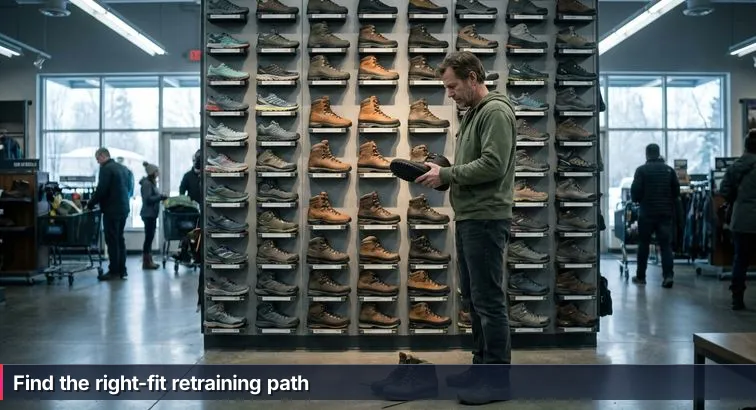
You’re staring at a wall of hiking boots: different brands, different price tags, all promising comfort and performance. Your brain is fried, your feet already hurt, and what you really want to know is simple: which pair will get you up the trail without blisters or blowing your budget. Losing a job and searching for “best Washington community college for retraining” feels almost identical. Rankings are loud and confident; your life right now probably isn’t.
Underneath that noise, there is at least one solid piece of ground: Washington’s Worker Retraining system is real, structured, and bigger than it looks from the outside. Statewide, around 7,000 people a year use Worker Retraining at community and technical colleges to pivot careers and get back to work, and in 2024 there were 14,720 workforce program completions - an 18.5% jump over the previous year. Over time, legislature-backed retraining has helped well over 100,000 jobless workers re-enter the workforce. According to the Washington Workforce Training and Education Coordinating Board, the program is specifically designed to help dislocated and vulnerable workers move into high-demand fields, not just back into “any job.”
“Worker Retraining and Job Skills programs are uniquely positioned to respond to both regional and national economic changes.” - Mike Nielsen, Director of Corporate and Continuing Education, Green River College
Why “best” depends on your terrain
When you’re exhausted and worried about money, there’s a real temptation to grab whatever’s labeled “#1” and hope for the best. But just like boots, colleges that look great on the wall can be a bad fit if you don’t match them to your actual terrain: your bills, your kids, your unemployment claim, and the jobs that exist within driving distance.
That’s why “best” in this guide is always conditional - less about bragging rights and more about fit:
- Best for rapid re-employment versus deeper reskilling over one to two years
- Best for Southwest Washington’s healthcare and manufacturing versus Seattle’s tech roles
- Best if you need short-term certificates versus committing to a two-year degree
- Best if you rely on unemployment benefit extensions (CAT/TB) versus needing evening or online classes while you keep working
How to use this “Top 10” like a trail map
This list highlights 10 Washington community and technical colleges that consistently stand out for Worker Retraining in terms of program strength, employer connections, student support, and regional impact. Think of it as a wall of solid, well-made boots: everything on the wall is good, but only some pairs will fit your feet and your trail. Your job isn’t to memorize the ranking; it’s to notice which options match the ground you actually have to cover.
Across the list, you’ll see some shared stitching:
- Every college participates in the statewide Worker Retraining framework laid out in the FY26 program guidelines, which ties public funding to real labor-market demand.
- Many are building or expanding Career Launch programs - college paths that deliberately weave in paid work experience, internships, or apprenticeships so you’re not training in a vacuum.
- Most combine tuition and book help with specialized advising and, in some cases, guidance on CAT/TB unemployment extensions, so you don’t accidentally burn through benefits while you study.
- All can often be paired with other options - like an online, tech-focused bootcamp such as Nucamp, which is an approved Private Career School for Washington’s Worker Retraining program and can offer up to 80% tuition assistance for eligible students, leaving about $100 a month for five months out of pocket - depending on your goals and eligibility.
Your next step isn’t to fall in love with a single name. It’s to use this list the way you’d use a trail map: narrow down a few “might fit” options by region and career field, then look closely at the laces and soles - funding, support, schedule, and how clearly each program connects to an actual job. That’s how you avoid blisters: wasted quarters, burned benefits, and training that doesn’t get you where you need to go.
Table of Contents
- Introduction: Finding the Right-Fit Boot
- South Puget Sound Community College
- Seattle Colleges
- Lake Washington Institute of Technology
- Renton Technical College
- Clover Park Technical College
- Bellingham Technical College
- Walla Walla Community College
- Yakima Valley College
- Whatcom Community College
- Clark College
- How to Choose a College for Worker Retraining
- Frequently Asked Questions
Veterans should review the WRT for recently discharged veterans section to understand required documents.
South Puget Sound Community College
If you live near Olympia, South Puget Sound Community College is one of the boots closest to where you actually stand. It’s a mid-sized, public community college with strong ties to state agencies, local healthcare systems, and regional employers. In a recent review highlighted on the college’s own news page, Intelligent.com ranked SPSCC as the number one community college in Washington, citing its balance of academic quality and workforce outcomes, which gives you some reassurance that you’re not betting your remaining time and money on an unknown option. As a public college, SPSCC follows the state’s standard tuition structure, and many lower- and moderate-income students see a large share of costs covered through need-based aid like the Washington College Grant.
Programs that match Olympia’s job market
SPSCC leans into fields that actually hire in and around the capital region. For Worker Retraining students, the most common paths are short certificates or applied associate degrees that connect directly to entry-level roles rather than abstract majors. Typical routes include:
- Healthcare programs such as medical assisting, nursing-related pathways, and allied health roles feeding local clinics and hospitals
- Business, bookkeeping, and accounting for state agencies, small businesses, and nonprofit offices
- IT support and networking, which can later be combined with a focused coding bootcamp like Nucamp if you decide to move deeper into software or cybersecurity
- Advanced manufacturing and trades, aligned with employers across Thurston County and surrounding areas
Because Washington is pushing colleges toward more work-integrated “Career Launch” models, you’ll increasingly see internships, clinicals, or apprenticeship-style experiences built into these programs rather than classroom-only training. That matters if you’re worried about graduating with skills employers don’t recognize.
Support that keeps you from slipping
The other part of fit is the lacing: the support systems that keep everything from coming apart halfway up the trail. SPSCC’s Worker Retraining and workforce teams typically help eligible students with tuition and book assistance, and they can walk you through how Worker Retraining interacts with unemployment insurance, including potential CAT/TB benefit extensions, so you don’t accidentally jeopardize your claim. Advisors use a Guided Pathways approach, helping you choose a clear program map up front instead of a random mix of classes that don’t add up to a credential.
- Dedicated Worker Retraining staff who understand layoff notices, UI paperwork, and stop-gap employment
- Academic planning geared toward short, stackable certificates and applied degrees
- Career services for resumes, interview practice, and local job search support
- Connections to other supports (like Opportunity Grant or Basic Food Employment and Training) when you qualify
It won’t remove all the stress, but it can turn “I have no idea where to start” into a sequence of clear, manageable steps.
Is SPSCC a fit for your terrain?
If you’re a laid-off state worker, retail employee, or service worker in the Olympia area who needs a stable, in-demand role rather than a complete reinvention, SPSCC often fits well. A typical path might be a 40-year-old administrative assistant who uses Worker Retraining to complete a one-year accounting certificate, then moves into a higher-paying role at a local employer. If you’re aiming at tech, you might start with SPSCC’s IT support or networking program to build foundational skills, then layer on an online bootcamp such as Nucamp (an approved Private Career School for Worker Retraining) later to go deeper into software development or cybersecurity while you’re already working.
| Option | Format | Typical Goal | How Worker Retraining Helps |
|---|---|---|---|
| South Puget Sound Community College | On-campus / hybrid | Certificate or associate degree in fields like healthcare, business, or IT support | Can reduce or cover tuition and books for eligible programs; pairs with need-based aid like the state’s college grant system |
| Nucamp (tech bootcamps) | Online, part-time | Targeted web development, backend, or cybersecurity skills to build on existing IT foundations | As an approved Worker Retraining provider, can offer significant tuition assistance to eligible Washington residents, often alongside past community college study |
Seattle Colleges
In the city itself, the Seattle Colleges District (Seattle Central, North Seattle, and South Seattle) gives you three campuses under one umbrella, all tied closely to tech, healthcare, maritime, and logistics employers. The district is also home to Seattle Promise, a free-college program for recent graduates that had about 1,710 students enrolled in fall 2025, according to the program’s own facts and impacts report. Even if you’re not Promise-eligible, that level of city investment tells you this system is built to be a serious pathway, not an afterthought.
Programs that match Seattle’s job market
Across the three campuses, the mix of Worker Retraining-friendly programs lines up with what actually hires in and around Seattle. Seattle Central and North Seattle lean into IT and software support, networking, and cybersecurity fundamentals, which can be a solid first step if you later want to deepen into coding or cloud via an external bootcamp like Nucamp. South Seattle adds a strong focus on maritime, aviation, and transportation/logistics, reflecting its proximity to port and industrial areas. All three offer healthcare pathways, business and accounting tracks, and short-term certificates designed to get you back into the workforce in under two years, sometimes much faster.
Worker Retraining support and on-campus WorkSource
What sets this district apart is how it weaves training and employment services together. Each campus has access to on-campus WorkSource centers or tightly integrated career hubs where employment specialists help with job search, resume building, and labor-market research. Through Worker Retraining, eligible students can usually get help with tuition, books, and navigating unemployment rules, and the district’s centralized workforce services coordinate multiple funding streams (Worker Retraining, Basic Food Employment and Training, Opportunity Grants) so you’re not juggling separate offices alone. The district’s own Worker Retraining overview emphasizes short-term, job-focused programs and one-on-one advising to line your program choice up with real openings in tech, healthcare, and trades.
Who Seattle Colleges fit best
If you’re in or near Seattle and need to move into a city-based role - IT help desk, medical office support, bookkeeping, logistics coordination - the district can be a strong fit. A laid-off retail worker might, for example, complete a 6-12 month IT support or business technology certificate at Seattle Central, use the on-campus WorkSource center for job placement support, and later layer on a remote Nucamp bootcamp to move from basic support into more advanced software or cybersecurity work once they’re earning again. The key advantage here is density: more employers nearby, more program choices, and more chances to connect what you learn in class to an actual job posting across town.
| Campus | Key Worker Retraining Strengths | Typical Career Fields | Workforce Features |
|---|---|---|---|
| Seattle Central College | Broad mix of short-term certificates and applied degrees | IT support, business and accounting, healthcare admin | Centralized workforce services and strong downtown employer ties |
| North Seattle College | Academic plus professional-technical balance | Networking, cybersecurity foundations, business pathways | Good option if you may later transfer to a four-year program |
| South Seattle College | Hands-on, technical and trades programs | Maritime, aviation, logistics, industrial trades | Close connection to port, airport, and industrial employers |
Lake Washington Institute of Technology
On the Eastside, Lake Washington Institute of Technology sits almost in the middle of the Seattle-Redmond-Bellevue tech corridor. That location matters: LWTech has a long-standing reputation for technology-driven, hands-on programs that line up with the software, cloud, gaming, and advanced manufacturing employers surrounding it. On its own Worker Retraining page, the college describes the program as a way to “jump start your new career,” and emphasizes help not just with classes, but with navigating unemployment rules and other funding so you’re not trying to decode everything alone.
Career paths aligned with Eastside employers
LWTech’s strength is where tech and practical skills meet. If you’re aiming for roles that are “close to the code” or the production line without needing a four-year degree, the menu fits that terrain well. Common Worker Retraining paths include:
- Information Technology and Computing - networking, IT support, and software testing that can lead into help desk or junior admin roles, and later stack into more advanced programming or cloud skills
- Digital gaming, design, and media - programs tied to the region’s game studios and creative tech companies
- Advanced manufacturing and engineering tech - training that supports aerospace, hardware, and high-precision industrial employers
- Health sciences - options like dental hygiene pathways, nursing assistant, and allied health certificates
Because these programs are built with local industry input, you’re less likely to end up with skills that don’t match actual job postings in Kirkland, Bellevue, or Redmond.
Worker Retraining and TAA: extra support if your job moved offshore
The Worker Retraining office at LWTech focuses on two big things: reducing your direct costs and helping you navigate the paperwork that comes with job loss. According to the college’s Worker Retraining overview, eligible students can receive help with tuition, books, and required supplies, plus one-on-one guidance with unemployment insurance documentation. LWTech also serves as a liaison for Trade Adjustment Assistance (TAA) benefits, which is crucial if your layoff was tied to jobs moving overseas or major trade-related changes and you’re entitled to additional federal training funds.
- Screening for Worker Retraining, TAA, and other workforce programs so you can braid funding sources instead of relying on just one
- Academic advising that builds short, stackable certificates into longer pathways, so you can return to work sooner and add skills over time
- Connections to employer partners in IT, manufacturing, and health, which can make internships and interviews more concrete
For many students, that combination of funding plus navigation is what makes going back to school feel possible instead of risky.
Who LWTech tends to fit
If you’re in Kirkland, Redmond, Bellevue, or nearby and want to move into IT support, software-adjacent roles, design, or advanced manufacturing, LWTech is often a strong match. Imagine a 35-year-old warehouse worker whose facility relocates out of state: they might use Worker Retraining at LWTech to complete an IT Support or Network Technician certificate, step into an entry-level help desk job on the Eastside, and later enroll in a part-time online coding or cybersecurity bootcamp like Nucamp to keep climbing the ladder once a steady paycheck is back in place.
| LWTech Pathway | Example Programs | Typical Time to Complete | Target Entry-Level Roles |
|---|---|---|---|
| Information Technology | IT Support, Network Technician, Software Testing | Short certificates to 2-year associate degrees | Help desk technician, junior network tech, QA tester |
| Digital Gaming & Design | Game Design, Digital Media, 3D Modeling | 1-2 years, depending on program | Game tester, production assistant, junior designer |
| Advanced Manufacturing | Machining, Engineering Technology, Industrial Maintenance | Short-term certificates or 2-year degrees | Manufacturing technician, CNC operator, maintenance tech |
| Health Sciences | Nursing Assistant, Dental pathways, Allied Health certificates | Often under 1 year for entry-level certificates | NA-C, dental assistant, medical support staff |
Renton Technical College
South King County’s jobs tend to be concrete and physical - planes, trucks, buildings, food. Renton Technical College meets that terrain with training that is deliberately hands-on and tightly linked to employers. It’s one of Washington’s most workforce-focused campuses, built around labs, shops, and kitchens rather than lecture halls. State-level recognition backs that up: in a recent round of competitive grants, Renton was among a dozen colleges awarded workforce development funds to expand high-demand training and upgrade equipment, according to a news release from the State Board for Community and Technical Colleges. That kind of investment usually means you’re learning on tools that look like what you’ll see on the job.
Programs that turn directly into paychecks
Renton Technical is built for people who want to move from classroom to job site as directly as possible. Worker Retraining students commonly enter short, intensive programs that lead into union apprenticeships, entry-level technical roles, or mid-level service jobs with clearer advancement paths. The focus is on high-demand trades and applied careers rather than general academics.
- Construction and electrical trades - carpentry, electrical, and related programs that often connect with union apprenticeship pathways
- Automotive and diesel technology - lab-heavy training that prepares you for dealership, fleet, or independent shop work
- Culinary arts and hospitality - for moving back into the service sector with higher skill and wage potential
- Healthcare support roles - options like medical assisting or other entry-level healthcare programs
Because these programs are cohort-based and schedule-heavy, they can feel intense - but that intensity is also what compresses a lot of learning into a shorter timeline, which matters if your savings and benefits have an expiration date.
Worker Retraining support on a fast timeline
Renton participates fully in Washington’s Worker Retraining framework, which is designed to help dislocated and vulnerable workers retrain for high-demand fields rather than drift from job to job. For eligible students, Worker Retraining at RTC can offset a significant share of tuition, fees, and books, and workforce staff help you match programs to labor-market demand so you’re not training for roles that don’t exist locally.
- Screening for Worker Retraining eligibility categories like layoff, exhausted UI, stop-gap employment, and vulnerable worker status
- Advising that prioritizes short, job-focused programs aligned with local employers
- Connections to apprenticeships and union partners in construction, electrical, and other trades
- Career services that focus on resumes, certifications, and interviews for specific roles, not just generic job search tips
That mix - financial help plus concrete guidance - can make the difference between “I can’t afford to go back to school” and “I can do this if I plan it right.”
Who Renton Technical tends to fit (and how Nucamp can complement it)
If you live in South King County and are ready to move into the skilled trades, transportation, or food services with a clear, practical route to employment, Renton Technical often fits well. Picture a 29-year-old fast-food worker whose location shuts down: with Worker Retraining, they could enroll in carpentry or electrical training at RTC, complete an intensive program, and move into a pre-apprenticeship or entry-level construction role with higher wages and benefits. If that same person later decides they want to transition from physical work into tech, they could keep working full-time and add an online coding or cybersecurity bootcamp such as Nucamp - an approved Worker Retraining provider in Washington - to gradually shift their career without giving up their paycheck.
| Option | Format | Main Focus | Best For |
|---|---|---|---|
| Renton Technical College | On-campus, cohort-based | Trades, automotive, culinary, healthcare support | Hands-on learners who want a direct path into local, in-person jobs |
| Nucamp Bootcamps | Online, part-time | Web development, backend, cybersecurity | Career changers who need flexible tech training that can be layered on after or alongside college programs |
Clover Park Technical College
Down in the South Sound, Clover Park Technical College is built for people who want to work with their hands and see a clear line from the lab or shop to a paycheck. Located in Lakewood near Tacoma, it serves Pierce County and surrounding communities that depend heavily on aerospace, defense, healthcare, and advanced manufacturing. Programs are set up less like traditional lecture-heavy college and more like a series of professional shops, hangars, and clinics where you learn on the same kinds of equipment you’ll use on the job.
Clover Park’s Worker Retraining services sit inside a broader Workforce Development division, which means dislocated workers aren’t an afterthought; they’re a central part of who the college is built to serve. The college’s own Worker Retraining information highlights tuition help, book assistance, and direct support with unemployment paperwork as core pieces of what they offer, not extras you have to chase down on your own.
Programs tuned to real South Sound jobs
Where Clover Park stands out is in applied, high-skill technical programs that match real job openings from Tacoma to Joint Base Lewis-McChord. Worker Retraining students often land in short certificates or associate degrees tied to specific roles rather than broad majors.
- Accelerated Industrial Mechatronics for fast entry into high-tech manufacturing and maintenance technician roles
- Automotive and automotive restoration, known for nationally accredited, hands-on training and smaller lab sizes
- Aviation maintenance and aerospace trades, aligned with the region’s aviation and defense employers
- Nursing assistant and allied health certificates feeding local hospitals, clinics, and long-term care facilities
- Construction and industrial trades that connect to regional projects and contractors
Because these programs are built in conversation with employers, you’re more likely to graduate with skills and credentials that hiring managers actually recognize.
Worker Retraining support that tackles paperwork and cost
On the support side, Clover Park tries to remove as many friction points as possible. For eligible students, Worker Retraining can reduce the cost of tuition, fees, and required books, and staff will sit with you to sort through unemployment insurance forms and timelines so you don’t accidentally put your benefits at risk while you train. Workforce advisors also help you choose programs that fit your specific situation: how far you can commute, how long you can be in school before income has to resume, and what wage level you realistically need on the other side.
- One-on-one intake to verify eligibility categories like layoff, exhausted benefits, or stop-gap employment
- Program planning focused on short, high-impact certificates when time and money are tight
- Referrals to other aid (like Opportunity Grant or Basic Food Employment and Training) when you qualify
- Connections to local employers in aerospace, automotive, and healthcare for clinicals, internships, and interviews
“The nationally accredited, hands-on programs and smaller class sizes gave me a direct path to employment.” - Automotive Restoration student, Clover Park Technical College
Who Clover Park tends to fit (and how you might combine it with online tech training)
If you’re in Pierce County and want to move into aerospace, automotive, industrial maintenance, or healthcare support without leaving the region, Clover Park often fits well. Picture a 45-year-old warehouse worker whose job disappears after automation upgrades: with Worker Retraining, they could enroll in the Accelerated Industrial Mechatronics program, train on modern industrial equipment, and move into a maintenance technician role that’s less physically punishing and more stable. Later, if they decide to shift toward tech or cybersecurity, they could add a part-time online bootcamp such as Nucamp - an approved training provider in Washington - on top of that experience, using their existing technical background as a springboard.
| Training Option | Primary Focus | Typical Duration | Likely First Job |
|---|---|---|---|
| Clover Park - Industrial Mechatronics | High-tech manufacturing and maintenance systems | Short accelerated certificate to 2-year degree | Maintenance or mechatronics technician in manufacturing |
| Clover Park - Automotive/Aviation | Vehicle and aircraft maintenance | 1-2 years, depending on program | Automotive, diesel, or aviation maintenance technician |
| Clover Park - Allied Health | Nursing assistant and healthcare support | Often under 1 year for entry-level roles | NA-C, medical support staff in clinics or long-term care |
| Nucamp (online bootcamps) | Web development, backend, cybersecurity | Several months, part-time online | Entry-level tech roles when paired with prior IT or technical experience |
Bellingham Technical College
In Northwest Washington, Bellingham Technical College is the option that feels more like a focused workshop than a sprawling campus. It’s a smaller, highly specialized technical college, which means fewer distractions and more time on the equipment, labs, and skills that actually tie to local jobs. Students consistently describe BTC as a place where staff are approachable and the campus has a personal feel, something that can matter a lot if you haven’t been in a classroom for years and the idea of a huge college feels overwhelming.
Programs built around industrial and maritime work
BTC’s strengths line up closely with what employers in Whatcom County actually hire for. If you picture the industrial shoreline, fabrication shops, and plants around Bellingham Bay, you’re looking at the terrain these programs are built for. Worker Retraining students often move into short, targeted certificates or applied associate degrees such as:
- Welding, machining, and advanced manufacturing for fabrication shops, shipyards, and industrial employers
- Maritime and marine trades, tied to port activity and marine service companies
- Process technology and industrial instrumentation for production, energy, and processing facilities
- Healthcare certificates like medical assistant or nursing assistant for local hospitals and clinics
These areas also reflect a broader trend: enrollment in vocational-focused community college programs has risen significantly, and construction trades programs saw a 23% increase in students in recent years, according to national data highlighted by The Manufacturing Institute. BTC’s catalog fits squarely inside that growing demand for skilled, hands-on work.
Worker Retraining in a small-campus setting
On the support side, Bellingham Technical’s size works in your favor. Instead of bouncing between offices, you’re more likely to work with a small, consistent workforce education team that learns your story and helps you plan around it. For eligible students, Worker Retraining can cover a significant share of tuition and books, and workforce funding advisors help you pick programs that fit both local hiring needs and your personal constraints: childcare, transportation, and how long you can realistically be out of full-time work. Short, intensive certificates mean you can often re-enter the workforce in under a year, with the option to stack further training later.
“Students highlight the college’s ‘communicative staff’ and the personal feel of a smaller campus, which makes returning to school less intimidating.” - Student review summarized in Niche’s 2026 community college rankings
Who BTC fits best (and how it compares with Whatcom Community College)
If you live in Whatcom County and want to pivot into industrial, maritime, or healthcare support roles without leaving the area, BTC is often the most direct route. Think of a 38-year-old restaurant worker whose job disappears after a closure: they might qualify for Worker Retraining, complete a short healthcare or industrial certificate at BTC, and move into a stable job at a local clinic or plant. In Bellingham you also have Whatcom Community College, which leans more toward a blend of academic transfer and professional-technical programs; it can be a better fit if you want a path that keeps a future bachelor’s degree on the table, as outlined on Whatcom Community College’s main site. The key is matching the option to your terrain: BTC if you want a tight focus on trades and industrial skills, Whatcom if you want more flexibility for later university transfer.
| College | Primary Focus | Best For | Typical Programs |
|---|---|---|---|
| Bellingham Technical College | Hands-on technical and trades training | Career changers aiming for industrial, maritime, or healthcare support roles | Welding, machining, marine trades, process technology, medical assistant, NA-C |
| Whatcom Community College | Mix of transfer and professional-technical programs | Learners who may want a job-focused certificate now and a transfer option later | IT, business, early childhood education, allied health, transfer associate degrees |
Walla Walla Community College
In Southeast Washington, Walla Walla Community College is the place many people land when they need to start over without leaving their home region. With campuses in Walla Walla and Clarkston, it serves a wide swath of rural and small-town communities where the big employers are in agriculture, logistics, energy, and healthcare. WWCC’s own Worker Retraining and Workforce Education team describes their role as helping adults “change careers to re-enter the workforce,” and they’ve become a primary retraining hub for Eastern and Southeastern Washington rather than just a local campus.
Programs that match the valley’s economy
The college has leaned into the industries that actually drive jobs in the area, so you’re not training for work that only exists in Seattle or Portland. Worker Retraining students often choose:
- Agriculture and wine industry programs that reflect the valley’s vineyards, food processing, and ag businesses
- Logistics and transportation pathways tied to warehousing and distribution along major highway and rail corridors
- Healthcare certificates that feed clinics, long-term care facilities, and regional hospitals
- A newer Renewable Energy-oriented certificate, designed to help workers pivot into the growing green energy and industrial maintenance sector
That mix means you can retrain into fields with long-term demand while staying rooted in a rural or small-city community, instead of feeling pressured to move to a major metro just to find work.
Worker Retraining with real case management
WWCC treats Worker Retraining as more than just a tuition discount. For eligible students, funding can cover a significant share of tuition, fees, and books, but the bigger value is often the case-managed support: educational planning, job search coaching, and help troubleshooting everyday barriers like transportation or car repairs that can derail a quarter. On the college’s Workforce Education Services page, staff emphasize their focus on underrepresented and rural students and on dismantling practical barriers so completion is possible, not just enrollment.
“They went the ‘extra mile,’ even helping with vehicle expenses so I could keep getting to class.” - Worker Retraining student, Walla Walla Community College, as reported by Workforce Education Services
Who WWCC is best for (and how it compares across Eastern Washington)
If you’re in Walla Walla, Clarkston, or nearby rural communities and need to move from unstable or seasonal work into renewable energy, logistics, ag-related tech, or healthcare, WWCC is often the most practical fit. A 50-year-old farmworker facing shrinking hours, for example, might qualify for Worker Retraining, complete a renewable energy or industrial maintenance certificate, and move into a more stable plant operations role without leaving the region. If you later decide to add tech skills for remote or hybrid roles, you can layer on an online bootcamp like Nucamp while keeping that new paycheck coming in.
| College | Region Served | Signature Worker Retraining Fields | Best For |
|---|---|---|---|
| Walla Walla Community College | Southeast Washington (Walla Walla & Clarkston) | Agriculture & wine, logistics, renewable energy, healthcare | Rural adults wanting new careers without leaving the valley |
| Yakima Valley College | Central Washington (Yakima Valley) | Healthcare, office technology, early childhood, human services | Returning students who need foundational computer and office skills |
| Clark College | Southwest Washington (Vancouver & Portland metro) | Healthcare pathways, advanced manufacturing, business, IT support | Workers near the state line looking at both Washington and Oregon job markets |
Yakima Valley College
In Central Washington, Yakima Valley College is often where people go when they’re ready to move from informal, patchwork work into something more stable. The region’s economy leans heavily on agriculture, healthcare, warehousing, and small business, and YVC has shaped its programs around that reality. Its own Worker Retraining information frames the college as a landing spot for adults who are unemployed or underemployed and coming back to school after years - or decades - away.
Programs that build practical, office-ready skills
Many Worker Retraining students at YVC don’t start with a big degree goal; they start with “I need a job that pays reliably and isn’t seasonal.” That’s why the college offers a mix of short certificates and longer pathways that fit Central Washington’s job openings. Common routes include:
- Healthcare and allied health certificates that feed into local hospitals, clinics, and long-term care facilities
- Business and office technology, including basic computer literacy, data entry, and administrative skills that many employers now expect as a baseline
- Early childhood education and human services for roles in schools, childcare centers, and community agencies
- General education and transfer-friendly pathways for students who want to restart college now and keep the option of a bachelor’s degree open
For a lot of returning learners, the first step is a short, skills-focused certificate - especially in computer and office technology - that can be stacked into larger credentials later once work and life feel more stable.
Worker Retraining support for returning learners
The practical barrier for many adults isn’t just tuition; it’s confidence. YVC’s Worker Retraining team leans into both. For those who qualify, the program can help with tuition and books, but staff also spend time on one-on-one planning: mapping classes around childcare and existing work, coordinating with unemployment benefits, and connecting students to tutoring, disability services, and counseling. On its Worker Retraining page, YVC specifically calls out support for people re-entering education after a long break.
“The program provided essential support for a returning student, helping me gain valuable computer skills and build a new professional network.” - Frances Saenz, Yakima Valley College student
Who Yakima Valley College fits best (and how you can layer tech training)
If you’re in the Yakima Valley and your work history is mostly in seasonal ag, informal jobs, or low-wage service roles, YVC can be a solid first boot on the trail. Picture a 42-year-old farmworker’s spouse who has done childcare and odd jobs but has never had an office position: they might use Worker Retraining to complete a basic computer and office technology certificate, get comfortable with email, spreadsheets, and data systems, and move into a front-desk job at a clinic, school, or local business. Later on, if they want to transition into tech or a hybrid admin/IT role, they could keep working and add an online, part-time coding or cybersecurity bootcamp - such as Nucamp - on top of the foundation YVC provided.
| YVC Pathway | Starting Point | Next Step Credential | Typical First Role |
|---|---|---|---|
| Healthcare Support | Short healthcare certificate | Longer allied health or nursing-related program | Clinic or long-term care support staff |
| Office & Business Technology | Basic computer and office skills certificate | Administrative or business-focused associate degree | Receptionist, office assistant, data entry clerk |
| Early Childhood & Human Services | Introductory certificate in ECE or human services | Associate degree and potential transfer to a four-year program | Classroom aide, childcare worker, support role in agencies |
| Tech-Adjacent Path | Office/IT basics at YVC | Online bootcamp or advanced IT certificate | Office administrator with tech duties, junior support roles |
Whatcom Community College
In Bellingham, Whatcom Community College is the option that sits between a pure trades campus and a traditional academic college. It serves Northwest Washington with a mix of professional-technical programs and transfer degrees, so you can get job-ready skills now without closing the door on a future bachelor’s. In independent evaluations like Niche’s 2026 rankings of Washington community colleges, Whatcom regularly shows up among the state’s stronger two-year schools on measures like student outcomes, affordability, and student reviews. For someone trying to rebuild after a layoff, that outside validation can offer a bit of reassurance that the boot you’re eyeing is built to last.
Programs that balance immediate employment and future options
For Worker Retraining students, Whatcom’s value is that you don’t have to choose between short-term survival and long-term growth. The college offers career-focused certificates and degrees in fields that hire locally, while also maintaining clear transfer pathways if you later want a four-year degree. Common routes for dislocated workers include:
- Information technology programs in networking and cybersecurity that can lead into support roles, and pair well with specialized coding or cloud bootcamps later on
- Business and accounting tracks aimed at office, bookkeeping, and small-business roles around Bellingham and the I-5 corridor
- Early childhood education and human services for jobs in schools, childcare centers, and community organizations
- Allied health offerings (capacity permitting) that can feed local clinics and healthcare providers
If you end up drawn toward tech specifically, you can use Whatcom to build foundational IT or business skills, then layer on a focused, online program such as Nucamp’s web development, backend, or cybersecurity bootcamps to deepen your technical toolkit once you’re back to earning a paycheck.
Worker Retraining support and Guided Pathways
On the support side, Whatcom participates in Washington’s Worker Retraining framework, which is designed for people who are unemployed, underemployed, or facing the loss of a job. For those who qualify, Worker Retraining can offset a meaningful portion of tuition and book costs, and Whatcom’s workforce advisors help you avoid wandering through random classes by using a Guided Pathways approach - choosing a clear program map from the start and sticking to it. That structure reduces the risk of wasted credits and helps you finish before your savings and energy run out.
The college also connects you to tutoring, counseling, and disability services as needed, which is especially important if you’ve been out of school for a long time or are juggling caregiving, part-time work, and your own health while you retrain. It’s the difference between being handed a course catalog and being handed an actual route.
Who Whatcom fits best (and how Nucamp can extend the path)
If you’re in Northwest Washington and want both a job-focused credential and the option to keep climbing academically, Whatcom tends to fit well. Picture a 30-year-old barista in Bellingham whose café closes: they might use Worker Retraining to complete an IT or business certificate at WCC, move into an entry-level support role at a local tech, logistics, or healthcare organization, and then - once paychecks are steady - add an online bootcamp like Nucamp to pivot further into software development or cybersecurity. Nucamp is an approved Private Career School for Worker Retraining in Washington, with programs recognized by outlets like Fortune (which named it “Best Overall Cybersecurity Bootcamp”) and a student rating of around 4.5/5 stars on Trustpilot, making it a realistic “second step” once your footing improves.
| Option | Primary Strengths | Best Use for Career Changers | Typical Next Step |
|---|---|---|---|
| Whatcom Community College | Blend of job-focused and transfer programs | Earn a certificate or associate degree that leads to local IT, business, or allied health roles | Advance within your field or transfer to a four-year program |
| Nucamp (online bootcamps) | Targeted software, backend, and cybersecurity training | Deepen tech skills after you’ve built general IT or business foundations | Move toward developer, backend, or security-focused positions |
Clark College
In Southwest Washington, Clark College in Vancouver is the main trailhead for people who want to retrain without moving away from family or crossing into a full four-year program right away. It serves Clark County and the broader Portland metro area with a wide range of career-focused certificates and two-year degrees, and it’s often described as the region’s primary workforce hub, especially for healthcare, manufacturing, and business. The college’s own program and pathways pages emphasize professional-technical options alongside academic transfer, which gives you room to rebuild now and keep longer-term choices open.
Programs tuned to a cross-river job market
Because Clark sits right on the state line, its programs are built with employers on both sides of the Columbia in mind. Worker Retraining students frequently land in short, job-focused programs tied to roles that are in consistent demand across Vancouver and Portland:
- Healthcare pathways, including medical assisting and other allied health programs that feed a healthcare system stretched by both urban and rural shortages
- Business, accounting, and office technology for administrative and bookkeeping roles in clinics, schools, and small to mid-sized companies
- Advanced manufacturing and welding aligned with industrial, construction, and maritime employers in the region
- Information technology and networking for entry-level IT support and systems roles that can later be deepened with focused tech training
Regional observers have pointed out that community colleges like Clark are increasingly on the front lines of addressing healthcare gaps and workforce shortages in areas just outside big metros, with one analysis noting that these colleges are “meeting the rural care crisis” by expanding allied health and nursing pathways in partnership with local providers, as reported in Community College Daily’s coverage of healthcare workforce efforts.
Worker Retraining support and guided career pathways
On the support side, Clark participates in Washington’s Worker Retraining framework, which is targeted at people who are unemployed, underemployed, or facing job loss. For eligible students, WRT funds can significantly reduce tuition and book costs, and Clark’s workforce and advising teams help you map out a realistic plan: which program fits your background, how long you can afford to be in school, and how your training lines up with job postings in both Vancouver and Portland. Advising is increasingly organized around Guided Pathways, meaning you choose a clear program “route” and then take a defined sequence of courses that stack into a credential, instead of guessing quarter by quarter.
“Clark College has become a central on-ramp for women in Southwest Washington who are building sustainable careers in healthcare and the trades.” - Women of Wonder Alliance, Women’s Education & Career Pathways in Southwest Washington
Who Clark fits best (and how Nucamp can extend the trail)
If you’re in Vancouver or nearby and want to move into healthcare, office and accounting roles, IT support, or industrial trades, Clark is a logical starting point. Think of a 37-year-old retail worker laid off from a mall store: with Worker Retraining, they could complete a medical office or accounting clerk certificate at Clark, step into a clinic or small-business role in Vancouver or Portland, and stabilize their income. If they later decide they want to move deeper into tech, they could keep that job and add an online, part-time bootcamp such as Nucamp - which is an approved Private Career School for Washington’s Worker Retraining program - to build web development, backend, or cybersecurity skills on top of the foundation Clark provided.
| Clark Pathway | Focus Area | Typical Time to Credential | Common First Roles |
|---|---|---|---|
| Healthcare | Medical assisting, allied health certificates | Short certificates to 2-year degrees | Medical assistant, clinic support, patient services |
| Business & Accounting | Office technology, bookkeeping, small-business support | Under 2 years for most certificates/degrees | Office assistant, accounting clerk, admin support |
| Advanced Manufacturing & Welding | Industrial trades, fabrication, production support | Short-term certificates or 2-year technical degrees | Welder, production tech, industrial support roles |
| Information Technology | Networking, IT support fundamentals | Certificates that can lead into associate degrees | Help desk tech, junior IT support, systems assistant |
How to Choose a College for Worker Retraining
Standing in front of this “Top 10” list can feel a lot like staring at that wall of boots: a lot of solid options, no obvious way to know which one won’t give you blisters in six months. The goal here isn’t to crown a single winner; it’s to help you read the labels and understand the terrain, so you can choose the training route that fits your life, your benefits, and the jobs near you. Washington has put real structure behind this - its community and technical colleges, workforce programs, and approved training providers are all part of a coordinated system aimed at connecting training to actual jobs, not just more classes.
“Beyond ‘train and pray’: State training policies to connect workers to good jobs.” - New America, Case Study on Washington’s training system
Step 1: Map your terrain before you pick a boot
Before you fall in love with any one college, zoom out and map where you’re actually standing. Start with region: which campuses or programs are within a realistic commute, or fully online if you can’t travel? Then look at your local job market - healthcare and manufacturing in Southwest Washington feel very different from tech and logistics in Seattle, or agriculture and warehousing in the Yakima Valley. Layer on your constraints: how long your unemployment benefits can last, whether you can handle full-time school or need evenings/online, and what wage you need on the other side. Washington’s Worker Retraining eligibility categories - like current or recently exhausted unemployment insurance, layoff notices, stop-gap jobs, displaced homemakers, and some veterans - also shape what funding you can use, so it helps to gather your UI records and layoff documentation before you start making calls.
Step 2: Compare the stitching - support, cost, and format
Once you’ve narrowed down a few options, look closely at the “stitching” that holds each program together: support services, costs after aid, and how learning is delivered. Community and technical colleges can often bundle Worker Retraining with other aid and build you a Guided Pathway - a defined course map that leads to a credential - while some programs also qualify for Career Launch-style models that mix classroom with real work experience. For tech careers specifically, you might combine a college certificate with a focused online bootcamp like Nucamp, which is an approved Private Career School for Washington’s Worker Retraining program and offers a state-backed scholarship where eligible students pay about $100 per month for 5 months (roughly $500 out-of-pocket) while state funds cover the rest of tuition. Nucamp’s part-time, online bootcamps in full-stack web development, backend with Python and SQL, and cybersecurity include weekly live workshops (capped at around 15 students) and structured job-hunting support, making them a possible second step after you’ve built basic IT or business skills.
| Option | Format | Best For | Key Things to Check |
|---|---|---|---|
| Community & Technical Colleges | On-campus / hybrid | Healthcare, trades, business, IT support, and transfer pathways | Worker Retraining eligibility, schedule (day/evening), completion time, local employer partnerships |
| Nucamp Tech Bootcamps | Online, part-time | Web development, backend, cybersecurity for career changers statewide | Fit with Worker Retraining scholarship, weekly time commitment, how it builds on your existing skills |
| Registered Apprenticeships | Earn-while-you-learn on job sites | Construction, electrical, manufacturing, some healthcare and IT roles | Entry requirements, waitlists, starting wages, related classroom training requirements |
| Self-Paced Online Courses | Fully online, flexible | Supplementing skills once you have a steady income | Lack of formal credential, limited funding options, how employers view the training |
Step 3: Use advisors - and funding - to avoid blisters
After you’ve compared options on paper, the most important move is talking to real humans. Every college on this list has a Worker Retraining or Workforce Education office; their job is to check your eligibility, help you avoid burning unemployment benefits improperly, and steer you toward programs that line up with hiring in your area. Bring your layoff notice, unemployment details, and a rough idea of the work you’d like to move into. If tech is on your radar, you can also check your eligibility for Nucamp’s Washington Worker Retraining scholarship through Nucamp’s Washington Worker Retraining page, which walks you through an online verification form, document upload, and a quick review that typically returns a decision within about two days. Veterans should know that Nucamp can be funded through Washington Worker Retraining if you meet the state’s veteran criteria, but it isn’t GI Bill-eligible because it’s not full-time, in-person training. In all cases, the goal is the same: use the statewide system - and the people who know its rules - to tie your laces properly before you start climbing, so you don’t end up with preventable blisters in the form of wasted quarters, lost benefits time, or credentials that don’t connect to real jobs.
Frequently Asked Questions
Which community college is best for worker retraining in Washington?
There isn’t a single “best” college - best depends on your region, timeline, and target field. For example, SPSCC is a strong fit for Olympia healthcare/IT, Seattle Colleges for city-based tech and healthcare, and Renton Technical for rapid, hands-on trades; statewide about 7,000 people use Worker Retraining each year and there were 14,720 workforce completions in 2024.
How did you rank and select the top 10 colleges?
We ranked schools by program strength, employer connections, student support, and alignment with regional labor demand, with extra weight for colleges that actively participate in the state Worker Retraining framework and Career Launch models. We also considered outcomes - statewide completions rose 18.5% year-over-year to 14,720 in 2024 - as evidence of program responsiveness.
Which college should I pick if I need the fastest path back to work?
Choose colleges that emphasize short, stackable certificates and strong employer partnerships - schools like Renton Technical, Clover Park, and certain Seattle Colleges campuses often focus on programs that can get you hired in under a year. Look for Career Launch or apprenticeship links that combine classroom training with paid work experience to shorten time-to-job.
Can Worker Retraining fund online bootcamps like Nucamp, and how much would I pay?
Yes - Nucamp is an approved Private Career School for Washington Worker Retraining and can qualify for substantial state-funded assistance (often up to 80% of tuition). Eligible students commonly pay about $100 per month for five months (roughly $500 out-of-pocket), though exact amounts depend on eligibility and program.
How do I check eligibility and avoid accidentally losing unemployment benefits while I train?
Contact a college’s Worker Retraining or workforce office with your layoff notice and UI records so staff can screen you for categories like layoff, exhausted UI, or stop-gap employment and map training to your benefit timeline. If you apply for Nucamp’s Washington scholarship, their verification process typically returns a decision within about two days.
If you need eligibility details, see the guide on WA Worker Retraining eligibility and coverage.
Compare training time and wages in the ranking of in-demand healthcare roles eligible for Worker Retraining.
Learn how co-enrollment works in our co-enrollment comparison for WRT and WIOA.
When problems pop up, consult the how to troubleshoot common Worker Retraining problems walkthrough.
Access the ready-to-download Worker Retraining checklist and timeline to meet priority funding deadlines.

Irene Holden
Operations Manager
Former Microsoft Education and Learning Futures Group team member, Irene now oversees instructors at Nucamp while writing about everything tech - from careers to coding bootcamps.