









Cost of Living vs Tech Salaries in the Cayman Islands in 2026: Can You Actually Afford It?
By Irene Holden
Last Updated: April 11th 2026
Key Takeaways
Yes - you can afford to live in the Cayman Islands on a tech salary in 2026, but it depends on role and planning: zero income tax and demand from Maples, Walkers and the fintech/Web3 cluster mean mid and senior engineers earning around KYD 130,000 and above can live comfortably and save, while junior roles near KYD 95,000 are workable if you share housing or live further out. Plan carefully because one-bedroom rent near Seven Mile Beach or Camana Bay is about KYD 2,800, groceries run roughly KYD 200 to 250 per week, electricity often hits KYD 300, and your take-home is roughly 90 percent of gross after pension and insurance, with overall costs about 15 percent higher than New York City.
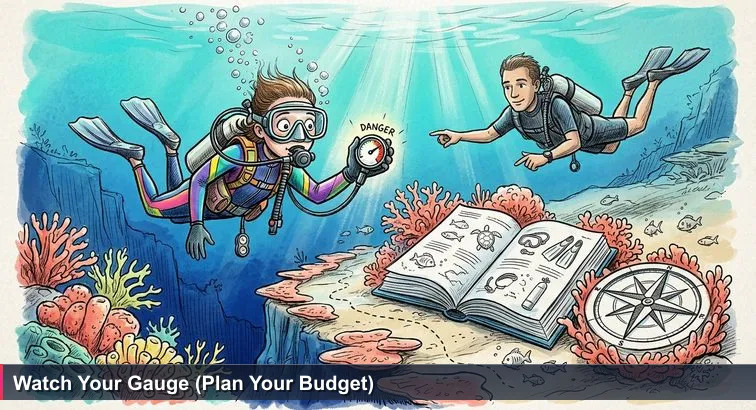
You don’t realise how fast you’re burning through air until you check the gauge at 60 feet. On that first real dive off West Bay, the water looked endless and shallow, the reef tumbling into cobalt blue. I drifted along, convinced I could stay all afternoon - right up until my instructor tapped my pressure gauge and I saw the needle already sliding toward the yellow.
Living in Cayman on a tech salary works the same way. From the surface, it looks bottomless: no income tax, fintech logos glowing over Camana Bay, Maples Group and Deloitte towers in George Town, job posts for AI engineers in Cayman Enterprise City. A KYD 95,000 package can feel like an infinite tank when you’re still on the boat, scrolling LinkedIn from London or Miami.
Surface impressions vs. real consumption
Once you’re actually here, the “air consumption” starts to show up in line items. A 1-bed near Seven Mile or central George Town commonly runs KYD 2,500-4,000. Power for a 1-bed with A/C can hit KYD 200-300 a month. Groceries for a single person land around KYD 200-250 per week in a jurisdiction that imports roughly 90% of its goods. Recent analyses cited in the Cayman Compass cost-of-living index now rank Cayman as the world’s second-most expensive jurisdiction, with overall prices about 15% higher than New York City.
The real question for AI and tech professionals
That’s why two people on similar salaries at Maples, Walkers, a Big Four firm, or a CEC fintech startup can have completely different experiences: one quietly building wealth, the other taking an unplanned roommate or flying home after 12 months. The difference isn’t the headline offer; it’s whether they treated Cayman like a dive to be planned, or a snorkel to be improvised.
This guide is about reading your gauge properly - translating KYD 95k-360k into actual bottom time once rent, food, utilities, transport, and upskilling are all factored in - so you know not just how beautiful it is down here, but how long you can afford to stay.
In This Guide
- Reading the Gauge: Living in Cayman on a Tech Salary
- Cayman in 2026: Paradise with a Price Tag
- How Tech Pay Actually Works in Cayman
- Where Your Money Goes: Housing, Food, Utilities, Transport
- Sample Monthly Budgets for Junior, Mid, and Senior Tech Roles
- Neighbourhood Strategies by Budget
- Lifestyle Trade-offs and Practical Cost Hacks
- How Cayman Compares to NYC, Miami, Barbados and Panama
- Upskilling to the KYD 95k+ Tier: AI and Dev Skills That Pay
- Can You Afford It? A Simple Decision Framework
- Plan Like a Dive: Final Checklist and Next Steps
- Frequently Asked Questions
For Cayman-focused advice, check the complete guide to starting an AI career that maps skills to Maples, Walkers, and CEC opportunities.
Cayman in 2026: Paradise with a Price Tag
From a distance, Cayman looks like the postcard version of paradise: glassy water off West Bay, white sand along Seven Mile, and a skyline of fund administrators, international banks, and law firms that quietly move billions through the global system. It is also one of the priciest jurisdictions on earth, with recent analyses in a global cost-of-living index placing Grand Cayman ahead of cities like London and Hong Kong on everyday costs.
The macro math: why everything costs so much
The core reason is structural, not seasonal greed. Cayman imports roughly 90% of its goods. Instead of income tax, government revenue comes from import duties (often around 22% on many items and 29.5-42% on most gas vehicles), work permit fees, and stamp duty on property and transactions. Reports in the local press show Cayman leading the Caribbean in growth of US food imports, and grocery bills continuing to climb even as headline inflation cools, putting sustained pressure on residents’ “gauges.”
Utilities stack on top of that. High fuel and generation costs mean electricity bills for modest apartments regularly shock newcomers, and water, telecoms, and insurance all price in the same small-island logistics. It is a beautiful reef - but it is an expensive one to hover over.
The offset: tax-free income and high-end salaries
On the other side of the ledger, there is no personal income tax on employment income. None. Recruitment specialists note that a KYD 95,000 salary in George Town delivers take-home broadly comparable to about USD 135,000 in a high-tax US city once federal, state, and local deductions are stripped out. For senior professionals, global cost-of-living models estimate local purchasing power roughly 50% higher than in New York when you combine zero tax with Cayman’s premium pay bands in finance, fintech, and law.
That combination - structurally high prices offset by structurally tax-free, globally benchmarked salaries - is the real “price tag” of paradise. For AI and ML professionals looking at offers from Maples Group, Walkers, the Big Four, or Cayman Enterprise City startups, the game is not to wish the costs away, but to model whether your air tank (salary) and breathing rate (spending) align.
How Tech Pay Actually Works in Cayman
Once you step off the plane and into HR’s onboarding meeting, the impressive headline number on your offer letter turns into something more practical: how much actually lands in your Cayman bank account each month, and who on island is willing to pay for your specific skills.
From offer letter to net pay
Cayman has no personal income tax, but most tech workers still see around 10% shaved off their gross for mandatory pension and health insurance. By law, employees contribute 5% pension (on earnings up to KYD 87,000), with many employers matching another 5% on top, and your share of health premiums typically runs KYD 100-300 per month. Cost-of-living guides used by major employers show that, in practice, your monthly net is about 90% of gross after these deductions.
| Role example | Annual gross (KYD) | Monthly gross (KYD) | Est. monthly net (KYD) |
|---|---|---|---|
| Junior Engineer | 95,000 | 7,920 | ≈ 7,100 |
| Senior Engineer | 140,000 | 11,670 | ≈ 10,500-10,800 |
| Fintech / Web3 / AI Lead | 220,000 | 18,330 | ≈ 16,500-17,000 |
These figures sit comfortably within 2026 ranges compiled from software engineer salary benchmarks in George Town, where juniors are commonly offered around KYD 95,000-105,000, mid/senior engineers KYD 130,000-155,000, and specialised fintech/Web3 talent KYD 170,000-360,000+.
Who actually pays these numbers?
The real buyers of tech and AI skills here are not consumer apps but the financial backbone of the jurisdiction: international law firms like Maples Group, Walkers and Ogier; banks and fund administrators; the local offices of PwC, Deloitte, EY and KPMG; regulators such as CIMA; and a cluster of fintech, blockchain and SaaS companies in Cayman Enterprise City. They hire for back-end engineering, cloud and DevOps, data, and increasingly AI/ML - and they price roles according to how close you are to the money, the models, and the regulatory risk they manage every day.
Where Your Money Goes: Housing, Food, Utilities, Transport
On most Cayman tech paycheques, the real “air leak” isn’t lattes or dive trips; it’s the fixed costs that hit the account every month whether you’re working late at Maples or shipping an AI feature for a Cayman Enterprise City startup. Housing sits at the top of that list, followed by food, utilities, and getting yourself to and from George Town or Seven Mile.
Housing: your biggest burner
Recent guides from local agencies and resources like Cayman Resident’s overview of typical rents show just how wide the range runs, even before you talk sea views:
- Seven Mile Beach / Camana Bay: 1-bed apartments typically KYD 2,500-4,000, reflecting walkability to banks, Big Four, and law firms.
- George Town / South Sound: central 1-beds around KYD 1,400-2,400, a mix of older and newer stock.
- West Bay: 2-beds anywhere from KYD 1,250 in older inland units to KYD 5,600 on canals or the sea.
- Bodden Town and further east: 2-bed homes in the KYD 2,000-3,650 range, with more space traded for a longer commute.
- Cayman Brac: significantly lower rents, viable if your role is remote or hybrid with infrequent trips to Grand Cayman.
Food: the quiet, relentless drawdown
Because almost everything on the supermarket shelf is shipped in, grocery costs add up quickly. For a single professional cooking most meals and eating reasonably well, a realistic range is KYD 200-250 per week, or roughly KYD 800-1,000 per month. Couples often land around KYD 1,200-1,500, and families with children can see KYD 1,800-2,200+ depending on ages and eating-out habits.
Utilities and connectivity: paying to stay cool and connected
Electricity is another line item that surprises newcomers. A 1-bed apartment running air conditioning can easily hit KYD 200-300 per month in warmer months; a typical 2-bed can reach KYD 300-450. Add KYD 100-150 for decent home internet and mobile, and you are looking at roughly KYD 350-450 a month for a single in a 1-bed, and KYD 500-700 for a couple or small family.
Transport: bus-friendly, car-dependent reality
Public minibuses charge roughly KYD 2-5 per ride along main corridors, which works if you live near George Town or Seven Mile and don’t mind some unpredictability. Most professionals still end up owning a car, and that is where Cayman’s import model bites: duties on gas vehicles often fall between 29.5-42% of the landed value, and fuel, insurance, and maintenance all run higher than in many US cities. For budgeting purposes, that translates to about KYD 200-250 per month if you lean on buses and the occasional taxi, KYD 350-500 for a modest used car and short commute, and KYD 600-800+ once you factor in a newer vehicle or daily drives from Bodden Town or West Bay.
Sample Monthly Budgets for Junior, Mid, and Senior Tech Roles
Once you know your monthly net, the next step is modelling how it behaves in the wild. To keep things grounded, these examples blend local rent data with the same kind of assumptions used in the Cayman cost-of-living report used by Amazon Web Services: pension and health trim about 10% off gross, and day-to-day spending patterns are realistic for tech professionals, not backpackers.
Junior tech (≈ KYD 95k/year): comfortable if you share
At KYD 95,000 a year, your monthly gross is about 7,920 and net is roughly KYD 7,100. The difference between thriving and treading water usually comes down to whether you split rent.
- Scenario A - Shared 2-bed in George Town Rent KYD 1,300 (your room), utilities + internet 200, groceries 800, transport 400, healthcare 150, entertainment/gym/hobbies 600, misc 500 → total spend ≈ KYD 3,950, savings ≈ KYD 3,150 (about 44% of net).
- Scenario B - Your own 1-bed near GT/SMB Rent 2,400-2,800, utilities 350-400, groceries 900-1,000, transport 450-500, healthcare 150, entertainment 700, misc 500 → total ≈ KYD 5,450-6,050, savings ≈ KYD 1,050-1,650 (around 15-23%).
Below about KYD 60,000 without housing support, these same fixed costs often compress savings to near zero, which is why many juniors treat early years here as a launchpad rather than a long-term base.
Mid / senior (≈ KYD 130-150k/year): strong surplus if you watch lifestyle creep
On KYD 140,000, monthly gross sits around 11,670, with net in the KYD 10,500-10,800 range. A fairly typical setup looks like this:
- Rent 2,800-3,200 (nice 1-bed or modest 2-bed), utilities + internet 450-500, groceries 1,000-1,100, transport 600, healthcare 200, leisure 1,000-1,200, misc 600 → total ≈ KYD 6,650-7,200, leaving roughly KYD 3,300-4,100 (30-38% of net) for savings and investments.
The AWS-style mid-level example (8,500 gross → 7,650 net) with similar line items still ends with about KYD 1,600 left over, underscoring how quickly surplus builds once you move beyond junior pay bands.
Lead / specialised (≈ KYD 170-360k+): wealth building, even with upgrades
At the lead end - say KYD 220,000 a year - monthly gross is about 18,330 and net around KYD 16,500-17,000. Many fintech, Web3, or AI leads upgrade housing, schooling, and travel and still see substantial surplus.
- Rent 4,000-4,500 (high-end 2-bed near SMB/Camana Bay), utilities + internet 600, groceries 1,200-1,400, transport 800-1,000, healthcare 300-400, private school 1,200-1,600, leisure 1,500-2,500, misc 1,000-1,500 → total ≈ KYD 10,600-12,900, leaving roughly KYD 4,000-6,400+ per month (about 25-40%+ of net) even with a premium lifestyle.
The pattern is clear: once you cross into mid and senior ranges, Cayman’s zero tax and high-end salaries become a genuine wealth accelerator - provided you don’t let every extra cubic foot of “air” turn into a bigger apartment, a newer car, and a restaurant habit you never planned for.
Neighbourhood Strategies by Budget
Choosing a neighbourhood in Grand Cayman is less about pinning a dream condo on a map and more about deciding how you want to trade commute time, cash, and community. For tech workers, where you live determines not only how much of your pay disappears into rent, but also whether you can walk to Camana Bay, rely on buses along West Bay Road, or spend an hour a day in traffic from the Eastern districts.
If you are early in your tech career or coming in on a leaner package, shared housing near the employment core is usually the smartest first move. Older apartments in George Town and inland West Bay offer realistic entry points, and house shares let you cut fixed costs while you learn the island. A typical strategy is to split a two-bedroom with another professional, share utilities and internet, and use buses or a modest car while you build savings and experience.
Once you hit mid-level pay, the key decision shifts to convenience versus space. Living around Seven Mile Beach or within the Camana Bay orbit buys walkability to banks, Big Four offices, and law firms, plus easy access to gyms, cafes, and the waterfront. Opting instead for West Bay just beyond the tourist strip or for Bodden Town gives you more square footage and often quieter surroundings, at the price of a longer daily drive into town.
For senior engineers, AI leads, and families, the menu widens again: canal-front communities, South Sound family homes, or even a base on Cayman Brac if your role is genuinely hybrid. Most long-term rentals are fully furnished, and landlords are accustomed to professional tenants on work permits, which is reflected in how properties are marketed in resources like the long-term rental guide from Provenance Properties. The practical question is which mix of rent, commute, and lifestyle leaves enough “air” in your tank for savings and the kind of island life you actually came here for.
Lifestyle Trade-offs and Practical Cost Hacks
Past a certain income level, what determines your “bottom time” in Cayman isn’t the digits on your contract so much as how you structure your life around them. Two engineers on similar salaries at the same bank can end up in totally different places after a year: one sitting on a healthy emergency fund, the other wondering how their tax-free paycheque vanished.
Most tech workers who make Cayman work long term lean on a few deliberate strategies:
- House-sharing: splitting rent and utilities in a two- or three-bedroom apartment immediately cuts your fixed burn, and it’s common for juniors and even some mid-level devs to keep this going for the first 12-24 months to push savings toward the 40-50% of net-income range.
- Commuter districts: living inland in West Bay or out in the Eastern districts trades commute time for meaningfully lower rent, even after you account for extra fuel and wear on a car.
- Remote-first mixes: AI and data roles that only need occasional in-person days open up options like basing yourself on Cayman Brac, where rent is substantially cheaper, and flying into Grand Cayman when necessary.
A second layer of hacks is behavioural. Cayman can easily turn into an endless loop of brunches, boat days, and imported gear if you let it. Residents who consistently save treat paid entertainment as the exception and lean into what the island gives you for free or nearly free: beaches, running routes, community sports, and low-cost adventures you’ll find in guides like Explore Cayman’s round-up of local activities and transport tips. They cook more than they eat out, buy cars for reliability rather than status, and use buses when it’s practical.
There’s also a meta-hack: increasing your earning power so the same lifestyle consumes less of your “tank.” Affordable programs like Nucamp’s Back End, SQL and DevOps with Python (16 weeks, ~KYD 1,770) or AI Essentials for Work (15 weeks, ~KYD 2,985) let Cayman-based professionals move from support roles into higher-paid engineering or AI-enabled positions without taking on massive debt. In a jurisdiction this expensive, using one or two months’ rent worth of tuition to climb into a stronger salary band can be the most powerful cost hack of all.
How Cayman Compares to NYC, Miami, Barbados and Panama
Once you’ve priced out rent, groceries, and a car, the obvious next question is: could you do better in New York, Miami, Bridgetown, or Panama City? For AI and ML professionals who can work almost anywhere with fibre and a laptop, Cayman has to justify its premium.
Compared with New York, Cayman’s everyday costs come in noticeably higher on core items. Global cost-of-living trackers show food bills roughly a quarter higher than in NYC, and utilities also bite harder. Yet after-tax income flips the picture for senior tech workers: New York layers federal, state, and often city tax onto your salary, while Cayman takes no personal income tax at all. For someone on a high six-figure package in financial services, that can mean more money left after rent and food in Cayman, even though every supermarket run feels steeper.
Miami tells a slightly different story. Florida has no state income tax, so the tax gap narrows, and some Miami suburbs offer cheaper rent than Seven Mile Beach or South Sound. But once you compare like-for-like neighbourhoods and factor in that Cayman’s groceries and utilities are often 20-30% more expensive, the advantage shifts to whichever location pays you closer to true global market rates. A senior AI engineer on a Cayman package tied to international finance can still come out ahead of a mid-market US tech salary in Miami, according to relocation guides used by firms like Affinity Cayman’s cost-of-living advisory.
Set against Bridgetown or Panama City, Cayman is undeniably the expensive outlier. Rents, restaurant meals, and basic services are all cheaper in Barbados and Panama, and digital nomad visas there actively court remote workers. What they generally don’t offer, at least not at Cayman’s scale, is a dense cluster of high-paying roles at international law firms, hedge fund administrators, Big Four offices, and fintech or Web3 companies sitting in a regulated offshore finance hub.
The upshot is simple: if you are junior, remote-paid in USD, and optimising for low burn, Bridgetown or Panama City can look attractive. If you are mid to senior in AI, data, or DevOps and your offer is benchmarked to Cayman’s financial-services economy, the combination of zero tax and deep-pocketed employers here usually delivers more long-term “bottom time” than New York or Miami, even with pricier bread, rent, and electricity.
Upskilling to the KYD 95k+ Tier: AI and Dev Skills That Pay
For a lot of Caymanians and regional expats, the only realistic way to make the island feel affordable is to move up a pay band, not just trim grocery bills. Crossing into the KYD 95k+ tier usually means doing work that sits closer to the core of Cayman’s economy: financial services, fintech, and regulated tech rather than generic support roles.
The skills that command those offers are clear when you look at who’s hiring. International law firms, banks, fund administrators, Big Four offices, and Cayman Enterprise City startups all lean heavily on back-end engineering, cloud and DevOps, data, and increasingly AI/ML. They need people who can wire Python services into fund platforms, design robust SQL data stores, automate infrastructure, and apply machine learning to fraud, risk, and compliance problems.
| Bootcamp | Duration | Tuition (≈ KYD) | Primary focus |
|---|---|---|---|
| Back End, SQL & DevOps with Python | 16 weeks | 1,770 | Python, databases, DevOps, cloud deployment |
| AI Essentials for Work | 15 weeks | 2,985 | Practical AI, prompt engineering, AI productivity |
| Solo AI Tech Entrepreneur | 25 weeks | 3,317 | AI products, LLM integration, monetisation |
Because living costs are so high, the ROI of upskilling matters. Nucamp keeps tuition in the low four figures while delivering community-based learning, career coaching, and outcomes that include roughly a 78% employment rate, around 75% graduation, and a 4.5/5 Trustpilot rating with about 80% five-star reviews. For someone moving from a mid-range administrative or support role into an entry-level dev, data, or AI-enabled position, that can mean effectively doubling income for the price of a month or two of rent.
Crucially, Nucamp’s live-online format is built for Cayman realities: you can keep your current job, avoid relocation to a foreign campus, and still access structured AI and software training through programs like the AI Essentials for Work bootcamp. In a labour market where Maples, Walkers, CIMA, and CEC startups are all competing for AI-literate talent, that kind of targeted upskilling is often the cleanest route into the salary ranges that make Cayman’s cost of living work in your favour.
Can You Afford It? A Simple Decision Framework
Deciding whether you can really afford Cayman is less about vibes and more about running the numbers like a risk model. Most employers chip in for pension, health insurance, and sometimes relocation or housing allowances, as outlined in international guides to employee benefits in the Cayman Islands. But once the welcome package is done, your ability to stay comfortably comes down to salary tier, dependants, and a few key thresholds.
Salary floors for singles
For a single person with no children and no housing subsidy, these ranges are a practical starting point:
- Under KYD 60k: high risk of struggling unless you have heavily subsidised housing, are happy with a very frugal lifestyle and roommates, and treat the role as a short-term stepping stone.
- KYD 70-90k: doable with shared accommodation in cheaper districts (inland West Bay, parts of George Town, Eastern districts), limited car use or reliance on buses, and careful budgeting. Savings are possible but modest if you insist on living alone.
- KYD 95-120k: typical junior dev / analyst range; comfortable if you share housing or accept a smaller solo 1-bed in town. With a roommate, savings of 20-40% of take-home are realistic.
- KYD 130-160k: mid/senior territory; you can live alone near Seven Mile or George Town and still save significantly.
- KYD 170k+: lead/specialist level; Cayman becomes a genuine wealth-accumulation play even with some lifestyle upgrades.
When kids enter the picture
Children change the equation through higher health premiums, larger housing needs, and potential private school fees:
- KYD 120k+ for a couple with one child: workable with modest housing, careful planning, and realistic expectations around cars and travel.
- KYD 150-180k+: comfortable for a small family, with room for schooling choices, occasional trips, and consistent savings.
- KYD 200k+: supports a higher-end lifestyle while still allowing meaningful long-term investing.
Your pre-offer “gauge check”
Before accepting any role, run this quick check:
- Convert your offer to monthly net: divide by 12, then multiply by 0.9 to approximate pension and health deductions.
- Subtract housing: use KYD 1,300-1,800 for a room in a shared place, or 2,500-3,200 for your own 1-bed near George Town/Seven Mile.
- Subtract fixed basics: groceries 800-1,000 (single), utilities + internet 350-450, transport 400-600 if you need a car, healthcare share 150-200.
- Read what’s left: less than KYD 800 for everything else means life will feel tight; roughly KYD 1,500-2,500+ suggests a comfortable buffer for savings, emergencies, and actually enjoying the island you moved to.
Plan Like a Dive: Final Checklist and Next Steps
On that second West Bay dive, nothing about the reef had changed - same drop-off, same parrotfish - but the plan had. We knew our target depth and bottom time, agreed on gas checks, and built in a safety stop. It felt calmer and, paradoxically, more freeing. Treating Cayman like a planned dive, not a spontaneous snorkel, is what turns a good offer into a sustainable life.
Your pre-move checklist
Before you sign anything, turn your situation into a concrete plan rather than a hunch:
- Calculate your true net: take the annual offer, divide by 12, then assume about 10% for pension and health. That’s the number you actually have to work with.
- Define your non-negotiables: solo apartment or willing to share, car vs. buses, minimum savings rate, travel expectations, and whether you’re bringing dependants.
- Choose a housing strategy: decide if you’re paying for walkability near George Town/Seven Mile, trading time for space in the Eastern districts, or starting with a house share while you learn the island.
- Stress-test your budget: plug in realistic lines for rent, groceries, utilities, transport, healthcare, and a buffer for surprises. If the remainder for savings and fun is skinny, rework something now rather than six months in.
Next steps for AI/ML and tech professionals
Once you know whether your current offer clears those thresholds, you have two levers: negotiate, or level up. Cayman’s tech-adjacent economy - international law firms, banks, Big Four offices, regulators, and Cayman Enterprise City startups - rewards back-end, data, cloud, and AI skills disproportionately. Local quality-of-life data from the government’s national survey shows most households feel materially secure, but that security is unevenly distributed; moving into higher-value roles is often what shifts you into the comfortable majority.
If your current salary modelling comes out tight, map an upskilling path. That might mean a year of focused self-study, or enrolling in an affordable bootcamp like Nucamp’s Python/DevOps or AI programmes, which are structured to fit around full-time work and priced in the low four-figure KYD range rather than traditional tuition levels. The goal is simple: trade a few months of disciplined effort now for many years of easier breathing on island.
The reef, the employers, and the opportunities are all here. The difference between surfacing early and settling in for a long, relaxed bottom time is whether you’ve checked your gauge, agreed the plan with your “buddy system” (roommates, partner, employer), and committed to building the skills that move you into the bands where Cayman’s zero tax and financial centre really start working for you.
Frequently Asked Questions
Can I actually afford to live in the Cayman Islands on a tech salary in 2026?
Yes - but it depends on your level and lifestyle. With no income tax and typical net ≈90% of gross (after pension and health), a junior on KYD 95,000 can be comfortable if they share housing, while those under KYD 60,000 risk real strain once rent and groceries are factored in.
What salary should I aim for to live comfortably and save in Grand Cayman?
Aim for at least KYD 95-120k to live comfortably (often with a roommate or modest 1-bed), KYD 130-160k to live well and save solidly, and KYD 170k+ if you want family-friendly comfort and meaningful savings; specialised fintech/Web3 leads can hit KYD 170-360k+. Net take-home is roughly 90% of gross, so a KYD 140k salary yields about KYD 10,500-10,800/month.
How much should I budget monthly for rent, groceries and utilities?
Expect rent to be the biggest line item: 1-bed near Seven Mile/Camana Bay often runs KYD 2,500-4,000, while 1-beds in George Town are KYD 1,400-2,400 and shared rooms can be ~KYD 1,300. Groceries typically cost KYD 800-1,000/month (KYD 200-250/week) and electricity/internet usually add KYD 200-450/month depending on A/C use.
I'm a junior dev - is it realistic to move to Cayman on a KYD 95k offer?
Yes, realistically - if you plan for shared housing or a cheaper district. A KYD 95k gross equates to ~KYD 7,100 net/month after deductions, and with a shared 2-bed (your share ~KYD 1,300) plus modest groceries and transport you can still save several hundred to a few thousand KYD a month.
If I'm senior or specialised in AI/ML, is Cayman financially better than NYC or Miami?
Often yes - for high earners Cayman’s zero income tax and high local demand for fintech/AI skills translate to stronger after-cost purchasing power (estimates show ~50% higher local purchasing power vs NYC for senior professionals). Senior AI/ML or fintech leads on KYD 170-360k commonly retain 25-40%+ of net income as savings even with a premium lifestyle.
Find the best junior developer opportunities in Cayman’s startup scene and tips on applying from George Town to Camana Bay.
Top 10 industries hiring AI talent in the Cayman Islands (2026 ranking)
Policy-makers and VCs can use our breakdown of the top Cayman AI startups as a map of the jurisdiction’s emerging tech reef.
Practical pathways: the Top 10 women in tech groups in the Cayman Islands (2026) for AI, blockchain and fintech careers

Irene Holden
Operations Manager
Former Microsoft Education and Learning Futures Group team member, Irene now oversees instructors at Nucamp while writing about everything tech - from careers to coding bootcamps.