









Top 10 AI Startups to Watch in the Cayman Islands in 2026
By Irene Holden
Last Updated: April 11th 2026
Too Long; Didn't Read
Sarborg and USD.AI are the two Cayman AI startups to watch in 2026 because Sarborg is building sovereign-AI infrastructure tailored to regulated funds and enterprises while USD.AI supplies GPU-backed liquidity that unlocks capital for AI builders. Sarborg has raised about KYD 8.33 million (around US$10 million) and USD.AI about KYD 10.83 million (around US$13 million), and with roughly 72% of Cayman residents using AI plus the Islands’ no direct income tax, strong legal frameworks and proximity to firms like Maples Group, Walkers and Cayman Enterprise City, both are well placed to scale regionally and export services across the Atlantic and Caribbean corridors.
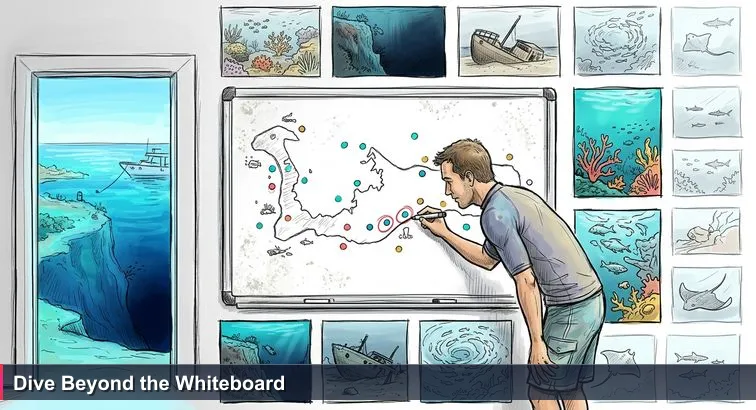
On a humid Cayman morning, the first sound is not the surf but the squeak of a marker on salt-stained plastic. Divers crowd around a whiteboard as a divemaster sketches Grand Cayman’s outline and circles a tidy “Top 10” list. Just beyond the open door, the real Caribbean glows turquoise and unruly - reef fingers, walls and blue water that spill far beyond the neat dots on the board.
Cayman’s AI economy looks much the same in 2026. On the “whiteboard” we still sketch an international financial centre: Maples Group, Walkers, the Big Four, global banks. But step outside that frame and you hit a fast-thickening reef of AI ventures in Camana Bay and Cayman Enterprise City - from BlueTech ocean-intelligence pilots to quant engines, sovereign-AI infra, and agent startups mapped in overviews like Nucamp’s guide to Cayman’s tech hub.
Crucially, AI here is no longer theoretical. Cayman Independent reports that by early 2026 about 72% of residents use AI tools for productivity, while RF Cayman Economic Outlook panels now treat AI as a core plank of economic resilience, not a side show. At the same time, startups such as Sarborg, Sahara and Kaiju are quietly raising in the KYD 8-16M band, a remarkable signal for a jurisdiction with no direct income tax and under 100,000 people.
So what does a “Top 10” even mean in an ocean this deep? Think of it less as a verdict and more as a dive slate into three dimensions of Cayman’s AI reef:
- Strategic importance to Cayman’s finance-, tourism- and health-driven economy
- Funding and traction, especially in the emerging KYD 8-16M Series A range
- Technical defensibility and export potential across the Caribbean and Atlantic corridor
For Cayman-based developers and career-changers, that map matters. With pathways like Nucamp’s AI bootcamps offering KYD 1,770-3,317 programmes that fit around work, the real decision is not whether to enter AI - it is which depth of this reef you want to build your career in.
Table of Contents
- Reading the Whiteboard, Not the Water
- Sarborg
- USD.AI
- BlueTech Centre of Excellence
- Kaiju
- NeuralStudio
- Sahara
- Excalipoint
- Agent Lunar
- HAPI Protocol
- Vizard
- Choosing Your Depth
- Frequently Asked Questions
For Cayman-focused advice, check the complete guide to starting an AI career that maps skills to Maples, Walkers, and CEC opportunities.
Sarborg
Every reef needs bedrock, and in Cayman’s AI ecosystem that role falls to Sarborg. Operating out of the Camana Bay corridor, it is quietly building the jurisdiction’s “sovereign AI” plumbing so banks, funds and law firms can use powerful models without handing their data to opaque overseas platforms.
Problem & Approach
Highly regulated clients in Cayman’s orbit - from funds structured by Maples or Walkers to banks audited by Big Four teams - are skeptical of shipping sensitive information into generic public clouds. Sarborg’s answer is an infrastructure stack built around private model hosting in compliant jurisdictions, hardened MLOps for monitoring and auditability, and rails for “autonomous digital economies” where smart contracts, trading engines and internal AI agents can interact safely.
This aligns with the trend highlighted in analyses like FundedIQ’s roundup of Cayman-funded startups: as foundation models commoditise, control over infrastructure, data residency and observability becomes the real choke point.
Key Numbers & Positioning
Sarborg has raised roughly ≈KYD 8.33M (about US$10M) in seed funding, putting it in the upper tier of Cayman AI deals. The company is in a late seed / pre-Series A phase, hiring aggressively across distributed-systems engineering, applied ML and security. Investor databases list it among the most heavily backed AI-infrastructure plays domiciled in the Islands.
Why It Matters for Cayman Talent
By allowing organisations to domicile not just funds but also their models in Cayman, Sarborg extends the jurisdiction’s traditional strengths - no direct income tax, sophisticated financial law, and IP-friendly structures - into the AI era. For local and Cayman-curious professionals, it creates hands-on roles in privacy-preserving training, model governance, and compliant deployment that are exportable across the Atlantic and Caribbean corridors.
What to Watch
Over the next 18-24 months, watch for Sarborg to become a natural acquisition target for hyperscalers seeking a regulation-friendly beachhead, and for deep integrations with Cayman-based fund administrators and trust companies as AI-powered compliance tools move from proof-of-concept into production.
USD.AI
Liquidity is the invisible current beneath most AI ventures, and USD.AI is trying to redirect that current through Cayman. Based in the Camana Bay corridor, the company lets AI builders borrow against one of their scarcest assets: high-end GPUs.
Problem & Approach
Early-stage AI startups from Miami to São Paulo struggle to secure credit lines big enough to cover clusters of H100s or A100s. Traditional banks hesitate; balance sheets look risky, and hardware is hard to value. USD.AI addresses this by operating a DeFi-style lending platform where loans are denominated in stablecoins and collateralised by GPU rigs themselves.
- Stablecoin loans secured by verifiable GPU hardware
- Automated risk models that track utilisation, resale value and market demand
- On-chain transparency so lenders can inspect collateral and loan performance in real time
According to CoinDesk’s coverage of its fundraising, this model positions USD.AI as a specialist liquidity layer for GPU-hungry AI builders worldwide, not just those physically based in Cayman.
Funding & Positioning
USD.AI has raised roughly ≈KYD 10.83M (about US$13M) in a Series A round, one of the more substantial AI-fintech raises tied to the jurisdiction. It sits at the intersection of financial engineering and infrastructure, frequently appearing in deal-flow notes from global crypto investors.
Why It Matters for Cayman Careers
Cayman already structures a significant slice of the world’s alternative investment funds. USD.AI extends that expertise to GPU capital: think Cayman-domiciled vehicles securitising diversified loan books backed by compute rather than real estate or aircraft. For engineers and data scientists on-island, it creates roles in credit-scoring models, risk analytics and protocol engineering that plug directly into both Web3 and institutional finance.
Over time, expect deeper dialogue with CIMA as AI infrastructure, stablecoins and regulated finance converge - and potential for structured products that let Cayman-based funds gain exposure to the “picks and shovels” of the global AI boom.
BlueTech Centre of Excellence
Some of Cayman’s most important AI work is happening just offshore. The planned BlueTech Centre of Excellence treats the Caribbean not just as a postcard backdrop but as a massive, under-instrumented dataset - ports, reefs, storm tracks and sediment flows that affect everything from tourism revenue to insurance pricing.
From Dive Site to Data Site
Island economies live and die by their coastlines, yet many still rely on sparse gauges and occasional dive surveys. The BlueTech cluster, championed by Cayman Enterprise City as part of the push to build the world’s next BlueTech centre of excellence, is changing that. Resident startups are deploying computer-vision buoys, underwater drones and sensor networks to monitor reefs, moorings and port approaches in real time.
Funding the Ocean Intelligence Layer
Unlike hobbyist reef cams, these are venture-backed companies. Early BlueTech ventures in the zone are raising ≈KYD 1.67M (about US$2M) in initial rounds, often with support from the Sui Foundation and national innovation funds. According to CEC’s BlueTech overview, pilot projects in marine environmental monitoring are slated to go live across Cayman’s near-shore reefs and seagrass beds, turning local waters into a living training set.
Why It Matters for Cayman Careers
BlueTech fits Cayman in a way few other verticals do. It blends tourism, marine science, coastal real estate and climate resilience - sectors where the Islands already have global visibility. For data scientists and engineers, it opens roles in:
- Computer vision for underwater imagery and port surveillance
- Time-series modelling of waves, storms and erosion
- Robotics and edge AI on buoys, drones and AUVs
Add Cayman’s no direct income tax and export potential across the Atlantic and Caribbean - from Bermuda’s harbours to Belize’s reefs - and the BlueTech Centre becomes more than a niche cluster. It is a blueprint for how small islands can own high-value, AI-driven IP in the era of rising seas and shifting currents.
Kaiju
In Cayman’s AI reef, Kaiju is the shop that lives in the fastest current. It specialises in deep-learning models for high-velocity digital-asset trading, operating out of Camana Bay but plugged into exchanges and liquidity pools that never sleep.
Digital-asset markets behave nothing like traditional FX or equities: they run 24/7, liquidity is fragmented across venues, and regime shifts can happen in minutes. Kaiju leans into that chaos with:
- Sequence models (recurrent and transformer-based) tuned for ultra-short-horizon price prediction
- Reinforcement-learning strategies that adapt to volatility and changing market microstructure
- Real-time risk engines that dynamically manage leverage and cross-exchange exposure
The company has secured roughly ≈KYD 16.6M (about US$20M) in Series A funding, putting it among the most heavily backed AI-native trading firms in the jurisdiction. Regional maps like StartupBlink’s Cayman rankings consistently place quant and Web3 ventures near the top of the local ecosystem, reflecting strong investor appetite for algorithmic finance structured through Cayman vehicles.
For the Islands, Kaiju does more than generate alpha. Cayman already hosts a large share of the world’s hedge funds and digital-asset structures; Kaiju moves some of that value creation on-island, turning Cayman from a domicile of record into a design lab for AI trading systems. That has knock-on effects for talent demand in:
- Applied ML and research engineering for strategy discovery
- Low-latency infrastructure and exchange connectivity
- Quant risk and data engineering across fragmented order books
Looking ahead, Kaiju is a plausible acquisition target for major exchanges, prime brokers or global quant funds wanting in-house AI capabilities within a tax-efficient, regulation-savvy jurisdiction. For Cayman-based engineers and data scientists, it represents one of the clearest paths into cutting-edge trading AI without leaving Seven Mile Beach behind.
NeuralStudio
On the shallow reef of Cayman’s AI ocean, NeuralStudio is often the first thing local businesses bump into. Based in George Town’s Cayman Tech City, it offers an AutoML portal that lets non-technical teams turn CSVs into working models without needing a resident data scientist.
From Spreadsheet to Model in a Browser
NeuralStudio’s core product is a browser-based interface where users upload their historical data, select an outcome to predict, and let the platform handle feature engineering, model selection and tuning. The results can then be deployed with one click either to the cloud or to edge devices in warehouses, shops or small offices.
- Zero-code templates for demand forecasting, churn prediction and basic anomaly detection
- Automatic monitoring of model drift and performance
- Simple connectors into common databases and file-based workflows
This sort of “AI without the PhD” is exactly what many Cayman SMEs need. Analyses of local AI deployment, such as TechBehemoths’ Cayman AI company listings, note that most regional firms are still in early stages of analytics maturity, making low-friction tools critical.
Funding & Early Traction
NeuralStudio has secured around ≈KYD 1.0M (about US$1.2M) in seed funding, largely a mix of proprietary capital and early revenue. It is already serving logistics operators and retailers in Cayman and nearby markets, where small improvements in stock levels or staffing can have outsized impact on margins.
Role in the Local Talent Pipeline
The venture featured among the top projects in Enterprise Cayman’s Business Design Competition, which spotlights AI-native ideas originating on-island; the programme’s finalists were announced via Enterprise Cayman’s showcase. NeuralStudio’s founders have been explicit about integrating Caymanian developers and analysts into their MLOps flows, giving early-career technologists a concrete pathway from coding bootcamps and university courses into production AI work.
For Cayman professionals who understand their sector but not yet the maths, NeuralStudio is a practical bridge: it lets them start driving measurable results with models today, while they continue deepening their skills in Python, data engineering and cloud through programmes and on-the-job learning.
Sahara
As Cayman’s financial and Web3 sectors plug more systems into AI, Sahara is the team watching the breakers. Operating between George Town and Camana Bay, it builds AI-enabled cybersecurity with a Web3 twist, aiming to give firms real-time threat detection backed by tamper-evident audit trails.
Problem & Approach
Global banks, fund administrators and digital-asset desks structured through Cayman are under pressure to adopt AI while fending off increasingly sophisticated attacks. Sahara, founded by alumni of Harvard and UC Berkeley, responds with machine-learning models that continuously analyse network traffic, on-chain activity and application logs to flag anomalies. Every high-value event is anchored to blockchain, creating an “immutable” audit trail that can be inspected by security teams, regulators and even counterparties.
Funding & Differentiators
The company has raised an estimated ≈KYD 12.5M (around US$15M) in Series A funding, placing it near the top of Tracxn’s Cayman AI-security rankings. Its edge lies in combining AI-driven anomaly detection with cryptographic evidence: rather than just raising alerts, Sahara can prove what happened, when, and in what sequence, an increasingly important capability for institutional clients in finance, Web3 and critical infrastructure.
Why It Matters for Cayman Careers
From banks downtown to trust companies in Camana Bay, local incumbents are moving sensitive processes onto AI platforms. Consulting analyses such as Sperto’s AI strategy guidance for Cayman businesses stress that security and governance are now central to AI adoption. Sahara sits exactly at that intersection, creating roles in threat-intelligence data science, security engineering and on-chain analytics that are anchored in Cayman but global in scope.
Watch for Sahara’s telemetry and audit standards to influence how offshore finance reports AI and cyber risk. If its approach becomes a template for “provable security” in AI-heavy workflows, Cayman could end up exporting not just financial products, but best practices for trustworthy machine intelligence.
Excalipoint
Where most of Cayman’s AI ventures orbit finance or cyber, Excalipoint dives into the immune system itself. Headquartered in George Town, it is a vertical AI biotech startup focused on unlocking new T-cell immunotherapies by training models on vast, messy immunological datasets that traditional tools struggle to interpret.
AI for T-Cell Discovery
Immuno-oncology has an enormous search space: countless combinations of T-cell receptors, tumour types and patient histories. Excalipoint applies specialised models to multi-omic and clinical data to surface promising targets and response signatures that generic platforms may overlook.
- Multi-modal learning across genomics, proteomics and clinical records
- Pattern discovery in how T-cells recognise and attack cancer cells
- Partner-ready platforms that plug into pharma discovery pipelines
Funding Signal & Investor Confidence
The company has raised more than KYD 12M (roughly US$14-15M) in a Series A round backed by a consortium of over 22 investors, including HongShan. That scale of backing mirrors a wider global pivot: major funds highlighted in overviews of Series A biotech and life-sciences investors are now explicitly seeking AI-native drug-discovery plays.
Why Cayman, and Why It Matters
Excalipoint uses Cayman as an IP and capital hub. The jurisdiction’s strong frameworks for IP holding and licensing, combined with no direct income tax, make it attractive for structuring royalty streams and co-development deals with global pharma. For the local ecosystem, it proves that Cayman can host IP-heavy AI ventures, not just fintech wrappers, and that deep-tech research can coexist alongside funds and law firms in Camana Bay.
For Cayman-based data scientists and engineers, Excalipoint opens a different kind of career path: working on graph neural networks for protein interactions, experiment-prioritisation models and clinical-trial optimisation, all while staying plugged into an international biotech funding network from a Caribbean base.
Agent Lunar
Tucked between law firms and coffee shops in George Town, Agent Lunar is quietly turning email chains, PDFs and checklists into something machines can actually act on. Operating via luniate.ai and backed by Techstars Global, it builds autonomous agents that take on the repetitive back-office work that keeps Cayman’s professional-services economy running.
The target is clear: regional businesses like trust companies, boutique law firms and fund administrators still rely on manual workflows for onboarding, compliance, invoicing and client communication. Agent Lunar’s platform orchestrates multiple specialised agents that can read and draft documents, chase tasks across systems, and update records without needing constant human prompting.
- Document intelligence to extract key fields from lengthy contracts or KYC packs
- Workflow agents that send reminders, compile status updates and escalate edge cases
- Vertical templates tuned for sectors such as legal, corporate services and light manufacturing
The startup has raised around ≈KYD 0.1M (about US$120k) in pre-seed funding and is part of a growing cohort of George Town companies catalogued in platforms like the F6S directory of Cayman startups. Its subscription SaaS model is designed for SMEs, offering tiers that a three-partner law practice or regional distributor can actually afford.
For Cayman-based AI practitioners, Agent Lunar is a hands-on proving ground for generative agents in conservative environments. Engineers and data scientists can work on task-planning, retrieval-augmented generation and reliability at the coalface of real client files, not synthetic benchmarks. For operations managers and paralegals, it offers a path to become “agent wranglers” - people who understand both the business process and how to supervise fleets of AI workers safely.
If the company can show repeatable ROI across Caribbean and North American SMEs, it is a likely acqui-hire target for larger AI consultancies or SaaS vendors keen to productise back-office automation in professional services, one of Cayman’s most entrenched strengths.
HAPI Protocol
When Cayman-domiciled funds venture into DeFi, the water looks clear until something moves fast in the shadows. HAPI Protocol sits at that edge, offering AI-driven fraud intelligence that scores wallets and smart contracts for risk in real time.
Problem & Approach
As more Cayman structures gain exposure to DeFi yield strategies, managers face complex AML, sanctions and fraud obligations. Traditional transaction monitoring was built for bank wires, not flash-loan attacks or cross-chain bridges. HAPI trains machine-learning models on historical on-chain exploits to identify suspicious patterns before losses crystallise.
- Real-time wallet scoring based on behavioural history and links to known bad actors
- Smart-contract risk analysis exposed via APIs and on-chain oracles
- Exchange and DeFi integrations that can halt or flag flows dynamically
Funding & Footprint
The project has raised around ≈KYD 4.16M (about US$5M) in seed/early-stage funding and is already integrated with multiple global exchanges and protocols. In ecosystem overviews like Seedtable’s guide to George Town startups, security and Web3 analytics ventures feature prominently, reflecting investor recognition that trust infrastructure must grow alongside trading volumes.
Why It Matters for Cayman Talent
Cayman’s role as an international financial centre means local service providers are increasingly asked to diligence DeFi exposures and token strategies. HAPI’s tooling gives them an AI-native way to do that, turning opaque wallet addresses into risk scores that compliance teams can act on.
For developers and data scientists on-island, the protocol offers work at the frontier of on-chain ML: building graph models over transaction networks, streaming anomaly detectors and low-latency APIs that plug straight into exchanges and fund dashboards. If successful, HAPI won’t just protect Cayman-linked DeFi flows; it will help define what “AI-powered compliance” looks like for digital assets globally.
Vizard
Not every AI win in Cayman is buried in a balance sheet; some live on TikTok and YouTube. Vizard focuses on those attention markets, using computer vision and language models to slice long-form video into platform-ready clips for creators, agencies and tourism brands.
AI for the Creator and Agency Economy
Instead of editors manually scrubbing through hours of footage from a Seven Mile Beach shoot or a conference at Camana Bay, Vizard’s engine scans the video, identifies high-impact segments and assembles them into short clips tailored for TikTok, Instagram Reels and YouTube Shorts. The system combines scene detection, speaker-change recognition and basic sentiment cues to decide what’s most likely to stop a thumb mid-scroll.
Templates are tuned for agency workflows, so a small Cayman creative studio can generate multiple branded cuts per client with consistent intros, captions and aspect ratios. That matters in an economy where tourism boards, hotels and financial-services brands are all racing to refresh their digital presence; pieces like Cayman Compass’s analysis of tech-led transformation highlight how critical content is becoming to the Islands’ global competitiveness.
Funding, Location & Career Paths
Vizard has raised about ≈KYD 2.92M (roughly US$3.5M) in seed funding and operates along the West Bay corridor, close to Cayman Tech City and a growing cluster of agencies and production houses. Usage metrics point to strong month-on-month growth in active users, particularly among digital marketing agencies managing multiple clients across the Caribbean.
For Cayman-based developers and ML practitioners, Vizard offers a chance to work on applied multimodal AI: aligning vision models with language understanding, optimising clip selection for watch-time, and building SaaS infrastructure that can scale globally from an island base. For marketers and editors, it is both a productivity tool and a skill amplifier, freeing them to focus on storytelling and campaign strategy while AI handles the repetitive grind of the edit bay.
Choosing Your Depth
After a day on the water, the whiteboard back at the dive shop looks different. You still see the same ten circled sites, but now you remember the thermoclines, the surge, the unexpected turtle that drifted through your frame. Cayman’s AI “Top 10” works the same way: the names are a starting point, the real learning comes from where you decide to drop in.
Look across this reef and you can see distinct layers. At the surface are the application-layer tools turning AI into invoices, dashboards and video clips. Below that, sheer walls of sector-specific AI in trading, ocean intelligence and biotech. Deeper still, the infrastructure and capital layer where sovereign-AI stacks and GPU-backed credit quietly shape what’s possible everywhere else.
How to Choose Your Depth
- If you’re drawn to systems thinking, security and regulation, the infra edge - Sarborg, USD.AI, Sahara - lets you work where AI meets cloud, compliance and capital markets.
- If domain expertise excites you, vertical plays like BlueTech, Kaiju and Excalipoint reward people who speak both SQL and “storm surge”, “order book” or “T-cell receptor”.
- If you care about end-users and workflows, application ventures - NeuralStudio, Agent Lunar, HAPI Protocol, Vizard - turn product instincts and prompt craft into measurable ROI for Cayman businesses.
Local conversations have shifted accordingly. In its coverage of the RF Cayman Economic Outlook, Cayman Independent reports that AI is now treated as a pillar of long-term resilience, not a side project. The Cayman Islands Chamber of Commerce has been openly asking whether local startups can thrive in an age of AI - and increasingly, the answer looks like “yes, if we pick our spots wisely.”
For developers, analysts and career-changers on-island or Cayman-curious, the play is simple: choose the depth where your curiosity naturally pulls you, then use Cayman’s advantages - no direct income tax, global finance on your doorstep, CEC and TechCayman pathways - to build there. The whiteboard is your orientation. The real work, and the real upside, is in the water.
Frequently Asked Questions
Which Cayman AI startup should I watch first as an investor?
It depends on your thesis: for sovereign infrastructure and regulatory-moat play watch Sarborg (seed ≈KYD 8.33M / US$10M), for high-return finance exposure watch Kaiju (Series A ≈KYD 16.6M / US$20M), and for fintech-liquidity upside consider USD.AI (Series A ≈KYD 10.83M / US$13M). Each targets different exit paths - infra buyers, quant funds or DeFi/fintech acquirers.
How did you rank these Top 10 Cayman AI startups?
Rankings used three practical filters: strategic importance to Cayman’s economy; funding and traction (noting a growing KYD 8-16M Series A band); and technical defensibility plus export potential across the Caribbean and Atlantic corridor. These factors were weighted to favour companies likely to scale from Cayman’s legal and tax advantages.
Which startups are actually hiring on-island and what roles are they offering?
Several are recruiting locally: Sarborg is hiring engineers and MLOps specialists, NeuralStudio integrates Caymanian developers into its MLOps workflows, and Kaiju and USD.AI are building teams in the Camana Bay corridor focused on trading, infra and DevOps. With about 72% of residents using AI tools by early 2026, local talent pipelines and junior-to-mid roles are growing fast.
Are these companies realistic acquisition or exit targets from Cayman?
Yes - multiple names are plausible exit targets: Sarborg and Sahara for hyperscalers or security firms, Kaiju and USD.AI for finance/crypto acquirers or public listings given Series A sizes (KYD 10-16M+). Cayman's no-direct-income-tax and strong IP/legal frameworks make M&A or dual-jurisdiction listings commercially attractive.
If I'm a Cayman founder, which 'depth' should I build around: infra, sector-specific or application-layer?
Pick by customer, capital and time-to-revenue: infra plays (Sarborg, USD.AI) need larger raises (KYD 8-16M) and long regulatory sales cycles; sector-specific bets (BlueTech, Excalipoint, Kaiju) lean on domain partnerships and export markets; application-layer startups (NeuralStudio, Agent Lunar, Vizard) can scale faster with smaller seed rounds (≈KYD 1-3M) and local SME customers.
Find out which top 10 Cayman AI companies are best for fintech, legal-tech or sovereign RegTech careers.
Practical pathways: the Top 10 women in tech groups in the Cayman Islands (2026) for AI, blockchain and fintech careers
Read our practical guide to choosing from the top AI bootcamps for Cayman Island learners, including tips on networking through CEC.
Learn about AI meetups, communities, and networking events in Cayman Islands (2026)

Irene Holden
Operations Manager
Former Microsoft Education and Learning Futures Group team member, Irene now oversees instructors at Nucamp while writing about everything tech - from careers to coding bootcamps.