









Cost of Living vs Tech Salaries in Monaco in 2026: Can You Actually Afford It?
By Irene Holden
Last Updated: April 18th 2026
Key Takeaways
Yes, you can afford Monaco in 2026 with a strategic approach, leveraging its zero personal income tax to boost net salaries, but housing costs are steep, with rents in Monaco averaging over €4,000 for a studio versus €1,200 in French border towns like Beausoleil. Senior tech roles earning upwards of €150,000 can justify living within the principality, while most professionals opt for commuting from nearby France to balance expenses and tap into the growing Côte d'Azur tech ecosystem. Ultimately, your decision hinges on whether the prestige of a Monaco address is worth the premium or if a commuter lifestyle offers a more sustainable path to thriving in this glamorous region.
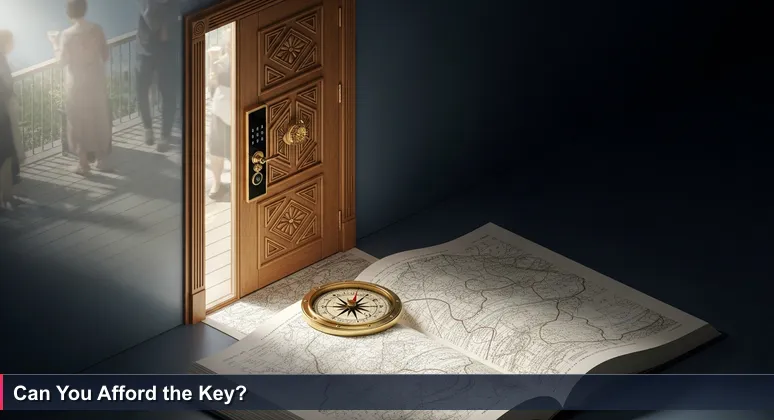
We’ve all seen that door. The one that promises a world of elegance, success, and belonging, if only you knew the code. For ambitious tech professionals, the Principality of Monaco presents this exact allure: earn a premium salary, keep every euro of it thanks to zero personal income tax for residents, and live in one of the world's most secure and glamorous locations. The shimmering promise is potent, turning a €100,000 offer into a net take-home comparable to €140,000+ elsewhere in Europe.
But this is not a simple invitation. The real question isn't about wanting in; it's whether you can afford the key - and sustain the life that awaits on the other side. As data reveals, this is a high-cost, high-service lifestyle where the premium environment commands a premium price. The initial allure meets a complex reality where rent in Monaco is 342.9% higher than the U.S. average, creating the fundamental tension of the "Monaco dream."
This guide moves beyond the dream into a strategic calculation. Your tech salary is just one variable in an equation that includes extreme geography, lifestyle trade-offs, and a career trajectory within the booming Côte d'Azur tech ecosystem. We will decode whether Monaco's tech promise is a sustainable masterpiece or a gilded mirage, providing the framework you need to make an informed decision with your eyes wide open.
In This Guide
- The Gilded Door to Monaco Tech
- Monaco's Unique Proposition for Tech
- Decoding Housing Costs in Monaco
- Full Monthly Budget Breakdown
- Tech Salaries in Monaco for 2026
- The Commuter Pathway to Affordability
- The Resident Pathway in Monaco
- The Family Pathway in Monaco
- Monaco vs Regional Tech Hubs
- Making Your Monaco Decision
- Frequently Asked Questions
Get all the details in the comprehensive guide to AI careers in Monaco.
Monaco's Unique Proposition for Tech
To understand Monaco's proposition, you must first separate the headline attraction from the comprehensive reality. The absence of personal income tax for residents is the foundational draw, creating immediate financial leverage. However, this premium fiscal environment exists within a premium-priced micro-state, creating a classic value equation.
The Fiscal Advantage and Its Counterweight
The tax benefit is substantial, but experts caution it's not a free pass. Financial analysts from Expat Money note that "nearly everything costs roughly double what it does in America, and housing costs more than four times as much". This establishes the core trade-off: significant gross salary retention versus equally significant living expenses. The state's investment in security, modern infrastructure, and efficient public services is unparalleled, but it's baked into the cost of everything from groceries to a parking spot.
A Sophisticated, Niche Tech Ecosystem
Contrary to being solely a financial hub, Monaco has cultivated a targeted tech scene. This ecosystem is driven by the state-backed MonacoTech incubator, which provides seed funding and support to local startups, and the government's overarching Extended Monaco digital transformation initiative. Major local employers seeking tech talent include infrastructure leader Monaco Telecom, the vast hospitality and entertainment group Monte-Carlo Société des Bains de Mer (SBM), and innovative engineering firms like Venturi, alongside the specialized IT and cybersecurity needs of the principality's numerous private banks and yachting companies.
Integration with the Côte d'Azur Powerhouse
Monaco's greatest tech asset may be its geography. Its ecosystem is not isolated but is tightly integrated with the larger regional hub of Sophia Antipolis, Europe's largest technology park, just a 40-minute drive away. This gives tech professionals in Monaco direct access to a vast network of multinational tech companies, research labs, and startups, effectively offering the prestige and tax benefits of Monaco with the career breadth of the French Riviera.
Decoding Housing Costs in Monaco
Housing is the single largest and most defining expense in the affordability equation, representing the fundamental choice between prestige and practicality. With the average price per square meter hovering around €54,000, real estate in Monaco is among the most expensive on the planet. For tech workers, this almost universally means renting, and the market is characterized by extreme premiums for location and limited availability.
The Price of a Monaco Address
Rental costs vary dramatically by district, defining lifestyle and budget. In the ultra-luxurious epicenter of Monte-Carlo, a studio starts at €4,000, with one-bedrooms reaching €8,000 to €15,000+. The vibrant La Condamine port area commands €3,500-€9,500 for a two-room apartment, while the modern, family-oriented Fontvieille district ranges from €5,000 to €11,000. For those seeking relative value within the principality, the quieter Jardin Exotique area might offer a studio for €2,500 to €4,100.
The Strategic Compromise: Les Villes Frontalières
The most popular and financially sustainable strategy is to live in a neighboring French commune. This choice creates a dramatic cost reduction. Beausoleil, literally across the street from Monaco, offers a similar studio or one-bedroom for between €1,200 and €2,500 per month - a fraction of the cost. Slightly further but scenically beautiful, Cap d'Ail or Menton provide a 15-25 minute commute via bus or train for rents ranging from €900 to €3,000.
The tradeoff is stark and clear: living in Monaco multiplies your housing cost by a factor of 3x or more compared to the French border towns. This isn't a minor budget line item; it is the primary financial lever in your Monaco strategy.
Full Monthly Budget Breakdown
While housing is the giant in your budget, numerous other expenses accumulate to define your true monthly outlay. A realistic budget for a single professional extends far beyond rent, encompassing utilities, sustenance, mobility, and the cost of simply living in a premium environment.
Sustenance and Home Infrastructure
Groceries in Monaco are approximately 15-25% higher than in neighboring France. A single person can expect to spend €300-€500 monthly, while a couple's budget ranges from €600 to €1,000. For home utilities, electricity, heating, and cooling for an 85m² apartment typically run €150-€200. Staying connected is also a notable line item; Monaco Telecom's combined fibre broadband and mobile packages start around €98/month.
Mobility and Healthcare
Transport costs bifurcate based on choice. Public transit is exceptionally efficient and affordable, with a single bus ticket at €1.50 and a resident monthly pass for just €15. The TER train to Nice costs €4-€5. Conversely, private car ownership is a luxury with severe costs: underground parking runs €300-€600 monthly, plus fuel, insurance, and tunnel fees. For healthcare, residents are covered by the Monegasque Social Security (CCSS), but most add a private Mutuelle for optimal coverage at €50-€150/month.
Leisure and the Bottom Line
Leisure expenses reveal Monaco's dual nature. A casual lunch costs €20-€30, comparable to other global hubs, while fine dining resides in another financial stratum. Activities like cinema cost around €15, but the surrounding geography offers plentiful free options like hiking and public beaches. When all these categories are summed, the cost of living for a single person, excluding rent, is approximately €1,749 per month. This figure underscores that the principality's premium extends into every facet of daily life.
Tech Salaries in Monaco for 2026
The earning potential for tech professionals in Monaco is high but exhibits a dramatic range, creating distinct financial realities. Your ability to afford life in or around the principality hinges directly on which segment of this salary spectrum you occupy, heavily influenced by specialization, seniority, and employer type.
The Premium for Senior & Specialized Expertise
At the apex, roles requiring deep expertise command exceptional compensation. According to Glassdoor's 2026 estimates, a Senior Software Engineer at a major firm can earn from €149,189 up to €367,924 annually. Similarly, Senior Full Stack Developer roles range from €119,702 to €284,726. These figures represent the top-tier packages necessary to realistically consider absorbing Monaco's housing costs.
The Reality for Mid-Level & Generalist Positions
The picture becomes less uniformly stellar for general IT or mid-level development roles. Surveys from platforms like 6figr.com show averages closer to €52,000, while Paylab data estimates an IT Specialist salary range of €40,896 to €86,892. This disparity highlights a common reality, as noted in industry discussions: "Monaco is so small that I'd expect basically all their developers to live in France and be paid French salaries." For many, the French commuter model is not a choice but a financial necessity.
"Monaco is so small that I'd expect basically all their developers to live in France and be paid French salaries." - Tech industry contributor on Reddit
The Founder & Startup Pathway
For those entering via the MonacoTech incubator, compensation often differs. Initial salaries may be lower or equity-heavy, offset by the unique support, networking, and potential high-growth trajectory offered within the principality's dedicated startup ecosystem. This path trades immediate, high cash compensation for long-term potential and alignment with Monaco's innovation goals.
The Commuter Pathway to Affordability
The most common and financially sustainable entry point for tech professionals is the commuter pathway. This strategic approach treats Monaco as a workplace rather than a residence, leveraging the dramatic cost differential just across the border. With a target salary range of €40,000 to €70,000, this model makes the Côte d'Azur tech life genuinely attainable.
The Strategic Base: French Border Towns
The cornerstone of this strategy is residing in a neighboring French commune. Beausoleil is the classic choice, offering a comfortable one-bedroom apartment for €1,200-€2,000, literally a short walk from Monaco. Alternatives like Cap d'Ail or Menton provide scenic coastal living with a slightly longer but manageable commute of 15-25 minutes by bus or TER train. This single decision reduces your largest expense by a factor of three or more.
The Monthly Financial Blueprint
This pathway unlocks a manageable monthly budget where savings remain possible. A typical breakdown includes rent and utilities around €1,400, efficient public transport via the €15/month bus pass or TER train, and controlled costs for food, healthcare, and leisure. When totaled, core living expenses hover around €2,700. For someone with a net salary in this range, this leaves a significant portion for savings, investments, or enjoying the region's amenities.
Integration, Not Isolation
This approach is the regional norm, not an exception. As highlighted in practical discussions, living in Beausoleil and working in Monaco is the "classic combo for someone who works in Monaco but doesn't have a Monaco salary". It fully integrates you into the broader job market, including opportunities in Sophia Antipolis, while allowing you to experience Monaco's benefits - networking, leisure, and career advancement - without the unsustainable financial burden of its real estate.
The Resident Pathway in Monaco
For tech professionals commanding higher compensation, the resident pathway becomes a viable, though calculated, choice. With a target salary of €80,000 to €130,000+, this model accepts Monaco's premium housing costs in exchange for unparalleled convenience, security, and the prestige of a Monegasque address. It is the path for senior individual contributors and managers for whom the tax advantage can significantly offset the cost of living.
Choosing Your District Strategically
Success on this path depends on strategic neighborhood selection, prioritizing "value" areas within the principality. This often means a small studio or one-bedroom in La Condamine for its vibrant local feel, or opting for the quieter, more residential Jardin Exotique, where rents range from €2,500 to €4,500 for compact living spaces. The goal is to find a balance between cost and the core benefit: eliminating the daily cross-border commute.
The Revised Monthly Calculus
Housing becomes the dominant, non-negotiable expense. A realistic monthly budget allocates €3,800 or more for rent and utilities. Transport costs shrink to a negligible €100 for walking and the efficient local bus network, as private car ownership transforms into a prohibitively expensive luxury. With higher costs for groceries, leisure, and comprehensive connectivity packages from Monaco Telecom, total core expenses rise to approximately €6,100.
The financial viability hinges entirely on the tax advantage. While disposable income after housing may not be vastly greater than a commuter's, the resident retains a significantly larger portion of their gross salary. This pathway is a conscious trade: you exchange potential savings or lifestyle luxuries for the intangible benefits of time, convenience, and status that come with living within the golden square mile.
The Family Pathway in Monaco
The pathway for established professionals seeking a long-term family life within Monaco is the most capital-intensive, requiring not just a high salary but significant existing assets. This is for those at the pinnacle of their career, with a target salary of €150,000+, for whom Monaco's safety, environment, and elite schooling justify the monumental financial commitment.
Housing and Family Logistics at a Premium
Accommodating a family means securing larger living space, with budgets for a two-bedroom apartment in family-oriented districts like Fontvieille starting at €5,000-€8,000+ per month. Beyond housing, family logistics introduce major recurring costs. While public schools following the French curriculum are free, the prestigious International School of Monaco (ISM) charges annual fees exceeding €20,000 per child. This represents a significant, long-term financial commitment on top of already exceptional housing costs.
The Hidden Barrier: Proof of Capital
A critical, often overlooked hurdle is the residency requirement itself. Beyond demonstrating a high salary or employment contract, securing long-term residency typically requires proof of substantial independent means. As detailed in guides on Monegasque residency, applicants are often expected to show evidence of €500,000 to €1M in a bank account or equivalent assets. This capital requirement creates a barrier that even a top tech salary alone may not overcome without prior wealth accumulation or a successful entrepreneurial exit.
This pathway, therefore, demands a dual foundation: a top-tier compensation package from a major employer or venture, complemented by significant existing capital. It is the ultimate trade-off, exchanging colossal financial outlay for what many consider an unparalleled environment in which to raise a family.
Monaco vs Regional Tech Hubs
Is Monaco your only option for a tech career on the French Riviera? The broader Côte d'Azur and neighboring regions offer compelling alternatives, each with a distinct balance of salary, cost, tax, and lifestyle. Your ideal hub depends on whether you prioritize net wealth accumulation, career ecosystem breadth, or overall quality of life.
| Hub | Key Differentiators | Best For |
|---|---|---|
| Monaco | 0% personal income tax; ultra-high housing costs (€54,000/m² avg.); premium, niche ecosystem with major employers like Monaco Telecom & SBM; integrated with Sophia Antipolis. | Senior specialists maximizing net salary; those valuing prestige/security; founders in MonacoTech. |
| Nice / Sophia Antipolis | Dramatically lower rents (€800-€1,500 for 1BR); strong, diverse tech scene; standard French income tax; more space; "normal" city life. | Building long-term career in a deep tech ecosystem; young families needing space; balanced lifestyle. |
| Geneva | High salaries but high federal/cantonal taxes; extremely high general cost of living, especially for insurance and healthcare; international organization hub. | Those in international tech/diplomatic sectors; comfortable with high gross pay but significant deductions. |
| Milan | Vibrant, lower-cost tech hub; energetic culture; high personal income taxes; lower safety ratings than Monaco. | Dynamic startup culture; prioritizing lower upfront living costs over tax efficiency. |
This regional view is crucial for education as well. While Monaco offers tech-adjacent business programs at the International University of Monaco (IUM), the Université Côte d'Azur in Nice provides extensive, direct computer science and engineering degrees, feeding the regional talent pipeline. Your career can thrive on mobility between these hubs, allowing you to design a life that optimizes both professional opportunity and personal finance.
Making Your Monaco Decision
The door to Monaco isn't locked with a single key marked "salary." It requires a complete set: specialized income, a strategic mindset about geography, and, for true settlement, significant capital. Transforming the dream into reality demands moving from wonder to a clear-eyed, mathematical strategy.
Your Four-Step Decision Framework
- Benchmark Your Offer Rigorously: Compare your net salary - factoring in Monaco's 0% income tax - against the detailed budgets for your desired lifestyle. Does a €100,000 offer truly cover a €6,100 monthly resident budget or a €2,700 commuter budget with robust savings?
- Embrace the Commuter Compromise: Seriously consider the French border towns. As established, this is the regional norm for a reason. Living in Beausoleil and working in Monaco is not a failure but a financially intelligent entry point into the Côte d'Azur tech ecosystem.
- Calculate the True Cost of Prestige: Decide what the Monaco address itself is worth to you in euros per month. Is the convenience, networking, and status worth an extra €2,500 in rent? For some, it's an invaluable investment; for others, that capital is better deployed elsewhere.
- View Monaco as Part of an Ecosystem: Your career can thrive between the principality's niche firms and Sophia Antipolis. Your life can be enriched by the entire Riviera. This holistic view offers more flexibility and opportunity than an all-or-nothing approach.
Monaco remains a land of exceptional opportunity for tech talent, but its promise is nuanced. It rewards the strategic, the highly compensated, and those who understand that the ultimate luxury isn't just living tax-free - it's living on your own terms, with your eyes wide open to the true cost of the golden door.
Frequently Asked Questions
Can I actually afford to live in Monaco on a tech salary in 2026?
Yes, but it depends on your role and strategy. Senior tech professionals earning €150,000+ can manage living in Monaco, while mid-level roles around €52,000 often find commuting from French towns like Beausoleil more affordable, with rents there at €1,200-€2,500 per month.
How expensive is rent in Monaco compared to nearby areas?
Rent in Monaco is extremely high, with studios starting at €2,500 in areas like Jardin Exotique and reaching €15,000+ in Monte-Carlo. Just across the border in Beausoleil, France, similar apartments cost €1,200-€2,500, making commuting a common choice for tech workers.
How does Monaco's no income tax policy affect my take-home pay as a tech professional?
Monaco's 0% personal income tax means your gross salary is your net pay, offering a significant advantage. For example, a €100,000 salary in Monaco is comparable to over €140,000 in a high-tax country, boosting disposable income for residents.
Are there good tech job opportunities in Monaco, or should I focus on the broader Côte d'Azur?
Monaco has niche opportunities with employers like Monaco Telecom, SBM, and Venturi, supported by the MonacoTech incubator. Additionally, the nearby Sophia Antipolis tech park, just 40 minutes away, offers extensive roles in AI and machine learning, making the region a vibrant ecosystem.
What's the best way to afford living near Monaco as a tech worker?
For most, commuting from French towns like Beausoleil or Cap d'Ail is cost-effective, with rents under €2,500 and a €15 monthly bus pass to Monaco. If you earn €80,000+, consider living in Monaco's value areas like Jardin Exotique, but budget for rents starting at €2,500.
Get the latest on Monaco-based AI hiring trends for 2026 in this ranked list.
For a detailed list, check out the top 10 highest paying tech companies in Monaco in 2026.
For insights on AI engineering in Monaco's 2026 market, this article provides a clear path.
Get the 2026 AI events calendar for Monaco to plan your networking strategy.
This article highlights the best monaco startups for junior software engineers, evaluated for their supportive ecosystems.

Irene Holden
Operations Manager
Former Microsoft Education and Learning Futures Group team member, Irene now oversees instructors at Nucamp while writing about everything tech - from careers to coding bootcamps.