









How to Become an AI Engineer in Uruguay in 2026
By Irene Holden
Last Updated: April 26th 2026
Quick Summary
To become an AI engineer in Uruguay by 2026, follow a 24-month roadmap requiring 15 to 20 hours weekly, covering math, Python, classical ML, generative AI, and MLOps. Uruguay's strong internet, bilingual workforce, and free zones like Zonamerica accelerate career growth, leading to senior roles paying $61,000 to $115,000 annually.
Before you begin, baseline proficiency in a programming language (Python preferred), solid high school mathematics through calculus, and reliable internet access are non-negotiable. Uruguay's extensive fiber-optic broadband infrastructure - consistently among the best in Latin America - means you can stream tutorials, run Jupyter notebooks in the cloud, and collaborate remotely without frustration. This digital backbone transforms the entire learning experience, removing the connectivity barriers that complicate self-paced education elsewhere in the region.
Tools you will need from day one
- A GitHub or GitLab account - your future portfolio lives here, and Uruguayan recruiters often inspect your commit history before reading your CV
- A free tier on Google Colab or a local Jupyter Notebook environment for experimentation
- Docker Desktop - you will use this extensively later; install it now and learn the basics
- A cloud account (AWS Free Tier or Google Cloud $300 credit) essential for deployment practice
- Access to learning platforms: Coursera, Platzi, IA University, or Nucamp depending on your budget and schedule
Time investment and market reality
Plan for 15-20 hours per week over 24 months. This is demanding, but Uruguay's tech market rewards completers. Recent data shows AI course enrollments in the country have grown 334% year-over-year, and while the learning ecosystem is crowded with students, local firms report a critical shortage of senior, production-ready engineers - not enough pilots to fly the systems being built. As noted by the Digital Education Council's 2026 survey, 92% of Latin American students now actively engage with AI tools, making the ability to debug and productionize the true differentiator.
Steps Overview
- Prerequisites & Required Materials
- Build Your Mathematical Foundation
- Master Core Programming & Data Engineering
- Learn Classical Machine Learning & Deep Learning
- Dive into Generative AI & LLMOps
- MLOps, Deployment & Production Systems
- Portfolio, Community & Continuous Learning
- Verification: How to Know You’ve Succeeded
- Common Questions
For a comprehensive guide on starting an AI career in Uruguay in 2026, check out this complete guide.
Build Your Mathematical Foundation
Your first 12 weeks are about recalibrating the instruments. Every neural network you later build - every optimization step, every probability distribution - rests on linear algebra, statistics, and calculus. Skipping this layer is the fastest way to crash later when a loss function diverges at 2 AM and you cannot diagnose why.
What your math foundation must include
- Linear algebra - vectors, matrices, eigenvalues, singular value decomposition (SVD). These operations transform data through every layer of a neural network.
- Probability and statistics - Bayes' theorem, distributions, hypothesis testing. Essential for evaluating model confidence and detecting data drift in production.
- Optimization - gradient descent variants, convex vs. non-convex functions, learning rate schedules. Without intuition here, you will be debugging blind.
Free resources abound. Khan Academy's Linear Algebra course is a reliable starting point. For structured math-for-ML training, the Coursera Mathematics for Machine Learning Specialization offers full financial aid for Uruguay-based learners, making it cost-effective. If you prefer local options, UdelaR's Instituto de Computación (InCo) offers free public workshops in computational mathematics - check their extension program for short courses.
The common mistake here is treating math as a checklist: learn just enough to pass a quiz and move on. You need intuition, not procedures. Practice by hand-flying small matrix operations and deriving simple gradient updates. As Uruguay's tech market shifts from model authorship to system orchestration, engineers who understand why math breaks under real data are the ones employers at dLocal and Mercado Libre actively recruit.
Master Core Programming & Data Engineering
If the previous twelve weeks taught you to read the instruments, these next twelve teach you to wire the plane. AI engineering is 80% data plumbing, glue code, and debugging - Python fluency beyond syntax, SQL that scales, and pipelines that don't break. Uruguay's free zones like Zonamerica host companies running these exact workflows daily, and local employers at dLocal and PedidosYa need engineers who can clean messy transactional data before any model sees it.
What your programming foundation must cover
- Python deep dive - NumPy, Pandas, Scikit-learn, plus advanced topics: generators,
asyncio,pytestfor testing ML pipelines. - SQL and NoSQL - write complex queries, understand indexing, and use PostgreSQL or MongoDB for storing feature stores.
- ETL/ELT pipelines - tools like Apache Airflow, dbt, or Prefect. Uruguay based tech hubs run these daily for fintech and e-commerce clients.
- Version control - Git branching strategies, rebasing, and pull request workflows mandatory for team-based work at Mercado Libre or Globant.
Nucamp's Back End, SQL and DevOps with Python course (16 weeks, approximately UYU 84,960) provides a cost-effective foundation tailored to the LatAm market. Complement it with DataCamp's Data Engineer with Python track for project-based practice. The most common pitfall? Jumping straight to deep learning without mastering data manipulation - a mistake that disqualifies candidates at Uruguay's top product companies.
Your six-month portfolio milestone: build a predictive model using a local dataset. Scrape Montevideo real estate listings from public sources, run exploratory analysis with regression, and deploy it as a simple Streamlit app. This proves you can go from raw data to a functional demo - exactly what hiring managers at dLocal and GeneXus look for in junior candidates.
Learn Classical Machine Learning & Deep Learning
Now the simulator gets real. Classical ML gives you the building blocks; deep learning lets you scale. But the sequence matters: before you orchestrate LLMs, you must understand how models learn to fail - and why debugging a random forest is fundamentally different from debugging a transformer.
What your model-building foundation must include
- Supervised learning - linear/logistic regression, decision trees, random forests, gradient boosting (XGBoost, LightGBM). Tune hyperparameters using cross-validation until the trade-offs feel intuitive.
- Unsupervised learning - K-means, hierarchical clustering, PCA for dimensionality reduction. Essential for understanding latent structure in messy datasets.
- Deep learning - feedforward networks, CNNs for image tasks, RNNs/LSTMs for sequences, and transformers built from scratch. Master PyTorch (preferred for research and production in 2026) and know TensorFlow at a conversational level.
DeepLearning.AI's Deep Learning Specialization remains the gold standard. For a formal degree with strong industry ties, Universidad ORT Uruguay's Master in Artificial Intelligence partners directly with GeneXus and local fintechs, giving you a built-in network. The IA University in Montevideo offers a 6-week ML Engineering and MLOps certificate with hands-on labs ideal for local learners who want face-to-face workshops.
The most common mistake? Tweaking model architecture before understanding data quality. Uruguay's employers at Mercado Libre and dLocal know this gap intimately: they need engineers who can diagnose why a model produces nonsense, not just which layer to add. Your 12-month portfolio milestone should prove this: build an NLP classifier - for example, sentiment analysis on Uruguayan news headlines - and deploy it with a FastAPI backend on a free cloud instance, packaged in Docker. This shows you can take a deep learning model from notebook to real endpoint, exactly what production-ready roles demand.
Dive into Generative AI & LLMOps
This is where the autopilot drops and you take the controls. Uruguay's market has shifted from building models to orchestrating them - the demand is for engineers who integrate LLMs into business workflows, not researchers who train new architectures. As Nicolás Jodal, a key figure in Uruguay's tech scene, noted, success requires "nurturing a culture of experimentation and ethical awareness" rather than sheer model-building skill (MIT, 2026). The highest-paying roles sit at this intersection of generative AI and production engineering.
| Skill Area | Key Tools & Techniques | Why It Matters in Uruguay |
|---|---|---|
| RAG pipelines | Vector databases (Pinecone, Weaviate, pgvector), embedding models | Feeds real-time data into LLMs for customer support at PedidosYa |
| Orchestration frameworks | LangChain, LlamaIndex | Chains LLM calls, manages context windows, builds agents for fintech |
| Prompt engineering | Chain-of-thought, few-shot, structured outputs | Systematic techniques for reliable output in dLocal risk analysis |
| LLMOps | Evaluation harnesses, latency monitoring, cost guardrails | Senior roles demand engineers who handle hallucinations and cost spikes |
OpenAI's Cookbook on GitHub provides free, example-heavy code to start building. For deeper integration skills, Nucamp's Solo AI Tech Entrepreneur Bootcamp (25 weeks, approximately UYU 159,200) covers LLM integration, AI agents, and product building - ideal if you aim to launch a startup or lead an initiative at companies like PedidosYa.
The common mistake is relying on prompt engineering alone. Production AI systems break in unpredictable ways - hallucinations drift, costs spike, latency crawls. You must implement evaluation harnesses and monitoring. Uruguay's senior engineer shortage reflects this exact gap: firms like Mercado Libre need engineers who can handle turbulence, not just steer the autopilot. Your portfolio milestone: build a RAG chatbot for a specific domain, like answering questions about Uruguayan labor laws using public documents, and deploy it with Docker. This project directly addresses real needs in Uruguay's legal and HR sectors.
MLOps, Deployment & Production Systems
A model that lives on your laptop is a toy. A model that runs at scale, retrains automatically, and alerts you when performance degrades - that is a career. This final engineering layer separates Uruguay's junior developers from its senior, production-ready engineers, the very talent that local firms report a critical shortage of.
Master these MLOps fundamentals:
- Containerization - Docker deep dive: multi-stage builds, Docker Compose for multi-service apps
- Orchestration - Kubernetes for scaling inference servers; understand pods, services, ingress
- CI/CD for ML - GitHub Actions or GitLab CI that trigger training, testing, and deployment
- Model monitoring - MLflow, Evidently AI, or Weights and Biases to track data drift, concept drift, and accuracy over time
- Cloud platforms - AWS SageMaker, Google Vertex AI, or Azure ML. Uruguay's free zones like Zonamerica host cloud-forward companies where this expertise is expected
The Machine Learning Engineering for Production (MLOps) Specialization from DeepLearning.AI provides structured training. For Uruguay-based learners, UTEC's Professional Master in Data Science in partnership with MIT offers deep MLOps modules accessible online from anywhere in the country.
The most common mistake: ignoring cost optimization. In Uruguay's export-focused tech industry, margins matter. Deploying a single model endpoint can burn thousands of dollars monthly if you haven't configured autoscaling, spot instances, or efficient serving. Your 18-to-24 month portfolio milestone: build a full MLOps pipeline for an e-commerce recommendation system using public Mercado Libre challenge data. Include automated retraining triggered by data drift, model versioning, and a monitoring dashboard. This is the project that convinces senior hiring managers at dLocal or Globant you are production-ready.
Portfolio, Community & Continuous Learning
This section never ends - because AI engineering in 2026 evolves so fast that static knowledge depreciates within months. Your portfolio and network are the only insurance against obsolescence. Commit consistently on GitHub with clear READMEs, project documentation, and demo videos. Uruguayan recruiters often inspect your commit history before reading your CV.
Your portfolio milestones must prove production readiness:
- Montevideo property price predictor (Streamlit) - EDA, scikit-learn, deployment for real-estate and fintech
- Sentiment classifier for Uruguayan news (FastAPI + Docker) - NLP, deep learning, API creation for dLocal risk analysis or Mercado Libre reviews
- RAG chatbot for legal documents (LangChain + pgvector) - generative AI, vector databases, orchestration for PedidosYa customer support and law firms
- End-to-end MLOps pipeline (CI/CD, model tracking, cloud) - directly relevant to Globant, GeneXus, and any product company
Community involvement accelerates your trajectory. Join CUTI events, PyDay Uruguay meetups, or hackathons at Zonamerica. Uruguay's tech scene is small but tight-knit - a single introduction can open doors at dLocal, Mercado Libre, or GeneXus. Apply for AI internships through the ANII BIT program, which funds hands-on projects for local talent.
There is a critical shortage of "production-ready engineers" in Uruguay's nearshore market - Solcre Staff Augmentation Report
Leverage Uruguay's unique advantages: 94% English proficiency among software engineers (3rd in Latin America), a strategic GMT-3 time zone overlapping US East Coast and Brazil, and free zones like Zonamerica where companies hire with higher budgets. Uruguay also led the Digital Nations AI working group in 2025-2026, making the state itself a potential employer for AI engineers focused on social policy. Don't wait until you feel "ready" before applying - the seniority gap means even junior engineers with solid deployment experience are highly valued.
Verification: How to Know You’ve Succeeded
You know you have landed when the instruments no longer surprise you. The autopilot is off, turbulence is routine, and your hands know exactly how much yoke to apply when the model starts hallucinating at 2 AM. Here are the six criteria that separate passengers from pilots in Uruguay's AI market.- You can take any problem from raw data to a deployed, monitored system that handles production load without you watching over it.
- Your GitHub profile shows at least three projects with READMEs, Dockerfiles, and CI pipelines - and Uruguayan recruiters have already found them.
- You have contributed to at least one open-source project or community event, demonstrating you can collaborate beyond your own code.
- You can confidently explain trade-offs between model architectures, deployment strategies, and evaluation metrics in a job interview - without notes.
- Your portfolio projects are scoped to Uruguay-specific use cases that local hiring managers at dLocal, Mercado Libre, or PedidosYa immediately understand.
- You command the median senior AI engineer salary range: $61,000-$115,000 annually (USD), as reported for Uruguay's senior-tech roles.
These criteria represent production readiness, not certificate completion. The industry's seniority gap remains urgent: as Clutch's 2026 rankings of AI companies in Uruguay show, local firms actively seek engineers who can architect and ship, not just train and tune. Uruguay's tech ecosystem, from Zonamerica startups to the Uruguay XXI trade delegation at eMerge Americas 2026, rewards engineers who move from reading the map to commanding the flight.
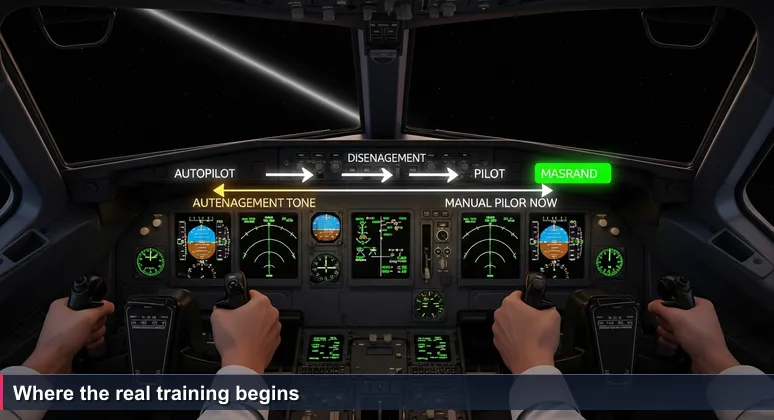
The autopilot disengaged the moment you started this roadmap. Now it is up to you to fly through the turbulence - with Uruguay's broadband backbone, bilingual talent pool, and strategic nearshore location beneath your wings. The sky is not the limit; it is where the real training begins.
Common Questions
How long does it realistically take to become an AI engineer in Uruguay?
The article outlines a 24-month plan at 15-20 hours per week, but many learners take 18-36 months depending on prior experience. Uruguay's stable tech ecosystem rewards consistent effort - senior AI engineers here earn $61,000-$115,000 annually, making the investment worthwhile.
Do I need a computer science degree to become an AI engineer in Uruguay?
Not necessarily. A strong foundation in Python, linear algebra, and statistics is more important. Many Uruguay-based bootcamps like Nucamp and short courses at IA University or Universidad ORT accept learners with solid coding skills, even without a formal degree.
How much does it cost to learn AI engineering in Uruguay?
Costs vary - from free resources like Khan Academy and Coursera financial aid to structured bootcamps like Nucamp (approx. UYU 84,960-159,200). Uruguay's free zones and companies like dLocal also sponsor training; check the ANII BIT program for funding.
What's the job market like for AI engineers in Uruguay in 2026?
Strong and growing. With Uruguay's nearshore advantages, companies like Mercado Libre, Globant, and PedidosYa actively hire. The median senior AI engineer salary ranges from $61,000-$115,000 USD, and the shortage of production-ready engineers means solid portfolio projects can quickly land you a role.
What's the single most important skill to focus on as an AI engineer in Uruguay?
Production deployment and MLOps. Uruguay's market has shifted from building models to orchestrating them - companies need engineers who can containerize models, set up CI/CD pipelines, and monitor performance in production, not just train models in notebooks.
Find the easiest tech jobs to get in Uruguay without a degree, ranked by entry barrier and local training programs.
Unlock the secrets to high total compensation at Uruguay's top tech firms.
Read our guide to the best tech companies in Uruguay for junior developers.
Discover the best entry-level positions in Uruguay's tech sector based on growth potential.
Consulta nuestra comparativa de los mejores bootcamps de IA y tecnología en Uruguay en 2026 para tomar una decisión informada.

Irene Holden
Operations Manager
Former Microsoft Education and Learning Futures Group team member, Irene now oversees instructors at Nucamp while writing about everything tech - from careers to coding bootcamps.