









How AI Is Helping Education Companies in Uruguay Cut Costs and Improve Efficiency
Last Updated: September 14th 2025
Too Long; Didn't Read:
AI tools like PowerSchool Connected Intelligence and PowerBuddy help Uruguayan education companies cut costs and boost efficiency - centralizing data for almost 700,000 learners, supporting 655,000+ Schoology users, reducing teacher prep from ~60 to ~5 minutes, and lowering TCO to ~$100/year.
Uruguay is proving why AI matters for education: Plan Ceibal's long-running digital push - originally aimed at putting a laptop in the hands of every student and teacher - now includes frameworks to teach AI in schools, giving local systems a real platform for efficiency and equity (Plan Ceibal digital education initiative (World Bank)).
Regional analysis from the IDB warns that AI can only transform learning when devices, connectivity and teacher training are in place, not as a stand-alone fix (Inter-American Development Bank roadmap for AI in education across Latin America and the Caribbean).
At the same time, headlines about students using generative AI to finish virtual tests in minutes show why schools and ed-tech companies must pair tools with policy and upskilling - practical training like Nucamp AI Essentials for Work syllabus (15-week course) teaches prompt-writing and workplace AI skills that can help educators and vendors deploy AI responsibly while cutting administrative time and personalizing instruction.
| Bootcamp | Length | Courses included | Early bird cost | Registration |
|---|---|---|---|---|
| AI Essentials for Work | 15 Weeks | AI at Work: Foundations; Writing AI Prompts; Job Based Practical AI Skills | $3,582 | Register for Nucamp AI Essentials for Work (15-week) |
“I am not surprised because artificial intelligence is, let's say, challenging us every day. It was not a scenario that was not possible because today it challenges everything, everything, and education as well. And what should be done in these cases to avoid this? Well, you have to work with guarantees for the students, technical guarantees, and that what is done is indeed genuine, but it is challenging you because it has changed the axes, the truth,” he said.
Table of Contents
- Background: Ceibal, PowerSchool and Uruguay's digital education journey
- Core technologies used in Uruguay and what they do
- How centralized data and AI analytics cut costs in Uruguay
- AI-powered instructional efficiency and personalization in Uruguay
- Workforce development and local capacity-building in Uruguay
- Operational outcomes, scale and recognition in Uruguay
- Practical steps for education companies in Uruguay to adopt AI responsibly
- Conclusion and next steps for Uruguay's education sector
- Frequently Asked Questions
Understand what data privacy laws in Uruguay mean for school leaders when selecting AI vendors and tools.
Background: Ceibal, PowerSchool and Uruguay's digital education journey
(Up)Uruguay's digital education journey began with Plan Ceibal's bold One Laptop per Child adaptation, a national push that put a Wi‑fi–ready notebook in the hands of every public‑school pupil so children could take learning - and internet access - home to their families (World Bank feature on Plan Ceibal's One Laptop per Child program); that early commitment paired devices with teacher training, digital resources and a social‑inclusion mission so technology didn't arrive as a gimmick but as infrastructure for equity.
Over time Ceibal expanded beyond hardware into teacher supports, a digital library and curricula in robotics, programming and languages, becoming state policy and a platform for lifelong learning (UNESCO case study on Plan Ceibal's digital education program).
The program's scale was striking yet economical - estimates put per‑child costs at about $260 including maintenance and training, representing less than 5% of the education budget - proving that national tech at scale can be affordable when built around pedagogy and support (Borgen Project overview of Uruguay's Plan Ceibal).
| Year | Milestone |
|---|---|
| 2006–2007 | Plan Ceibal launched / OLPC roots |
| 2007–2009 | All public students provided laptops; schools connected |
| 2010 | Plan Ceibal becomes state policy |
| 2011 | Ceibal Digital Library launched |
| 2013–2017 | Expanded programs: robotics, programming, Ceibal Inglés, Jovenes a Programar |
“Computers are not magic but they will improve the education system” - Miguel Brechner, Director of Plan Ceibal
Core technologies used in Uruguay and what they do
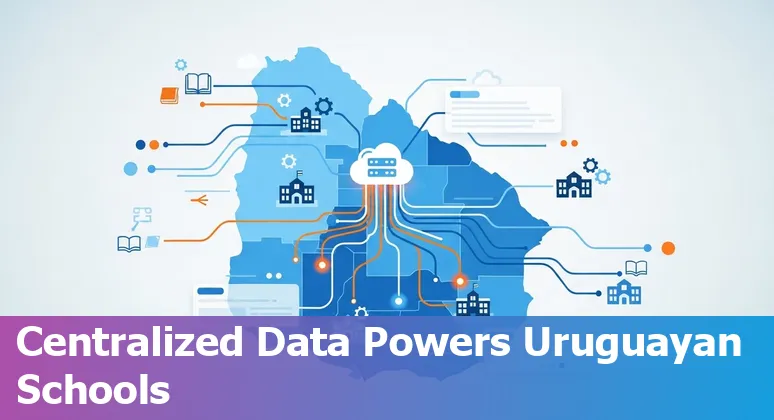
(Up)Uruguay's core classroom technologies now combine device-level access with cloud data services and AI assistants: PowerSchool's PowerSchool Connected Intelligence K-12 centralizes data across Ceibal's systems so policymakers and BI teams can spot engagement trends, cyberbullying signals, or students dropping off the LMS for almost 700,000 learners; PowerSchool's AI assistant PowerSchool PowerBuddy for Learning AI assistant layers AI-driven personalization and teacher support on top of the LMS; and Schoology Learning - deployed nationwide - serves as the classroom hub (used by over 655,000 people and relied on by 93% of students and 94% of teachers during the pandemic).
Complementary pieces like CREA2 and videoconferencing power the British Council's Ceibal en Inglés remote lessons, a setup so connected that remote teachers report feeling “in the room” and even received virtual hugs from students on-screen - a vivid reminder that tech can scale both efficiency and human presence.
| Technology | Primary role | Reach / Note |
|---|---|---|
| PowerSchool Connected Intelligence K-12 | Centralize K-12 data lake, analytics & reporting | Supports Ceibal's ~700,000 students; enables predictive insights |
| PowerBuddy for Learning | AI assistant for instruction and personalization | Integrates with Schoology to accelerate personalized learning |
| Schoology Learning (LMS) | Course delivery, collaboration, gradebooks | Deployed nationwide; impacted 655,000+ users; high pandemic uptake |
| CREA2 + Video Conferencing | Remote synchronous teaching and supplementary materials | Used in Ceibal en Inglés to reach 80,000+ primary pupils |
“Schoology Learning has been, since its implementation, where students and teachers closely keep in touch.” - Mauro Carballo, Manager of Science and Technology, Ceibal
How centralized data and AI analytics cut costs in Uruguay
(Up)Centralizing Ceibal's many platforms into a single K‑12 data lake is already turning IT headaches into measurable savings: PowerSchool's rollout of Connected Intelligence K‑12 gives Uruguay a unified pipeline for engagement, device‑usage and behavior signals across almost 700,000 learners, cutting the manual work BI teams previously spent stitching together reports and freeing them to build interventions that matter (see the PowerSchool announcement on Connected Intelligence K‑12).
With cleaner, role‑based access to real‑time data and AI‑driven tools, teachers can see which students aren't logging into the LMS or completing activities and intervene earlier - exactly the kind of predictive insight data‑lake strategies have produced elsewhere to reduce reporting burdens and improve retention outcomes (read why data lakes matter for scalable AI and analytics).
The “so what” is simple: fewer hours spent on spreadsheet plumbing means lower operating costs and faster, targeted support for students, turning abundant data into timely action rather than backlogged paperwork.
“Once implemented, PowerSchool Connected Intelligence K-12 would allow us to make data-driven decisions at scale in a timely manner, which could be a huge change for Ceibal,” said Martin Anza, Information Technology Manager, Ceibal.
AI-powered instructional efficiency and personalization in Uruguay
(Up)Uruguay is moving from device access to smarter, classroom-ready AI: Ceibal's rollout of PowerSchool Connected Intelligence K‑12 lays the data groundwork while PowerBuddy for Learning brings AI into teachers' everyday workflows, working inside Schoology to push personalization at scale (PowerSchool Connected Intelligence K‑12 platform) and directly support lesson creation and student help (PowerBuddy AI assistant case study).
The practical payoff is striking - tools that flag students who stop logging into the LMS or struggle with assignments free BI and IT teams from manual reporting and give teachers back the time to coach, differentiate and follow up; in one real-world deployment teachers moved from hour‑long prep sessions to minutes and students gained an always‑on assistant for practice and review.
That combination of predictive signals plus in‑platform AI turns Ceibal's nationwide connectivity and Schoology usage into targeted, cost‑saving personalization that scales to hundreds of thousands of learners.
“When teachers create exercises for children, the process typically takes around an hour. However, utilizing PowerBuddy can reduce this time to approximately five minutes.” - Tippayaphorn Sungaid, 5th-grade English teacher
Workforce development and local capacity-building in Uruguay
(Up)Workforce development in Uruguay rides on Plan Ceibal's broad foundation: early mass rollout - by 2009 some 350,000 children and 16,000 teachers had received a “ceibalita” - paired with classroom coding tools (Scratch, Pippy), new robotics tracks and remote English lessons, creating a practical pipeline for teacher training and local tech talent that already helps fuel a $600M software-export cluster (see TNW's impact and numbers).
That infrastructure means education companies can shift from selling devices to investing in people: targeted upskilling for teachers and instructional designers, practical AI prompt libraries and AI‑assisted feedback use cases that cut prep and grading time, and reskilling playbooks for roles most exposed to automation (Nucamp AI Essentials for Work syllabus and AI prompt guides).
The “so what?” is tangible - a small nation with nationwide connectivity can turn every classroom into a training ground, so vendors and policy teams who pair short, job‑aligned courses with in‑platform AI supports gain quicker ROI and stronger local capacity for scalable, equitable adoption.
“The cost of the CEIBAL program has been modest: the 4-year TCO (Total Cost of Ownership) is approximately $400 for four years, $100 per year per child. This figure includes the laptops, replacement of laptops after 4 years of use, repairs, Internet costs, administrative costs, fiber optic costs, robotics, planned video conference facilities, the portal and platforms (plataforma) for LMS (Learning Management System) as well as digital resources for mathematics, reading and other subjects. The cost figures also include initial training provided for teachers to familiarize them with the technology and how to use it.”
Operational outcomes, scale and recognition in Uruguay
(Up)Uruguay's investments in Ceibal plus a single data backbone are already delivering concrete operational wins: by centralizing records and analytics with PowerSchool Connected Intelligence K‑12, Ceibal can track LMS engagement, device use and even surface cyberbullying signals faster, letting BI teams stop stitching reports and start directing support where it's needed most (PowerSchool announcement on Uruguay modernizing data infrastructure with PowerSchool Connected Intelligence K‑12 and PowerBuddy); pairing that lake with PowerBuddy for Learning brings AI into teachers' daily workflows inside Schoology, cutting prep time and scaling personalized help across a system that touches more than half a million users and nearly 700,000 learners.
The operational picture is both practical and visible - higher engagement, smoother rollouts from urban to rural schools, and external recognition (a 2025 BETT Award nomination) that validates efficiency gains and policy impact (PowerSchool case study on Ceibal embracing innovation and community).
At the same time, national research on children's online experiences underscores why sensitive detection and timely interventions matter for safety and learning at scale (Global Kids Online report on Uruguay children's online experiences).
| Outcome | Figure / Note |
|---|---|
| Students supported | Almost 700,000 |
| Schoology reach | 655,000+ individuals; 93% students & 94% teachers (pandemic) |
| Recognition | 2025 BETT Award nomination (Collaboration category) |
“Once implemented, PowerSchool Connected Intelligence K-12 would allow us to make data-driven decisions at scale in a timely manner, which could be a huge change for Ceibal,” said Martin Anza, Information Technology Manager, Ceibal.
Practical steps for education companies in Uruguay to adopt AI responsibly
(Up)Education companies aiming to adopt AI responsibly in Uruguay should follow a pragmatic, locally rooted playbook: begin by partnering with universities and programs that build technical and ethical capacity - for example, MIT's Global Teaching Labs work with UTEC helped create a talent pipeline and hands‑on ML projects - and pair that with community upskilling initiatives like Git Commit Uruguay that teach practical AI skills to students and recent grads.
Pilot AI as decision‑support (not overnight automation) using anonymized datasets and fairness‑aware methods - a notable prototype used over 15,000 anonymized cases to triage social‑assistance needs - so models improve prioritization without replacing human judgment.
Insist on synthetic sampling, bias checks, and clear evaluation metrics during pilots, involve sector stakeholders early (teachers, social workers, BI teams), and make short, job‑aligned training and prompt libraries part of deployments so teachers and designers can use AI to cut prep time while preserving local curriculum and accessibility.
Finally, bake in data‑privacy safeguards and ethics governance from day one and iterate on measured outcomes; Uruguay's experience shows that small pilots, strong partnerships, and transparent evaluation fast‑track responsible, scalable adoption.
“When I first heard about the project idea – it struck me that yes, this is probably the best use of ML I can imagine,” reflects Yitong.
Conclusion and next steps for Uruguay's education sector
(Up)Uruguay's clear next steps are pragmatic: keep centralizing data and AI where evidence shows impact, scale teacher-facing tools that save time, and invest in local capacity so technology amplifies - not replaces - human judgment.
PowerSchool's nationwide upgrade and Schoology rollout gave Ceibal the visibility that helped limit pandemic learning loss to about 0.5 years (versus ~1.3 years regionally), a concrete proof point for data+pedagogy approaches (PowerSchool case study: Ceibal nationwide upgrade).
Build more pilot projects with universities and labs to turn prototypes into policy - the MIT Global Teaching Labs partnership shows how training and small ML pilots can feed national programs and ethical safeguards (MIT MISTI Uruguay collaboration on AI and social policy).
For vendors and schools, short, job-aligned courses that teach prompt-writing and in-platform AI skills help teachers use tools responsibly; practical training like the Nucamp AI Essentials for Work syllabus can accelerate adoption while protecting privacy and equity (Nucamp AI Essentials for Work bootcamp (15-week syllabus)).
The path forward is iterative: measure outcomes, fix bias and privacy gaps early, and scale what demonstrably improves learning and lowers operating costs.
| Program | Length | Early bird cost | Register |
|---|---|---|---|
| AI Essentials for Work | 15 Weeks | $3,582 | Register for AI Essentials for Work bootcamp |
“Our program in Uruguay was designed to empower students to use new AI technologies to address local challenges,” says Eduardo Rivera.
Frequently Asked Questions
(Up)How is AI being used in Uruguay's education system to cut costs and improve efficiency?
Uruguay pairs a nationwide device and connectivity backbone (Plan Ceibal) with centralized data and AI tools. PowerSchool Connected Intelligence K‑12 creates a unified K‑12 data lake for engagement, device usage and behavior signals across almost 700,000 learners, reducing manual BI reporting. AI assistants (e.g., PowerBuddy for Learning) integrate with Schoology to automate routine tasks, accelerate personalized lesson creation and flag students who disengage. Real-world impacts include freeing BI and IT teams from spreadsheet stitching, faster targeted interventions, and dramatic teacher prep time reductions reported in pilots (from ~1 hour to ~5 minutes in lesson creation). Together these reduce operating hours and associated costs while scaling personalized support.
What measurable outcomes and scale has Uruguay achieved with this approach?
Uruguay's deployment touches nearly 700,000 students and more than 655,000 Schoology users (Schoology saw 93% student and 94% teacher uptake during the pandemic). Cost benchmarks show early Ceibal estimates of about $260 per child including maintenance and training (under 5% of the education budget), and an estimated 4‑year TCO of ~$400 ($100 per year per child). Operational outcomes include faster detection of disengagement or cyberbullying, time savings for BI/IT and teachers, and a smaller pandemic learning loss (~0.5 years in Uruguay versus ~1.3 years regionally). The program has also received external recognition, such as a 2025 BETT Award nomination in the Collaboration category.
What safeguards and capacity-building steps are required for responsible AI adoption in schools?
Responsible adoption requires more than models: devices, connectivity and teacher training must be in place. Practical safeguards include piloting AI as decision‑support with anonymized datasets, using synthetic sampling and bias checks, defining clear evaluation metrics, and involving teachers, BI teams and social workers early. Data privacy, ethics governance and transparency should be built in from day one. Capacity building means short, job‑aligned upskilling (prompt‑writing, in‑platform AI skills), university and lab partnerships (examples: MIT Global Teaching Labs, local programs) and practical prompt libraries so tools save prep/grading time without replacing pedagogical judgment.
How can education companies and vendors in Uruguay maximize ROI while protecting equity and quality?
Vendors should shift from hardware-only offers to investing in people and integration: provide teacher upskilling, role‑based AI tools, prompt libraries, and AI‑assisted feedback that reduce prep and grading time. Pair short, job‑aligned training courses with in‑platform AI supports to accelerate adoption and local capacity. Pilot with fairness-aware methods, measure impacts (engagement, retention, teacher time saved), and scale what demonstrably improves learning while maintaining privacy and accessibility. Uruguay's strong local talent pipeline and software cluster (cited ~$600M software export ecosystem) make workforce development an especially effective investment.
What are practical first steps for schools or districts that want to pilot AI safely and measure its impact?
Start small and evidence-driven: 1) Centralize records into a secure data pipeline or data lake so you can generate consistent metrics; 2) Run a pilot using anonymized or synthetic samples (one prototype used ~15,000 anonymized cases to triage needs) and treat models as decision‑support; 3) Require bias checks, privacy safeguards and predefined evaluation metrics (engagement, retention, teacher time saved, learning loss); 4) Involve teachers, BI teams and community stakeholders from day one; 5) Pair pilots with short, job‑aligned training and prompt libraries so teachers can use tools immediately; 6) Iterate and scale only when pilots show measurable cost or learning gains.
Find out how Microsoft 365 Copilot lesson automation converts instructor notes into polished slides and multilingual handouts in minutes.
The rise of chat-based helpers puts pressure on the private tutoring market in Uruguay, but tutors who offer mentorship and exam-strategy can charge a premium.

Ludo Fourrage
Founder and CEO
Ludovic (Ludo) Fourrage is an education industry veteran, named in 2017 as a Learning Technology Leader by Training Magazine. Before founding Nucamp, Ludo spent 18 years at Microsoft where he led innovation in the learning space. As the Senior Director of Digital Learning at this same company, Ludo led the development of the first of its kind 'YouTube for the Enterprise'. More recently, he delivered one of the most successful Corporate MOOC programs in partnership with top business schools and consulting organizations, i.e. INSEAD, Wharton, London Business School, and Accenture, to name a few. With the belief that the right education for everyone is an achievable goal, Ludo leads the nucamp team in the quest to make quality education accessible