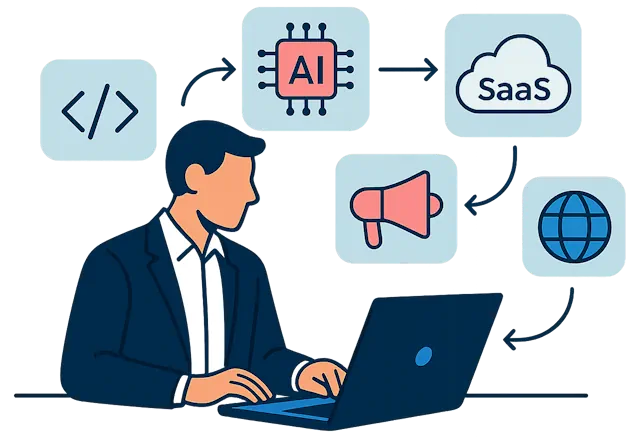



The Complete Guide to Using AI as a HR Professional in Uganda in 2025
Last Updated: September 14th 2025

Too Long; Didn't Read:
In 2025 Ugandan HR professionals should run measurable AI pilots (track time‑to‑hire, candidate drop‑off) with DPPA and PDPO/NITA‑U privacy safeguards; invest in upskilling (15‑week AI course $3,582, Makerere paths, AI Innovation Academy seed funding up to $4,000) while awaiting a 17‑member, 90‑day national AI task force.
AI is no longer a distant promise for Uganda - it's actively reshaping organisations and people practices, from precision farming to AI‑assisted ultrasounds in rural clinics, and the case for HR to lead responsible adoption is clear (read the Business Times Uganda coverage on AI in Uganda).
Global people-leader guidance stresses human-centric deployment and upskilling as top priorities, with Chief People Officers urging structural redesign and deliberate AI support for staff, not just automation.
Talent-acquisition research from Mercer also warns of practical barriers (systems integration, tool understanding) and recommends pilots, training, and governance before scaling.
For HR teams in Uganda that means running measurable pilots with privacy safeguards, building skills, and using practical courses like Nucamp's AI Essentials for Work to teach workplace prompts and tool use in 15 weeks - a pragmatic route to boost productivity while protecting fairness and development.
| Program | Length | Courses | Early Bird Cost | Registration |
|---|---|---|---|---|
| AI Essentials for Work | 15 Weeks | AI at Work: Foundations; Writing AI Prompts; Job Based Practical AI Skills | $3,582 | Register for Nucamp AI Essentials for Work bootcamp |
“Caution is the current setting – but transformation is the long-term opportunity.”
Table of Contents
- How are HR professionals in Uganda using AI?
- Primary AI use cases for HR teams in Uganda
- Tangible benefits for Ugandan HR teams using AI
- Risks, limitations and Uganda legal context for AI in HR
- Building AI governance and ethics in HR for Uganda
- Step-by-step pilot for Ugandan HR: resume screening + onboarding chatbot
- Tools, vendors and procurement guidance for HR in Uganda
- Where to study AI in Uganda and how to become an AI expert in 2025 in Uganda
- What is the AI task force in Uganda? - roles HR professionals should know, and Conclusion
- Frequently Asked Questions
Join the next generation of AI-powered professionals in Nucamp's Uganda bootcamp.
How are HR professionals in Uganda using AI?
(Up)Across Uganda HR teams are experimenting with AI in practical, low‑risk ways that boost day‑to‑day productivity: many tools are used to automate routine tasks, support decision‑making and keep candidates engaged 24/7 on mobile - for example, conversational assistants like the Paradox (Olivia) chatbot that shorten time‑to‑hire and improve remote applicant experiences (Paradox Olivia conversational assistant for HR in Uganda).
Common local pilots include anonymous CV screening to shortlist faster while reducing unconscious bias, and onboarding chatbots, all run with measurable KPIs and privacy safeguards tailored to Uganda's context (pilot HR chatbots and automation in Uganda).
Adoption patterns mirror global HR findings: most Ugandan HR pros start with individual, productivity‑focused uses and fall into familiar personas - from Skeptical Avoiders to Adoption Champions - which means scaling impact depends on targeted training, clear ROI measures and governance to build trust (AIHR research on HR AI adoption and best practices).
The result is pragmatic: small, measurable wins that protect fairness while proving AI's value inside Uganda's people practices.
Primary AI use cases for HR teams in Uganda
(Up)Primary AI use cases for HR teams in Uganda cluster around three practical flows that deliver fast, measurable wins: smarter sourcing and matching, automated screening and workflow orchestration, and always‑on candidate engagement.
AI sourcing platforms like Rival Recruit AI sourcing platform surface passive talent at scale with AI search and personalized outreach (its 750M+ profile reach and prioritisation tools are especially useful when local talent pools are distributed across cities and rural areas).
Enterprise ATS solutions such as iCIMS enterprise ATS and feature-rich platforms like SmartRecruiters applicant tracking system bring AI into resume parsing, score‑based shortlisting, scheduling and onboarding automation - shortening time‑to‑fill and cutting manual data entry so small HR teams can focus on interviews and candidate fit.
On the candidate side, conversational assistants and AI‑driven screening keep applicants informed on mobile 24/7 and reduce drop‑off for remote and diaspora applicants; AI‑generated job descriptions and outreach copy also lift employer brand with less drafting time.
Together these use cases let Ugandan HR teams run lightweight pilots, measure KPIs like time‑to‑hire and candidate drop‑off, and scale only when fairness, privacy and integration checks are satisfied - so the technology amplifies human judgement instead of replacing it.
“With SmartRecruiters AI, we move through high volumes of information from a high volume of candidates in a systematic way.”
Tangible benefits for Ugandan HR teams using AI
(Up)For HR teams in Uganda the gains from practical AI are already tangible: the national study on AI in Ugandan public services highlights clearer efficiency, better accuracy and stronger fraud detection across government agencies - benefits HR can translate into faster screening, smarter scheduling and cleaner payroll controls (see the full APS DPr national study on AI use in Uganda's public services).
Globally, HR leaders report cost and time savings too - one industry piece found 93% of HR managers using AI tools to cut costs - so local teams can expect similar wins when pilots focus on measurable KPIs and privacy safeguards (Unleash.ai report: 93% of HR managers use AI tools to reduce costs).
Concrete examples in Uganda make the case vivid: an AI queue system at UIA managing visitors across a one‑stop centre with 14 agencies reduced waiting time and unlocked real‑time staff planning, UNMA's AI supercomputer gives timelier weather alerts that protect field staff and operations, and smart metering in electricity distribution cut theft and operational overheads - each a model HR can borrow for candidate flow, workforce planning and remote-worker safety.
The core “so what?” is simple: modest, well‑measured AI pilots can free HR teams from repetitive admin, surface risk faster, and deliver a smoother candidate and employee experience while keeping fairness and data security front and centre.
| Agency | AI use |
|---|---|
| Uganda Investment Authority (UIA) | AI‑powered queue management embedded in CRM (appointment scheduling, staff planning) |
| Uganda Revenue Authority (URA) | ASYCUDA with AI for risk profiling, fraud detection and customs tracking |
| Uganda National Meteorological Authority (UNMA) | AI forecasting supercomputer for timely, accurate weather predictions |
| UETCL / UEDCL (energy) | SCADA and smart metering for reliable transmission, distribution and theft detection |
| Kampala Capital City Authority (KCCA) | 100+ air quality sensors with AI analytics for pollution monitoring |
“The AI-powered system of innovation has significantly decreased the actual waiting pre-service and post-service time of our customers. It also provides us with real-time data which assists in adequate staff planning and allows for increased mobility of our staff.”
Risks, limitations and Uganda legal context for AI in HR
(Up)AI can sharpen HR operations in Uganda, but legal and operational risks must be front and centre: Uganda's constitutional privacy protection (Article 27) is backed by the Data Protection and Privacy Act (DPPA) and Regulations, which apply inside and outside Uganda when Ugandan personal data is processed, so HR teams using resume‑screening, chatbots or workforce analytics must secure informed consent, respect purpose‑limits and avoid feeding special or child data into models without clear legal grounds (see the DPPA overview for practical obligations).
The Personal Data Protection Office (PDPO), now operational under NITA‑U, requires registration of controllers/processors, mandates DPIAs for high‑risk processing, and can force breach notifications and annual reports - an immediate notification duty means an exposed candidate database can quickly become a regulatory incident.
Rights that matter to people teams include access, rectification, the right not to be subject to fully automated decisions, and the ability to opt out of certain processing, so any automated shortlisting must preserve human oversight and appeal routes.
Employers also face IP and employment pitfalls - who owns AI‑generated reports or code and how vendor contracts treat data reuse are real contractual traps that call for clear clauses, NDAs and audits (read a legal briefing on AI, IP and employment risks).
Penalties are tangible: criminal sanctions and fines are on the table (including currency‑point fines and, in corporate cases, fines calculated against turnover), so practical controls - vendor due diligence, anonymisation, role‑based access, DPO appointment where required, and small, monitored pilots with DPIAs - are the best hedge against legal and reputation harm while unlocking AI's productivity gains in Ugandan HR.
| Legal checkpoint | What HR teams must do |
|---|---|
| DPPA (enacted 2019) | Use lawful basis; obtain informed consent; publish privacy notices |
| PDPO / NITA‑U | Register controllers/processors; report breaches; consult on guidance |
| DPIAs & DPOs | Run DPIAs for high‑risk AI pilots; appoint DPO if large‑scale monitoring or special data |
| Cross‑border transfers | Only to adequate jurisdictions or with consent; check contractual safeguards |
| Sanctions | Fines (currency points / up to % of turnover) and possible criminal penalties for breaches |
Building AI governance and ethics in HR for Uganda
(Up)Building AI governance and ethics in HR for Uganda starts with a human‑rights‑based playbook that ties HR pilots to national policy: align people‑systems with the Ministry of ICT & National Guidance and NITA's emerging risk‑based oversight, use DPIA‑style assessments for high‑risk hiring tools, and bake vendor due‑diligence, audit rights and bias‑mitigation clauses into contracts (local university courses on AI governance show how to evaluate vendors and draft usage policies).
Practical steps include transparent candidate notices, preserving human review for automated shortlisting, staged sandboxes for safe experimentation, and targeted capacity building so HR can interpret model outputs rather than defer to them - all approaches recommended in Uganda's unfolding AI regulatory work and ethical framework.
Engage public and staff stakeholders early (the UN Global Pulse framework stresses awareness, fairness and transparency), feed pilots into the country's readiness assessments and the planned National AI Task Force, and treat governance like active monitoring rather than a one‑off checklist: regular audits, clear escalation paths and documented KPIs turn ethical intent into measurable practice, so AI becomes an engine for inclusion not a source of surprise or harm.
See the Uganda AI regulatory framework and digital policy overview at Uganda AI regulatory framework and digital policy and the UN Global Pulse Uganda Transformative Ethical AI Framework at UN Global Pulse: Uganda's Transformative Ethical AI Framework.
“For Uganda, AI must serve as a bridge - not a barrier to opportunity, dignity, and shared prosperity.”
Step-by-step pilot for Ugandan HR: resume screening + onboarding chatbot
(Up)Run a tight, measurable pilot that combines automated resume screening with an onboarding chatbot: begin by choosing one clear role and writing a precise job description so the ATS searches for the right signals (TechnologyAdvice and Goboon stress that a clear JD is the roadmap for fair screening), then set objective selection criteria and structured scoring so every CV is judged the same way rather than by gut.
Configure your ATS to pull LinkedIn links and contact details, strip fancy formatting, and prefer .doc/.pdf inputs (follow ResumePilots' resume formatting tips), then run the automated filter but reserve a parallel manual review of borderline “maybe” candidates for a short validation window to catch false negatives.
Anonymise PII where possible, track KPIs - time‑to‑hire, candidate drop‑off and quality‑of‑hire - and iterate: if too many qualified candidates are filtered out, loosen keyword rules or add synonym mappings.
While screening runs, pilot a mobile onboarding chatbot (for example, a Paradox/Olivia style assistant recommended for 24/7 candidate engagement) to reduce drop‑off and collect structured preboarding data.
Keep the pilot small, time‑boxed and instrumented: success is a repeatable flow that frees HR from admin without losing the human check that hiring always needs.
“Your intended audience is a machine – and can be very unforgiving.”
Tools, vendors and procurement guidance for HR in Uganda
(Up)When short‑listing HR tech for Uganda, treat procurement like a staged experiment: pick vendors that fit local payroll, integration and implementation realities rather than brand buzz.
For midsize HR teams that value a fast roll‑out and strong workforce analytics, Workday consistently wins praise for a smoother implementation and clean UX (see the Rippling comparison of Rippling comparison of Workday vs SAP HR software), while SAP SuccessFactors is the safer choice for organisations needing deep global payroll, localisation and broad ERP integrations - its suite supports native payroll across dozens of countries and extensive partner connectors (read the SAP vs SuccessFactors analysis at SAP SuccessFactors vs Workday payroll and ERP comparison).
For lean HR teams that want rapid payroll + HR convergence, Rippling's unified approach and fast deployment is worth evaluating, and for candidate experience pilots add a Paradox/Olivia‑style conversational assistant to keep applicants engaged 24/7 on mobile so fewer good candidates drop out overnight (Paradox (Olivia) conversational recruiting assistant for candidate engagement).
Procurement checklist: validate local payroll coverage, ask for implementation timelines and total cost of ownership, insist on data‑processing and IP clauses, require sandbox trials and measurable KPIs before signing, and prioritise vendors with proven integrations to your existing systems so HR can focus on people rather than glue code.
| Vendor | Best for | Procurement tip (Uganda) |
|---|---|---|
| Workday | Midsize to large orgs needing fast deployment and strong analytics | Confirm integration paths and expected implementation timeline; budget for consultants |
| SAP SuccessFactors | Global enterprises requiring multi‑country payroll and deep ERP integration | Verify native payroll coverage and localisation for Uganda; plan longer implementation |
| Rippling | Organisations wanting unified HR + payroll with quick time‑to‑value | Check payroll compliance scope (Rippling advertises tax compliance across 50+ countries) and demo end‑to‑end flows |
| Paradox (Olivia) | Candidate engagement and onboarding automation | Pilot on a single role first; measure drop‑off and candidate satisfaction on mobile |
Where to study AI in Uganda and how to become an AI expert in 2025 in Uganda
(Up)For HR professionals aiming to become AI-capable in Uganda, the clearest pathway runs through Makerere's growing AI ecosystem: start with foundational coursework such as Makerere's Artificial Intelligence course to learn core concepts and techniques (Makerere University Artificial Intelligence course (CoCIS)), get hands‑on with applied labs like the Makerere AI Health Lab where teams are building smartphone‑microscopy malaria and ultrasound tools, and connect to the Makerere Centre for AI (MAK‑AI) for research mentorship and community networks (Makerere Centre for AI (MAK-AI) official website).
Practitioners with product ideas can fast‑track skills and incubation via the AI Innovation Academy - a 2‑month ideation and incubation programme (deadline 4 Sept 2025) that offers seed funding up to USD 4,000 to turn prototypes into MVPs (Makerere AI Innovation Academy application page).
For longer‑term career routes, Makerere's AI for Development research lab (IDRC‑supported) and CoCIS graduate pathways provide MSc/PhD training and project experience in AI for health, agriculture, NLP and climate - a mix of coursework, lab projects and funded incubation that makes the jump from curious HR professional to practical AI expert both realistic and locally relevant, especially if paired with real-world pilots inside HR teams (resume screening, chatbots, workforce analytics) to build a portfolio employers recognise.
| Program | Provider | Length / Funding / Notes |
|---|---|---|
| Artificial Intelligence (course) | Makerere University (CoCIS) | Theory & techniques course - foundational AI concepts and applications (Makerere AI course page (CoCIS)) |
| AI Innovation Academy | Makerere Centre for AI (Mak‑AI) | 2 months; seed funding up to USD 4,000; deadline 4 Sept 2025; open to Ugandans and residents (AI Innovation Academy application page) |
| Makerere AI for Development Research Lab | Makerere University / IDRC | Project funding CAD 1,000,000; 48 months; multidisciplinary AI4D research & capacity building |
“Don't hide your potential. You're too visible to be broke.” - Christine Kikome, Makerere Computer Science student
What is the AI task force in Uganda? - roles HR professionals should know, and Conclusion
(Up)The Uganda AI Task Force recently convened by the Uganda Communications Commission is a 17‑member, 90‑day sprint to produce a concept note that will inform government advice on AI adoption - everything from infrastructure and data management to consumer protection, job impacts and education (read the UCC announcement for the full remit).
For HR professionals this committee is the single most important regulatory signal in 2025: its recommendations will influence how resume‑screening, chatbots, workforce analytics and vendor contracts are judged, and whether safeguards like DPIAs, human review and stronger privacy notices become mandatory.
HR leaders should treat the task force's outputs as actionable guidance - engage in consultations, bake audit and data‑processing clauses into procurement, and pair small, measurable pilots with staff upskilling so automation augments rather than replaces judgment.
Aon's guidance underlines that HR must lead preparation and workforce redesign as AI arrives, and practical training (for example, Nucamp AI Essentials for Work 15-week course) helps teams build prompt skills, tool literacy and governance capabilities to respond fast.
Think of the task force as a short, decisive window to shape the rules: show up early and HR can write the playbook for responsible AI adoption in Uganda.
| Role | Representative (from UCC Task Force) |
|---|---|
| Task Force Chair | Michael Bamwesigye |
| UCC Board Chair (initiated task force) | Dr. Dorothy Okello |
| Legal counsel (advisory) | Dr. Abudu‑Sallam Waiswa |
“When it comes to AI, human resources teams have a significant opportunity to lead the way. It's important not to miss the moment.” - Lambros Lambrou, Chief Strategy Officer, Aon
Frequently Asked Questions
(Up)How are HR professionals in Uganda using AI in 2025?
Ugandan HR teams are running small, measurable pilots that boost productivity without removing human oversight. Common uses include AI sourcing and matching to surface passive talent, AI resume parsing and score-based shortlisting in ATS platforms, workflow orchestration and scheduling automation, and 24/7 candidate engagement via conversational assistants (Paradox/Olivia‑style chatbots). Teams focus on KPIs such as time‑to‑hire, candidate drop‑off and quality‑of‑hire, start with low‑risk, role‑level pilots, and pair tool use with targeted training and governance before scaling.
What are the legal and regulatory obligations HR teams must follow when deploying AI in Uganda?
HR teams must comply with Uganda's Data Protection and Privacy Act (DPPA) and the Personal Data Protection Office (PDPO) requirements under NITA‑U. Practical obligations include using a lawful basis and informed consent, publishing privacy notices, registering controllers/processors where required, running Data Protection Impact Assessments (DPIAs) for high‑risk processing, and notifying breaches promptly. Important rights to respect are access, rectification and the right not to be subject to fully automated decisions without human review. Mitigations include anonymisation, role‑based access, appointing a DPO for large‑scale monitoring, vendor due‑diligence, explicit IP/data‑reuse clauses in contracts, and staged pilots to limit regulatory risk. Non‑compliance can trigger fines (currency‑point or turnover‑linked) and criminal penalties.
What is a recommended step‑by‑step pilot combining automated resume screening and a chatbot for Ugandan HR teams?
Run a time‑boxed pilot on a single, well‑defined role: (1) write a precise job description and objective selection criteria; (2) configure the ATS to normalise input (.doc/.pdf preferred), parse LinkedIn links and strip formatting; (3) implement structured scoring so every CV is judged consistently; (4) anonymise personally identifiable information where possible and preserve a parallel manual review for borderline candidates to catch false negatives; (5) deploy a mobile onboarding chatbot to collect preboarding data and reduce drop‑off; (6) instrument the flow and track KPIs (time‑to‑hire, candidate drop‑off, quality‑of‑hire); (7) run a DPIA if the pilot is high‑risk, publish candidate notices and obtain consent, iterate rules (keywords/synonyms) based on measured outcomes, and only scale once fairness, privacy and integration checks pass.
Which tools and procurement practices should HR teams prioritise when buying AI‑enabled HR systems in Uganda?
Select vendors that match local payroll, integration and implementation realities rather than brand alone. Common vendor choices: Workday (midsize to large orgs for analytics and faster deployments), SAP SuccessFactors (global payroll and deep ERP integration), Rippling (unified HR+payroll for quick time‑to‑value) and Paradox/Olivia‑style assistants for candidate engagement. Procurement checklist: validate local payroll and localisation coverage, confirm integration paths and realistic implementation timelines, budget for total cost of ownership and consultants, insist on sandbox trials and measurable KPIs before signing, require data‑processing, IP and data‑reuse clauses, audit rights and vendor due‑diligence, and pilot on a single role first to prove value.
Where can HR professionals in Uganda train to become AI‑capable in 2025 and what practical courses are recommended?
Local pathways include Makerere University courses and research labs (Makerere CoCIS AI course, Makerere AI for Development research lab and the Makerere Centre for AI), and the AI Innovation Academy (2 months incubation with seed funding up to USD 4,000). For workplace‑specific, practical training consider Nucamp's AI Essentials for Work - a 15‑week course focused on AI at work, writing prompts and job‑based practical AI skills (early bird cost listed at $3,582) - alongside hands‑on pilots inside HR teams to build a demonstrable portfolio. Combining formal study, short applied programmes and live pilots is the most effective route to practical AI capability.
Explore the growing demand for an HR automation specialist opportunity and which practical skills will get you hired in Uganda's changing labor market.
Unlock internal mobility and smarter sourcing with Eightfold AI talent intelligence to match skills to roles and reduce external hiring costs.
Build fairness into your process with a bias-check checklist for hiring that flags problematic language and recommends neutral alternatives.

Ludo Fourrage
Founder and CEO
Ludovic (Ludo) Fourrage is an education industry veteran, named in 2017 as a Learning Technology Leader by Training Magazine. Before founding Nucamp, Ludo spent 18 years at Microsoft where he led innovation in the learning space. As the Senior Director of Digital Learning at this same company, Ludo led the development of the first of its kind 'YouTube for the Enterprise'. More recently, he delivered one of the most successful Corporate MOOC programs in partnership with top business schools and consulting organizations, i.e. INSEAD, Wharton, London Business School, and Accenture, to name a few. With the belief that the right education for everyone is an achievable goal, Ludo leads the nucamp team in the quest to make quality education accessible