









How AI Is Helping Healthcare Companies in Uganda Cut Costs and Improve Efficiency
Last Updated: September 14th 2025
Too Long; Didn't Read:
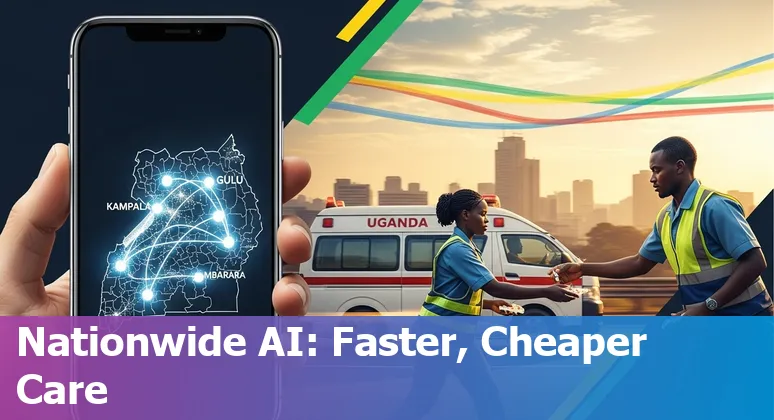
AI in Uganda healthcare cuts unit costs and wait times via diagnostic automation (1,182‑image malaria set with 7,245 parasite boxes), predictive forecasting, telemedicine and smarter queues; pilots like MESAMalaria ($262,191 NIH funding) plus targeted upskilling (15‑week, $3,582) scale efficiency.
For healthcare companies in Uganda, AI is rapidly shifting from promising concept to practical cost‑cutting tool: local research shows government agencies are already using AI to speed processing, detect fraud and optimise queues, and those same techniques - diagnostic image analysis, smart triage and appointment scheduling - translate directly to clinics and hospitals (see a mixed‑methods study on AI in Uganda's public services: APSDPR study on AI in Uganda's public services).
Thoughtful regulation will be key if AI is to expand safely and support Universal Health Coverage, as argued in a recent paper on an appropriate regulatory framework for Uganda's health sector (regulatory framework for Uganda's health sector for UHC - EquityHealthJ).
Practical, low‑cost wins matter most - simple queue and scheduling models can shave hours from patient waits and cut unit costs; see examples of queue optimisation use cases for clinics in Uganda.
Upskilling teams with targeted courses - like an AI Essentials for Work program - helps companies adopt these tools without hiring large data teams, turning smarter workflows into measurable savings.
| Bootcamp | Length | Early bird cost | Registration |
|---|---|---|---|
| AI Essentials for Work | 15 Weeks | $3,582 | Register for the AI Essentials for Work bootcamp - Nucamp |
“The more accurate weather information has assisted the public in getting early warnings which could save lives and property.”
Table of Contents
- Diagnostic automation & image analysis in Uganda (Makerere AI Health Lab)
- Screening and triage: lower costs and better resource use across Uganda
- Telemedicine, chatbots and EHRs: scaling care and reducing unit costs in Uganda
- Patient flow, appointments and staffing optimization for hospitals in Uganda
- Predictive analytics & early-warning systems to reduce supply chain and outbreak costs in Uganda
- Operational monitoring and remote sensing: cutting maintenance and downtime costs in Uganda
- Capacity building, local R&D and reduced outsourcing costs in Uganda
- Measured cost savings & real examples from Uganda
- Barriers, enablers and policy actions for Uganda's healthcare AI adoption
- Practical steps & recommended roadmap for healthcare companies in Uganda
- Frequently Asked Questions
Learn why privacy-by-design for healthcare AI is essential to protect patient data across Uganda's systems.
Diagnostic automation & image analysis in Uganda (Makerere AI Health Lab)
(Up)Diagnostic automation in Uganda is shifting from prototype to practice thanks to Makerere University's AI Health Lab and spin‑outs like the Ocular project: a 3D‑printed smartphone adapter clips to a microscope and - when paired with deep‑learning models - lets frontline clinics screen blood, sputum and Pap smears faster and cheaper than traditional lab workflows, reducing reliance on scarce technicians and speeding treatment decisions.
Field trials aim to standardise phone‑and‑microscope setups for robust, in‑field malaria screening and real‑time surveillance (Makerere University AI Health Lab overview), and a funded in‑country study is validating these tools for point‑of‑care use across Uganda (MESAMalaria automated mobile microscopy project page).
Complementary efforts curate open datasets - ranging from a Lacuna Fund malaria corpus to a 1,000‑image Pap smear collection - so models improve quickly; one public collection already includes 1,182 thick blood smear images with bounding boxes for 7,245 parasites, a vivid reminder that affordable hardware plus smart models can turn hundreds of ordinary smartphones into a distributed microscope network that shrinks diagnosis time and unit cost for clinics nationwide.
See the Ocular diagnostic smartphone microscope adapter project for details.
| Project | Focus | Key fact |
|---|---|---|
| Ocular | AI‑powered microscopy for malaria, TB, cervical cancer | Smartphone adapter + ML for point‑of‑care diagnostics |
| Automated mobile microscopy (MESAMalaria) | Field‑deployable malaria screening & surveillance | Sep 2023–Jul 2026; funding $262,191 (NIH) |
| Lacuna Fund / Datasets | Open labelled blood smear & Pap smear images | Includes a 1,182‑image malaria set with 7,245 parasite boxes |
Screening and triage: lower costs and better resource use across Uganda
(Up)Screening and triage across Uganda are becoming leaner and faster by pairing stronger prevention with on‑the‑ground AI: improved, targeted dual‑AI mosquito nets are already cutting malaria cases in hotspots and - by reducing infections - trim the number of clinic visits and downstream triage costs (study on dual-AI mosquito nets reducing malaria in Uganda); meanwhile, Makerere's AI work shows how a 3D‑printed smartphone adapter plus deep‑learning models can turn a routine blood smear into a diagnosis in under a minute (vs the usual 15–25 minutes), slashing labour time where microscopes outnumber technicians and speeding treatment decisions (Makerere University AI smartphone adapter malaria diagnosis study) - an approach independently reported in field reporting on Kampala's AI Health Lab and its pilots (Devex report on AI malaria diagnostics in Kampala).
The combined effect is practical: fewer mis‑triaged patients, lighter lab workloads in districts with staffing and infrastructure gaps, and faster routing of severe cases to scarce referral centres - so clinics can treat more patients correctly at lower unit cost, with a net that literally keeps people from needing the clinic in the first place.
“The goal of the proposed research is to develop a rapid, low cost, accurate and simple in-field screening system for microscopy challenges like ...”
Telemedicine, chatbots and EHRs: scaling care and reducing unit costs in Uganda
(Up)Telemedicine is already proving its value across Uganda by shrinking geographic barriers, cutting travel expenses for rural patients and creating a cheaper channel for routine consultations - an approach celebrated in local coverage of virtual consultations (virtual consultations in Uganda - EPRC) and quantified in studies that report reduced travel distances and associated costs for remote residents.
Practical pilots show that as telehealth use grows, some per‑patient costs fall (for example, IT support per consultation drops with scale), a finding highlighted in a cardiac telehealth program established to support cardiovascular diagnosis and care in remote, resource‑poor parts of Uganda (cardiac telehealth program - PLOS ONE, 2021).
Successful scaling depends on readiness - core systems, clinical workflows and technology - which a national facility survey found varies across districts and must be strengthened for broad adoption (eHealth readiness survey - BMC Health Services Research).
When teleconsultations sit on reliable EHR backbones and simple automated triage (e.g., scripted chat interfaces) handles low‑risk queries, clinics can reserve scarce in‑person slots for complex cases, turning a one‑off costly referral into an affordable virtual follow‑up and lowering unit costs across the system.
| Source | Key point | Link |
|---|---|---|
| EPRC coverage | Virtual consultations reduce barriers and can lower expenses | EPRC - Virtual consultations in Uganda |
| PLOS ONE (2021) | Cardiac telehealth program in Uganda; per‑patient IT and operational costs decline with higher utilization | PLOS ONE - Cardiac telehealth program |
| BMC Health Services Research (2019) | Survey of eHealth readiness across public facilities: core, e‑learning, clinical and technology domains need strengthening | BMC - eHealth readiness survey |
Patient flow, appointments and staffing optimization for hospitals in Uganda
(Up)Smarter patient flow in Ugandan hospitals is increasingly pragmatic - not futuristic - thanks to AI‑enabled queueing, appointment booking and staffing tools that turn guesswork into real‑time decisions: Uganda's public‑sector study documents an AI‑powered queue management module embedded in a CRM that schedules appointments, cuts pre‑ and post‑service waits and supplies live data for staff planning (APS DPr study on AI in Uganda public services queue management); vendors such as Q‑SYS show how touch‑screen kiosks, SMS tokening and digital signage move patients smoothly from check‑in to consult while soft‑call pads and analytics let managers reassign clinicians on the fly (Q‑SYS hospital queue management system case study).
Platforms that let patients “wait anywhere” with a mobile ticket, integrate with EHRs and generate turnaround‑time and counter‑utilisation reports make staffing leaner and more resilient, reducing idle time and no‑shows while preserving clinical capacity for complex cases - so clinics spend less on admin and more on care (Qmatic patient flow and resource planning for hospitals).
The result is measurable: fewer overcrowded lobbies, clearer appointment rhythms and smarter shift rostering that lower unit costs while improving the patient experience.
| Metric | Value (from NITA via APSDPR) |
|---|---|
| MDAs with Internet access | All MDAs |
| MDAs with functional computers/laptops | 97.9% |
| MDAs taking steps towards 4IR technologies | 21% |
“The AI-powered system of innovation has significantly decreased the actual waiting pre-service and post-service time of our customers.”
Predictive analytics & early-warning systems to reduce supply chain and outbreak costs in Uganda
(Up)Predictive analytics and early‑warning systems are fast becoming practical levers for lowering supply‑chain and outbreak costs across Uganda, a pattern reflected in the recent literature review of AI in the Ugandan health sector that highlights forecasting, anomaly detection and surveillance as priority use cases (Adoption of Artificial Intelligence in the Ugandan Health Sector - literature review).
By turning routine lab results, clinic visits and stock records into short‑term forecasts, these tools can reduce emergency procurement, avoid harmful stockouts and trigger targeted responses sooner; the Makerere AI Health Lab launch is accelerating the kinds of clinical data projects and field‑ready models needed to make those signals reliable and actionable across districts (Nucamp AI Essentials for Work syllabus - Makerere AI Health Lab guide).
The payoffs are concrete: fewer rushed orders, smarter allocation of scarce supplies and earlier, cheaper interventions when trends first appear - picture an automated alert flagging rising case patterns days before a ward reaches capacity, allowing managers to move stock or staff rather than pay for last‑minute emergency logistics.
Operational monitoring and remote sensing: cutting maintenance and downtime costs in Uganda
(Up)Operational monitoring and remote sensing are already tangible levers for cutting maintenance and downtime costs in Uganda's health system: utilities and city agencies use AI‑ready IoT stacks that hospitals can adopt to keep lights, labs and lifesaving devices online.
The national study of AI use in public services documents UETCL's SCADA platform that gathers IoT telemetry and “sounds alarms when hazardous faults and conditions are detected,” and UEDCL/Umeme's smart prepayment metering that enables two‑way monitoring and flags tampering - both examples that translate directly into fewer power outages and faster fault response for clinics (see the APSDPR review on AI in Uganda).
Similarly, Kampala's network of more than 100 air‑quality sensors and UNMA's IoT‑fed forecasting supercomputer show how remote sensing gives managers early warnings that protect infrastructure and staff capacity.
On the clinical side, medical IoT can track equipment, monitor patients and optimise device use so biomedical teams spend less time hunting broken assets and more on care (APSDPR study on AI in Uganda), while secure device identity and certificate management are essential to avoid costly hacks or downtime (medical IoT solutions for hospitals, IoT security and device identity).
The practical payoff is straightforward: predictive alarms and remote diagnostics mean technicians replace parts before a freezer or oxygen supply fails, turning emergency repairs into scheduled, lower‑cost maintenance.
| Project / Tech | Agency | Operational benefit |
|---|---|---|
| SCADA (real‑time telemetry) | UETCL | Early fault detection; faster rectification |
| Smart prepayment meters | UEDCL / Umeme | Reduced theft; lower inspection costs |
| Air quality sensor network | KCCA | Citywide environmental monitoring; proactive responses |
| AI forecasting (IoT inputs) | UNMA | Timely alerts that protect assets and operations |
“The more accurate weather information has assisted the public in getting early warnings which could save lives and property.”
Capacity building, local R&D and reduced outsourcing costs in Uganda
(Up)Building local capacity is the clearest cost‑cutting lever for Ugandan health companies: Makerere's new AI Health Lab and the broader Mak‑CAD hub are training a steady pipeline of data scientists, clinicians and engineers to turn prototypes into locally‑relevant products - already evidenced by the Ocular project's $1.5M Google grant and student successes that show ideas moving from classroom to market (Makerere University AI Health Lab launch announcement).
Complementary centres like the Centre of Design, Innovation and Translational Excellence (CITE) build practical skills in biomedical device trials and regulation, cutting the need to outsource testing or maintenance abroad and keeping much of the R&D spend in Uganda (CITE Uganda Centre of Design, Innovation and Translational Excellence official site).
The payoff is tangible: fewer expensive overseas contracts, faster local iteration on tools like AI microscopy, and a talent pool - students, PhD teams and innovation pods - that lets hospitals and startups adopt, validate and scale solutions cheaply and responsibly.
“Today marks a momentous occasion as we unveil the Artificial Intelligence Health Lab at Makerere University.”
Measured cost savings & real examples from Uganda
(Up)Measured cost savings in Uganda are already visible when research pinpoints where time, tests and avoidable admissions pile up: a Malaria Journal review of adult in‑patient care documents patterns in malaria diagnosis and treatment that create clear targets for faster, cheaper workflows (Malaria Journal review - quality of care for adult in‑patients with malaria), while mixed‑methods work on paediatric case management shows the comparative feasibility of rapid diagnostic tests and microscopy at lower‑level facilities - an operational choice that can trim unnecessary drug use and repeat visits (Mixed-methods study - malaria case management in children at lower-level Ugandan facilities).
Practical administrative changes add to those clinical wins: simple queue and appointment fixes reduce waiting-room congestion and administrative overhead, so clinics spend less on staffing gaps and patient follow‑ups (Nucamp AI Essentials for Work - AI prompts and healthcare use cases for clinics).
The takeaway is concrete rather than theoretical: by targeting known diagnostic and flow inefficiencies identified in Ugandan studies, AI and modest process changes can convert slow, costly steps into predictable savings - freeing beds, cutting needless tests and moving scarce funds into treatment that matters most.
Barriers, enablers and policy actions for Uganda's healthcare AI adoption
(Up)Uganda's path to practical, cost‑saving healthcare AI runs through a familiar policy gauntlet: weak governance, capacity gaps and poor stakeholder engagement can turn promising pilots into one‑off projects unless tackled head‑on.
Scoping reviews of LMICs show that unclear roles for the private sector, fragmented purchasing, and limited regulatory and monitoring capacity all blunt impact, while community‑health research flags corruption, weak informal‑worker engagement and fragile funding as real barriers to continuity (Governance challenges in LMIC private health sectors - BMJ Global Health; Barriers and enablers for community health programs - BMC Primary Care).
Practical enablers for Uganda include a clear, publicly‑owned vision for private–public roles, routine data submission and interoperable systems, inclusive policy dialogue to avoid “behind‑closed‑doors” capture, and investment in contracting, inspection and data skills - precisely the gaps that local talent hubs and training (for example, the Makerere AI Health Lab track) are starting to fill (Makerere AI Health Lab - local capacity and R&D in Uganda).
The policy lift is straightforward: strengthen independent regulation, mandate data reporting, fund long‑term workforce development, and design transparent procurement so AI becomes a routine operational tool rather than an expensive novelty; otherwise the same staffing and procurement frictions that drive up costs will simply migrate into a digital layer.
“Barriers included lack of influence or direct involvement in guideline development and shared decision-making, compounded by women's previous poor experiences ...”
Practical steps & recommended roadmap for healthcare companies in Uganda
(Up)Practical next steps for healthcare companies in Uganda start with clear, local priorities: pick one high‑value use case (malaria, TB or cervical cancer are proven targets at Makerere), then partner with local research hubs to pilot and scale - working with the Makerere AI Health Lab's projects (for example the Ocular 3D‑printed smartphone‑microscope adapter and curated malaria/Pap smear datasets) keeps solutions grounded in real clinic workflows and local data (Makerere AI Health Lab projects and datasets, Makerere University AI Health Lab launch and strategy).
Build a staged roadmap: (1) map the bottleneck you'll solve, (2) run a short, measurable pilot using available datasets and tools, (3) harden models for edge use (offline/phone‑based inference), (4) embed simple governance - EHR links, privacy and cybersecurity - and (5) plan for procurement, maintenance and local commercialization so pilots outlive grant cycles.
Upskilling clinical managers and ops teams is essential: targeted courses that teach prompt design, workflows and change management help turn pilots into lower unit costs - see the practical AI Essentials for Work training that covers these workplace skills and deployment basics (AI Essentials for Work bootcamp - Nucamp registration).
The most durable wins come from tight university–clinic partnerships, clear data rules, and training that lets health workers use AI tools reliably at the point of care - literally turning ordinary smartphones into distributed diagnostic nodes that reduce delays and needless referrals.
| Bootcamp | Length | Early bird cost | Registration |
|---|---|---|---|
| AI Essentials for Work | 15 Weeks | $3,582 | AI Essentials for Work bootcamp - Nucamp registration |
“Today marks a momentous occasion as we unveil the Artificial Intelligence Health Lab at Makerere University.”
Frequently Asked Questions
(Up)How is AI currently cutting costs and improving efficiency for healthcare companies in Uganda?
AI reduces unit costs and speeds care by automating diagnostics (e.g., smartphone‑microscope image analysis that cuts blood‑smear diagnosis from 15–25 minutes to under a minute), enabling smart triage and appointment scheduling that shrink patient wait times and no‑shows, powering telemedicine that lowers travel and per‑consultation costs as volume grows, and using predictive analytics and IoT monitoring to avoid emergency procurement, stockouts and equipment downtime. Combined, these approaches free clinician time, reduce unnecessary tests and referrals, and make staffing and supplies more efficient.
What concrete AI projects and datasets in Uganda demonstrate these benefits?
Notable examples include Makerere University's AI Health Lab and the Ocular project (a 3D‑printed smartphone adapter plus ML for point‑of‑care microscopy), MESAMalaria (field‑deployable malaria screening; Sep 2023–Jul 2026; funding ~$262,191 NIH), and open datasets curated via the Lacuna Fund and others (including a 1,182‑image malaria set with 7,245 parasite bounding boxes). Ocular and related work have progressed from prototypes to funded field trials and in‑country validation studies, showing practical, deployable gains.
What measurable savings and efficiency gains have studies and pilots in Uganda reported?
Measured gains include dramatic reductions in diagnostic time (microscopy to <1 minute vs typical 15–25 minutes), smaller per‑patient IT and operational costs for telehealth as utilization increases, reduced clinic visits where preventive AI (e.g., improved nets) lowers malaria incidence, and documented decreases in pre‑ and post‑service wait times after deploying AI queue/appointment modules. Operational IoT and forecasting also reduce emergency repairs and rushed procurement, cutting logistics and maintenance expenses.
What barriers must Uganda address to scale AI cost‑savings safely, and what policy actions are recommended?
Key barriers are weak governance, limited regulatory capacity, fragmented procurement, uneven facility readiness, data gaps and skill shortages. Recommended actions include establishing clear, publicly owned private–public roles; independent regulation and mandated data reporting; investment in workforce development and contracting/inspection skills; interoperable EHRs and procurement transparency; and inclusive policy dialogue to avoid capture - measures that help pilots become sustainable operational tools supporting Universal Health Coverage.
What practical roadmap should healthcare companies in Uganda follow to adopt AI and realise cost savings?
Start by choosing one high‑value use case (malaria, TB or cervical cancer), partner with local research hubs (e.g., Makerere AI Health Lab) and run short, measurable pilots. Follow a staged plan: (1) map the bottleneck, (2) pilot with available datasets/tools, (3) harden models for edge/offline inference, (4) embed governance (EHR links, privacy, cybersecurity), and (5) plan procurement, maintenance and local commercialisation so solutions outlast grants. Upskill clinical managers and ops teams via targeted training (example: AI Essentials for Work - 15 weeks; early bird cost cited in the article $3,582) to operate and scale AI tools without large in‑house data teams.
Health workers can safeguard careers by Move into clinical informatics and data stewardship, managing the very systems that automate routine tasks.
Learn why syndromic surveillance with meteorological data gives faster outbreak warnings and targeted responses.

Ludo Fourrage
Founder and CEO
Ludovic (Ludo) Fourrage is an education industry veteran, named in 2017 as a Learning Technology Leader by Training Magazine. Before founding Nucamp, Ludo spent 18 years at Microsoft where he led innovation in the learning space. As the Senior Director of Digital Learning at this same company, Ludo led the development of the first of its kind 'YouTube for the Enterprise'. More recently, he delivered one of the most successful Corporate MOOC programs in partnership with top business schools and consulting organizations, i.e. INSEAD, Wharton, London Business School, and Accenture, to name a few. With the belief that the right education for everyone is an achievable goal, Ludo leads the nucamp team in the quest to make quality education accessible