









Who's Hiring Cybersecurity Professionals in Tyler, TX in 2026?
By Irene Holden
Last Updated: March 31st 2026
Key Takeaways
In 2026, cybersecurity professionals in Tyler, TX will be hired by diverse local employers like CHRISTUS Trinity Mother Frances in healthcare and Brookshire Grocery Company in retail, alongside roles in government, utilities, and tech. With a 29% national demand surge, salaries range from about $66,000 for entry-level analysts to over $100,000 for specialized positions, supported by Tyler's lower cost of living and access to remote jobs from the Dallas-Fort Worth metroplex.
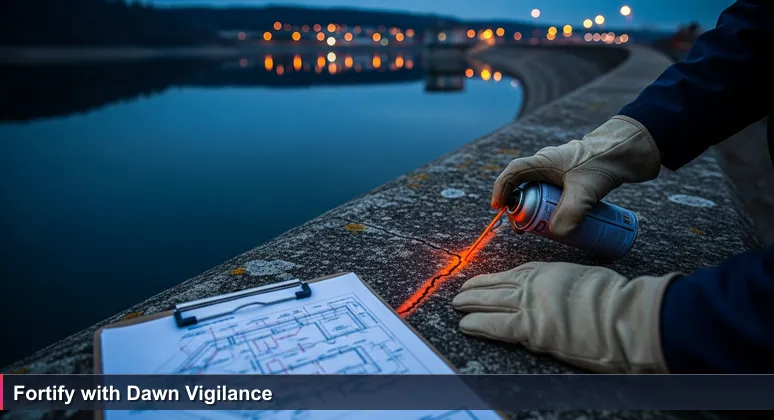
The most critical job in Tyler isn't always the most visible. It happens at dawn, in server rooms and network operations centers, by professionals looking for the single crack that could flood an entire system. Like the experts who maintain the physical levees protecting our communities, Tyler's economy relies on a dispersed force of cybersecurity guardians embedded in every critical sector, from hospitals to grocery headquarters.
This workforce is our digital levee, holding back a relentless tide of threats. Nationally, demand for information security analysts is projected to grow by a staggering 29% through 2034, translating to roughly 16,000 annual openings. In Tyler, this demand isn't concentrated in a single "tech hub"; it's a city-wide fortification effort across healthcare, retail, utilities, and government.
The hiring landscape here is defined by sector-specific missions. A professional securing patient data at CHRISTUS Health faces different challenges than one defending the supply chain at Brookshire Grocery Company's headquarters. Yet, they share the same quiet vigilance - the dawn work of proactive defense that keeps essential services running and public trust intact.
For those pursuing a career here, success means moving beyond a generic job search. It requires identifying which piece of Tyler's vital infrastructure you are called to defend and understanding its unique threat landscape. As noted by industry analysts, becoming an early adopter of specialized tools and trends in areas like threat detection is becoming the primary driver of job security in this high-stakes field.
In This Guide
- The Unseen Levee: Tyler's Cybersecurity Guardians
- Why Tyler's Cybersecurity Demand is Surging
- Fortifying Healthcare Systems in Tyler
- Guarding Retail and Supply Chains
- Protecting Education and Government Data
- Securing Utilities and Critical Infrastructure
- Leveraging Cloud and Regional Tech Jobs
- Military-to-Cyber Pipeline for Veterans
- Building Your Cybersecurity Career in Tyler
- Frequently Asked Questions
This article offers a comprehensive guide to starting an AI career in Tyler in 2026.
Why Tyler's Cybersecurity Demand is Surging
Cybersecurity demand in Tyler is driven by more than just national trends; it's fueled by the city's unique economic composition and strategic advantages. While the U.S. Bureau of Labor Statistics projects a 29% national growth in information security roles, local imperatives transform this statistic into urgent, sector-specific hiring.
Every critical industry here faces its own digital "floodplain." A ransomware attack can halt surgeries at a hospital, disrupt the supply chain for a regional grocery distributor, or lock a school district out of its records. This diversity means cybersecurity is no longer a niche IT cost but a fundamental requirement for business continuity across Tyler's economic base.
Texas's favorable business climate acts as a powerful accelerant. Professionals building careers here benefit from no state income tax and a significantly lower cost of living compared to coastal tech hubs. This financial advantage allows salaries to stretch further, enhancing overall compensation and stability for cybersecurity experts.
Furthermore, Tyler's position creates a dual-market opportunity. While local employers like CHRISTUS Health and Brookshire Grocery Company hire to protect their physical operations, professionals can also access the massive DFW tech economy just 90 minutes away. This proximity supports a growing number of remote or hybrid roles with DFW-based firms, offering Tyler residents high-tech salaries while enjoying East Texas community life - a powerful combination defining the region's surge in opportunity.
Fortifying Healthcare Systems in Tyler
In Tyler's healthcare sector, cybersecurity is a matter of life-critical defense. Protecting Electronic Health Records (EHRs), ensuring strict HIPAA compliance, and securing a proliferating array of connected medical devices (IoMT) are daily missions where the cost of failure extends far beyond financial loss.
Major employers like CHRISTUS Trinity Mother Frances Health System and UT Health Tyler under the UT System are on the front lines. They defend vast networks of sensitive patient data and complex care systems against relentless threats like ransomware and data exfiltration. Analysts at these institutions are the first responders, constantly monitoring for the single anomaly that could indicate a breach.
Roles here are specialized and in high demand. Cybersecurity Analyst I and II positions form the front-line defense, while Security Engineers build the secure architecture for clinical environments. Governance, Risk, and Compliance (GRC) Analysts are equally vital, ensuring every digital action adheres to stringent healthcare regulations.
Compensation reflects the high stakes. Entry-level Analyst roles in Tyler offer salaries ranging from $66,000 to $85,000, while senior Security Engineers protecting these environments can earn between $125,000 and $169,000. The pathway is clear: start with a foundational Security+ certification and a firm grasp of HIPAA, then progress to specialized credentials like CySA+ (Cybersecurity Analyst) and the leadership-oriented CISSP to advance within this urgent and rewarding field.
Guarding Retail and Supply Chains
Headquartered in Tyler, Brookshire Grocery Company (BGC) represents a massive and complex cybersecurity frontier far beyond the store floor. As a regional retail giant, its security team defends an sprawling attack surface: point-of-sale systems across hundreds of locations, intricate supply chain logistics, e-commerce platforms, and vast repositories of sensitive customer payment data.
The primary threat vectors here are distinct. PCI-DSS compliance is a non-negotiable mandate to protect credit card data, where breaches result in severe fines and eroded consumer trust. Equally critical are supply chain attacks that could disrupt distribution networks, emptying shelves and causing direct revenue loss. Professionals in this sector must think like both defenders and business continuity experts.
Key roles are tailored to these challenges. Information Security Engineers establish enterprise-wide security standards and manage critical tools, while Security Analysts hunt for retail-specific threats like gift card fraud and point-of-sale malware. Business Systems Analysts with a security focus act as crucial translators between IT teams and business units like logistics and finance.
Local salary ranges reflect the specialized need: Security Analysts can earn around $53,090, with Security Engineer roles typically ranging from $48,000 to $51,000 for entry-to-mid level positions in the Tyler market. To enter this field, build upon a Security+ foundation with knowledge of PCI-DSS standards and retail operations. Practical experience, such as setting up a lab to secure a mock POS network, provides a tangible advantage when applying to protect Tyler's commercial lifelines.
Protecting Education and Government Data
Cybersecurity in Tyler's public sector is fundamentally about protecting the institutions of daily life and public trust. From the University of Texas at Tyler to local school districts and municipal offices, professionals here defend student records, sensitive citizen data, and the continuous operation of essential services.
The challenges are multifaceted. UT Tyler must secure student data under FERPA regulations, protect valuable academic research, and defend campus-wide IoT and hybrid learning networks. Meanwhile, the City of Tyler and Smith County face the critical task of safeguarding citizen information in tax, utility, and court records, while also securing public payment portals and even traffic control systems.
Emerging roles reflect the evolving threat landscape. Positions like the Public Safety IT Specialist, who trains law enforcement on cyber awareness, highlight the intersection of physical security and digital defense. More traditional roles include IT Security Specialists, who often blend security duties with system administration, and Cybersecurity Software Developers creating custom tools at the university level.
Salaries for specialized positions in university and government IT often range from $80,000 to $90,000, frequently accompanied by strong benefits and pension plans. The hiring process can be methodical, so checking the UT System careers page and local government boards regularly is key. Success requires a foundational Security+ certification and the ability to navigate the structured, policy-driven environments that define public service.
Securing Utilities and Critical Infrastructure
Where the digital and physical worlds collide most dramatically, Tyler's cybersecurity professionals face their highest-stakes mission: securing utilities and critical infrastructure. Water treatment plants, electrical substations, and pipelines are managed by Industrial Control Systems (ICS) and SCADA networks - Operational Technology (OT) that was once isolated but is now connected and vulnerable.
A breach here transcends data loss; it threatens the 24/7 availability and safety of services the entire community depends on. Protecting these systems from cyber-physical attacks or ransomware is a matter of public safety and national security, making this one of the most urgent and specialized frontiers in the field.
The roles demand unique expertise. An OT Cybersecurity Engineer must understand both traditional IT security principles and the intricacies of industrial systems like PLCs and RTUs. These professionals design secure network architecture for utilities and monitor for threats that could disrupt physical processes. Infrastructure Security Engineers also play a key role, protecting the IT backbone that supports utility operations and customer platforms.
Due to the niche skill set required, compensation is significant, with specialized OT/SCADA roles commanding salaries between $103,000 and $142,000. The pathway requires deliberate specialization. Professionals start with a robust foundation in networking (Network+, CCNA) and general cybersecurity before pursuing OT-specific training. Certifications like the GISCP (Global Industrial Cyber Security Professional) or vendor credentials from Siemens or Rockwell Automation are invaluable. For those in Tyler, targeted education and partnering with local municipal utilities can provide the crucial hands-on experience needed to defend this critical frontier.
Leveraging Cloud and Regional Tech Jobs
While Tyler's cybersecurity landscape is anchored by sector-specific employers, it is significantly expanded by the regional tech footprint and the universal shift to the cloud. The city's largest pure-tech employer, Tyler Technologies, operates as a major "GovTech" leader, securing software that runs municipalities nationwide and hiring for specialized roles like Principal Cybersecurity Engineers focused on Identity and Access Management (IAM) and Cloud Security Analysts.
However, the opportunity extends far beyond a single company. Tyler-based businesses across all sectors are migrating to cloud services like AWS and Azure, creating robust local demand for professionals who can secure these hybrid environments. This technical shift, combined with Tyler's proximity to the Dallas-Fort Worth metroplex, creates a powerful dual market.
Many cybersecurity professionals in Tyler successfully secure remote or hybrid roles with companies based in DFW, Houston, or Austin. They leverage high-speed internet and Texas's favorable tax climate to earn competitive tech salaries while enjoying Tyler's lower cost of living. This "best of both worlds" scenario is a defining feature of the local job market.
For local tech roles at firms like Tyler Technologies, salaries for analysts and specialists typically range from $86,000 to $97,000. To compete, building cloud competencies is paramount. Earning certifications like the AWS Certified Security - Specialty or Microsoft Certified: Azure Security Engineer Associate provides a direct pathway to these in-demand positions, whether you aim to work for a local tech giant or defend the cloud infrastructure of any Tyler business.
Military-to-Cyber Pipeline for Veterans
Tyler's proximity to major defense installations like NAS JRB Fort Worth and Fort Cavazos creates a natural and valuable pipeline for veterans transitioning into cybersecurity. Defense contractors and supporting firms actively seek the discipline, mission-oriented mindset, and often the security clearances that former military personnel possess, viewing them as ideal candidates for high-stakes cyber defense roles.
Major employers like Leidos and Raytheon, while based in the DFW area, frequently recruit for cleared personnel who can live in Tyler and work remotely or with a limited commute. Roles such as Information Systems Security Engineer (ISSE) are critical for defending classified networks and national security infrastructure, offering a direct continuation of a service member's protective mission.
For veterans, the first step is often a deliberate translation of military experience - whether in IT, intelligence, or physical security - into civilian cybersecurity terminology. The Security+ certification is a mandatory DoD 8570 baseline requirement and serves as the essential entry point. From there, veterans can advance toward the CISSP for leadership roles. Utilizing VA resources and GI Bill benefits to fund certifications and accelerated training programs is a strategic advantage.
Compensation in this pipeline reflects the specialized need. Entry-level cybersecurity salaries in the region for those translating military experience average around $125,294, while senior, cleared ISSE roles can command between $107,000 and $195,000, depending on clearance level and specialization. Local, accelerated programs like the 15-week Nucamp Cybersecurity Bootcamp provide a structured, affordable pathway for veterans ready to quickly pivot and secure their place on Tyler's digital front lines.
Building Your Cybersecurity Career in Tyler
Building a successful cybersecurity career in Tyler requires a strategic shift in perspective. The opportunity isn't hidden in a single corporate campus but woven into the fabric of the city's vital sectors. Your first decision is identifying which piece of infrastructure you're called to defend - whether it's the life-critical systems of healthcare, the complex supply chains of retail, or the foundational utilities of the community.
Success hinges on moving beyond generic skills to sector-specific expertise. This means acquiring the certifications that speak directly to your chosen field's threats: HIPAA and CISSP for healthcare, PCI-DSS and CEH for retail, GISCP for utilities, or cloud security credentials for tech. As demonstrated by a local professional with a 33-year track record in IT, deep, specialized knowledge builds lasting, impactful careers here.
"It offered affordability, a structured learning path, and a supportive community of fellow learners." - Nucamp Bootcamp Student
Leverage Tyler's unique advantages as your foundation. The lower cost of living and no state income tax amplify your earning power, while proximity to the DFW metroplex opens a dual market of robust local roles and high-paying remote opportunities. Accelerated, affordable training paths like the 15-week Cybersecurity Bootcamp can provide the rapid, structured upskilling needed to enter this high-demand field efficiently.
Begin by fortifying your foundations with core certifications and practical labs. Then, consistently monitor the career pages of local institutions - from CHRISTUS Health and Brookshire's to UT Tyler and the City. In doing so, you won't just find a job; you'll take your place on the digital levee, ensuring the community's safety and your own professional prosperity for years to come.
Frequently Asked Questions
Which companies and sectors in Tyler are actively hiring cybersecurity professionals in 2026?
Major employers include CHRISTUS in healthcare, Brookshire Grocery Company in retail, UT Tyler in education, and Tyler Technologies in tech, with demand across sectors like utilities and defense. This reflects Tyler's distributed need for cybersecurity to protect critical infrastructure from hospitals to supply chains.
What cybersecurity roles are most in demand in Tyler right now?
Key roles include Cybersecurity Analysts for monitoring threats, Security Engineers for building secure networks, and specialized positions like OT Cybersecurity Engineers for utilities. In healthcare, GRC Analysts focus on compliance, while retail prioritizes roles for PCI-DSS standards.
How much do cybersecurity jobs typically pay in Tyler, TX?
Salaries range from $66,000 to $85,000 for Healthcare Analysts, up to $142,000 for OT roles, with entry-level positions around $125,294 for veterans. Tech firms like Tyler Technologies offer $86,000 to $97,000, reflecting Tyler's competitive market with lower living costs.
Why should I consider a cybersecurity career in Tyler over a larger city like Dallas?
Tyler provides a lower cost of living, no state income tax, and proximity to the DFW metroplex for remote or hybrid roles, balancing high-tech salaries with affordable living. You can work for local employers or access DFW's tech market while enjoying community stability in East Texas.
What certifications are essential to land a cybersecurity job in Tyler?
Start with Security+ for entry-level roles, then advance to CISSP for leadership or cloud certifications like AWS Certified Security for tech positions. In healthcare, CySA+ is valuable, while veterans should prioritize Security+ as a DoD requirement for defense roles.
This comprehensive guide details AI salary ranges and Texas advantages for Tyler professionals in 2026.
Discover which agentic AI companies are making waves in Tyler according to this 2026 evaluation.
Get updated on the 2026 AI job market in Tyler, Texas through this detailed report.
This Tyler TX tech salary vs cost of living analysis for 2026 helps you calculate your disposable income.
Discover AI career pathways through bootcamps in Tyler, TX in this detailed article.

Irene Holden
Operations Manager
Former Microsoft Education and Learning Futures Group team member, Irene now oversees instructors at Nucamp while writing about everything tech - from careers to coding bootcamps.