









How to Become an AI Engineer in Tyler, TX in 2026
By Irene Holden
Last Updated: March 31st 2026
Quick Summary
To become an AI engineer in Tyler, TX by 2026, focus on mastering software engineering fundamentals and AI tools through a structured path that takes 12 to 20 months with daily dedication or 6 months via intensive bootcamps like Nucamp's. Build a portfolio with projects for local industries like healthcare and retail, and leverage Tyler's no state income tax, lower cost of living, and access to the Dallas-Fort Worth metroplex to boost your job prospects in the growing Texas tech market.
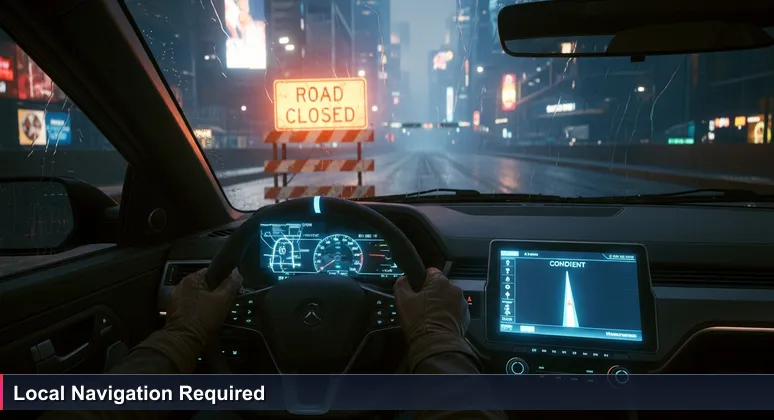
The most reliable GPS will still lead you into a ditch if it doesn’t know about the new construction on South Broadway. Before you chart your course, you need the right vehicle and fuel for the journey. Your primary tool is a computer with reliable internet and at least 8GB of RAM to handle running local models later. More critical than specs is the foundational mindset: comfort with logical thinking and a problem-solving attitude are your compass.
Be realistic about your schedule. Industry experts consistently note that a dedicated, structured approach of 3-5 hours daily can lead to job readiness in 12 to 20 months. However, for those with some coding background, intensive programs can dramatically accelerate this timeline. A popular roadmap from ex-Google and Microsoft engineers outlines a viable 6-month pivot by focusing on modern tools like LLMs and deployment.
This accelerated path often involves guided training. In Tyler, you can find local, instructor-led options like the AI classes offered by Certstaffix Training, which provide structured learning with hands-on support. Whether you choose self-study or a guided program, committing consistent time is the non-negotiable fuel that will power you from curious beginner to job-ready builder in the East Texas market.
Steps Overview
- Essential Gear for Your AI Journey
- Lay Your Texas-Sized Foundation
- Build Your AI Core Competency
- Specialize with Modern AI and Localized Projects
- Integrate into the Local and Digital Tech Ecosystem
- Verify Your Readiness and Launch
- Common Questions
This article offers a comprehensive guide to starting an AI career in Tyler in 2026.
Lay Your Texas-Sized Foundation
Your first destination isn't AI itself; it's building the robust software engineering bedrock the market demands. Industry analysis shows roles are converging, with AI integration becoming a "baseline expectation" for software builders. As highlighted in a 2026 hiring trends report, the "Junior AI Specialist" role is fading in favor of candidates who are backend engineers first.
This means your action plan is non-negotiable. Start by mastering Python, focusing on data structures and key libraries like NumPy and Pandas. From day one, host every project on GitHub to learn version control. Understanding how to write clean, debuggable code in an IDE like VS Code is more valuable than any theoretical algorithm at this stage.
Warning: Jumping straight into advanced machine learning is the fastest path to frustration. As one expert put it, this field "rewards builders over studiers." Connect your learning to Tyler immediately. While studying Python, explore public datasets for Smith County or think about structuring inventory data - applying your skills to local contexts turns abstract knowledge into tangible capability.
For a structured foundation, consider formal pathways. UT Tyler's Computer Engineering program offers a hands-on approach, or targeted bootcamps can build these essential backend and DevOps skills in a matter of months, ensuring you can construct the data pipelines and APIs that local industries rely on.
Build Your AI Core Competency
With your programming foundation set, you now add the engine and transmission: the essential mathematics and AI frameworks that power intelligent systems. Understanding the "why" behind algorithms transforms you from a library user into a builder who can troubleshoot and optimize for Tyler's specific needs, whether that's creating explainable diagnostic models for CHRISTUS Trinity Mother Frances or precise forecasting tools for local supply chains.
Master the Mathematical Bedrock
Dedicate 2-4 weeks to each core area. Learn linear algebra (vectors, matrices) to understand data flow in neural networks, statistics for model evaluation, and calculus (derivatives, gradients) to grasp optimization. Pro tip: Fight abstraction by immediately implementing concepts in code. Use NumPy to perform the matrix multiplication you just learned.
Implement Machine Learning Fundamentals
Move from math to application with core algorithms like Linear Regression and Decision Trees using Scikit-learn. This is where theory meets practice, building the judgment needed for real-world data. For structured, project-based learning in the supporting Python and cloud deployment skills, a focused bootcamp like Nucamp's 16-week Back End, SQL and DevOps program provides a clear path for $2,124.
Introduction to Deep Learning
Begin building neural networks with TensorFlow or PyTorch. This step bridges traditional machine learning and the modern AI you'll specialize in next. Connect your learning to local research by exploring the work of the Center for Robotics and Intelligent Systems (CeRIS) at UT Tyler, which focuses on autonomous systems and smart healthcare applications right here in East Texas.
"This field rewards builders over studiers." - Industry Expert, on prioritizing implementation over theory
Specialize with Modern AI and Localized Projects
This is where you transition from learner to builder by mastering the tools defining 2026 and applying them to projects that resonate in East Texas. The market is shifting toward Large Language Models (LLMs) and Generative AI, and employers need to see applied, production-ready competence.
Dive into Generative AI & LLMs
Move beyond basic model building to prompt engineering, fine-tuning, and building agentic systems with frameworks like LangChain. This is the cutting edge demanded by companies integrating AI into products. For a guided deep dive, consider a specialized program like the 25-week Solo AI Tech Entrepreneur Bootcamp, which teaches how to build, integrate, and monetize AI-powered applications - the ultimate builder showcase.
Build Your Tyler-Focused Portfolio
Create 3-4 in-depth projects using local data or problem definitions. As highlighted by ex-Google and Microsoft engineers, these end-to-end applications prove you can build ready-to-use products. Don't just follow tutorials; solve problems for Tyler industries.
| Industry | Project Idea | Skills Demonstrated |
|---|---|---|
| Healthcare | Medical image classifier for diagnostics | CNNs with PyTorch, model interpretability |
| Retail/Logistics | Demand forecasting model | Time-series analysis, Scikit-learn, Pandas |
| Local Government | RAG chatbot for city regulations | LLM integration, LangChain, document retrieval |
Deploy Your Work
Learn cloud deployment basics on AWS or Azure. Use platforms like Streamlit or Hugging Face Spaces to host a live demo of a project. This final step proves you can handle the full AI lifecycle - from idea to a working application. It turns your portfolio from a static collection of code into an interactive testament to your skills, ready to impress local employers or remote teams across Texas.
Integrate into the Local and Digital Tech Ecosystem
Learning in isolation is the fastest path to irrelevance in a tight-knit market like Tyler's. Opportunities here often flow through networks, and your proximity to the massive Dallas-Fort Worth tech scene means you need to be a known entity both locally and digitally.
Network Where You Live
Start by attending local events that connect talent with industry. Key opportunities include the UT Tyler Spring Houston Engineering Center (HEC) Internship & Career Fair, which has featured applied AI projects. Also, look for skill-specific training like the PMI-CPMAI Certification weekend offered in Tyler, which covers AI project management fundamentals.
Leverage University & Online Channels
Engage with the Office of Digital Learning at UT Tyler, which promotes AI literacy through public workshops. Simultaneously, build a strong LinkedIn profile. Follow and engage with Texas-based AI leaders, local companies like Tyler Technologies that list AI-enabled roles, and recruiters analyzing regional trends.
Become a Visible Builder
The biggest mistake is waiting until you feel "100% ready." Start sharing your learning journey and project milestones now. This builds a narrative of growth, attracts feedback, and surfaces opportunities before they're publicly posted. As you engage, consistently articulate the value of building your career in Texas: no state income tax, a lower cost of living, and direct access to the DFW metroplex’s job market are powerful advantages in any conversation.
Verify Your Readiness and Launch
How do you know you're ready to apply for AI engineer roles in Tyler? It's not about a certificate; it's about demonstrable capability that meets both technical and market expectations. Use this checklist to verify your position before merging onto the career highway.
- A portfolio of 3-4 deployed projects, with at least one addressing a domain relevant to East Texas industries like healthcare, retail, or logistics.
- The ability to clearly explain the trade-offs in your model choices and articulate specific improvements, showing depth beyond tutorial completion.
- An active, clean GitHub showcasing well-documented code and a commit history that tells the story of a builder.
- A nascent professional network in Texas, built through local events and online engagement with companies and recruiters.
- Clear articulation of the Texas advantage in your career narrative: no state income tax, lower cost of living, and strategic access to the DFW market.
When you can confidently check these boxes, you are no longer following a generic map - you are navigating the local terrain. Begin monitoring the active AI and machine learning job market in Tyler, tailoring your applications to highlight your localized projects and production skills. The road is built for those who have learned to read the signs.
Common Questions
Is it realistic to become an AI engineer in Tyler, TX by 2026 with no prior experience?
Yes, with a dedicated plan. Experts note that a structured approach of 3-5 hours daily can lead to job readiness in 12 to 20 months, and intensive bootcamps like Nucamp's can accelerate this to 6 months for those with some coding background, leveraging Tyler's lower cost of living.
What kind of computer do I need to start learning AI from Tyler?
A reliable computer with at least 8GB of RAM is recommended for running local models later. You don't need a high-end GPU initially, making it accessible in Tyler's affordable tech setup environment.
How long will it take to land an AI engineer job in Tyler?
Job readiness typically takes 12 to 20 months with self-study or 6 months with a bootcamp. Focus on building projects relevant to local industries like healthcare or retail to stand out in the 2026 market.
Are there enough AI jobs in Tyler, or do I need to look elsewhere in Texas?
Tyler has growing opportunities with employers like CHRISTUS and Brookshire Grocery, but the Dallas-Fort Worth metroplex offers remote roles just 90 minutes away. Texas's no state income tax makes working from Tyler advantageous.
What should I learn first to become an AI engineer: coding or AI math?
Start with mastering Python and software engineering fundamentals. Experts stress that in 2026, AI engineers are 'backend engineers first,' so build a solid coding base before diving into AI concepts.
Find out about East Texas AI networking events in 2026 and how to leverage them for career growth.
Discover AI career pathways through bootcamps in Tyler, TX in this detailed article.
This Tyler TX tech salary vs cost of living analysis for 2026 helps you calculate your disposable income.
Discover where AI roles are booming in Tyler's economy with this in-depth analysis.
Discover the leading AI startups in Tyler for 2026 that are making a local impact.

Irene Holden
Operations Manager
Former Microsoft Education and Learning Futures Group team member, Irene now oversees instructors at Nucamp while writing about everything tech - from careers to coding bootcamps.