









Top 10 AI Tools Every Finance Professional in Taiwan Should Know in 2025
Last Updated: September 14th 2025
Too Long; Didn't Read:
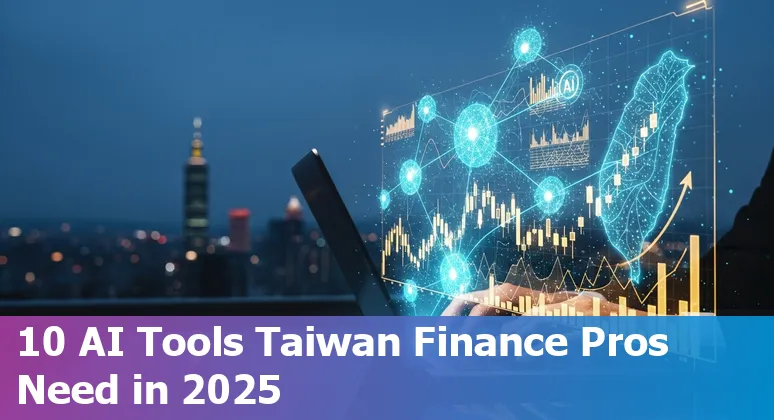
By 2025 AI is reshaping Taiwan finance - treasury, credit scoring and forecasting - with inference costs down over 280‑fold and generative AI investment surging. Pilot high‑impact tools, embed XAI/governance to meet tightening regulatory oversight, and upskill via a 15‑week program ($3,582 early bird).
Taiwan's finance professionals are at a practical inflection point in 2025: global momentum and falling costs mean advanced AI is no longer a boutique tool but a force reshaping treasury, credit scoring, and forecasting.
Stanford's 2025 AI Index report documents dramatic shifts - generative AI investment surging and inference costs falling over 280‑fold - making model-driven forecasting and real‑time anomaly detection far more affordable.
At the same time, RGP cautions that regulators are tightening oversight and that firms must pair innovation with strong governance in its AI in Financial Services 2025 report, so Taiwan teams that learn practical prompt skills, XAI basics and procurement clauses will win both agility and compliance - skills taught in Nucamp's Nucamp AI Essentials for Work bootcamp (15-week), a 15‑week path to apply AI safely across finance workflows.
| Bootcamp | Detail |
|---|---|
| AI Essentials for Work | 15 Weeks; Courses: AI at Work: Foundations, Writing AI Prompts, Job Based Practical AI Skills; Early bird $3,582; Register for Nucamp AI Essentials for Work (15-week) |
“AI-focused skills will empower finance professionals to confidently work with AI technologies and bridge the trust gap by ensuring decisions made by AI systems are transparent and understandable.” - Morne Rossouw, Chief AI Officer, Kyriba
Table of Contents
- Methodology - How We Selected These AI Tools for Taiwan Finance Teams (2025)
- DataRobot - Predictive Analytics and Time-Series Forecasting for Treasury
- Zest AI - ML-Driven Credit Scoring and Underwriting Automation
- AlphaSense - AI-Powered Investment Research and Market Analysis
- HighRadius - Autonomous Receivables and Cash Forecasting
- Anaplan - Enterprise FP&A and Scenario Planning with PlanIQ
- BlackLine - Financial Close Automation and Reconciliations
- AppZen - Real-Time Spend Auditing and AP Fraud Detection
- Tipalti - Global Supplier Payments and Accounts Payable Automation
- Botkeeper - Bookkeeping Automation and Transaction Categorization
- Formula Bot - Excel Automation and Formula Generation for Self-Service Modelling
- Conclusion - Next Steps for Taiwan Finance Teams and Training Resources (Nucamp Bootcamp)
- Frequently Asked Questions
Explore safe experimentation with AI-driven products using Taiwan's FinTech Sandbox Act and learn how to apply.
Methodology - How We Selected These AI Tools for Taiwan Finance Teams (2025)
(Up)Selection focused on what matters for Taiwan finance teams in 2025: practical risk control, clear governance, and measurable business value. Tools were evaluated against the FSC's risk‑based lifecycle and six core principles (governance, fairness, privacy, robustness, explainability, sustainability), with special attention to third‑party oversight, data‑minimisation clauses and contract exit controls described in the FSC “Guidelines for the Application of AI in the Financial Industry” (FSC Guidelines for the Application of AI in the Financial Industry (June 20, 2024)).
We cross‑checked regulatory context and Taiwan's national AI plans - MODA, NSTC and the AI Evaluation Center - to favour vendors that support audit trails, explainability and sandbox testing as recommended in Lee & Li's review (Artificial Intelligence 2025 - Taiwan: Trends and Developments (Lee & Li)).
Candidate tools also had to solve high‑impact finance use cases (predictive cash‑flow, anomaly/fraud detection, FP&A automation), demonstrate clear pilot ROI and provide vendor governance features so boards can meet fiduciary duties - because in practice, a model without explainability is a governance headache, not a solution.
| Selection Checklist | Key Items |
|---|---|
| AI lifecycle alignment | System planning & design; data collection; model build/validation; deployment & monitoring |
| Risk factors | Client impact, personal data use, AI autonomy, system complexity, stakeholder breadth, recourse options |
“include human thought,”
DataRobot - Predictive Analytics and Time-Series Forecasting for Treasury
(Up)For Taiwan treasury teams facing volatile FX flows, holiday-driven cash swings and many legal entities, DataRobot's time‑series stack is a practical bridge from historical ledgers to operational forecasts: the platform automates lag/rolling‑stat feature engineering, supports multiseries forecasting for many subsidiaries, and lets teams add “known in advance” (KA) variables or upload country calendars so Taipei‑specific holidays can improve accuracy; see the DataRobot Time-Series modeling documentation for how FDW/FW windows, KA flags and calendars work DataRobot Time-Series modeling documentation.
Its July 5, 2025 no‑code Time Series release also lowers the bar for non‑data scientists to run nowcasts and scenario horizons, which is useful when treasury needs a rapid week‑ahead liquidity view or to simulate policy changes Boston Institute of Analytics: DataRobot No‑Code Time Series release (July 5, 2025).
Practical treasury takeaways: use multiseries models for pooled cash by legal entity, mark payroll and tax dates as KA/calendar events, validate prediction intervals before committing risk limits, and avoid blind retraining - DataRobot's docs warn that older history can sometimes hurt recent forecasts.
| DataRobot Time‑Series Feature | Why it matters for Taiwan treasury |
|---|---|
| Automated feature engineering (lags, rolling stats) | Speeds building cash‑flow predictors across accounts |
| Multiseries & segmentation | Forecast many subsidiaries or business lines in one project |
| Known‑in‑advance (KA) & calendars | Incorporate payroll, tax dates and Taiwan holidays for better accuracy |
| Prediction intervals & retraining guidance | Quantify forecast uncertainty and avoid overfitting to obsolete history |
Zest AI - ML-Driven Credit Scoring and Underwriting Automation
(Up)Zest AI brings machine‑learning underwriting and embedded fraud detection that matter for Taiwan lenders looking to expand access while keeping tight risk and compliance controls: its underwriting stack promises 2–4x more accurate risk ranking than generic models, meaningful risk reduction (20%+ in studies) and approval lifts (25–30% across protected classes) while automating a large share of decisions - figures echoed in Zest's product materials and partnership announcements - so community banks and credit unions can say “yes” faster without raising losses; for practical details see Zest's AI‑Automated Underwriting page Zest AI automated underwriting product page and its native integration with Temenos' loan origination platform that pairs decisioning with real‑time fraud checks Zest AI Temenos loan origination integration announcement.
Deployment is intentionally pragmatic - short proofs of concept and fast integrations - and the platform bundles explainability, adversarial de‑biasing and active model monitoring, which helps Taiwanese compliance teams document models and meet audit expectations while improving borrower outcomes; one vivid payoff: institutions report slashing multi‑hour manual decision times down to near‑instant outcomes, turning underwriting bottlenecks into competitive service advantages.
| Capability | What it means for Taiwan lenders |
|---|---|
| Auto‑decisioning | 60–80%+ automation potential - faster approvals and consistent rules |
| Risk & approval impact | ~20%+ risk reduction; ~25–30% approval lift for underserved cohorts |
| Deployment speed | Proof of concept 2 weeks; integrations as quickly as 4 weeks; active monitoring 24/7 |
| Fairness & explainability | Adversarial debiasing, LDA searches and model documentation to support compliance |
“With climbing delinquencies and charge‑offs, Commonwealth Credit Union sets itself apart with 30–40% lower delinquency ratios than our peers. Zest AI's technology is helping us manage our risk, strategically continue to underwrite deeper, say yes to more members, and control our delinquencies and charge‑offs.” - Jaynel Christensen, Chief Growth Officer
AlphaSense - AI-Powered Investment Research and Market Analysis
(Up)AlphaSense turns the grunt work of earnings season into strategic advantage for Taiwan finance teams - imagine opening a TSMC tear sheet that already aggregates call highlights, KPIs and a smart summary so treasury and investor‑relations can see that Q2 revenue rose 17.8% sequentially in USD to $30.1B and EPS jumped 60.7% year‑over‑year, then immediately drill into management tone; AlphaSense's platform surfaces Smart Summaries, Smart Synonyms and generative search to compress deep research into a few high‑confidence bullets, while sentence‑level sentiment and Δ sorting lets analysts flag the biggest quarter‑over‑quarter language shifts before competitors do (see the AlphaSense TSMC earnings page AlphaSense TSMC earnings page).
For market monitoring and manufacturing exposure - critical in Taiwan's semiconductor‑heavy landscape - the platform's watchlists, alerts and exportable sentiment charts speed due diligence and board reporting, so a small IR or FP&A team can act with the confidence of a larger research shop; learn how sentiment scoring and transcript highlighting work in the AlphaSense Sentiment Analysis guide AlphaSense Sentiment Analysis guide.
| AlphaSense Capability | Why it matters for Taiwan finance teams |
|---|---|
| Smart Summaries & Company Tear Sheets | Fast, citation‑linked earnings snapshots for firms like TSMC - speeds FP&A and IR prep |
| Sentence‑level Sentiment & Δ Sorting | Detects inflection points in management tone and ranks biggest quarterly shifts |
| Smart Synonyms & Generative Search | Finds relevant insights across paywalled reports and expert calls without missed keywords |
“The time saved by using AlphaSense is enormous. It easily saves us several hours a week. Requested information can be prepared in a timely, precise and efficient manner. For our daily work, this is essential.” - Michael Otto, Director of Investor Relations and Sustainability
HighRadius - Autonomous Receivables and Cash Forecasting
(Up)HighRadius packages autonomous receivables, cash application and AI agents into an Order‑to‑Cash stack that can materially tighten liquidity for Taiwan finance teams by cutting manual touchpoints and accelerating cash conversion: the platform advertises AI‑driven O2C automation that can reduce DSO (Days Sales Outstanding) by about 10%, lower past‑dues ~20% and lift AR productivity by roughly 30–40%, while its Cash Application module claims 90%+ same‑day automation so payments get posted instead of languishing in queues - a small operational change that can feel like finding a hidden week of working capital.
The vendor's product pages and recent posts explain how agentic AI blends ML, NLP and generative capabilities to prioritize high‑value collections work, automate disputes and recommend data‑driven decisions across credit, invoicing and collections; see HighRadius' AI Powered Order to Cash overview and their Cash Application Management details for practical specs and demo options.
| Capability | Claimed Impact |
|---|---|
| Reduce DSO | ~10% |
| Reduce past dues | ~20% |
| Productivity uplift | 30–40% (AR/O2C teams) |
| Cash application automation | 90%+ same‑day |
| Bank key‑in fees | Eliminate 100% (checks) |
Anaplan - Enterprise FP&A and Scenario Planning with PlanIQ
(Up)Anaplan's PlanIQ brings enterprise FP&A smarts to Taiwan finance teams by embedding ML forecasting inside the connected planning models they already use - no separate data‑science project required.
PlanIQ's AutoML and ensemble options (ARIMA, DeepAR+, CNN‑QR, MVLR, Anaplan Prophet and more) automatically train time‑series models, surface data issues, and let model builders compare algorithm results side‑by‑side so planners can pick the best fit; read the Anaplan PlanIQ overview brief or the technical guide on Anaplan Anapedia PlanIQ technical guide for setup details.
For Taiwan this means planners can fold in related drivers (prices, promotions, macro indicators), add a country‑specific holiday calendar (think Lunar New Year seasonality), and schedule forecasts or run ad‑hoc scenarios; PlanIQ even returns forecast quantiles (defaults give an 80% confidence band) so a board deck replaces guesswork with a defensible range.
The result is faster scenario planning, clearer explainability for auditors, and FP&A outputs that non‑data scientists can own and iterate.
| Feature | Why it matters for Taiwan FP&A |
|---|---|
| AutoML & multiple algorithms | Finds the best model for each series without a data‑science team |
| Related data & attributes | Include local drivers (pricing, promos, macro indicators) to improve accuracy |
| Holiday calendars & quantiles | Handles seasonality (e.g., Lunar New Year) and provides confidence bands for decisions |
| Integration & scheduling | Embeds forecasts back into Anaplan models and automates planning cycles |
BlackLine - Financial Close Automation and Reconciliations
(Up)BlackLine is the kind of platform Taiwan's larger finance teams reach for when month‑end looks like a tangle of spreadsheets across multiple legal entities: it automates transaction matching and reconciliations, surfaces exceptions for focused review, and creates an auditable, role‑based workflow so controllers can track status in real time instead of hunting in Excel - a change that reviewers describe as turning a multi‑day spreadsheet slog into a single, audit‑ready dashboard.
The product's strengths - deep ERP integrations (NetSuite, SAP, Oracle, Workday and more), configurable templates, real‑time monitoring and built‑in controls - make it well suited to multinational groups and firms with complex intercompany flows in Taiwan, but expect a meaningful implementation lift (often several months) and enterprise pricing to match; for practical overviews see Numeric's BlackLine guide BlackLine Reconciliation: What It Is and How it Works and regional implementation notes from Shearwater Asia on BlackLine reconciliation and financial close management.
For mid‑market teams weighing cost, HubiFi's roundup of automated reconciliation tools helps compare speed, controls and change management tradeoffs before committing.
| Feature | Why it matters for Taiwan finance teams |
|---|---|
| Automated transaction matching & templates | Reduces manual errors and standardizes reconciliations across subsidiaries |
| ERP integrations | Works with major ERPs used by Taiwan multinationals for seamless data flow |
| Audit trail & controls | Supports compliance and board reporting with documented approvals |
| Implementation & cost | Powerful but often requires months to deploy and enterprise pricing; compare alternatives for mid‑market teams |
AppZen - Real-Time Spend Auditing and AP Fraud Detection
(Up)AppZen streamlines real‑time spend auditing and AP fraud detection in ways that matter for Taiwan finance teams juggling international travel, supplier invoices and regulatory checks: its AI automatically audits 100% of expenses, reads receipt lines in 42 languages across 97 countries, and even validates fapiao formats and anti‑bribery controls so cross‑border T&E and vendor spend don't slip past compliance gates - think of it as a 24/7 automated finance expert that reads every receipt before it lands in payroll or AP. The Mastermind platform also exposes spend patterns, routes high‑risk exceptions with Smart Workflows, and deploys AI Agents that can handle roughly half of routine T&E tasks, reducing review backlogs and speeding reimbursements; practical details and integration options are on AppZen's Expense Audit and Mastermind pages.
For Taiwan firms, the combination of duplicate detection, merchant verification and regulatory checks (FCPA, Sunshine Act, PEP detection) turns noisy expense trails into actionable controls and audit trails that internal teams and auditors can trust.
| Capability | Why it matters for Taiwan finance teams |
|---|---|
| 100% expense audit coverage | Catches policy violations and fraud before payouts |
| 42 languages, 97 countries & fapiao validation | Supports cross‑border travel, supplier invoices and China fapiao compliance |
| Duplicate & merchant detection | Prevents double payments and flags high‑risk vendors |
| AI Agents & Smart Workflows | Automates ~50% of routine T&E work and routes exceptions for review |
| Real‑world impact (case study) | MedTech customer reported a 60% auto‑approval rate in audits |
“AppZen has literally been a complete change from a visibility, transparency, ease of use, and lack-of-bias perspective. We are more confident in the data and its quality. My team can address concerns to ensure we're compliant across all the policy groups and countries in which we operate.”
Tipalti - Global Supplier Payments and Accounts Payable Automation
(Up)Tipalti is a practical choice for Taiwan finance teams that need to tame cross‑border payables without adding headcount: its AI Smart Scan and auto‑coding turn messy invoices into ERP‑ready bills, the supplier self‑service portal accelerates onboarding, and the Mass Payments rails support payouts to 200+ countries in 120+ currencies so multi‑entity groups can centralize control while paying vendors locally; see Tipalti's invoice management overview for the capture-to‑pay flow Tipalti Invoice Management (AP Automation) and its automated invoice processing notes on global payouts and tax compliance Tipalti Automated Invoice Processing: Global Payouts & Tax Compliance.
Real customer wins - from PubMatic cutting processing to three minutes to ServiceRocket trimming AP time by ~80% - show how automating PO matching, tax form collection and real‑time reconciliation can shrink month‑end chaos into a single, auditable dashboard; for a Taiwan FP&A or treasury team, that can feel like freeing an extra week of cash flow every quarter.
| Capability | Why it matters for Taiwan finance teams |
|---|---|
| Global payments (200+ countries, 120 currencies) | Centralize multi‑entity payouts and pay suppliers in local currency to reduce FX friction |
| AI invoice capture & auto‑coding | Eliminates manual data entry and speeds invoice-to-ERP posting for faster closes |
| Supplier self‑service portal | Reduces vendor inquiries and accelerates onboarding across languages and time zones |
| Tax & compliance (KPMG‑approved engine) | Automates multi‑jurisdiction tax rules and creates audit trails for regulators |
| ERP integrations & real‑time reconciliation | Maintains GL accuracy and shortens month‑end by syncing payments to ledgers |
Botkeeper - Bookkeeping Automation and Transaction Categorization
(Up)Botkeeper turns one of Taiwan finance teams' perennial headaches - slow, error‑prone bookkeeping - into an automated, auditable flow by combining machine learning, human oversight and a firm‑focused portal: Transaction Manager, Smart Connect and Botkeeper's AutoPush predict categorizations (AutoPush can auto‑post transactions at a ≥98% confidence threshold) while flagging lower‑confidence items for review, so month‑end moves from firefighting to a calm, explainable process; learn more on Botkeeper's automated bookkeeping platform Botkeeper automated bookkeeping platform and the service FAQs that detail Transaction Manager and AutoPush workflows Botkeeper Transaction Manager and AutoPush workflows FAQ.
For firms serving Taiwan's multilingual SMEs and multi‑entity groups, Botkeeper's Xero/QBO support, real‑time dashboards, Auto Bank Rec (beta) and journal‑entry automation scale capacity without hiring - a bit like gaining a senior bookkeeper who works 24/7 and never needs coffee - freeing staff to focus on advisory and cash strategy rather than data entry.
| Feature | Why it matters for Taiwan finance teams |
|---|---|
| AutoPush (AI categorization, ≥98% confidence) | Posts high‑confidence transactions automatically to the GL to speed closes |
| Transaction Manager & Smart Connect | Centralizes review workflow and secure bank access so exceptions are tracked and resolved |
| Auto Bank Rec (beta) & JE automation | Automates reconciliations and loan/payroll splits to reduce manual corrections |
| Firm & Financial Insights | Real‑time operational metrics and KPI dashboards to support advisory work |
| Xero/QBO ecosystem support | Fits common ledgers used by Taiwan SMEs and accounting partners, easing onboarding |
Formula Bot - Excel Automation and Formula Generation for Self-Service Modelling
(Up)Formula Bot brings Excel automation and self‑service modelling to Taiwan finance teams that need fast, auditable results without hiring more analysts: its AI Excel generator converts plain‑English requests into accurate formulas, explains complex functions, spins up downloadable spreadsheets, and even parses PDFs into Excel - features that can cut the hours spent cleaning and reworking models into minutes.
The platform works inside Excel and Google Sheets via free add‑ons, supports common data sources (Excel, Sheets, Google Analytics, SQL databases) and offers ready‑made templates and a chat‑based analyst for exploratory analysis, visualization and sentiment extraction, so an FP&A manager can produce investor‑ready charts or scenario inputs quickly.
For Taiwan use cases - multi‑entity consolidations, holiday‑driven seasonality and frequent PDF reports - the PDF‑to‑Excel and formula generator tools are especially practical.
Try Formula Bot's AI Excel generator to speed modelling and reduce formula errors, or explore the Excel AI add‑on for direct in‑sheet formula help and the AI spreadsheet generator for one‑click templates and PDF conversion.
| Plan | Price (monthly) | Key benefit |
|---|---|---|
| Unlimited | $15 | Everyday analysis, unlimited formula generation, basic performance |
| Unlimited Plus | $25 | Higher speed, larger file limits, more enrichments and scheduled reports |
| Unlimited Ultra | $35 | Top performance for big data, most enrichments and scheduled reports |
“Formula Bot makes data analysis effortless - I can upload a file, ask questions in plain English, and get instant insights and charts without touching a formula.” - Emma Clarke, DataVision Analytics
Conclusion - Next Steps for Taiwan Finance Teams and Training Resources (Nucamp Bootcamp)
(Up)Taiwan finance teams should treat 2025 as the year to move from curiosity to control: follow the FSC's risk‑based playbook (see the FSC's Guidelines for the Use of Artificial Intelligence in the Financial Industry - June 20, 2024) and the practical legal framing in Lee & Li's Artificial Intelligence 2025 - Taiwan guide when scoping pilots, third‑party contracts and data governance.
Start small with high‑impact pilots (cash forecasting, credit decisioning or AP fraud detection), embed explainability and vendor exit clauses up front, and pair tool selection with role-based training so controllers and auditors can explain outcomes to boards - think of the Guidelines as a board‑level lifejacket: low profile but indispensable when the water gets choppy.
For teams ready to build practical skills, a structured upskilling path such as Nucamp's AI Essentials for Work 15-week bootcamp (registration) teaches prompt design, XAI basics and workflow integration so staff can operationalize these tools without a full data‑science hire.
| Bootcamp | Key details |
|---|---|
| AI Essentials for Work | 15 weeks; Courses: AI at Work: Foundations, Writing AI Prompts, Job‑Based Practical AI Skills; Early bird $3,582; syllabus: AI Essentials for Work syllabus; register: AI Essentials for Work registration |
Frequently Asked Questions
(Up)Which AI tools should Taiwan finance professionals prioritize in 2025?
Prioritize tools that map to high‑impact finance workflows: DataRobot (time‑series forecasting for treasury), Zest AI (ML credit scoring & underwriting), AlphaSense (investment research & sentiment), HighRadius (autonomous receivables & cash application), Anaplan PlanIQ (enterprise FP&A & scenario planning), BlackLine (close & reconciliations), AppZen (real‑time spend auditing & fapiao validation), Tipalti (global supplier payments & AP automation), Botkeeper (bookkeeping automation) and Formula Bot (Excel/formula generation). Each tool was selected for practical ROI, vendor governance features and applicability to Taiwan use cases like holiday seasonality, multientity consolidation and fapiao compliance.
How did you select these tools and what regulatory considerations should Taiwan teams follow?
Selection followed a risk‑based playbook aligned to Taiwan regulators (FSC) and national AI plans (MODA, NSTC, AI Evaluation Center). Key criteria: governance, fairness, privacy, robustness, explainability and sustainability; support for audit trails/sandbox testing; third‑party oversight; data‑minimisation clauses and contract exit controls. Practically, pick vendors that provide explainability, active model monitoring, audit logs and contract language for exit/recourse so boards and auditors can meet fiduciary duties.
What practical finance use cases and measurable impacts can teams expect from these tools?
Concrete pilots with measurable impact include: treasury forecasting with DataRobot (multiseries forecasting, KA/calendar events for Taiwan holidays), credit underwriting with Zest AI (reported ~20%+ risk reduction and ~25–30% approval lift in cases), receivables automation with HighRadius (DSO reduction ~10%, cash application 90%+ same‑day), AP/spend auditing with AppZen (100% expense audit coverage, multi‑language & fapiao support), and FP&A scenario planning with Anaplan PlanIQ (forecast quantiles and AutoML). Start with small, high‑value pilots (cash forecasting, credit decisioning, AP fraud detection) to prove ROI.
What implementation, cost and deployment tradeoffs should finance teams plan for?
Expect a spectrum: some tools (e.g., Zest AI) support rapid PoCs (weeks) and fast integrations; enterprise platforms (BlackLine) can require several months and enterprise pricing. Consider vendor features (ERP integrations, audit trails, explainability, model monitoring), implementation lift, and mid‑market alternatives. Also note broader market dynamics: inference and deployment costs have fallen substantially (Stanford cited inference cost declines of ~280‑fold), making advanced features more affordable, but governance and contract clauses remain essential.
How should teams upskill and who offers practical training for operationalizing these AI tools?
Pair tool selection with role‑based training so controllers, auditors and FP&A can explain AI outcomes. Recommended path: a structured, practical program covering prompt design, XAI basics and workflow integration. Example: Nucamp's 'AI Essentials for Work' 15‑week bootcamp (courses include AI at Work: Foundations, Writing AI Prompts, Job‑Based Practical AI Skills) - early bird pricing noted in the article was $3,582 - designed to help teams safely operationalize AI in finance workflows.
Shrink your close calendar and reduce reconciliation errors with month-end close automation.
The concept of the data paradox in finance explains why better data can both enable AI and expose roles to automation in Taiwan.

Ludo Fourrage
Founder and CEO
Ludovic (Ludo) Fourrage is an education industry veteran, named in 2017 as a Learning Technology Leader by Training Magazine. Before founding Nucamp, Ludo spent 18 years at Microsoft where he led innovation in the learning space. As the Senior Director of Digital Learning at this same company, Ludo led the development of the first of its kind 'YouTube for the Enterprise'. More recently, he delivered one of the most successful Corporate MOOC programs in partnership with top business schools and consulting organizations, i.e. INSEAD, Wharton, London Business School, and Accenture, to name a few. With the belief that the right education for everyone is an achievable goal, Ludo leads the nucamp team in the quest to make quality education accessible