









How to Pay for Tech Training in Solomon Islands in 2026: Scholarships, Grants & Government Programs
By Irene Holden
Last Updated: April 23rd 2026
Key Takeaways
Solomon Islanders can pay for tech training in 2026 through 1,000 government scholarships, Australia Awards prioritizing cyber security and software engineering, and TVET pathways from Australia Skills Awards - with total values from SBD 14,000 locally to over SBD 500,000 for overseas degrees. The critical move is to apply before deadlines like SIG's September 2025 cutoff and stack funding sources like SIG's tuition-only model with BSP loans.
If you qualify for a government or bilateral scholarship, this is the most financially complete path available. These programs cover tuition, living costs, and often travel - effectively building the entire bridge for you. The trade-off is competition and application lead time; most require you to apply 6-12 months before your intended start date. For 2026, the Solomon Islands Government has allocated 1,000 awards through the Solomon Islands Tertiary Education and Skills Authority (SITESA), with 88% delivered in-country to strengthen local institutions like SINU and USP Honiara. Eligible fields now explicitly include ICT, computer science, and engineering as high-priority sectors under the national human resource development strategy.
The Australia Awards program remains the highest-value single pathway for Solomon Islanders pursuing tech careers, with priority fields for the 2027 intake explicitly naming cyber security, software engineering, and information technology. Total estimated value exceeds SBD 500,000 per recipient, covering full tuition at an Australian university, return air travel, establishment allowance, and a fortnightly living stipend. As Mr. Schloeffel, a development partner associated with the program, stated: "Education is one of the smartest investments we can make. These scholarships will equip Solomon Islanders with the knowledge and skills to excel in their chosen careers." Applications open February 1, 2026, through the Australian High Commission in Honiara.
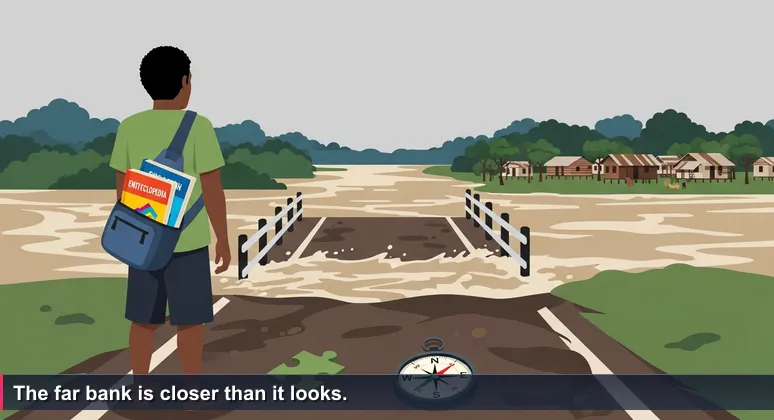
The Manaaki New Zealand Scholarships offer full funding for undergraduate and postgraduate studies either in New Zealand or at Pacific regional universities like USP in Suva. For 2026, the extended application deadline is April 10, providing a weekly living allowance of NZ$531 plus a NZ$3,000 establishment allowance. If you want to stay regional rather than relocate entirely, this is your strongest option - USP Suva offers more private bootcamp options and Income-Share Agreements than Honiara, giving you flexibility if your career plan shifts mid-degree. Complementing these donor programs, the newly launched ICT for Education Master Plan 2026-2030 signals long-term government commitment through four technical pillars - iKonnect, iManage, iTeach, and iResources - designed to align training with actual labor market needs. Minister of Education Hon. Tozen Leokana described it as "a plan about justice, equity, and transforming opportunity for all learners across our country," confirming that the far bank is closer than it looks for those who apply.
In This Guide
- Government and Donor Programs: Free Money for Tech Training
- SIG National Scholarships and the Tuition Only Model
- Australia Awards: Full Funding for Study Down Under
- Manaaki New Zealand Scholarships: Regional and NZ Options
- Australia Skills Awards: TVET Pathway to Tech Careers
- ICT for Education Master Plan 2026-2030: Long-Term Investment
- Employer-Funded Programs and Private Scholarships
- Payment Plans, Installments, and Private Financing
- Eligibility Decision Tree: Find Your Best Route
- Application Calendar for 2026-2027 Intakes
- Documentation Checklist: What You Need to Apply
- Stacking Multiple Funding Sources: Real Examples
- Conclusion: Choose Your Bridge and Step Forward
- Frequently Asked Questions
Planning to break into AI? This complete resource for AI careers in Solomon Islands outlines skills and salary expectations.
SIG National Scholarships and the Tuition Only Model
The 1,000 SIG National Scholarships administered by SITESA remain the largest single pool of domestic education funding for Solomon Islanders in 2026. With 88% delivered in-country to strengthen local institutions, the government has shifted emphasis toward SINU and USP Honiara while reserving 12% for specialized overseas study. ICT, computer science, and engineering are explicitly listed as high-priority sectors under the national human resource development strategy. The application window runs from July 14 to September 14, 2025 for the 2026 intake, making it the earliest deadline among all major funding programs.
A critical development for 2026 is the introduction of the "Tuition Only" model for local students at SINU. This expands access for qualified applicants who may not have secured a full award but can cover their own living costs. SITESA CEO Constance Nasi confirmed that "SITESA has allocated 10 more scholarship spaces for the constituency category. Last year we provided five," signalling an incremental but meaningful expansion of reach. Typical award sizes range from SBD 15,000-40,000 per year for local study and SBD 120,000+ for overseas placements including tuition, living allowance, and travel.
To apply, visit the SITESA online scholarship portal and complete the application before the September deadline. If your grades are strong but you missed the full award, the "Tuition Only" model is your second door - most applicants simply do not know it exists. According to Solomon Star News reporting, this model was designed specifically for students exactly like you: qualified, motivated, but needing a narrower crossing. Apply for it specifically.
Australia Awards: Full Funding for Study Down Under
The Australia Awards represent the single highest-value funding pathway available to Solomon Islanders pursuing tech careers. For the 2027 intake, priority fields explicitly include cyber security, software engineering, and information technology. The total package exceeds SBD 500,000 per recipient, covering full tuition at an Australian university, return air travel, an establishment allowance, and a fortnightly living stipend equivalent to AUD rates. This is not partial support - it is a complete financial bridge that allows you to focus entirely on your studies.
- Full tuition at any Australian university offering your program
- Return air travel from Honiara to your Australian campus
- Establishment allowance of approximately SBD 20,000+ to cover initial costs
- Fortnightly living stipend at standard Australian student rates
Applications for the 2027 intake open February 1, 2026 and close April 30, 2026. You must apply through the Australian High Commission in Honiara, where full program details and eligibility criteria are published. The DFAT opening and closing dates page also provides country-specific guidance for Solomon Islands applicants.
The real-world dividend of this pathway is demonstrated by leaders like Curtis Kalu, a Chevening alumna who now serves as Director of the National Scholarship Division. Her overseas training did not just earn her a qualification - it positioned her to return and lead the entire SITESA scholarship system that funds hundreds of Solomon Islanders each year. This is the long-term return on an Australia Awards investment: you gain technical expertise abroad and return to shape the sector at home. The steel bridge is open. Mark April 30 on your calendar and begin preparing your documents now.
Manaaki New Zealand Scholarships: Regional and NZ Options
The Manaaki New Zealand Scholarships offer a powerful alternative for Solomon Islanders who want fully funded tech training without relocating to Australia. These scholarships cover full tuition, return air travel, a weekly living allowance of NZ$531, and a one-time establishment allowance of NZ$3,000. The total package is comparable to Australia Awards in value, but with a key advantage: you can study either in New Zealand or at regional Pacific universities like USP in Suva, Fiji. ICT and technology-related programs are explicitly eligible under New Zealand's development priorities for the Pacific.
For the 2026-2027 intake, the extended application deadline is April 10, 2026. You should apply through the official Manaaki New Zealand Scholarships information page, which provides full eligibility criteria and country-specific guidance for Solomon Islands applicants. Additional program details are available through the University of Auckland's Geothermal Institute, which hosts Manaaki scholars in related technical fields.
The regional study option at USP Suva is this program's hidden advantage. Unlike Honiara, Suva has a more developed tech startup scene and offers private coding bootcamps with Income-Share Agreements - meaning you can add practical certifications while your degree is fully funded. This flexibility lets you adapt your training if your career plan shifts mid-degree. Whether you choose to study in New Zealand or stay closer to home at USP, the Manaaki scholarship builds a complete bridge from Honiara to a tech career - no gaps, no out-of-pocket costs for tuition or living expenses. The crossing is open; the deadline is approaching.
Australia Skills Awards: TVET Pathway to Tech Careers
Not every tech career requires a university degree. The Australia Skills Awards (ASA) provide 500 TVET scholarships for Solomon Islanders to study at local Rural Training Centres (RTCs), covering full tuition fees and personal protective equipment. Typical awards are valued at approximately SBD 14,000 per year, with no living stipend included since you arrange accommodation locally. Recipients consistently highlight that coverage of both fees and PPE allows them to "focus purely on skill acquisition" rather than worrying about costs, according to program feedback shared through the Solomon Islands Government portal at solomons.gov.sb.
Applications are handled directly through your chosen RTC, with awards typically announced in February each year. This pathway is designed for those who may not have strong academic transcripts but have work experience and practical ambition. According to the SIBC News announcement, the ASA program prioritizes candidates outside Honiara who want to gain digital skills quickly without relocating for years.
This crossing is ideal if you:
- Live in a province outside Honiara with access to a local RTC
- Have work experience but no formal qualifications
- Want practical digital skills in fields like ICT support, basic networking, or digital literacy
- Need to stay in your community while training
The TVET pathway is the footbridge of tech training - narrow, direct, and built for quick crossings. It does not require the load of a full degree. If your destination is a practical tech role with Our Telekom or a provincial government ICT project within 12-18 months, step onto this plank first.
ICT for Education Master Plan 2026-2030: Long-Term Investment
The launch of the Solomon Islands ICT for Education Master Plan 2026-2030 by the Ministry of Education and Human Resources Development (MEHRD) in early 2026 signals long-term government commitment to digital skills development. While not a scholarship program itself, this plan will open training funding pathways over the next four years by aligning curriculum with actual labor market needs. Minister of Education Hon. Tozen Leokana described its purpose with unusual clarity:
"This is not merely a plan about computers, internet connectivity, or digital devices. It is a plan about justice, equity, and transforming opportunity for all learners across our country." - Hon. Tozen Leokana, Minister of Education, MEHRD
The plan is built on four technical pillars designed to create coherent national progress: iKonnect for infrastructure, iManage for information systems, iTeach for teacher digital skills, and iResources for learning materials. According to the Solomon Islands Government portal, these pillars ensure that the skills you acquire through funded training have a direct employment pathway. This is a deliberate shift from ad-hoc donor projects toward a national framework that every Solomon Islander can rely on.
For students considering tech training in 2026-2030, the Master Plan means that government scholarship priorities will increasingly favor programs linked to these four pillars. The MEHRD launch announcement on ZFM 99.5 confirmed that the plan is designed to expand access for learners across all provinces, not just Honiara. This is the foundation upon which future SIG scholarships, donor partnerships, and local training programs will be built. The bridge you cross today will be wider and stronger tomorrow because of this long-term investment.
Employer-Funded Programs and Private Scholarships
Government scholarships get the most attention, but Solomon Islands employers and private organizations quietly fund ICT training every year. These programs are less formalized than donor scholarships - and often far less competitive because fewer people apply. The key is knowing which doors to knock on and asking before the funding is allocated.Major local employers run training sponsorship programs that are not widely advertised:
- Our Telekom sponsors staff to attend USP or overseas technical training in network engineering and telecommunications. If you are already employed there, your training pathway is built into your career progression. For external applicants, ask directly about community scholarships tied to specific skills gaps.
- Bank South Pacific (BSP) offers graduate programs that include professional ICT certifications for candidates entering their technology divisions. BSP also provides school fee loans that can be used to pay for ICT training at SINU or USP Honiara - apply early in the academic year to avoid the June-July rush.
- Gold Ridge Community Investment Trust provides education assistance for communities near mining operations in Central Province and Guadalcanal. These grants are "quiet" programs that exist but are rarely advertised publicly.
- Smart Technology LTD has sponsored tuition for youths in Ulawa and Ugi, described by recipients as a "golden opportunity" to build a brighter future through digital skills.
The Canada Fund for Local Initiatives offers an additional route: while it primarily targets organizations rather than individuals, it provides CAD$30,000-$50,000 per project (approximately SBD 240,000-400,000) for training and capacity-building expenditures. If you are part of a youth group, NGO, or community organization, this fund covers workshops, certification programs, and short-course vouchers. Applications close well before project deadlines, so plan 6-8 months ahead. The common thread across all these programs: they reward initiative. Walk into the office, ask the question, and you may find a bridge no one else knew existed.
Payment Plans, Installments, and Private Financing
If you do not qualify for a scholarship and are not employed by a sponsor, self-funding through payment plans is still possible. Both SINU and USP Honiara allow fee payments per semester rather than requiring full upfront payment, making this the most common method for self-funded students in Honiara. Estimated costs for 2026: SINU ICT diploma at SBD 8,000-12,000 per semester, and USP Honiara certificate or diploma programs at SBD 10,000-15,000 per semester. The strategy is simple: pay per semester and work between terms. Many Honiara students combine part-time work with semester-based study, accepting a longer timeline in exchange for zero debt.
Beyond installment plans, three other self-funding routes exist:
- Short-course vouchers issued through World Bank and other development partner programs for specific digital literacy workshops. Typical value: SBD 2,000-5,000 for a 2-4 week course. Monitor SITESA's current opportunity listings for announcements.
- BSP School Fee Loans that can be used to pay for ICT training at SINU or USP. Apply early in the academic year - the BSP Solomon Islands school fee loan page warns applicants to avoid the June-July rush to ensure processing.
- Income-Share Agreements (ISAs) are rare in Honiara but more common in regional hubs like Suva. If you are willing to relocate to Suva for 6-12 months, private coding bootcamps in web development, data analysis, or network security may offer deferred tuition in exchange for a percentage of future income. This remains the least accessible option locally but is worth knowing about if you have regional mobility.
Eligibility Decision Tree: Find Your Best Route
The river looks wide when you stand at the bank, but the right bridge depends entirely on what you are carrying. Use this decision tree to determine which funding routes to pursue first, saving weeks of wasted applications. Step 1: Do you have strong academic transcripts (Form 7 or above, 60%+ average)? If yes, apply for SIG National Scholarships and Australia Awards immediately - these are the steel bridges designed for your load. If no, proceed to Step 2.At Step 2, ask whether you are currently employed or can get employed. If yes, approach your employer about training sponsorship or apply for a BSP School Fee Loan through the MEHRD scholarship portal for guidance on connecting employer support with formal study. If no, proceed to Step 3: are you in a province with active development programs? Check with your Provincial Assembly office for Ward Development Grants that can cover training costs. According to Island Sun reporting on 2026 scholarship spaces, provincial channels are underutilized by ICT applicants specifically.
If you reach Step 4, can you pay per semester? If yes, enroll at SINU or USP Honiara and pay in installments - this is the most accessible path with no debt. If no, apply for TVET scholarships at a Rural Training Centre through the Australia Skills Awards program. Every Solomon Islander who crosses into a tech career walks one of these four paths. The bridge you choose must match your weight and destination. Do not stand at the riverbank deciding which crossing looks best - start at Step 1 and move forward until you find the route that opens for you.
Application Calendar for 2026-2027 Intakes
Timing is everything when crossing into a tech career. Missing a deadline by one week can delay your entry by a full year. The table below maps every major funding program's application window for the 2026-2027 cycle, allowing you to plan your approach months in advance.
| Program | Application Opens | Application Closes | Intake |
|---|---|---|---|
| SIG National Scholarships (SITESA) | July 14, 2025 | September 14, 2025 | 2026 |
| Australia Awards (2027 intake) | February 1, 2026 | April 30, 2026 | 2027 |
| Manaaki New Zealand Scholarships | Varies by country | April 10, 2026 (extended) | 2026-2027 |
| Australia Skills Awards (ASA) | January 2026 | February 2026 | 2026 |
| SINU/USP Honiara enrollment | Rolling per semester | Rolling per semester | Semester-based |
| BSP School Fee Loan | Year-round | Year-round (avoid June rush) | Per semester |
The critical insight from this calendar: the SIG and Australia Awards windows are the earliest and shortest. If you are reading this in mid-2026, you have already missed the SIG window for 2026 intake but can still prepare for the 2027 Australia Awards round opening February 2026. The Solomon Star News announcement of 2027 Australia Awards confirms the February opening date, so mark your calendar now.
For programs with rolling enrollment like SINU and USP Honiara, the bridge is always open - but pay attention to semester start dates and apply early for BSP loans to avoid the June processing rush. The SITESA current opportunity listings provide real-time updates on short-course vouchers and scholarship extensions throughout the year. Pick your crossing, note the deadline, and step forward.
Documentation Checklist: What You Need to Apply
Before you submit a single application, gather these documents. Missing one can delay your submission by weeks in the Solomon Islands context, where internet connectivity and document verification vary significantly across provinces. Start collecting these items now, even if your chosen program's deadline is months away.
Essential (required by nearly all programs):
- National ID or birth certificate
- Form 7 certificate or equivalent academic transcripts
- Two passport-sized photographs (recent)
- Police clearance certificate (for overseas programs)
Strongly recommended: proof of income (parental or household for needs-based assessment), an employer reference letter if employed, a community leader recommendation for provincial or constituency-based programs, and a written statement of purpose (300-500 words explaining why you chose ICT and how you will contribute to Solomon Islands upon completion). For overseas programs like Australia Awards and Manaaki New Zealand, you will also need a passport valid for at least two years, a medical examination certificate, and English proficiency test results such as IELTS - check specific requirements on the Australian High Commission in Honiara study page.
The SITESA scholarship information portal provides a full list of required uploads for the SIG National Scholarships. Photocopy every document twice - keep one set for yourself and submit the other. In Honiara, where printing shops near Chinatown may close unexpectedly, having duplicate copies saves you an extra trip across town. The bridge cannot be crossed without the right papers in hand.
Stacking Multiple Funding Sources: Real Examples
Most successful tech students do not rely on a single funding source. They stack multiple streams to cover total costs, treating each program as one plank in a wider bridge. Here is how that works in practice with real SBD figures for three common Solomon Islands scenarios.
Example 1: The Local Stack
A SIG "Tuition Only" scholarship at SINU covers SBD 25,000 in tuition. A BSP School Fee Loan adds SBD 8,000 for books, transport, and data. Part-time work at a Honiara internet café earns SBD 3,000-4,000 per month for living expenses. Total funding gap covered: approximately SBD 33,000. Out-of-pocket cost: SBD 0 for tuition, SBD 5,000-8,000 for full-year living costs depending on your budget. The BSP school fee loan page confirms year-round availability if you apply early.
Example 2: The Overseas Stack
An Australia Awards Scholarship covers full tuition (AUD $35,000+/year), a living stipend, and airfare. A BSP loan of SBD 15,000 supports your sibling's school fees back in Solomon Islands while you study abroad. A SBD 4,000 short-course voucher from a World Bank program covers a pre-departure digital literacy workshop. Total funding gap covered: AUD $35,000+ plus SBD 19,000. Out-of-pocket cost: minimal if you manage your stipend carefully. Monitor SITESA's current opportunity listings for short-course vouchers that can supplement your main award.
Example 3: The TVET Stack
An Australia Skills Award covers SBD 14,000 in RTC fees and PPE. A Provincial Ward Development Grant provides SBD 2,000-3,000 for transport to and from the training centre. Smart Technology LTD adds SBD 5,000 toward a laptop. Total funding gap covered: SBD 21,000-22,000. Out-of-pocket cost: SBD 0 for training. You may need to cover daily meals and accommodation near the RTC yourself, but the core investment is fully funded.
Conclusion: Choose Your Bridge and Step Forward
Standing at the riverbank accomplishes nothing. In 2026, the Solomon Islands has more funding pathways for tech training than ever before - the ICT for Education Master Plan signals long-term national commitment, the Australia Awards explicitly name cyber security and software engineering as priority fields, and the SITESA "Tuition Only" model was designed for students exactly like you. The professionals who make the crossing are not the ones with the highest grades or strongest connections. They are the ones who applied.
Curtis Kalu returned from overseas training to lead the national scholarship division that now funds hundreds of Solomon Islanders each year. TVET graduates from Rural Training Centres now work on Our Telekom network rollouts across Guadalcanal. Young people from Ulawa and Ugi, sponsored by Smart Technology LTD, are building digital skills in communities previously overlooked by the tech sector. The National TVET Policy launched in February 2026 confirms that this momentum is structural, not temporary - the government is actively aligning training with labor market needs to create a sustainable pipeline of Solomon Islander tech professionals.
Pick the bridge that matches your weight and destination. Gather your documents. Mark the deadlines on your calendar. Step onto the first plank. The Australia-Solomon Islands partnership continues investing in skills development because the far bank is reachable - and a generation of Solomon Islanders is crossing into tech careers right now. Your turn starts with a single application.
Frequently Asked Questions
What's the easiest scholarship to get for ICT training if I don't have top grades?
The SIG 'Tuition Only' model at SINU is less competitive than full scholarships and covers up to SBD 25,000 in tuition. If you're open to vocational training, the Australia Skills Awards offer 500 TVET scholarships covering SBD 14,000 in fees and PPE at Rural Training Centres - ideal if you're outside Honiara.
I missed the SITESA deadline for 2026. Can I still get funding this year?
Yes, but you need to act quickly. The Manaaki New Zealand Scholarships have an extended deadline of April 10, 2026, and the Australia Awards for 2027 intake open February 1, 2026. Alternatively, apply for a BSP School Fee Loan (up to SBD 15,000) to pay per semester at SINU or USP Honiara.
How much does ICT training actually cost in Honiara for 2026?
At SINU, an ICT diploma costs SBD 8,000-12,000 per semester; at USP Honiara, certificates run SBD 10,000-15,000 per semester. Tuition is payable per semester, so you can combine part-time work to cover costs without a full scholarship.
Are there any scholarships that cover living costs for local study?
Most local scholarships like the SIG 'Tuition Only' award cover only tuition. For local living support, consider stacking a BSP School Fee Loan with a part-time job. For overseas study, Australia Awards provide a fortnightly living stipend (AUD rates) plus establishment allowance - worth over SBD 500,000 total.
I want to study overseas but can't afford the flight. Is there a grant for that?
Yes, major donor scholarships cover airfare. The Australia Awards include return flights, and the Manaaki New Zealand Scholarships cover return travel. These programs also provide establishment allowances (e.g., NZ$3,000) to help you settle in. Apply by April 2026 for Manaaki or by April 30, 2026 for Australia Awards.
Get the full Solomon Islands tech salaries and living costs breakdown here.
Check out the rising AI startups in Solomon Islands that tech professionals should track in 2026, as featured in this story-driven analysis.
Our guide to free digital skills training at community centres in the Solomon Islands covers all 10 venues.
This complete guide to AI communities and networking in Solomon Islands 2026 covers everything.
Learn about the best women in tech groups in Solomon Islands ranked by impact.

Irene Holden
Operations Manager
Former Microsoft Education and Learning Futures Group team member, Irene now oversees instructors at Nucamp while writing about everything tech - from careers to coding bootcamps.