









Top 10 AI Startups to Watch in Solomon Islands in 2026
By Irene Holden
Last Updated: April 23rd 2026
Too Long; Didn't Read
Solomon Islands' AI ecosystem is in its early growth phase, with Solomon leading as the top startup for its NVIDIA-backed industrial AI applications in manufacturing and tourism, while Toro Marketplace revolutionizes e-commerce with AI-driven logistics and vendor matchmaking. The 2026 list highlights 10 ventures from SINU incubator projects to government-backed EDiSON disaster risk system, signaling a foundation that needs patient capital and regulatory support to thrive.
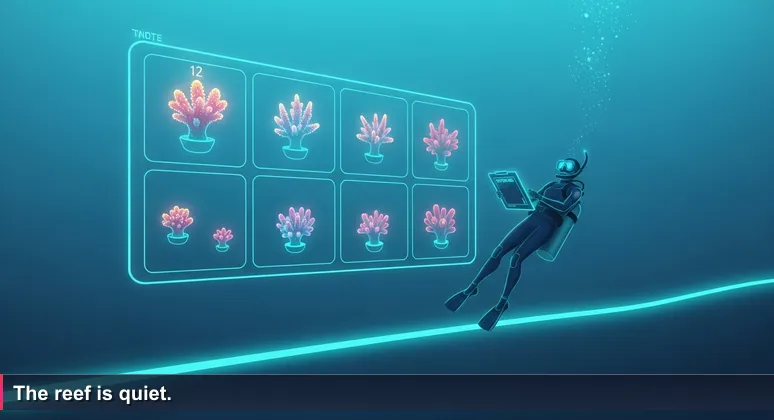
Marine biologists have a rule: never count a reef before it has had time to grow. The first survey of a new coral restoration site is less about ranking than about establishing a baseline - noticing which nubbins have taken hold, which are vulnerable, and where the conditions for growth are strongest. Sunlight pierces turquoise water as a diver hovers above a transect line, clipboard in hand, counting juvenile growth no bigger than a thumbnail. The reef is quiet, new growth barely visible against the sand. That same patience must be applied to the Solomon Islands AI ecosystem in 2026.
We want a clean numbered list - Top 10 AI Startups - but the local scene is less than a decade old. According to the AI Asia Pacific Institute, underdeveloped digital infrastructure and a lack of comprehensive regulatory frameworks remain significant barriers across the Pacific. The tension is real: how do you impose order on a space that is still germinating? What gets lost when fragile beginnings are reduced to a rank?
A reef survey does not determine which coral is "best" - it is an act of attention that creates a baseline for care. Similarly, this list is not a competition but an invitation to nourish. It says: these ventures matter. The partnerships between SINU and Our Telekom, the Iumi Gro Accelerator winners, the government-backed Bokolo Cash CBDC - each represents a fragile new shoot on a reef that, with the right currents, could become extraordinary.
Read this list not as a hierarchy but as a map of possibility. The real work comes after the count: the patient capital, consistent connectivity, and regulatory frameworks needed for these seedlings to become a forest. For AI professionals reading in Honiara, the startup that will define the Solomon Islands' next decade is probably being prototyped right now - on a laptop at a SINU lab, in a tourism office in Gizo, or at a kitchen table with a Starlink connection. Watch these ten ventures, but more importantly, watch the gaps between them. That is where the next list begins.
Table of Contents
- Introduction
- IslandTech Solomons
- SINU AI Incubator Ventures
- Pacific Tourism AI Adopters
- SolAgro
- CEMS Holdings
- EDiSON Disaster Risk Management
- Bokolo Cash CBDC
- Bina
- Toro Marketplace
- Solomon AI and 3D Vision
- The Reef Beyond the Count
- Frequently Asked Questions
Planning to break into AI? This complete resource for AI careers in Solomon Islands outlines skills and salary expectations.
IslandTech Solomons
Operating as a grassroots tech community based in Honiara, IslandTech Solomons organises regular meetups, hackathons, and training sessions focused on digital skills and emerging technologies. While not a traditional startup, this community-driven initiative functions as the connective tissue for the local AI ecosystem, filling a critical gap in a market where no dedicated hub previously existed for tech entrepreneurs, developers, and AI practitioners to share knowledge and access mentorship.
The venture capital pipeline is only half the story - for AI startups to thrive in the Solomon Islands, they need talent. IslandTech connects self-taught developers from Guadalcanal with SINU computer science students and returning graduates from the University of the South Pacific and overseas universities. The community has already hosted workshops with visiting experts from the Pacific Tourism Organisation's digital transformation project, bringing real-world AI applications directly to Honiara's developer community.
In a market where dominant telcos Our Telekom and Bmobile are the primary employers for tech talent, IslandTech provides the informal peer network that Honiara's growing developer community needs to stay current with global trends. According to its community page, the initiative represents the first organised effort to cultivate a local tech ecosystem outside formal institutional channels.
Watch for a potential formal partnership with SINU's AI integration strategy, or a spin-off accelerator programme targeting Solomon Islands-specific AI use cases. The community's ability to attract sponsorship from Smart Technology and local ISPs will determine its sustainability. Suva's TechTalks Fiji and Port Moresby's PNG Digital Innovation Hub are five years ahead in maturity - IslandTech's challenge is scaling beyond monthly meetups while maintaining its volunteer-driven ethos.
SINU AI Incubator Ventures
Solomon Islands National University graduates possess strong theoretical foundations but have historically lacked the startup infrastructure to commercialise AI research into viable products. The SINU AI Incubator, launched under Vice-Chancellor Professor Transform Aqorau's AI integration strategy, directly addresses this gap by supporting early-stage student and faculty ventures across two focused verticals: NLP-based learning platforms for education and computer vision systems for precision agriculture.
The partnership between SINU and Our Telekom provides the sandbox for these emerging startups to test AI-driven learning platforms on local infrastructure. According to the partnership announcement, Telekom's network enables SINU to advance AI in education by supplying the connectivity and cloud resources that student teams need to prototype their ideas. This collaboration is particularly significant given that over 80% of Solomon Islanders rely on subsistence farming, making the agriculture vertical directly relevant to national economic priorities.
The incubator is uniquely positioned to address the "last mile" of AI adoption in the Solomon Islands - building applications that function effectively on low-bandwidth networks and mobile-first interfaces. Student ventures are designing solutions that work offline, sync when connectivity becomes available, and communicate in Solomon Islands Pijin alongside English. This pragmatic approach acknowledges the reality that most users across Guadalcanal, Malaita, and Western Province access the internet primarily through smartphones with inconsistent data coverage.
Watch for the first spin-off company to graduate from the incubator with external funding. If one of these student ventures secures investment from the Iumi Gro Business Accelerator or a development partner like the Asian Development Bank, it will validate the incubator model for the entire Pacific region. The incubator's success ultimately depends on whether it can attract industry mentors from Auckland's tech corridor and Suva's fintech sector - the same cross-pollination that transformed USP's PACE-SD into a regional research powerhouse.
Pacific Tourism AI Adopters
Small tourism operators across Western Province, Guadalcanal, and Malaita have historically lacked the digital tools to compete with regional destinations like Fiji and Vanuatu in the online booking market. Under the SPTO-led Pacific Tourism Digital Transformation Project, over 100 tourism operators in 2025/2026 adopted AI-driven booking and guest personalisation tools - a shift that has fundamentally changed how boutique island experiences reach international travellers.
This is not a single startup but a cohort of local entrepreneurs building on shared AI infrastructure. Richard Skewes, Trade Manager at Tourism Solomons, described AI as a "game changer" for integrating local culture into the digital guest experience. Operators at Barakoma Airport Lodge in Western Province and properties around Honiara are now using NLP-powered chatbots for guest inquiries and generative AI for personalised itinerary recommendations - technology that was inaccessible to Solomon Islands businesses just three years ago. The tools help properties in Gizo, Munda, and remote eco-lodges create bespoke travel packages without requiring a major marketing budget.
The tourism sector accounts for a significant portion of Solomon Islands GDP and is the government's priority industry for AI adoption. According to Solomon Star News, the programme trains operators in social media management alongside AI tools, creating a comprehensive digital toolkit for the post-pandemic traveller market. These tools directly address the challenge of making boutique island experiences discoverable to international travellers without requiring the marketing spend of larger competitors.
Watch for a consolidation of these tools into a Solomon Islands-specific tourism AI platform, potentially attracting investment from Tourism Solomons or the Ministry of Culture and Tourism. The success of this cohort could establish the template for other Pacific island nations - creating a scalable model where local knowledge and global AI infrastructure combine to level the playing field for small-island tourism economies.
SolAgro
Farmers across rural Guadalcanal and Malaita have historically lacked precision agriculture tools that could improve crop yields and reduce losses from pests and disease. SolAgro, a winner of the Iumi Gro Business Accelerator, addresses this gap using AI-powered drone imagery and smartphone-based computer vision to identify crop pests and diseases before they become visible to the human eye. The system delivers SMS-based alerts in Solomon Islands Pijin and local languages, making the technology accessible to farmers with basic mobile phones.
Agriculture is the backbone of the Solomon Islands economy, yet the sector has seen minimal technology adoption. SolAgro's approach is uniquely suited to the Pacific context: it operates offline, stores data for upload when connectivity is available, and trains local farmers to use basic smartphone cameras rather than requiring expensive hardware. This aligns with SINU's mission to integrate AI into sustainable resource management in rural areas.
The Iumi Gro Accelerator selection validates SolAgro's commercial viability. The co-investment model provides seed funding while requiring the founders to demonstrate revenue from farmer cooperatives and agricultural exporters within 18 months. This structured timeline ensures the venture moves beyond prototype to real-world impact. For the 80% of Solomon Islanders relying on subsistence farming, SolAgro represents the first practical application of AI in their daily lives - a tool that can mean the difference between a harvest lost to disease and one that feeds a community.
Watch for a partnership with the Ministry of Agriculture and Livestock to scale the drone programme nationally, or an acquisition by a larger Pacific agri-tech player expanding into the Solomon Islands market. Suva-based agri-tech initiatives are two to three years ahead, but SolAgro's offline-first design gives it a clear advantage for deployment across the 900-plus islands where connectivity remains unreliable.
CEMS Holdings
Small and medium enterprises in Honiara and provincial centres face an operational nightmare: inventory management, supply chain tracking, and quality control become exponentially harder when operating across multiple islands with unreliable shipping routes. CEMS Holdings, an Iumi Gro Business Accelerator winner, uses AI-powered inventory forecasting and logistics optimisation to help businesses manage stock across the Solomon Islands' fragmented supply chains. The system learns from historical shipping delays, weather patterns, and seasonal demand to recommend optimal stock levels for each location.
The Solomon Islands' geography makes logistics the single biggest operational challenge for any business operating beyond Honiara. According to the government's Inclusive Digital Economy Strategy, the country's inter-island supply chain bottlenecks represent a critical gap that digital solutions must address. CEMS solves this by building a Pacific-specific model that accounts for the unique constraints of shipping between Guadalcanal, Malaita, Western Province, and Temotu - rather than applying a generic global solution designed for road-based logistics in developed countries.
The Iumi Gro Accelerator funding and co-investment partnership give CEMS the capital to build its first enterprise customer base among Honiara wholesalers and importers. For SMEs in Auki, Gizo, and Munda, the system means fewer empty shelves during shipping delays and less capital tied up in dead stock. The AI model continuously refines its predictions as it processes more data from the region's complex shipping schedules, making it increasingly valuable over time. Watch for expansion into Papua New Guinea's supply chain market, which shares similar geographic challenges, or a strategic partnership with a major shipping company operating in the Pacific like Steamships Trading Company or Pacific Direct Line.
EDiSON Disaster Risk Management
The Solomon Islands is one of the most disaster-prone nations on Earth, yet its early warning systems have historically been fragmented across multiple government agencies with limited data integration. EDiSON, an AI-assisted Disaster Risk Management system developed in partnership with SAP and UNESCO, delivers predictive insights for cyclones, tsunamis, and floods - and was selected by the Solomon Islands government to go fully operational in 2026.
EDiSON represents the most significant AI deployment in Solomon Islands government history. The system integrates real-time data from meteorological services, geological surveys, and satellite imagery to provide visibility into disaster risks before they strike. According to ABC Pacific's coverage of the trial, the AI component uses pattern recognition to improve prediction accuracy over time, learning from each event to sharpen its forecasts for future cyclones and flood events that regularly threaten communities across Guadalcanal, Malaita, and Western Province.
While this is a public-sector solution rather than a commercial startup, its deployment creates downstream opportunities for local tech companies to build applications on top of EDiSON's API, potentially sparking a disaster-tech ecosystem in Honiara. Watch for regional expansion into Vanuatu and Fiji, which face similar climate risks. The SAP and UNESCO partnership model could be replicated across the Pacific, positioning the Solomon Islands as the pilot market for AI-assisted disaster resilience in small island states.
Bokolo Cash CBDC
Over 60% of Solomon Islands adults remain unbanked or underbanked, relying on informal savings groups and cash-based transactions that limit economic inclusion. Bokolo Cash, the Central Bank of Solomon Islands' Central Bank Digital Currency developed in partnership with Japanese blockchain firm Soramitsu, directly addresses this gap. The 2026 iteration integrates AI-powered fraud detection and secure automated transfers, creating a digital currency designed specifically for the Pacific context.
The AI layer of Bokolo Cash is the most compelling development for tech professionals. The system uses machine learning to analyse transaction patterns and flag suspicious activity in real time - critical for a digital currency targeting unbanked populations who have no traditional credit history. Prime Minister Manasseh Sogavare described the technology as a "catalyst for inclusive and sustainable development", according to Digital Pound Foundation's country profile. The Central Bank of Solomon Islands backs the initiative through a regulatory sandbox, providing a guaranteed user base and government mandate that no private fintech in the Pacific can match.
The AI fraud detection system could be licensed to other Pacific central banks exploring CBDCs, positioning Solomon Islands as a regional blockchain hub that attracts further fintech development to Honiara. According to the Alliance for Financial Inclusion, digitalisation is driving progress across the Pacific, but Bokolo Cash gives the Solomon Islands a critical first-mover advantage. Fiji's digital payment ecosystem is more mature with MyCash and M-PAiSA, but neither has a CBDC mandate - a distinction that could reshape regional financial infrastructure in the years ahead.
Bina
Traditional credit scoring models exclude most Solomon Islanders, who lack formal bank accounts, credit cards, or documented payment histories. Bina bridges this gap using AI-driven credit scoring and behavioural analytics designed specifically for the unbanked population. Through a partnership with SINPF (Solomon Islands National Provident Fund), Bina offers "YouSave" and "MobileFund" instant loans that draw on mobile data - call patterns, airtime top-up history, and mobile money transactions - to create credit profiles for individuals who have never interacted with formal financial institutions.
According to the Central Bank of Solomon Islands announcement, MobileFund went live with instant loans accessible via mobile phone, representing a significant leap in financial inclusion for the country. The AI model continuously learns from repayment behaviour, improving its accuracy for Solomon Islands users who lack traditional credit histories. The product addresses a genuine pain point: the average Solomon Islands worker faces a 3-5 day wait for traditional loan approval through banks in Honiara and provincial centres, while Bina promises approval in minutes.
The partnership with SINPF gives Bina access to a significant portion of the formal workforce's data, creating a captive user base that no competing fintech can replicate. The Central Bank's backing through the regulatory sandbox provides the institutional credibility needed to build trust among first-time borrowers. Watch for expansion of the credit scoring model to utility payments - Our Telekom bills and Solomon Power accounts - to broaden the data pool and refine lending decisions further. As noted in the Solomon Islands Government's digital transformation strategy, this kind of alternative data approach is essential for leapfrogging traditional banking infrastructure. Bina is a potential acquisition target for BSP Bank or another Pacific financial institution looking to enter the AI lending space, particularly as competition with Fiji's Fintech Pacific intensifies across the region.
Toro Marketplace
The Solomon Islands lacked a unified e-commerce platform capable of handling the country's unique logistics, mobile money preferences, and vendor diversity - small businesses in Honiara and provincial centres had no online marketplace to reach customers beyond their immediate community. Toro, launched in late 2025 by founder Angellina Fakaia, fills this void as the country's first integrated e-commerce platform, using AI for personalised product recommendations and vendor matchmaking that functions as a local "Amazon and Upwork hybrid."
The AI recommendation engine learns from browsing behaviour to surface products from local vendors that users might otherwise never discover, creating a digital marketplace that mirrors the diversity of Solomon Islands commerce. As reported by Sunday Isles, Fakaia secured strategic partnerships with Smart Technology and Cab'It for logistics and mobile money integration, creating the first end-to-end e-commerce supply chain in the Solomon Islands. The platform works with Bmobile and Our Telekom networks and integrates with mobile money services that Solomon Islanders already use.
The Solomon Islands Inclusive Digital Economy Strategy identified e-commerce infrastructure as a critical gap for economic development. Fakaia described Toro as "essential infrastructure for the digital economy", positioning it not as a discretionary marketplace but as a utility for Solomon Islands commerce. Watch for Toro's vendor matchmaking AI to expand into a freelance marketplace, enabling Solomon Islands professionals to offer services regionally. The company is positioned for Series A funding in 2027 and could become the first Solomon Islands startup to expand into Fiji and PNG, bringing locally-designed AI solutions to the broader Pacific market.
Solomon AI and 3D Vision
Manufacturing quality control and tourism resort operations in the Solomon Islands have historically lacked automated inspection systems, leading to quality inconsistencies that affect exports and guest experiences. Solomon, a global AI and 3D vision company with a dedicated Honiara-focused branch, applies augmented intelligence and computer vision to two verticals: defect detection in local manufacturing and Standard Operating Procedure validation for tourism resorts. According to the partnership announcement with NVIDIA, Solomon deploys AI and 3D vision solutions that make robots more intelligent and capable of performing quality control tasks that previously required human inspection.
For Solomon Islands manufacturers exporting to Australia and New Zealand, automated defect detection reduces costly returns and improves compliance with export standards that are critical for maintaining trade relationships. For international resorts in Western Province and Gizo, the SOP validation tool ensures consistency in hospitality delivery - a factor that directly influences high-end guest reviews across platforms like Booking.com and TripAdvisor. The company's AI-powered 3D vision solutions bring enterprise-grade technology to a market that has never had access to industrial automation tools before.
No comparable industrial AI company operates in Fiji or PNG, giving the Solomon Islands a competitive advantage in attracting manufacturing and resort investment that requires automated quality assurance. The Honiara branch serves as a proof of concept for AI deployment in small island states, and Solomon is the most likely candidate among these ten ventures for an acquisition by a larger industrial AI company seeking to expand into the Pacific region.
The Reef Beyond the Count
In marine surveys, the most important data point is not which coral colony is largest - it is whether the conditions exist for the reef to regenerate. The Solomon Islands AI ecosystem in 2026 has the essential ingredients: government will behind EDiSON and Bokolo Cash, private sector pioneers like Toro and Solomon, institutional support from the SINU incubator and Iumi Gro Accelerator, and talent cultivation through IslandTech Solomons and Tourism Solomons training.
What it lacks - and what will determine whether these ten ventures become the foundation of a self-sustaining ecosystem - is patient capital, consistent connectivity, and a regulatory framework that protects citizens without stifling innovation. As noted in the AI Asia Pacific Institute's assessment, underdeveloped digital infrastructure and absent regulatory frameworks remain the region's most significant hurdles. Governor-General David Vunagi (Kapu) has warned that while AI is "here to stay," there is a critical need for policies to regulate its daily use and protect citizens from ethical risks, as reported by Solomon Star News.
For the AI professionals reading this in Honiara: your future employer may not be on this list yet. The startup that will define the Solomon Islands' next decade of digital transformation is probably being prototyped right now - on a laptop at a SINU lab, in a tourism office in Gizo, or at a kitchen table in a Honiara suburb with a Starlink connection. The government's commitment to the Inclusive Digital Economy Strategy signals that the infrastructure will come. Watch these ten ventures, but more importantly, watch the gaps between them - the problems no one has solved yet, the sectors no one has digitized, the data no one is collecting. That is where the next list begins.
Frequently Asked Questions
Which AI startup on this list has the most funding or highest growth potential?
Solomon, with its NVIDIA partnership and enterprise-grade computer vision, has the strongest global backing and is likely the most scalable. However, Bokolo Cash CBDC has guaranteed government support, while Toro Marketplace and Bina have secured strategic partnerships with major local firms like Smart Technology and SINPF.
How were these 10 startups ranked? What criteria did you use?
The ranking is based on a combination of product-market fit within the Solomon Islands context, partnerships secured (e.g., Iumi Gro Accelerator wins, SINU collaboration), and potential for regional expansion. It is not a strict competition but an assessment of each venture's current traction and future promise in our unique ecosystem.
Are there any AI startups in this list specifically for agriculture or tourism?
Yes, SolAgro uses AI drone imagery and smartphone computer vision to help farmers detect pests early, serving the 80% of Solomon Islanders in subsistence farming. For tourism, the Pacific Tourism AI Adopters cohort helps operators with NLP chatbots and generative AI for guest itineraries, supported by Tourism Solomons and the SPTO.
What is the biggest challenge these AI startups face in the Solomon Islands?
The biggest challenges are reliable connectivity outside Honiara, limited patient capital, and the need for a regulatory framework that balances innovation with ethical safeguards. As Governor-General David Vunagi noted, AI is here to stay, but we must manage risks carefully amid our developing infrastructure.
Can I work with or invest in these AI startups as a Solomon Islander?
Yes, many are open to talent and partnerships. IslandTech Solomons hosts meetups for developers, SINU's incubator welcomes student ventures, and accelerators like Iumi Gro offer funding for early-stage ideas. For investment, watch for the first Series A round from Toro Marketplace in 2027 or government-backed initiatives like Bokolo Cash.
Discover the 2026 ranking of AI bootcamps in Solomon Islands from $700 to $110K SBD.
For a comprehensive guide to AI meetups in Solomon Islands, check out this article.
Find out which organizations are hiring cybersecurity professionals in the Solomon Islands by reading Who's Hiring Cybersecurity Professionals in Solomon Islands in 2026.
Check out our compilation of 10 free tech training opportunities at public libraries in Solomon Islands.
Our article covers the best tech careers in Solomon Islands without a diploma.

Irene Holden
Operations Manager
Former Microsoft Education and Learning Futures Group team member, Irene now oversees instructors at Nucamp while writing about everything tech - from careers to coding bootcamps.